On August 30, 1774, two Virginians arrived by carriage at George Washington’s home, Mount Vernon. It was Patrick Henry and Edmund Pendleton. Henry and Pendleton planned to spend the night at Mount Vernon and on the morning of August 31, 1774 they would depart with Washington to go to Philadelphia and attend the First Continental Congress. These three Virginians would be joined in Philadelphia by Richard Henry Lee, Peyton Randolph, Benjamin Harrison, and Richard Bland to form the Virginia delegation at the congress. This was the first time delegates from twelve of the American colonies met in the lead up to the Revolutionary War.
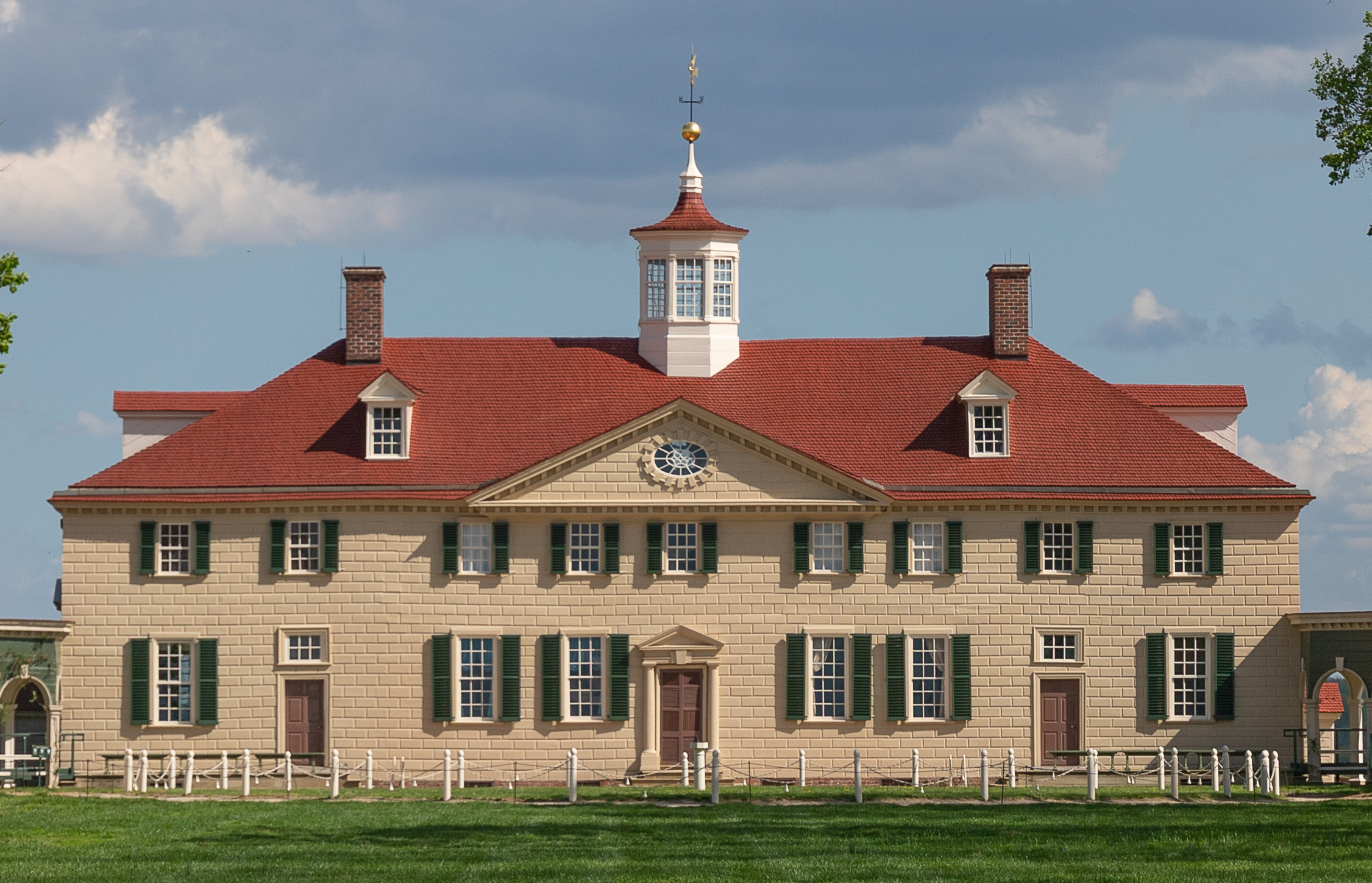
The west front of the mansion at Mount Vernon. From the doorway here, Martha Washington bid farewell to her husband on August 31, 1774. (Wikimedia)
They had no idea what this congress would lead to. For the first time, men from colonies as far north as New Hampshire and far south as South Carolina would be meeting. The disparate colonies were coming together in response to the British Parliament’s harsh measures levied earlier that year.
As the three Virginians left Mount Vernon on August 31, Edmund Pendleton remembered how Martha Washington bid them goodbye. She had no idea that the events that would follow would result in her husband being gone from Mount Vernon for nearly eight years.
Pendleton wrote: “I was most pleased with Mrs. Washington and her spirit. She seemed ready to make any sacrifice and was cheerful though I knew she felt anxious. She talked like a Spartan mother to her son going to battle. ‘I hope you will stand firm – I know George will,’ she said. The dear little woman was busy from morning to night in domestic duties, but she gave us much time in conversation and affording us entertainment. When we set off in the morning, she stood in the door and cheered us with the good words, ‘God be with you gentlemen.’”
Make sure to follow Emerging Revolutionary War on Facebook as we attend events to mark the 250th anniversary of the First Continental Congress next weekend in Philadelphia. We will be doing videos throughout the weekend and will post them later to our YouTube channel.
On September 1, 1774 Massachusetts was on the brink of war. General Thomas Gage, now Governor of Massachusetts was growing more worried about Whig access to gunpowder and weapons. He made a fateful decision to send a small expedition to retrieve the provincial powder stored in Charlestown. This powder in Gages’ mind, was owned by the King. Local leaders felt otherwise and now this grab for powder by Gage nearly sparked war in 1774.
As word of the Boston Tea Party reached the other colonies, the response was mixed. Most colonists believed Bostonians should pay for the ruined tea, but they were also overwhelmingly shocked by the harshness of the Coercive Acts. Support from across the 13 colonies began to pour into Boston. Using an already established “Committee of Correspondence” network created in the early 1770s, colonial leaders began to discuss a proper reaction. Boycotts on imports of British goods and tea especially were accepted broadly. But most importantly, 12 colonies (Georgia abstained) sent representatives to a “Continental Congress” in Philadelphia in September 1774. Unlike the previous Stamp Act Congress, the First Continental Congress was attended by the majority of American colonies. The Congress encouraged boycotts and also petitioned the King and Parliament to rescind the Coercive Acts. In response to their planned attendance, Governor Gage dissolved the Massachusetts Provincial Assembly before the Continental Congress met and called for new elections. This did not deter them from sending representatives (John Adams, Samuel Adams, Thomas Cushing, and Robert Treat Paine) to Philadelphia.
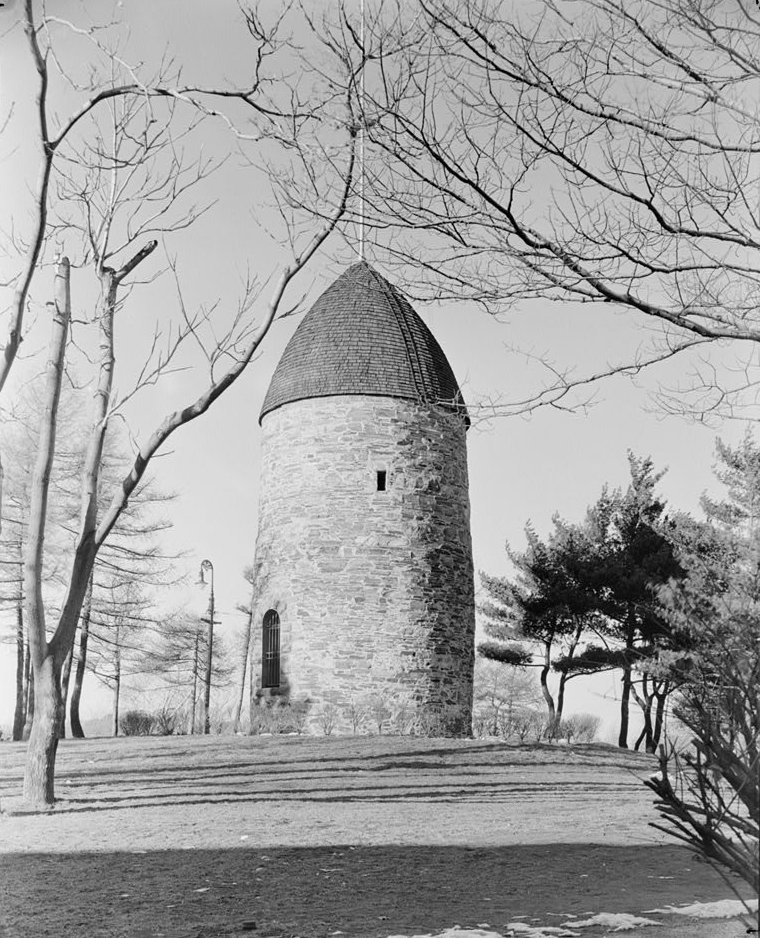
Charlestown (now Somerville) Powder House, ca. 1935
Back in Massachusetts, Gage became wearier of his situation and the possibility of open conflict with colonists. He was active in paying informants and gaining information from local Tories (those loyal to the British government). These sources informed Gage that the people of the countryside were beginning to arm themselves. In an effort to deny them use of the official Royal arms and powder stored across the colony, he began to collect these government-owned supplies. In colonial America, most men served in the local militia. Local towns had powder magazines to store the powder that would be used for training the militia or if the militia was called to defend a portion of the colony. Many of these powder magazines also stored a portion of gunpowder that belonged to the colonial government—the King’s powder.
One such large powder magazine that stored a large quantity of British gunpowder was in nearby Charlestown, now known as Somerville. This powder magazine was the largest in the colony. William Brattle, the commander of the Middlesex County militia and a Royal appointee, notified Gage that he believed the local militia were making plans to steal the Royal gunpowder. Gage moved quickly; he ordered the Middlesex County sheriff to secure the keys. Then early on the morning of September 1, nearly 300 British Regulars made their way to the powder house and removed all of the gunpowder that rightfully belonged to the governor and his agents. By that afternoon, the British troops, powder, and two cannon were in Boston at Castle William (a fort on an island in Boston Harbor).
Word spread quickly that the British came and stole the powder and, in the process, had shot and killed colonials. Now Boston was on fire, and the British navy was bombarding the city. All of this of course was not true, but the word spread like wildfire just the same. Misinformation abounded, and now thousands of locals and militia were gathering in Cambridge looking for revenge. Many loyal to the colonial government were forced to flee to Boston for protection. As time went on, it was evident that the rumors of a battle and Boston burning were untrue. The incident, however, showed how quickly the countryside could mobilize against the governor. Word was quickly sent to Philadelphia where the delegates to the First Continental Congress was aghast at the news. They debated on what to do, and the Massachusetts delegation specifically were on edge for more information. Word eventually arrived that the situation that was first reported was not accurate and no fighting had broken out. John Adams wrote;
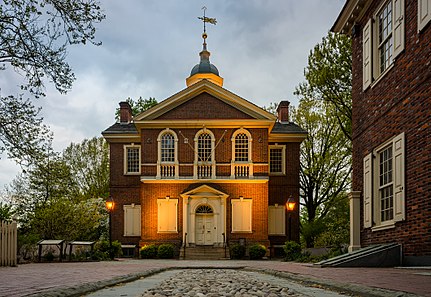
Carpenters Hall, Philadelphia where the First Continental Congress convened on September 5, 1774.
“When the horrid news was brought here of the bombardment of Boston, which made us completely miserable for two days, we saw proofs of both the sympathy and the resolution of the continent. War! war! war! was the cry, and it was pronounced in a tone which would have done honor to the oratory of a Briton or a Roman. If it had proved true, you would have heard the thunder of an American Congress.”
Gage, somewhat shaken by the event, began to concentrate his military strength in the city of Boston and fortified the city against a possible attack. He sent word to England that he needed more men to enforce the Coercive Acts. The “Powder Alarm” proved that, within a day, thousands of armed colonials could assemble. The message he sent London shocked the King: “If you think ten thousand men sufficient, send twenty; if one million is thought enough, give two.” Soon after on September 9th, Whig (Patriot) leaders such as Dr. Joseph Warren and others passed the Suffolk Resolves. These strongly worded resolves called for a boycott of British goods and heavily impacted policies adopted by the First Continental Congress. Parliament badly miscalculated the colonial reaction to the Coercive Acts and the pendulum was beginning to swing to independence. The Powder Alarm quickly taught General Gage that the resistance to Royal authority was not just a small group of rebels, but a growing majority of the population.
You can still today visit the the famous Powder House today. It stands in Nathan Tufts Park at 850 Broadway, Somerville, Massachusetts (GPS: N 42.400675, W 71.116998). There is plenty of street parking available. Take the trails in the park to the Powder House located in the center of the park.
First, thank you all for understanding with the technical difficulties of yesterday’s potential Facebook Live.
Over this past weekend, the 210th anniversary of the Battle of Bladensburg and the Burning of Washington by British troops took place. In a potential future tour, I was scouting out locations around our nation’s capital that are connected with the year 1814. Although some of the sites have been rebuilt, some of the history is preserved in museums, and one of the places is still occupied by the president of the United States, there is still a lot of history underfoot related to the War of 1812.
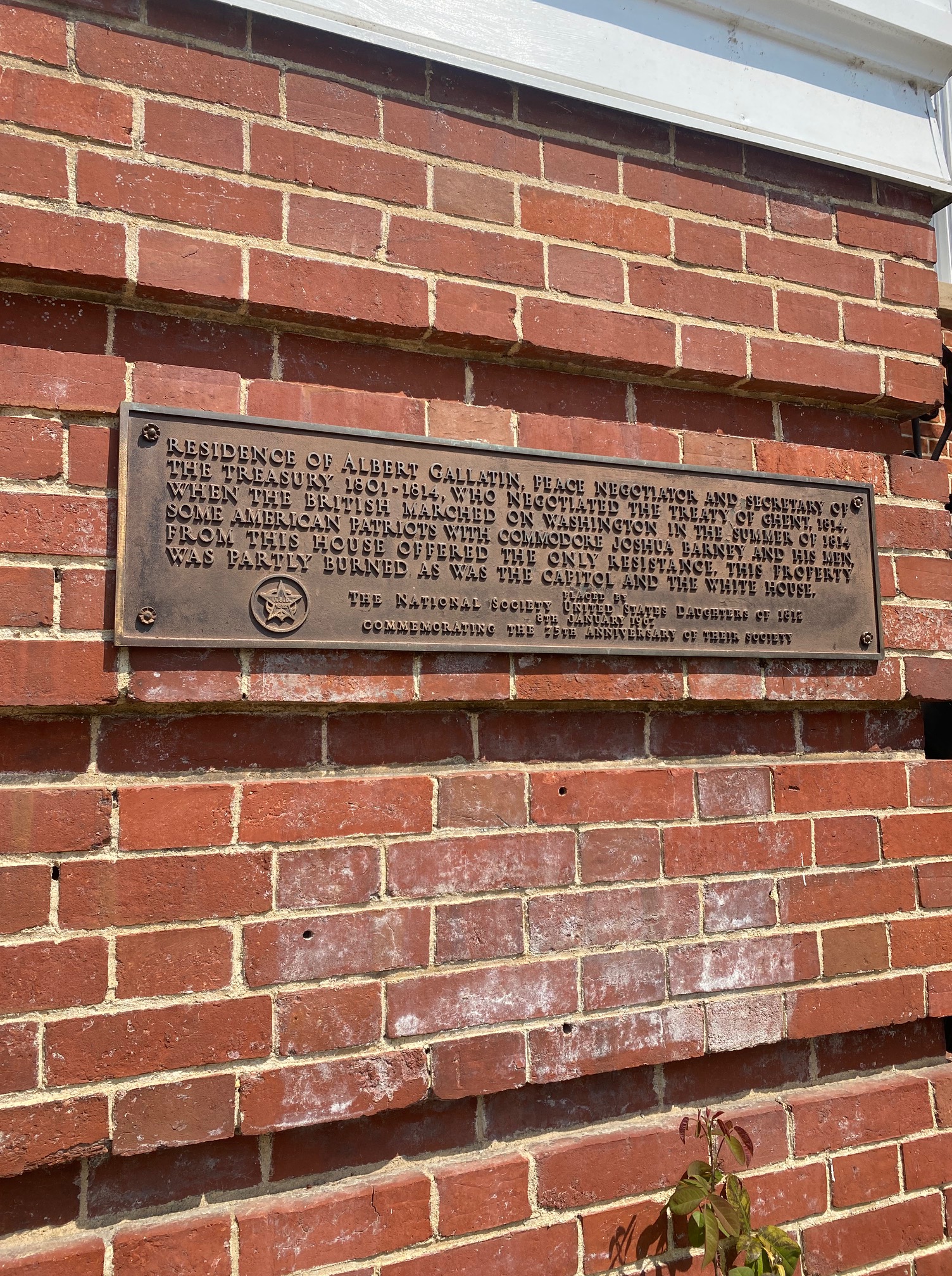
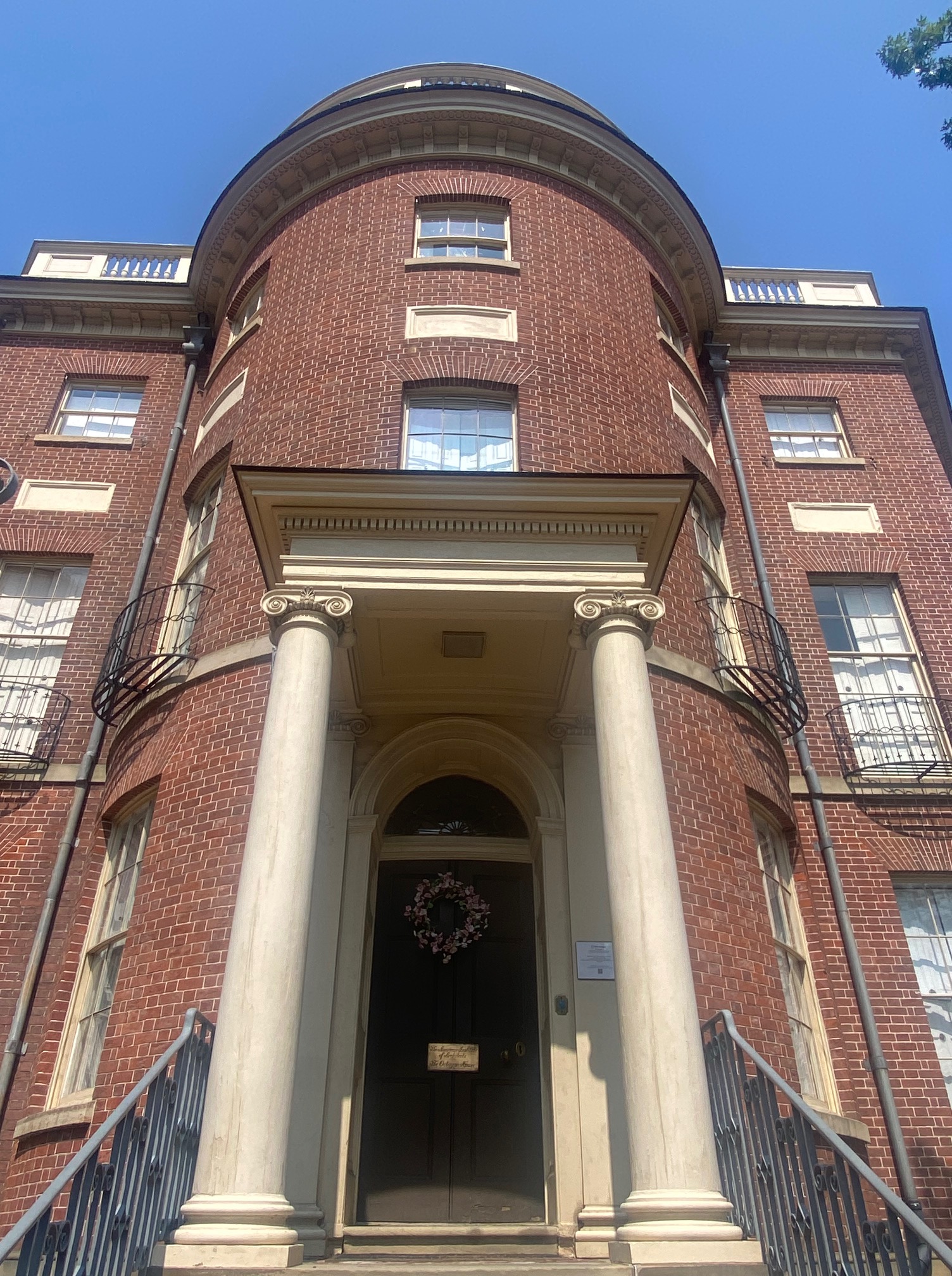
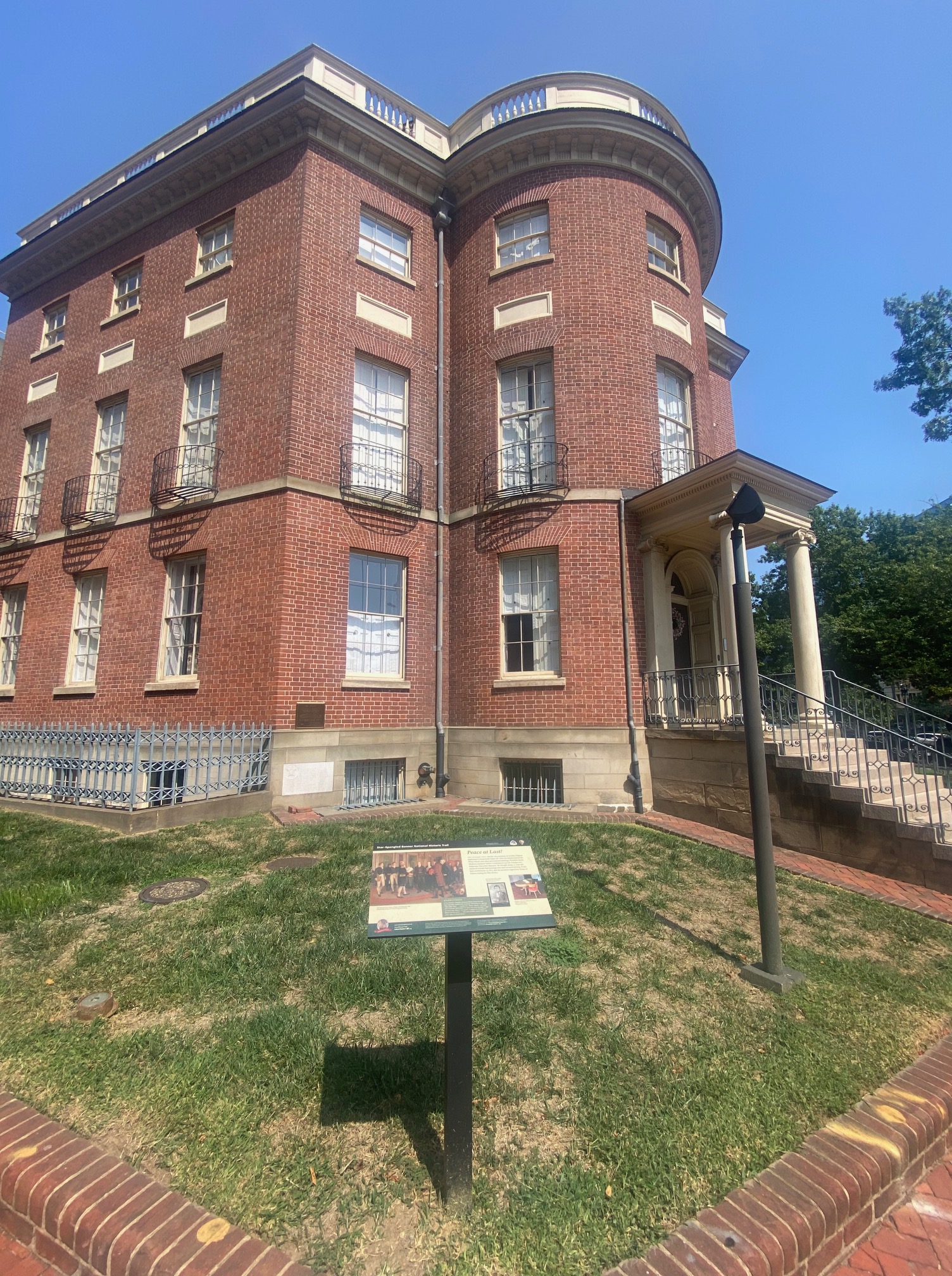
Some of that history is below. Robert Sewall built a house sometime between 1800 on 2nd and Maryland Avenue Northeast but with an inheritance from an uncle’s passing moved to southern Maryland. He rented the property to Albert Gallatin, who would serve as treasury secretary under both Presidents Thomas Jefferson and James Madison. In 1813, Gallatin left to become one of the United States peace commissioners in Ghent, Belgium charged with negotiating a treaty to end the War of 1812. William Sewall, Robert’s son, took responsibility for the house at that point. William served with Commodore Joshua Barney during the War of 1812 and records do not indicate he ever lived at the residence.
During the British march into the city, a group of Barney’s men took refuge in the residence and fired shots at the enemy column. Two British soldiers were killed and the horse of Major General Robert Ross was also struck. Ross ordered men into the structure to clear the snipers but not finding the culprits, the infantrymen burnt the property in retaliation. This would be the only private property burnt during the British incursion into Washington.
The property remained in the Sewall family, the house was rebuilt in 1820 and is now the Belmont-Paul Women’s Equality National Monument, a unit of the National Park Service.
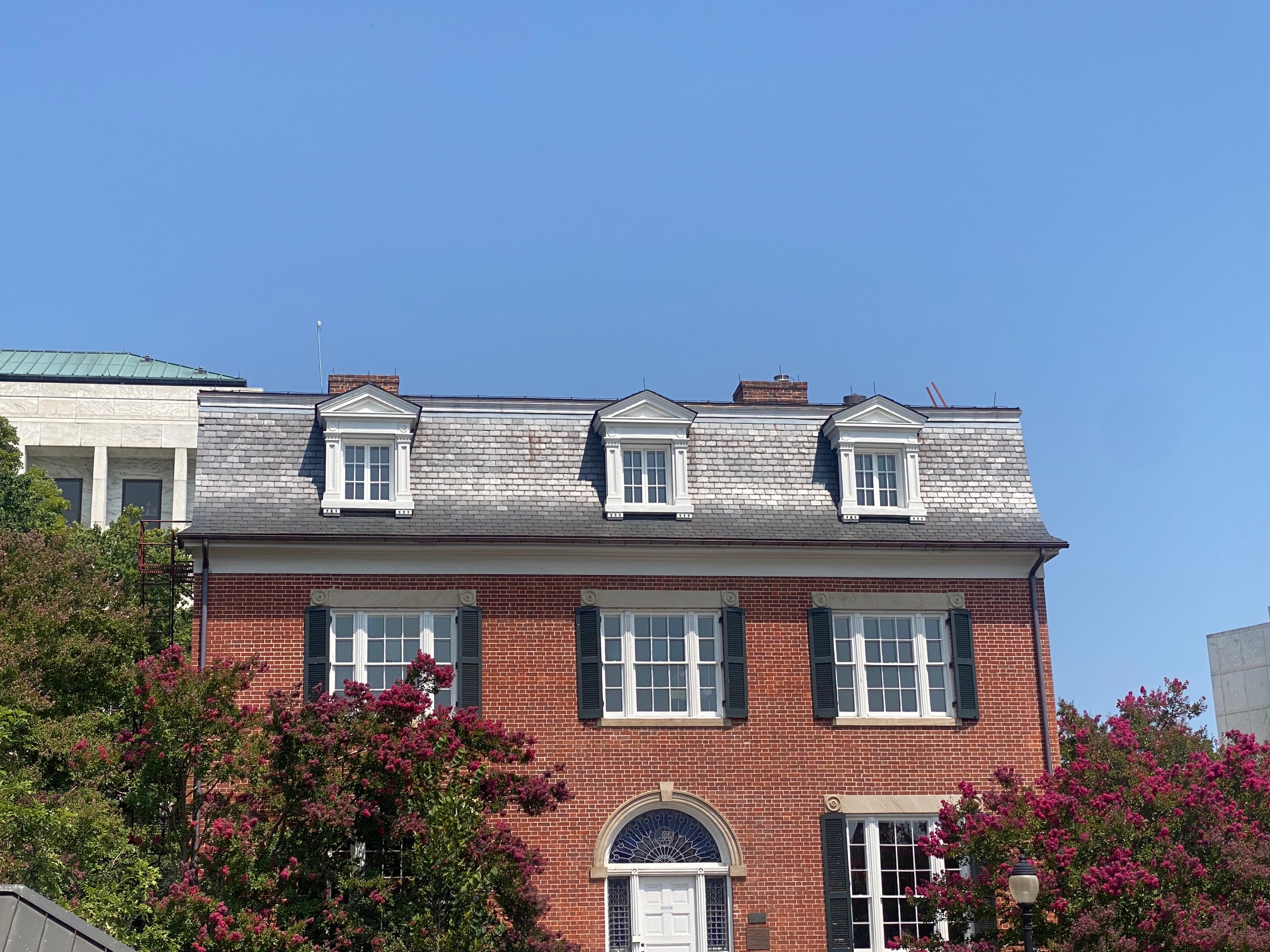
After returning to Washington, the Madison’s took residence here, in the house of John Tayloe III. On September 8, 1814, the Madison family moved in and in an upstairs room, the president received the peace treaty negotiated in Ghent, Belgium. He ratified the treaty in the upstairs study on February 17, 1815. When the Madison family vacated the quarters, six months after moving in, Tayloe received $500 in rent from their stay.
Join us on our Facebook page at 7 pm on Sunday, September 1 for a discussion with historian and author Scott C. Patchan about George Washington’s role in the French and Indian War. Patchan will be discussing his latest book, George Washington in the French & Indian War, published earlier this year by the History Press.
George Washington has frequently been criticized for his first military campaign, which sparked the French and Indian War. This backwoods campaign between British and French colonials eventually grew into the Seven Years’ War, a global conflict between these European empires. In 1754 Washington was an ambitious yet inexperienced young officer, eager to carry out his orders and mission on behalf of Virginia and the British king. While his campaign failed to meet its objectives, Washington experienced his first taste of military command, dealing with situations that ultimately proved beyond his control, and learned lessons that made him into the man who led the Continental Army to victory in the Revolutionary War. Historian Scott Patchan delves deep into Washington’s correspondence to tell the story of his training as an officer.
Scott’s interest in history began at a young age when his parents took him to Fort Necessity National Battlefield in Fayette County, Pennsylvania. This visit initiated a lifelong love of history that has resulted in Scott’s writing of six books, most prominently Shenandoah Summer, Second Manassas: The Struggle for Chinn Ridge and The Last Battle of Winchester, as well as dozens of articles. He is a sought-after speaker and popular guide for tours on colonial American history, the Revolutionary War and the Civil War for the last twenty-five years across the eastern United States.
Emerging Revolutionary War welcomes back guest historian Michael Aubrecht
In 1777 Thomas Jefferson and a committee of revisors came to the City of Fredericksburg for the purpose of revising several Virginia statutes. This led to Jefferson drafting the Virginia Statute for Religious Freedom.
When Jefferson and his comrades arrived in Fredericksburg they were met with a town bristling with military activity. Troops were drilling in the public square and filled the crowded streets, buildings and shops. Awaiting travel orders were the men of the Second Virginia and the Seventh Virginia, ordered here on January 9 for a rendezvous just prior to marching to join General Washington at the front. By the time Jefferson arrived in Fredericksburg, sixty of the more than two hundred battles and skirmishes of the war had already taken place.
I chose the long way to Revolutionary War history. Part of it can be blamed on the co-founders and early bloggers on ERW. They convinced me, a Civil War historian, to come to the “dark side,” and study the more pivotal, more complex, and more important era in American history. And thus I joined this merry band and “threw in” to start learning more about our turbulent founding. I can’t say that I am a master of this domain yet, but I’ve come a long in several years.
Today, however, as I walked through one of our country’s national cemeteries, one that does not have any dead from our War for Independence, I began thinking about the American consciousness and the path toward someone’s interest in our military history. I began by reflecting on my own experience and why I was drawn to study the Civil War. Certainly, visiting Civil War battlefields as a young child with a toy musket and kepi sold me easily enough to want me to pursue this field of study as a future career. But maybe it was also the impact of visual media. I could see my childhood heroes in pictures taken at the time, the wreckage of the battlefield, and the plight of dead and dying soldiers on those fields and at field hospitals.
So maybe the Revolutionary period does not garner the attention that study of later wars does as it lacks photographs, and for later conflicts, film, film with sound, and live frontline reporting on tv and the internet. But time may also factor into the perception of interest levels. Iraq, Afghanistan, Desert Storm, and Vietnam veterans are still with us, and although their numbers are marching into history, the Korean War and World War II generations. Their presence in our society makes the conflicts in which they served seem not so long ago, rather, more like recent history. As a public historian, however, when I have discussions regarding World War I and the Civil War it’s viscerally noticeable that modern society has a harder time making tangible connections to these moments in American history. It simply seems much further into the past, a long, long time ago to them. Maybe because there are no longer any living veterans from these wars. Bringing the Revolutionary War into the discussion only makes it seem even more remote from present day. The general public’s perception of time when thinking of this era might as well be the Dark Ages, but it is not even 250 years old yet. We are still a country in its infancy by world comparison. Thus, it’s a harder “sell” to the masses to become involved or interested in the Revolutionary War era outside of a cast of a few prominent characters, George Washington among the very top of that list.
Since April 2023, however, I have been on a crusade to change that thinking as I work with the public. The Revolutionary War was not that far away, and although we only have paintings and sketches from the war rather than photographs and live action film, it is enough to spark an interest and deeper appreciation and understanding. Perhaps, though, it is the tangible reminders of the war that can once and for all disprove the notion that this period is too far removed into the past to be relevant, worth note, or even remembrance.
Nearly eighteen months ago I stood on the battlefield of Camden, fought August 16, 1780. I watched as horsedrawn caissons returned the remains of twelve Continental soldiers of the Maryland and Delaware regiments, one British Loyalist of a North Carolina regiment, and one Scottish Highlander, 71st regiment back to the battlefield. The remains had been discovered earlier in 2022. After a moving ceremony, among a massive crowd gathered to pay their respects, I was able to walk among the flag draped coffins, made of wood from the battlefield itself. I was standing mere inches from soldiers that had given their lives on that field 243 years earlier. The vail of time instantly dropped at that stark realization. The Revolutionary War was not far into the past, hemmed in among long lost American decades. Rather it was right in front of me, in the present, in the now. You could further walk the battlefield that April weekend. Four white flag markers denoted the four corners of where each set of remains were found on the battlefield. You could literally see the battle unfold before you, and now lay witness to where these men had died and fell all those years before.
I have had many powerful experiences at historic sites of the years. Standing or walking in the footsteps of historical giants, visiting gravesites, being present on anniversaries of important moments. But no experience was as powerful as this day. And so, on this day, I reflect on the battle of Camden, South Carolina. I reflect on that April day. And I reflect on the unfinished work that lay ahead during the 250th anniversary commemorations of the Revolutionary War as public historians. We must rededicate ourselves “to the great task remaining before us” to bring these pivotal, complex, and important moments of this era back into the American consciousness and to ensure it remains ever present for the next 250 years.
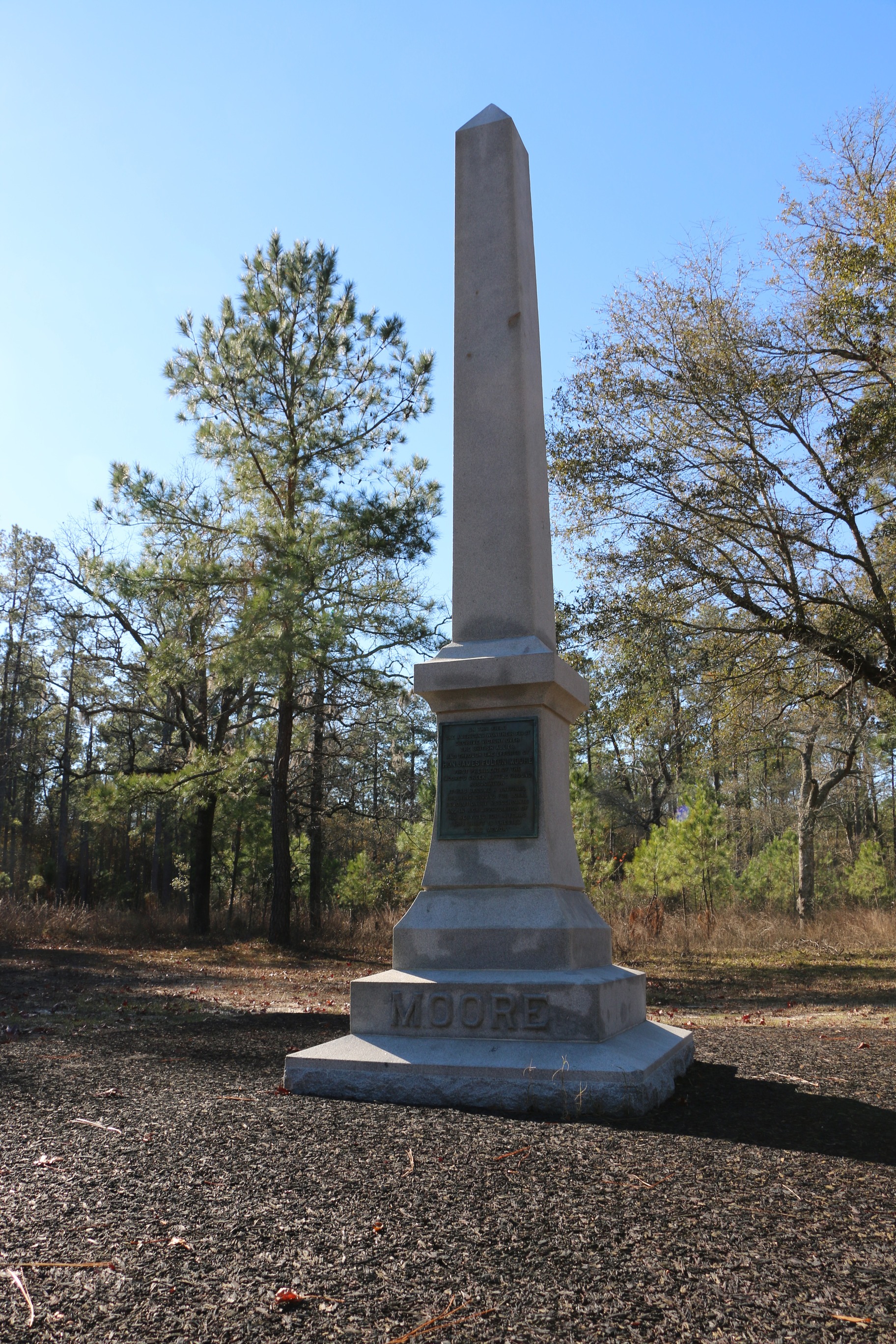
On February 27, 1776 Patriot and Loyalist forces faced off at Moores Creek Bridge in southeastern North Carolina. Loyalist forces anticipated support from a British army arriving along the North Carolina coast and planned to use this combination force to return British authority in North Carolina. Though, when help did not arrive, a mixed bag of North Carolina Patriots turned back an attack at Moores Creek Bridge. Their victory, combined with the Patriot victory at Great Bridge, VA in December 1775, solidified their control of North Carolina. Additionally, the Loyalist defeat served as a major deterrent for Loyalist support until the opening of the Southern Campaign four years later. This small action had long lasting impact on the entire war in the south.
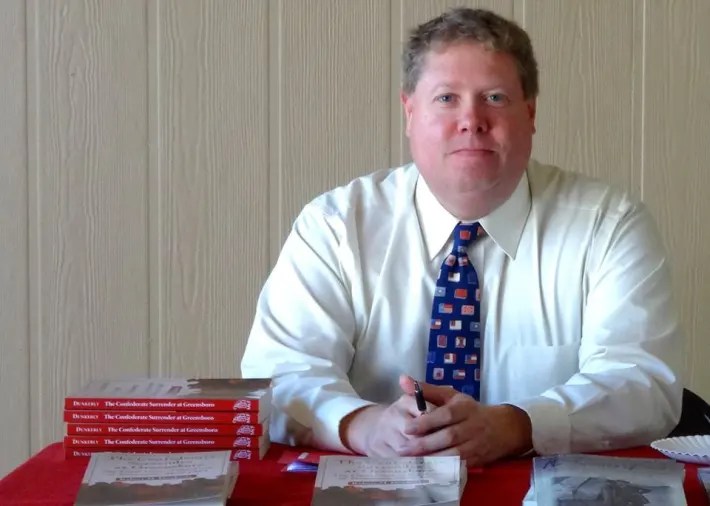
Join us this Sunday night at 7pm on our You Tube Channel ( https://www.youtube.com/@emergingrevolutionarywar8217 ) as we welcome back our own ERW historian Bert Dunkerly. Bert has extensive knowledge on the history of this battle and experience working at the battlefield itself. We will discuss the complex situation leading up to the battle and how this small battle changed the war strategy in the south. Grab a drink and join in on the discussion!
Emerging Revolutionary War welcomes guest historian Evan Portman
Overlooking the Grand Parade at Valley Forge National Historical Park is a statue almost as solid as the man it portrays. Baron von Steuben helped transform the American army into an effective and efficient fighting force in the winter of 1777-1778, but he also aided the country nearly a century and a half later. Yes, Baron von Steuben helped the United States through World War I—or at least the social turmoil on the home front.
Friedrich Wilhelm August Heinrich Ferdinand Steuben was born in Prussia (modern day Germany) in 1730 and served in the Prussian army through the Seven Years’ War. By 1775, Steuben had accrued a considerable amount of debt (despite his stature within the aristocracy), so he sought a foreign military appointment. Failing to catch the eye of the British, French, or Austrians, the Baron set his sights on the fledgling American government. Congress arranged for Steuben to be paid, depending on the outcome of the war, and sent him to the winter encampment at Valley Forge. There, he began drilling the Continental army and instituted better hygiene and sanitation practices. He also wrote a drill manual, which he published in 1779 as Regulations for the Order and Discipline of the Troops of the United States. After the encampment at Valley Forge, Steuben participated in the Southern Campaign of the Revolutionary War. After the Siege of Yorktown, Congress awarded the Baron a tract of land in New York where he died in 1794.
On this date 167 years ago, the infamous siege of Fort William Henry raged along the southern shore of Lake George, New York. For nearly a week the British and Colonial garrison inside the fort and outside its walls had endured through a near hopeless situation. Casualties had mounted, guns and mortars had burst from incessant firing, and the French siege lines had crawled to within 150 yards of the northwest bastion. Reinforcements were not coming to relieve the defenders. The following day, Lieutenant Colonel George Monro had little choice but to surrender his force under honorable terms to the French commander, General Montcalm. On August 10, the column marched out of the fort and nearby entrenched camp in route to Fort Edward. French-allied Indians fell upon the soldiers, and the women and children who accompanied them, and the “massacre” of Fort William Henry ensued.
The following letter with news relating to the siege, was written to George Washington on August 8, 1757. The author was Beverley Robinson, a Virginian who through marriage inherited a large swath of land in the Hudson Highlands of New York. During the Revolution, Robinson remained loyal to the Crown and was made colonel of the Loyal American Regiment in 1777. He was directly involved in the plot to turn Benedict Arnold. Through reasons not clear, Robinson and Washington became acquainted enough beforehand that during the French and Indian War, the former wrote the young Virginia soldier frequently.
“New York 8th Augt 1757
Dr Sir
The inclosed Lettrs came to my hands Yesterday by a Vassill from Halifax, they will I suppose give you all the News from that Quarter. Except the Arriva⟨l of⟩ the Highlanders wh. has been since they were wrote, all well and in good Order Lord Loudoun had not Left Halifax a fortnight ago.
we are now under the greatest apprehensions for fort Wm Henry having Certain Accots that it is Besieged by a Large Body of French & Indians & Mr Mont Calm himself at the head of them. a fryday Last the Express came away from fort Edward & they were then Very hotly Engaged—our Liut. Governer went up Last week to forward the Militia. Genl [William] Johnson was gone up with two thousand Militia & 100 Indians, and the Militia was going up from the adjacent Counties. Col. Young Command at Wm Henry he had Just got into that place with a Reinforcement of 1000 men. we hope the Best. I am Dr Sir Yr Humble Sert
[1] “To George Washington from Beverley Robinson, 8 August 1757,” Founders Online, National Archives, https://founders.archives.gov/documents/Washington/02-04-02-0239. [Original source: The Papers of George Washington, Colonial Series, vol. 4, 9 November 1756 – 24 October 1757, ed. W. W. Abbot. Charlottesville: University Press of Virginia, 1984, pp. 367–368.]
This Sunday, August 3rd at 7pm we welcome back to Rev War Revelry historian and author Alex Cain. Alex is a well known expert on everything Lexington, MA (among many other topics) and hosts a well researched blog: https://www.historicalnerdery.com/ . Alex’s book, We Stood Our Ground: Lexington in the First Year of the American Revolution is highly recommended by ERW for a detailed account of Lexington and its role in the beginning of the American Revolution.
The events of Boston leading up 1775 are well documented, but it was in the countryside around Boston where the populace became militarized. Towns such as Lexington was just as influential in the push to revolution as Boston. Join us as we discuss the role of Lexington, Massachusetts before it was made famous in April 1775.
Be sure to visit our Facebook page or You Tube Channel this Sunday at 7pm as we release this prerecorded Rev War Revelry. Alex will also be joining us this October for our ERW Bus Tour of Lexington and Concord, there a few tickets left so be sure to register to experience Lexington with Alex!







 Emerging Revolutionary War Era