Emerging Revolutionary War welcomes guest historian Dr Lawrence Howard
Many people have not been taught that slavery was practiced in early America’s northern colonies, later states. Though fewer people were enslaved in the north than in the south, where the plantation economy was highly reliant on enslaved labor, people were also held in bondage in the north. Also not often taught is the contribution such enslaved persons made to the success of America’s Founding, though recent scholarship seeks to amend this. This article explores the 1779 Petition to the New Hampshire Government, written by Prince Whipple – born in Africa in 1750 and purchased by William Whipple of Portsmouth, New Hampshire at a young age. In this petition, twenty black men requested emancipation from slavery. The African American petitioners echoed some of the same political ideas that the delegates to the Second Continental Congress had staked their own lives on just three years earlier in the Declaration of Independence, announcing American political independence from Britain.
There is a lot of anticipation on the upcoming Ken Burns’ documentary on the American Revolution. The series will run on PBS starting this Sunday at 8pm and running through Friday. Emerging Revolutionary War invites you to join us each night at 10pm on our Facebook page as we recap each episode with our Emerging Revolutionary War historians. These will be live streams, so join in on the discussion via the chat.
We have seen various previews of the documentary and we are excited about the potential this series might have on generating more public interest in the American Revolution and the 250th anniversary events over the next six years.
Be sure to join us and we hope to see you at 10pm on Sunday night!
Join us this Sunday night at 7pm on our Facebook page as we welcome Dr. Susan Brynne Long. While partisan warfare in the American south has gained popular and scholarly attention in recent years, little work has been done on the prisoners of the backcountry theater. Scholarship on British and Loyalist captives has emphasized the vigilante justice to which they were often subject, but less attention has been paid to the role of military tradition and lived experiences with prisoners in their administration. Dr. Long is filling that gap, with her research emphasizing the role of these factors in the progression of the backcountry war, resulting in an administrative structure of prisoner administration that prioritized humane treatment, even though southern revolutionaries failed to enforce compliance with this standard.
Dr. Susan Brynne Long is an instructor of history at the University of Nebraska – Omaha, whose research and teaching focus on early America and military history. Her current research is about the American administration of British allied prisoners of war in the Revolution.
This Rev War Revelry will be pre-recorded and posted on our Facebook page at 7pm on November 16. 2025. Then it will be posted to our You Tube and Spotify channels.
World War I ended in a Burger King parking lot in New Jersey. Really! Trust me. While visiting Revolutionary War sites in New Jersey, I had to chance to visit something I’d known about but not yet seen. I hope readers are ok this slight deviation from Revolutionary history.
World War I raged from 1914-1918, with the United States entering in 1917. The Allied nations consisted of the U.S., U.K., France, Italy, Russia, Serbia, and Japan. The Central Powers included Germany, Austria-Hungary, Bulgaria, and the Ottoman Empire. By the fall of 1918 the other Central Powers had dropped out, leaving only Germany still fighting.
On November 11, 1918, Germany agreed to an armistice with the Allies, halting the fighting. Negotiations began on a final peace treaty, resulting in the Treaty of Versailles, signed in 1919. But the U.S. did not sign it. Wilson, a Democrat, faced Republican opposition in Congress. Large portions of the American population also opposed the settlement. There was also opposition to Wilson’s proposed League of Nations, an organization similar to today’s United Nations.
So while the rest of the Allies settled with Germany in 1919, for two more years the U.S. and Germany were still at war, with the Armistice in place. President Wilson’s successor, Warren G. Harding, also opposed the Treaty of Versailles, so suggested that Congress make a separate peace treaty that did not include American membership in the League of Nations. Senator Philander Knox introduced such a resolution and it passed the Senate in April, 1921.
Representative Stephen G. Porter proposed a similar measure in the House. Both houses of Congress modified the two proposals, creating the Knox–Porter joint resolution and passing it on July 1. At the time President Hardig was visiting New Jersey Senator Joseph S. Frelinghuysen and were playing golf at the Raritan Valley Country Club.
The golf course was across the street was the Frelinghuysen estate. Word arrived that a courier was on his way from the Raritan train station, having traveled from Washington with the signing copy of the resolution. Harding walked back to the estate, signed the document, and then returned to complete his round of golf. The Frelinghuysen estate was destroyed by fire in the 1950s, and the site is now occupied by a shopping center and parking lot, with a small plaque marking the place where the home once stood.
The old entrance to the Estate where Harding signed the treaty. Author Photo.
Senator Joseph S. Frelinghuysen was the descendant of Frederick Frelinghuysen, who served as a Major General of militia during the Revolution. He was also in the Continental Congress and the Senate.
The historic marker explains the events here of 1921. Author Photo.
So while we think of World War I as ending on November 11, 1918, the actual peace treaty with Germany didn’t occur until three years later. Article 1 of the treaty required Germany to grant to the U.S. government all rights and privileges that were enjoyed by the other Allies that had ratified the Versailles treaty two years earlier. And today there’s a Burger King on the site in Somerville, New Jersey.
The Commission of Captain Samuel Nicholas, the first American Marine. (USMC)
Today marks the 250th birthday of the Marine Corps. November 10, 1775 was a milestone in the creation of American naval power, but the birthday story is a little more complicated.
The Continental Congress resolved to create a navy under its auspices on October 13, 1775, but much work remained to build American naval power to a point where it might serve a strategic purpose. Individual colonies had already begun creating naval forces and George Washington had leased ships under the army’s authority. Thus, the resolution served as more of milestone on a long road, rather than a fresh beginning.
On October 30, the Continental Congress considered the reports of its naval committee and confirmed recommendations for two vessels of 14 and 10 guns. Moreover, it resolved to add two more ships to its burgeoning navy, one of 20 guns and one carrying up to 36 guns. It also added four new members to the naval committee, bringing it to a total of seven. Stephen Hopkins (RI), Joseph Hewes (NC), Richard Henry Lee (VA), and John Adams (MA) joined John Langdon (NH), Silas Deane (CT), and Christopher Gadsden (SC).[1] On November 2, Congress gave the naval committee authority to call on the treasury for up to $100,000 to acquire a navy and delegated to the committee the authority to recruit officers and seamen, offering them prize money in the amount of one-half the value of all warships and one-third the value of transports made prizes.[2] It also took up a petition from a Committee of Safety in Passamaquoddy, Nova Scotia to join the association represented by the Continental Congress. Naturally, Congress appointed a committee—Silas Deane, John Jay, Stephen Hopkins, John Langdon, and John Adams to consider the matter. The naval expansion and Passamaquoddy petition sparked a new round of thinking about American naval power.
In November 1775, as the American colonies were deep in rebellion against Britain, General George Washington faced not only the British army but also the task of shaping a new American identity. One revealing moment came on November 5, 1775, when Washington, then commander-in-chief of the Continental Army, issued an order forbidding his soldiers from celebrating Guy Fawkes Day, also known as Pope’s Day in colonial New England. This event—often overlooked in histories of the Revolution—offers insight into Washington’s leadership, his moral sensibilities, and his vision for the cause of American independence.
Guy Fawkes Night at Windsor Castle, 1775
Guy Fawkes Day had long been an English and colonial holiday commemorating the failed Gunpowder Plot of 1605, when Catholic conspirator Guy Fawkes attempted to blow up Parliament and assassinate King James I. In Protestant England and its colonies, November 5 became a day of noisy anti-Catholic demonstrations, bonfires, and the burning of effigies of the Pope and Fawkes. In Boston and other colonial towns, rival street gangs—often from the North and South Ends—would parade effigies, fight, and engage in destructive celebrations. It was, in short, a day of raucous Protestant triumphalism and sectarian hatred.
By 1775, however, the American Revolution had changed the stakes. The Continental Army, drawn from thirteen diverse colonies, was fighting not merely as British subjects in revolt but as Americans united against tyranny. Washington recognized that this unity could not rest on religious prejudice. Moreover, the colonies were seeking crucial support from Catholic France and from Catholic Canadians in Quebec. Anti-Catholic displays risked alienating potential allies. Thus, on November 5, 1775, Washington issued a General Order that firmly condemned the planned festivities.
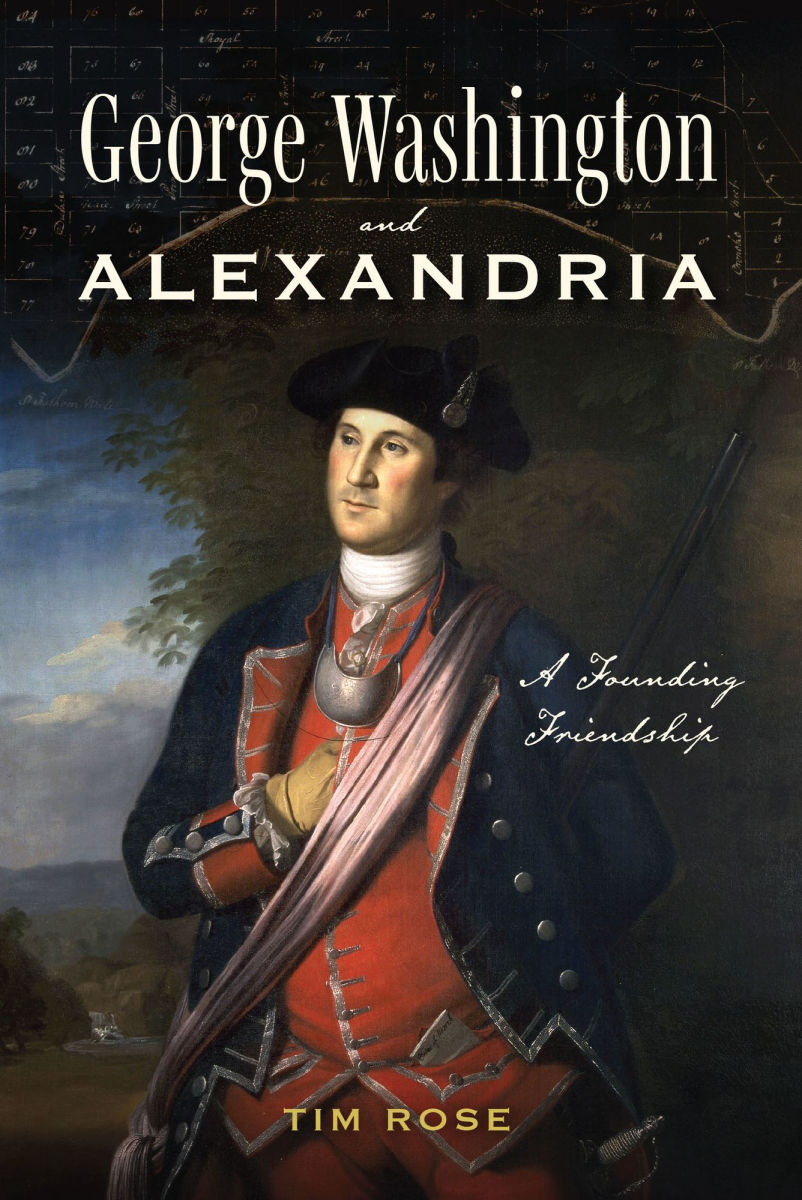
John Fitzgerald, an Irish Catholic immigrated to Alexandria in 1773. He became good friends with Washington and like many other Catholics, provided great service to Washington. For a time he served as an aide-de-camp to Washington.
Washington’s order read, in part, that “at such a juncture, and in such circumstances, to be insulting their religion is so monstrous, as not to be suffered or excused.” He called on his troops to remember that “we are contending for the rights of mankind” and that the cause required dignity and respect for all faiths. The general’s tone combined moral rebuke with strategic foresight. By discouraging Pope’s Day, he sought to replace narrow sectarian loyalties with a broader, inclusive patriotism.
This moment also reflects Washington’s character and leadership style. He understood the importance of discipline and order in an army composed largely of volunteers. The elimination of destructive, drunken celebrations helped reinforce his insistence on professionalism. But more importantly, Washington saw the American cause as grounded in universal principles of liberty and justice—principles incompatible with the kind of bigotry Pope’s Day embodied.
In retrospect, Washington’s handling of Guy Fawkes Day in 1775 stands as an early statement of religious tolerance in American political life. His decision to forbid anti-Catholic celebrations prefigured later American commitments to freedom of conscience and the separation of church and state. What might have seemed a minor disciplinary order was, in fact, a symbolic act of leadership: it transformed an old English custom of division into an American lesson in unity. Through it, Washington began to shape not just an army, but a nation.
Emerging Revolutionary War welcomes back guest historian Evan Portman
Most historians credit Ann Pamela Cunningham with kickstarting the historic preservation movement with her purchase of Mount Vernon in 1858. However, preservation of historic sites began long before the Mount Vernon Ladies’ Association. In fact, the storied walls of Fort Ticonderoga became the object of a preservation movement 38 years before the Ladies’ Association purchased George Washington’s ancestral home.
Fort Ticonderoga—known as the Gibraltar of North America—played an integral role in both the French and Indian War and the American Revolution. The fort was originally constructed by the French in 1755 on a portage known to the Iroquois as ticonderoga, meaning a “land between two waters.” Fort Carillon, as it was known to the French, stood strategically between Lake Champlain and Lake George, thereby controlling both the Hudson River Valley and St. Lawrence River Valley. On July 8, 1758, an outnumbered French army successfully defended the fort against British forces in the bloodiest battle of the French and Indian War.[1] However, the following year British General Jeffery Amherst captured the fort and renamed it Fort Ticonderoga.[2]
By the American Revolution, the fort had fallen into disrepair but was still guarded by a small British garrison. In 1775, it was the scene of one of the most famous dramas in American history. On May 10, Col. Benedict Arnold and Col. Ethan Allen led a combined force of the Green Mountain Boys and Massachusetts and Connecticut militiamen across Lake Champlain to capture the fort. “Come out you old Rat!” Allen famously cried to the fort’s commander, Capt. William Delaplace, and demanded he surrender the garrison “in the name of the Great Jehovah and the Continental Congress.”[3] Delaplace agreed, and Ticonderoga quickly fell into American hands.
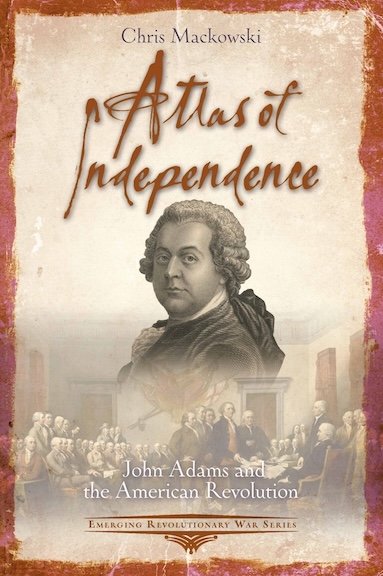
We’re excited to share a sneak-peak of our next upcoming title in the Emerging Revolutionary War Series, published by Savas Beatie:
About the Book:
“The man to whom the country is most indebted for the great measure of independence is Mr. John Adams…. I call him the Atlas of American independence.”
So attested one of the delegates to the Second Continental Congress, moved to support independence after months of angst, indecision, dithering, and fear. Thomas Jefferson called Adams “our colossus on the floor,” arguing with power, passion, and persuasive force of reason why America needed to take the extraordinary step to break from the British Empire and set up an independent nation.
Born of humble means outside Boston, Massachusetts, Adams’s work ethic led him to become one of the colony’s most successful attorneys. Yet he burned with a powerful ambition and yearned for more. “I never shall shine, till some animating Occasion calls forth all my Powers,” he fretted.
Festering tension in Boston with British soldiers and taxation and trade policies—tension that spread across all thirteen colonies—provided the occasion Adam longed for, and soon he found himself at the center of the storm, thrust onto the national stage where all his “Powers” transformed him into the intellectual architect of American independence. Perhaps more than any other American, he rose to the historical moment, urging his contemporaries into the unknown future.
But his efforts came at tremendous cost: long separations from his beloved children and “dearest friend” and wife, Abigail, who forged for herself a role as long-distance political counselor even as she managed affairs on the family farm in a way nearly unprecedented for 18th century America.
“The times alone have destined me to fame,” Adams wrote. Atlas of Independence: John Adams and the American Revolution offers a reader-friendly overview of Adams’s seminal role in that tumultuous Founding time.
About the Author:
Chris Mackowski, Ph.D., is a writing professor in St. Bonaventure University’s Jandoli School of Communication. He is the co-founder and editor-in-chief of Emerging Civil War and advisory editor for Emerging Revolutionary War.
He has written, co-written, or edited more than thirty books.
Join us for our next ERW Revelry on November 2 at 7 pm with author and historian Elizabeth Reese as we delve into her book, Marquis de Lafayette Returns: A Tour of America’s National Capital Region. Reese’s book explores the farewell tour of the beloved Revolutionary War hero, the Marquis de Lafayette, and his journey through Washington, D.C., Virginia, and Maryland during his grand return to the United States in 1824–1825.
In Marquis de Lafayette Returns, Reese traces Lafayette’s final visit to the young United States. Amid a contentious election season, Lafayette was embraced by Americans as a living link to the Revolution—a symbol of the ideals for which they strived.
Elizabeth Reese is a Maryland native who has spent more than a decade interpreting history at sites like Hamilton Grange National Memorial and the U.S. Capitol Visitor Center. Her writing has appeared in TIME, The New York Times, the Journal of the American Revolution, and her talks have been featured on C-SPAN. She currently serves as Senior Manager of Public Programs & Interpretation at Woodlawn & Pope-Leighey House and is completing her M.A. in American History from Gettysburg College.
This Revelry is pre-recorded and will be posted to our Facebook page at 7pm on November 2, 2025. It will then be posted to our Spotify and You Tube Channels.
War Without Mercy: Liberty or Death in the American Revolution by Mark Edward Lender and the late James Kirby Martin is an enlightening and innovative look at violence and norms during the American Revolution. The authors waste no time getting to the point: they want to know why the war reached a point in which seemingly boundless levels of violence were embraced by all sides without regard to emerging standards of international law nominally intended to govern the use of force in warfare, collectively referred to as jus in bello, a Latin phrase essentially referring to the legal conduct of a war or justice in war. (Jus ad bellum refers to the legality of initiating a war. Collectively, they are key components of just war theory. Lender and Martin focus on jus in bello, particularly as it refers to legal or moral constraints on violence.)
War Without Mercy lays out the basic concepts of jus in bello as it was understood in the late 18thcentury. While historians often attribute the origins of modern international law to Hugo Grotius, Lender and Martin take Emer de Vattel’s landmark 1758 work “The Law of Nations” as the baseline text relevant to the American Revolution. Vattel offered limits on the conduct of military operations, clearly delineating concepts such as combatants, non-combatants, and proportionality. In general, he tried to narrow the scope of war so that it remained the domain of organized governments and outside the domain of broader society. Elites on both sides of the Atlantic had often read Vattel’s work, or were at least familiar with the ideas it contained, and War Without Mercy demonstrates that many of them sought to honor its principles, for moral, professional, and practical reasons.
That said, Lender and Martin argue that violence committed outside of the purview of elite-led revolutionary governments and the Continental Army (usually) characterized the war. The vast majority of fighting during the American Revolution occurred in small battles, skirmishes, and raids that resembled mob and gang violence directed at people out of uniform more than organized martial conduct. In that context, it routinely violated concepts of jus in bello. In addition to outlining earlier studies making that case, War Without Mercy examines the war in New Jersey, the western theater, the New York frontier, and the south. While those regions saw significant battles or campaigns, the day-to-day war was fought between small units of militia or irregulars with an occasional admixture of regulars or Continentals. In each case, Lender and Martin examine the escalation of events over the course of the war and the reasons each side tended toward “existential warfare,” essentially, war to the death in which the alternative to victory was total destruction. Given such high stakes, any constraints on means were self-defeating. No combatants could run the risk of losing the war by being charitable towards their enemies. Outrage sparked outrage. Thus, violence escalated like a ratchet as each side retaliated for perceived wrongs. It was a possibility several prominent patriots recognized before the fighting began. Indeed, James Lovell predicted it in his 1771 speech commemorating the Boston Massacre. War Without Mercy attributes the beginning of the cycle to the rebels, who quickly turned to intimidation, the threat of violence, and outright violence to silence loyalists and establish local political control as British colonial government collapsed.
One chapter examines Benedict Arnold’s raid on New London, CT. Lender and Martin consider the offensive and the Battle of Groton Heights, as the assault on Fort Griswold defending the River Thames was known, in the context of jus in bello. In general, despite the destruction of New London and the bloody results at Fort Griswold, they find the raid consistent with Vattel’s law of war. As a major privateering base, New London made itself a legitimate target of war and Arnold strove to limit damage to private property that did not contribute to the American war effort. The bloodletting at Fort Griswold was more the result of the fog of war, weak command and control, and the natural challenges of suddenly attempting to restrain men in the midst of intense combat. The New London raid, however, does demonstrate the blurring of lines between combatant and non-combatant, legitimate and non-legitimate objects of military operations, under the doctrine of jus in bello, as the war progressed and intensified. Lender and Martin liken it to the difficult decisions facing RAF Bomber Command during World War II, when it shifted from ineffective attempts to bomb specific targets to area bombing.
War Without Mercy is a must read. Revolutionary War library shelves are rife with biographies, battle studies, and political narratives. Fewer books place the American Revolution in the wider study of warfare and its evolution. By considering the war in the context of emerging principles of jus in bello and the rapid escalation to existential warfare, Lender and Martin are bringing a new analytical perspective to the study of the American Revolution. It’s a vital interpretation of the war’s nature.