Revolution on the Ohio Frontier: Fort Laurens

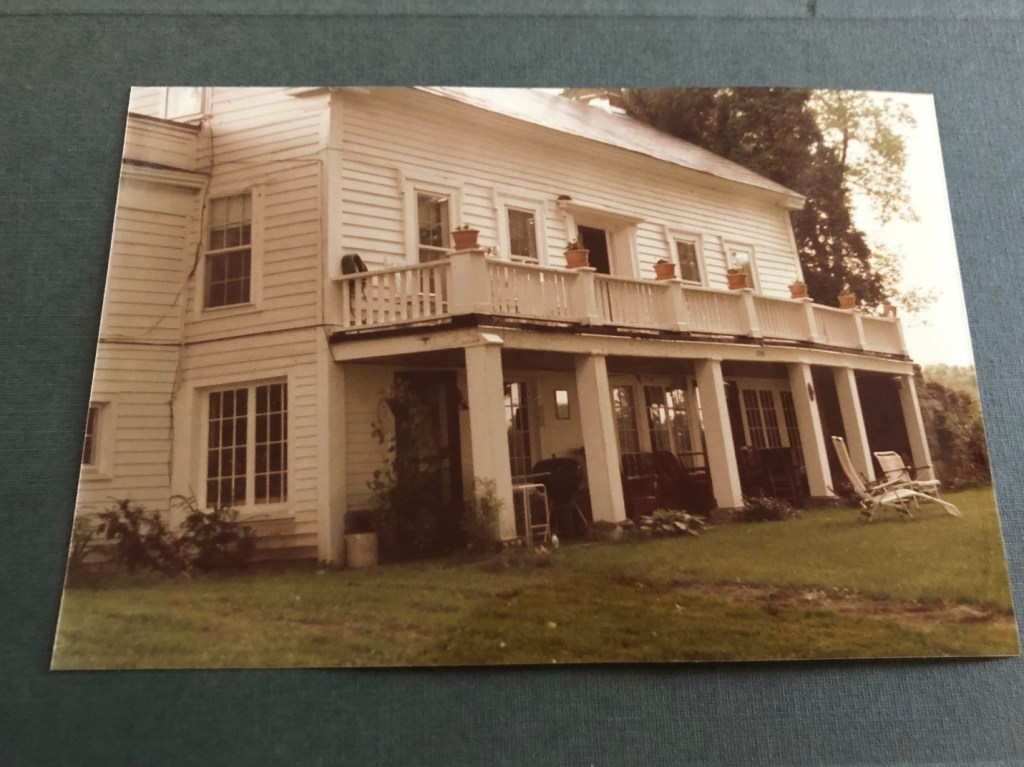
img_2465
The Museum at Fort Laurens, Ohio

For much of the American Revolution, the British waged war on their rebelling colonists in the Ohio River Valley via proxy, relying on western Indian nations (Shawnee, Wyandot, Mingo, Chippewa, Ottawa, and others) to attack isolated American settlements and villages across the Ohio River.  The Continental Congress, already unable to meet the needs of its own army along the coasts, could offer little in the way of assistance. So, frontier defense largely fell upon the local militia.  They adopted a two-pronged strategy: 1) build forts and blockhouses along the frontier, giving settlers a place of safe haven when Indian raiding parties were about, and 2) preemptive raids against Native American villages in an attempt to disrupt their preparations for raids against the settlers.

In 1777, however, Congress realized that more aggressive measures were required: the war would have to be carried against the heart of British power at Detroit, from where the British coordinated, supplied, and rewarded Native American raids. With that in mind, Congress and Continental authorities at Pittsburgh began planning an offensive to capture the British post between Lakes Huron and Erie.  First, they would need to secure the continued neutrality of the Delaware Indian nation in the Muskingum River Valley, which today is in Eastern Ohio. Second, they would need to build a substantial network of forts capable of sustaining an overland offensive. Building a new fort in Delaware territory would serve both goals.

Continue reading “Revolution on the Ohio Frontier: Fort Laurens”

“You shall be carried to the gaol of Fredericktown” (Part 2)

The first post in this series looked at the various prisons established in Frederick, Maryland to hold British, German, and Loyalist prisoners. We’ll wrap this up by examining a notorious trial that took place in 1781.

Perhaps the most well-known case involving Loyalist prisoners in Frederick occurred in the summer of 1781. By this point in the war, enthusiasm for the American cause was on the wane in many communities. Conscription and heavy taxation to support the war effort were unpopular, especially as there was little battlefield success to boost morale. British forces were campaigning deep in Virginia and the Carolinas, giving hope to local Loyalists. Some Loyalists chose to declare their allegiance publicly, leading to a number of short-lived “uprisings” against American rule.[i] The Council of Maryland got wind of one such conspiracy in June, 1781, when orders were given to the lieutenants of the Frederick and Washington County militias to arrest a number of “disaffected and Dangerous Persons whose going at Large may be detrimental to the State.”[ii] Among those singled out for arrest were “Henry Newcomer and Bleachy of Washington County and Fritchy, Kelly, and Tinckles of Frederick County.” All these men had been connected to a supposed plot to raise a group of armed Loyalists in western Maryland, free the prisoners of war in Frederick, and march to support Lord Cornwallis in Virginia.

The details of the plot were uncovered by Christian Orendorff, an enterprising militia captain from the vicinity of Sharpsburg, in Washington County. His neighbor, Henry Newcomber, had confided to him one night that “we have raised a body of men for the Service of the King” to be commanded by a “Dutch Man” from Frederick named Fritchey. Orendorff feigned sympathy with Newcomber’s cause and soon met with Caspar Fritchey, who revealed more of the plot to him – including names of some of his co-conspirators. Captain Orendorff sent word to the authorities, who acted quickly to break up the insurrection and round up the ringleaders. Although Orendorff claimed that the Loyalists had recruited 6,000 men, only seven were brought to trial.

Photo431930.jpgFrederick’s 1752 Courthouse as depicted on the 1858 Isaac Bond Map. The Courthouse burned in 1861 and was replaced the following year. The former courthouse now serves as city hall. (Library of Congress)

The seven men condemned to stand trial – Peter Sueman, Nicholas Andrews, John Graves, Yost Plecker, Adam Graves, Henry Shell, and Caspar Fritchie[iii] – were singled out as the leaders of the plot. All were brought to Frederick under a heavy guard while a special court convened. Thomas Sprigg, serving as Lieutenant of Washington County, wrote to the Council that “[they Acknowledge themselves to be Captains that they have Misted and Admin’d the Oath of Allegeance to many persons, one of them to the Amot of 42 they Confess very freely they say they expect and deserve to be hang’d, and I pray God they may not be disappoint’d…”[iv]

On June 17th, 1781 a special court of oyer and terminer was called. Derived from old English law, these special courts were overseen by a panel of commissioners, and typically presided over serious crimes like treason. Among the judges were the local militia commander Col. James Johnson, Alexander Hanson (son of President of the Continental Congress, John Hanson), and Upton Sheredine. All were men with staunch patriot sympathies. It wasn’t a surprise, then, that the trial was a short one. Relying primarily on Orendorff’s testimony, the court found all seven men guilty of treason against the state of Maryland. For the crime of enlisting men for the service of the King, Judge Hanson handed down a grisly punishment:

“You, Peter Sueman, Nicholas Andrews, Yost Plecker, Adam

Graves, Henry Shell, John George Graves, and Casper Fritchie,

and each of you, attend to your sentence. You shall be carried

to the gaol of Fredericktown, and be hanged therein; you shall

be cut down to the earth alive, and your entrails shall be taken

out and burnt while you are yet alive, your heads shall be cut off,

your body shall be divided into four parts, and your heads and

quarters shall be placed where his excellency the Governor

shall appoint. So Lord have mercy upon your poor souls.”[v]

Four of the accused – Andrews, Shell, and the Graves brothers – were subsequently pardoned due to their “want of education and experience.” It appears that the court saw them as young men duped by the real leaders of the plot. The other three men were not so lucky.

new courthouse.jpgThe former courthouse square in Frederick, near where the county jail once stood. It’s likely that the executions took place very near this location in August 1781. The large brick structure is the 1862 courthouse (now Frederick’s City Hall).

While the plot and trial are well documented, the aftermath is not. Later historians cannot agree on whether the entire sentence of hanging, drawing, and quartering was ever carried out, or if the three men were simply hung. On August 28, 1781 the Baltimore Advertiser simply reported that “On Friday the 17th instant, Caspar Fritichie, Peter Sueman, and Yost Plecker, suffered Death in Frederick Town for High Treason.” Many family stories that have been passed down in the area, however, firmly state that the full punishment was meted out on the unlucky Loyalists. Today the only physical reminder of this “First American Civil War” in Frederick is a simple bronze plaque and a small sign near the courthouse where the executions likely took place. The episode, however, still sheds light on the darker side of Maryland’s Revolutionary story.

[i] A perfect example was “Claypool’s Rebellion” on the Virginia frontier. In June 1781 John Claypool of Hampshire County, Virginia led a large body of men in resisting efforts to tax or raise troops for the State of Virginia. After dozens of men took up arms alongside Claypool a body of militia was sent to put down the “rebellion.” For more information visit https://secondvirginia.wordpress.com/2015/06/17/claypools-rebellion/

[ii] Journal and Correspondence of the Council of Maryland, 1780-1781. p 467

[iii] John Caspar Fritchie was the father-in-law of legendary Civil War heroine Barbara Fritchie

[iv] Journal and Correspondence of the Council of Maryland, 1781. p 298

[v] Scharf. P 143

Emerging Revolutionary War Series 2019 Releases

erws-logo

In 2018, the inaugural two volumes, of the Emerging Revolutionary War Series published by Savas Beatie, LLC. Those first two volumes were; A Single Blow, The Battles of Lexington and Concord and The Beginning of the American Revolution and Victory or Death, The Battles of Trenton and Princeton.

In 2019, the series is set to release the next two volumes. The Winter that Won the War, The Winter Encampment at Valley Forge, 1777-1778 and A Handsome Flogging, The Battle of Monmouth, June 28, 1778. This past week, the covers of both were released by Savas Beatie so get a sneak peak below.

Both titles are scheduled for a release later this year. Stay tuned for updates!

“You shall be carried to the gaol of Fredericktown” (Part 1)

In the western Maryland city of Frederick there is an innocuous looking brick building that stands in the historic downtown. The non-descript 20th century structure, near the corner of Market and 2nd Streets, is easily overlooked in a city full of stately Federal and Victorian-era homes. A closer look, however, gives a few tantalizing details of Frederick’s Revolutionary War past. A bronze plaque bears the following inscription:

tory gaol

(Photo by Craig Swaim/HMDB.org)

Former Site of Tory Gaol

 A log jailhouse (gaol),
built to house
British prisoners or Tories,
stood on this site in June, 1776.
The tiny two story gaol
was 30 feet long and 20 wide.
The six-room facility
held prisoners throughout the
Revolutionary War.
Converted to a stable
after the war,
the building stood until 1846.

At the start of the American Revolution Frederick was a prosperous market town, ideally situated in the fertile Monocacy River Valley. Roads radiated out in nearly every direction, connecting the growing town to major seaports like Baltimore and Georgetown, Maryland as well as frontier outposts like Cumberland, Maryland and Winchester, Virginia. Nearby farmland attracted settlers throughout the mid-eighteenth century, particularly German immigrants travelling south from neighboring Pennsylvania.[i] By 1745 a town had been laid out which served as the county seat for the entirety of western Maryland.

When war began in 1775 the people of Frederick were among the first in Maryland to join the patriot cause. Two companies of riflemen were raised in Frederick County in the summer of 1775, and departed Frederick for Boston on July 18th. Marching along with companies of Virginia they reached their destination in only 22 days, becoming the first southern troops to join the New Englanders besieging Boston.[ii]

Although support for war with Britain reached a fever pitch in the summer of 1775, some Fredericktonians still held out for reconciliation or even sought open collaboration with the British. In a scene that would be repeated in countless communities throughout the colonies, these Loyalists would suffer for their political convictions. In November 1775 a Pennsylvania-born Loyalist named John Connolly was stopped as he travelled through Frederick County with some Scottish associates. He was detained near Elizabethtown (modern Hagerstown) while the local Committee of Safety rifled through his belongings, and the search soon turned up incriminating evidence. Connolly was on his way through Maryland with hidden papers, including a commission from Lord Dunmore – then the Royal Governor of Virginia – to raise a regiment of natives and frontiersmen to harass the western settlements.[iii]  George Mason wrote to General Washington, describing the plot:

” Majr Connelly was taken above Frederick Town in Maryland, in his way to the Indian Country and with him a Doctr Smith from Charles County & one Cameron, they are all now fast by the heels in the Goal of Frederick Town. Connelly we are told, had with him a Commission from Genl Gage to raise a number of Indians, & with them to penetrate, thro the Country towards Alexandria, in the spring, where he would be met by Lord Dunmore. Commissions for the other two were to be furnished hereafter.”[iv]

The hapless Loyalist and his would-be conspirators were detained in Frederick before eventually being sent on to Philadelphia.

Concern over Loyalist plots like Connolly’s was such that in December 1775 the Maryland Convention authorized £200 for the construction of a jail specifically for confining Loyalists. Located on 2nd Street, the building consisted of “a strong log jail…thirty feet long, twenty broad, to be lined with two-inch planks, two stories, with split logs and plank floors, the upper story divided into three rooms, with a stove in each.”[v] Construction was completed in May of the following year, and almost immediately prisoners were brought there for incarceration. The first group of “tories” imprisoned in Frederick were from North Carolina, but more quickly followed.[vi] By the summer of 1776 there were 27 Loyalist and British prisoners being held in Frederick’s “Tory Gaol” – so many that it was considered “a dreadful place…to be confined in, and so crowded at present that we fear it may be dangerous to their health.”[vii] Prisoners were transferred to the county jail opposite the courthouse in an attempt to relieve the overcrowding.

runaway ad

Advertisement for Loyalists who escaped the jail in Frederick on September 23, 1776 (Maryland Gazette. October 3, 1776)

            As the war dragged on, Frederick continued to house an ever growing number of prisoners. In large part this was due to the town’s location far enough from the main theaters of the war to be relatively secure, but also centrally located between north and south. A group of more than 100 prisoners captured at Saratoga arrived in Frederick in December 1777 and were temporarily confined in the county jail while permanent quarters were being erected at forty miles to the west at Fort Frederick. On Christmas day these disgruntled British and German POWs set the jailhouse on fire and attempted to escape in the ensuing chaos but were gradually beaten back by guards under the command of Lt. William Beatty.[viii] The failed jail breakers were rounded up and sent to the Tory Gaol, where they stayed under the threat of execution if they attempted another escape.

The issue of prison overcrowding was partially resolved in 1781 with the completion of the Frederick Barracks. Begun in 1777, the large stone buildings were designed to house Maryland volunteers, but they were soon put to use holding German prisoners. As a result the buildings – one of which still stands today – earned the lasting sobriquet “Hessian Barracks”.[ix]

barracks

The so-called “Hessian Barracks” on the south side of Frederick. Built between 1777 and 1781 to house American soldiers, they were used to house British and German prisoners during the Revolutionary War. Prisoners from the Quasi War and War of 1812 were also held here. Later they served as a barracks and hospital during the Civil War. The existing structure is currently owned by the Maryland School for the Deaf. (Library of Congress)

In the next installment, we’ll take a look at the most infamous Loyalist plot to be uncovered in Maryland during the war and the trial that resulted…


[i] Tracey, Grace and Dern, John. Pioneers of Old Monocacy: The Early Settlement of Frederick County, Maryland, 1721-1743.

[ii] Scharf, Thomas. History of Western Maryland. pp 130-131.

[iii] Connolly, John. “A Narrative of the Transactions, Imprisonment, and Sufferings of John Connolly, an American Loyalist and Lieut. Col. in His Majesty’s Service” The Pennsylvania Magazine of History and Biography

Vol. 12, No. 3 (Oct., 1888), pp 310-324

[iv] Journal and Correspondence of the Maryland Council of Safety, August 29, 1775 to July 6, 1776. p 93

[v] Scharf. p 138

[vi] Steiner, Bernard. Western Maryland in the Revolution. pp 34-35.

[vii] Ibid. p 35

[viii] Scharf. p 141.

[ix] Maryland Historical Trust. https://mht.maryland.gov/nr/NRDetail.aspx?NRID=46

An Interesting “What If?” Question: Benedict Arnold and the Monmouth Campaign

So recently I have been working on a Monmouth Court House project. Last night an alternate scenario popped into my head. I wanted to ask you, the readers, your opinion. During the spring of 1778, what if Charles Lee, recently exchanged from a year and a half imprisonment, had been appointed as military governor of Philadelphia instead of Benedict Arnold? What if Arnold had then been ordered to join Washington’s army? He obviously would have never gotten the chance to fall in love with Peggy Shippen (we know what happened next), but his widely known aggressiveness and leadership capabilities also could have played a significant role in the upcoming Monmouth Campaign. What do you think may have happened? Would Arnold have influenced Washington’s decision making? Could he have potentially commanded the Continental Army’s vanguard that opened the fighting at Monmouth like Lee did? How would he have behaved if he once again commanded American troops in the field? This is all counterfactual history, of course, but just something to have fun with and think about.


Coryell’s Ferry: Site of Another Important Delaware River Crossing, June 1778

While visiting home in New Jersey this past week I was able to travel to many different sites associated with the Monmouth Campaign of June 1778. One of those sites in particular was Coryell’s Ferry (or Landing), which straddled the Delaware River in present-day New Hope, Pennsylvania and Lambertville, New Jersey.

coryell's landing
Ferry Landing Park in New Hope, PA. The site of Coryell’s Ferry.

France’s official entrance into the war on the Americans’ side in early 1778 forced the British to alter their overall military strategy. His Majesty’s Forces began withdrawing from the American interior and were consolidated along the coast between New York City and Newport, Rhode Island. From there, reinforcements were ordered to be dispatched to Florida and the Caribbean to counter France’s impending threat in that region. Philadelphia, which had been occupied since the previous September, was deemed unnecessary to hold any longer. By June 17, 1778, British Lt. Gen. Henry Clinton’s army of over 20,000 men had crossed the Delaware at Cooper’s Ferry (present-day Camden, New Jersey) and was marching northeast towards New York City.

Three days later the Continental Army was in full pursuit with Washington’s advanced column being led across the river by Maj. Gen. Charles Lee at Coryell’s Ferry (some thirty miles northeast of Philadelphia). By June 22, Washington and the last elements of his army were in New Jersey as well. What exactly was to happen next was not yet known. Clinton could either transport his army to New York City via South Amboy or from Sandy Hook. Until it could be discerned what the British general’s intentions were, Washington planned to “govern ourselves according to circumstances.” In six days the two armies would collide in desperate battle near the small village of Monmouth Court House.

coryell's landing 2
Lambertville, NJ from the Pennsylvania side of the Delaware River. The Continental Army crossed here between June 20-22, 1778.


Book Review: One if by Land, Two if by Submarine, by Eileen Schnabel

erw-book-reviews-11

A few months ago, author Eileen Schnabel sent us her young adult novel, “One if by Land, Two if by Submarine” for a gander.  Not being specialists in middle school fiction, we turned to an expert, my 13-year old daughter, Abigail, who is a voracious reader and read the novel over the holiday break.   Here is her review:

Abigail Sterner, Book Review of Eileen Schnabel, One if by Land, Two if by Submarine, (Reston, VA: Curiosity Quills Press, 2018), Digital Edition.

One if by Land, Two if by Submarine, by Eileen Schnabel, is a perfect blend of historical and science fiction. The story centers around Kep, a 13-year-old boy who enjoys swimming. He and his genius, history-obsessed younger brother Max, go to a Revolutionary War reenactment camp for a competition with a grand prize of $200 dollars. It isn’t clear exactly what the competition involves, but it serves the purpose of bringing several main characters together into a team.  The team starts out with Max and Kep. They are later joined by the daughter-of-a-Senator-turned-animal-rights-activist named Tella. The fourth and final member of the team is an aspiring actor named T.J. During the competition, the four discover that they must travel back in time to prevent someone from foiling the famous ride of Paul Revere.  Thus, the kids have to save the American Revolution before it can even begin.

Continue reading “Book Review: One if by Land, Two if by Submarine, by Eileen Schnabel”

The Battle of the Kegs (January 5th, 1778)

Francis Hopkinson
Francis Hopkinson, Signer of the Declaration and Satirical Lyricist

The Philadelphia Campaign did not end well for the Continental Army after three separate defeats at Brandywine, Paoli, and Germantown followed by the British occupation of the new nation’s capital.   Among other things, however, it would produce an amusing little ditty commemorating an attack on the British on January 5, 1778 for American audiences eager to poke fun at the British.

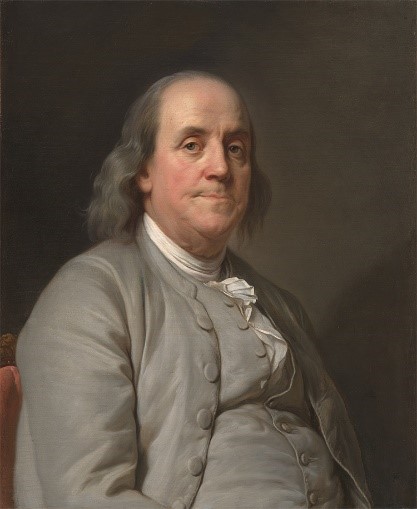
When informed that the British had occupied his adopted hometown, Benjamin Franklin reportedly waved off his concern and replied, “No, Philadelphia has captured Howe.”[i]  Franklin was more militarily astute than many politicians observing the war.  When his army captured Continue reading “The Battle of the Kegs (January 5th, 1778)”

Inspiring Books of the American Revolutionary War Era

The start of a new year seems to be coupled with new resolutions and fresh beginnings, naturally. If your list includes looking for that one book to start 2019 with or looking to dive into the American Revolutionary Era with a reading list or you were casting around to settle on a new interest to begin the year with, Emerging Revolutionary War has you covered!

With 2018 coming to a close, Emerging Revolutionary War asked its cadre of historians to share their answers to the following question;

“What was the one book that most influenced you and sparked your interest in this time period of history?”

Their answers are below! Continue reading “Inspiring Books of the American Revolutionary War Era”

Victory or Death

1leutze
Washington Crossing the Delaware, by Emanuel Gottlieb Leutze.  Washington had crossed the Delaware River on the night of December 25 to attack Trenton. (The Metropolitan Museum of Art)

Early on the morning of December 26, 1776, George Washington and his 2,400 man army went running into the Hessian occupied village of Trenton, New Jersey.  It was snowing hard that morning and the one American soldier recalled that “we advanced, and although there was not more than one bayonet to five men, orders were given to ‘Charge bayonets and rush on!’ And rush on we did.” Continue reading “Victory or Death”