A Title

asb

When writing a book, one of the most important initial aspects is picking a title. The author needs one that is expressive, attracts attention, but has some overall tie-in that provides a fitting capture of the essence of the book.

One of the advantages of writing history is the use of quotes. Let the participants, combatants, or witnesses of the event provide the context for a title. When one resonates, go with it!

With the recent publication, the co-author, Robert Orrison and myself bounced various potential titles off each other. Then we had a list of our favorites included in the initial information sheet sent to Ted Savas, of Savas Beatie, LLC, the publisher. Yet, one continued to stand out, as it was written in a diary by a British junior officer slightly more than a month before the Battles of Lexington and Concord.


The entire inscription is below:

“It is certain both sides were ripe for it, and a single blow would have occasioned the commencement of hostilities.” —Lieutenant Frederick Mackenzie, Royal Welch Fusiliers, March 6, 1775.

Mackenzie’s uncanny foresight predicted the exact outcome of the fighting that erupted on April 19, 1775. With casualties suffered by both sides, the war of words and near-misses became a war of shot and shell.

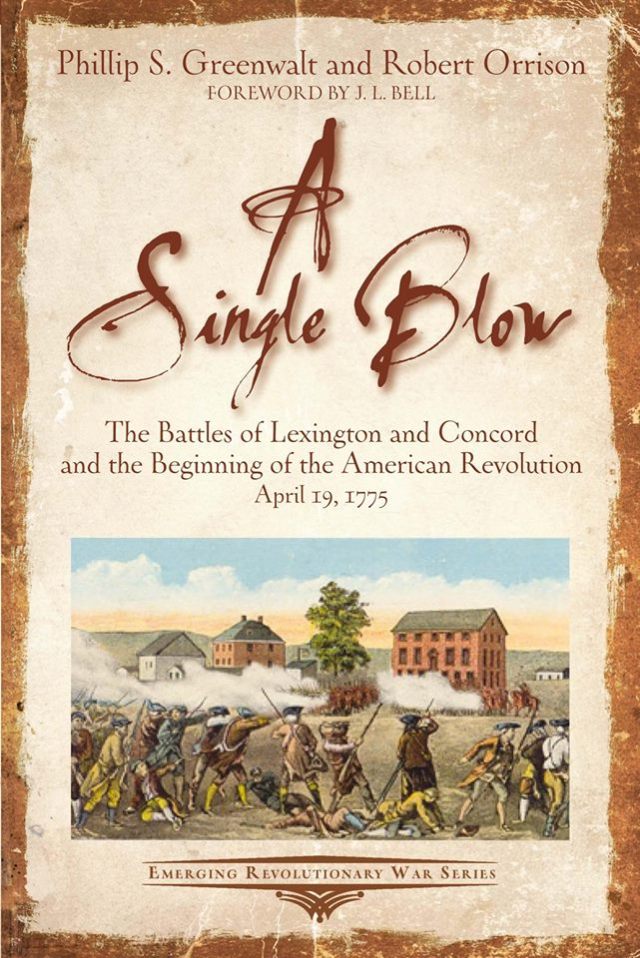
Hostilities had commenced and we had a title. A Single Blow: The Battles of Lexington and Concord and the The Beginning of the American Revolution. 


Chief Cornstalk’s American Revolution (part one)

Chief Cornstalk (Wikimedia Commons).jpg

Chief Cornstalk after an 1870 rendering (Wikimedia Commons)

The American Revolution on the frontier was brutal.  Neutrality was difficult position to maintain, but some Native American tribes attempted it.  In the Ohio River Valley, it was particularly challenging.  But, for a time the Shawnee and Delaware tribes in modern-day Ohio sought to navigate their way between British power in Detroit and the Americans in Pittsburgh.  Chief Hokoleskwa, known as Cornstalk among the whites, was a leader of the pro-peace factions of the Shawnee.  Unfortunately, it got him killed. Continue reading “Chief Cornstalk’s American Revolution (part one)”

The Carlyle House Congress and Britain’s Military Objectives for 1755

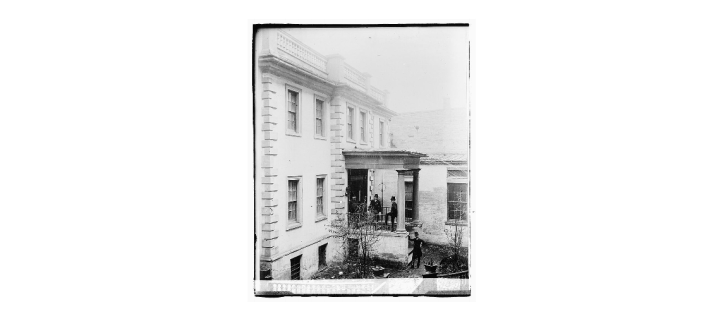
The campaigns of 1755 began when Britain’s ranking military leaders in North America met in Alexandria, Virginia with the colonial royal governors of Maryland, Massachusetts, New York, Pennsylvania, and Virginia, at the home of prominent Ohio Company member, John Carlyle. On April 14-15, 1755, in what became known as the “Carlyle House Congress,” the newly minted commander in chief of His Majesty’s Forces in North America, Major General Edward Braddock, presented London’s military objectives for that coming spring and summer. The Crown’s strategy, on paper, was simple: capture and hold key French fortifications within the boundaries of New York, Nova Scotia, and Pennsylvania before the enemy could concentrate his strength. This plan was intended to oust the French from His Majesty’s colonial possessions on the continent before a large-scale conflict could commence.

Carlyle House
The John Carlyle House, c. 1918-1920, Library of Congress.

The task of subduing the French, Canadians, and their Native American auxiliaries in these regions fell upon a mixed contingent of British Regular soldiers, colonial provincial troops, and British-allied Native American warriors. How each group would be utilized depended upon how the respective expeditionary field commander chose to execute his orders by moving, supplying, and fighting his men. Continue reading “The Carlyle House Congress and Britain’s Military Objectives for 1755”

Winning the Battles and Losing the War: A Review of Whispers Across the Atlantick: General William Howe and the American Revolution, by David Smith

General William Howe Color (Wikimedia Commons).jpeg

(William Howe, Wikimedia Commons)

David Smith, Whispers Across the Atlantick: General William Howe and the American Revolution, (NY: Osprey Publishing, 2017).

If it’s true that George Washington lost all his battles, but won the war, then it’s equally true that Sir William Howe won all his battles and lost the war.  Of course, neither premise is accurate, but they pithily sum up the conventional interpretation of each commander’s accomplishments on the battlefield, wrong as they may be.  Washington’s role as Commander-in-Chief has come under increased scrutiny as Americans revisit their history.  His chief adversary, however, Sir William Howe, has largely escaped focused study.  David Smith set out to rectify that shortfall in his doctoral dissertation, which became the basis of Whispers Across the Atlantick.  Historians should thank him for it.  Continue reading “Winning the Battles and Losing the War: A Review of Whispers Across the Atlantick: General William Howe and the American Revolution, by David Smith”

Dr. Prescott, Love & War

Love brought Dr. Samuel Prescott, a practicing physician, to the town of Lexington on the night of April 18, 1775. The young doctor was courting Ms. Lydia Mulliken, when the alarm of the British soldiers marching from Boston went out to the local militia. Lydia’s brother was one of those called to gather.

Love. That emotion also drew Dr. Prescott back toward his hometown of Concord—this time to alert friends, neighbors, and family members of the urgent news of the evening. En route, Dr. Prescott along with Paul Revere and William Dawes, alerted the countryside of the moving British troops. After being vetted and vouchsafed as a true friend of liberty, Dr. Prescott rode posthaste to his hometown, where his word carried greater weight.

paul_revere
A artist’s interpretation of Paul Revere’s (or maybe William Dawes or Dr. Samuel Prescott)’s ride to warn the Massachusetts countryside. (courtesy of VFW)

Continue reading “Dr. Prescott, Love & War”

Hugh Mercer’s Last Companion

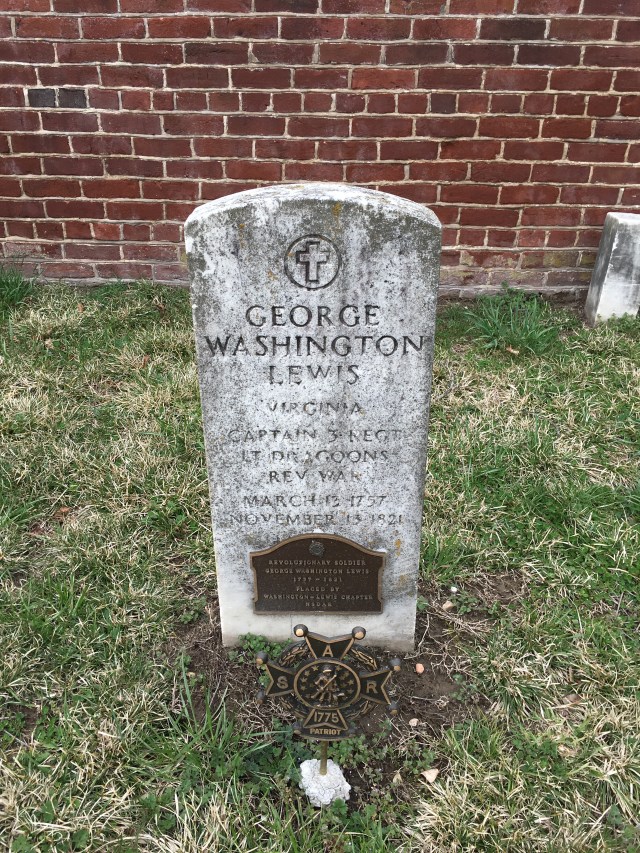
While walking through the Willis cemetery, located at the top of Marye’s Heights in Fredericksburg, Virginia, I encountered the grave of an American patriot from the Revolutionary War, George Washington Lewis.  Lewis, as it turns out was George Washington’s nephew and played a role in the Trenton-Princeton campaign in 1776 and 1777.

18AD352B-DF01-44F8-8550-D72A8914935D
A relatively modern stone marks the location of George Lewis’ grave in the Willis cemetery on Marye’s Heights. (Author photo)

Continue reading “Hugh Mercer’s Last Companion”

“Acts of a Rude Rabble…” General Gage, Lord Dartmouth and Ignorant Orders

Thomas_Gage_John_Singleton_Copley
General Thomas Gage

When one studies British General Thomas Gage and his performance leading up to Lexington and Concord you must step back and put yourself in Gage’s position. A man that believed not only in Royal authority over the American colonies, but also in the basic rules of law. Gage was not anti-American by any means.


In November 1763, Gage was placed in overall command of British forces in the American colonies and settles in New York. At this time Gage was well respected by most American colonists. Of course, this all changed in 1774 when Gage was sent north to Boston to become the Royal-appointed Governor of Massachusetts and enforce the highly unpopular Port Bill that closed the port of Boston among other harsh actions. He was walking into a situation that most historians today argue was a no-win situation. Continue reading ““Acts of a Rude Rabble…” General Gage, Lord Dartmouth and Ignorant Orders”

ERW at Patriots Day Weekend 2018!

800px-Cary_Memorial_Library,_Lexington_MA
Cary Memorial Library in Lexington, MA

We look forward to our time in Lexington, Concord and Boston on Patriots Day Weekend 2018! We will be at the Cary Memorial Library in Lexington on Sunday, April 15th at 1:30pm. We will also be posting FB live videos throughout the weekend…stay tuned!


Meet the Author event

​Sunday April 15th, 1:30 PM
Cary Memorial Library

Historians Phillip Greenwalt and Robert Orrison launch their new book “A Single Blow: The Battles of Lexington and Concord and the Beginning of the American Revolution, April 19, 1775” with a presentation, Q & A, and book signing event. This book, the first in a new Revolutionary War series, uncovers the amazing history that this pivotal spring day ushered in for the fate of Massachusetts and thirteen of Great Britain’s North American colonies. The event is co-sponsored by the Lexington Visitors Center, Cary Memorial Library, and Lexington Historical Society28468420_10155304839444327_325033352871924612_n

Two Riders….Gage Gathers Information

As British General Thomas Gage and his American Whig (or Patriot) antagonists squared off in Boston and the surrounding towns, information gathering became the key to success. Both sides had created networks of spies, but the advantage was clearly in favor of the Whigs. During the winter 1774-1775, groups such as the Sons of Liberty had established a complex spy network within Boston comprised of a system of riders that spread information and “alarms’ quickly. The Committee of Safety and the Massachusetts Provincial Congress relied on this network to stay informed of what was going on in Boston and the British intentions. Continue reading “Two Riders….Gage Gathers Information”

Seeing Jefferson Anew: A Review of Jefferson’s Body: A Corporeal Biography, by Maurizio Valsania

erw-book-reviews-11

Maurizio Valsania, Jefferson’s Body: A Corporeal Biography

University of Virginia Press, 2017.

265 pages, endnotes, bibliography, index.


After reading about Thomas Jefferson for over thirty years, I was beginning to wonder if anything new could be said about the man from Monticello.  That query has been answered in the affirmative by University of Torino, Italy, Professor Maurizio Valsania, who gives us an earthy and unique biography of Jefferson focused on his body.

Valsania’s fascinating work is an interdisciplinary study which borrows from physical and cultural anthropology, anatomy and psychology, which measures Jefferson’s corporality as a way of understanding his life.  Broken into two main parts: the self and the other, the author examines how Jefferson was constructed, biologically, and how he constructed  himself before moving on to consider how the sage of Monticello used these to make sense of the other – most notably Native Americans, African Americans and women.

In Valsania’s book we find a “mild, harmonious, flexible, engaging, maybe also “feminine” [man;]…Jefferson had an unconventional corporeality.”[i]  Described as refined, retiring, soft and mild mannered, Jefferson exhibited a natural simplicity.  But, as Valsania explained, “Jefferson, like many others who sought to perform “simplicity,” relied heavily on the worship of naturalness.  Impossible to hide is the fact that “natural” in the period could simultaneously mean something good and something bad; nature had to be emulated and defeated as the same time.”[ii] Continue reading “Seeing Jefferson Anew: A Review of Jefferson’s Body: A Corporeal Biography, by Maurizio Valsania”