

The campaigns of 1755 began when Britain’s ranking military leaders in North America met in Alexandria, Virginia with the colonial royal governors of Maryland, Massachusetts, New York, Pennsylvania, and Virginia, at the home of prominent Ohio Company member, John Carlyle. On April 14-15, 1755, in what became known as the “Carlyle House Congress,” the newly minted commander in chief of His Majesty’s Forces in North America, Major General Edward Braddock, presented London’s military objectives for that coming spring and summer. The Crown’s strategy, on paper, was simple: capture and hold key French fortifications within the boundaries of New York, Nova Scotia, and Pennsylvania before the enemy could concentrate his strength. This plan was intended to oust the French from His Majesty’s colonial possessions on the continent before a large-scale conflict could commence.
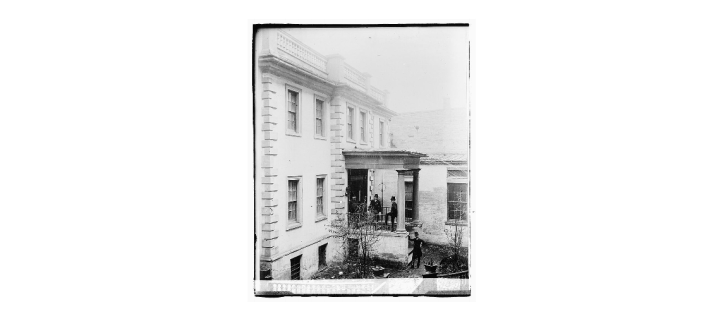
The task of subduing the French, Canadians, and their Native American auxiliaries in these regions fell upon a mixed contingent of British Regular soldiers, colonial provincial troops, and British-allied Native American warriors. How each group would be utilized depended upon how the respective expeditionary field commander chose to execute his orders by moving, supplying, and fighting his men. Continue reading “The Carlyle House Congress and Britain’s Military Objectives for 1755”







 Emerging Revolutionary War Era