ERW Weekender: Museum of the American Revolution

On April 19, 2017, symbolic in American Revolutionary War history, the Museum of the American Revolution opened in Philadelphia, Pennsylvania. The weekend before, I had the chance, to get a “sneak peak” of the new museum.

IMG_1670
Museum of the American Revolution

I left thoroughly impressed as the museum fills in a critical need for telling this utmost important era in our nation’s history. Yet, the development of exhibits along with the myriad of learning styles and technology underscores the need in this 21st century to be approachable and inclusive to reach various levels of interest that the visitor may have.

Greeting visitors as they approach are a few murals depicting well-known scenes of the American Revolution–including the symbolic “Crossing of the Delaware” and the “Signing of the Declaration of the Declaration.” Along with one of the most important sections of the Declaration of Independence.IMG_1651 (1)

After entering the museum the exhibit area is on the second floor, beginning with the build-up to the war and ending with a nod to the upholding of the revolutionary ideals. Broken up into four segments, the exhibits cover the period of the “Road to Independence” from 1760-1775, “The Darkest Hour” 1776-1778, “A Revolutionary War” 1778-1783, and ending with “A New Nation” 1783 to present-day. A must-see is the short 15-minute film that is centered on George Washington’s command tent, which is shown behind the screen at the conclusion of the film.

Yet, do not shirk the exhibits, which include the a portion of the last remaining “Liberty Tree” from Annapolis, Maryland that fell during a hurricane a few years back. Small movie theaters dot the exhibit area depicting different aspects of the war and history. The Oneida Native Americans, the first allies of the United States are also prominently–and rightfully–highlighted as to their contributions.

IMG_1661Another of the interesting components of the museum is the use of interpretive questions, including “Why were they called Hessians?” with an accompanying multi-dimensional map that shows the different German principalities that contributed troops to the British war effort. Another interesting panel discusses the first use of acronym “USA.”

The museum’s display collection of artifacts is also truly amazing. From a few of the first flags carried by units in the war, to the aforementioned “Liberty Tree”, to a portion of the famous North Bridge, in Concord, Massachusetts.

Combined with the interactive displays, the chance to walk onto a privateer ship, and the assortment of artifacts on display, the museum exhibit area caters to all levels of enthusiasts and can definitely absorb a few hours of your time.

IMG_1653
North Bridge segment

With the museum main attractions situated on the second floor, the first floor of the museum is free to house the orientation film, a cafe, and the gift shop. If you have never been to Philadelphia, the museum is another highlight to add to your bucket list itinerary. If you have ventured to the “City of Brotherly Love” before, the museum provides an excellent reason to journey back.

For information on the museum, including programs, exhibits, and the admission fee, click here.

#Alarmed

A special thanks to Stacey Fraser at the Lexington Historical Society for the update on the new exhibit described below.

If one asked what a buzzword for 21st century communication would be today, what would be your answer?

Text? Tweet? Snap?

exhibit-poster_1_orig
(courtesy of Lexington Historical Society) 

What if the follow up question was that some of the same buzzwords of the 21st century could describe the 18th century? Thanks to the Lexington Historical Society at Buckman Tavern, you can see the similarities yourself.

Opening on April 8th, the interactive exhibit is part of the admission ticket to the tavern. Titled #Alarmed! 18th Century Social Media “explores how news went viral  250 years ago” in addition to letting “visitors  imagine how colonials might have made use of modern media tools to kick start a revolution. Continue reading “#Alarmed”

April 19th Memories from Lexington

Leading up to the anniversary of April 19, 1775, we will be sharing some short remembrances from a few people who are from Lexington and Concord. This installment is by Rich Gillespie, a native of Lexington, Massachusetts.

If you live in Lexington, Massachusetts, the beginning of the American Revolution is an essential piece of life. The Minuteman statue dominates the center of town, the village green where the Alarm List stood to face the Regulars is much as it once was, the Town Seal seen on your friendly snowplow quotes Sam Adams’ comment to John Hancock upon hearing the firing—“Oh, What a glorious morning for America!”, and the high school’s team is predictably the Minutemen.  The British marched to and from Concord within 150 yards of my 4th grade classroom, and the spring field trip was to the key sites of Lexington and Concord.  My first job (as was my sister’s) was guiding visitors on Lexington Green.

Hip-hip Huzzah-Haughty British troops leave Lexington
(author collection)

Continue reading “April 19th Memories from Lexington”

Remembering Patriots Day

Leading up to the anniversary of April 19, 1775, we will be sharing some short remembrances from a few people who are from Lexington and Concord. Our first installment is by Alex Merenyi. Alex grew up in Lexington and moved to the Washington, DC area to attend college. He shares with us how he looks back on Patriots Day..

Patriots’ Day was always weird for me growing up.

Lexington’s Tourist Season would begin with a bang on Patriots Day – one specific bang, at 5:36-ish in the morning a Monday  – and carry through until the snow would scare the tour busses back home for the winter. (Ironically, it meant that the foot and a half of standing snow made getting around a lot easier.) It wasn’t until I moved to DC that I realized nobody else knew what Patriots Day was.

What it was for us, in addition to being of the part of the year where tour busses blocked off the best way to Starbucks, was two discrete parts; the historical, which was the reenactment of the Battle of Lexington; and the festival, which was that the center was shut down for a carnival-like opening of the tourist season. (There was also a 5k, which I remember my Father running once. It always seemed odd that they’d run a race that day through the heart of town, but so it went.)

You couldn’t live in Lexington and not know about The Reenactment. Every year, on the third Monday in April, a bunch of Americans would stand up to the Regulars and be cut down in a single volley of fire. I went once, when I was young enough to ride on my Father’s shoulders, and watched my dentist and his friends get shot on the Battle Green. Two minutes later we began walking home, wanting to beat the crowds that had gathered there. A second volley of fire went off, and I remember asking my Dad if that meant the British had shot the wives that ran out to their fallen husbands. (He explained they fired to clear their rifles. I was maybe seven – by this point, ‘The British Were Evil” was pretty engrained; I remained suspicious.) All told, it took us longer to walk to and from the event than watch it. Even as a kid, I had to ask myself what all the fuss was about – a fifteen minute re-enactment of, let’s call it what it is – the first American defeat – seemed rather odd.

I mention my dentist not just as an anecdote, but to illustrate how deeply The Reenactment went – the men and women who would come together at the pre-dawn hours in April and fall over, year after year, were celebrities in Lexington. It was all over my dentist’s office, photos of him marching in the 4th of July parades, scenes of him at the then-standing Foxboro Stadium firing a musket for the other Patriots’ having scored. (Back in the pre-Brady days, those were fewer and further between). Schools would give extra credit for interviewing reenactors, and of course, every student had the requisite “Go to the re-enactment and write a paper on how important it is.” As a child growing up in Lexington, it had an aura effect that made all of the rest of American History seem rather… well, underwhelming – nobody was making a huge fuss about re-enacting the signing of the Constitution. (Adding to that of course was that my Mother is quite British; her answer to my asking about how the Battle of Lexington was covered for her in school? “It wasn’t.”) Until I left Lexington, I never really appreciated why all the fuss was made about The Reenactment, or why these few people were given such a disproportionate amount of attention; It was more than just “this is a thing that we do once a year”, it was a recognition of something that nobody ever dared point out:

“If it weren’t for these guys, Lexington wouldn’t be on the map.”


Gage Finally Acts, Patriots Respond

Thomas_Gage_John_Singleton_Copley
Thomas Gage, by John Singleton Copley 

Finally, Gage put his plan into motion. The previous excursions taught him that this needed to be a quick strike, and secrecy was essential. Gage planned on a mixed force of elite Grenadiers and Light Infantry, picked from the several regiments in Boston. The Grenadiers were known to be fearless fighters and of big stock. While the Light Infantry tended to be smaller, they were less equipped so they could move fast. Both types of infantry were considered some of the most trained and effective troops. One possible problem was that these companies never served together since they were pulled from their various regiments. This could cause command issues if forced into combat. In command of these nearly 700 men, Gage placed Lt. Col. Francis Smith. Smith, a senior officer in the 10th Regiment of Foot, was chosen because he was cautious, prudent, and would not act rashly. Gage knew this was a precarious mission and wanted a level-headed man in command. Smith, one of the more overweight officers in Gage’s command, was not a dynamic leader. His ability to be flexible and think on the fly was questionable. Smith’s second in command was Maj. John Pitcairn of the Royal Marines. Pitcairn was considered a sharp officer and actually respected by many in Boston, even the Patriots.


Gage’s orders to Smith were direct. He was to march to Concord “with the utmost

Smith
Lt. Col. Francis Smith by Francis Cotes

expedition and secrecy to Concord, where you will seize and destroy all the artillery, ammunition, provisions, tents, small arms and all military stores whatever.” Gage also wanted to be sure the soldiers respected private property; their issue was with the rebels and their leaders, not the private citizens. They were also not to fire on any militia they encountered unless they were fired upon first. Gage knew that there might a possibility that armed militias would meet Smith’s force somewhere along the way as they had done previously in Portsmouth and Salem.


Left out of Smith’s orders were the capture of the Patriot leaders. One can only surmise why Gage did not carry out this directive from Dartmouth, but Gage knew the situation in Massachusetts better than his superiors. He might have wanted to avoid creating martyrs for the Patriot case. In either case, the men would cross Back Bay on long boats provided by the Royal Navy. From there, they would land at Lechmere Point and march through Cambridge, Menotomy through Lexington and to Concord. The other possible route, over the Boston neck, was deemed more hazardous and open to potential ambushes. The column wanted to keep its final destination a secret and crossing via water could possibly confuse the Patriot riders and spies that were surely out in the countryside after the first two false alarms that spring.

To try to prevent the Patriot riders from spreading the alarm, Gage ordered out a patrol of 25 men on April 18th to ride in the direction of Concord to cover all the major roads and intersections. As Gage told Smith, these men were “ordered out to stop all advice of your march getting to Concord before you.” Unfortunately, these men raised more suspicion than anything else. Locals began to wonder why these British men on horseback were out on patrol. Though these patrols did capture a few Patriot riders that night, they created more harm than good and added to the Patriot sense that something was about to happen on the night of April 18th.

paul-revere-at-lexington-from-harpers-young-people-1889,2267251
Paul Revere at Lexington in Harper’s Young People

The precision and preciseness of the Patriot and Sons of Liberty spy network was proven on the night of April 18th. Gage, proud of his highly guarded secret, found out quickly through some of his junior officers, that the mission was not a secret. Many of the men did know their “secret” destination was Concord. How this information was released is lost to history. Some argue Gage’s wife, Margaret, might have informed Dr. Joseph Warren about the expedition. Margaret, a native of New Jersey might have had possible sentimental feelings towards the Patriots. However, there is no hard evidence that she betrayed her husband. What is known is that Warren did have informants close to Gage and, possibly through paid information, Warren was able to procure this important information. The Patriot leaders also had other clues that something was going to happen on the night of April 18th. The moving of all the Grenadier and Light Infantry companies from the barracks to the Boston Common, as well as the assembly of the Naval long boats on Back Bay notified the Patriots that the British were planning a move of some sort. Either way, as the British units were assembling on the Boston Common, the Patriot system of alarm riders was put into action.


“The Pox and the Covenant: The Curious History of Science and Religion in Colonial Boston”

Looking for something to do midweek? Enjoy a Wednesday night at Shenandoah University and learn about an aspect of early American history.

17022231_10158247490885542_2027414006029973125_n
“The Pox and the Covenant” by Tony Williams

If in the lower Shenandoah Valley or can make the trek, join Shenandoah University’s History Fellows in welcoming Tony Williams, senior fellow at the Bill of Rights Institute, for a guest lecture.

Author of five books on the Early American history and holds a Bachelor of Arts in history from Syracuse (NY) University and a Master of Arts in United States history from Ohio State University. After a successful 15-year teaching career at the middle and high-school level, he became the Program Director at the Washington, Jefferson, & Madison Institute in Charlottesville, Virginia in 2014.

The lecture will be held at Henkel Hall, Hester Auditorium and will begin at 7 p.m. Williams will have his books for sale after the talk, including the title that bears the lecture’s name.

For information and questions, please contact Jonathan Noyalas, Chair of the Shenandoah University’s History Fellows at (540)-665-4501 or jnoyalas01@su.edu.

If interested in other events at Shenandoah University of this nature, check out the link here.

Announcement: Emerging Revolutionary War Series

This summer Emerging Revolutionary War will launch its namesake book-series, the Emerging Revolutionary War Series published by Savas Beatie LLC, a military history book publishing company based in California.

The initial two volumes of the series will discuss the Battles of Lexington and Concord, the opening salvos of the American Revolution and also the Battles of Trenton and Princeton, two engagements that kept the cause of American independence alive in the bleak winter of 1776-1777.

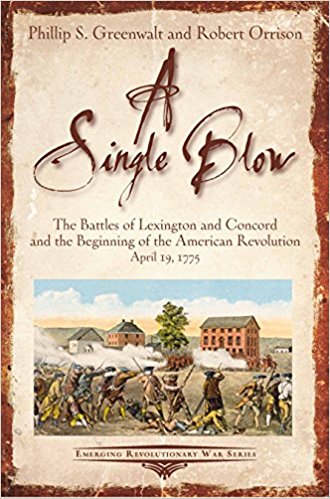
Look for the the first two books in stores and online this summer. For a preview, courtesy of Amazon, click here for In a Single Blow. For Victory or Death, click here.

51YZDafuylL._SX332_BO1,204,203,200_ 51GqdvdQhGL._SX332_BO1,204,203,200_


Leaving Vegetius Behind: The British Army’s Departure from Classical Military Influence (1754-1783) – Part 2

Read Part 1 here

During the spring and summer of 1754, conflict over colonial possessions in North America erupted in western Pennsylvania. England’s military influence was ousted from the Ohio River Valley, and before the year was over the Captain-General of His Majesty’s Forces, the Duke of Cumberland, planned to dispatch regular troops to the colonies. Major General Edward Braddock, along with a thousand men of the 44th and 48th Regiments of Foot, was ordered to Virginia to organize a four-pronged summer offensive against the French at the Forks of the Ohio River, in Nova Scotia, the Great Lakes region, and along Lake Champlain. The two British regiments with Braddock had served primarily in Ireland, and possessed minimal experience in combat (Colonel Sir Peter Halkett’s 44th Regiment was lightly engaged at Culloden in 1746). Historian David Preston described the experience carried to North America by the senior and junior officers of Braddock’s expeditionary force:

While there was a growing sense of professionalism in the mid-eighteenth-century British Army, most younger officers had formed whatever expertise they possessed through studying manuals, guidebooks, and historical works by ancient and modern authors such as Thucydides, Caesar, Vegetius, and Humphrey Bland, whose Treatise of Military Discipline, first published in 1727, was the unofficial guide to basic drill and maneuver for young officers. The officers’ own lack of formal training, along with their mechanistic daily regimens, prevented them from achieving competency much beyond the level of basic training that they were expected to perfect in their soldiers. While some senior officers had tasted battle, the first test of combat leadership for many of the junior officers or subalterns came on the banks of the Monongahela.[1]

Despite the lack of battlefield experience, King George II, the Duke of Cumberland, and Braddock were confident that the “professionalism” of the regular troops would be enough to oust French forces (Troupes de la Marine, Canadian militia, and Native American auxiliaries from the Ohio River Valley and Great Lakes) from Fort Duquesne.

The first break from Vegetius’s influence and British army doctrine in the Age of Enlightenment occurred before the campaigns of 1755 even commenced. The 44th and 48th Regiments of Foot were understrength and carried with them to North America roughly 500 men each. To raise their numbers to full battalion strength – 700 men – the units were augmented with colonial levies from Maryland, Pennsylvania, and Virginia. Already lacking in experience, the addition of colonial militiamen (militias were the largest recruiting pools in the colonies) did nothing but delegitimize the “professionalism” of the two regiments. The levies, who previously only drilled once every few months or so with their respective militias, were expected to conduct themselves like British regular soldiers.

Along with the colonists augmented into the regiments of foot, the task of capturing the various French strongholds in Nova Scotia and along Lakes Champlain and Ontario that summer was given to non-regular troops. To subdue the French garrisons, small armies of colonial provincial soldiers were recruited in New England, New Jersey, and New York. Braddock’s army, too, was supplemented with provincials from Maryland, Pennsylvania, Virginia, and the Carolinas. The expeditionary force ordered to bag Fort Saint-Frédéric (Crown Point) along Lake Champlain was composed of 3,000 provincial troops with only one British regular, Captain William Eyre of the 44th Regiment of Foot, serving among them.[2] Again, these provincial regiments were entirely green (other than some veterans of various frontier services and the Louisbourg Expedition of 1745) and made up of levies and volunteers drawn predominantly from local militias. Also, attached to these armies were Native American auxiliaries, whose style of warfare was completely foreign to regular troops and far from professional. Service against and alongside these “savages” was the first exposure to irregular warfare in North America that His Majesty’s soldiers would receive. Vegetius believed that heavy reliance on auxiliaries, in this case Native Americans, colonial provincials, and colonial troops on the British military establishment, was detrimental to the performance and survival of professional units and overall cohesion.[3]

For the most part, the colonial provincials held their own on the battlefield against French forces, more so than the British regulars did early in the French and Indian War. They obtained victories in Nova Scotia, along the southern shore of Lake George in New York, and diligently defended the frontier against French and Indian raids. However, the colonists could never truly mesh with the regulars from Great Britain. British officers held them in contempt. “The Americans,” Brigadier General James Wolfe declared, “are in general the dirtiest most contemptible cowardly dogs that you can conceive. There is no depending on them in action. They fall down dead in their own dirt and desert by battalions, officers and all. Such rascals as those are rather an encumbrance than any real strength to an army.”[4]

Officers serving in North America and British authorities in London, like William Pitt, began to recognize the importance in 1758 of separating from the seemingly arrogant professionalism that the British Army had so dearly held on to. The conflict being fought in the colonies was not a conventional European war. Even as a world war was being waged elsewhere around the globe, it became evident that something needed to change if His Majesty King George II was to claim North America as his own. William Pitt, Leader of the House of Commons and Secretary of State for the Southern Department, put forth and instituted an agenda that shifted the sole focus on winning with professional soldiers in North America to building a substantial military force consisting of a majority of colonists. He ordered 20,000 colonists to be levied or recruited into provincial units. The crown would supply them the required arms, ammunition, tents, and provisions, and would reimburse the colonial assemblies for the costs of raising, clothing and paying the men. In response to this proposal, the colonies mustered over 23,000 troops for the upcoming 1758 campaigns.[5] These men complimented the 20,000 British regulars dispatched to the colonies that year. At close glance, the measure instituted by Pitt’s administration resembled France’s levée en masse in 1793 on a smaller scale.[6] This was an early example of the departure from Vegetius’s classical reliance on professional soldiers in favor of larger armies consisting of men serving shorter terms of enlistment. Discipline for these men was mild and their training was limited. “Men,” one of Vegetius’s general maxims read, “must be sufficiently tried before they are led against the enemy.”[7] Quality was displaced by quantity. This was not the only aspect of the British Army that was transforming in the wilderness of North America. The nature of the conflict was forcing a change in the way the war was being waged as well.

Edward Braddock’s expeditionary force of regulars and provincials crossed the Monongahela River on the morning of July 9, 1755 and precipitated a departure from Vegetius and Humphrey Bland’s strategic, operational, and tactical influence. Less than ten miles outside of Fort Duquesne, the 1,400-man column engaged and was easily defeated by a smaller force of Canadians and Indians fighting in an irregular manner. Braddock’s Defeat signaled an end to England’s classical style of linear warfare – it had officially met its match and was countered. Vegetius and Bland’s disciplined closed-rank formations had faltered. Vegetius wrote that, “The nature of the ground is often of more consequence than courage.”[8] However, this referred to terrain and its effect on the seven linear formations that Vegetius had presented. General engagements in Europe did not take place in thick vegetation. Maneuvering, let alone fighting, in closed-ranks was nearly impossible to accomplish smoothly in North America. As Braddock’s army had learned along the banks of the Monongahela, His Majesty’s Forces needed to adapt to the current conditions and nature of warfare in the colonies. To do so, officers needed to adjust tactically and borrow from the colonists and their Native American auxiliaries who were accustomed to loose formations and irregular warfare. Adapting meant completely altering preconceived tactical doctrine.

wounding of general braddock
The Wounding of Edward Braddock at the Battle of the Monongahela, July 9, 1755

Continue reading “Leaving Vegetius Behind: The British Army’s Departure from Classical Military Influence (1754-1783) – Part 2”

What it Means to Wear the Green

This St. Patrick’s Day millions of people around the world will wear green and celebrate the Irish holiday.  However there was a time when wearing the color green in Ireland could be punishable by death.

In the wake of the American Revolution, revolutions and rebellions began to breakout across Europe.  While much has been written on how the American Revolution helped inspire the epic and violent French Revolution in 1789, the Irish rebellion of 1798 has largely been forgotten.

Arklowflag.svg
One of the green banners carried by Irish rebels in 1798.  This one uses a phrase common in the American Revolution.

Continue reading “What it Means to Wear the Green”