On This Date: An America 250th Anniversary

The 27-year-old from Thetford, Norfolk, England native had a long journey before he even sailed across the Atlantic Ocean for the colonies. Although receiving an education until age 13, and an apprenticeship with his father until age 19, both uncommon among his peers, Thomas Paine started his professional career as a privateer. It did not suit him for long, he returned to Britain in 1759. Paine then became a staymaker, and within several years, opened his own store in Sandwich, Kent. By the end of the same year, Paine had married.

Read more: On This Date: An America 250th Anniversary

Life seemed to be set for the young couple, but tragedy after tragedy ultimately led Paine to the American colonies. Paine’s shop ran into financial challenges not long after his nuptials, and although offset by the joy of pregnancy, a relocation to a new town may have been too much on Mary. She went into early labor, and both mother and child tragically died during the delivery. A series of moves, career changes, and troubles dotted the next dozen years.

A supernumerary, Excise Officer, staymaker, schoolteacher, were all ahead of time. Charges of fraud and dismissal were as well. By the age of 31, in 1768, Paine’s next professional endeavor took him to Lewes in Sussex. Over the ensuing years in Lewes, a town with a long history of opposition to the monarchy and republican sentiments, Paine became a member of the Court Leet and parish vestry, worked as a tobacconist and grocer, and married for the second the time.

Thomas Paine

By 1772, Paine wrote his first political piece. His time in his home country was now on the clock. By the spring of 1774, following his political priorities and ideologies, Paine had all but abandoned his post as an excise officer and was essentially fired. He next separated from his second wife, Elizabeth, and moved to London. It was while in London that Paine met Benjamin Franklin who suggested he emigrate to Philadelphia. Paine did exactly that.

His journey through life was turbulent, even more so during the first half of the 1770s, just like his voyage across the Atlantic on his to Philadelphia in the Pennsylvania colony. The water supplies aboard the ship were dreadful, and typhoid raged across the decks of the vessel. Paine was barely alive by the time the ship reached Philadelphia. He was so ill he was unable to leave the docked boat under his own power, Benjamin Franklin sending his personal physician to the ship and have him carried off. Yet, on this date, November 30, 250 years ago, Thomas Paine had arrived to the American colonies. After six weeks of recovery his new journey, a journey shared by all those that were to be swept up in the American Revolution, began.

Less than two years after landing in Philadelphia, Paine published his work Common Sense. Coupled with a series of works entitled The Crises, Paine, “ignited a nation to help the failing cause of the Revolution.”

Rev War Revelry: Old South Meeting House and the Boston Tea Party

Join us this Sunday, October 15th at 7pm as we welcome Matthew Wilding, Director of Education and Interpretation at Revolutionary Spaces. Revolutionary Spaces manages the Old South Meeting House and the Old State House in historic Boston. We will discuss the history of the Old South Meeting House and its important role in the revolutionary movement in Boston (especially during the Boston Tea Party). We will also cover their plans for the 250th anniversary of the Boston Tea Party, including their new exhibit on the destruction of property in public protests.

Grab a drink and follow along as we start to gear up for the 250th anniversary of the Boston Tea Party with Emerging Revolutionary War!

“Rev War Revelry” Book Chat with Benjamin Carp

There are arguably many moments along the road towards war with England that greatly shaped that road’s trajectory. Perhaps among the top contenders on that list would be the Boston Tea Party. Join historian Benjamin Carp and ERW’s Dan Welch as we dig in with the author of one of the best books on that pivotal moment. Dr. Benjamin L. Carp is the author of The Great New York Fire of 1776: A Lost Story of the American Revolution, and Defiance of the Patriots: The Boston Tea Party and the Making of America (2010), which won the triennial Society of the Cincinnati Cox Book Prize in 2013; and Rebels Rising: Cities and the American Revolution (2007). His book, Defiance of the Patriots, will be the focus of Sunday’s book chat.

With Richard D. Brown, he co-edited Major Problems in the Era of the American Revolution, 1760-1791: Documents and Essays, 3rd ed. (2014). He has written about nationalism, firefighters, Benjamin Franklin, and Quaker merchants in Charleston. He has also written for Colonial Williamsburg, the Wall Street Journal and the Washington Post. He previously taught at the University of Edinburgh and Tufts University. He was born and raised in New York State and each of his parents earned two CUNY degrees. See you Sunday at 7 p.m. EDT on Emerging Revolutionary War’s Facebook page!

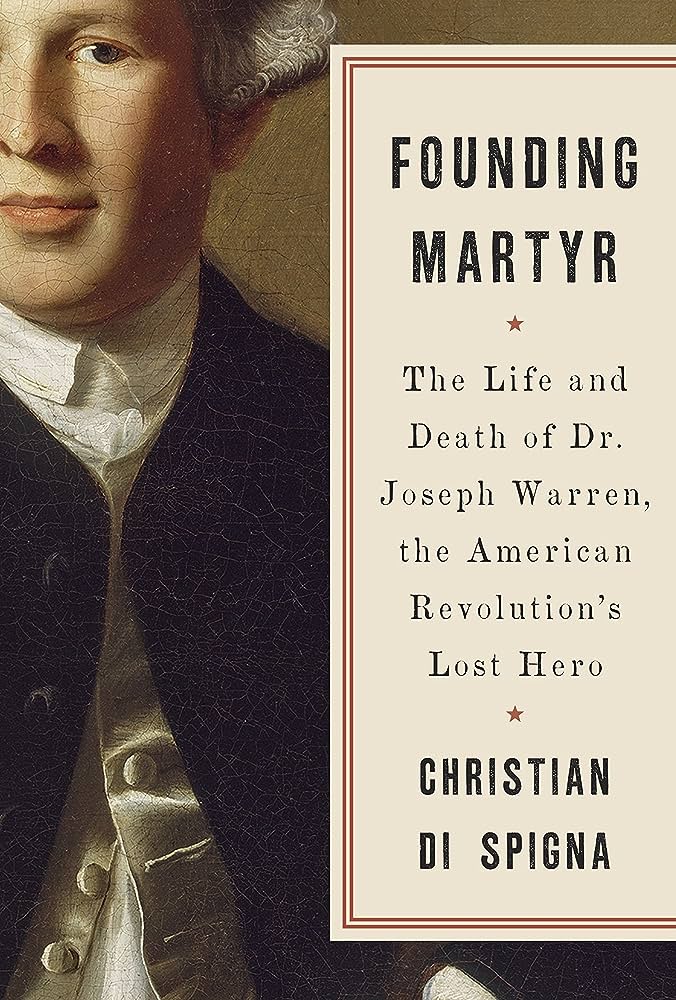
“Rev War Revelry” Founding Martyr Dr. Joseph Warren

Dr. Joseph Warren is considered by many “the lost hero of the American Revolution.” Warren was the brainchild of the revolution movement in Boston. Warren was involved in almost every major insurrectionary act in the Boston area for a decade, from the Stamp Act protests to the Boston Massacre to the Boston Tea Party, and his incendiary writings included the famous Suffolk Resolves, which helped unite the colonies against Britain and inspired the Declaration of Independence.

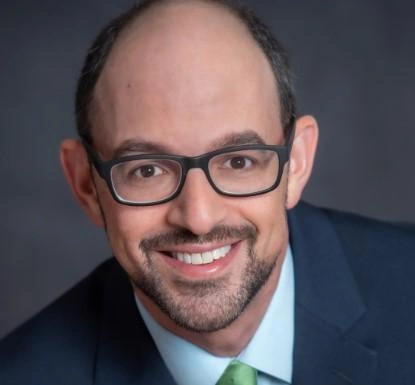
Joining Emerging Revolutionary War will be historian and author Christian Di Spigna. He is the author of Founding Martyr: The Life and Death of Dr. Joseph Warren, the American Revolution’s lost hero. He is the Executive Director of the Dr. Joseph Warren Foundation and is the vice chairman for the Revolution 250 committee of Massachusetts Freemasons. He also serves on the board of the Bunker Hill Monument Association.

As we approach the 250th commemoration of the Boston Tea Party, we will focus on Warren’s life, his role in the Boston Tea Party and his lasting impact on the Revolution. Grab a drink and join us as we talk with author and historian Di Spigna about Warren, the patriot who once said…

“When Liberty is the prize, who would shun the warfare? Who would stoop to waste a coward thought on life?”

See you Sunday at 7 p.m. EDT on Emerging Revolutionary War’s Facebook page!

“Rev War Revelry” Sails into Boston Harbor to talk Tea Party

On December 16, 1773, a protest orchestrated by the Sons of Liberty in Boston, Massachusetts turned words into action. Upset over recently passed legislation and the belief that “no taxation without representation” 116 people dumped 342 chests of tea owned by the British East India Company into Boston Harbor. The event was one of the milestones on the way to the American Revolution and American independence. As the Boston Tea Party, as it is known to history, closes in on its 250th anniversary, Emerging Revolutionary War will invite Evan O’Brien, the creative director for the Boston Tea Party Ships and Museum this Sunday, June 25, evening for the next “Rev War Revelry.”

We hope you can join us at 7 p.m. EDT on Emerging Revolutionary War’s Facebook page for a discussion of the history behind and on December 16, 1773 and the efforts to commemorate and interpret that time frame. If you are contemplating venturing up to Boston in December to be in the city for the 250th anniversary of this event, you will not want to miss this discussion, as Evan will share some of what the museum has been planning to commemorate when Boston Harbor became a “tea-pot.”