“Rev War Roundtable with ERW” Focuses on African American soldiers during the American Revolution with author and historian, John U. Rees

Baron Ludwig von Closen, aide–de–camp to French General Rochambeau, wrote in July 1781: 

 “I had a chance to see the American Army, man for man. It is really painful to see those brave men, almost naked with only some trousers and little linen jackets, most of them without stockings, but, would you believe it, very cheerful and healthy in appearance … It is incredible that soldiers composed of men of every age, even children of fifteen, of whites and blacks, unpaid and rather poorly fed, can march so fast and withstand fire so steadfastly’.” 

During the American Revolution, African-Americans, both freed and enslaved, fought for the patriots. Some wielded muskets in militia outfits whereas others were part of the Continental army. African-Americans were there from the Siege of Boston through the end of the conflict. In fact, until the Korean War the American Revolution was the last time a United States military force was integrated in time of war.

Although publications have been printed about the 1st Rhode Island or comparative studies between Africans that served for the British or patriots. However, the field needed a dedicated study of African-Americans that served in the Continental army. Enter John U. Rees.

A lifelong Bucks County, Pennsylvanian who has studied and written about the soldiery of the American Revolution for the past three decades. He is published many times over and this Sunday, he will join Emerging Revolutionary War at 7 p.m. on “Rev War Revelry.”

The discussion will include his new book, “They Were Good Soldiers’: African-Americans Serving in the Continental Army, 1775-1783.” Which is now available for purchase online. ‘They Were Good Soldiers’: African Americans Serving in the Continental Army, 1775-1783 begins by discussing the inclusion and treatment of black Americans by the various Crown forces (particularly British and Loyalist commanders, and military units). The narrative then moves into an overview of black soldiers in the Continental Army, before examining their service state by state. Each state chapter looks first at the Continental regiments in that state’s contingent throughout the war, and then adds interesting black soldiers’ pension narratives or portions thereof. The premise is to introduce the reader to the men’s wartime duties and experiences. The book’s concluding chapters examine veterans’ post-war fortunes in a changing society and the effect of increasing racial bias in the late eighteenth and early nineteenth centuries. 

Besides the book dialogue, a general conversation about the roles of African-Americans in the American Revolutionary period. So, find your favorite brew, bring your questions and insights, and join John Rees and ERW on Sunday evening on our Facebook page.

For more articles by our guest historian John Rees, visit https://tinyurl.com/Rees-author-only . An online compendium of articles on African Americans in the Revolutionary era is available at https://tinyurl.com/Afr-Amer-Rev-War . 

“Rev War Roundtable with ERW” Presents 1776!

This Sunday, at 7 p.m. join Emerging Revolutionary War on our Facebook page for a happy hour historian discussion on the play. 1776. Joining ERW historians, will be historian Liz Williams from Historic Alexandria.

And making her debut on “Rev War Revelry” will be Rebecca Grawl from “DC by Foot” and a “Tour of Her Own.” Welcome Rebecca!

For those unfamiliar, the play, “1776” premiered on Broadway in 1969 but has a longer history than just that debut. One can easily guess the synopsis of the production; centering around the pivotal year in American history that same year. A revival of the play is on tap for next spring.

A few weeks ago we had a discussion on “Hamilton” so we hope you are ready for another discussion about American Revolutionary history on the stage and screen. Remember to grab your favorite brew and a place of comfort and sit back and enjoy your Sunday night with Emerging Revolutionary War as the historians harangue, mildly, the history and play “1776.”

Following in Father’s Footsteps

On June 12, 1781, William Pitt, referred to as the “Younger” to differentiate from his father, Lord Chatham, William Pitt, and former prime minister of Great Britain during the Seven Years’ War, stood up in the House of Commons.

Like his late father, Pitt spoke on a war, this time not in favor of a conflict but in opposition. Also like his father, he spoke with a passion and eloquence that marked him for future roles of higher prominence. He also stood to correct his father’s legacy in regards to the Americans which that day was referred to by other members in Parliament. His view on the current war, the American Revolution, is quite evident.

“A Noble Lord who spoke earlier has in the warmth of his zeal called this a holy war. For my part, although the Right Honorouble gentleman who made the motion, and some other gentlemen, have been more than once in the course of the debate reprehended for calling it a wicked or accursed war, I am persuaded, and I will affirm, that it is a most accursed, wicked, barbarous, cruel, unnatural, unjust, and most diabolical

The expense of it has been enormous, far beyond any former experience, and yet what has the British nation received in return? Nothing but a series of ineffective victories or severe defeats–victories only celebrated with temporary triumph over our brethren whom we would trample down, or defeats which fill the land with mourning for the loss dear and valuable relations, slain in the impious cause of enforcing unconditional submission. Where is the Englishman who on reading the narrative of those bloody and well-fought contests can refrain from lamenting the loss of so much British blood shed in such a cause, or from weeping on whatever side Victory might be declared?”

Approximately a year and a half later, in December 1783, the 24-year old William Pitt became the prime minister of Great Britain. His tenure as prime minister, which lasted into the 19th century, would like his father’s, be marked with a war against France.

Yet, for a brief moment, in late spring, in London, William Pitt, the Younger, stood up, without preparing, as he did not intend to speak that day, and gave a passionate but reasonable response to the issue of the war with America. His closing words ring through the centuries.

Who (in Pitt’s case Englishmen but substitute whomever you’d like) “can refrain from lamenting the loss…or weeping on whatever side Victory might be declared.”

“Rev War Round Table with ERW” Talks Turning Points

On Sunday, May 17th sy 7 p.m. EST, join Emerging Revolutionary War on our Facebook page for the next “Rev War Revelry” happy hour round-robin historian discussion.

This week’s theme is “Turning Points” a broad term that will most certainly conjure up an interesting conversation.

Word around the ol’ pub about potential topics that will be discussed include Valley Forge, Ten Crucial Days, Guilford Court House. Maybe a mention even of one of the more obvious, Saratoga?

But, you know how gossip goes! So, tune in on Sunday and bring your favorite drink, give the ERW historians a toast and a “Huzzah.”

We look forward to your comments, counterpoints, and conversation.

Finding Your Patriot

Emerging Revolutionary War welcomes back guest historian Kate Bitely

Part 1

How much do you know about your great-great-great-great-great grandparents? Did your family pass on detailed stories of their past? Perhaps you took a DNA test like ‘23andMe,’ or maybe you know little if anything about your roots. Whatever the case may be, now is a great time to start the journey of learning about your familial past, as it might just lead you to an unexpected destination. For me, I grew up knowing my distant relative, John Biteley Sr., a New Yorker who come to the U.S. from Germany in the 1750’s. His American born son, John Biteley Jr., went on to serve as a patriot in the American Revolution. My grandfather, Ralph Bitely, always told us, “the Bitely’s were at Ticonderoga!”  In 2010, my grandfather passed away. A few years after his death, my grandmother gave me a box filled with documents that detail the history of the Bitelys. This box would be the start of my journey back to the 18th century.

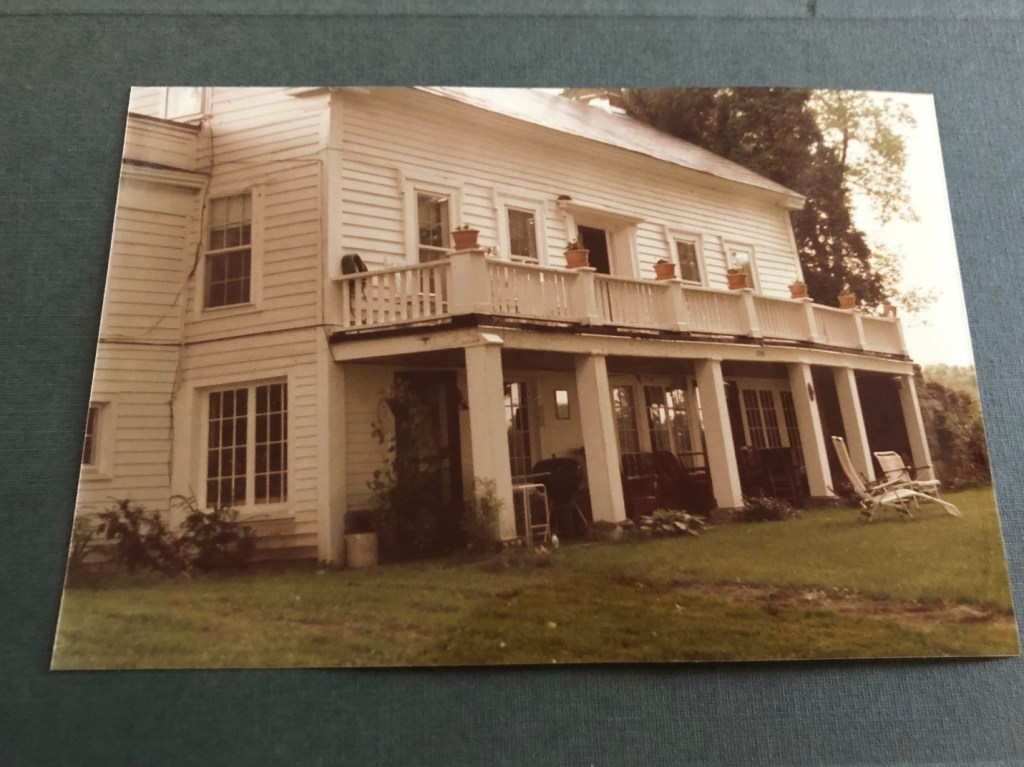
As I dug through the box a few years ago, I recall being filled with excitement as I learned about my family. They were farmers, predominately grape farmers to be exact. (My love for wine is clearly hereditary). As I dug deeper, I found a more modern picture of the “Bitely Homestead,” the home of John Biteley Sr., located in Saratoga County, NY. It was first built before the war around 1770, was burned down by Gen. John Burgoyne in 1777 and was rebuilt in 1779. Nearby remains a family cemetery where many of my relatives remain. While I have not been for a visit yet, I hope to make a trip soon when conditions are safe to do so.

Photo of the “Bitely Homestead” in Moreau, NY rebuilt in 1779 after the British burned down the original structure in 1777 found inside the box from my grandmother.
Continue reading “Finding Your Patriot”

ERW Weekender: Ninety Six, The Site That Has It All

Emerging Revolutionary War welcomes historian Vanessa Smiley to the blog.

The thing about Ninety Six National Historic Site is that it’s unassuming exterior hides a wealth of history. It’s also nowhere near a major highway, meaning you have to want to get there if you’re thinking of visiting. And when you do get there, you will realize that there’s more history per acre than its demur entrance lets on. Located in the back country of South Carolina, Ninety Six has a history that speaks to the stories of Native Americans, the American frontier of the 18th century, and the American Revolution.

Entrance to the park
(courtesy of Ninety Six NHS, NPS)

The site at Ninety Six holds a treasure trove of study on these subjects. Native American, mostly Cherokee, activity was heavy in the area long before European settlers arrived. One of the earliest backcountry trading posts, established by Robert Gouedy in 1759, made Ninety Six a hotbed of trading activity thanks to its location at the crossroads of twelve different roads and paths, linking the area to nearly all parts of the colonies.

Continue reading “ERW Weekender: Ninety Six, The Site That Has It All”

ERW Weekender: Boston Massacre: 250 Years and 1-Day Later

Crispus Attucks. Every American school child learned that name in a social studies or history class in grade school. On the night of March 5, 1770, Attucks, an African-American was one of the six Bostonians that was killed by British soldiers.

Known in American history as the “Boston Massacre” the tragic event was used as fodder by the Sons of Liberty and pro-revolutionary minded individuals to propel the colonies toward rupture with Great Britain.

Continue reading “ERW Weekender: Boston Massacre: 250 Years and 1-Day Later”

ERW Weekender: Wheeling

Emerging Revolutionary War welcomes guest historian Jon-Erik Gilot. A short bio is attached at the bottom of this post.

Though perhaps more widely known as the birthplace of West Virginia during the Civil War, Wheeling and its environs retains several significant sites associated with the Revolutionary War. The name itself is translated from the Delaware language meaning “place of the skull,” legend having that the severed head of a white settler was placed on a pole by local Native Americans as a warning to others to stay away.

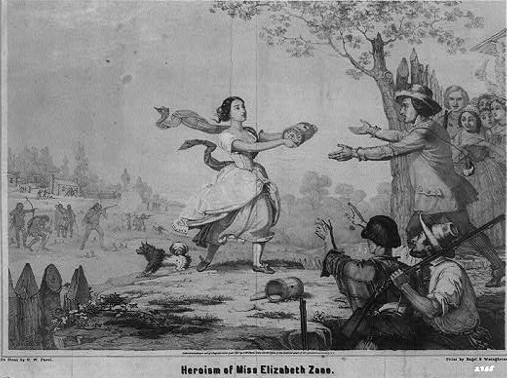
Betty Zane’s Run for Gunpowder during Second Battle of Fort Henry–1782
(image courtesy of Library of Congress)

Wheeling was founded in 1769 by Colonel Ebenezer Zane and his brothers Jonathan and Silas. Five years later in 1774 Fort Henry (originally called Fort Fincastle) was built overlooking the Ohio River to protect the growing numbers of settlers from attack. The fort was twice attacked during the Revolutionary War, first in 1777 and again on September 11 – 13, 1782, when a force of British loyalists (Butler’s Rangers) and Native Americans (under the command of outlaw Simon Girty) attacked the fort’s 47 defenders. The fort was besieged over two days, culminating in Betty Zane’s heroic run for gunpowder in a nearby cabin. The British and natives broke off the battle with the arrival of Virginia militia reinforcements. Fort Henry is acknowledged as one of the final battles of the Revolutionary War.

Continue reading “ERW Weekender: Wheeling”

62nd Foot at Freeman’s Farm

Emerging Revolutionary War welcomes guest historian Kevin Pawlak. A short bio follows the post below.

On May 25, 1775, the 62nd Regiment of Foot stood for review. The line of men, clad in their redcoats with buff facings, did not impress the reviewing officer. He called the regiment “very much drafted” and “very indifferent.” Despite the disparaging grade, in just over two years, the 62nd Foot commendably fought in one of the fiercest actions of the War for Independence.

John Anstruther
courtesy of 62ndregiment.org

Scottish military man Lt. Col. John Anstruther led the 62nd Foot in the campaign of 1777. Anstruther faced no easy task; the 62nd was the junior British regiment in John Burgoyne’s army and most of its men were inexperienced in campaigning and battle. To make the situation even worse, roughly one-quarter of the 62nd Foot’s soldiers were German. Language barriers likely prevented complete cohesion within the unit. However, with a war on, nothing could be done to rectify the regiment’s defects as it marched south into New York.

Anstruther’s regiment was present for the operations around Fort Ticonderoga in early July 1777. After American forces abandoned the fort, the conglomerate and inexperienced 62nd remained behind to man Mount Independence overlooking Lake Champlain. As the rest of Burgoyne’s army continued campaigning, the men of the 62nd Foot spent time guarding themselves against rattlesnakes rather than the enemy. Their time came to rejoin the main army before the Battle of Saratoga commenced.

Continue reading “62nd Foot at Freeman’s Farm”

Annis Boudinot Stockton, Mythmaking, and the American Revolution

Emerging Revolutionary War welcomes guest historian Blake McGready. A short bio is at the end of this post.

In December 1776, Richard Stockton of Princeton, New Jersey, a signer of the Declaration of Independence, disavowed the American Revolution and swore allegiance to King George III. After British forces imprisoned Stockton, he accepted his captor’s amnesty offer. Revolutionaries considered Stockton’s decision an act of cold betrayal and condemned his perfidy. And yet, following his death in 1781, most biographies avoided or ignored Stockton’s questionable political commitment; one tribute claimed his conviction inspired “the utmost confidence of his associates and the country at large.” Stockton owed much of this comeback to his wife, Annis Boudinot. As a prolific and published poet, she helped erase much of her husband’s political infidelity in her writings. At the time of his death she praised him in one tribute, “Can we forget how patiently he bore / The various conflicts of the trying hour / While meekness, faith, and piety refin’d.” She carefully forgot that her husband abandoned the revolutionaries during “the trying hour.”[i]

Annis Boudinot (Mrs. Richard) Stockton by James Sharples Senior, from life, 1796-1797. Courtesy, Independence National Historical Park.
Continue reading “Annis Boudinot Stockton, Mythmaking, and the American Revolution”