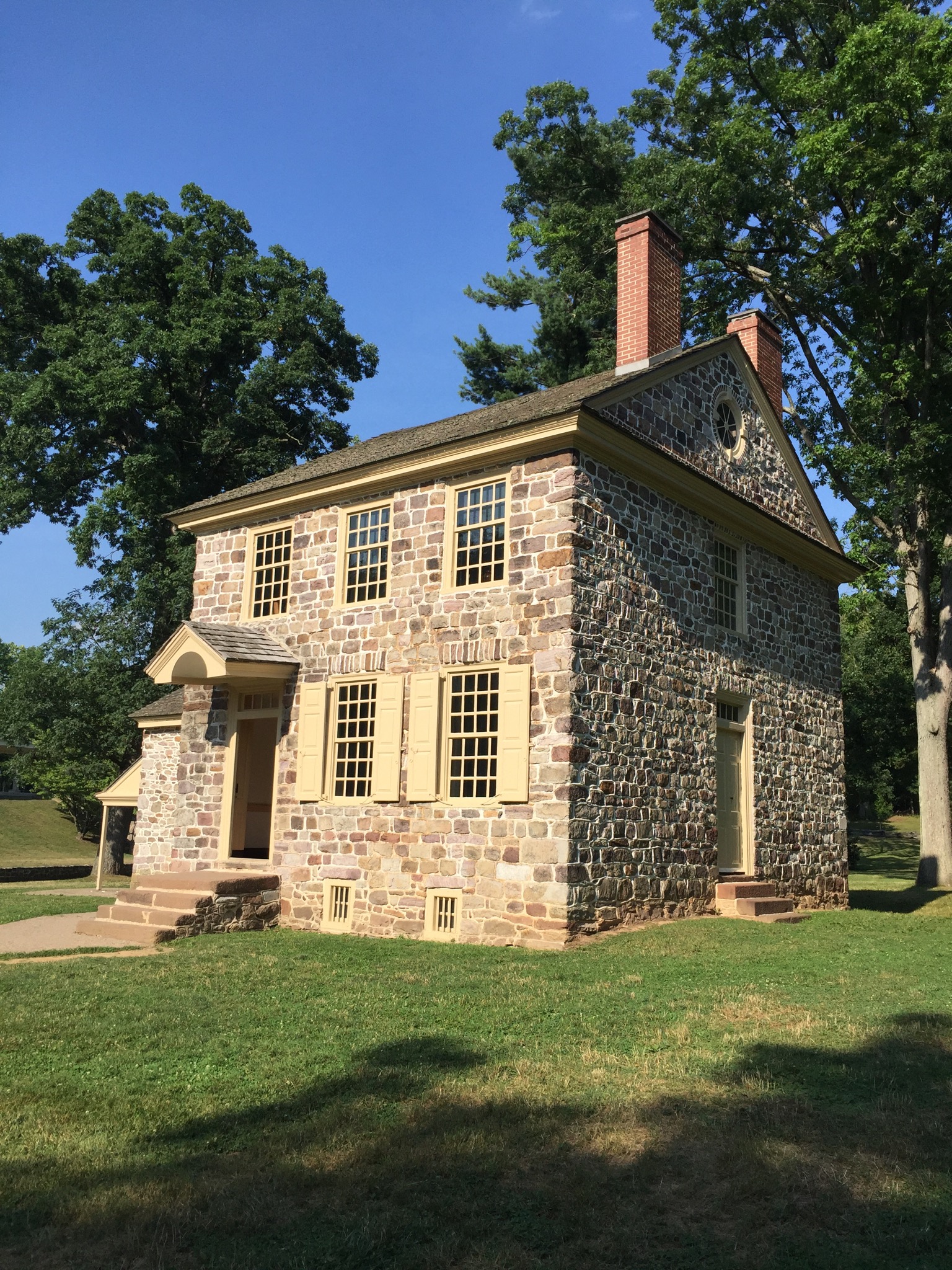
Major John Van Dyk and the Bones of Major John André. Part I

Emerging Revolutionary War welcomes historian and educator Jeffrey Collin Wilford to the blog. A brief biog is at the bottom of this post. A list of sources will be at the bottom of the concluding Part III.

Major John André and John Van Dyk: Continental Artillery Soldier 

Much has been written about the betrayal of America by Benedict Arnold. However, one small but candidly morbid fact buried in the story has not. It relates to the disposition of British Major John André’s remains as they lay in a wooden ossuary on a British mail ship on the banks of the Hudson River while awaiting their return to England in 1821. The only recorded recollection of this event was in a letter written by a 67-year-old former Revolutionary War soldier and published in a Virginia newspaper in 1825. This man also happened to be one of the four officers who escorted André to the gallows in Tappan, New York, on October 2, 1780. 

John Van Dyk lived a storied life, serving America as a militiaman, Continental Artillery soldier, customs officer, New York City assessor, and assistant alderman. He came from an old Dutch family that had settled in the original New Amsterdam colony, which would eventually become Manhattan. There is ample evidence that, in 1775, he was actively involved in significant acts of disobedience against British rule with other “Liberty Boys,” as the New York Sons of Liberty preferred to call themselves. 

One of these acts was stealing muskets and cannons from the Royal Armory and Fort George.  Under the encouragement of Isaac Sears and Marinus Willett,  he was one of a crowd of colonists who broke into the Royal Arsenal at City Hall on April 23, 1775, stealing  550 muskets, bayonets, and related munitions. The angry mob had been spurred to act by the attacks on their fellow countrymen the week previous at Lexington and Concord in Massachusetts. Every person who took a musket was required to sign for it, signaling a promise to return it if it was needed to fight against British occupation. That call came on July 4, 1775, when the New York Provincial Congress ordered them recalled to outfit newly commissioned  Colonel Alexander McDougall’s 1st New York Regiment. It was relayed that anyone who refused would be deemed an enemy of the state. In all, 434 muskets were returned. 

Exactly four months later, Captain John Van Dyk was one of sixty or so men who, under Liberty Boys Colonel John Lasher and Colonel John Lamb, executed the orders of the New York Provincial Congress to remove the cannon from Fort George at the southern tip of Manhattan and drag them back to the area of City Hall. With tensions high in the city, the state leaders feared they would be turned against the colonists if they were left in the hands of the British. One of the militia members assisting in the removal effort was 19-year-old King’s College student Alexander Hamilton of the Hearts of Oak independent militia. By this time, civil unrest had relegated the British colonial government to operating from naval ships anchored in New York Harbor, which made keeping the cannon secure from a more agitated population nearly impossible. 

Just before midnight on August 23, 1775, a skirmish ensued between  Lasher and Lamb’s men removing the cannon, and a British barge near the shore. It had been sent to monitor the rebels’ activity by Captain George Vandeput from the HMS Asia, a 64-gun British warship anchored near shore. Musket shots rang out, presumably started by the British, which resulted in the killing of a King’s soldier on the barge. As a result, the Asia turned broadside and opened fire with their cannons in a barrage on the city that lasted for three hours. A city whose population had already been diminished by the fear of a coming conflict, shrunk even further due to the terror experienced that night.  

John Van Dyk spent most of the next eight years as an officer in General Henry Knox’s artillery while under the command of Colonel John Lamb.  During the war, he saw action at Brooklyn, Harlem Heights, White Plains, Trenton, Brandywine, Germantown, Crosswicks Creek, Monmouth, and Short Hills. He was also at both Morristown winter encampments and Valley Forge. In 1780 he was captured by the British off the coast of New Jersey and confined on the prison ship HMS Jersey in Brooklyn before being released that summer.  

Van Dyk had spent months out of commission in late 1779 and early 1780 with what, according to his symptoms, was probably malaria or yellow fever.  He petitioned General Knox, who, in turn, appealed to General Washington for leave to recuperate. Making his way to West Point to meet with General Washington he was instructed by the Commander-in-Chief’s aide-de-camp to be evaluated by Dr. John Cochran, physician and surgeon general of the army of the Middle Department. On Cochran’s recommendation, General Washington wrote to President Samuel Huntington asking that the Continental Congress grant Van Dyk’s petition for an 8-month Furlow to sea to convalesce, which was common at the time as it was believed the fresh sea air was helpful to healing. Approved, it would take six months before he boarded the brig General Reed with a crew of 120 and 16 guns, a privateer out of Philadelphia commanded by  Samuel Davidson. Once aboard ship he was temporarily made a Lieutenant of Marines. 

Only two days into the voyage, on April 21, 1780, things took an immediate turn for the worse when they were intercepted and captured by the 28-gun HMS Iris and the 16-gun sloop HMS Vulture. The Iris was the former American warship USS Hancock, captured in July of 1777 and renamed by the British. Van Dyk was brought to Brooklyn and placed on the prison ship Jersey in Wallabout Bay, one of the most notorious and deadly places for holding American prisoners of war. Conditions were so poor that, while approximately 6,800 American soldiers died in battle during the Revolution, over 11,000 prisoners died on the Jersey alone! Fortunately for John Van Dyk, American officers were often traded off the Jersey for British officers who were in the custody of American forces. Within two months he was released and traveled to his temporary home of Elizabethtown, New Jersey to finish recuperating before rejoining Lamb’s artillery in Tappan, New York. 

John Van Dyk had experienced many horrors of war in the years and months leading up to the morning of September 21, 1780, when British Major John André, an Adjutant General to British General Sir Henry Clinton, left New York City and sailed up the Hudson River. This pivotal incident would brand one of Washington’s closest generals a traitor and lead to the death of the esteemed and well-liked André. Ironically, Major André traveled on the very same sloop that had assisted in the capture of Captain Van Dyk just six months earlier. 

Bio:

Jeffrey Wilford has been an educator in Maine for over 30 years where he holds certifications in history and science. He received a bachelor’s degree in communications with an emphasis in journalism from California State University – Fullerton and a master’s degree in education, teaching and learning, from the University of Maine. In addition to his career teaching, he has worked as a general assignment newspaper reporter and an assistant to the press secretary of former Maine Governor and US Congressman Joseph Brennen. He lives in Maine with his wife Nicolette Rolde Wilford.
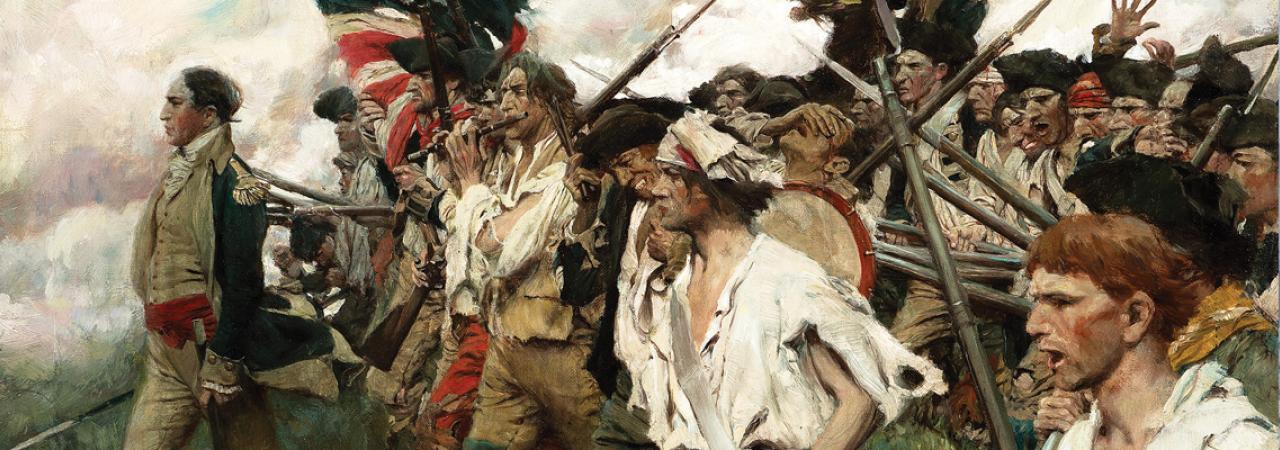
Announcing our 2025 ERW Bus Tour…. Philadelphia Campaign of 1777 with Michael Harris!

We are excited to announced our FIFTH annual ERW bus tour will be on November 7-9, 2025 and will cover the 1777 Philadelphia Campaign.

Author and historian Michael Harris will join us as we cover the fall of 1777 campaign. The British Army under Gen. William Howe made a concerted effort to take the American capital of Philadelphia. George Washington and the Continental Army fought major actions at Brandywine and Germantown in an effort to hold and take back the city. The tour will cover sites associated with the Philadelphia Campaign, such as Brandywine, Germantown, Paoli and others.

Tickets are $250 per person and will include Friday night lecture at the host hotel, all day bus tour on Saturday and half day bus tour on Sunday. A lunch is included for Saturday.

Our host hotel is the Holiday Inn Express and Suites – King of Prussia. Lodging is NOT included in the registration fee. A room bloc has been established under the name of “Emerging Revolutionary War.” A link will be provided in the future for hotel lodging.

Join us for our FIFTH annual tour as we take on the beginning of the American Revolution just a few months before the 250th anniversary. Learn about the dramatic events that led to some of the bloodiest days in the American Revolution. There is no better way to experience history than to stand in the footsteps of where it happened!

To register, visit: https://www.eventbrite.com/e/battles-for-the-capital-1777-philadelphia-campaign-bus-tour-tickets-1048228358237?aff=oddtdtcreator

For more questions, please email emergingrevolutionarywar@gmail.com.

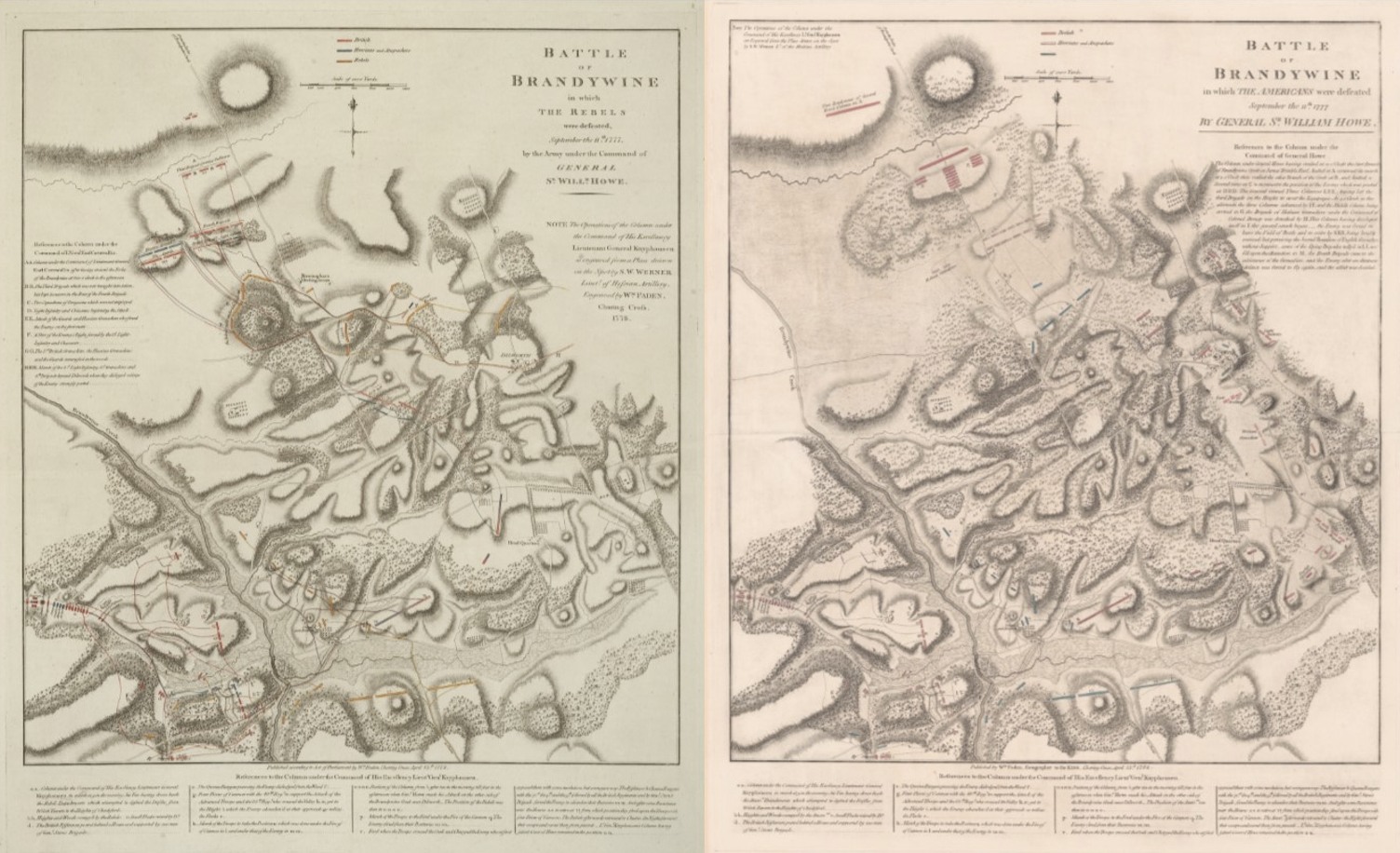
Rev War Revelry This Sunday: William Faden’s 1778 & 1784 Maps of the Battle of Brandywine with Andrew Outten

British cartographer William Faden is well known for his maps depicting major battles of the Revolutionary War. Unusually, he produced two maps of the Battle of Brandywine, one in 1778 and the other in 1784. Each map shows troop movements and positions along with other aspects of the overall battlefield landscape, but each conveys significantly different information.

Join us this Sunday night at 7p.m. on our Facebook page as we chat with Andrew Outten, historical programs manager for the American Revolution Institute of the Society of the Cincinnati. Andrew will discuss the Battle of Brandywine, key differences between the two maps, and recent discoveries pertaining to those differences. Should be a great night sharing new research so grab a drink and join us for our January 8th Rev War Revelry!

Hindsight is 2020 (or 2021)

Emerging Revolutionary War welcomes guest historian Liz Williams, from Historic Alexandria, the host of the second annual symposium

When we planned our 2nd Annual Revolutionary War Symposium for 2020, our theme came easily – Hindsight is 2020. Little did we know that our cheeky title would take on a different meaning as we had to navigate a global pandemic. But I am excited that we can still offer our symposium (yes 6 months later) and virtual!  In this format, we can zoom our experts to computers and smartphones across the country. And this year we have a great variety of topics – from Drunken Hessians to African American Continentals. Learn about Loyalists, battles in the Southern Theatre, and along a creek in southeastern Pennsylvania.

As we move toward the 250th anniversary of the nation, it is critical for us all to look with fresh eyes at our founding. At Gadsby’s Tavern Museum, we engage with the complexity and challenges of early America, many of which were rooted in what transpired before and during the Revolutionary War. By understanding our past, we can continue the work of creating a better United States for all.

The Symposium costs $40 per person, $20 OHA Members & Students and reservations can be made at AlexandriaVa.gov/Shop. Looking forward to seeing everyone on May 22!

The Continentals’ Last Claimant: The Story of Lemuel Cook

Emerging Revolutionary War welcomes guest historian Kevin Pawlak

New York state has a rich American Revolution history. Battlefields at Saratoga, Oriskany, Fort Ticonderoga, Long Island, and more dot the state’s connection to our nation’s founding. But growing up in the western part of the state, those sites were at least a few hours’ drive.

Recently, I discovered a neat story related to the American Revolution that was in my own home county—Orleans County. It is not a battlefield, though it is about a man who stood on those battlefields with George Washington’s Continental Army. Lemuel Cook, who died at the age of 107, spent the last thirty years of his life in the next town over from my hometown and died there. While he was not the last surviving veteran of the war for America’s independence, he was the last to claim a pension for his service.

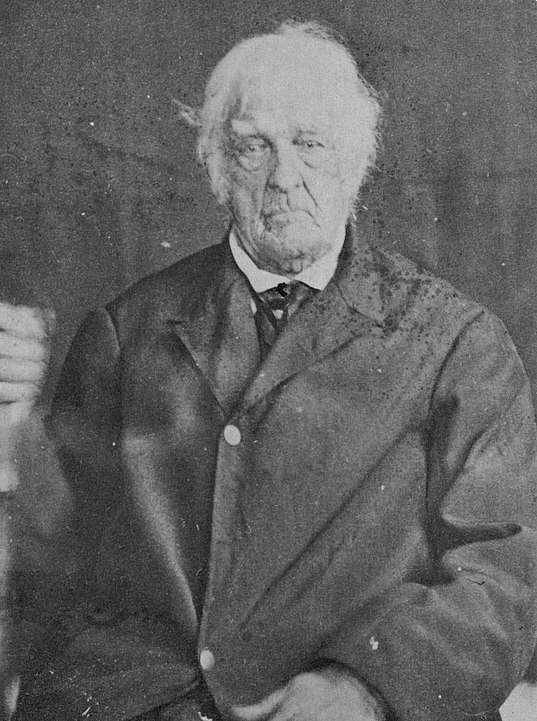
Lemuel Cook

Ninety-one years prior to his death in 1866, the sixteen-year-old Connecticut native enlisted with the 2nd Continental Light Dragoons. He saw service with the dragoons at Brandywine and Yorktown.

Cook moved frequently after his service expired until he settled in Clarendon, New York in 1832. Cook’s devotion to the nation he helped create never waned until his dying days. He regularly attended town hall meetings and elections until a few years before his death. Souvenir seekers continually asked for the old veteran’s autograph, which he obliged. In 1861, a photographer captured this national treasure in a photograph.

Unfortunately, even Cook could not defeat Father Time. As he aged, his speech became “very fragmentary,” according to one newspaper. “He recalls the past slowly, and with difficulty, but when he has his mind fixed upon it, all seems to come up clear.” Despite his weariness, Cook’s spunk occasionally showed, “the old determination still manifesting itself in his look and words.” Specifically, during an interview in the midst of the American Civil War, Cook pounded his cane on the floor and proclaimed, “It is terrible, but terrible as it is the rebellion must be put down.” Incredibly, he lived to see the rebellion “put down” and died on May 20, 1866.

Cook’s grave, located in the Cook Cemetery on Munger Road in Clarendon, suffered damage in a windstorm in 2017 but was quickly fixed. In the same year, descendants and local historians unveiled a state historic marker alerting passersby to this unique niche of Revolutionary War history in a place far from the famous battlefields that achieved our nation’s independence.

“Rev War Roundtable with ERW” Brandywine Campaign

The largest, in terms of military forces deployed, engagement in the American Revolutionary War occurred on September 11, 1777 in southeastern Pennsylvania. The Battle of Brandywine was a pivotal moment in the British campaign that captured the patriot capital in Philadelphia. With the anniversary of the engagement happening the Friday before, the Emerging Revolutionary War crew will make this engagement and campaign the focal point of Sunday’s “Rev War Roundtable with ERW.”

Joining the “Rev War Revelry” this Sunday, at 7pm on Emerging Revolutionary War’s Facebook page will be Michael C. Harris, historian and author of Brandywine: A History of the Battle that Lost Philadelphia but Saved America, September 11, 1777, which was published and is available for purchase by Savas Beatie. Click here to order.

Besides authoring the history mentioned above, Harris has an upcoming release, on another important battle in Pennsylvania, Germantown, fought on October 4, 1777. Rumor on the street has it that he will be joining ERW at a future date to discuss this important battle and talk about his new book.

A bit of a background on Harris. He is a graduate of the University of Mary Washington and the American Military University. He has worked for the National Park Service in Fredericksburg, Virginia, Fort Mott State Park in New Jersey, and the Pennsylvania Historical and Museum Commission at Brandywine Battlefield. He has conducted tours and staff rides of many east coast battlefields. Michael is certified in secondary education and currently teaches in the Philadelphia region. He lives in Pennsylvania with his wife, Michelle and son, Nathanael.

Although the battle lost Philadelphia for the patriots, Harris does not hold back on the culprit for the setback:

“Washington failed the army, the army did not fail Washington.”

To hear the reasoning behind that emphatic quote we hope you join us this Sunday!

Stolen Honor in Georgia

Emerging Revolutionary War welcomes back guest historian Gabriel Neville.

Thirty years ago, Dutch Henderson was “stomping through the woods” near Lake Sinclair in central Georgia when he stumbled upon an old gravestone. Some might have thought it an odd spot for a grave, but Dutch knew the history of the area and it made sense. In fact, the setting told him the man six feet under had played an important role in American history.

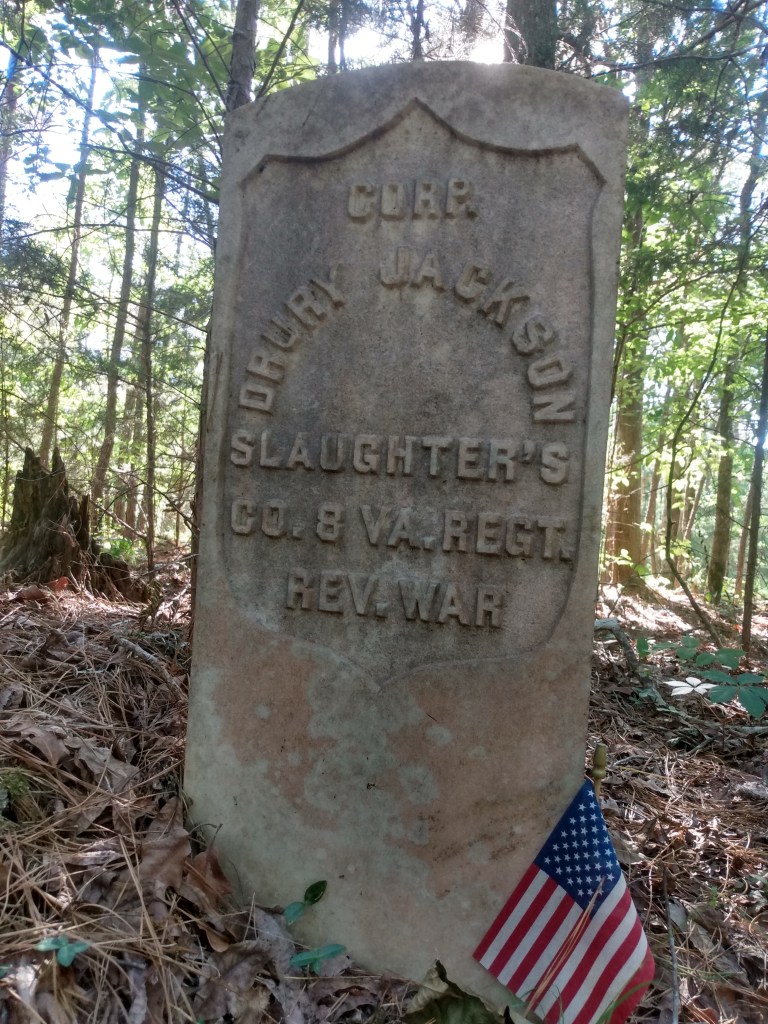
The inscription on the marker read: “CORP. DRURY JACKSON, SLAUGHTER’S CO. 8 VA. REGT. REV. WAR.” Why was this headstone for a Revolutionary War soldier all alone in the woods near a lake? Time changes things. Neither the lake nor the woods were there when Drury Jackson died. Back then the grave was on cleared ground overlooking the Oconee River. Depressions in the soil still reveal to the trained eye that Drury was buried in proper cemetery. The river became a lake in 1953 when it was dammed up to create a 45,000-kilowatt hydroelectric generating station. When Dutch found the grave, the cemetery had been neglected and reclaimed by nature. Today it is in a copse of trees surrounded by vacation homes.

The mysterious headstone for veteran Drury Jackson provides no dates to help us identify the man in the ground. (Dutch Henderson)

Dutch spends his free time studying local history and conducting archeology. He has made some important finds, including a string of frontier forts along what was once the “far” side of the Oconee. He’s pretty sure that Drury’s burial in that spot is an important clue to his life in the years following the Revolutionary War. From there, however, things get complicated.[1]

A genealogy site sporting a photo of the headstone tells us that Drury Jackson was born in Brunswick County, Virginia on February 2, 1745, married Lucy Dozier and then Nancy Ann Kennedy, and died in Wilkes County, Georgia before 1794. This seems possible, but Wilkes County is about seventy miles northeast of the grave. Another source tells us that Drury Jackson was born in 1767 in Franklin County, Tennessee, married Lucy B. Myrick, and died in Baldwin County, Georgia in 1823. This seems more likely, since the grave is in Baldwin County.

So, which of the two men is the right Drury Jackson? The easy assumption is that the stone properly belongs to the one who died nearby. The grave marker itself is of no help. It provides neither the date of his birth nor the date of his death. Moreover, it is the kind of marker that was issued after 1873 by the federal government for the graves of veterans of the Civil and Spanish-American wars (and the unmarked graves of veterans of earlier wars). It is clear that the marker was placed there long after the man’s death by descendants or others in the community.[2]

Continue reading “Stolen Honor in Georgia”

The Revolution’s Impact on Pennsylvania’s Pacifist Communities Part 1 of 2

Pennsylvania’s founder, William Penn, was a Quaker, and insisted on morality and fairness for his government: fair treatment of Native Americans and religious freedom for all citizens.

By the time of the Revolution the colony was 90 years old and a variety of religious groups found safe haven in the colony, including Huguenots, German Pietists, Amish, Mennonite, Dutch Reformed, Lutherans, Quakers, Anglicans, Protestants, Dutch Mennonites, Jewish, and Baptists.

Quakers are perhaps the best known religious group that thrived in Pennsylvania. The Society of Friends emerged in England in the mid-1600s, and were persecuted for their beliefs. William Penn, an aristocratic Quaker convert, received a land grant as payment for a debt from the crown, and made religious toleration a cornerstone of the colony. When armies invaded Pennsylvania in 1777, the state’s Quakers were impacted.  Refusing to be active participants, they did offer humanitarian aid to both sides.

Continue reading “The Revolution’s Impact on Pennsylvania’s Pacifist Communities Part 1 of 2”

Campaign 1776 Updates

Our friends at Campaign 1776, an initiative of the Civil War Trust,  have passed along a few important updates from their very busy September.

campaign-1776-logo-220First, another installment of their very popular “In4” video series sheds light on the Battle of Brandywine, fought in southeastern Pennsylvania on September 11, 1777. The video is narrated by Thomas McGuire, historian and author. Check out the video here.
Switching gears to the Southern Theater, Campaign 1776 has kicked off an initiative to save 1,037 acres at six sites in South Carolina. Those sites include land on Port Royal Island, Fort Fair Lawn, Colleton Castle, Lewisfield Plantation, Hanging Rock, and Waxhaws.

This appeal is the “first of its kind”, according to Civil War Trust Communication Manager Meg Martin, “to save land at these sites.” Furthermore, some of these sites were pivotal to the eventual outcome of the American Revolution, as some historians believe that the war was essentially won in the Southern Theater.

Learn more about the Campaign’s involvement here. But, feel free to leave your opinion on whether you agree that the American Revolution was won in the South or not in the comments below.


*Thank you to Meg Martin for her contributions to this post.*

ERW Weekender: Brandywine & Valley Forge

Emerging Revolutionary War is honored to welcome guest historian Daniel Welch to the blog. A brief biography of Mr. Welch is at the bottom of the post. 

Several weeks ago I decided to take my usual weekend off of visiting American Civil War battlefields to take a moment to explore some American Revolutionary War historic sites just several hours down the road. Since it was a rather last minute decision, I was not completely prepared before visiting other than some basic historical context and a vague idea of operating hours and things to do while at these historic sites. So, if you want to follow the Continental Army during their experiences in the fall and winter of 1777-1778 read on to help plan a great weekend day trip.

Battle of Brandywine

IMG_1356
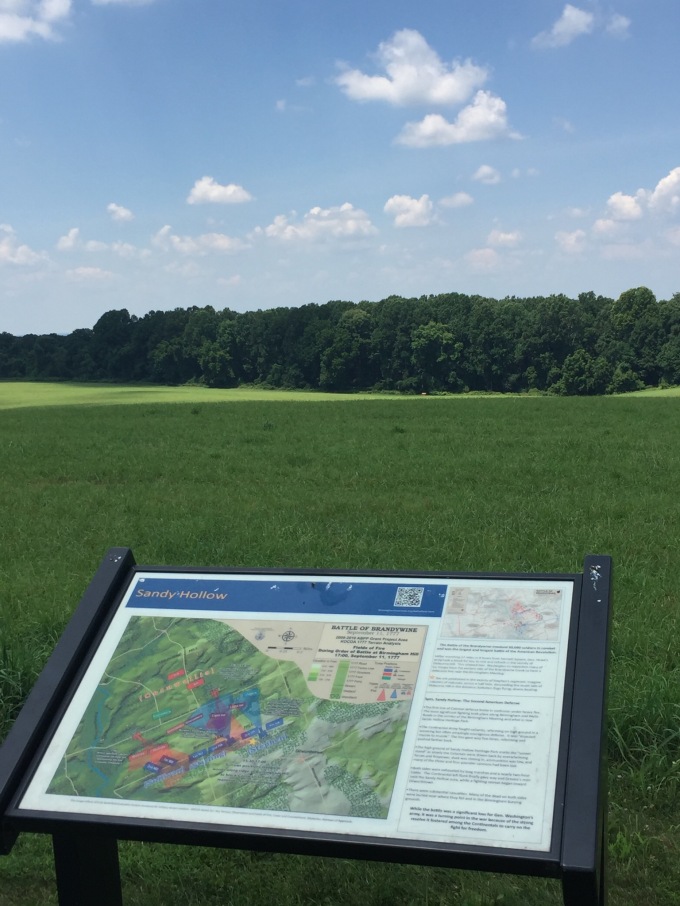
Sandy Hollow, Brandywine Battlefield

If you want to follow these events as they happened, and in chronological order, began your day at the Brandywine Battlefield Park Associates site. Walking the site is free, but there is a charge if you want to go through the museum or on a tour of one of two historic homes on the property. Their hours are constantly changing so make sure you check their website. (click here), before you plan your visit. To go on a house tour, view the film, and go through the museum there is an $8.00 charge; the museum and film alone is $5.00. I would suggest, if you have the time, to take in the film and museum. The film lasts approximately twenty minutes while a thorough look of the museum could take one an additional forty minutes. Between the film and museum, a firm foundation to the events of September 11, 1777 will be in place before you head out to other locations associated with the battle.  The house tour is a guided tour through Washington’s headquarters on the property and is conducted by a volunteer at the site. The tour took over an hour and a half, and considering that the home had burned to the ground nearly 100 years ago and has been rebuilt and filled with modern reproductions, your time would be better spent going to other sites associated with the battle.

IMG_1351
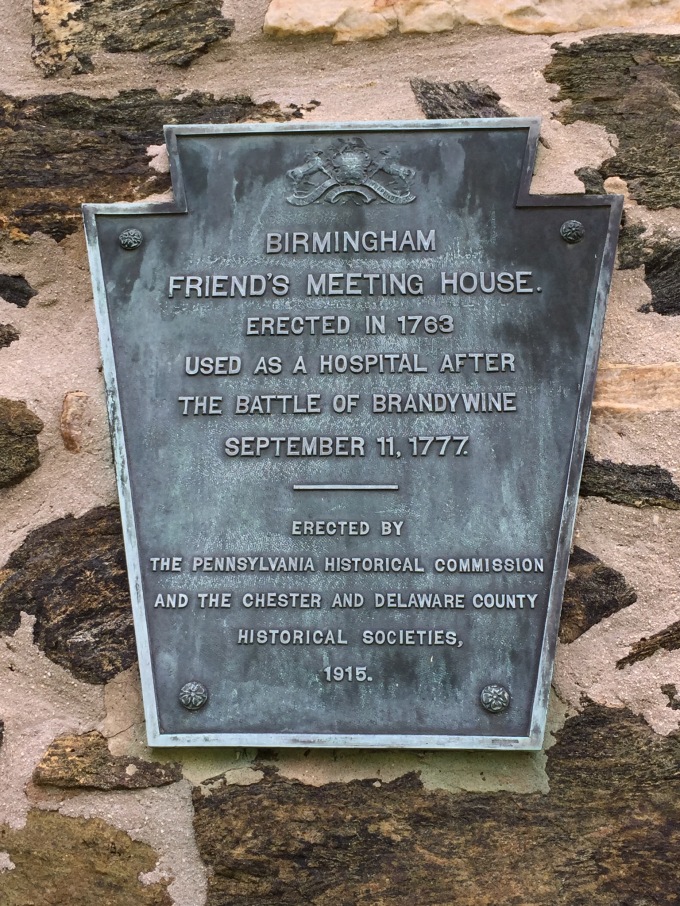
Birmingham Friend’s Meeting House plaque

Before leaving, make sure you pick up driving directions from the employees at the counter to get to Birmingham Friend’s Meeting House, and Sandy Hollow, the American’s second line of defense during the battle. Also, make sure to purchase the driving tour map of the battle of Brandywine. This map will take you to numerous other historic sites and homes within the Brandywine Valley that witnessed the events of that day. The cost is a mere $2.95. Plan an additional three to four hours to complete the driving tour.

Ultimately the battle proved to be an American defeat. Although he was defeated on the field, Washington and his generals were able to get large portions of the army to the rear through Polish General Pulaski’s assistance in covering the retreat. Despite the best maneuvers to save his army, Washington was unable to save Philadelphia and the city fell to the British just two weeks later on September 26, 1777. The British remained until June 1778.

Lunch

By now a late lunch would be in order.  A great spot is the Black Powder Tavern. A tavern since 1746, it has a great Revolutionary War history, including a supposed visit by Washington himself. The restaurant’s name is related to a historical legend that none other than Von Steuben had ordered the tavern turned into a secret black powder magazine during the army’s pivotal winter at Valley Forge. The food here was great, as was the service and beer selection.

Valley Forge National Historical Park

Following the defeat at Brandywine in September, and another engagement at White Marsh in early December, General Washington looked to put his army into a more secure camp for the coming winter. Active military campaigning for 1777 in Pennsylvania was over.  Just twenty miles northwest of Philadelphia, the Continental Army faced numerous challenges here including a lack of food and shelter. Disease also spread during their time at Valley Forge.  By February 1778, approximately 2,500 soldiers had perished.

IMG_1397
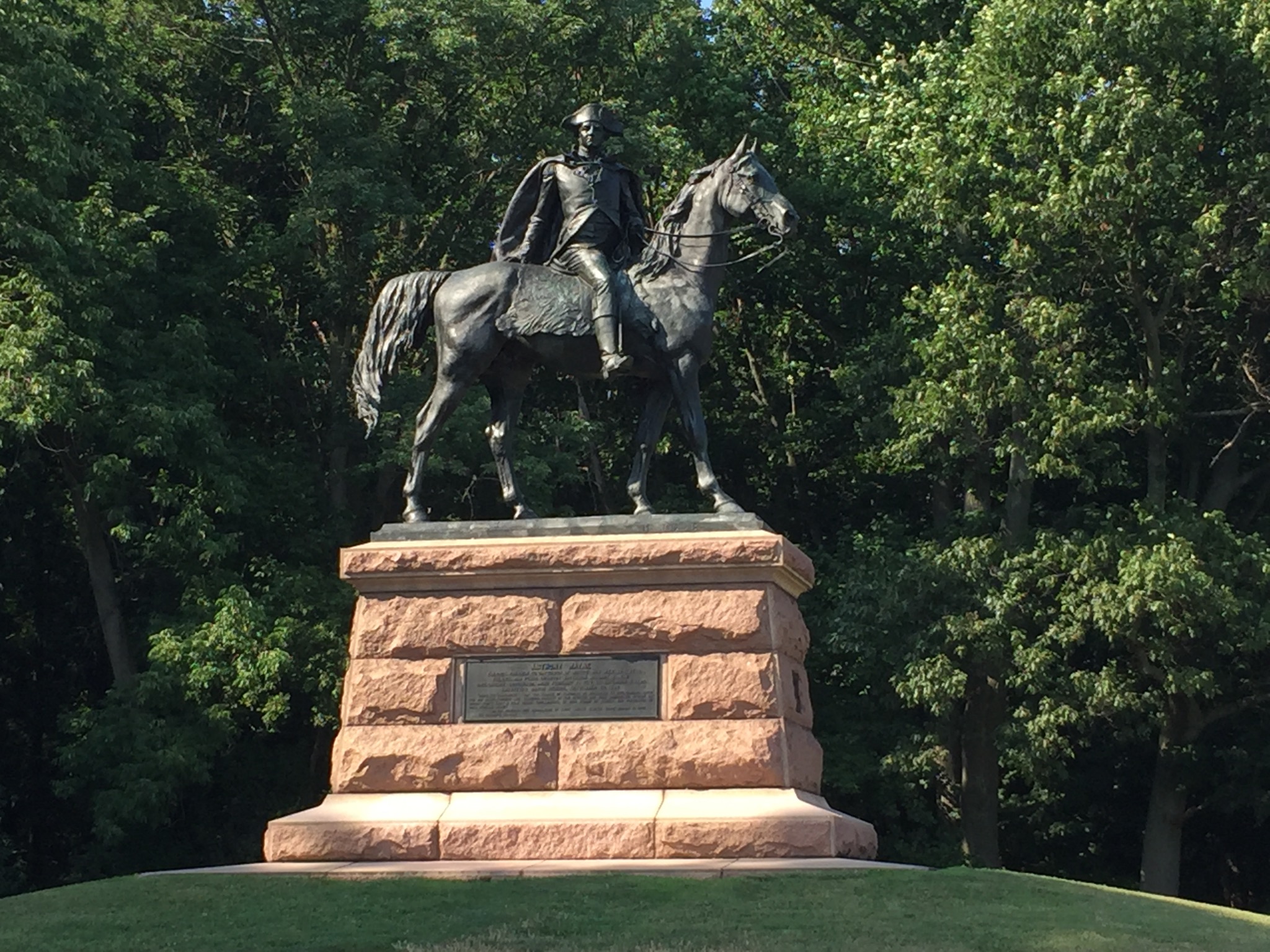
General Anthony Wayne Statue, Valley Forge National Historical Park

To begin your visit here, start at the visitor center. The museum has its challenges. There is no discernible narrative to the exhibits; rather, numerous cases with laminated pieces of paper hanging on the side with corresponding images and item descriptions.  Although there are some unique items on display, if it is busy you could wait at a particular case for the laminated cards to know what you are looking at. After a perusal of the museum, take in the free film. Although it is rather dated it provides a great overview of the winter encampment, its challenges, and outcomes. Between the film and museum, plan on spending an hour at the visitor center.

If you have additional time, take in the one and only National Park Service Ranger program offered. It is a rather short program, in length and walking distance, from the visitor center to the reconstructed Muhlenberg Hut sites. The program also echoes what is presented in the film. Before leaving the visitor center, I recommend getting the auto tour cd, as well as any updates on road closures. The park is currently under a significant amount of construction that has closed some roads and altered the driving tour route. The suggested driving tour cd is two hours in length. This would be a time allotment for those visitors who do not stop at each site, get out of the car, and explore all the stops along the route. You will want to get out and explore monuments such as those to the New Jersey troops, National Memorial Arch, von Steuben, and Patriots of African American Descent. You will also want to explore the several historic homes within the park that were used during the encampment, such as Varnum’s Quarters, Washington’s Headquarters, and the Memorial Chapel.  My explorations, coupled with the driving tour cd, lasted nearly five hours.

IMG_1421
George Washington’s Headquarters (Isaac Potts House) at Valley Forge National Historical Park

Although it would be a long day, it can be done in one; however, if you wish to slow the pace of your visit, each site could be done on a separate day during your weekend. There is plenty of lodging in the area to accommodate this schedule. By visiting both of these historic areas and learning about the events of the fall through early spring 1777-1778, a greater picture can be viewed gleaned of military situation during the time period, as well as the tough composition of the Continental Army despite their defeats.


*Dan Welch currently serves as a primary and secondary educator with a public school district in northeast Ohio.  Previously, Dan was the education programs coordinator for the Gettysburg Foundation, the non-profit partner of Gettysburg National Military Park, as well as a seasonal Park Ranger at Gettysburg National Military Park for six years. During that time, he led numerous programs on the campaign and battle for school groups, families, and visitors of all ages.

Welch received his BA in Instrumental Music Education from Youngstown State University where he studied under the famed French Hornist William Slocum, and is currently finishing his MA in Military History with a Civil War Era concentration at American Military University. Welch has also studied under the tutelage of Dr. Allen C. Guelzo as part of the Gettysburg Semester at Gettysburg College. He currently resides with his wife, Sarah, in Boardman, Ohio.