

Review: Founding Martyr, The Life and Death of Dr. Joseph Warren, the American Revolution’s Lost Hero by Christian Di Spigna

ERW Book Reviews (1)

Doctor. Major General. President of the Provincial Congress. Author of political tracts. A true patriot. Forgotten.

41mPwaMUWfL._SX336_BO1,204,203,200_All these words, plus many more, are titles that depict the life of Dr. Joseph Warren. However, the last term is most synonymous with the Massachusetts doctor who fell in the Battle of Bunker Hill on June 17, 1775 in the early stages of the American Revolutionary War. That last word, forgotten, is exactly what author and historian Christian Di Spigna is hoping to expunge with his new biography, Founding Martyr. 
Di Spigna, an early American history expert and Colonial Williamsburg volunteer, focuses his account of Dr. Warren on not the events immediately surrounding his death at Bunker Hill and subsequent martyrdom but “to fill in the more obscure parts of Warren’s life” which will lead to understanding more of the “key period in the formation of his character, his special networks, and ultimately his medical and political careers” (pg. 7). Continue reading “Review: Founding Martyr, The Life and Death of Dr. Joseph Warren, the American Revolution’s Lost Hero by Christian Di Spigna”

The Gerrymander: A Gift from the Founding Fathers

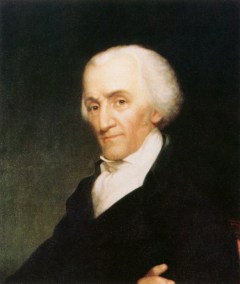
Elbridge-gerry-painting
Massachusetts Governor and U.S. Vice President Elbridge Gerry

Lately, the term “gerrymandering” is getting thrown around as some sort of new illness that afflicts the republic.  The process essentially involves drawing electoral district boundaries in ways that benefit one political party or the other and dates back to 1812 Massachusetts, when Governor Elbridge Gerry, a member in good standing of the founding generation, signed legislation radically redrawing electoral districts in the state to favor the Democratic-Republican Party.

Born in 1744, Gerry was a Massachusetts merchant and vocal opponent of British policy in the colonies who served in the Second Continental Congress, signed the Declaration of Independence, the Articles of Confederation, and attended the Constitutional Convention.   Like a few of his contemporaries, notably George Mason and Patrick Henry of Virginia, he refused to sign the Constitution due to its lack of an explicit Bill of Rights. Nonetheless, he went on to serve as an envoy to France in the Adams administration, then was elected to the U.S. House of Representatives, as Governor of Massachusetts, and then was Vice President under James Madison.  Only a few men had a better claim on the term “founding father.”

Continue reading “The Gerrymander: A Gift from the Founding Fathers”

Thanksgiving with the Continental Army, 1777

Abraham Lincoln usually gets the credit for establishing Thanksgiving as a national holiday in 1863.  He deserves much of it for making it an annual event.  But, Lincoln was harkening back to an earlier practice of giving thanks amidst the trials and tribulations of war, whether it was going well or not.  The tradition predated the Revolutionary War generation, but they were as apt to a hold national day of giving thanks as any of their predecessors or successors in American history.  Continue reading “Thanksgiving with the Continental Army, 1777”

Review: First Founding Father: Richard Henry Lee and the Call for American Independence by Harlow Giles Unger

ERW Book Reviews (1)

A member of one of Virginia’s first families, Richard Henry Lee was a critical voice in America’s struggle against Great Britain. Born at the family home, Stratford Hall, in Westmoreland County, Lee was educated in England. In 1758, he entered Virginia’s House of Burgesses. Seven years later, Lee’s efforts on the road to independence began.

In response to the recent passage of the Stamp Act, Lee co-authored what became known as the Westmoreland Resolves. The document condemned fellow colonists who paid the related tax as well as the British Parliament. As tensions rose with Britain, Lee proposed a means for the individual colonies to communicate with one another. This idea birthed the Committees of Correspondence. In 1774, Lee was elected to the Continental Congress which met in Philadelphia. It was here in the early summer of 1776 that Lee suggested a bill for the colonies to break all allegiance with England and form a United States. The proposal was the basis of the Declaration of Independence. Continue reading “Review: First Founding Father: Richard Henry Lee and the Call for American Independence by Harlow Giles Unger”

Standing in the Room Where American Was Born

Indep Hall WindowAs I stood in Independence Hall, in the room where the Founders debated the Declaration of Independence, I suddenly started thinking of the opening scene from the musical 1776, when John Adams cries for independence while everyone else complains about either the heat or the flies. “Won’t somebody open up a window?” one of the delegates pleads. “Too many flies!” others respond, shouting him down. Adams is advocating the most lofty of ideas but everyone else is mired in their own personal discomfort. What a great metaphor.
To stand in that room where Adams and the other delegates worked was a privilege. The tour group consisted of 50 people or so, so there was no opportunity for quiet reflection. There was no sublime, transcendent moment of awe or epiphany. The tour guide could not even tell me which table Adams sat at except “toward the back over here somewhere.”  Continue reading “Standing in the Room Where American Was Born”

Two Patriots: One Slave and One Free – James Armistead Lafayette and James Forten

Part Two by Malanna Henderson 

A hero who championed American independence was Revolutionary War hero James Forten; not particularly for what he did, but for what he didn’t do.

james-forten
James Forten, Possible attribution: Raphaelle Peale, c. 1800-1810, (Explorepahistory.com)

At the tender age of fourteen, Forten became a prisoner of war aboard the notorious British prison ship, the HMS Jersey, anchored in New York. Like nearly all of his fellow inmates who perished or survived the horrific tribulation, he remained loyal to the patriot cause in the face of death. Continue reading “Two Patriots: One Slave and One Free – James Armistead Lafayette and James Forten”

Six Signers Signing

Part Three of Six

His name might not be too familiar, but he has the distinction of signing three of the most important documents of the American Revolutionary period; the petition to King George III of 1774, the Declaration of Independence, and the United States Constitution. His name?

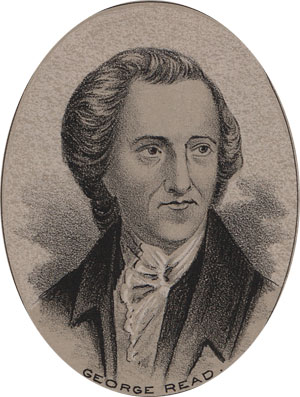
George Read.read


Born in the colony of Maryland on September 18, 1733 in the county of Cecil, the young Read was shortly thereafter on the move. His family, while George was an infant, resettled in New Castle, Delaware. When of school age, he attended Reverend Francis Allison’s Academy in New London, Pennsylvania, and one of his classmates was Thomas McKean, a future Signer of the Declaration of Independence as well. George moved on to study law in Philadelphia under the tutelage of John Moland. In 1753, George was admitted to the bar and the next year had settled back in New Castle, Delaware to practice. Continue reading “Six Signers Signing”

Six Signing Signers

Part One of Six

On August 2, 1776, in Philadelphia, Pennsylvania, the majority of the 56 men who would forever be known as the “Signers of the Declaration of Independence” placed quill to ink and affixed their signature.

On September 17, 1787, the men who persevered, haggled, and agreed on the United States Constitution, dipped a quill into ink and placed their signatures on that famous document.

If one looks closely and reads the names of the signers, six gentlemen’s names would appear on both documents. If one hazarded a quick guess, Thomas Jefferson, John Hancock, John or Samuel Adams, George Washington, and Benjamin Franklin would most likely be the first names to spill off the tongue.

Only one of those names would be correct; Benjamin Franklin. This post, the first in the series, will shed light on whose these men were, who had the great fortune–or luck?–to sign both famous political documents. The first of the “Six Signing Signers” is…..

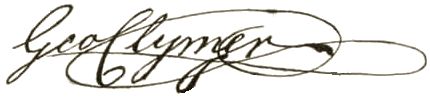
29aa0f03f572a6bf876557dca1c4db16

George Clymer. Continue reading “Six Signing Signers”