The Other Great Artilleryman

Mention the words “artillery” and “American Revolution” and what name instantly pops into your mind? Henry Knox.

Rightfully so.

Yet, like George Washington, Knox needed competent officers under him to successfully organize, train, lead, and develop the artillery arm of the Continental Army.

Enter John Lamb.
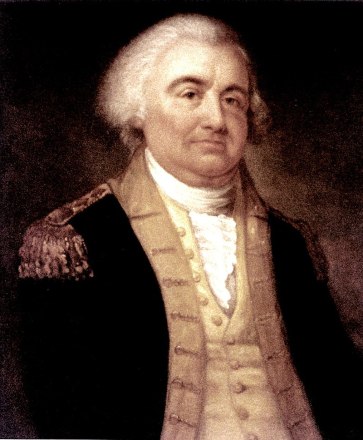
John Lamb
John Lamb

Born on the first day of 1735 in New York City, he was destined to rebel. The reason he was even born in New York City was due to the fact that his father, a convicted burglar had been sentenced for deportation to the colonies in the 1720s.

His early upbringing saw him become a prosperous wine merchant and he quickly ingratiated himself into the burgeoning patriot movement by becoming an integral part of the Sons of Liberty in New York City.  Continue reading “The Other Great Artilleryman”
“Rev War Roundtable with ERW” French and Indian Sojourn

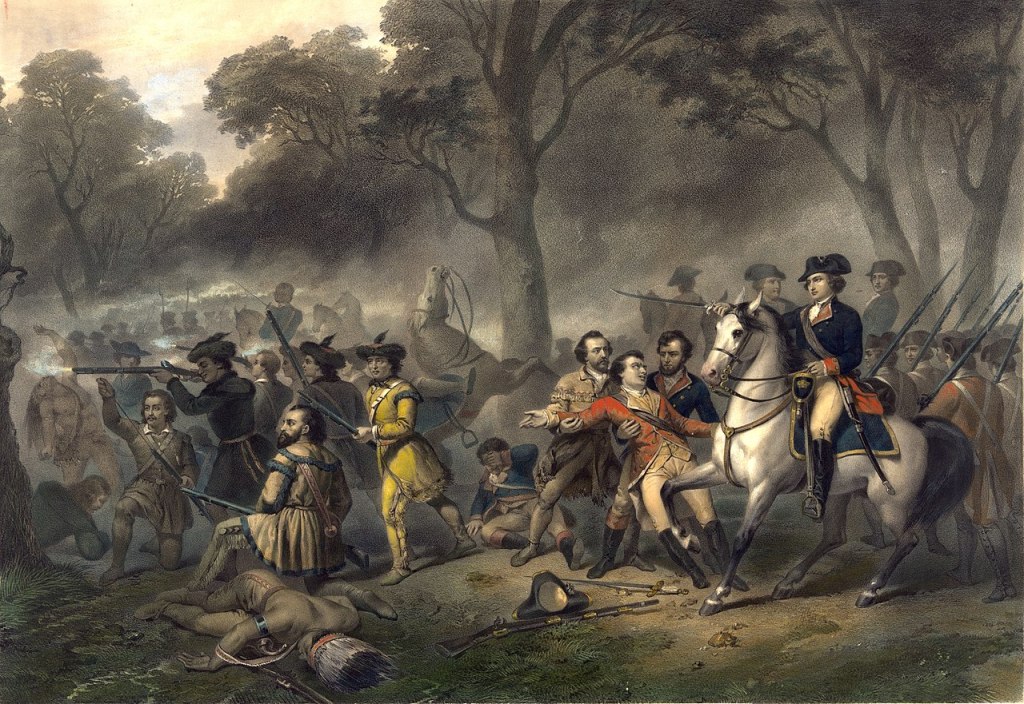
For the past few weeks, Emerging Revolutionary War has, naturally, centered our “Rev War Revelry” on topics associated with the American Revolution. However, our blog is dedicated to the the Revolutionary era and so to live up to that name, our historian happy hour will focus on George Washington, the French and Indian War, and the frontier, especially Western Pennsylvania, and see where the conversation goes from there.

This week, ERW historians will be joined by Dr. Walter Powell, who has been the president of the Braddock Road Preservation Association for the past 30 years and has been very active in French and Indian War events.

Joining Dr. Powell as a guest is John Miller, the Operations Director for Monterey Pass Museum and Battlefield ans the Executive Director of Shippensburg (PA) Historical Soceity.

We look forward to you joining Emerging Revolutionary War on our Facebook page at 7pm EST this Sunday. Along with your favorite beverage, remember to bring with your questions and comments as we embark on this sojourn to the French and Indian War in a history happy hour!

“The Sword is Now Drawn…” The Powder Incident, Lexington and Concord moves Virginia to Revolution

download
Battle of Lexington by Amos Doolittle, December, 1775

One of the most amazing parts of the events on April 19, 1775 is just how sophisticated the colonial information network was. As soon as Lt. Col. Francis Smith’s British Regulars began to move across the Charles River, riders fanned out from Boston and to neighboring towns. Each town then had more riders that spread out and soon dozens of men were riding through the New England countryside warning of the fighting that took place. Soon information spread to the mid-Atlantic colonies and Philadelphia on April 24th. In the age of no electricity, the complexities and speed that news traveled from Boston to the other colonies was pretty amazing. Stories grew from person to person and it would take months and even years to decipher truth from exaggeration. It was imperative for both the “Patriots” and General Thomas Gage to get their version of the events of April 19th out as fast as possible. Facts or not, the importance of the public relations was of utmost importance to both sides to win the hearts and minds of the other colonies.

As the news reached Virginia, the colony was already at a crossroads with their

Sir_Joshua_Reynolds_-_John_Murray,_4th_Earl_of_Dunmore_-_Google_Art_Project_Square
Virginia Lt Governor, John Murray, 4th Earl of Dunmore

Governor. The last House of Burgesses that met in Williamsburg was dissolved in August 1774 over their vocal support of the people of Massachusetts after the Boston Port Act. The once popular Governor, John Murray, 4th Earl of Dunmore (Governor Dunmore), was angered over their overt support and ordered them dissolved and returned home. The legislature defied his orders and met soon after at the nearby Raleigh Tavern, thus constituting the “First Virginia Convention.” With questionable legal authority, the Convention called for solidarity and non-importation of British goods. They also agreed to meet again in the future. The “Second Virginia Convention” met in March of 1775 in Richmond, a safe distance from the Governor’s influence in Williamsburg. It was at this Convention that Patrick Henry made his famous “Give me Liberty or Give me Death” speech on March 23. Though considered radical at the time, the speech energized the Convention and set the tone. When the Governor learned of the Convention and especially Henry’s speech, he made a fateful decision to remove the gunpowder stored in the magazine in Williamsburg. Continue reading ““The Sword is Now Drawn…” The Powder Incident, Lexington and Concord moves Virginia to Revolution”

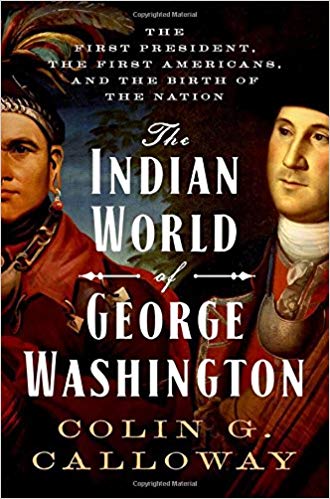
Book Review: The Indian World of George Washington by Colin G. Calloway

Indian World of GW - Calloway

Multiple tomes grace bookshelves in libraries, book stores, and personal residences that depict various aspects of George Washington’s life and legacy. Historian Colin G. Calloway’s “The Indian World of George Washington”  deserves a space on that bookshelf.

Long overdue, this volume about Washington fills a void, as “nothing was more central than the relationship between the first president and the first Americans” (pg. 4). From his first appearances in the greater colonial world in the early 1750s to the last years of his presidency, “a thick Indian strand runs through the life of George Washington as surely as it runs through the history of early America” (pg. 4).

Continue reading “Book Review: The Indian World of George Washington by Colin G. Calloway”

ERW Book Review: Washington’s End: The Final Years and Forgotten Struggle by Jonathan Horn

George Washington retired from public life at the end of his second presidential term on March 4, 1797. Twenty months and ten days later he died on December 14, 1799. In between Washington was also the first in the United States to be a former president, first to deal with securing his legacy as both a military hero and political figure, and having to see the country he sacrificed so much to create, lurch forward without him having an active part in it.

Until now, these years have been either excluded, glossed over, or an anti-climatic ending to a Washington biography. Until now. Joseph Horn, a former presidential speechwriter and the author of The Man Who Would Not Be Washington lends his talent to a new biography of Washington, examining those last few years in-depth.

The author has a valid point when he argues that, “for too long, the story of Washington’s last years has been squeezed into the margins of manuscripts, if included at all” (pg. 14). Channeling the method of famed Washington biographer Douglas Southall Freeman, Horn writes this biography in the “fog of war” style that affords the reader the opportunity to read the history “through the eyes of those who made it rather than through the hindsight of historians” (pg. 14).

Continue reading “ERW Book Review: Washington’s End: The Final Years and Forgotten Struggle by Jonathan Horn”

Lafayette at Brandywine

Marquis de Lafayette was a French aristocrat serving in the French army, and recently married, when the Revolution broke out in America.  He followed events with interst, and was motivated to come and fight with the Americans.

He arrived in March, 1777, nineteen years old and eager.  He immediately formed a friendship with Washington, and was an aide on his staff.  In the meantime British forces had invaded Pennsylvania, intent on capturing Philadelphia.  Washington’s army took a position behind Brandywine Creek, and the British attacked on September 11, 1777.  British troops had flanked the Americans, and reinforcements were rushed to the threatened sector, making a stand on Birmingham Hill.

Eager to get to the fighting, Lafayette and a group of French officers rode to the unfolding battle at Birmingham Hill, arriving as the action was at its hottest.  Approaching from the south, they rode up the Birmingham Road, and turned to the left, coming in behind the brown-coated troops of General Thomas Conway’s Pennsylvania brigade.

Continue reading “Lafayette at Brandywine”

George Washington’s Birthday Celebration

During George Washington’s lifetime and maybe because he was such a great man, he had two birthdays beginning in the 1750’s. Born under the Julian calendar, George was born on February 11, 1731/32. When the English Parliament decreed in 1750 that two years hence England would switch calendars and adopt the Gregorian, used by the majority of countries/states in Europe, there was a discrepancy. So, 11-days was added (some believe that the old calendar was off by a year and a eleven days thus the slash in “1731/32” above).

Regardless, Washington’s birthday was moved to what we, in the United States, are taught now, that it fell on February 22, 1732. Just don’t tell his mother, who believed to her dying day that he was born on the aforementioned date. And who argues with mothers?

What we cannot argue with is that certain birthdays were celebrated at Gadsby’s Tavern, in Alexandria (a city a young George surveyed and helped lay out), Virginia. On October 6, 1796, John Gadsby leased the City Hotel from John Wise and quickly became the epicenter of social and political discourse in Alexandria.

Today the Gadsby Tavern and Museum is open to the public and run by Historic Alexandria a department within the City of Alexandria. For more information and to plan your visit, a bite to eat, or celebrate a birth night ball like George click here.

The balcony where musicians would sit and play at Gadsby’s Tavern (author’s collection)
The hall at Gadsby’s Tavern, which can still be rented out today for celebrations and ceremonies. (author’s collection)

Following Washington

Emerging Revolutionary War welcomes guest historian Terry Rensel.

I despise driving the Pennsylvania Turnpike, so for my drive from Fredericksburg, Virginia to Erie, Pennsylvania to visit family for Thanksgiving I decide to go cross-country to Cumberland, Maryland and then play it by ear from there. As I realized that I was going to be close to Fort Necessity, I decided to make that a stop since I’ve never been there, then see what the day held.

Although a child of NW Pennsylvania, and getting plenty of young George Washington in school, Fort Necessity was a place that I have never been before. It appealed to both my interest in, and desire to visit as many, National Park Service sites as possible. I also have an interest in travelling historic roads, so the fact that US 40, the National Road, was included made it a bit of a two-for for me.

I knew that Fort Necessity itself was a small fortification, I had no idea just how small until I saw it with my own eyes. I can’t believe that this unassuming stockade was the place was a place where the opening acts of the French and Indian War occurred.

Fort Necessity from treeline

The National Park Service has signage, and recently planted trees, where the historic 1754 tree line was. There wasn’t much room for maneuver. The Visitor Center isn’t a very large building, but their exhibits were fantastic. Along with battle related items, there is also a series of items and interpretation for the National Road.

Continue reading “Following Washington”

ERW Weekender: Remember Paoli!

On the night of September 20, 1777, while encamped in Chester County, PA just outside Philadelphia, a division of American soldiers was defeated in a swift surprise attack by a slightly smaller British force. American propagandists, in an effort to galvanize Patriot support, would make the most of this encounter to show the British Army as overly brutal and bloodthirsty. On the foggy morning of December 9, 2019, members of the ERW paid a call on this battle site; Paoli Battlefield Historical Park.

American Camp
Paoli Battlefield Historical Park

Continue reading “ERW Weekender: Remember Paoli!”

Thanksgiving with George Washington

St Paul's Chapel New York (Wikimedia Commons)
St. Paul’s Chapel, New York (Wikimedia Commons)

Setting aside one day to give national thanks to God for the blessings of the prior year and beseech him for future blessings had been frequently practiced in England, but it merged with several Puritan traditions in New England during the 17th century.  By the time of the American Revolution, Thanksgiving was a well-established custom.   The Second Continental Congress turned a regional tradition into a national one when offered its first Thanksgiving Proclamation on November 1, 1777, recommending that the individual states of the new United States set apart December 18th as a day of Thanksgiving and praise.  During the Revolution, Congress continued the practice, issuing its last proclamation in 1784.

Continue reading “Thanksgiving with George Washington”