“Rev War Roundtable with ERW” Lays Siege at Yorktown

After our sojourn to the French and Indian War last Sunday, “Rev War Roundtable with ERW” returns to the American Revolution this weekend at 7 p.m. EST. Join Emerging Revolutionary War and a guest historian as they discuss, comment, and chat about the pivotal Siege of Yorktown in 1781.

Although the war did not officially end with the capitulation of Lord Charles Cornwallis’ German and British forces on October 19, 1781, the major loss reverberated in in both the colonies and the halls of Parliament. The euphoria on one side of the Atlantic will be matched in this happy hour historian discussion, with no set agenda, and your comments, toasts, thoughts, opinions, and questions will be strongly encouraged.

Joining ERW will be Kirby Smith, formerly of Colonial National Historical Park and currently a Training Instructor for the Department of Defense. He is a 16-year veteran of the United States Army and is native of the Yorktown area. Kirby is also an expert on the Battle of Green Spring that occurred during the summer of 1781 and can be considered part of the Yorktown Campaign. This last major land battle prior to the siege featured such military luminaries as Marquis de Lafayette, Anthony Wayne, Lord Cornwallis, and the infamous Banastre Tartleton.

Besides Kirby, Kate Gruber, Special Collections Curator for the Jamestown-Yorktown Foundation and Mark Maloy a National Park Service ranger will be joining the happy hour discussion.

As we bid adieu to the month of May, let’s all grab a drink and discuss the beginning of the end of the American Revolution. We invite you to join us in our virtual tavern via our Facebook page this Sunday.

Lafayette at Brandywine

Marquis de Lafayette was a French aristocrat serving in the French army, and recently married, when the Revolution broke out in America.  He followed events with interst, and was motivated to come and fight with the Americans.

He arrived in March, 1777, nineteen years old and eager.  He immediately formed a friendship with Washington, and was an aide on his staff.  In the meantime British forces had invaded Pennsylvania, intent on capturing Philadelphia.  Washington’s army took a position behind Brandywine Creek, and the British attacked on September 11, 1777.  British troops had flanked the Americans, and reinforcements were rushed to the threatened sector, making a stand on Birmingham Hill.

Eager to get to the fighting, Lafayette and a group of French officers rode to the unfolding battle at Birmingham Hill, arriving as the action was at its hottest.  Approaching from the south, they rode up the Birmingham Road, and turned to the left, coming in behind the brown-coated troops of General Thomas Conway’s Pennsylvania brigade.

Continue reading “Lafayette at Brandywine”

Interview with Tom Chaffin, author of Revolutionary Brothers, Thomas Jefferson, the Marquis de Lafayette, and the Friendship that Helped Forge Two Nations

Last week, Emerging Revolutionary War‘s Phillip S. Greenwalt wrote a review of the above mentioned book. To find that review click here. Recently, through email, Emerging Revolutionary War had a chance to interview the author. The questions and his responses are below.

Tom Chaffin, author
Continue reading “Interview with Tom Chaffin, author of Revolutionary Brothers, Thomas Jefferson, the Marquis de Lafayette, and the Friendship that Helped Forge Two Nations”

Review: Revolutionary Brothers, Thomas Jefferson, the Marquis de Lafayette, and the Friendship that Helped Forge Two Nations by Tom Chaffin

Thomas Jefferson, Marquis de Lafayette, two household names from the American Revolutionary War. One the author of Declaration of Independence and one of the great political minds of the era. The other, a Frenchman, enamored with the ideals of the rebelling colonies of British North America who risked a maritime crossing, was wounded at Brandywine, and served both on the field of battle and the international sphere to help achieve American independence.

That much is known about these two gentlemen, icons of history. How about their friendship, one that spanned decades and brought both men through times of personal and professional difficulties. Although years separated visits and both men were well into adulthood before making their respective acquaintance, the friendship helped cement the bond between countries, from aid during the American Revolution to a thankful nation celebrating the return of the Marquis in the mid-1820s.

This friendship has finally been captured in narrative form by historian Tom Chaffin, author of other historical works and biographies in a book published by St. Martin’s Press in 2019.

Continue reading “Review: Revolutionary Brothers, Thomas Jefferson, the Marquis de Lafayette, and the Friendship that Helped Forge Two Nations by Tom Chaffin”

“De Kalb has died, as he has lived, the unconquered friend of liberty”

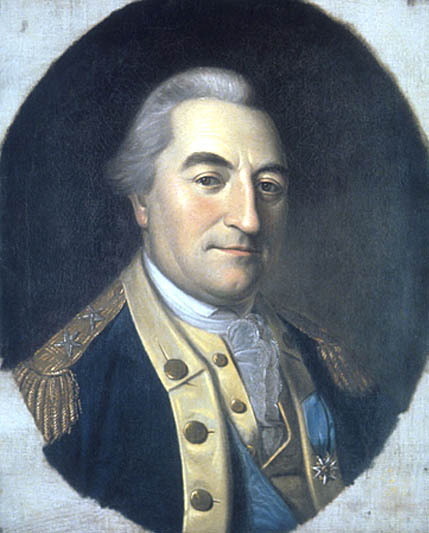
Johann_de_Kalb
Johann de Kalb (Charles Willson Peale)

On this date in 1780, Johann von Robias, Baron de Kalb, died of wounds received three days earlier during the Battle of Camden, South Carolina.

de Kalb, born on June 19, 1721 in the Principality of Bayreuth, was in charge of the American right wing during the engagement at Camden, leading the premier units, the Delawareans and Marylanders, of General Horatio Gates’ Southern Army.

When the left and center of the American line disintegrated, de Kalb’s force had to beat a hasty retreat before becoming completely surrounded. During this juncture of the fighting, the Baron’s horse was shot out from under him and the German was thrown to the ground. Before he could gain his feet, he was hit with three musket balls and bayoneted multiple times by approaching British soldiers. The wounds would prove mortal. Continue reading ““De Kalb has died, as he has lived, the unconquered friend of liberty””

Captain John Asbhy

Part Two

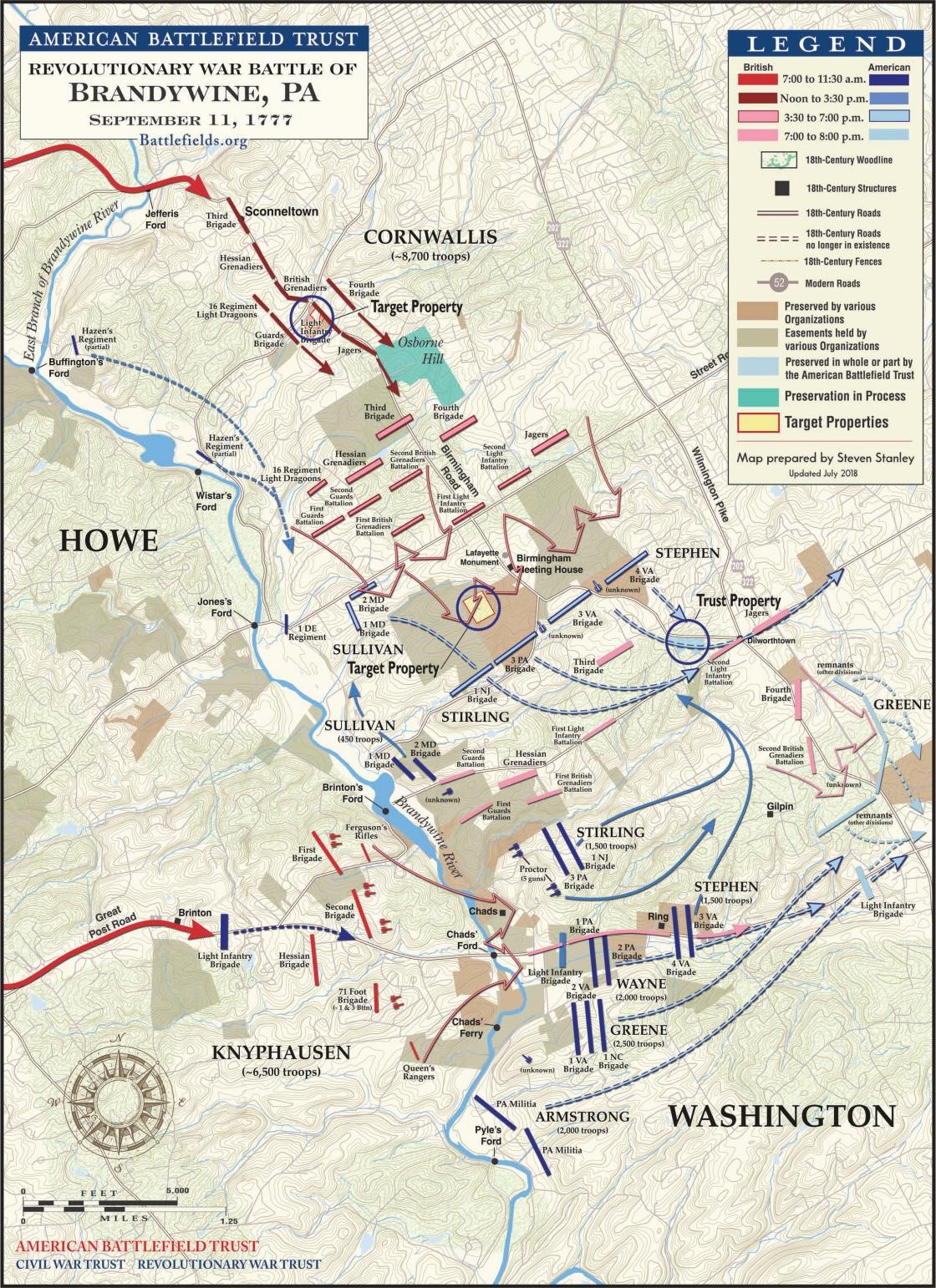
Captain John Ashby and his fellow Virginians would face their greatest test of the war on the afternoon of September 11th, 1777 at the Battle of Brandywine. Following a wide flank march the bulk of the Crown forces emerged on Washington’s right flank, ready to trap and smash the Continental Army. Washington reorganized his line, drawing men north in a desperate attempt to meet the new threat. The Third Virginia was ordered into position far in advance of the American lines – their objective was to hold a wooded hill near the Birmingham Friends Meeting House in order to buy time for the rest of the American troops to take up position. Ashby and his fellow officers arranged their men among the buildings and woodlot of the Samuel Jones farm and awaited the attack that was certain to come.

The Battle of Brandywine, September 11, 1777 (American Battlefield Trust)

Continue reading “Captain John Asbhy”

Uncovering the Continental Army in Morristown

Approximately one month ago, I took a temporary detail assignment to Morristown National Historical Park. The national park preserves the winter cantonments of the Continental Army during the American Revolution; including the harshest winter, weather-wise, of the entire war, in 1779-1780.

For parts of multiple winters and even during the campaigning season, Washington’s forces would come to Morristown, situated behind the Watchung Mountains, which provided safety but also a perch to monitor the British in the New York City.

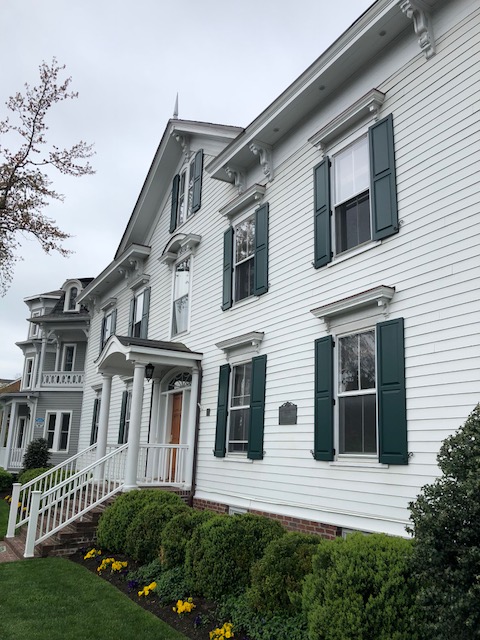
The town still bears witnesses to this rich legacy of housing soldiers, with historic buildings and signs dotted around the spiraling town. On a walk the other day, I came across the house below, with a small plaque situated on the front of the dwelling.

IMG_2771

The home saw soldiers use it for their encampments throughout the majority of the war years. On his return to the United States the Marquis de Lafayette was welcomed with a reception in the building as well, which is in the photo below.

IMG_2772

Morristown is filled with tidbits of history from the American Revolution and I as spend the next few months there as a park ranger, I will share what I come across. So, stay tuned as I uncover the history of the place that “Saved America” according to the park’s unofficial slogan.


Three American Revolutionary War Luminaries

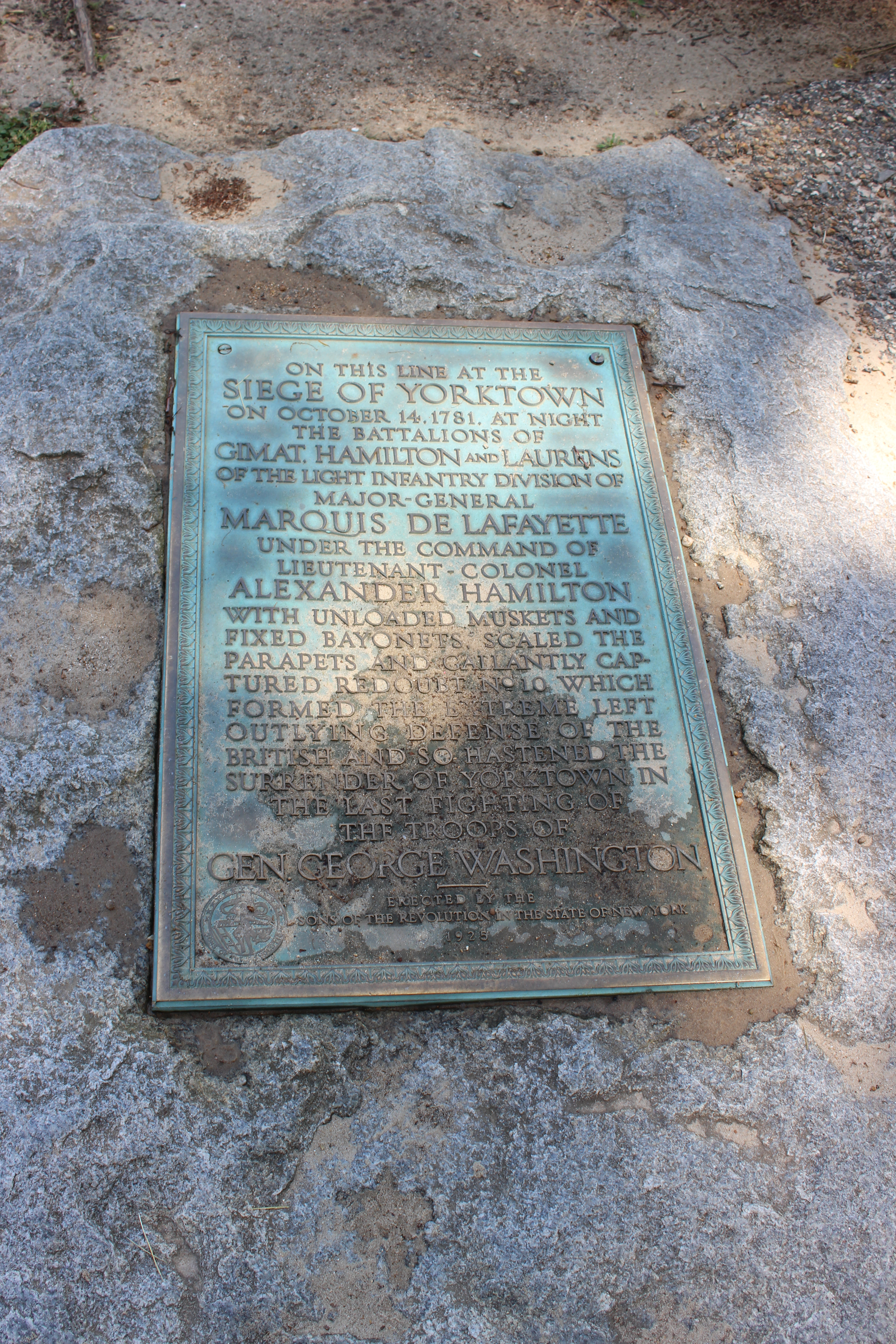
A few years ago I had the opportunity to visit Yorktown National Battlefield. This evening I was scrolling through my cache of American Revolution photos on an external hard drive, when I came across the picture below.

IMG_5993

A simple monument to three luminaries of the American Revolution. Three brilliant young men, one of which, John Laurens, would fall in one of the last small engagements of the war.

Could you imagine the conversation between the three that fateful October evening of 1781?

ERW Weekender: Cornwallis House

IMG_0461
Cornwallis House, Winnsboro, South Carolina

In the quaint South Carolina town of Winnsboro, a few miles off of current Interstate-77 sites a two-story stands one of the oldest dwellings in a town founded by Richard Winn of Virginia a few years before the start of the American Revolution.

Yet, it was during those hostilities that one of the more famous military leaders came to “Winnsborough” as it was sometimes listed on maps of the time. His name, Lord Charles Cornwallis, the overall commander of British forces in the Southern Colonies. He would use the house during the winter of 1780-1781.

The house itself is an enigma. The structure dates to pre-1776 obviously, but the builder and owner of the house is still not known. Yet, it is well document that the house did serve during the labeled “winter of discontent” for the British and Cornwallis.

Across the street resides the Mount Zion Institute which became quarters for British soldiers during that winter of 1780-1781.

After the conflict the property and house was deeded to Captain John Buchanan, a veteran of the American Revolution. Buchanan was part of the welcoming party for the Marquis de Lafayette when the Frenchman landed at Georgetown, South Carolina.

Although not open to the public, special requests will be entertained. Click here for the link below for more information on the house and also who to contact for those special arrangements.

ERW Weekender: Bunker Hill Monument & Museum

Emerging Revolutionary War welcomes back guest historian Katie Turner Getty. 

Towering over Charlestown, Massachusetts, its foundation set in sacred battleground soil, the Bunker Hill Monument is a 221 foot obelisk commemorating the Battle of Bunker Hill. The cornerstone of the monument was laid by the Marquis De Lafayette in 1825, fifty years after the battle was fought on June 17, 1775.

BunkerHillMon-KTGetty
Bunker Hill Monument (author collection)

Although the land surrounding the monument has been greatly developed since the battle, visitors today can get still get a sense of the 18th-century landscape just by walking through Charlestown and climbing the hill to reach Monument Square. Approaching visitors are greeted by the statue of Colonel William Prescott, the gray granite of the monument serving as an impressive backdrop behind him. Continue reading “ERW Weekender: Bunker Hill Monument & Museum”