“Rev War Revelry” Visits Forts Lee & Washington

On both banks of the Hudson River, in 1776, sat two forts the patriots hoped would stop any British excursions up the waterway. Named for the top two military leaders of the Continental army–George Washington and Charles Lee–the fortifications both fell to the British by late November of that same year.

Join Emerging Revolutionary War this Sunday, at 7 p.m. EDT on our Facebook page as the forts become the focal point for this week’s “Rev War Revelry.” Joining ERW will be Charlie Dewey who will help break down and discuss the implications of these actions in November 1776.

Dewey, an officer in the New York Army National Guard and a graduate of the Virginia Military Institute has been a museum educator and special events coordinator for Fort Lee Historic Park since May 2018. He has been published in the Journal of the American Revolution along with being the author of various other scholarly articles on the Revolutionary time period.

Fort Washington, the last toehold of the Americans on Manhattan Island that fell and Fort Lee, the beginning of the long trek by Washington’s army across New Jersey late in 1776 have a unique part in American Revolutionary history. We look forward to you joining us this Sunday for this historian happy hour.

“This Sudden Expedition”: The Capture of Fort Ticonderoga – 246 Years Later

On this date in 1775, an early victory was secured for the American cause along the western shore of Lake Champlain in New York. Led by Colonel Benedict Arnold and Ethan Allen, over eighty men surprised and overwhelmed Fort Ticonderoga’s garrison, capturing the strategic stronghold and much needed supplies and cannon for the Americans. On May 22, the Pennsylvania Packet reported on the news received from the north:

On Wednesday evening last arrived here, John Brown, Esq; from Ticonderoga, express to the General Congress, from whom we learn, that on the beginning of this instant, a company of about fifty men, from Connecticut, and the western part of Massachusetts, and joined by upwards of one hundred from Bennington, in New-York government, and the adjacent towns, proceeded to the eastern side of Lake Champlain, and on the night before the 11th current, crossed the Lake, with 85 men, (not being able to obtain craft to transport the rest,) and about daybreak invested the fort, whose gate, contrary to expectation, they found shut, but the wicker open, through which, with the Indian war whoop, all that could, entered one by one, others scaling the wall on both sides of the gate, and instantly secured and disarmed the sentries, and pressed into the parade, where they formed the hollow square;  but immediately quitting that order, they rushed into the several barracks on three sides of the fort, and seized on the garrison [commanded by Captain William Delaplace], consisting of two officers, and upwards of forty privates, whom they brought out, disarmed, put under guard, and have since sent prisoners to Hartford, in Connecticut. All this was performed in about ten minutes, without the loss of a life, or a drop of blood on our side, and but very little on that of the King’s troops.

In the fort were found about thirty barrels of flour, a few barrels of pork, seventy odd chests of leaden ball, computed at three hundred tons, about ten barrels of powder in bad condition, near two hundred pieces of ordnances of all sizes, from eighteen pounders downwards, at Ticonderoga and Crown Point, which last place, being held only by a corporal and eight men, falls of course into our hands.

By this sudden expedition, planned by some principal persons in the four neighboring colonies, that important pass is now in the hands of the Americans, where we trust the wisdom of the Grand Continental Congress, will take effectual measures to secure it….

The story of the capture of Fort Ticonderoga is as confusing as it is epic. Arnold, a Connecticut man, held a colonel’s commission to take the fort from the Massachusetts Committee of Safety, but he rode ahead to be part of the action without the men he was ordered to raise for the expedition; and Ethan Allen and his Green Mountain Boys of the Hampshire Grants were anti-New York and in search of their own glory after being asked to join a separately organized assault on the fort by Colonel Edward Mott sanctioned by Connecticut.

Ethan Allen demands the surrender of Fort Ticonderoga in this dramatized illustration. NYPL

The irony of all of this is that each plan formulated by those involved was done entirely without the advice or consent of New York, the very colony whose boundaries the fort was within. This occurred all during the commencement of the Second Continental Congress when New York was still weary of escalating hostilities with the King. Regardless of the awkward and unconcerted circumstances, it is undeniable that the fort’s capture helped secure victory for the Americans during the siege of Boston when fifty-eight pieces of ordnance were transported to assist General Washington in driving the British out of the city. Whether or not Allen heroically demanded Capt. Delaplace to surrender, “In the name of the Great Jehovah and the Continental Congress!” as is remembered (he almost definitely did not), is an entirely different question.

The Continentals’ Last Claimant: The Story of Lemuel Cook

Emerging Revolutionary War welcomes guest historian Kevin Pawlak

New York state has a rich American Revolution history. Battlefields at Saratoga, Oriskany, Fort Ticonderoga, Long Island, and more dot the state’s connection to our nation’s founding. But growing up in the western part of the state, those sites were at least a few hours’ drive.

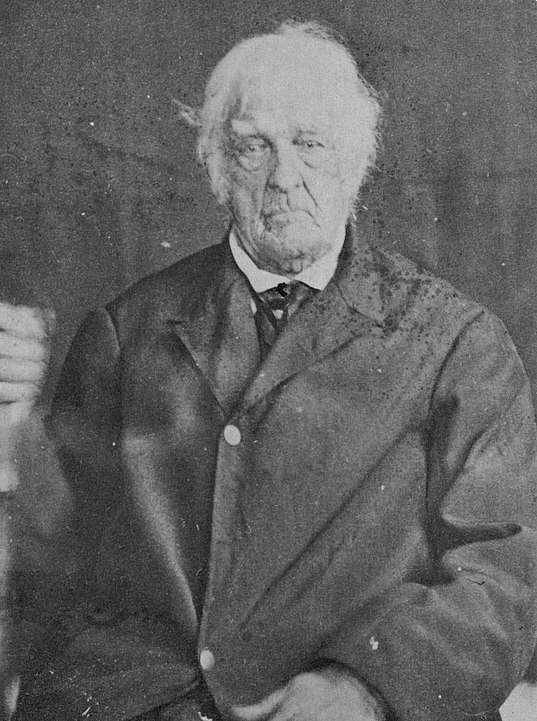
Recently, I discovered a neat story related to the American Revolution that was in my own home county—Orleans County. It is not a battlefield, though it is about a man who stood on those battlefields with George Washington’s Continental Army. Lemuel Cook, who died at the age of 107, spent the last thirty years of his life in the next town over from my hometown and died there. While he was not the last surviving veteran of the war for America’s independence, he was the last to claim a pension for his service.

Lemuel Cook

Ninety-one years prior to his death in 1866, the sixteen-year-old Connecticut native enlisted with the 2nd Continental Light Dragoons. He saw service with the dragoons at Brandywine and Yorktown.

Cook moved frequently after his service expired until he settled in Clarendon, New York in 1832. Cook’s devotion to the nation he helped create never waned until his dying days. He regularly attended town hall meetings and elections until a few years before his death. Souvenir seekers continually asked for the old veteran’s autograph, which he obliged. In 1861, a photographer captured this national treasure in a photograph.

Unfortunately, even Cook could not defeat Father Time. As he aged, his speech became “very fragmentary,” according to one newspaper. “He recalls the past slowly, and with difficulty, but when he has his mind fixed upon it, all seems to come up clear.” Despite his weariness, Cook’s spunk occasionally showed, “the old determination still manifesting itself in his look and words.” Specifically, during an interview in the midst of the American Civil War, Cook pounded his cane on the floor and proclaimed, “It is terrible, but terrible as it is the rebellion must be put down.” Incredibly, he lived to see the rebellion “put down” and died on May 20, 1866.

Cook’s grave, located in the Cook Cemetery on Munger Road in Clarendon, suffered damage in a windstorm in 2017 but was quickly fixed. In the same year, descendants and local historians unveiled a state historic marker alerting passersby to this unique niche of Revolutionary War history in a place far from the famous battlefields that achieved our nation’s independence.

History after a Pandemic

The odds are good that you haven’t been able to visit some of your favorite Revolutionary War sites during the Covid-19 pandemic. Many of these locations rely on foot traffic for their annual income and may be struggling to stay afloat amidst various state lockdowns and a smaller number of visitors.  (We left out many national, state, and local parks, which sometimes have access to government funds.  But, they often have partnerships with non-profit foundations that provide vital support for their activities.)  So, we decided to start a list of museums and parks that you can help out now and visit as circumstances allow.  No doubt it will grow.  The list does not constitute a solicitation or endorsement, but many of our historians visited some of these museums in the past and found them really helpful to our own work.  (You may need to copy and paste some links.)  If you search our “weekender” posts, there are even more sites to support and visit when you can.

Continue reading “History after a Pandemic”

Finding Your Patriot

Emerging Revolutionary War welcomes back guest historian Kate Bitely

Part 1

How much do you know about your great-great-great-great-great grandparents? Did your family pass on detailed stories of their past? Perhaps you took a DNA test like ‘23andMe,’ or maybe you know little if anything about your roots. Whatever the case may be, now is a great time to start the journey of learning about your familial past, as it might just lead you to an unexpected destination. For me, I grew up knowing my distant relative, John Biteley Sr., a New Yorker who come to the U.S. from Germany in the 1750’s. His American born son, John Biteley Jr., went on to serve as a patriot in the American Revolution. My grandfather, Ralph Bitely, always told us, “the Bitely’s were at Ticonderoga!”  In 2010, my grandfather passed away. A few years after his death, my grandmother gave me a box filled with documents that detail the history of the Bitelys. This box would be the start of my journey back to the 18th century.

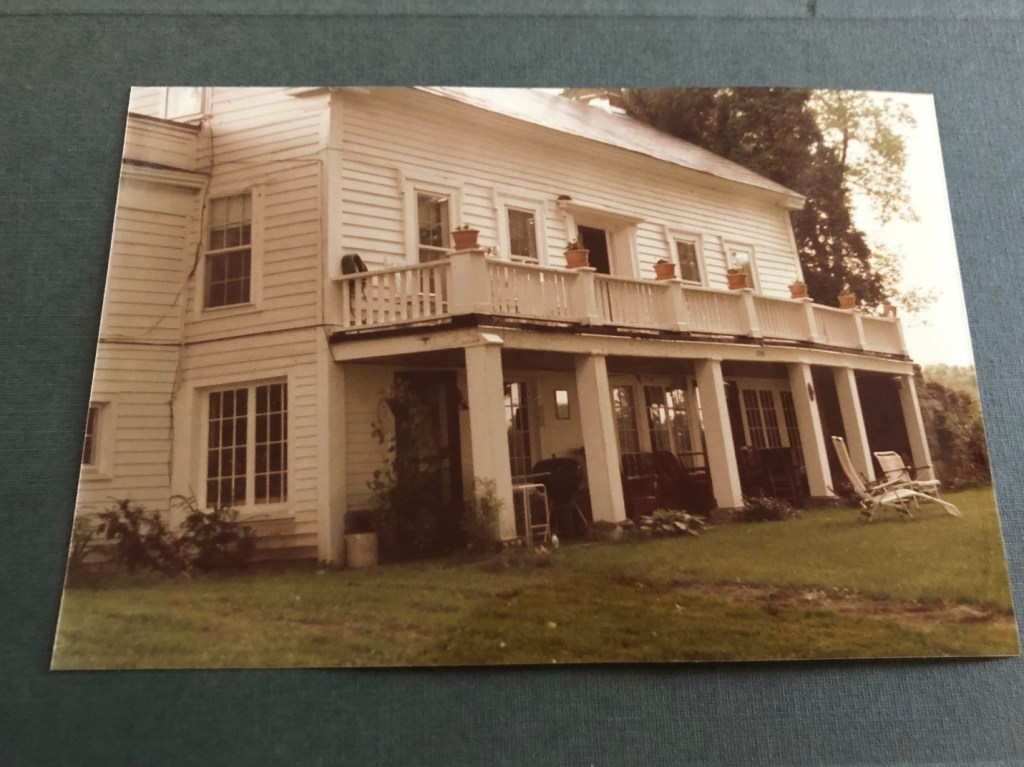
As I dug through the box a few years ago, I recall being filled with excitement as I learned about my family. They were farmers, predominately grape farmers to be exact. (My love for wine is clearly hereditary). As I dug deeper, I found a more modern picture of the “Bitely Homestead,” the home of John Biteley Sr., located in Saratoga County, NY. It was first built before the war around 1770, was burned down by Gen. John Burgoyne in 1777 and was rebuilt in 1779. Nearby remains a family cemetery where many of my relatives remain. While I have not been for a visit yet, I hope to make a trip soon when conditions are safe to do so.

Photo of the “Bitely Homestead” in Moreau, NY rebuilt in 1779 after the British burned down the original structure in 1777 found inside the box from my grandmother.
Continue reading “Finding Your Patriot”

Annis Boudinot Stockton, Mythmaking, and the American Revolution (cont.)

Emerging Revolutionary War welcomes back guest historian Blake McGready for part two of the series. To read part one, click here.

While her poetry avoided wartime setbacks and conjured stories of revolutionary unity, Stockton’s poems did confront the violent realities of what she called “a most cruel and eventful war”. Her choice allusions demonstrate how, in her mind, wartime violence bound the revolutionaries together. Following the death of General Joseph Warren at the battle of Bunker Hill she lamented, “That heart, which, studious of his countries good / Held up her rights and seal’d them with his blood!” In 1776 Stockton wrote of revolutionary soldiers who “fought and bled to save their native land / From bowing to a tyrant’s stern command,” and honored great men dying on battlefields “Made fertile by the blood of heroes slain.” Whereas historians have noted how the war’s violence was often deliberately excluded from the popular imagination, by contrast, Stockton’s war and violence were inseparable.[i]

Continue reading “Annis Boudinot Stockton, Mythmaking, and the American Revolution (cont.)”

Press Release: Veterans Dig History in Groundbreaking Project at Saratoga Battlefield

From our friends at American Battlefield Trust (ABT), for more information about the ABT click here.

ABT


Iraq, Afghanistan and Vietnam veterans have returned to the battlefield.  But instead of the Middle East or Southeast Asia, they are mustering at Saratoga National Historical Park where they will be applying their military knowledge and newly learnt archaeological skills to conduct a field survey at the famous Revolutionary War battlefield.

Approximately 33 veterans will participate in the project created by the American Veterans Archaeological Recovery (AVAR) in cooperation with the American Battlefield Trust and the National Park Service (NPS).  Working together, they will attempt to verify revolutionary-era troop locations during the 1777 battle while aiding participants’ transition back to civilian life.  AVAR recruits veteran participants through social media, and specifically targets those who feel isolated and disconnected after leaving service; the organization predominantly recruits veterans from recent conflicts, such as Iraq and Afghanistan, with a young average participant age of 35. Continue reading “Press Release: Veterans Dig History in Groundbreaking Project at Saratoga Battlefield”

Committees of Safety and the Revolutionary War: King’s District, New York

Emerging Revolutionary War welcomes guest historian Kieran O’Keefe. 

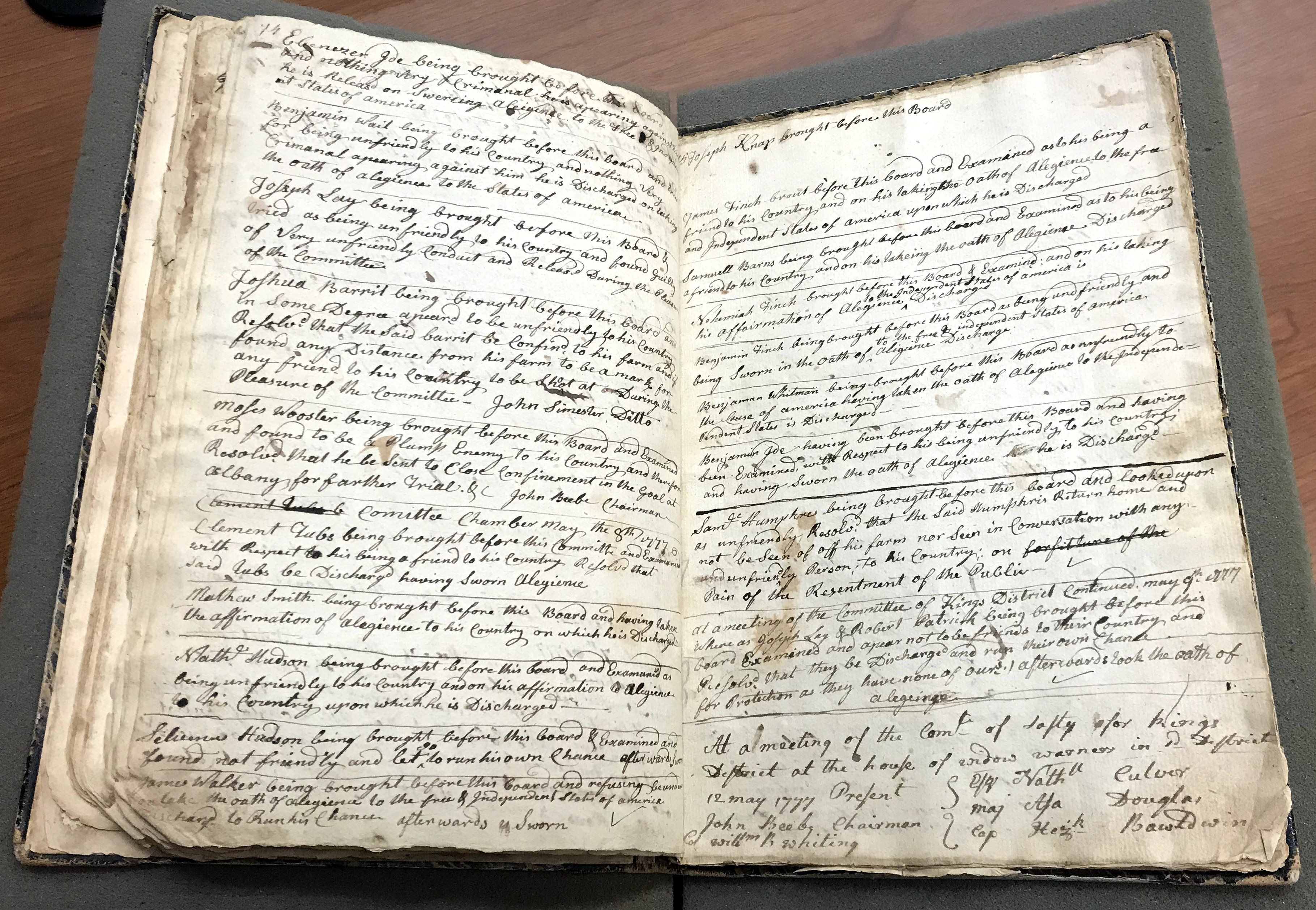
While the most famous scenes of the American Revolutionary War involve major battles or deliberations in Congress, the driving force behind the Revolution within small towns were committees of safety. As the war progressed and British authority dissipated, these committees became the effective government in most localities until the formal establishment of state governments. They had responsibilities such as regulating the economy, suppressing loyalists, procuring military supplies, raising revolutionary forces, and overseeing civil and criminal justice. Despite their ubiquity, it is rare to find the records of a committee completely intact. One such exception is the King’s District Committee of Albany County, New York, whose minutes survive in the Library of Congress.

The First Continental Congress created the committee system when it adopted the Continental Association in 1774. The Association called for the non-importation, non-consumption, and non-exportation of goods between the colonies and Great Britain, Ireland, and the British West Indies. This boycott was to put economic pressure on Britain to repeal the punitive Coercive Acts, which punished Massachusetts for the Boston Tea Party by closing the port of Boston and bringing the colony under tighter royal control with the aid of British redcoats. The Continental Association also stated that “a committee be chosen in every county, city, and town, by those who are qualified to vote for representatives in the legislature, whose business it shall be attentively to observe the conduct of all persons touching this association.” These committees were to ensure that all Americans adhered to the boycott stipulated in the Association. Committees began forming throughout the colonies in late 1774 and soon took on a greater role than originally designed, frequently seizing the reins of local government. The committees were unusually democratic. They generally consisted of about five men who were popularly elected, and many members were from the middling ranks of society with no prior political experience.

King's District
The King’s District Committee record book (author collection) 

Continue reading “Committees of Safety and the Revolutionary War: King’s District, New York”

“Elbow Room” for “Uncle Johnny”

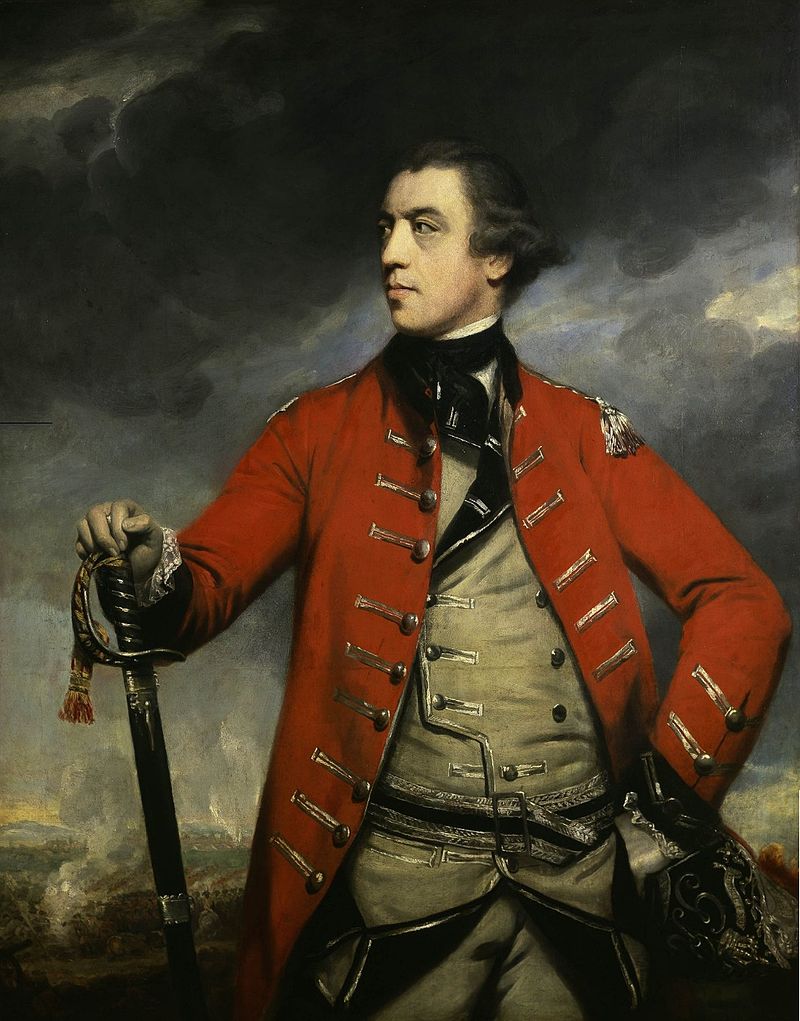
On this date in 1777, British General John Burgoyne surrendered to American General Horatio Gates around Saratoga, New York. This victory solidified French support for the fledgling American nation and became one of the turning points in the road to independence.

800px-BurgoyneByReynolds
General John Burgoyne

Out of this momentous occasion came an anecdote about the British general officer. The short story has some truth in it, yet, whether the entire tale is accurate, well, I’ll leave that for you to decide!

Two years prior to the Battles of Saratoga and upon arriving in Boston, Massachusetts, General Burgoyne remarked “Well, let us get in, and we’ll soon find elbow-room” when he was told the numbers of militia besieging British regulars around the town.

After his capitulation, Burgoyne and his forces were marched toward Albany, New York, and multitudes of people turned out to see the vanquished British and German soldiery along the route. One resident supposedly yelled from her homestead doorway;

“Make elbow room for General Burgoyne.” 

Not what he had envisioned in 1775 upon disembarking in North America. Yet, history does not relate what “Gentleman Johnny” Burgoyne thought exactly about the elbow room he received in the countryside of upstate New York!*


This slideshow requires JavaScript.


*“Gentleman Johnny” was a nickname acquired by Burgoyne was stationed in London with the Horse Guards, a fashionable cavalry regiment.” 

**Information gathered from A.J. Langguth’s “Patriots” and The Patriot Resource, which can be found here.

George Washington’s Greatest Speech?

On the morning of March 15, 1783, George Washington strode into the “New Building” or “Temple” as the structure was referred as, to address the assembled officers of the Continental Army. He asked General Horatio Gates if he could have the floor to say a few words and when he unfolded his pieces of paper on the podium, the words lost their importance.

Why? Continue reading “George Washington’s Greatest Speech?”