Robert Morris: Founding Father and Revolutionary Financier

Emerging Revolutionary War welcomes back guest historian Michael Aubrecht

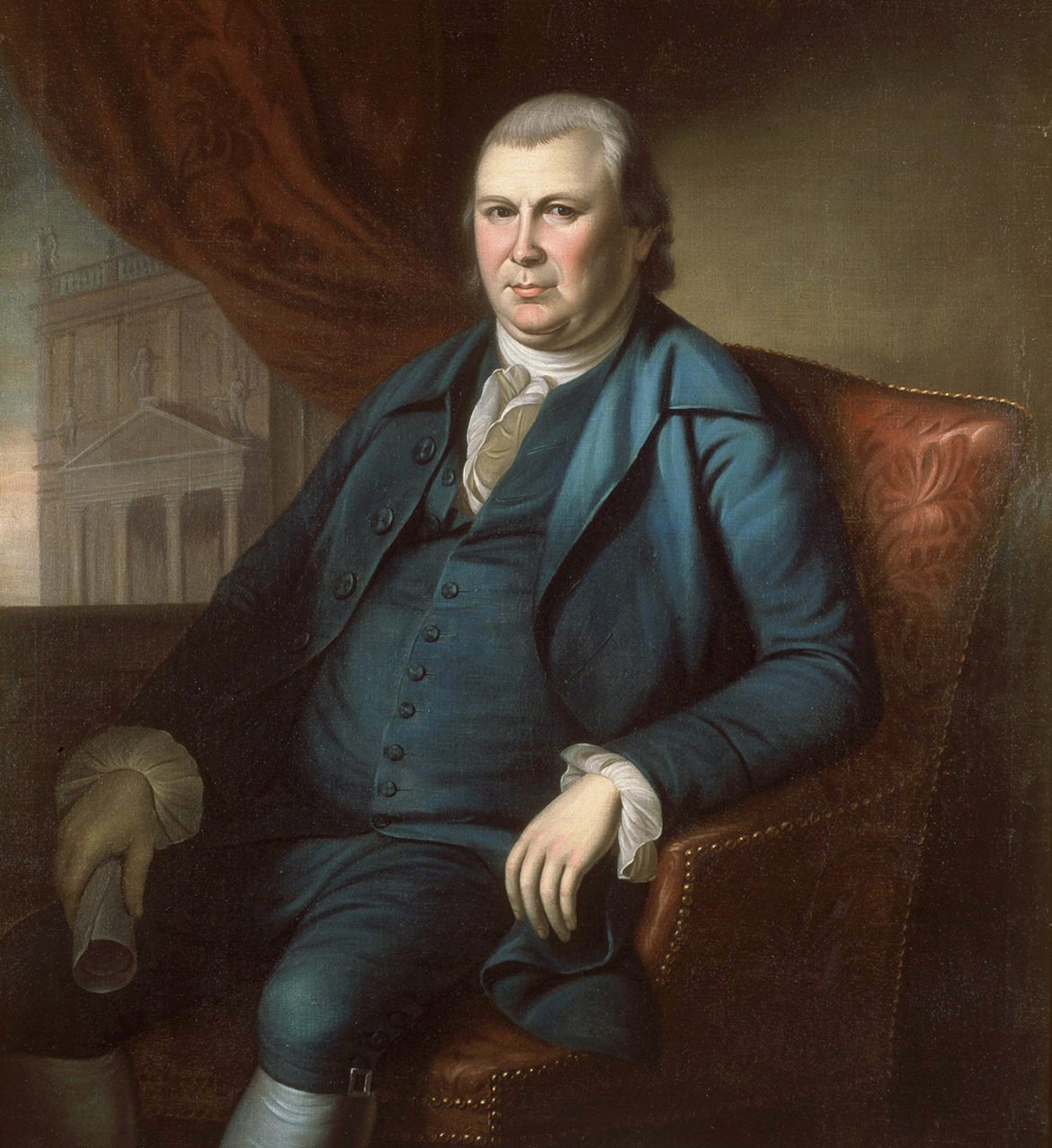
To call Robert Morris “a political renaissance man” would be an understatement. He was vice president of the Pennsylvania Committee of Safety (1775–76) and was a member of the Continental Congress (1775–78) as well as a member of the Pennsylvania legislature (1778–79, 1780–81, 1785–86). Morris practically controlled the financial operations of the Revolutionary War from 1776 to 1783. He was a delegate to the Constitutional Convention (1787) and served in the U.S. Senate (1789–95). Perhaps most impressive is the fact that he signed the Declaration of Independence and the Articles of Confederation and later signed the U.S. Constitution.

At the start of the war Robert Morris was one of the wealthiest men in the colonies, but he would go on to claim bankruptcy after some catastrophic decisions. To fully appreciate the contributions of Robert Morris we must go back and examine him from the beginning.

Robert Morris

Robert Morris was born on January 31, 1734, in Liverpool, England, the son of Robert Morris, Sr., and Elizabeth Murphet Morris. His mother died when he was only two and he was raised by his grandmother. Morris’ father immigrated to the colonies in 1700, settled in Maryland and in 1738 he began a successful career working for Foster, Cunliffe and Sons of Liverpool. His job was to purchase and ship tobacco back to England. Morris Sr. was known for his ingenuity, and he was the creator of the tobacco inspection law. He was also regarded as an inventive merchant and was the first to keep his accounts in money rather than in gallons, pounds, or yards.

In 1750 tragedy would once again strike the Morris family. In July Morris Sr. hosted a dinner party aboard one of the company’s ships. As he prepared to depart a farewell salute was fired from the ship’s cannon and wadding from the shot burst through the side of the boat and severely injured him. He died a few days later of blood poisoning on July 12, 1750. The tragedy had a terrible effect on Morris who became an orphan at the age of 16. Looking for a change he left Maryland for Philadelphia in 1748. He was taken under the wing of his father’s friend, Mr. Greenway, who filled the gap left by the death of Morris’ father. Raised with a tremendous work ethic Morris flourished as a clerk at the merchant firm of Charles Willing & Co. 

Following in his father’s footsteps Morris was also gifted with successful ingenuity. In his twenties he took his earnings and joined a few friends in establishing the London Coffee House. (Today the Philadelphia Stock Exchange claims the coffee house as its origin.) Morris was sent as a ship’s captain on a trading mission to Jamaica during the Seven Years War (1756-1763). He was captured by a group of French Privateers but managed to escape to Cuba where he remained until an American ship arrived in Havana. Only then was he able to secure safe passage back to Philadelphia. 

Shortly after Morris’ return to the colonies Willing retired and handed the firm over to his son Thomas who offered him a partnership. This resulted in the formation of Willing, Morris & Co. The firm boasted three ships that were dispatched to the West Indies and England importing British cargo and exporting American goods. This relationship lasted for over 40 years and was immensely successful. At one point, Morris was ranked by the Encyclopedia of American Wealth, along with Charles Carroll of Carrollton, as the two wealthiest signers of the Declaration of Independence.

As influential merchants, Morris and Willing disagreed with the changes in tax policy. In 1765, the Stamp Act was passed and was met with massive resistance. Morris was at the forefront and led protests in the streets. His fervor was so striking that he convinced the stamp collector to suspend his post and return the stamps back to their origin. The tax collector stated that if he had not complied, he feared his house would have been torn down “brick by brick.” In 1769, the partners organized the first non-importation agreement, which forever ended the slave trade in the Philadelphia region.

Morris married Mary White on March 2, 1769, and they had seven children. In 1770, he bought an eighty-acre farm on the eastern bank of the Schuylkill River where he built a home he named “The Hills.” Due to his growing reputation Morris was asked to be a warden of the port of Philadelphia. Showing his tenacity, he convinced the captain of a tea ship to return to England in 1775.

Later on, Morris was appointed to the Model Treaty Committee following Richard Henry Lee’s resolution for independence on June 7, 1776. The resulting treaty projected international relations based on free trade and not political alliance. The treaty was eventually taken to Paris by Benjamin Franklin who transformed it into the Treaty of Alliance which was made possible by the Continental Army’s victory at Yorktown in 1781. 

Scholars disagree as to whether Morris was present on July 4 when the Declaration of Independence was approved. But when it came time to sign the Declaration on August 2 he did so. Morris boldly stated that it was “the duty of every individual to act his part in whatever station his country may call him to in hours of difficulty, danger and distress.” Until peace was achieved in 1783, Morris performed services in support of the war. His efforts earned him the moniker of “Financier of the Revolution.”

Michael is the author of “The Letters of Robert Morris: Founding Father and Revolutionary Financier.

Philip Livingston’s Grave, York, PA

While driving near York, Pennsylvania, I decided to stop by Prospect Hill Cemetery to visit the grave of Union General William Franklin. The cemetery was massive, and after locating Franklin’s grave and snapping a few photographs, I continued up the hill where I saw a plot devoted to dead Union soldiers who died while being treated at the army hospital located in York during the war. They were men from all throughout the North. Many of them simply having volunteered to fight, marched away from home, got sick, and died.

An older grave caught my eye just a stone’s throw away from the Civil War graves – a notable one that I did not know was in the cemetery. It was the grave of another non-Pennsylvanian. In fact, he was a New Yorker, and died in York in June of 1778, while a sitting member of the Continental Congress. It was the final resting place of a signer of the Declaration of Independence – Philip Livingston.

Philip Livingston certainly is not one of the Founding Fathers we remember. In fact, we probably remember his brother, William, who served as New Jersey’s Governor during the war, more. But Philip had a very impressive resume and played a part in nearly every major political conference in the colonies held in the years leading up to and during the early days of the American Revolution.

Born in 1716, Livingston graduated from Yale and pursued a career in the import business. Quickly, he built on his status and influence after relocating to Manhattan. He attended the Albany Congress in 1754, and was a member of the Stamp Act Congress, New York’s Committee of Safety, and president of the New York Provincial Congress in 1775. The prior year, Livingston was appointed to the First Continental Congress and was forced to flee his Manhattan home with his family when the British occupied the city in 1776. While he participated in the Second Continental Congress, he also served in the New York Senate.

Unfortunately, Livingston would never get to see his dream of an independent American nation become a reality. Following the British capture of Philadelphia in 1777, the Continental Congress relocated to York, Pennsylvania. Livingston had been suffering from dropsy, and his health was quickly deteriorating. He died suddenly in York while Congress was in session on June 12, 1778, and was laid to rest on Prospect Hill.

Grave of Philip Livingston, Prospect Hill Cemetery, York, Pennsylvania

If you ever find yourself near York, take the time to visit the grave of a Founding Father who, far from home, died before the cause in which he pledged his life and sacred honor for could be won.

Book Review: The Whiskey Rebellion: A Distilled History of an American Crisis (Yardley, PA: Westholme Publishing, 2023)

During the second half of the 18th century, the Forks of the Ohio, where the Monongahela and Allegheny Rivers come together to form the Ohio River, were a vortex of conflict that dramatically influenced the course of events in North America and the unfolding of a young United States.  In his latest book, The Whiskey Rebellion: A Distilled History of an American Crisis, historian Brady J. Crytzer adds to his already substantial body of work exploring the critical role the region played in American history.  It is a must read.

            In 1791, Congress passed a whiskey tax to raise revenue and pay off war debts.  Treasury Secretary Alexander Hamilton, whose brainchild the whiskey tax was, designed the tax to help consolidate capital for investment in the country’s infrastructure.  Small farmers, who constituted the bulk of distillers on the frontier, rebelled.  Their resentment of the tax was not driven merely by its existence, but also by its structure, which they argued discriminated against small farmers.   They had a point.  Whiskey, not just as commodity, was a medium of exchange because hard currency was scarce on the frontier.   Thus, in some ways, the whiskey tax resembled the stamp tax; one had to pay it to engage in normal commerce.  The tax could be levied both on stills and the amount of whiskey each distiller produced.  Large enterprises who ran their stills year-round could pay the tax.  Small farmers, however, primarily ran their stills for brief periods in order to convert grain crops to more readily transportable whiskey.   Moreover, the tax had to be paid in cash, which was scarce on the frontier.  As a result, the tax was regressive and more difficult for smaller farmer to pay than for large the large distillers.  

            Rebellion was in some ways the predictable outcome.  By 1791, the frontier was populated by people with a tradition of resisting governments they believed were run for the benefit of others.  Whether those elites were in far-off London or distant Philadelphia was immaterial.  Pittsburgh might be a federalist outpost as a frontier center for exercising the authority of the newly-established United States government, but the more populous surrounding countryside was dominated by small farmers and small communities.  They responded much in the same way Americans had before the Revolution: community meetings and remonstrances, isolated attacks on officials, intimidation of those cooperating with distant governments, destruction of property, the creation of new political institutions, and the old stand-by: tarring and feathering.  Events culminated in a two-day battle for General John Neville’s home and a large muster of rebels at the site of British Major General Edward Braddock’s defeat on the Monongahela River.

Continue reading “Book Review: The Whiskey Rebellion: A Distilled History of an American Crisis (Yardley, PA: Westholme Publishing, 2023)”

“Rev War Roundtable with ERW” Brandywine Campaign

The largest, in terms of military forces deployed, engagement in the American Revolutionary War occurred on September 11, 1777 in southeastern Pennsylvania. The Battle of Brandywine was a pivotal moment in the British campaign that captured the patriot capital in Philadelphia. With the anniversary of the engagement happening the Friday before, the Emerging Revolutionary War crew will make this engagement and campaign the focal point of Sunday’s “Rev War Roundtable with ERW.”

Joining the “Rev War Revelry” this Sunday, at 7pm on Emerging Revolutionary War’s Facebook page will be Michael C. Harris, historian and author of Brandywine: A History of the Battle that Lost Philadelphia but Saved America, September 11, 1777, which was published and is available for purchase by Savas Beatie. Click here to order.

Besides authoring the history mentioned above, Harris has an upcoming release, on another important battle in Pennsylvania, Germantown, fought on October 4, 1777. Rumor on the street has it that he will be joining ERW at a future date to discuss this important battle and talk about his new book.

A bit of a background on Harris. He is a graduate of the University of Mary Washington and the American Military University. He has worked for the National Park Service in Fredericksburg, Virginia, Fort Mott State Park in New Jersey, and the Pennsylvania Historical and Museum Commission at Brandywine Battlefield. He has conducted tours and staff rides of many east coast battlefields. Michael is certified in secondary education and currently teaches in the Philadelphia region. He lives in Pennsylvania with his wife, Michelle and son, Nathanael.

Although the battle lost Philadelphia for the patriots, Harris does not hold back on the culprit for the setback:

“Washington failed the army, the army did not fail Washington.”

To hear the reasoning behind that emphatic quote we hope you join us this Sunday!

History after a Pandemic

The odds are good that you haven’t been able to visit some of your favorite Revolutionary War sites during the Covid-19 pandemic. Many of these locations rely on foot traffic for their annual income and may be struggling to stay afloat amidst various state lockdowns and a smaller number of visitors.  (We left out many national, state, and local parks, which sometimes have access to government funds.  But, they often have partnerships with non-profit foundations that provide vital support for their activities.)  So, we decided to start a list of museums and parks that you can help out now and visit as circumstances allow.  No doubt it will grow.  The list does not constitute a solicitation or endorsement, but many of our historians visited some of these museums in the past and found them really helpful to our own work.  (You may need to copy and paste some links.)  If you search our “weekender” posts, there are even more sites to support and visit when you can.

Continue reading “History after a Pandemic”

Following Washington

Emerging Revolutionary War welcomes guest historian Terry Rensel.

I despise driving the Pennsylvania Turnpike, so for my drive from Fredericksburg, Virginia to Erie, Pennsylvania to visit family for Thanksgiving I decide to go cross-country to Cumberland, Maryland and then play it by ear from there. As I realized that I was going to be close to Fort Necessity, I decided to make that a stop since I’ve never been there, then see what the day held.

Although a child of NW Pennsylvania, and getting plenty of young George Washington in school, Fort Necessity was a place that I have never been before. It appealed to both my interest in, and desire to visit as many, National Park Service sites as possible. I also have an interest in travelling historic roads, so the fact that US 40, the National Road, was included made it a bit of a two-for for me.

I knew that Fort Necessity itself was a small fortification, I had no idea just how small until I saw it with my own eyes. I can’t believe that this unassuming stockade was the place was a place where the opening acts of the French and Indian War occurred.

Fort Necessity from treeline

The National Park Service has signage, and recently planted trees, where the historic 1754 tree line was. There wasn’t much room for maneuver. The Visitor Center isn’t a very large building, but their exhibits were fantastic. Along with battle related items, there is also a series of items and interpretation for the National Road.

Continue reading “Following Washington”

Visiting a Tragedy: Gnadenhutten, OH

Few places in the American Revolution evoke sorrow like Gnadenhutten, Ohio.  There, in March 1782, militia from Western Pennsylvania bludgeoned, scalped, and burned to death some ninety-six bound Indians who had adopted the Christian faith preached by missionaries from the church of the United Brethren.  Thirty-four of the victims were children.  Benjamin Franklin called the killings “abominable murders.”[1]

IMG_2540
The Chapel at Gnadenhutten with the 1872 memorial.  The Cooper’s Hut is to the right.  (ES Photo)

Continue reading “Visiting a Tragedy: Gnadenhutten, OH”

General Edward Hand: The Squaw Campaign

Emerging Revolutionary War welcomes guest historian Eric Sterner. 

In February 1778, Brigadier General Edward Hand, commanding Continental forces at Fort Pitt on the American frontier, launched what may be one of the oddest campaigns of the American Revolution, more famous for its fecklessness than any benefit to the American war effort. Born in Ireland, Hand arrived in the colonies with the 18th Royal Irish Regiment as a surgeon’s mate.  He eventually left service in 1774 and set up a medical practice in Philadelphia.  The siege of Boston found him among the besiegers as Lieutenant Colonel of a Pennsylvania Rifle Battalion.  He fought under Washington on Long Island, at White Plains, and then Princeton, after which Washington successfully pursued the rank of Brigadier for him before sending him to Pittsburgh.[1]   Hand arrived in June, 1777, finding just two companies of the 13th Virginia.[2]   As was often the case on the frontier, Fort Pitt was under-garrisoned and Continental officers would have to scrounge constantly for troops, largely relying on local militia forces to defend the frontier.

Hand
General Edward Hand (courtesy of Ohio History Central)

Hand hoped to conduct a campaign to the west, driving toward British power at Detroit, but was unable to raise sufficient forces that fall.  Instead, he settled for a trip down the Ohio to ensure local garrisons were in proper order.[3]  Around Christmas, Hand received information that the British had established a small magazine on the Cuyahoga River, likely somewhere close to where it empties into Lake Erie in the current city limits of Cleveland.[4]  As December gave way to January and February, Hand resolved to do something about it.  At the beginning of the month, he wrote Colonel William Crawford, formerly of the 13th Virginia, currently of the Pennsylvania militia and a well-respected local leader, entreating the colonel to undertake an expedition:
“As I am credibly informed that the English have lodged a quantity of arms, ammunition, provision, and clothing at a small indian Town, about one hundred miles from Fort Pitt to support the savages in their excursions against the inhabitants of this and the adjacent counties, I ardently wish to collect as many brave, active lads as are willing to turn out, to destroy this magazine.  Every man must be provided with a horse, and every article necessary to equip them for the expedition, except ammunition, which, with some arms, I can furnish.” Continue reading “General Edward Hand: The Squaw Campaign”

Fight for Osborne Hill

From a Pennsylvania State Historical Commission marker, one quickly can find out the importance of Osborne Hill to the Battle of Brandywine, fought on September 11, 1777.

Photo184914
Osborne Hill Marker (courtesy of Keith Smith, hmdb.org)

The hillside was the site of British General William Howe’s post in which he coordinated and commanded the different components of the British and Hessian forces that day. The battle opened the way for the British conquest of Philadelphia and was the largest, in terms of manpower fighting, of any American Revolutionary War battle.

Now, this important tract of land needs a few more people to fight for its control and preservation. Continue reading “Fight for Osborne Hill”

The Battle of Crooked Billet

Join our friends at the Lehigh (PA) Valley American Revolution Round Table on Wednesday, November 15, 2017 at 6:30 p.m. at the Oechls Center for Global Education at Lafayette College in Eastern, Pennsylvania. The topic is the battle mentioned above.

Noted historian, reenactor, and U.S. Attorney General Denis Cooke will be the speaker. See flyer below for further details.

LVARRT Poster-page-001