“Rev War Revelry” Founding Martyr Dr. Joseph Warren

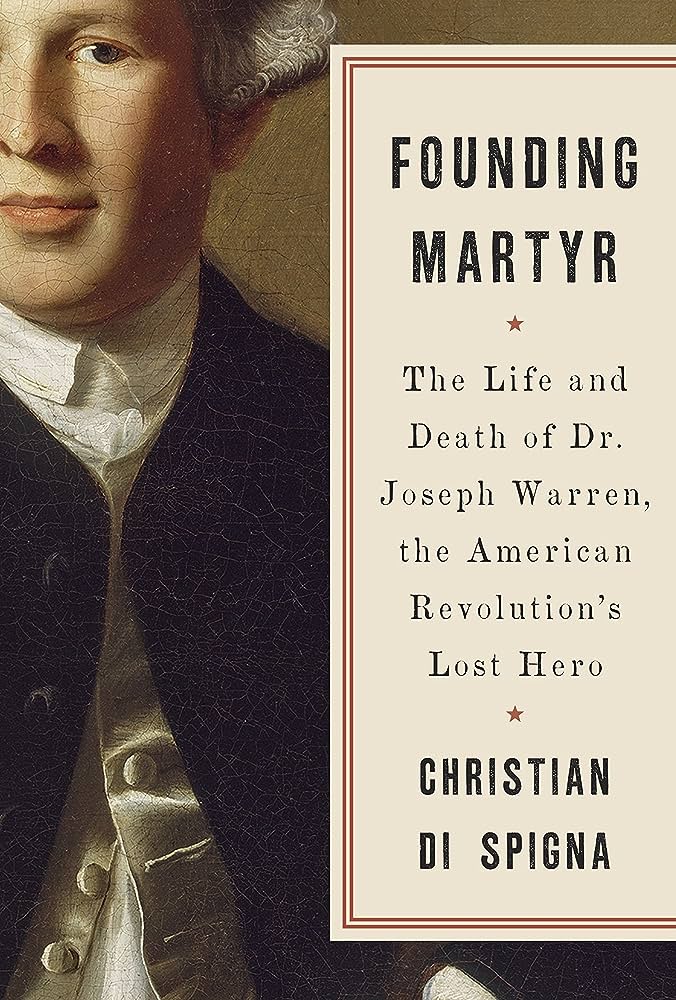
Dr. Joseph Warren is considered by many “the lost hero of the American Revolution.” Warren was the brainchild of the revolution movement in Boston. Warren was involved in almost every major insurrectionary act in the Boston area for a decade, from the Stamp Act protests to the Boston Massacre to the Boston Tea Party, and his incendiary writings included the famous Suffolk Resolves, which helped unite the colonies against Britain and inspired the Declaration of Independence.

Joining Emerging Revolutionary War will be historian and author Christian Di Spigna. He is the author of Founding Martyr: The Life and Death of Dr. Joseph Warren, the American Revolution’s lost hero. He is the Executive Director of the Dr. Joseph Warren Foundation and is the vice chairman for the Revolution 250 committee of Massachusetts Freemasons. He also serves on the board of the Bunker Hill Monument Association.

As we approach the 250th commemoration of the Boston Tea Party, we will focus on Warren’s life, his role in the Boston Tea Party and his lasting impact on the Revolution. Grab a drink and join us as we talk with author and historian Di Spigna about Warren, the patriot who once said…

“When Liberty is the prize, who would shun the warfare? Who would stoop to waste a coward thought on life?”

See you Sunday at 7 p.m. EDT on Emerging Revolutionary War’s Facebook page!
“Rev War Revelry” Battlefields!

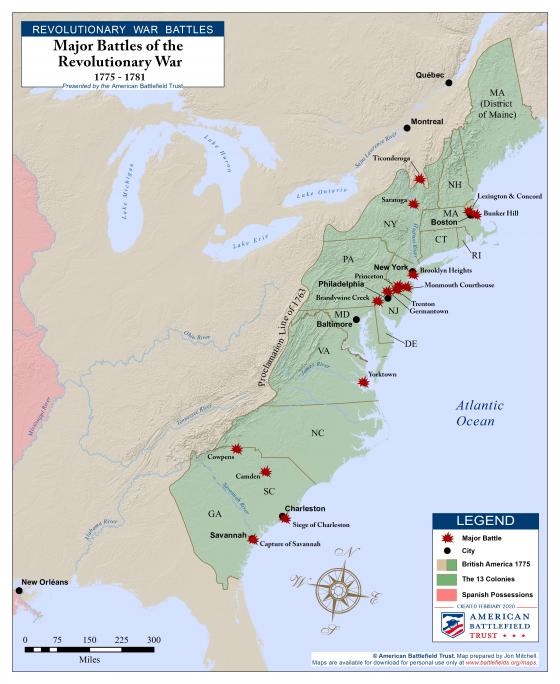
Lexington and/or Concord or both? Same question, Trenton or Princeton or both? Guilford Court House? Yorktown Battlefield? Ask any historian or history enthusiast of the American Revolutionary War period what their favorite battlefield is and you may get one of the places above. Or some other hallowed ground.

This Sunday, at 7 p.m. EDT, join Emerging Revolutionary War on our Facebook page for a panel discussion on our favorite battlefields of the American Revolution. Discussion will also include the successes, pitfalls, or failure of preservation and what one can see or not see at these sites. We look forward to a lively conversation and your comments on what is the battlefield of choice.

“Rev War Revelry” Sails into Boston Harbor to talk Tea Party

On December 16, 1773, a protest orchestrated by the Sons of Liberty in Boston, Massachusetts turned words into action. Upset over recently passed legislation and the belief that “no taxation without representation” 116 people dumped 342 chests of tea owned by the British East India Company into Boston Harbor. The event was one of the milestones on the way to the American Revolution and American independence. As the Boston Tea Party, as it is known to history, closes in on its 250th anniversary, Emerging Revolutionary War will invite Evan O’Brien, the creative director for the Boston Tea Party Ships and Museum this Sunday, June 25, evening for the next “Rev War Revelry.”

We hope you can join us at 7 p.m. EDT on Emerging Revolutionary War’s Facebook page for a discussion of the history behind and on December 16, 1773 and the efforts to commemorate and interpret that time frame. If you are contemplating venturing up to Boston in December to be in the city for the 250th anniversary of this event, you will not want to miss this discussion, as Evan will share some of what the museum has been planning to commemorate when Boston Harbor became a “tea-pot.”

“Our Flag Was Still There…” Book Talk on “Rev War Revelry”

On September 14, 1814, United States forces defending Fort McHenry in Baltimore repelled the British attempt to capture the city. Flying defiantly over the brick parapets was a 30 x 42 -foot the following day, clearly seen by the British and one captive American, Francis Scott Key. Over 100 years later the poem Key began writing on September 15 became the national anthem of the United States of America. But, what about the flag that the military commander of Fort McHenry, Major George Armistead had made? Well, this iconic flag became a part of the Armistead family for almost the next century as well.

Now, historian Tom McMillan, who has written on another member of the Armistead family, returns with his latest publication, Our Flag Was Still There: The Star-Spangled Banner that Survived the British and 200 Years–and the Armistead Family Who Saved It. This fascinating read, tracing the flag and its intertwined connection with the Armistead family, will be the subject of this week’s “Rev War Revelry.” McMillan gave a bit of a teaser to entice you to listen in on Emerging Revolutionary War’s Facebook page Sunday at 7 p.m. EDT.

OUR FLAG WAS STILL THERE details the improbable two-hundred-year journey of the original Star-Spangled Banner — from Fort McHenry in 1814, when Francis Scott Key saw it, to the Smithsonian in the 21st century – thanks to three generations of an enduring military family, the Armistead’s, who defended, kept, hid, and ultimately donated the most famous flag in American history.”

We hope you grab your favorite beverage and tune in. The book is now available for purchase and Tom will have details on how to attain a copy!

“Rev War Revelry” Before the Dawn’s Early Light: Bladensburg and the Prelude to Fort McHenry

This Sunday, join Emerging Revolutionary War as we explore the prelude to Fort McHenry and the actions in Maryland and Washington D.C. in the summer of 1814. Joining Emerging Revolutionary War will be the American Battlefield Trust’s Senior Education Manager, Dan Davis.

This historian happy hour will discuss the first part of the campaign that eventually led to the climactic Battle of Baltimore, which included both the unsuccessful British attempts at Fort McHenry and North Point. Before that success for American arms, the United States suffered through the defeat at Bladensburg and the capture of the nation’s capital.

We hope you can join us on our Facebook page, on Sunday, April 30th at 7 p.m. EDT .

“Rev War Revelry” Battle of North Point

On September 12, 1814, approximately 4,700 soldiers, a mix of British infantry and marines, were landed on the North Point peninsula, a jut of land between the Back and Patapsco River and on a direct line of march toward Baltimore. While the infantry and marines advanced toward the city, the British Navy’s task was to subdue the American fortifications in Baltimore harbor. The latter was foiled by the stout defense of Fort McHenry which served as the backdrop for the future national anthem, the Star-Spangled Banner.

Less is known about the accompanying land engagement, fought at North Point between the British and American militia. That battle, which cost the life of Major General Robert Ross, the British commander, saw the American militia retreat, but in order, and stymied the initial approach of the British toward Baltimore. Furthermore, the battle gave the Americans more time to add to their defenses.

To shed light on this aspect of the Battle of Baltimore, Emerging Revolutionary War will be joined by two historians, both of who have worked on volunteered at Fort McHenry National Monument and Historic Shrine.

Jim Bailey is now the Chief of Visitor Services and Education at Manassas National Battlefield Park but is a former park ranger at Fort McHenry. The other guest historian is Chris Boyle who has been a National Park Service volunteer at Fort McHenry National Monument & Historical Shrine since 2005 in both the Fort McHenry Guard living history program and as an historical interpreter focusing on the Fort’s history from the War of 1812 through the Civil War. While not a native Baltimorean, he has called the city home for the last 20 years.

We hope you can join us on Sunday at 7 p.m EDT on our Facebook page for this historian happy hour.

“Rev War Revelry” Nathanael Greene, Quartermaster

In March 1778, Major General Nathanael Greene finally consented to become the quartermaster for the Continental army then encamped at Valley Forge. He was loathe to give up his position as a line commander in charge of a division of infantry but with reassurances from General George Washington that he would retain his place and that his expertise was absolutely needed to revitalize the quartermaster department the Rhode Islander agreed.

His work over the next two plus years paid huge dividends. On Sunday, August 21, at 7p.m. EDT join Emerging Revolutionary War on our Facebook page for the next “Rev War Revelry.” Joining ERW will be the American Battlefield Trust’s Senior Education Manager, historian and author Dan Davis.

In reference to Greene’s role as quartermaster general at Valley Forge, Davis said, “Primarily remembered for his actions during the Southern Campaign, Nathanael Greene’s efforts at Valley Forge were critical in sustaining the Continental Army during a crucial period of its history.”

We look forward to a great discussion and hope you can join us for this historian happy hour!

One artist’s depiction of what the encampment at Valley Forge looked like

“Rev War Revelry” The Battle of New Orleans in the War of 1812

Emerging Revolutionary War’s next revelry will turn to the War of 1812, specifically its end. Turning their attention south, the British army focused on capturing the city of New Orleans from American forces led by Andrew Jackson. The long and large campaign culminated with the Battle of New Orleans on January 8, 1815. The battle was a great American success and made Jackson a national hero.

Historians Kevin Pawlak, Sean Michael Chick, and George Best will examine the campaign that brought American and British armies to the Crescent City. We look forward to you joining us, at 7 p.m. EDT on our Facebook page for the next historian happy hour.

The Battle Of New Orleans, January 8, 1815. Final Battle Of The War Of 1812, Resulting In Victory For The American Forces Against The British. After A 19Th Century Work. (Photo by: Universal History Archive/UIG via Getty Images)

“Rev War Revelry” The Battle of Lake George: England’s First Triumph in the French and Indian War

To usher in the month of May, Emerging Revolutionary War returns to the French and Indian War for a discussion with author and historian Billy Griffith on his book, “The Battle of Lake George: England’s First Triumph in the French and Indian War.

On September 8, 1755, two armies clashed along the southern shore of Lake George in New York’s Adirondack Mountains. The battle between William Johnson’s force of colonial provincials and Mohawk allies and Baron de Dieskau’s French and Native American army would decide who possessed the lower part of the strategic water highway system that connected New York City with Quebec.

Join ERW historian Billy Griffith for a discussion about this crucial event in the early stages of the French and Indian War that can be considered one of the first true “American” victories against professional foreign troops. We look forward to you joining us, at 7 p.m. EDT on our Facebook page for the next historian happy hour.

“Rev War Revelry” Author Spotlight  Decision at Brandywine: The Battle on Birmingham Hill with Robert Dunkerly

This Sunday on the Emerging Revolutionary War’s Facebook page, Robert Dunkerly will join the “Rev War Revelry” to discuss his newest publication, Decision at Brandywine: The Battle of Birmingham Hill.

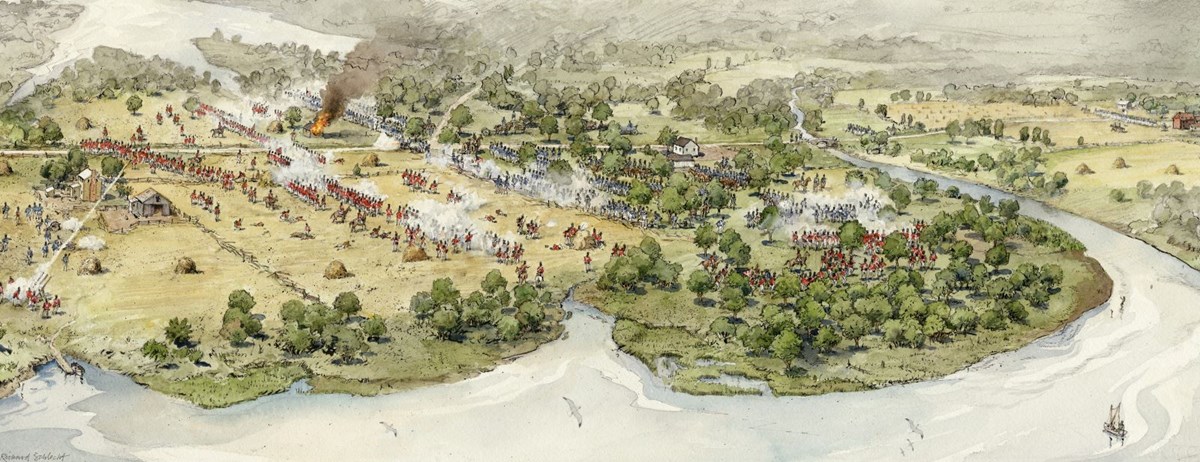
The Battle of Brandywine, fought on September 11, 1777, saw the defeat of the American forces in southeastern Pennsylvania. The victory by the British opened the road to Philadelphia, which fell to Sir William Howe’s forces on September 26, fifteen days after the battle.

Dunkerly, a park ranger with Richmond National Battlefield Park and a contributing historian for Emerging Revolutionary War will discuss the pivotal action that happened around Birmingham Hill on that Thursday in 1777. The engagement at Brandywine was the largest and longest battle in the entire American Revolution and the third bloodiest. This new publication examines the action near Birmingham Hill and Meeting House where the action that day turned against George Washington’s forces.

Thus, this Sunday, at 7 p.m. EDT, tune into ERW’s Facebook page for the next historian happy hour as the popular “Rev War Revelry” series continues with this author spotlight.