“Rev War Revelry” Visits Forts Lee & Washington

On both banks of the Hudson River, in 1776, sat two forts the patriots hoped would stop any British excursions up the waterway. Named for the top two military leaders of the Continental army–George Washington and Charles Lee–the fortifications both fell to the British by late November of that same year.

Join Emerging Revolutionary War this Sunday, at 7 p.m. EDT on our Facebook page as the forts become the focal point for this week’s “Rev War Revelry.” Joining ERW will be Charlie Dewey who will help break down and discuss the implications of these actions in November 1776.

Dewey, an officer in the New York Army National Guard and a graduate of the Virginia Military Institute has been a museum educator and special events coordinator for Fort Lee Historic Park since May 2018. He has been published in the Journal of the American Revolution along with being the author of various other scholarly articles on the Revolutionary time period.

Fort Washington, the last toehold of the Americans on Manhattan Island that fell and Fort Lee, the beginning of the long trek by Washington’s army across New Jersey late in 1776 have a unique part in American Revolutionary history. We look forward to you joining us this Sunday for this historian happy hour.

“Rev War Revelry” The Winter that Won the War, Valley Forge

In June 1778, the Continental army marched out of their winter encampment in Valley Forge, Pennsylvania and headed toward New Jersey in pursuit of the retreating British army. The past six months, from December 1777 to June 1778, ushered in a period of suffering, renewal, and change.

Valley Forge is imprinted into the psyche of Americans as the the toughest winter of the entire American Revolution. In fairness, it was one of many tough winters that the Continental army survived. However, the reasons why this winter stands out will be part of the discussion of this Sunday evening’s “Rev War Revelry” which can be found on Emerging Revolutionary War’s Facebook page at 7 pm. EDT.

This week’s historian happy hour includes a discussion with Philip S. Greenwalt author of the recently released Emerging Revolutionary War Series title, The Winter that Won the War. This is the fourth volume in the series, with previous ones covering Lexington and Concord, Trenton and Princeton, and Monmouth.

Greenwalt will discuss how the Valley Forge winter was the intersection of various issues and how the decisions made and the determination of survival by the army made this the winter that won the war.

Tune in as well to hear how you can purchase a copy of this book to take with you as you plan that summer trip to Valley Forge and the Philadelphia area!

“Rev War Revelry” War on the Chesapeake!

The Star-Spangled Banner and the burning of Washington City are the enduring legacies of the 1814 Chesapeake Campaign. These two events provide contrasting impressions of the American experience in the War of 1812. One conjures up an image of an American flag resiliently flying above Fort McHenry’s ramparts, denying the British entry into Baltimore. The other marks a low point in the American war effort, when politicians fled the nation’s capital followed by British soldiers, who burned many government buildings in the new nation’s capital city.

War along the Chesapeake Bay was not a limited episode in the War of 1812. There, Americans and British soldiers waged a hard and destructive war against one another. They fought pitched battles at Bladensburg and North Point. This campaign, remembered in popular memory for the creation of a national anthem and the burning of a nation’s capital, is more complex than just these two events.

Join Emerging Revolutionary War historians and guest historians John Nathan McDonald and George Best as we discuss the causes, movements, and impact of the 1814 Chesapeake Campaign. So, with your favorite beverage log onto our ERW Facebook page for the next historian happy hour as we discuss the obscure War of 1812 this Sunday, May 30, at 7 pm.

“Rev War Revelry” 18th Century Weaponry

Brown Bess. Grasshopper. Charleville. May seem like random names with no connection to the title of this post. On the contrary though, these names, be it nicknames or the actual name, of the firearm or artillery piece were all used by the soldiers and militia of the American Revolution.

This Sunday, at 7 p.m. EST, on Emerging Revolutionary War’s Facebook page, the next “Rev War Revelry” will dive into the weaponry that was prevalent during the era of the American Revolution. Joining ERW will be T. Logan Metesh of High Caliber History LLC of which he is the founder.

With over a decade of experience working for the Smithsonian Institution, National Park Service, and the National Rifle Association Museums, Metesh is a sought after consultant, writer, and museum professional. He will use his interpretive ability to present history and research on firearms and firearms development to this historian happy hour.

We look forward to welcoming Logan Metesh to the “Rev War Revelry” Sunday night chat and hope you will join us as well.

“Rev War Revelry”: The Battle of Alamance

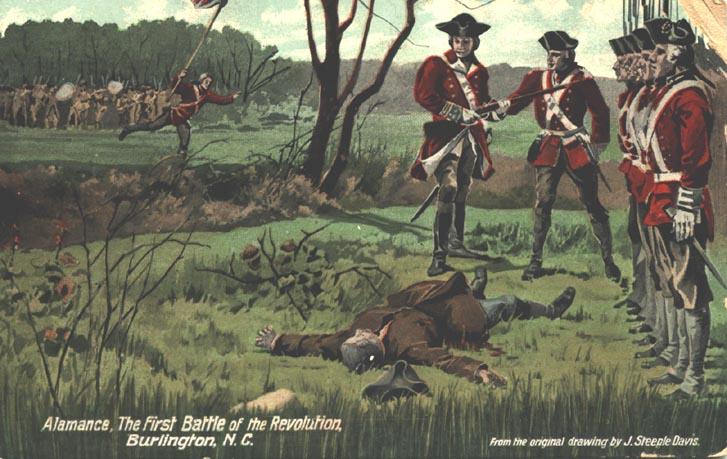
The month of May will mark the 250th anniversary of a little known event that occurred in the North Carolina piedmont called the Battle of Alamance. This battle was the result of an uprising of western North Carolinians who were opposed to the corruption in the colonial government and called themselves “Regulators.” The North Carolina colonial militia under the command of Royal Governor William Tryon marched from the east to quell the rebellion. The two North Carolina forces met at Alamance in May of 1771.

Emerging Revolutionary War welcomes Jeremiah DeGennaro, Historic Site Manager of Alamance Battleground to the “Rev War Revelry” historian happy hour. We will discuss the history of the Battle of Alamance, from what unfolded in North Carolina in 1771 to how this engagement has been remembered. Most recently, the battle was featured in an episode of the TV show, “Outlander.”

Some have suggested that this engagement was the “First Battle of the American Revolution.” But was it? Tune in on May 2 at 7 p.m. ET on the Emerging Revolutionary War’s Facebook page to hear the discussion on this and other questions. If you can’t make it on Sunday night, remember you can watch it later (and all our past “Rev War Revelry’s”) on our YouTube page.

“Rev War Revelry” Returns to Lexington with Alex Cain

Approximately one year ago, Emerging Revolutionary War began a historian happy hour virtual chat on Sunday evenings. The goal was to share our passion for history, connect with each other during the pandemic, and have an excuse to drink a beer. Pretty much what we would be doing if we could gather in person.

Fast forward one year and the “Rev War Revelry” that was created has now become a fixture of our Sunday evenings; well every other Sunday after 36-consecutive weeks from April 2020 to November 2020.

The brain trust at Emerging Revolutionary War convened to discuss what we should do for the one-year anniversary. One logical conclusion came up. A return to Massachusetts!

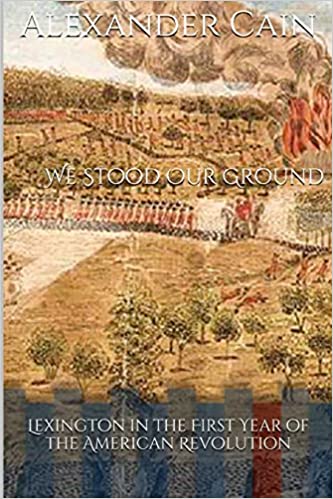
ERW welcomes guest historian Alex Cain, a Lexington historian and author, who will discuss what the Massachusetts town was like in 1775, the details of what happened on both April 18 and 19, 1775, and the misconceptions that sprung up from the beginning of the American Revolution. Of course, we welcome comments and questions through the hour.

Thank you for being part of the “Rev War Revelry” experience as we enter the second year of the historian happy hour. We look forward to seeing you on Sunday evening at 7pm EST on our Facebook page with your favorite beverage and question in hand.

The program can be accessed through Emerging Revolutionary War’s Facebook page. For those that cannot make the program when it is live, there will be a recording posted to our YouTube page within a few days following.

2021 Symposium Highlight: Vanessa Smiley

Over the next few months, we will be highlighting the speakers and topic for our 2021 Symposium, Hindsight is 2020: Revisiting Misconceptions of the Revolution, taking place on May 22nd .

Today we continue with historian Vanessa Smiley who will be covering the myths and misconceptions of the Southern Campaigns during the American Revolution.  

See Vanessa as she discusses an aspect of the Southern Campaign on March 7 at 7p.m. on Emerging Revolutionary War’s Facebook Live as part of the “Rev War Revelry” historian happy hour!

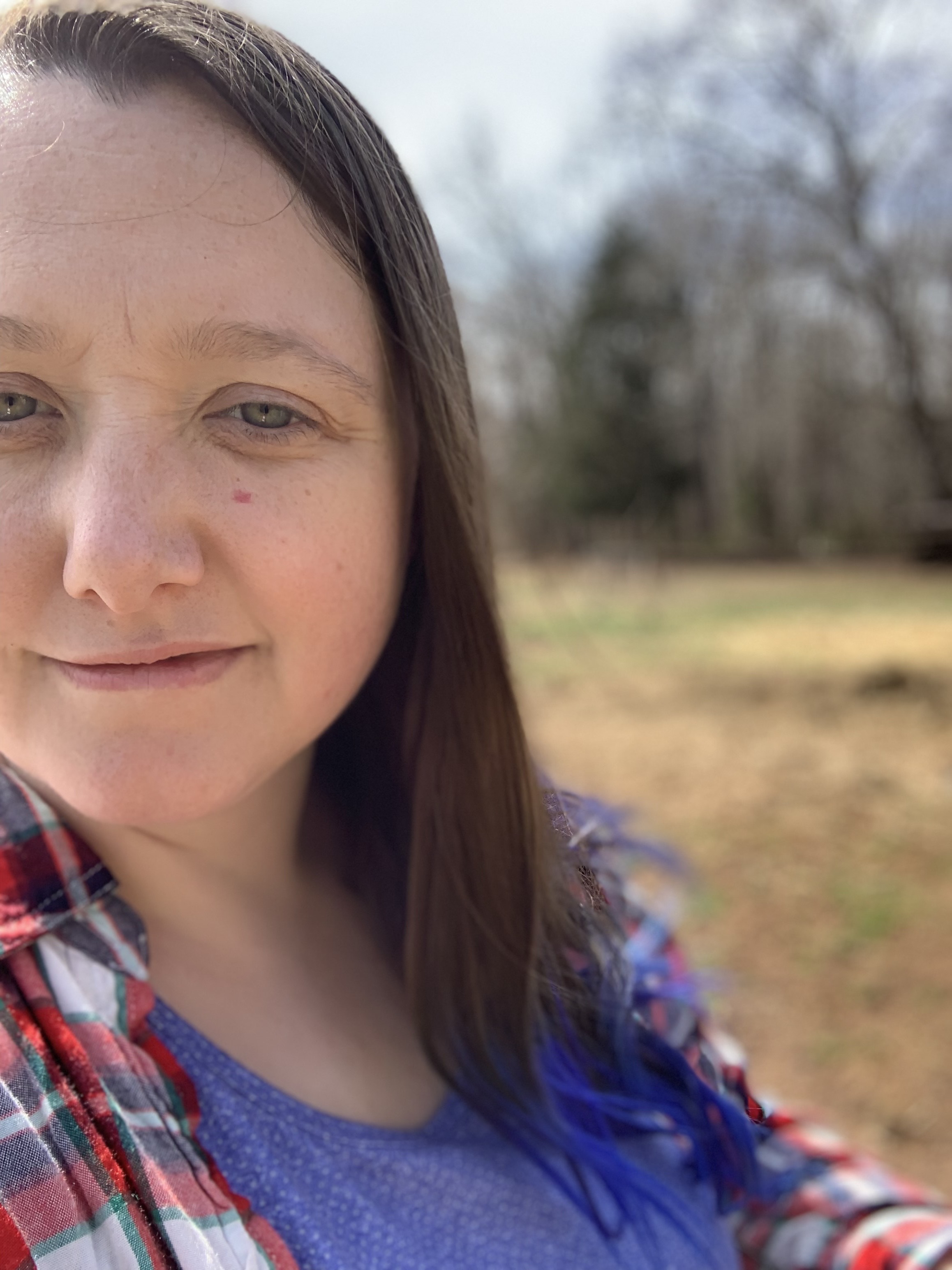
Vanessa Smiley is an historian and interpreter whose roots began at National Park Service Civil War and Rev War sites. Her Rev War park experience includes serving as the Chief of Interpretation at the Southern Campaign of the American Revolution Parks Group in South Carolina, an acting assignment as Superintendent at Guilford Courthouse NMP, and Chief of Interpretation at Morristown NHP. Vanessa is currently the Project Manager of Interpretive Media Development for the National Capital Area at Harpers Ferry Center. She received her undergraduate degree in Historic Preservation from the University of Mary Washington and her Master’s degree in Resource Interpretation from Stephen F. Austin State University.

Outside of her work with the NPS, Vanessa enjoys researching family histories, studying material and social culture of the 18th and 19th centuries, listening to podcasts, reading true crime, drinking craft beer, and attempting to make the perfect sangria. She and her husband live in Morgan County, West Virginia on their small farm where they run a nonprofit animal sanctuary.

She will be presenting her talk From the Bottom Up: Myths and Misconceptions of the Southern Theater at the May symposium.

 Why do you believe the Southern Campaigns were so significant to the outcome of the American Revolution?

The simplest way to describe why I believe the Southern Campaigns were so significant to the War’s outcome is: it was a grassroots effort. What I mean is that while the Continental Army shouldered plenty, it was the combination of local efforts of the militia and determined civilians who turned the tide of the war when the British looked to the southern colonies, especially in the second half of the war. All one has to do is to look at two key battles, Kings Mountain and Cowpens, to see the impact of militia integrity, courage, and resolve.

Some point to the politics of Boston and New York as a driving force behind the start of the war. But the taverns and town halls of Charleston and Savannah were no less significant in adding fuel to the revolutionary fire. There is also the added dichotomy of our first true American civil war that played out in the backcountry of the Carolinas. Here were literal neighbors, brothers, cousins, and friends taking up arms to serve their respective causes and finding themselves on opposite sides. These dynamics were one driving force behind the militias that had such an impact during the Southern Campaigns.

What first attracted you to the study of early American history? What keeps you involved in the study of this history? Do you find these things are the same or different?

I give credit to my love of history to my high school history teacher, who embodied the archetype of the quintessential eccentric and genius history connoisseur striving to bring history alive. He immersed us in the history of the 18th and 19th century through first person accounts, visits to historical sites, and the dramatics of storytelling. He also armed me with the intellectual tool of piecing out the relevancy of events and people of the past, and that’s what has kept me interested in studying history for the past two decades.

While my work at historic sites for the National Park Service provided an easy outlet for my historian brain, I sought those historical connections and resources even outside of work because of that drive to understand the past. It’s a little bit different now than before though. I don’t get to be as immersed as I once was (no traipsing through cemeteries at night to feel the chill and terror of the Underground Railroad) and instead my mind goes to educating the public on the importance of our history. That’s why I’m so appreciative for Emerging Revolutionary War!

What is the biggest myth about the war in the South? How do you think it came about?

That the war was won in the north and not the south! I’ll go into more detail on this one during my presentation, but I’ll tease a little bit here. One part of the answer to the second question might lie with our public education system. In studying the state education curriculums of various states, I found that there is a stronger emphasis on the beginnings of the war than the war’s end. And so the Southern theater gets very little, if any, attention when kids study the war in school. The exception used to be in certain states like South Carolina, where the battles of Cowpens and Kings Mountain were directly referenced in the state standards. Since the standards updated in 2020, this no longer seems to be the case.

You’ll have to wait for my presentation to dive a little deeper into this myth with me!

Do you think there are common misconceptions of the era of the American Revolution among the American people? If so, what are they and have they ever affected your work?

There certainly are, and the ones that have affected my work the most center around that idea of the often-overlooked Southern Campaigns for most Americans. Ask any random person to name a Revolutionary War battle or event and the majority will name something from the northern colonies. Every now and then you get a Charleston, and if you consider Virginia part of the south, then a Yorktown for sure. But as I’m sure has become obvious already, I strive to educate about the rich history of the Rev War in the south.

Why do you think it is important for us to study the Revolutionary Era? 

No matter which political, social, or economic side you’re on nowadays, we can all agree we are living in our own revolutionary time. And we find ourselves looking back to our nation’s founding for understanding and guidance, namely things like our national ideals and governmental processes. But we are a different people and a different nation than what we were then. We should not take everything from 240 years ago at face value. By studying and investigating the past, we can understand how and why decisions were made at the time. And perhaps we can extract an element, or life lesson, that can be applied to our modern times.

I believe that while history does not repeat itself, it does rhyme. By understanding the past, we may know our future.

Join us for our SECOND annual Emerging Revolutionary War Symposium. Due to the COVID 19 pandemic, we postponed the 2020 Symposium to May 22, 2021 with the same topics and speakers. Co hosted by Gadsby’s Tavern Museum, speakers and topics include:


Michael Harris on Misconceptions of Battle of Brandywine
Vanessa Smiley on Myths of the Southern Campaigns
Travis Shaw on American Loyalists
John U Rees on African American Continental Soldiers
Mark Maloy on myths of the Battle of Trenton

Stay tuned as we highlight our speakers and their topics in future blog posts.

UPDATE: The 2021 Symposium will now be virtual. Though conditions with the pandemic are improving, we do not believe we will be able to have the event in person by May, so we have decided to be virtual. Due to this shift, we are also dropping the price! Now the full day symposium is $40 per person and $20 for students. This allows for guests from all across the country to learn about African American soldiers, Loyalists, and Drunken Hessians. Buy your ticket today!

To register visit: https://shop.alexandriava.gov/Events.aspx

“Rev War Revelry” Author Interview: John Maass

In March 1781, General Charles Lord Cornwallis finally caught up with his antagonist, General Nathanael Greene and his joint Continental and militia forces in North Carolina. On March 15, 1781, the British scored a pyrrhic victory over the American forces, securing the field but losing approximately 25% of their field force in the process.

With the victory, Cornwallis was forced to retreat to the North Carolina coast, to Wilmington, where he could rest and refit. He then led his forces north and into Virginia, to his destiny at Yorktown.

Yet, the road to Guilford Court House, for both sides, started in South Carolina, across the entire breadth of North Carolina, and into the southern reaches of Virginia before returning to the Old North State. This road and the history of the campaign, along with the March 15th engagement, unfolds in a new history by Dr. John Maass, author and historian, currently at the U.S. Army Center of Military History in Washington D.C.

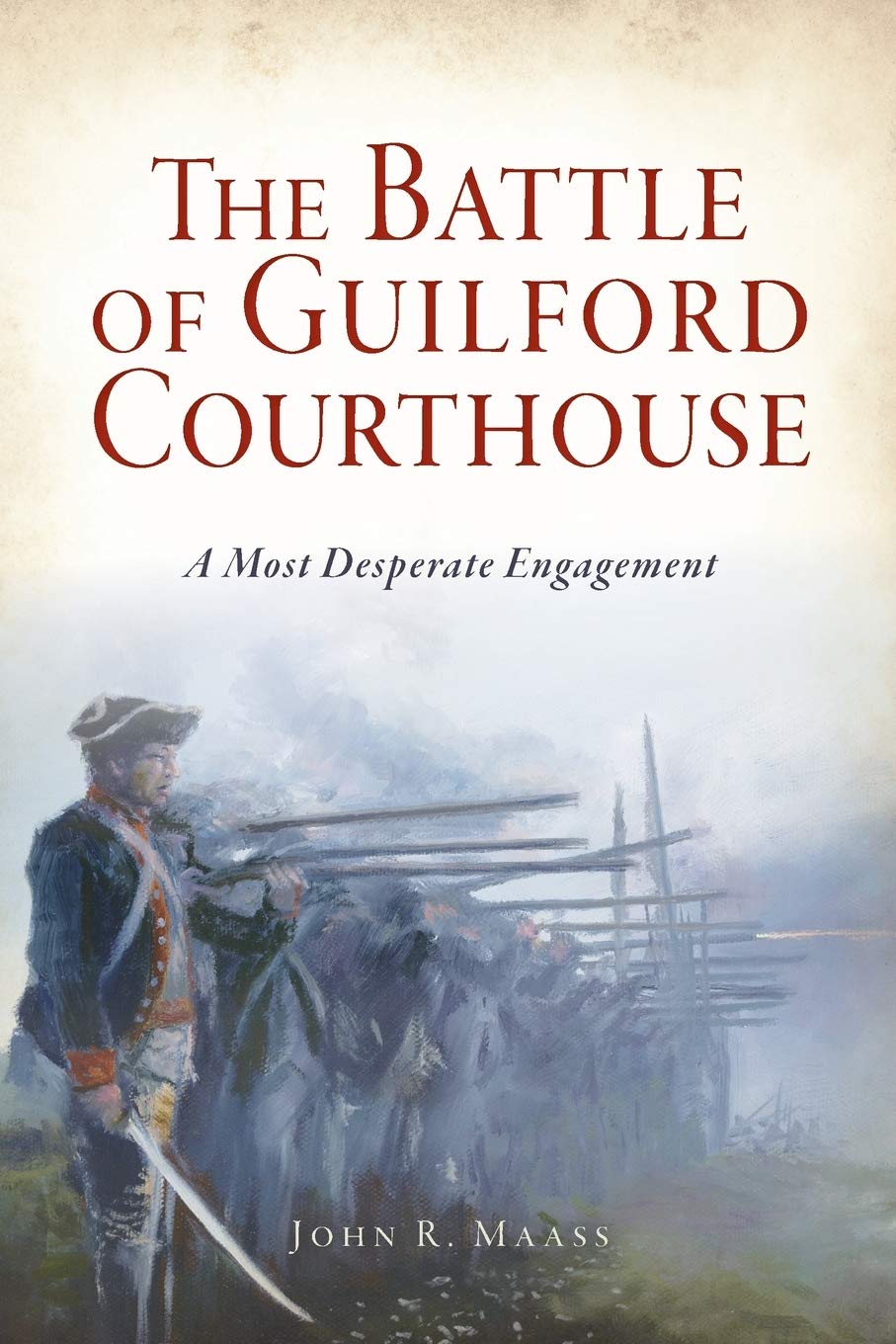
His book, The Battle of Guilford Court House, A Most Desperate Engagement will be the focus of this week’s “Rev War Revelry.” The book is now available from book retailers and online. We hope you can join us this Sunday, at 7 p.m. EST, for our next installment of a historian happy hour.

To access, just head to Emerging Revolutionary War’s Facebook page, go to the “Events” tab and follow the prompt at 7 p.m.

“Rev War Revelry” Big Game Halftime Historian Happy Hour

This Sunday, a football game will be played in Tampa, Florida between a team named after pirates and another as the name given to Native American leaders. There will be a halftime entertainment. Just slightly different than previous years.

No, we are not talking about the pandemic restrictions that will limit access to the stadium and change the landscape of the halftime show there.

Emerging Revolutionary War is the change. When the whistle blow for the end of the second quarter, change your view from the television screen to the computer screen, click onto our Facebook site and tune into the Big Game Halftime Historian Happy Hour where our historians will discuss the connections between the teams, locales, and who is the GOAT of early American history.

This shortened historian happy hour will still pack the same level of camaraderie, entertainment, and historical tales that you are used to with “Rev War Revelry.”

See you Sunday, 7pm EST, and remember your drink of choice!

“Rev War Revelry” Light Horse Harry Lee Discussion

On January 29, 1756, Henry Lee III is born at Leesylvania Plantation in Prince William County, Virginia. Part of the prestigious Lee family of Virginia, his father was a cousin of Richard Henry and Francis Lightfoot Lee, two brothers who signed the Declaration of Independence.

Henry Lee would blossom into one of the better cavalry commanders in the American Revolution, earning the nickname, “Light Horse Harry” Lee because of his accomplishments. With January being his birth month, Emerging Revolutionary War welcomes historian and author Mike Cecere, who will discuss his book, “Wedded to my Sword, The Revolutionary War Service of Light Horse Harry Lee.”

Cecere, former high school and community college history teacher is the author of thirteen books on the American Revolution, most focused on aspects of the colony of Virginia and/or her native sons.

This Sunday we hope you spend some time joining us on the next installment of “Rev War Revelry’ as we discuss the Lee that was born in January and became a military hero of the American Revolution. This historian happy hour will be live on our Facebook page at 7 pm EST.

(Yes, we do know there is another Lee that is born in January and plays a prominent role in history).