

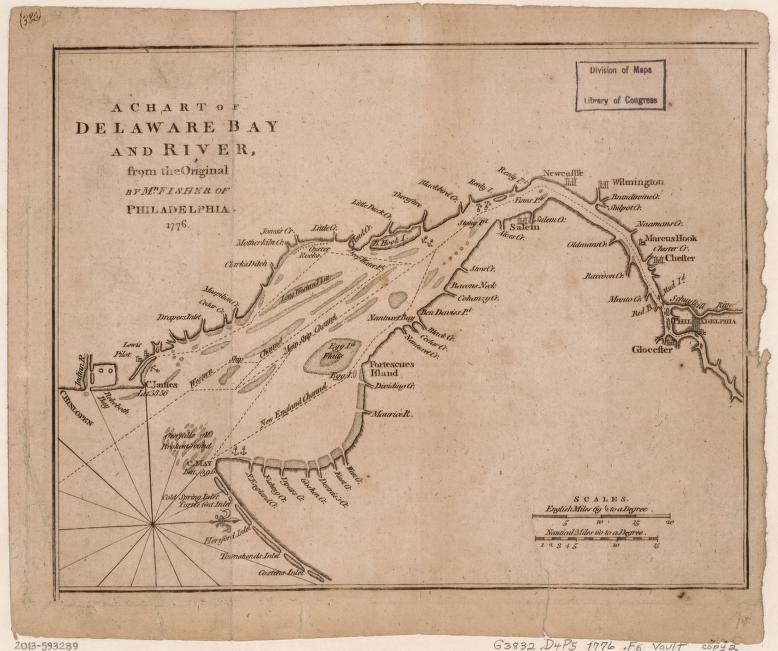
While the Americans recovered their strength and restocked their vessels upstream after the fighting on May 8, Hamond and his sailors worked to refloat the Roebuck. With a higher tide and deeper water sometime between 2 and 4 am, Roebuck finally floated free.[i] When the sun rose on Thursday the 9th fog blanketed the river and neither side could see one another. The American ships were already on the move, though, falling back down the river under a light breeze and oars to reengage the British vessels, probably in the hope that Roebuck was still grounded.[ii] In the fog, though, they paused to wait.
The mist finally burned off enough to see and around 8 o’clock that morning, Wallace and Liverpool spied the American galleys some two miles upriver.[iii] Hamond made the signal to weigh anchor and pursue them upstream. Even at full sail, though, the British couldn’t catch the Americans as “they industriously plied their Oars and Sails to avoid us.”[iv] They eventually found a point of land on the western shore Hamond could not reach, particularly in the face of an ebbing tide. Both sides anchored and waited. The prospect of continuing to advance up the Delaware, which grew ever narrower and more shallow did not appeal to Hamond. He and Captain Bellew held a quick conference and decided to drop back down the river, hoping to draw the galleys after them toward water more favorable to the British.
Around 2 pm, Hamond detected the Americans getting underway. So, Roebuck and Liverpool raised their anchors and clapped on more sail, still hoping to entice them to chase the British into deeper water. The small squadrons began exchanging long range fire around 4 pm, lasting through afternoon all while slowly moving down the Delaware. The cannon were heavy enough to be heard in Philadelphia.[v] The winds were generally moderate, but an occasional shower passed through.[vi] As they had through most of the day, the Americans stuck to the shallows closer to shore. Throughout, the two sides kept their distance. The Americans were satisfied chasing the British away and Hamond could not tempt them into a close-in fight. Finally, with darkness deepening, the firing ceased. The Americans preferred not to descend below New Castle.
Continue reading “A Naval Battle off Wilmington, DE: May 9, 1776”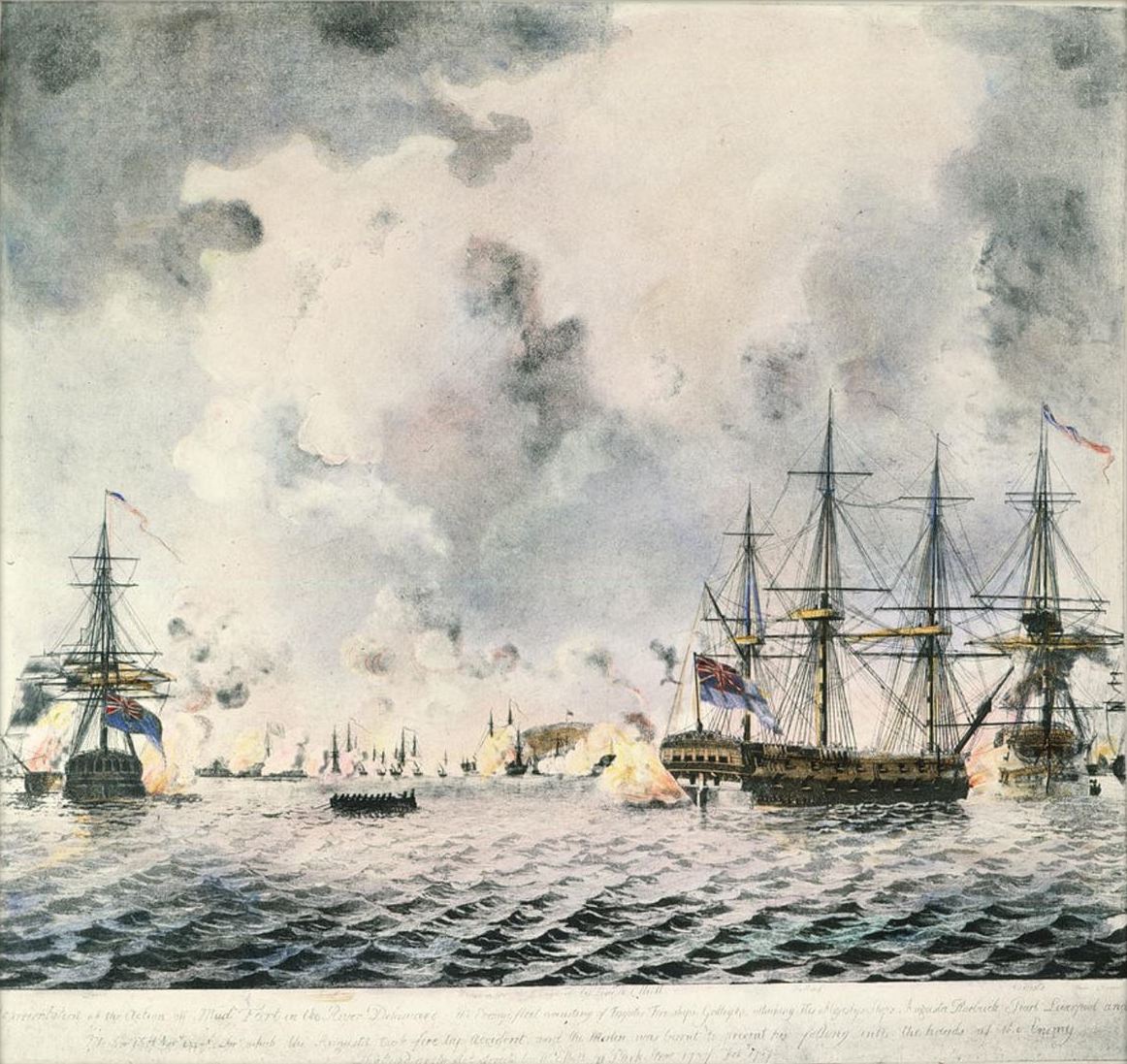


 Emerging Revolutionary War Era