Emerging Revolutionary War welcomes guest historian Drew Palmer. A biography follows at the end of this post.
What does it look like when veteran soldiers do not want to fight anymore? When morale plummets and the realities of war take their toll on men. This is exactly what happened to 150 men in the Maryland Line of the Continental Army in the late summer of 1780.
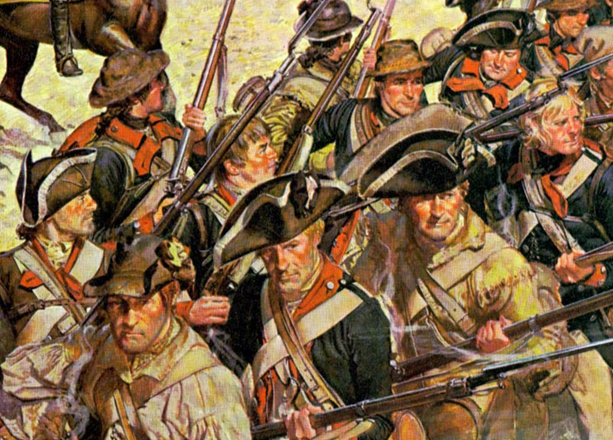
The 1st Maryland Regiment holds the line at the Battle of Guilford Courthouse, March 15, 1781
The continental regiments of Maryland that made up what became known as the “Maryland Line” or “Old Line State” had earned the reputation as a reliable, brave, and disciplined fighting force as early as 1776 after their actions in the Battle of Long Island.1 At the Battle of Camden on August 16, 1780, the 1st and 2nd Maryland Brigades offered a stout defense as Gen. Charles Cornwallis’s British force crashed into Continental soldiers from Maryland and Delaware. In the end, though, Maj. General Horatio Gates’s Southern Continental Army was completely routed from the field, with many of the Maryland Continental troops taken prisoner and held in the small village of Camden after the battle.2
The village of Camden, South Carolina, was an unpleasant place to be after the battle. The crowded conditions and brutal summer climate of South Carolina began to produce sickness amongst Cornwallis’s men and the American prisoners that were held in Camden. To prevent further sickness from spreading, Cornwallis decided to split the American prisoners held at Camden into divisions of around 150 men. These divisions were guarded by small detachments of the British army and marched from Camden to Charlestown, South Carolina.3 One detachment of the British 63rd Regiment of Foot escorted 150 prisoners of the 1st Maryland Brigade captured at Camden. The division made it to Thomas Sumter’s abandoned plantation at Great Savannah, about 60 miles northwest of Charleston. As the Maryland prisoners and their British guards halted for the night, militia commander Francis Marion received word from a Loyalist deserter that the Marylanders were nearby and decided to ambush the British element in hopes of freeing the Maryland prisoners.4 In the early morning hours of August 25, 1780, Marion’s militia attacked.
On Veteran’s Day in 2022, the American Battlefield Trust published the following article on their website “Archaeologists, Historians Unearth Remarkable Discovery at Camden Battlefield.” The Battle of Camden, fought in South Carolina on August 16, 1780, was a disastrous defeat for the American army, which suffered 1,900 casualties out of 3,700 engaged. Among those 1,900 approximate casualties were 5 Marylanders of the 1st Maryland Brigade. Over 242 years later, these five soldiers’ remains were found on the battlefield in a shallow grave. Another nine were found buried in other sites on the hallowed ground of Camden.
With forensic analysis and other research done in the ensuing months, a few facts about who these men were came to light. One of the most poignant discoveries was the age of two of the fallen Marylanders. Their ages were 16 to 19 years of age.
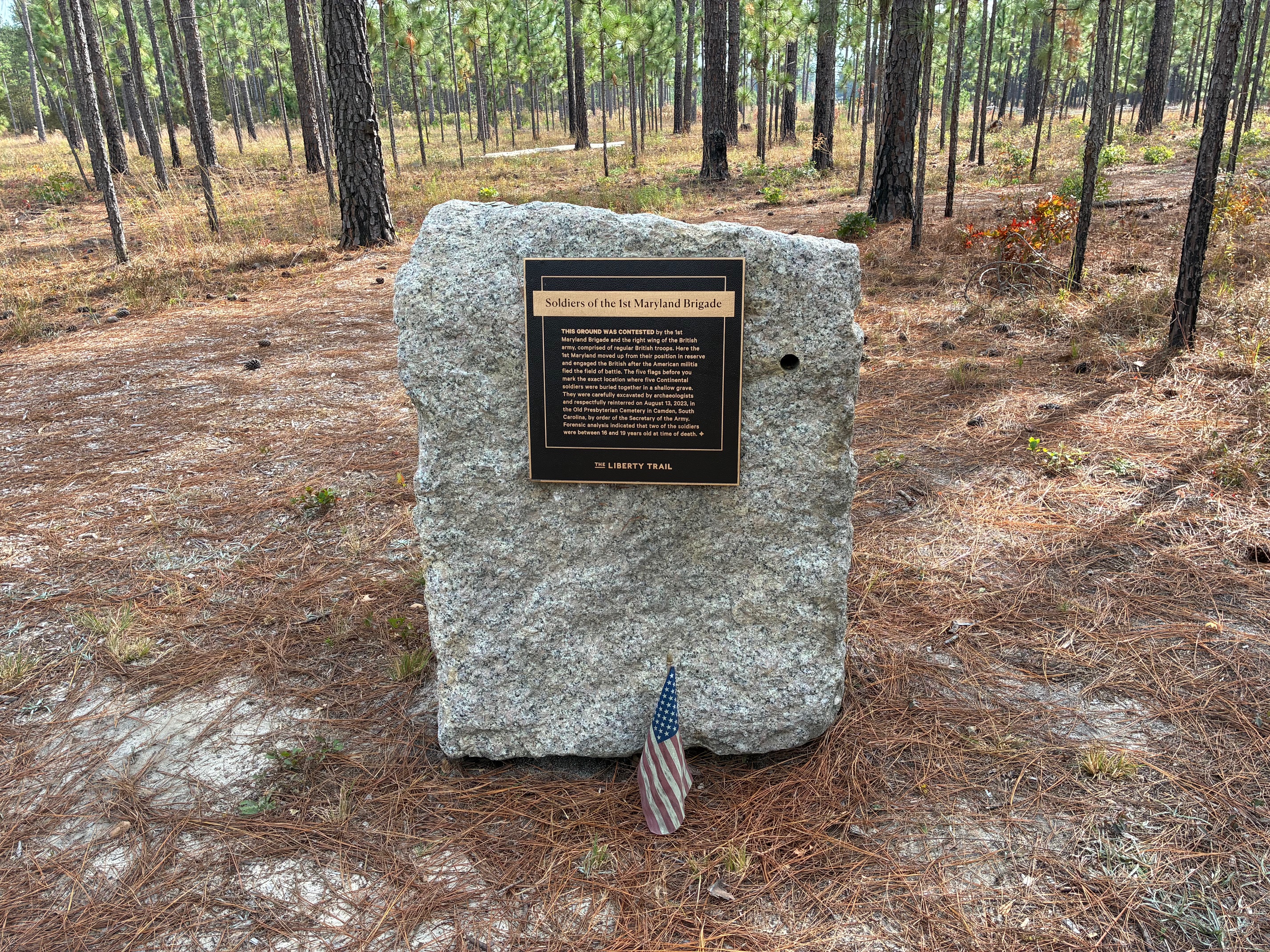
Although I have studied, lectured, and written about numerous engagements in two American wars, the simple fact of how young these soldiers were, as I read the memorial bronze plaque on the boulder monument, gives a deeper sense of sadness. Wars kill people of all ages, bullets don’t differentiate.
As we enter the holiday season and gather with friends and family, young and old, the fact that one of these soldiers, as young as 16, possibly, sacrificed his life, still name unknown, and lost to history for over 242 years. A family never knew what happened to their relation.
It is why it is invaluable that history continues to be studied. Archaeology is still important. And preservation of hallowed ground, like Camden, is worth preserving and interpreting. As you spend your holidays in the fashion that suits you, take a moment to think about a fallen soldier at Camden, in August 1780, sacrificed at sixteen.
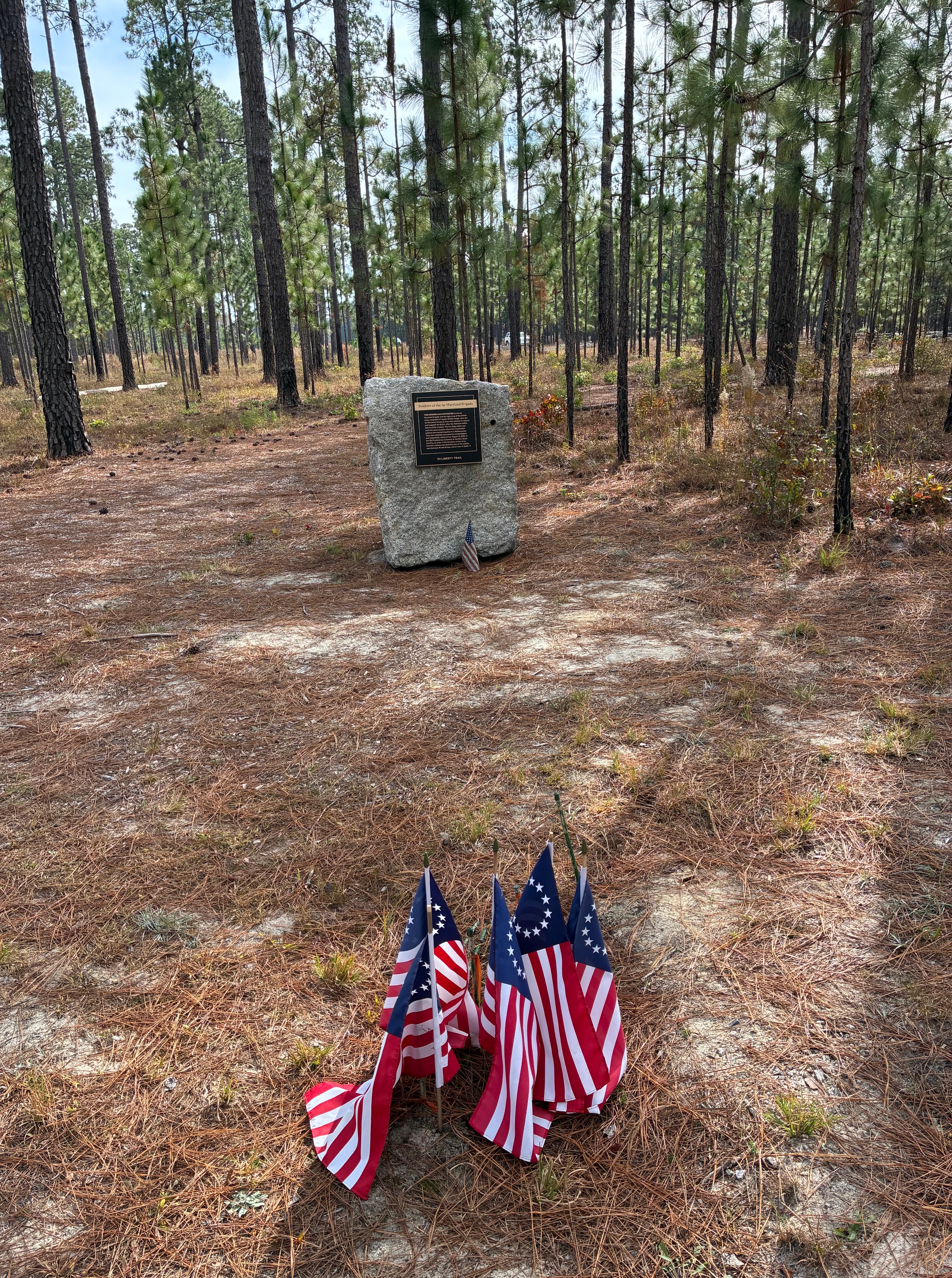
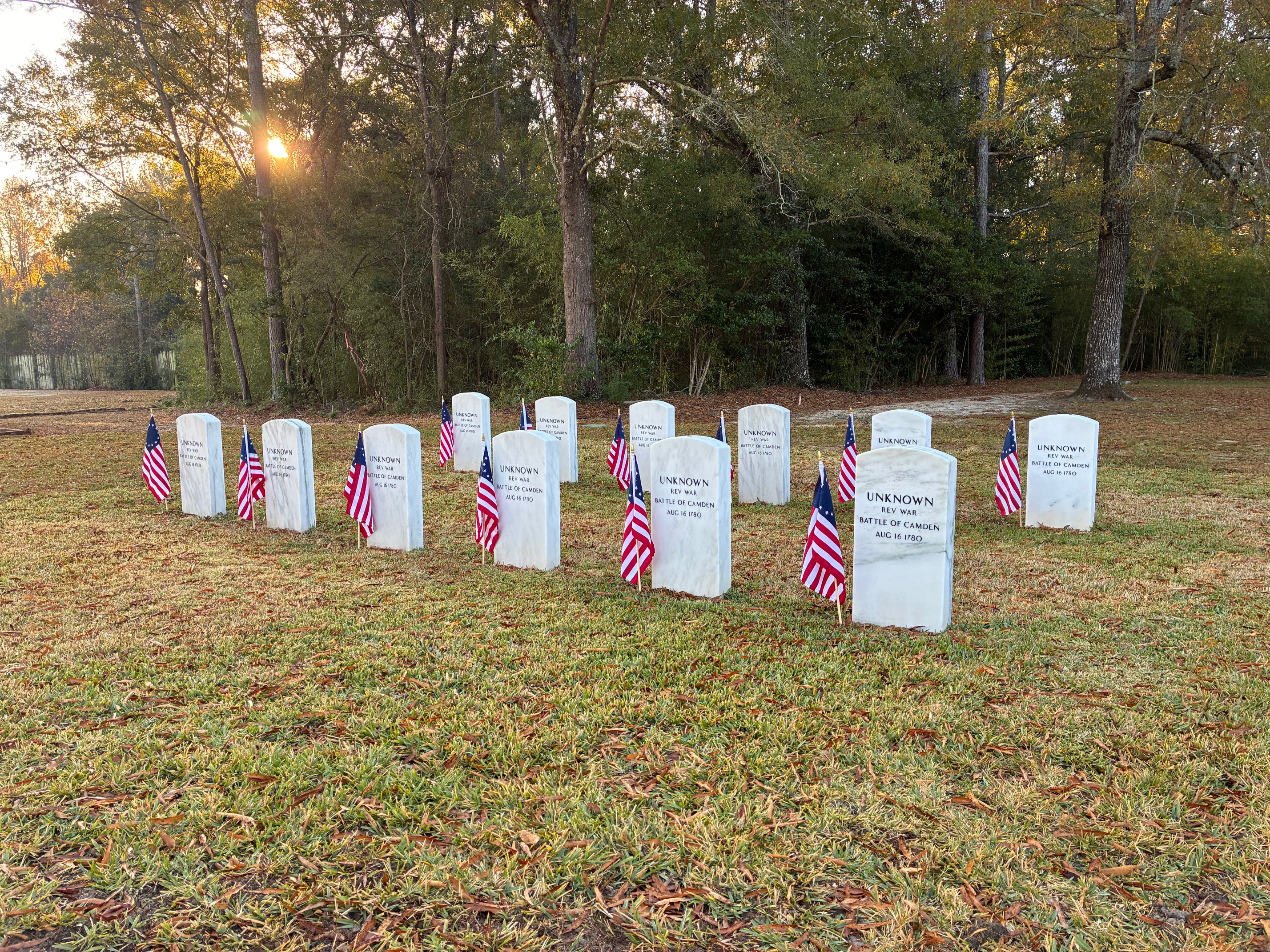
Monument to the MarylandersThe flags mark the location of the five remainsGravestones of nine American soldiers, their remains found on the Camden Battlefield, now in the Revolutionary War Memorial outisde Quaker Cemetery in Camden, SC.
Emerging Revolutionary War welcomes guest historian Tom Elmore. Brief bio is at the bottom of the post.
When Walt Disney’s Disneyland anthology series, featuring shows inspired by the themes of the park’s sections, debuted in 1954 it ended the television season at #6 in the Nielsen television ratings and improved to #4 the next season. Much of that success was due to the Davey Crocket episodes, one of the first major television phenomena.[1]
But the series dropped to #14 in the third season and was out of the top twenty in the fourth and fifth seasons. The American Broadcasting Company (ABC) which carried the program, renamed Walt Disney Presents, pressured Disney to come up with another Crockett and more westerns which made up most of the top 20.[2]
Disney later complained that “I found myself in a straightjacket. I no longer had the freedom of action…They kept insisting that I do more and more westerns and my show became loaded…with every western myth.” Consequently, relations between Disney and ABC became strained.[3]
Disney turned to one of his passions, American history, to create a series based on the partisan leader, General Francis Marion, “the Swamp Fox,” who harassed British troops in South Carolina during the American Revolution.[4]
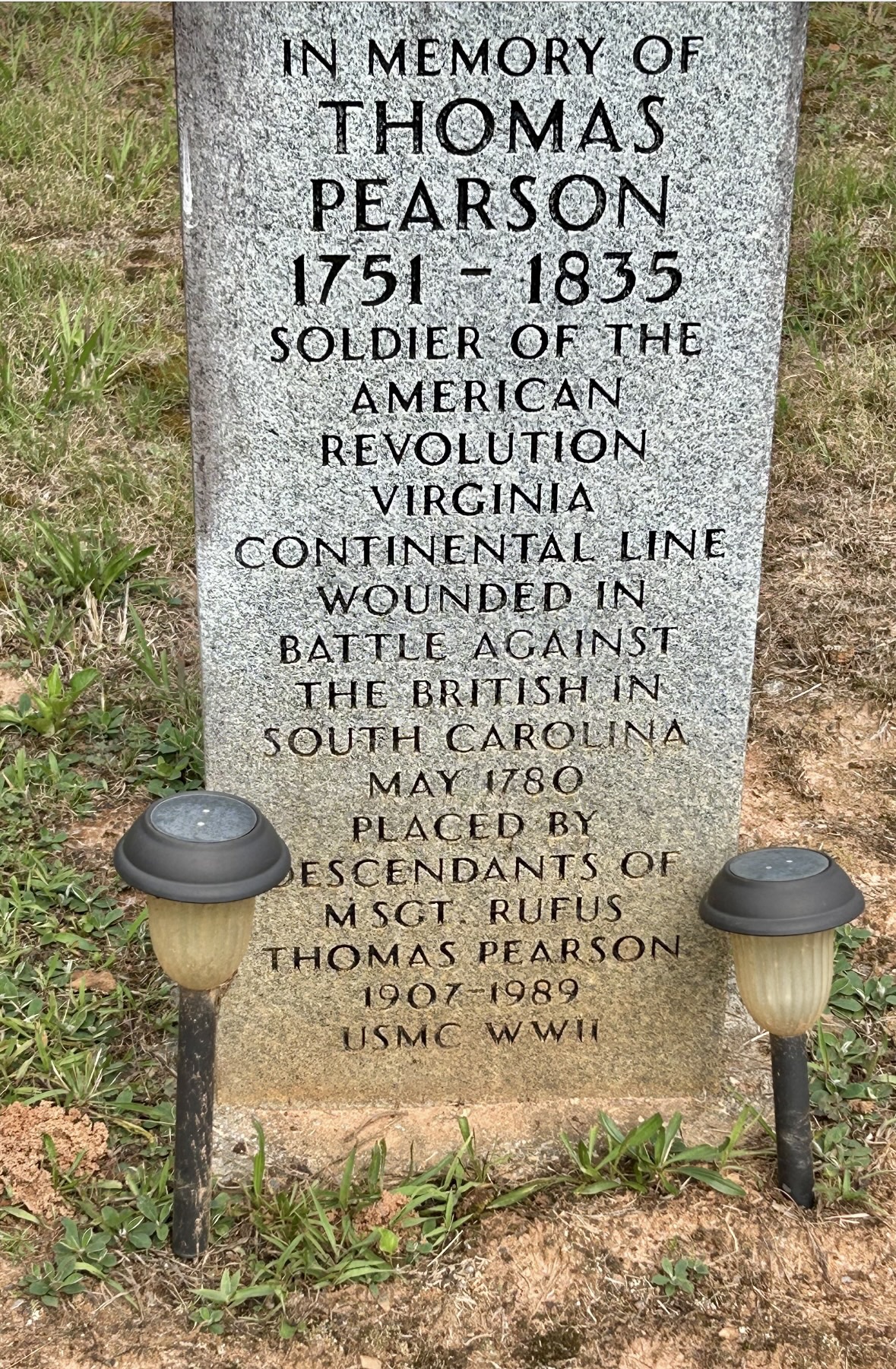
Not long ago, a good friend of mine found himself in Henry County, Va. Located southwest of Richmond, the county was named for the patriot, Patrick Henry, in 1777. Touring a local cemetery there, my friend came upon a very interesting headstone. It was the grave marker for a soldier of the American Revolution; a man named Thomas Pearson.
Grave of Thomas Pearson
According to the headstone, Thomas Pearson had served in the Virginia Continental Line and in May 1780, was wounded in battle against the British in South Carolina. My friend sent me a photograph of the headstone. Based on the place and date, he was hoping this Thomas Pearson had perhaps served at the battle of Camden. As a co-author of a book on Camden, I have to admit that I was quite intrigued myself.
But, based on my research for the book, I knew immediately that certain pieces of information on the man’s epitaph didn’t correspond to details of the Camden fight. First off, it indicates that Thomas Pearson served in the Virginia Continental Line. The Virginians engaged at Camden were actually not part of the Continental Line but, rather, state militia forces commanded by Gen. Edward Stevens. In fact, most of the troops of the Virginia Continental Line were captured by the British at the fall of Charleston on May 12, 1780.
The epitaph also reads that Pearson was wounded in May 1780, in South Carolina. The battle of Camden occurred later, on August 16, so most likely this gentleman wasn’t there. Still, the gravestone intrigued me. I decided to do a little research into Thomas Pearson and sadly, I was to discover that his story was a tragic one.
On November 30, 1812, at the age of 61, Thomas Pearson applied for a pension for his services in the Revolutionary War from the Commonwealth of Virginia. According to his application, he was “a soldier in the revolutionary war, belonging to the VA Line on continental establishment, and attached to the regiment commanded by Col. Abraham Buford.” Clearly, he was a veteran of the southern campaign.
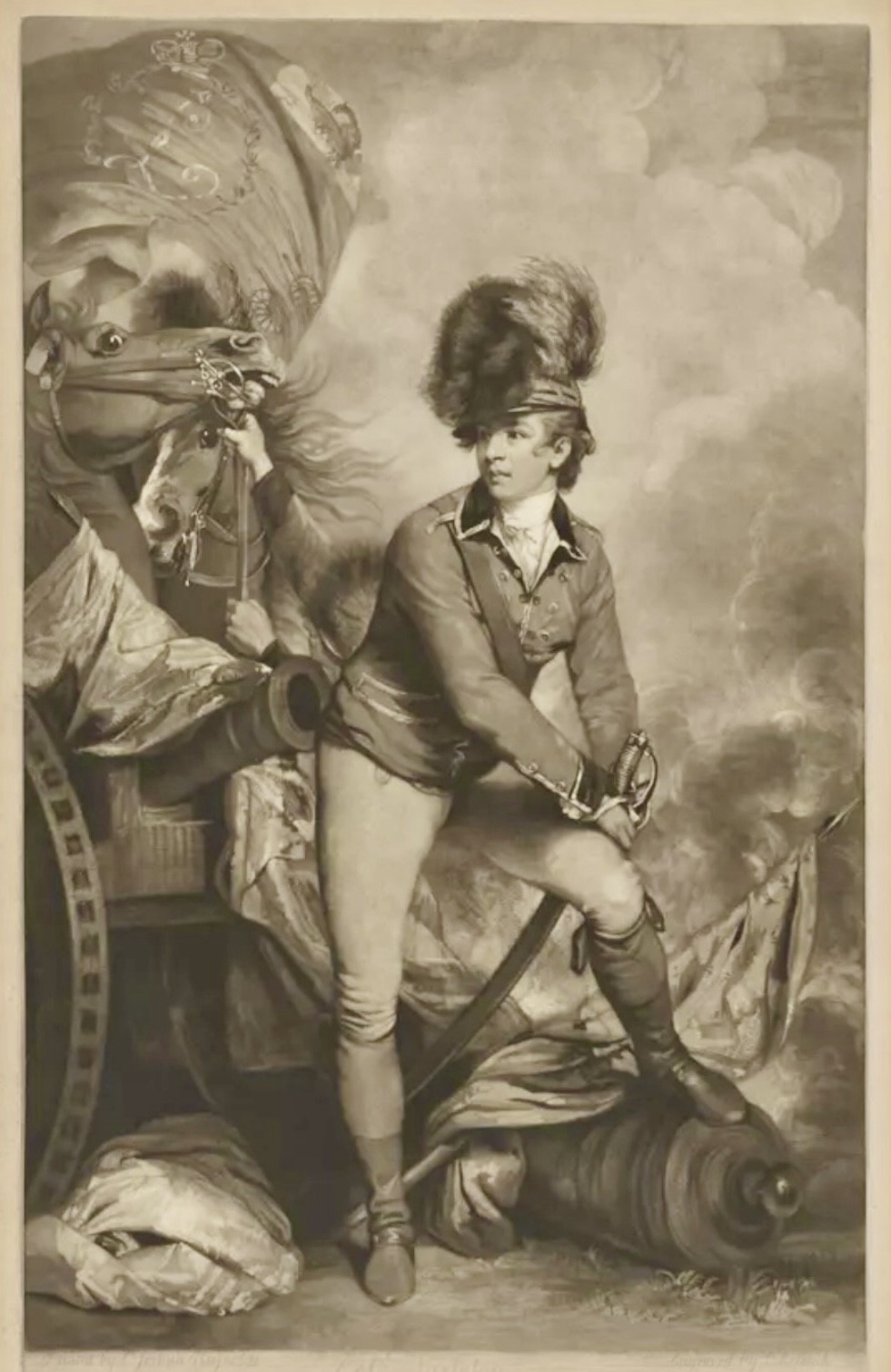
In May 1780, he was indeed serving in the Virginia Continental Line, as an officer of the 3rd Virginia Detachment of Scott’s Virginia Brigade. Commanded by Col. Abraham Buford of Culpepper County, VA, the 3rd Detachment, nearly 400 strong, was marching into South Carolina to the relief of the City of Charleston, which was under siege by the British. The city fell before Buford’s column could reach it, however. Afterwards, Buford received orders from Brig. Gen. Isaac Huger to fall back to Hillsborough, NC. In Charleston, British Lt. Gen. Charles, Earl Cornwallis, who would soon assume command of all British forces in the south, learned of the existence of these Patriot reinforcements. On May 27, he sent troops in pursuit. They were mounted troops of the British Legion, mostly loyalists under the command of the infamous Lt. Col. Banastre Tarleton. Throughout the southern campaign, the 26-year-old Tarleton would establish for himself a reputation for cruelty and blood lust that was unsurpassed. Some of the acts attributed to him during this period were true and some were not, but his dubious reputation would become cemented in the minds of many Americans during this episode.
Lt. Col. Banastre Tarleton
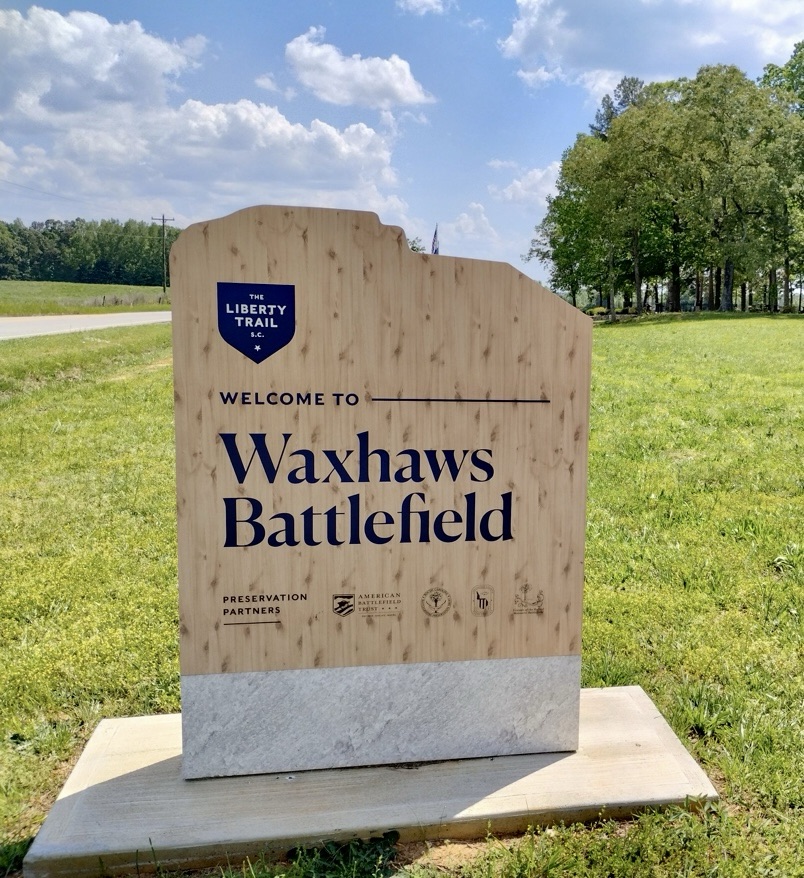
Tarleton set out in pursuit of Abraham Buford’s troops on May 27, leading around 300 of his Legion dragoons, some mounted infantry, and a detachment of the 17th Light Dragoons. Having a reputation for driving his forces unmercifully, Tarleton’s troops were able to quickly catch up, and closed in on Buford’s Virginians on May 29, on the border of North and South Carolina. It was farming country here, known as the Waxhaws.
When the two forces were still some miles apart, Tarleton issued a call for surrender, under a white flag of truce. In his message he wrote: “Resistance being vain, to prevent the effusion of human blood, I make offers which can never be repeated.” After conferring with his officers, Col. Buford made the decision to refuse Tarleton’s offer. He replied: “I reject your proposals, and shall defend myself to the last extremity.” The Patriot force then continued its march north towards Hillsborough, with Tarleton’s troopers continuing the pursuit.
By mid-afternoon of the 29th, Tarleton’s lead elements caught up with Buford’s column, attacking and destroying the small rear guard. Commanding that rear guard was Lieut. Thomas Pearson. Witnesses said that Pearson was sabered and knocked from his horse. While he lay on the ground, he continued to receive wounds; his face was mangled and there were cuts across his nose, lips, and tongue. Col. Buford halted his column, deploying his infantry in a single line across an open field, east of the Rocky River Road. He then issued a questionable order: his men were told to hold their fire until the dragoons were almost on top of them and then unleash a volley at point-blank range. When the charge came, the Virginians followed orders; they held their fire until the British were about 10 yards away. While their one volley did manage to empty a few enemy saddles, it wasn’t nearly enough and now the Virginians had no time to re-load their muskets. In a flash, Tarleton’s troopers were in among the Continentals, hacking men down with their sabers, wholesale.
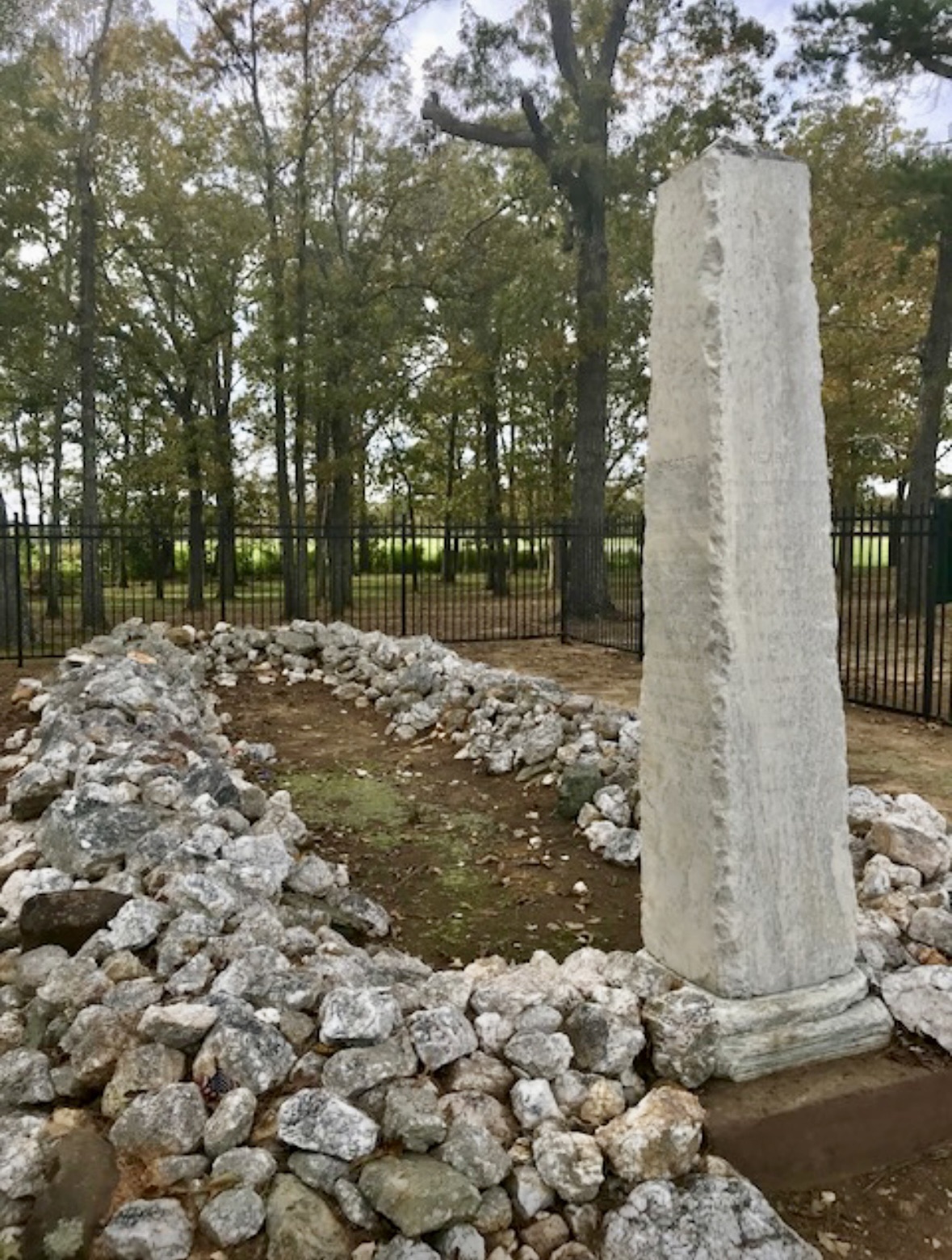
Quickly realizing the battle was lost, Buford sent forward a white flag of surrender. About this time, Tarleton’s horse was killed, going down and momentarily trapping its rider. Some of his nearby troops became enraged, believing the Patriots were not honoring their own white flag. These troops are said to have continued sabering Patriot soldiers as they tried to surrender. Abraham Buford and some of his troops did manage to escape the field but his command was destroyed. Continental casualties totaled around 113 killed, 147 wounded, and 50 captured. Two Patriot 6-pounder artillery pieces and 26 baggage wagons were likewise captured. Compared to this, Tarleton’s losses were negligible. The battle would long be remembered as “Buford’s Massacre” and many of the Patriot dead lie today in a mass grave at the battlefield site.
Mass Grave at the Waxhaws battle site
Banastre Tarleton’s reputation for cruelty was established at the Waxhaws. Nicknames like “Bloody Ban” and “Bloody Tarleton” began to be used to describe him and the phrase “Tarleton’s Quarter” would become a Patriot battle cry.
Even though severely wounded in this action, Lieut. Thomas Pearson managed to survive his injuries, living until 1835. He was 84 when he died; his last years were hard on him. According to his pension application, he “received sundry wounds in his head and arms, which have rendered him, in his present advanced stage of life, incapable of maintaining himself by labour (sic).” On January 12, 1813, the Commonwealth of Virginia granted Pearson’s request for relief. He received an immediate payment of $50, with an annual pension payment of $60.
Today, this Revolutionary War veteran lies at rest in a quiet cemetery in Henry County, VA.
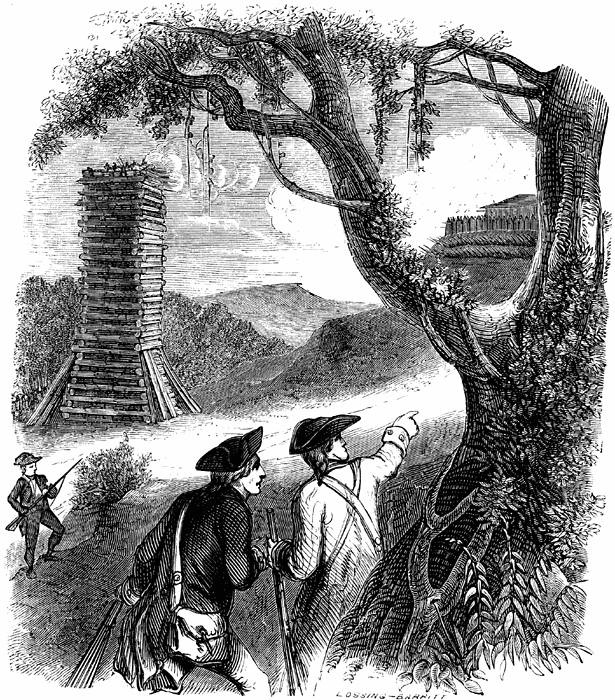
Join us as we welcome back Dr. Steven Smith as he discusses his new book “The Battles of Fort Watson and Fort Motte, 1781.”
Dr. Smith will discuss the history of four critical weeks from April 12 until May 12, 1781, in which the tide of the Southern Campaign of the Revolutionary War turned in favor of the Americans. Focusing on General Francis Marion’s and Colonel Henry Lee’s capture of two key British forts, Fort Watson and Fort Motte, coordinating with Nathanael Greene in retaking the South Carolina backcountry. These posts defended the supply line between Charleston and the British-occupied villages of Camden and Ninety Six. Although there would be much more fighting to do, once the two forts were lost, the British had to abandon the backcountry or starve. The British would never again be on the strategic offensive and were confined to the Charleston environs until they abandoned the city in December 1782.
Smith will also discuss how archaeological investigations have helped change the interpretation and mythology of both battles. Join us for a livestream on our You Tube channel in what will be a great discussion. The video will be posted to our Facebook page at its conclusion
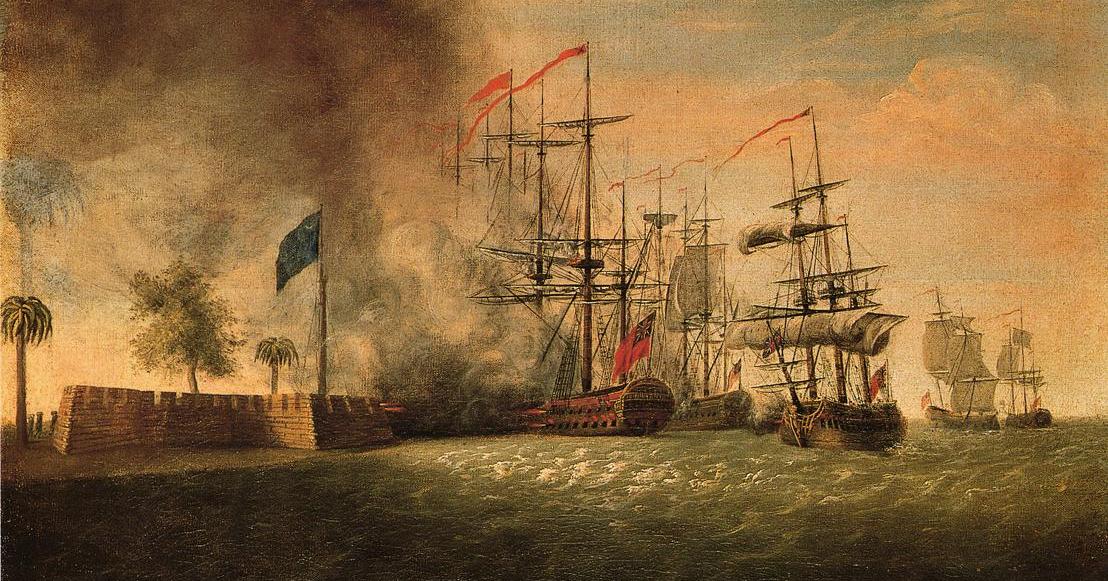
On June 28, 1776, nine British warships under the command of Sir Peter Parker weighed anchor and began moving toward Sullivan’s Island outside of Charleston, South Carolina. Col. William Moultrie, commanding the 2nd South Carolina Regiment in an unfinished palmetto log fort, ordered his men to their posts to prepare for a defense. The first four British ships moved into position and anchored 400 yards from the fort. In an amazing display of British firepower, the British ships began to fire broadsides, simultaneously firing all the cannon from one side of the ship. The broadsides were deafening as hundreds of British cannonballs screeched through the air and slammed into the palmetto walls of the fort. Local newspapers later described the cannonade as “one of the most heavy and incessant cannonades perhaps ever known.”
As the walls of the fort shook violently, Moultrie’s men coolly manned their cannon and returned the fire as best they could. A continuous roar of cannon fire from hundreds of artillery pieces belched forth, quickly filling the harbor with the sight of white smoke and the smell of burning sulfur. The crash of the cannonballs mixed with the screams of wounded men filled the air.
As the British cannon boomed away, their solid shot hit the walls of the palmetto fort. But the soft, spongy wood of the palmetto (and the 16 feet of sand behind them) absorbed the shock and the balls either buried themselves into the wall or bounced off and fell harmlessly to the ground. Meanwhile, the British ships endured terrible damage from the American shore batteries. American cannonballs smashed into the oak of the British ships, causing havoc and bloodshed.
The following is from David Reuwer, who was a good friend of Charles Baxley and worked with Charles to help preserve and interpret the story of Camden, Hobkirk’s Hill and South Carolina in the American Revolution. Both men shared an unmatched level of passion and enthusiasm for history.
“I never heard that,” was a common cadence with which this practical lawyer and self-taught historian responded to new information about the American Revolution in South Carolina. He both challenged the statement maker to support it and welcomed the newbie into the fellowship of the Southern Campaigns. This is how Charles B. Baxley operated with both hands – one gladly shaking an entry to join our exploits and the other cautioning you to rise to ever higher and increasing standards. He would push, exacerbate, pull, and uplift you. The Southern Campaigns of the American Revolution was created in 2004 by Charles Baxley and David Reuwer when they delineated the tripod elements of scholarship, fellowship and fun. Charles defined scholarship as building blocks of historic research, inquisition and field evidence; fellowship as to include anyone who would cite source material gone before us while presently lifting others up around us; and fun as joyfully sharing one another’s knowledgeable victories as we pursued historic adventures.
The substantive virtue Charles practiced daily was broad inclusion – come and join us! There was always another chair at the table and more room for additional players according to him. However, you had to participate somehow, to care about the commonweal, and to help others with their project needs and requests. You had to give as well as take.
Charles suffered from PAD – project aggrandizement disorder – in that he cajoled and made each of us go deeper when all the rest of us thought it had been done. He could come up with endless lists of questions when everyone else considered the subject utterly exhausted. History was neither boring, stale nor irrelevant the way Charles viewed and worked it. History is an experience, as much about the present as it was about the past. We must place our “boots on the ground” – the actual locatable sites – in order to fulfill our duties of scholarship and fellowship. Only when a little more (or a lot) is known and understood, that we can pass on, have we accomplished the tasks before us responsibly to the future generations. Charles achieved much of this by writing, sending and responding to multiplicative emails and countless phone calls while sitting in his “war room” den at home late into the night and wee morning hours.
Charles was inherently an encourager of others making us to think hard about their historic project, to question everything, to counsel with others, to be in mentorship, and to ./explore new thinking about what one is doing. His queries to you could sometimes be unnerving but if you really worked for the answers, the growth toward historic truth was rewarding. No wonder he was awarded the Order of the Palmetto by Governor Mark Sanford in 2006; no surprise in 2022 that Governor Henry McMaster appointed him the Chairman of the South Carolina American Revolution Sestercentennial Commission (SC250). He was one of the key people who took on the gigantuan task of restoring South Carolina’s Revolutionary battlefield stories into their proper place in American history since 1856 when Senator Andrew Butler vociferously debated Charles Sumner of Massachusetts on the floor of the U.S. Senate.
It is true that he liked chairing the Round Tables with intervening commentary and being the centrifugal point-man in most other Revolutionary War conversations. His verbal editorials were always engaging and usually enlightening.
He liked playing “director” and was sincerely effectual at connecting people with other people and endeavors with other projects. His brain was way ahead of most other thinking minds, historically, and he courteously provoked when he did. Perhaps no other single person currently had as much comprehensive breadth-and-depth knowledge about the Revolution in SC as Charles. “Learning is not virtue but the means to bring us an acquaintance with it. Integrity without knowledge is weak and useless, and knowledge without integrity is dangerous and dreadful. Let these be your motives to action through life, the relief of the distressed, the detection of frauds, the defeat of oppression, and diffusion of happiness,” professed 38-year-old General Nathanael Greene, final military commander of the Southern Department during the Revolution. Charles embodied this learning for 70 plus years and shared this way to live with all the rest of us. If you were not about doing a task, he would assign you one. Charles often related that we were only as good as our current task, project or mission and persuasively demanded that we focus on it for the purpose of sharing it with others.
Our State has lost one most caring advocate of the Revolutionary founding 1770-1783 era – a hero of history. For him, it was about accurately working the historic puzzle and conclusively moving the story forward in truth. Most substantively, many of us State residents, numerous thousands of 250th out-of-state tourists, and untold future generations of all Americans will HEAR and HAVE HEARD of South Carolina’s significant persons, places, battles, and events of the Southern Campaigns because of Charles B. Baxley. Mirroring Christopher Gadsden, he lived for “What I can do for my country, I will do.”
Emerging Revolutionary War welcomes guest historian Eric Wiser to the blog.
This is a brief story of my first and memorable visit to the Camden Battlefield in South Carolina this September past. I am a husband and father living in the suburbs of Chicago. I make my living as an accountant. As rewarding as my career has been, it’s my strong interest in early American history that stirs my imagination. My pilgrimage to Camden was part of a visit to my friend Phil Kondos who moved to eastern Georgia with his family over a decade ago. Phil is a gifted musician and wonderful father and happens to share a mutual love of history. This narrative of our visit will hopefully inspire others to place Camden Battlefield on their bucket list.
My interest in the Battle of Camden mostly derives from having a Patriot ancestor who fought there. Pvt. Michael Wiser, a 23-year-old grist miller from Frederick County, Maryland, was with the First Maryland Brigade and captured by the British at Camden.[i]
Lieutenant General Henry Clinton, New York Public Library
With the Charleston in British hands, Clinton believed that all he had to do was establish outposts in South Carolina stationed with British regulars. This be believed would put down what was left of the rebellion in the state. These posts assisted the recruitment and training of the thousands of Loyalist troops he believed would now rally around the King’s Colors. To take the best advantage of his Regular troops, Clinton determined to establish three major outposts in the South Carolina backcountry. Clinton established these posts at Augusta (Georgia), Ninety-Six, and Camden. While these posts were to be centers for the British army, the local Loyalist militias were to serve as the pacification forces in South Carolina while the main British force was freed up for larger strategic goals.
To recruit, enlist, and train the large, expected influx of Loyalist militia, Clinton named Maj. Patrick Ferguson as Inspector of Militia. Ferguson was ordered to enlist younger men, preferably unmarried, into companies that would form battalions. He was instructed to recruit from Georgia to North Carolina and offer short enlistments if necessary. Clinton believed that having the colonists maintain their own law and order (via Great Britain’s authority) would cause less apprehension with those that were mostly undecided about to whom they should throw their support, the Patriots or the British.
By mid-May, the British army set out for their destinations in the back country. Clinton’s second in command, Lieut. Gen. Charles Lord Cornwallis, marched to Camden while Ferguson moved to Ninety-Six. Without much resistance, Clinton’s plan to conquer South Carolina was working perfectly. Patriot leaders scrambled to find ways to organize their resistance. The only organized Continental force remaining in South Carolina was a small force of Virginians under Col. Abraham Buford that was on its way to Charleston when the city surrendered. Ordered by Brig. Gen Isaac Huger to reverse course and make his way north toward Hillsborough, North Carolina. There along with the North Carolina militia, he could be the core of American defense in North Carolina.
On May 27, Cornwallis ordered Lieut. Col. Banastre Tarleton with 300 of his dragoons and mounted infantry in pursuit of Buford. Tarleton’s British Legion was mostly composed of Loyalist recruits, so many in his force were from America. Tarleton pushed him men and horses hard, many horses falling out along the way. Buford was aware of a possible British pursuit but underestimated the speed in which Tarleton closed the gap. On May 29, Tarleton caught up with Buford in a region near the South and North Carolina border called the “Waxhaws.”
Lieutenant Colonel Banastre Tarleton, New York Public Library
The events that took place next are still debated today. Tarleton under a flag of truce tried to get Buford to surrender. Writing to Buford, Tarleton wrote “Resistance being vain, to prevent the effusion of human blood, I make offers which can never be repeated.” Tarleton was already creating an image of himself as an aggressive and brutal fighter. Buford, however, refused, replying, “I reject your proposals, and shall defend myself to the last extremity.” With that, Buford continued his march north towards North Carolina as did Tarleton’s pursuit. Around 3:00 p.m. the lead elements of Tarleton’s force wiped out Buford’s small rearguard, forcing Buford to stop and deal with Tarleton.
Buford decided to create a single battle line east of the Rocky River Road. Tarleton, ever the aggressive commander, ordered his horsemen to charge the Virginians. Here, Buford made what would be a devastating blunder. He ordered his men to not fire until the British cavalry was within ten yards of the American line. This would not allow the Americans a chance to fire another volley before the British charge was upon them. The Virginians fired, taking out some of the British dragoons and horses (Tarleton himself became briefly trapped under his horse), but most charged through Buford’s line, wielding their sabers and cutting down the Virginians. Total chaos ensued, and many of Buford’s men attempted to flee. Some tried to surrender by throwing their arms to the ground, but American accounts state that the British were offering “no quarter” and killing everyone that tried to surrender. Other accounts report that Buford sent a white flag to Tarleton, but probably because he was injured, it was never received, and the fighting continued. Accounts differ widely between the Americans and British on the fighting, but the fact cannot be argued that Buford’s command was destroyed.
Waxhaws Grave and Monument, photo and flags courtesy of the author
American casualties were estimated at 350, 113 men killed, 147 wounded, 50 captured, and 2 six-pound artillery pieces and 26 wagons captured. Buford himself was able to escape the field. Tarleton only suffered 5 killed and 12 wounded, a complete victory. What has become known as “Buford’s Massacre” was not referred to as a massacre at all in many period accounts. Tarleton himself blamed the “slaughter” on the fact that his men thought he was killed in the battle and sought revenge. The disparity in numbers and the reports of indiscriminate British slaughter of Americans led to the creation of “Tarleton’s Quarter.” Patriot leaders quickly pounced on this and began to spread stories about Tarleton’s brutal tactics. This proved to be a public relations coup for the Patriot cause, as it energized their side and led to a more robust recruitment of militia and partisan forces to take on the British who now faced no organized opposition in South Carolina or Georgia.
Stay Tuned for the Emerging Revolutionary War Series newest book releases “To the Last Extremity: The Battles for Charleston, 1776-1782” by Mark Maloy and “All That Can Be Expected: The Battle of Camden and the British High Tide in the South, August 16, 1780” by Rob Orrison and Mark Wilcox to learn more abou the 1780 Southern Campaign. Both releases are published by Savas Beatie Publshing: https://www.savasbeatie.com/american-revolution/
The Battle of Waxhaws, fought on May 29, 1780, was a lopsided British victory by Lieutenant Colonel Banastre Tarleton’s British cavalry over American Colonel Abraham Buford’s Continental forces in Waxhaws South Carolina. Buford lost 316 of 350 men with the British losing less than 20. Known popularly as “Buford’s Massacre,” Continental leaders used the battle as a propaganda tool against the Crown forces in the south. But, was it really a massacre?
Join us as we welcome historian and author Dr. Jim Piecuch as we discuss his research and theory about the Battle of Waxhaws and its aftermath. Dr. Piecuch has written several books on the Southern Campaign of the American Revolution including his book “Blood Be Upon Your Head: Tarleton and the Myth of Buford’s Massacre.” This Rev War Revelry will be pre-recorded and posted on May 28th at 7pm. Grab a drink and a good seat and enjoy this great presentation on one of the most controversial battles of the American Revolution.





 Emerging Revolutionary War Era