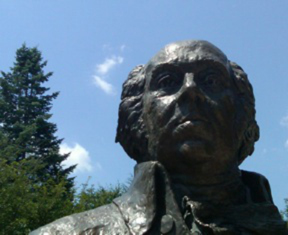
Two Patriots: One Slave and One Free; James Armistead Lafayette and James Forten

Emerging Revolutionary War welcomes back guest historian Malanna Henderson

Part One

 “It is not for their own land they fought, not even for a land which had adopted them, but for a land which had enslaved them, and whose laws, even in freedom, oftener oppressed than protected. Bravery, under such circumstances, has a peculiar beauty and merit.” – Harriet Beecher Stowe.

The words spoken by “the little woman who wrote the book that started this Great War,” so said Abraham Lincoln, according to legend, upon meeting Mrs. Stowe sometime in 1862, rang true for black patriots in the Civil War as well as those in the Revolutionary War.

The Smithsonian tome, The American Revolutionary War: A Visual History quotes a Hessian officer in 1777, as saying, “No regiment is to be seen in which there are not Negroes in abundance and among them are able-bodied and strong fellows.”

In every battle of the Revolutionary War from Lexington to Yorktown; black men, slave and free, picked up the musket and defended America; and yet, many historians as well as visual artists have omitted their contributions in the history books and their images on canvases depicting historic battles. The need for white historians to “overlook,” “underestimate,” and or “erase,” these sacrifices is a gross negligence that distorts and misrepresents American history; and furthermore, it continues to disenfranchise the patriotic heroes of the past and malign the self-image of millions of Americans today simply because of the color of their skin.

Black soldiers have always fought two wars simultaneously; wars declared by their government and the unspoken wars at home for liberty, equality and before the Civil War, for citizenship.

What kind of men fight for the liberty of others when their own liberty isn’t guaranteed?

True patriots: James Armistead Lafayette was one such person.

malanna-henderson-image-1
James Armistead Lafayette (1760-1832) Blackpast.org

Slaves serving in the rebel military was a question that manifested itself early amongst the colonial government agencies. Their presence rankled many, while others welcomed them and praised their bravery. Some men of color had fought gallantly and with distinction as they stood alongside their white compatriots, defenders of liberty on the Lexington Green in April of 1775.

For instance, in the Battle of Bunker Hill, Peter Salem, a slave, served with courage under fire, as varying accounts reported. Salem was introduced to George Washington as “the man who shot Pitcairn,” the British Royal Marine Major who shouted to his men before Salem shot him down, “The day is ours.” Despite the competence and bravery of such men on the battlefield their exploits didn’t convert the wide-spread reluctance of most colonists to accept black men as soldiers.

General George Washington, Commander-in-Chief of the Continental Army, harbored the same common prejudices of the southern-planter ruling class of which he was a member. In July, he instructed recruiters “not to enlist any stroller, negro, or vagabond, or person suspected of being an enemy to the liberty of America.” Commanders in each colony and regiment made up their own minds. Some ignored his command. Their decision was based on need and experience. Those who had already served successfully with black militia and minutemen may have seen no cause to alter their regiments.

By December of 1776, Washington back-pedaled on his decision, allowing for black veterans of Lexington, Concord and Bunker Hill to serve; but of the slave, he maintained his objection. However, some junior officers appreciated the contributions of blacks. Col. John Thomas wrote John Adams on October 24, 1775, “We have negroes, but I look upon them as equally serviceable with other men, for fatigue (labor); and, in action many of them have proven themselves brave.”

As the war raged on, the necessity for able-bodied men settled the question. White soldiers, who usually served for only a few months to a year, mustered out, died or were wounded; while others deserted. Black soldiers who expected to receive their freedom if they served were in the war for the duration. This was a positive factor for the commanding officers who had to re-train all new recruits. Around five-thousand blacks served in the Revolutionary War as soldiers. However, a vast unknown number provided a myriad of support services.

Another reason the colonials reconsidered enlisting blacks was the bold military tactic that occurred in November of 1775. Lord Dunmore, the last royal governor of Virginia, ratified a proclamation freeing all indentured servants and slaves of rebels if they would fight for the British. Thousands of people fled the plantations to gain their freedom. This single act struck a devastating blow on two fronts, it threaten their economic stability and increased the tension between master and slave, with the master fearing slave revolts and the permanent loss of their property. Moreover, it upset the social order. Enslaved men serving alongside whites put them on an equal footing in the battlefield, which violated the white supremacy dogma that governed current thought and practice.

Born into slavery on December 10, 1748, in New Kent, Virginia to owner William Armistead, James enlisted in the Revolutionary War under General Marquis de Lafayette in 1781. His owner was a patriot and most likely received the bonus James would have gotten for enlisting had he been free or white. Enlistment bonuses comprised of money, land or slaves.

By the time Armistead entered the war, the efforts of Benjamin Franklin and other colonial agents had secured a military and economic alliance with the French. A long-time imperial rival of British expansion, the French provided naval ships, money and personnel.

malanna-henderson-image-2


Marquis de Lafayette (born Marie Joseph Paul Yves Roch Gilbert du Motier) was a descendant of ancient French nobility. His father, a colonel in the French Grenadiers had died in the Seven Year’s War (known as the French and Indian War in America) when the young nobleman was only two years old. The political ideals of liberty and equality espoused by the colonials matched his beliefs and fired his military ambitions. Perchance, his yearning to play a role in America’s fight for independence from British rule may have been spawned by a desire to avenge his father’s death.

Since Lord Dunmore’s Proclamation, it was easy for Armistead to gain access in the enemy camps as a runaway slave seeking his freedom. While providing varied services to the British, he gained the confidence of Brigadier General Benedict Arnold, who by now had defected to the British. He charged Armistead with scouting, foraging and spying. Armistead was able to comfortably go between both camps, in essence becoming a double spy. He carried false and misleading information to the British but provided accurate intelligence on the movement of British forces and details of their military strategies to General Lafayette.

When Arnold left Virginia, Armistead was able to deceive General Charles Cornwallis as well, who rampaged through parts of Virginia and burned Richmond, the capital. He sent Colonel Banastre Tarleton to capture the entire legislative assembly, which included Daniel Boone, Patrick Henry and the governor. The plan was thwarted by an astute young man named Jack Jouett. Although, a few were apprehended, among them Daniel Boone; Jouett’s actions prevented the British from arresting the biggest prize: Governor Thomas Jefferson.

By early August, Cornwallis had made plans to establish fortifications in Yorktown, expecting reinforcements to increase his troops of approximately nine-thousand.

General Washington, in the meantime, had joined forces with Comte de Rochambeau to recapture New York. With intelligence supplied by James Armistead, they learned that Cornwallis was in Yorktown waiting for military support. French Admiral de Grasse, with a fleet of about twenty-eight naval ships, was on his way to the Chesapeake from St. Dominick (present-day Haiti). A plan to surround Cornwallis by land and sea appeared possible. The French naval fleet, along with the Washington’s Continental and Rochambeau’s French forces, headed to the enemy’s headquarters. Once Washington reached Yorktown, General Lafayette’s regiment joined him. Thus, Armistead’s accurate and meticulous reports were vital to the American victory that culminated in Yorktown on October 19, 1781.
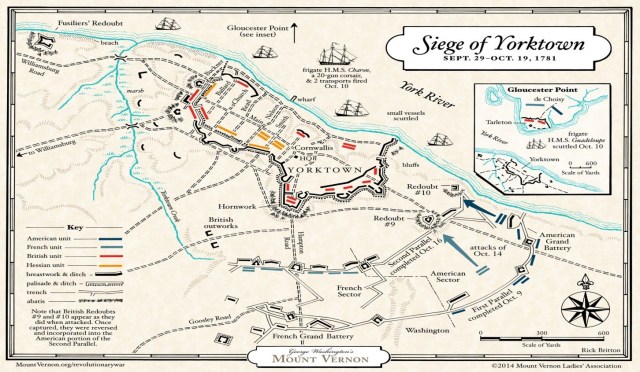
 

malanna-henderson-image-3jpg
(http://www.mountvernon.org/preservation/maps/map-the-siege-of-yorktown/)
malanna-henderson-image-4
The surrender of the British forces at Yorktown, Painting by John Trumbull (US Capitol) (http://www.mountvernon.org/preservation/maps/map-the-siege-of-yorktown/)


Later Cornwallis met the Marquis at his headquarters and was flabbergasted to find his spy James Armistead present.

The Treaty of Paris in 1783 severed ties from Britain, the mother country, and established America as an independent nation. That same year, the Act of 1783 was passed freeing slaves who had fought in the Revolutionary War on their masters’ behalf. However, it excluded slave-spies. Ergo, James Armistead, who risked his life by providing information to help win the freedom of many, was himself denied freedom. Was his life in less danger operating under subterfuge as a spy amongst the British than it would have been, had he served as a soldier on the battlefield? I think not. Had his espionage been discovered, he surely would have had to forfeit his life.

After the war, Armistead was returned to slavery. Even his own master didn’t have the legal right to free him because of the Act of 1783, omitting slave-spies from emancipation.

When learning of his compatriot’s status, the Marquis penned a certificate to the Virginia legislator in October of 1784 imploring them to grant Armistead his freedom, declaring:

“This is to Certify that the Bearer By the Name of James Armistead Has done Essential Services to me While I had the Honour to Command in this State. His Intelligences from the Ennemy’s Camp were Industriously Collected and More faithfully deliver’d. He properly Acquitted Himself with Some Important Commissions I Gave Him and Appears to me Entitled to Every Reward his Situation Can Admit of. Done Under my Hand,” Richmond, November 21st 1784.

The legislator didn’t act upon the request straightaway. However, again in 1786, James Armistead applied for his freedom and it was duly granted on January 9, 1787, with a fair compensation to his master, William.

In honor of his benefactor, James Armistead added Lafayette to his surname. After emancipation, he moved a short distance south of New Kent, near Richmond, Virginia and acquired forty acres of less than suitable farmland. He married and had a family. He even owned slaves. History doesn’t tell us if he bought enslaved relatives to free them or if they were bought to farm his land as field hands.

It wasn’t until 1819 that he applied to the state legislature for financial assistance to ease his poverty. This time, the response was immediate; he received $60 and an annual pension of $40 for his service during the Revolutionary War.

Unlike James Armistead Lafayette, many blacks who worked as laborers, guides, messengers and spies were not as fortunate. Whether they were pressed into service or willingly answered the call, most neither received their freedom nor wages for their behind-the-scene contributions to the war.

In 1824, the Marquis de Lafayette visited the United States and was lauded as a hero of the American Revolutionary War in Richmond with festivities and a parade. Spying Armistead in the crowd, it is said he halted the procession, dismounted from his horse and embraced his old comrade.


_____________________________________________________________

End Notes

References:

  • Kareem Abdul-Jabbar and Alan Steinberg Black Profiles in Courage: A Legacy of African-American Achievement. (New York: William Morrow and Company, Inc.1996) pages 32-34.


  • Col. Michael Lee Lanning (Ret.) Defenders of Liberty: African Americans in the Revolutionary War. (New York: Kensington Publishing Corp. 2000) pages 45-46; 130


  • Smithsonian The American Revolution, A Pictorial History. (New York: DK Publishing, First Edition 2016)


  • Harry M. Ward, For Virginia and For Independence: Twenty-Eight Revolutionary War Soldiers from the Old Dominion, Chapter 26 “Spy”, pages 155-159.



The Battle of Kings Mountain, From Those Who Were There

Emerging Revolutionary War welcomes back historian Bert Dunkerly. The accounts below come from Mr. Dunkerly’s book on the battle.

9e68818e-8f86-4871-83ad-e24e9f58afb9
“The Battle of Kings Mountain, Eyewitness Accounts” by Bert Dunkerly  (Acadia Publishing)

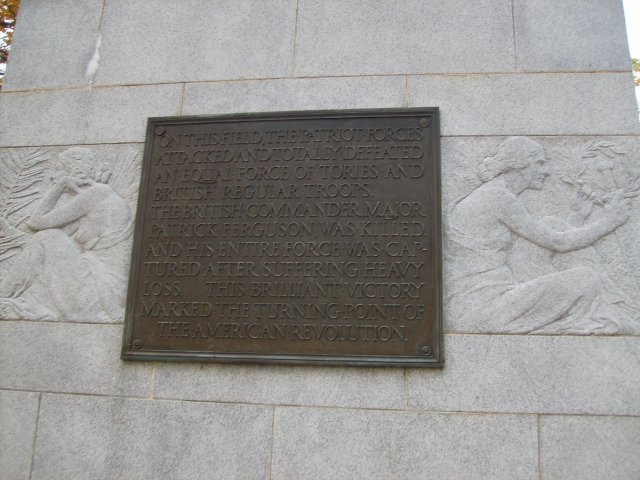
The battle of Kings Mountain was an intense, one-hour battle fought just below the North Carolina-South Carolina border.  The October 1780 engagement pitted about 900 American militia from five states (Virginia, the two Carolinas, Georgia, and modern-day Tennessee) against 1,100 Loyalists under Maj. Patrick Ferguson.  With Ferguson’s wounding late in the action, command fell to his subordinate, Captain Abraham DePeyster.  As the Americans closed in, the Loyalists surrendered.

Eyewitness accounts provide details of the battle, especially its lesser known aspects like the conclusion of the battle and subsequent Loyalist surrender.  Here are a few detailed accounts, presented with original spelling and grammar.

Virginia militiaman Leonard Hice had quite an experience in the battle, being wounded four times.  He would spend two years recovering:

“I was commanded by Captain James Dysart where I was dreadfully wounded, I received two bullets in my left arm and it was broken.  We were fighting in the woods and with the assistance of my commander who would push my bullets down, I shot 3 rounds before I was shot down.  I then received a bullet through my left leg.  The fourth bullet I received in my right knee which shattered the bone by my right thigh and brought me to the ground.  When on the ground I received a bullet in my breast and was bourne off the ground to a doctor.”

Andrew Cresswell was a militiaman from Virginia who found himself too far in front during the final phase of the battle.  He also was fortunate to witness the surrender and provided one of the only accounts of Captain Abraham DePeyster surrendering to Colonel William Campbell.  His account also speaks to the brutal nature of the fighting between Loyalist and Whig.

“I saw the smoke of their guns and as I saw but one man further round than myself I  spoke to him and told him we had better take care least we might make a mistake.  I retreated about ten paces where I discharged my gun. About that moment they began to run.  I waited for nobody.  I ran without a halt till I came to the center of their encampment at which moment the flag was raised for quarters.  I saw Capt. DePeyster start from amongst his dirty crew on my right seeing him coming a direct course towards me.  I looked round to my left I saw Col. Campbell of Virginia on my left DePeyster came forward with his swoard hilt foremost.  Campbell accosted him in these words “I am happy to see you Sir.  DePeyster, in answer swore by his maker he was not happy to see him under the present circumstances at the same time delivered up his sword – Campbell received the sword, turned it round in his hand and handed it back telling him to return to his post which he received.  Rejoining these words, God eternally damn the Tories to Hell’s Flames and so the scene ended as to the surrender.”

Lt Anthony Alliare was a New York Loyalist in Ferguson’s command.  He recounts the experience of the New York detachment, which launched a series of unsuccessful bayonet charges early in the battle.  His reference to the “North Carolina regiment” refers to local Loyalist troops fighting alongside his men.

“The action continued an hour and five minutes, but their numbers enabled them to surround us.  The North Carolina regiment seeing this, and numbers being out of ammunition, gave way, which naturally threw the rest of the militia into confusion.  Our poor little detachment, which consisted of only seventy men when we marched to the field of action, were all killed and wounded by twenty, and those brave fellows were soon crowded as close as possible by the militia.’

Ensign Robert Campbell of Virginia also witnessed the close of the battle, and recounts a white flag being raised.

“It was about this time that Colonel Campbell advanced in front of his men, and climbed over a steep rock close by the enemy’s lines to get a view of their situation and saw they were retreating from behind the rocks that were near to him.  As soon as Captain Dupoister observed that Colonel Ferguson was killed, he raised flag and called for quarters.  It was soon taken out of his hand by one of the officers on horseback, and raised so high that it could be seen by our line, and the firing immediately ceased.  The Loyalists, at the time of their surrender, were driven into a crowd, and being closely surrounded, they could not have made any further resistance.”

Isaac Shelby, from the Carolina frontier (modern Tennessee) was a militia commander in the battle.  He also provides insights in the battle’s final moments.

“They were ordered to throw down their arms; which they did, and surrendered themselves prisoners at discretion.  It was some time before a complete cessation of the firing, on our part, could be effected. Our men, who had been scattered in the battle, were continually coming up, and continued to fire, without comprehending in the heat of the moment, what had happened; and some, who had heard that at Buford’s defeat the British had refused quarters to many who asked it, were willing to follow that bad example.  Owing to these causes, the ignorance of some, and the disposition of other to retaliate, it required some time, and some exertion on the art of the offices, to put an entire stop to the firing.  After the surrender of the enemy, our men gave spontaneously three loud and long shouts.”

In one hour, the entire Loyalist force of 1,100 was killed, wounded, or captured.  October 7 marks the anniversary of this battle which, in the words of Thomas Jefferson, was the “turn of the tide of success.”

SANYO DIGITAL CAMERA
Plaque at Kings Mountain National Military Park


Robert M. Dunkerly (Bert) is a historian, award-winning author, and speaker who is actively involved in historic preservation and research. He holds a degree in History from St. Vincent College and a Masters in Historic Preservation from Middle Tennessee State University. He has worked at nine historic sites, written eleven books and over twenty articles. His research includes archaeology, colonial life, military history, and historic commemoration. Dunkerly is currently a Park Ranger at Richmond National Battlefield Park. He has visited over 400 battlefields and over 700 historic sites worldwide. When not reading or writing, he enjoys hiking, camping, and photography.

Six Signing Signers

Part One of Six

On August 2, 1776, in Philadelphia, Pennsylvania, the majority of the 56 men who would forever be known as the “Signers of the Declaration of Independence” placed quill to ink and affixed their signature.

On September 17, 1787, the men who persevered, haggled, and agreed on the United States Constitution, dipped a quill into ink and placed their signatures on that famous document.

If one looks closely and reads the names of the signers, six gentlemen’s names would appear on both documents. If one hazarded a quick guess, Thomas Jefferson, John Hancock, John or Samuel Adams, George Washington, and Benjamin Franklin would most likely be the first names to spill off the tongue.

Only one of those names would be correct; Benjamin Franklin. This post, the first in the series, will shed light on whose these men were, who had the great fortune–or luck?–to sign both famous political documents. The first of the “Six Signing Signers” is…..

29aa0f03f572a6bf876557dca1c4db16

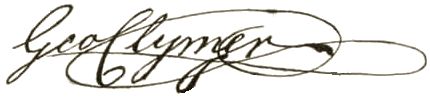
George Clymer. Continue reading “Six Signing Signers”

“Happy Independence Day”

Whether you are about to enjoy a firework display, finishing up a family barbecue, or enjoying this holiday in some other form, the historians here at Emerging Revolutionary War wish all our readers and fellow historians a “Happy Independence Day.”

For those protecting our country on this day, around the world, a big “thank you” to go along with this July 4th, to you as well.

But, let’s not forget the true meaning of this day. When, in 1776, in Philadelphia, Mr. John Hancock, as president of the Second Continental Congress, affixed his signature to the document below, which declared to the world the break from Great Britain.

DOI
Declaration of Independence

From the words of Richard Henry Lee, “Resolved, That These United Colonies are, and of right ought to be, free and independent states,” to the quill of Thomas Jefferson, “When in the course of human events it becomes necessary for one people to dissolve the political  bands which have connected them,” let us truly remember the history behind this day and the build-up to that fateful decision in Philadelphia.

Have a “Happy Independence Day.”


The Second of July’s Importance

This year, July 4th, which falls on a Monday, and will be celebrated as America’s Independence Day around the country. Americans remember that date, in 1776, as the day that John Hancock, as president of the Second Continental Congress, put quill to ink and then parchment, to affix his signature in a bold stroke at the bottom of the Declaration of Independence. Interestingly, only one other person signed their name to the document that day, secretary to the Second Continental Congress, Charles Thompson.

However, the important date to remember, is today, July 2. On this date in 1776, the Second Continental Congress will adopt Virginia delegate Richard Henry Lee’s resolution to declare independence from Great Britain. This document, crafted by another Virginia, Thomas Jefferson, was originally brought up for debate in June. By June 28th, Jefferson, chosen by a sub-committee to write the declaration, had presented it to Congress assembled in Philadelphia for review.

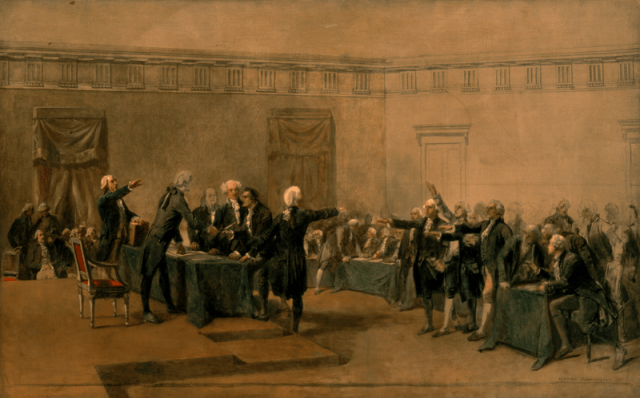
800px-Signing_of_Declaration_of_Independence_by_Armand-Dumaresq,_c1873
Artist Charles E. A. Dumaresq’s rendition of the Second Continental Congress signing the Declaration of Independence

Continue reading “The Second of July’s Importance”

Thomas Blackburn: Forgotten Patriot

Emerging Revolutionary War is honored to share the post below by guest historian Kerry Mitchell

Thomas Jefferson, George Washington, Richard Henry Lee, George Mason, Patrick Henry…when thinking about the period before and during the American Revolution these names come up as some of the great Virginians who were involved in the founding of our nation. While these men were great on their own accounts, there were other Virginian men who helped shaped our nation. Thomas Blackburn of Prince William County is one of these who history tends to glance over even though during the 1760s and 1770s, he was an important figure in American history.

DSC_5537
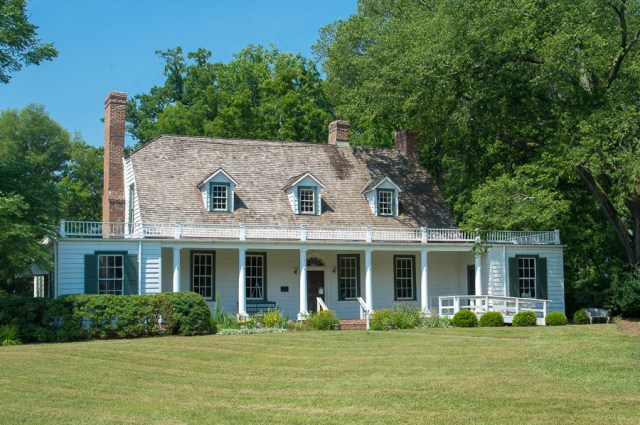
Rippon Lodge in Prince William County, Virginia, home of Colonel Thomas Blackburn

Thomas was born in Prince William County around 1742 to Richard and Mary (nee Watts) Blackburn. Richard Blackburn was a native from Ripon, England who came over in the early 1700s and settled in Gloucester County, Virginia before moving to Prince William County in 1733. In addition to being a carpenter and farmer, Richard was involved in Prince William County politics and served as a Justice of the Peace. Not much is known about Thomas’s early childhood. He inherits his family home and farm, Rippon Lodge in 1760. That same year he marries Christian Scott with whom he has six children with.  By 1762, Thomas receives a captain’s commission from the governor. With the French and Indian War ending it is unclear to what extent he served. We do know that in September 1766 he was serving as a Justice of the Peace for Prince William County. In 1772, Thomas was elected to be one of the Prince William representatives to the House of Burgesses.

RL Interior Jan09 028
A photo of the interior of one of the rooms of Rippon Lodge

Thomas’s election to the House coincided with the brewing unrest brewing between the colonists and Great Britain. After the Boston Tea Party and Britain’s passage of the intolerable Acts, Thomas was amongst the group of members who drafted the resolution that would call for a day of prayer and fasting for the people of Boston.  Lord Dunmore believed the resolution was an insult to King George III and he dissolved the House on My 26th. Thomas was among the 22 ex-members who met at Raleigh Tavern and decided they would support a continental boycott of British goods. He went back to Prince William County to have the resolution passed by county leaders (which they did on June 6th). From 1774-1776, Thomas served in the first four Virginia conventions and involved himself in many committees dealing with the unrest. He was part of the committee offering George Washington the command of Virginia’s militia and as well as the committee with George Mason and Henry Lee II raising troops to defend Virginia. In the spring of 1776, Thomas lost his seat to attend the 5th Virginia Convention to Cuthbert Bullitt.

IMG_0093
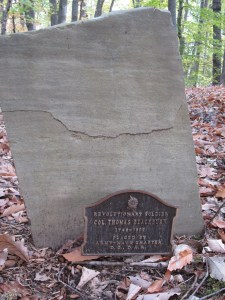
Gravestone and D.A.R. marker for Colonel Thomas Blackburn

After losing his seat to Bullitt, Thomas was appointed as a Lt. Colonel of the 2nd Virginia State Regiment. After being passed over for a promotion, Thomas gave in his resignation on June 10, 1777. While he was out of the army officially, Thomas did not stay out of the fight for long. He rejoined the Virginia Militia as a volunteer. He fought at the battle of Germantown, Pennsylvania in October 1777. During this battle, he was wounded in the leg which ended his military career. He returned to Rippon Lodge in Woodbridge, Virginia to continue farming and entertaining his many friends. This included George Washington whom Thomas became related to through marriage when his daughter, Julia Ann, married George’s nephew, Bushrod Washington.  On July 7, 1807, Thomas passed away at Rippon Lodge where he is buried in the family cemetery.

Thomas Blackburb Obituary Virginia Gazette Aug 29th 1807
Thomas Blackburn Obituary, Virginia Gazette, August 29, 1807

*Originally from New York, Kerry Mitchell is currently the Historic Interpreter at Rippon Lodge Historic Site, part of Prince William County’s Historic Preservation Division. She has a B.A. in Historic Preservation from the University of Mary Washington, a M.A. in American History from George Mason University and a graduate certificate in Museum Collection Care and Management from The George Washington University. She has previously worked at the National Museum of the Marine Corps, Reston Historic Trust, and the Fire Island National Seashore.*

Remembering John and Abigail (part one)

RevWarWednesdays-header

AdamsStatueFacePart one of two

When Abigail Adams died in late October, 1818, her husband, John, brokenhearted, said, “I wish I could lie down beside her and die, too.”

Today, the two are entombed side by side, along with their son John Quincy and his wife, Louisa Catherine, in a well-lit, whitewashed crypt beneath the United First Parish Church in Quincy, Mass. I’ve come here to pay my respects to the former presidents and first ladies, but mostly I’m here to say thanks to John, and to remember him because he worried he’d be forgotten. Continue reading “Remembering John and Abigail (part one)”

Jefferson: Self-governance and “the field of knowledge”

RevWarWednesdays-header

tjmonticellostatueThe final part in a four-part series

“The field of knowledge,” said Thomas Jefferson, “is the common prosperity of all mankind.”

Jefferson’s words are inscribed in big bold letters in the entryway of Monticello’s visitor center. They’re written in architectural perpetuity in Jefferson’s “academical village,” the University of Virginia. They’re enshrined in the very concept of democracy.

“Whenever the people are well-informed, they can be trusted with their own government,” Jefferson said. Knowledge enables self-determination. Continue reading “Jefferson: Self-governance and “the field of knowledge””

Mercer’s Grenadier Militia

RevWarWednesdays-header


Emerging Revolutionary War and Revolutionary War Wednesday is pleased to welcome back guest historian Drew Gruber.

Part 1

When we think about American militia during the Revolutionary War, the image of an untrained rifle-toting citizen turned soldier comes to mind. This stereotype of the American soldier, popularized by movies like The Patriot is not completely false but such generalizations should give us pause and inspire us to investigate the roll of American militia, independent companies, and ‘irregular’ troops a bit closer. For example, how was it that on October 3, 1781 a group of Virginia militiamen defeated an elite British force? The story of Lieutenant Colonel John Mercer’s Grenadier Militia during the battle at Seawell’s Ordinary has been told and retold since 1781, however the formation of this illustrious group is often ignored and deserves a closer look. Continue reading “Mercer’s Grenadier Militia”