

Emerging Revolutionary War welcomes guest historian Bjorn Bruckshaw, a bio follows the post.
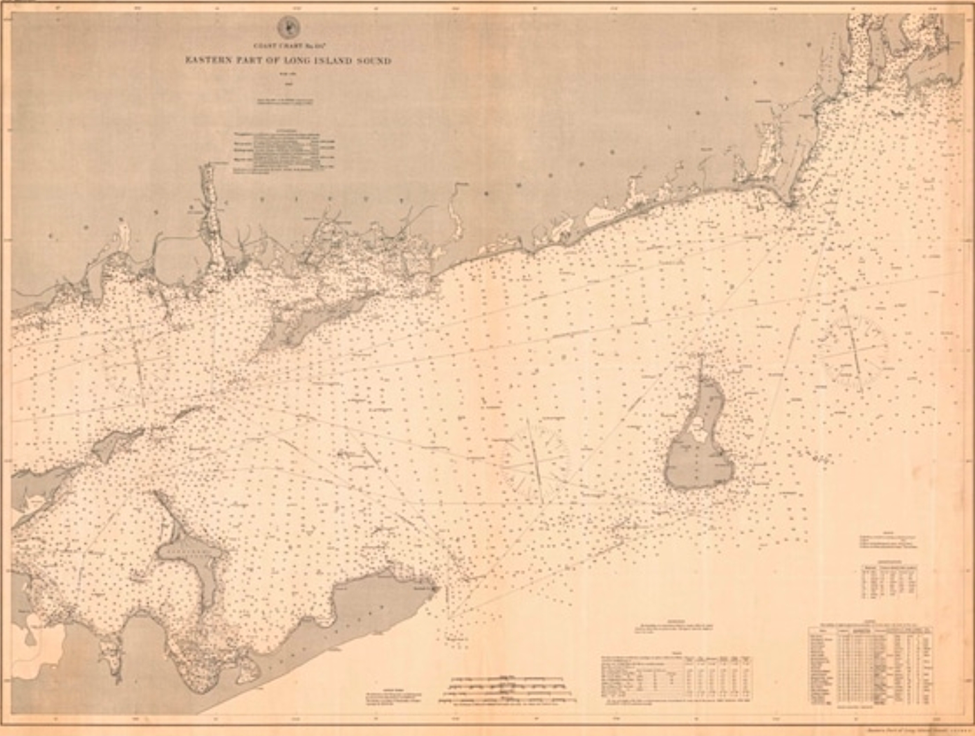
In the early morning hours of April 6, 1776, a lone British warship slipped through the moonlit waters southeast of Block Island. The twenty-gun frigate HMS Glasgow was carrying dispatches from Newport, Rhode Island, to the British fleet assembling off Charleston, South Carolina. Suddenly the ship’s lookout sighted sails on the horizon—then more sails behind them. Within minutes Captain Tyringham Howe realized the alarming truth: his single ship had encountered nearly the entire fleet of the newly created Continental Navy.¹
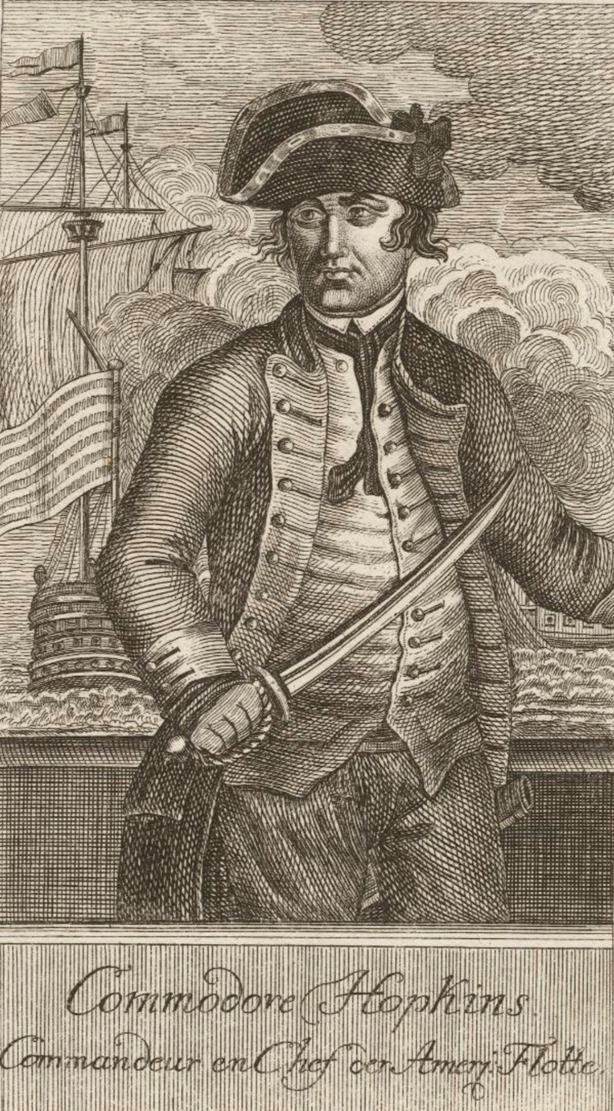
What followed should have been a decisive American victory. Commodore Esek Hopkins commanded a squadron of seven armed vessels, including the flagship Alfred, the brigs Cabot and Andrew Doria, and several additional ships. Against them stood only one British frigate. Yet by dawn the British ship had fought its way free and escaped. The encounter became one of the earliest—and most embarrassing—naval engagements of the American Revolution.²
The clash southeast of Block Island revealed the weaknesses of the young American navy: inexperienced crews, poor coordination between ships, and ineffective gunnery. Despite overwhelming numerical superiority, the Continental squadron failed to capture a single enemy warship. As one frustrated American officer later remarked, “A more imprudent, ill-conducted affair never happened.”³
The British vessel at the center of the encounter was HMS Glasgow, a sixth-rate twenty-gun frigate of the Royal Navy. In early April 1776 the ship had been tasked with delivering dispatches from Newport to the British fleet gathering off Charleston for an upcoming campaign against the southern colonies. That expedition would ultimately culminate in the failed British assault during the Battle of Sullivan’s Island in June 1776.⁴
Meanwhile the American rebellion had begun extending onto the seas. The Second Continental Congress had authorized the creation of a navy in late 1775 to challenge British control of American waters. By February 1776 the first ships of the fleet were ready for service, and Congress appointed Hopkins as commander-in-chief of the new force.⁵
Hopkins’s squadron consisted largely of converted merchant vessels hastily adapted for war. The fleet included the flagship Alfred, along with Columbus, Cabot, Andrew Doria, Providence, Wasp, and Fly. Among the officers serving aboard the fleet was a young lieutenant named John Paul Jones, who served aboard the Alfred and would later gain fame as one of the most celebrated naval commanders of the Revolution.⁶
In February 1776 Hopkins led the squadron south on an expedition to the Bahamas, where British military supplies were believed to be stored. In early March American marines landed on the island of New Providence and captured the town of Nassau. The operation marked the first amphibious assault conducted by the Continental Navy and resulted in the capture of valuable military stores.⁷
After loading their ships with captured supplies, the fleet departed Nassau on March 17 and sailed north toward American waters. The voyage was plagued by numerous difficulties. Disease spread quickly among the crews, including outbreaks of fever and smallpox that weakened many sailors and reduced the effectiveness of the fleet.⁸
By April 4 the squadron had reached waters off Long Island and captured a British supply vessel, HMS Hawk. The following day the Americans seized another prize, the Bolton. Hoping to capture additional ships, Hopkins continued cruising near Block Island that night and organized the fleet into a scouting formation.⁹
The squadron sailed in two columns. The right column was led by the brig Cabot, commanded by Hopkins’s son, Captain John Burroughs Hopkins, followed by the flagship Alfred. The left column was headed by the Andrew Doria under Captain Nicholas Biddle, followed by the Columbus. Behind them sailed the Providence, while Fly and Wasp trailed farther astern escorting the captured prize vessels. Because prize crews had been assigned to the captured ships, the fighting strength of Hopkins’s fleet was already reduced.¹⁰
The night of April 6 was exceptionally clear, illuminated by a nearly full moon. Between one and two in the morning, with the fleet sailing generally southward, the Andrew Doria sighted a vessel roughly eight leagues southeast of Block Island. That ship proved to be HMS Glasgow, sailing westward on its dispatch mission.¹¹
Captain Howe cautiously approached the unknown fleet to investigate. Over the next thirty minutes the British frigate closed the distance until it came within hailing range of the Cabot. Commodore Hopkins issued no signals during this time, preventing the American ships from forming a proper battle line. The engagement that followed unfolded in confusion. Captain Nicholas Biddle later described the encounter simply as “helter-skelter.”¹²
When Howe hailed the Cabot for identification, Captain Hopkins attempted deception, replying that the ships were “the Columbus and Alfred, a 22-gun frigate.” The ruse quickly collapsed once the ships realized each other’s identity and the Americans opened fire.¹³
The lightly armed Cabot fired the first broadside but inflicted little damage. The British warship responded with two powerful broadsides from heavier guns that quickly disabled the American vessel. The attack killed Cabot’s sailing master, wounded Captain Hopkins, and shattered the ship’s steering.¹⁴
As the damaged brig drifted away, the flagship Alfred moved forward to engage the British frigate. The two ships exchanged broadsides in the darkness, but early in the action a British shot severed the tiller lines aboard Alfred, briefly robbing the ship of steering control and exposing it to raking fire. The drifting vessels also complicated the efforts of Andrew Doria and other American ships attempting to join the battle.¹⁵
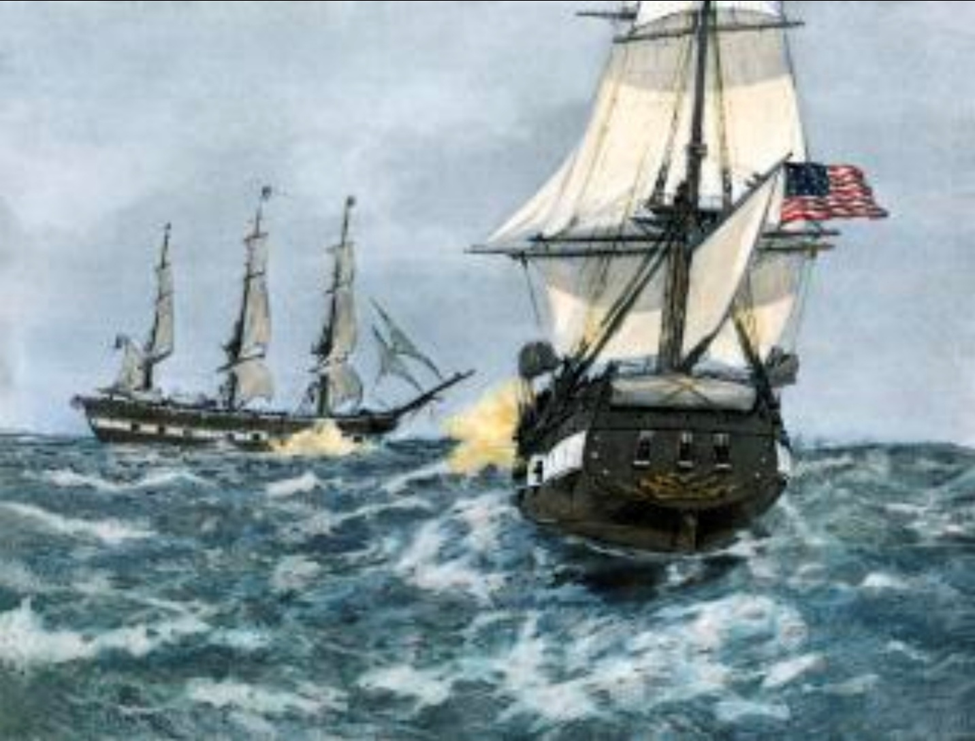
The Providence remained largely out of action during the engagement, while the Columbus eventually joined the fight but fired wildly and inflicted little damage on the British ship.¹⁶
Despite facing multiple opponents, Captain Howe maneuvered the Glasgow skillfully throughout the battle. In his official report he later wrote that the American ships “engaged us very warmly for a considerable time,” yet careful sailing allowed him to keep them “at such distance as prevented their making any impression upon us.”¹⁷
With his ship exposed to fire from several vessels, Howe eventually chose to break off the engagement rather than risk being boarded. Despite extensive damage to sails and rigging, he set course toward Newport and gradually pulled away from the pursuing American squadron. In his report he summarized the escape simply: “By the blessing of God we got clear of them and arrived safe at Newport.”¹⁸
The Americans gave chase for several hours, but their heavily loaded ships and damaged rigging prevented them from closing the distance. As daylight approached Hopkins called off the pursuit rather than risk encountering the larger British squadron stationed at Newport.¹⁹
The only prize the Americans captured during the engagement was the Glasgow’s tender, which they brought into New London, Connecticut, on April 8.²⁰
The battle proved deeply embarrassing for the Americans. The Glasgow suffered only four casualties—one killed and three wounded—while American losses were considerably higher: four killed and seven wounded aboard Cabot, six killed and six wounded aboard Alfred, and one wounded aboard Andrew Doria.²¹
Although John Hancock initially praised Hopkins for the cruise, the failure to capture the Glasgow quickly sparked criticism both within Congress and among naval officers. Captain Biddle later wrote bitterly of the encounter, “A more imprudent, ill-conducted affair never happened.”²²
The engagement also sparked controversy within the American fleet itself. Captain Abraham Whipple of the Columbus faced accusations of cowardice and requested a court-martial to clear his name. Although he was acquitted, he was criticized for errors of judgment. Captain John Hazard of the Providence was convicted of neglect of duty and forced to surrender his commission.²³
Hopkins himself soon faced scrutiny from Congress for other decisions during the cruise. He had violated his written orders by attacking Nassau rather than cruising along the Virginia and Carolina coasts, and he distributed captured goods without consulting Congress. Combined with the embarrassment of the Glasgow’s escape, these controversies eventually led to his dismissal from the Continental Navy in 1778.²⁴
The naval clash southeast of Block Island remains one of the earliest tests of the Continental Navy. A single British warship had encountered an entire American squadron—and escaped. The encounter demonstrated that numerical superiority alone could not compensate for inexperience, poor coordination, and inadequate training at sea.
In the quiet waters off Block Island, the young American navy learned a harsh lesson about the realities of naval warfare.
Endnotes:
- David McCullough, 1776 (New York: Simon & Schuster, 2005), 103–105.
- William M. Fowler Jr., Rebels Under Sail: The American Navy During the Revolution (New York: Charles Scribner’s Sons, 1976), 55–60.
- Samuel Eliot Morison, John Paul Jones: A Sailor’s Biography (Boston: Little, Brown and Company, 1959), 58–61.
- Nathan Miller, Sea of Glory: A Naval History of the American Revolution (New York: David McKay Company, 1974), 62–66.
- United States Continental Congress, Journals of the Continental Congress, 1774–1789, vol. 4 (Washington, DC: Government Printing Office, 1906), 292–295.
- Robert Wilden Neeser, ed., The Papers of John Paul Jones (New York: Naval History Society, 1906), 34–36.
- William M. Fowler Jr., Rebels Under Sail: The American Navy During the Revolution (New York: Charles Scribner’s Sons, 1976), 56–58.
- Nathan Miller, Sea of Glory: A Naval History of the American Revolution (New York: David McKay Company, 1974), 64–65.
- William Bell Clark, ed., Naval Documents of the American Revolution, vol. 4 (Washington, DC: U.S. Government Printing Office, 1969), 460–468.
- William Bell Clark, ed., Naval Documents of the American Revolution, vol. 4 (Washington, DC: U.S. Government Printing Office, 1969), 468–470.
- William Bell Clark, ed., Naval Documents of the American Revolution, vol. 4 (Washington, DC: U.S. Government Printing Office, 1969), 470–472.
- Nicholas Biddle to the Marine Committee of Congress, April 1776, in William Bell Clark, ed., Naval Documents of the American Revolution, vol. 4 (Washington, DC: U.S. Government Printing Office, 1969), 470–473.
- William Bell Clark, ed., Naval Documents of the American Revolution, vol. 4 (Washington, DC: U.S. Government Printing Office, 1969), 472–474.
- Nathan Miller, Sea of Glory: A Naval History of the American Revolution (New York: David McKay Company, 1974), 65–66.
- William M. Fowler Jr., Rebels Under Sail: The American Navy During the Revolution (New York: Charles Scribner’s Sons, 1976), 61–62.
- William Bell Clark, ed., Naval Documents of the American Revolution, vol. 4 (Washington, DC: U.S. Government Printing Office, 1969), 474–476.
- Captain Tyringham Howe to Admiral Molyneux Shuldham, April 8, 1776, in William Bell Clark, ed., Naval Documents of the American Revolution, vol. 4 (Washington, DC: U.S. Government Printing Office, 1969), 482–485.
- Captain Tyringham Howe to Admiral Molyneux Shuldham, April 8, 1776, in William Bell Clark, ed., Naval Documents of the American Revolution, vol. 4 (Washington, DC: U.S. Government Printing Office, 1969), 482–485.
- William M. Fowler Jr., Rebels Under Sail: The American Navy During the Revolution (New York: Charles Scribner’s Sons, 1976), 62–63.
- William Bell Clark, ed., Naval Documents of the American Revolution, vol. 4 (Washington, DC: U.S. Government Printing Office, 1969), 476–478.
- Nathan Miller, Sea of Glory: A Naval History of the American Revolution (New York: David McKay Company, 1974), 66–67.
- Nicholas Biddle to the Marine Committee of Congress, April 1776, in William Bell Clark, ed., Naval Documents of the American Revolution, vol. 4 (Washington, DC: U.S. Government Printing Office, 1969), 470–473.
- William Bell Clark, ed., Naval Documents of the American Revolution, vol. 4 (Washington, DC: U.S. Government Printing Office, 1969), 485–488.
- United States Continental Congress, Journals of the Continental Congress, 1774–1789, vol. 4 (Washington, DC: Government Printing Office, 1906), 292–295.
Bio:
Bjorn Bruckshaw is an independent historian and writer specializing in the American Revolution, with a particular focus on Rhode Island’s military and naval contributions to the war for independence. A native of Warwick, Rhode Island, his research often centers on the soldiers, sailors, and lesser-known events connected to Rhode Island and New England during the Revolutionary War. I am a combat veteran of the U.S. Army’s 82nd Airborne Division, where I served multiple combat tours and was awarded the Purple Heart. His military experience informs his historical work, particularly his interest in battlefield decision-making, leadership, and the lived experiences of soldiers during the Revolutionary War. In addition to archival research and writing, I have participated in historical fieldwork, including taking part in an archaeological dig at the Saratoga battlefield. I am currently researching and writing a larger work examining Rhode Island’s role in the American Revolution and the men who fought to secure American independence.
 Emerging Revolutionary War Era