Emerging Revolutionary War welcomes guest historian Ben Powers
Introduction
Nathaniel Greene is renowned for leading the Southern Department during the American Revolution, achieving significant strategic results against Lords Cornwallis and Rawdon, even though he lost several battles. Historian Theodore Thayer called him “the strategist of the American Revolution.”[1] Greene carefully planned his army’s movements to maximize maneuverability, chose to fight in situations with roughly equal numbers, strengthened support from auxiliary and irregular forces, and put the British in increasingly worse positions. His main goal was to keep his army active—success meant staying in the field and avoiding severe losses. This led Cornwallis to make decisions that resulted in his defeat at Yorktown, Virginia, in October 1781. Greene’s careful coordination of military actions to achieve strategic results hinted at what would later be called “operational art,” a concept later connected to leaders like Napoleon Bonaparte and Soviet theorists.[2] Greene’s skills showed the main elements of operational art, making him more than a strategist—he was an early example of an operational artist.
Some Definitions
The “operational level of war” is a twentieth-century concept describing military activities between the tactical level (winning battles) and the strategic level (achieving national aims through armed force and other instruments of power). In current doctrine, tactics involve sequencing forces in time and space to accomplish missions like seizing terrain. Strategy is how national leaders and senior commanders use available means to achieve defined ends. The operational level connects these two, as theater commanders sequence campaigns to achieve strategic objectives, a concept relevant for analyzing Greene’s approach.
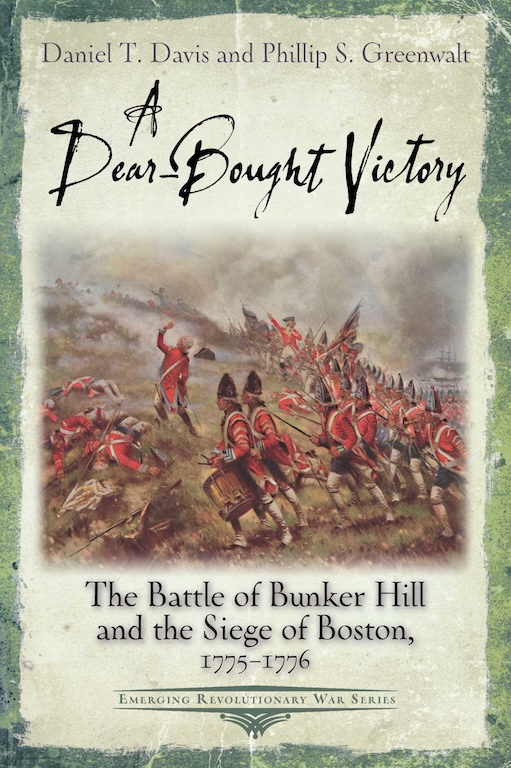
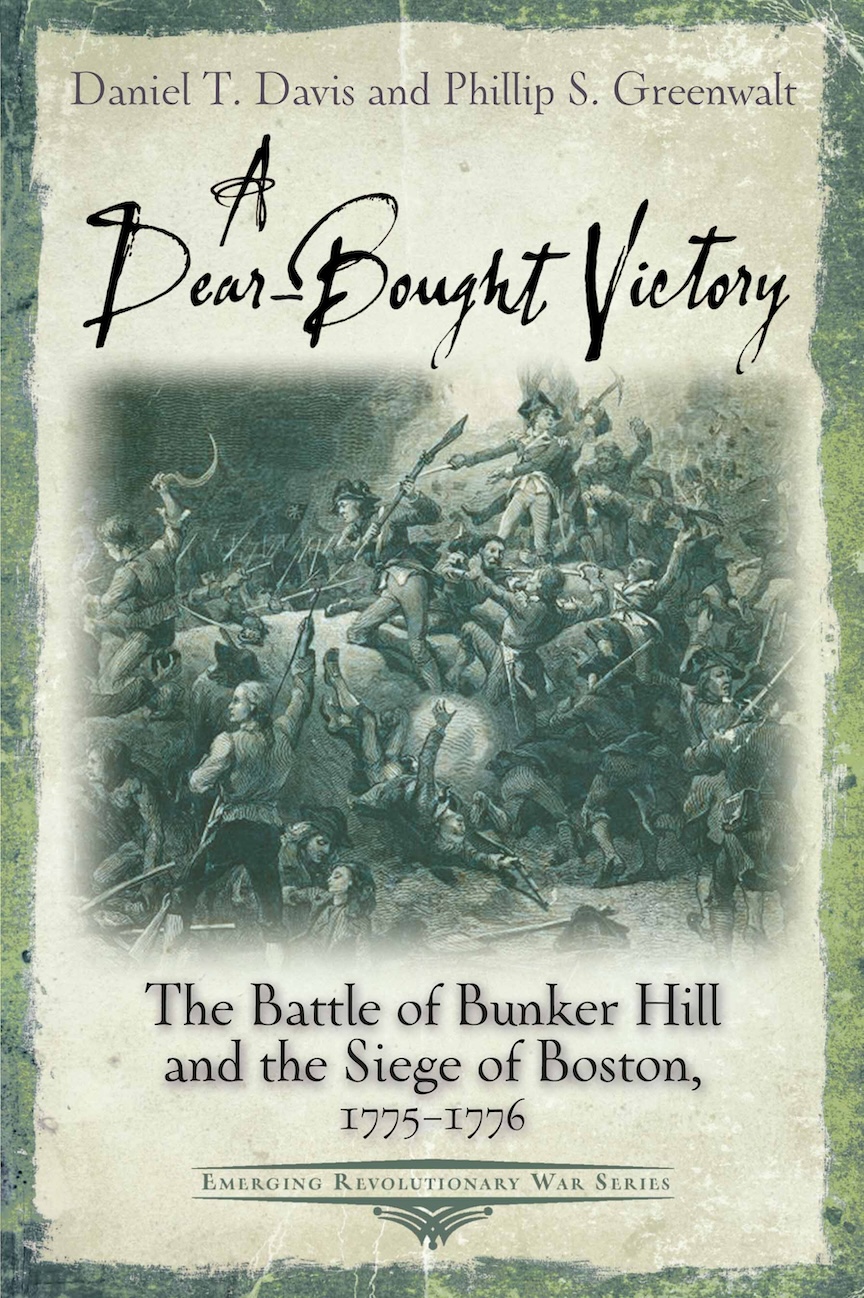
We’re excited to share one of the 2026 new releases in the Emerging Revolutionary War Series. Published by Savas Beatie, a sneak peek, including the cover, is below.
About the Book:
“I wish we could sell them another hill at the same price we did Bunkers Hill,” Nathanael Greene wrote to the governor of Rhode Island after the battle of June 17, 1775.
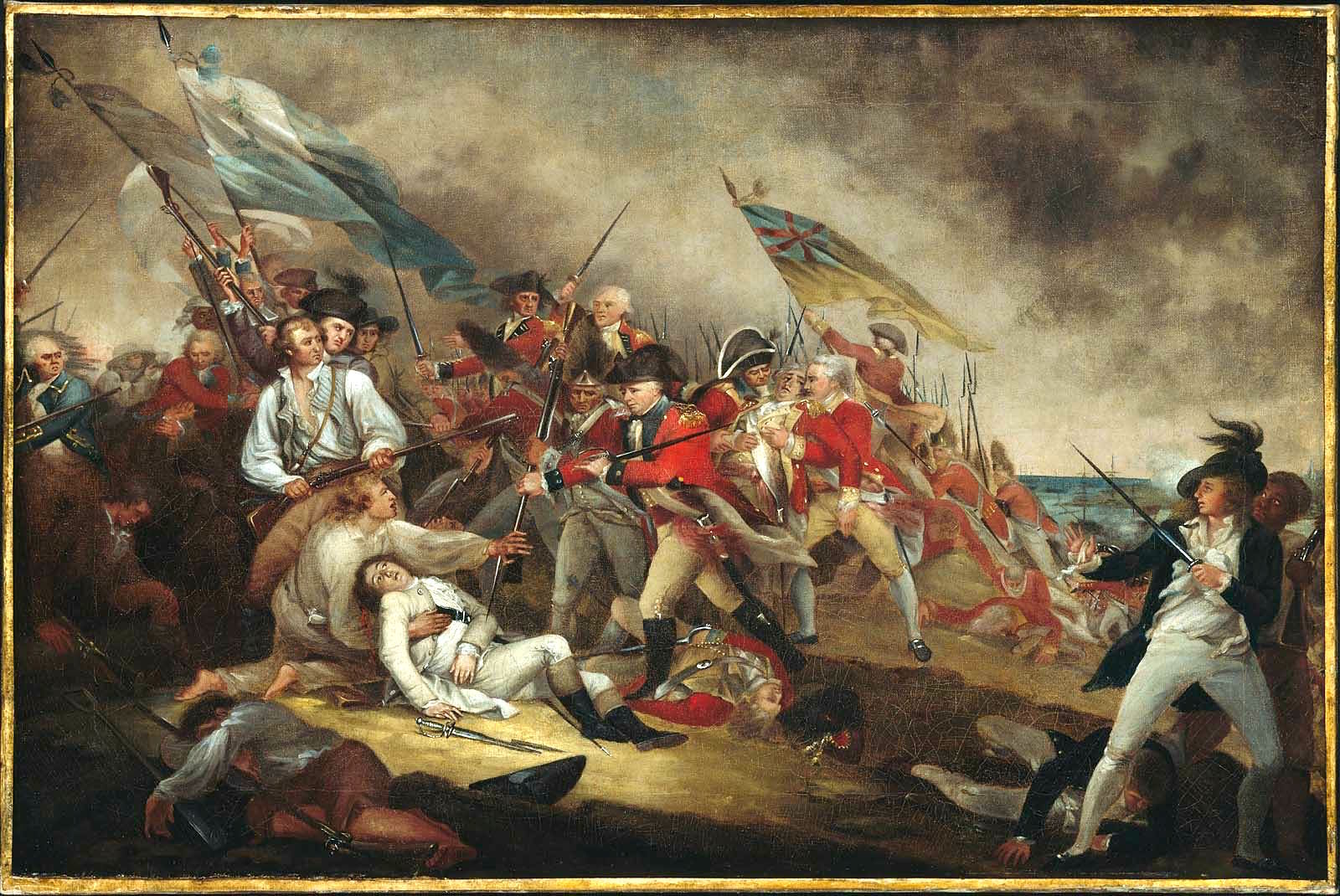
Actually fought on Breed’s Hill outside Boston, Massachusetts, the battle of Bunker Hill proved a pyrrhic victory for British forces. Confident in their ability to overwhelm the New England militia that opposed them, long lines of neatly uniformed British infantry and marines swept uphill toward a quickly built earthen redoubt defended by a motely collection of farmers, shopkeepers, and tradesmen.
“Don’t fire until you see the whites of their eyes!” the colonials urged each other—or did they?
By the end of the fight, the British gained the summit and Colonial forces scattered. One of the patriot leaders, Dr. Joseph Warren, lay dead—one of the first martyrs of the American Revolution. But for the British, the scene was far, far worse: it would be the greatest number of casualties they would ever suffer in any battle of the American Revolution. As British General Henry Clinton commented afterward, “A few more such victories would have surely put an end to British dominion in America.”
The siege of Boston would continue, but the sobering lesson of Bunker Hill changed British strategy—as did the arrival soon thereafter of a new commander-in-chief of Continental forces: General George Washington.
In A Dear-Bought Victory, historians Daniel T. Davis and Phillip S. Greenwalt separate the facts from the myths as they take readers to the slopes of Breed’s Hill and along the Boston siege lines as they explore a battle that continues to hold a place in popular memory unlike few others.
About the Authors:
Daniel T. Davis is the Senior Education Manager at the American Battlefield Trust. He is a graduate of Longwood University with a bachelor’s degree in public history. Dan has worked as a Ranger/Historian at Appomattox Court House National Historical Park and Fredericksburg and Spotsylvania National Military Park. He is the author or co-author of numerous books on the American Civil War. This is his first co-authored book in the Emerging Revolutionary War Series. Dan is a native of Fredericksburg, Virginia.
Phillip S. Greenwalt is the co-founder of Emerging Revolutionary War and a full-time contributor to Emerging Civil War. He is a graduate of Wheeling Jesuit University with a bachelor’s degree in history along with graduate degrees in American History and International Studies and Leadership from George Mason University and Arizona State University, respectively. He is the author of co-author of seven books on the American Revolutionary and Civil Wars. Phill has worked for the National Park Service for the last 17 years at numerous natural and cultural sites. He is a native of Baltimore, Maryland.
Join us this Sunday night at 7pm on our Facebook page as we welcome Dr. Susan Brynne Long. While partisan warfare in the American south has gained popular and scholarly attention in recent years, little work has been done on the prisoners of the backcountry theater. Scholarship on British and Loyalist captives has emphasized the vigilante justice to which they were often subject, but less attention has been paid to the role of military tradition and lived experiences with prisoners in their administration. Dr. Long is filling that gap, with her research emphasizing the role of these factors in the progression of the backcountry war, resulting in an administrative structure of prisoner administration that prioritized humane treatment, even though southern revolutionaries failed to enforce compliance with this standard.
Dr. Susan Brynne Long is an instructor of history at the University of Nebraska – Omaha, whose research and teaching focus on early America and military history. Her current research is about the American administration of British allied prisoners of war in the Revolution.
This Rev War Revelry will be pre-recorded and posted on our Facebook page at 7pm on November 16. 2025. Then it will be posted to our You Tube and Spotify channels.
On Tuesday, the 250th anniversary of the Battle of Bunker Hill, fought on Breed’s Hill on Charlestown Peninsula, will be remembered. On June 17, 1775, the last major engagement before George Washington arrived in Massachusetts to take command was fought between militia under Colonel William Prescott and British forces under General William Howe. Although a defeat for the patriots, resulting in the death of Dr. Joseph Warren, the victory was a pyrrhic one for the British.
Join Emerging Revolutionary War historians as they discuss the engagement, the personas, and the ramifications of the Battle of Bunker Hill. Also, stay tuned until the end for an announcement as well.
So, two days before the 250th, grab your favorite beverage and tune into our Facebook page at 7 p.m. EDT and have your questions ready. If you are unable to attend the live on Sunday evening, don’t fret, the video will be posted to YouTube by the anniversary and to our podcast channel as soon as possible
On Friday, April 21, 1775, word arrived in New Haven, Connecticut, regarding the fighting at Lexington and Concord. The Revolutionary War had begun, and thousands of militiamen from Massachusetts and the surrounding colonies in New England were converging around Boston to lay siege to the British army bottled up in the city. The next day, New Haven’s militia unit, the Governor’s Second Company of Guards, or Second Company, Governor’s Foot Guards, prepared to march to Cambridge.
Garbed in “A scarlet coat of common length, the lapels, cuffs and collars of buff and trimmed with plain silver wash buttons, white linen vest, breeches and stockings, black half leggins and small, fashionable and narrow ruffled shirt,” the Foot Guards made for quite the appearance. At the head of the 65-man-strong company was Captain Benedict Arnold, a leading member in revolutionary New Haven.
Arnold, 34-years-old at the outbreak of the war, had not stood pat during the decade leading up to April 1775. He was a member of the Sons of Liberty, and on multiple occasions, led mobs against the pro-monarchy members of the community. His leadership and zeal were recognized in March 1775 when he was elected captain of the militia. Like so many other patriots throughout the colonies, the shots fired at Lexington and Concord on April 19 would catapult Arnold onto a path to glory, and unfortunately for the country, later treason.
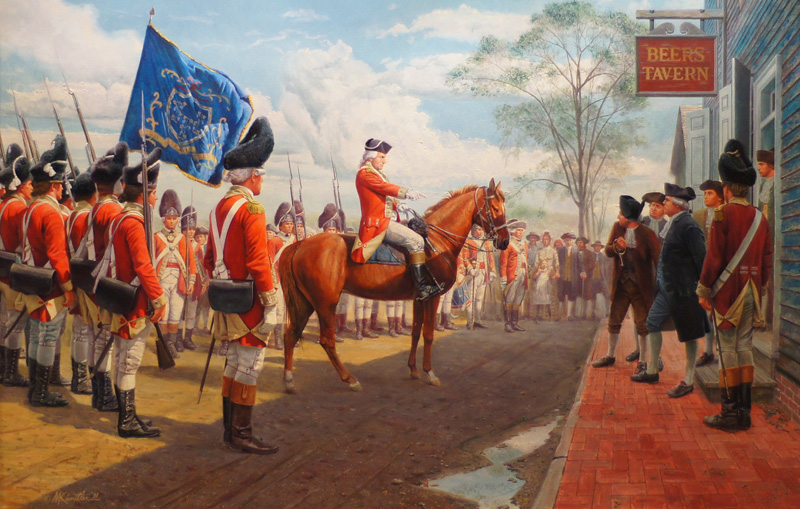
When the news arrived in town the evening of April 21, fifty-eight members of the Foot Guards voted to march to the assistance of their New England brethren. The next morning, Captain Arnold assembled the men on the New Haven Green, where the powder house was located. The doors were locked, and the keys to the stores in possession of New Haven’s Selectmen. Just off the green, at the intersection of College and Chapel Streets, stood Beers Tavern, where the Selectmen were gathered and discussing the town’s response to the recently received news.
The Foot Guards positioned themselves outside the building, while Arnold banged on the door demanding the keys to the powder house. The Selectmen refused to turn them over until official orders arrived. “None but the Almighty God shall prevent my marching,” Arnold passionately assured them. His forceful persuasion worked. The storehouse was opened, and the militia retrieved the necessary ammunition, flints, and powder. Once equipped, Arnold led his men out of New Haven and began a three-day march to Cambridge to join the fight.
Benedict Arnold Demands the Powder House Key by Mort Künstler
Idleness was not in Benedict Arnold’s nature, and upon arriving within the army’s camp, he approached the Massachusetts Committee of Safety with a proposal to lead an expedition against the British-held Ford Ticonderoga situated between Lake George and Lake Champlain in New York. The fort helped defend the crucial waterway system running north-south from Canada and housed cannon that could be vital to the patriot cause. The committee’s chairman, Dr. Joseph Warren, backed the plan and it was approved. On May 3, Arnold was promoted to colonel in the service of Massachusetts (not Connecticut) and was ordered to raise a force in western New England to accomplish the mission. The future hero of Saratoga and traitor to American liberty spurred his horse out of Cambridge and set his sights on taking “America’s Gibraltar.”
“To-morrow an oration is to be delivered by Dr. [Joseph] Warren,” Samuel Adams wrote on March 5, 1775, the fifth anniversary of the infamous Boston Massacre. “It was thought best to have an experienced officer in the political field on this occasion, as we may possibly be attacked in our trenches.”
Around every anniversary of the Boston Massacre, the people of the city and surrounding countryside sat to reflect on the events of that frigid March night and the current situation between themselves and their mother country. Chosen to deliver the 1775 commemorative oration, his second time doing so, was one of Boston’s most prominent physicians and chairman of the committee of safety, Dr. Joseph Warren. Because March 5 fell on a Sunday, the event was held the following day.
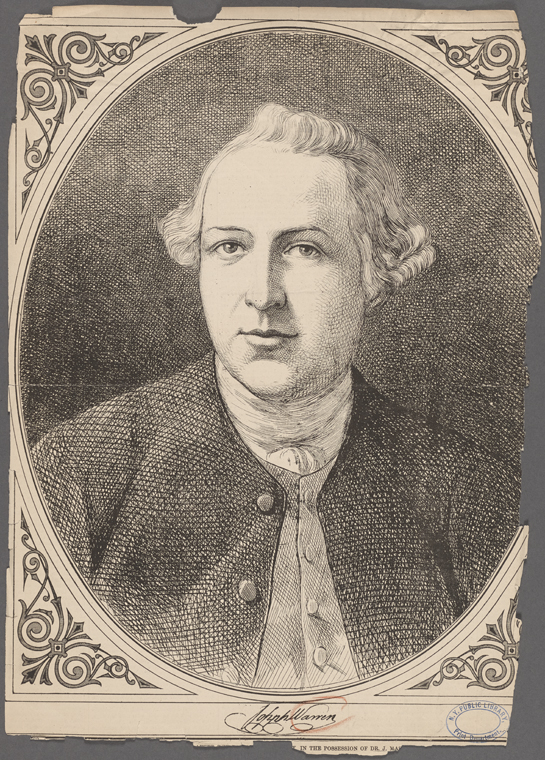
Dr. Joseph Warren. NYPL.
Warren was known to be a passionate and fiery speaker, able to invoke the raw emotion necessary to drive his listeners to action. The political climate surrounding that year’s event was never more incendiary. While no one could have known it at the time, though many anxiously anticipated something coming, the first shots of the Revolutionary War at Lexington and Concord were only a little more than a month in the future. The events on March 6 within the walls of the Old South Meeting House did nothing to ease those anxieties.
Accounts vary on the numbers and makeup of the attendees, but thousands flocked to the commemoration, including a large group of British Army officers garrisoned in the city. The presence of His Majesty’s soldiers was a sure sign that the building would be thick with rigid tension. The sight of the scarlet-coated men seated and standing around the pulpit did not deter the organizers. John Adams showed civility towards the officers, while his cousin Samuel saw an opportunity to enflame sentiments.
Old South Meeting House, Boston, MA. Courtesy of Robert Orrison.
Dr. Warren, 33 years old in March 1775, took the stage garbed in a toga, a symbol of the free men of Rome. His oration only touched upon the events five years prior, but the remainder oozed with patriotic fervor and a call to resist Great Britain’s rule until grievances were met. “I mourn over my bleeding country,” Warren lamented. “With them I weep at her distress, and with them deeply resent the many injuries she has received from the hands of cruel and unreasonable men.” As if a premonition of his own demise in battle at Bunker Hill several months later, he declared, “Our liberty must be preserved. It is far dearer than life.” The speech in its entirety can be read here.
Met with some low hisses and sighs of disapproval from the front rows, Warren’s oration was nonetheless received with emotion and the admiration of his fellow colonists. It was not until he stepped down from the pulpit that pandemonium began to ensue. Samuel Adams rose to appoint a speaker for next year’s commemoration. In doing so he also took the opportunity to reinforce the belief that the events on March 5, 1770 were not an accident, but a “Bloody Massacre.” Even Warren had refused to use this rhetoric. In response, the British officers began to jeer, shouting “Fie! Fie!” and “To Shame!” The already uneasy crowd mistook the shouts as “Fire! Fire!” and many began rushing for the windows, scrambling down the outside gutters and walls. As if this was not enough, the 43rd Regiment of Foot, returning from exercise, happened to be marching by with fife and drum. Their presence threw the crowd “into the utmost consternation,” who may have believed another “bloody massacre” was about to unfold.
Cooler heads prevailed, and any serious confrontation was avoided. Had it not been, one officer attested that it “wou’d in all probability have proved fatal to [John] Hancock, Adams, and Warren, and the rest of those Villains, as they were all up in the Pulpit together.”
March 6, 1775, proved to be another example of the swiftly deteriorating climate in Massachusetts. The influence of the “rebel” leaders continued to grow, while the image of a tyrannical monarch and his blood-thirsty soldiers was reinforced. Open hostilities seemed inevitable. Any day could bring bloodshed. As history exited the Old South Meeting House that day, it continued its accelerated journey down the road from Boston and on to Lexington Green.
How was George Washington spending his January 29th, 250 years ago, today?
Being a homebody!
“[Jan] 29 [1775]. At home all day. Ditto. Mr. & Mrs. Custis went to Pohick Church & from thence to Colo. Masons.”[1]
[1] “[Diary entry: 29 January 1775],” Founders Online, National Archives, https://founders.archives.gov/documents/Washington/01-03-02-0005-0001-0029. [Original source: The Diaries of George Washington, vol. 3, 1 January 1771–5 November 1781, ed. Donald Jackson. Charlottesville: University Press of Virginia, 1978, p. 305.]
May it please your Excellency [General Washington]
My last of the 20th ultimo from Point aux Trembles, advising of my retiring from before Quebec, make no Doubt your Excellency has received. I continued at Point aux Trembles until the 3rd Instant, when to my great Joy General Montgomery joined us with Artillery and about 300 Men. Yesterday we arrived here, and are making all possible Preparation to attack the City, which has a wretched motley Garrison of disaffected Seamen, Marines & Inhabitants, the Walls in a ruinous Situation, & cannot hold out long. Inclosed is a Return of my Detachment amounting to 675 Men, for whom, I have received Cloathing of General Montgomery. I hope there will soon be Provision made for paying the Soldiers Arrearages, as many of them have Families, who are in Want. A continual Hurry has prevented my sending a Continuation of my Journal. I am with very great Respect Your Excellency’s Most obedient humble servant
Benedict Arnold
“To George Washington from Colonel Benedict Arnold, 5 December 1775,” Founders Online, National Archives, https://founders.archives.gov/documents/Washington/03-02-02-0445. [Original source: The Papers of George Washington, Revolutionary War Series, vol. 2, 16 September 1775 – 31 December 1775, ed. Philander D. Chase. Charlottesville: University Press of Virginia, 1987, p. 495.]
For this week’s “Rev War Revelry” Emerging Revolutionary War ventures to the west to discuss the recently published book, “Till the Extinction of this Rebellion, George Rogers Clark, Frontier Warfare, and the Illinois Campaign of 1778-1779.” The author, Eric Sterner, is a contributor to the Emerging Revolutionary War, along with the author of An Anatomy of a Massacre: The Destruction of Gnadenhutten, 1782. When not writing history, Sterner had a career in government and public policy besides contributing to the literature and study of the American Revolutionary War era.
This book, published by Westholme Publishing, examines the viewpoints of the American, British, and Indigenous perspectives and illustrates the wide impact of the American Revolution on the peoples west of the Appalachian Mountains. What happened with Clark’s movements and campaign will lay the foundation for American expansion and the “opening of the West” following the American Revolution.
We hope you can join us for this historian happy hour this Sunday at 7 p.m. on our Facebook channel. If you miss it, we will post the revelry on our YouTube channel. Just search “Emerging Revolutionary War” to subscribe.
Although 1781 is most known for the pivotal and successful victory at Yorktown, action in the American Revolution unfolded throughout the eastern seaboard. In early September 1781, Benedict Arnold returned to the land of his birth to lead a raid on New London and the port that harbored preying privateers.
During this raid, the American militia under Lieutenant Colonel William Ledyard especially, stoutly defended Fort Griswold until overcome by superior numbers. The town of New London was also torched and saw a rarity like the battle of Trenton, in that combatants fought through the very streets of the town.
Capturing all this and uncovering new primary sources, Matthew Reardon weaves a narrative that balances military history, from the fighting to the strategies, with the impact on New London and Connecticut. His book, “The Traitor’s Homecoming, Benedict Arnold’s Raid on New London, Connecticut, September 4 – 13, 1781” was recently published by Savas Beatie, LLC. Matthew is a native of northeastern Connecticut and is a public educator along with being a command historian for the Connecticut Military Department. He can be reached for inquiries on speaking engagements or how to purchase the book here.
The book will be the focus of this week’s “Rev War Revelry.” We hope you can join us on our Facebook page on Sunday, 7 p.m. EDT.
*Note* This “Rev War Revelry” will be recorded in advance as the Emerging Revolutionary War crew will be in Lexington and Concord, Massachusetts for the 4th Annual Emerging Revolutionary War bus tour.