As we have seen, two untrained, amateur, but very effective soldiers perfected the concept of the defense in depth during the campaigns of 1781. Morgan was the first to experiment with the concept, and he did so with great effect at Cowpens, thoroughly defeating Tarleton’s Legion and sending “Bloody Ban” flying in a wild panic. Greene then adopted the tactic and applied it on a much larger scale at Guilford Courthouse. Even though he lost the battle, he scored a major strategic victory by punishing Cornwallis’ army and inflicting enormous losses on it for little gain—Greene’s army escaped to fight another day. His stand at Guilford Courthouse set the stage f Continue reading “Defense in Depth as a Revolutionary War Battlefield Tactic”→
Part Three (click here for first two installments)
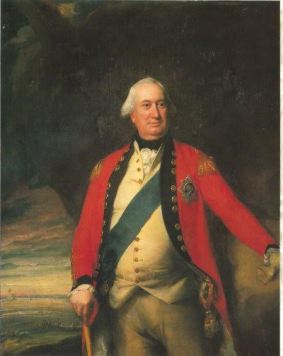
Determined to avenge his embarrassing defeat at Cowpens, Lt. Gen. Charles Lord Cornwallis set his army out in a determined pursuit of the American army. Knowing that he was too weak to face Cornwallis in a pitched battle, Maj. Gen. Nathanael Greene, the Southern Department commander, retreated northeastward from Salisbury, North Carolina toward the Virginia state line, where he hoped that additional militia troops would reinforce his army and he would receive supplies. The British chased Greene to the Dan River, near the Virginia border, but Greene wisely put the river between his army and the enemy. Cornwallis and his weary soldiers arrived at the rain-swollen river on February 15, too late to catch Greene’s army, which had finished crossing earlier that day. Frustrated, Cornwallis withdrew to Hillsborough, North Carolina.
Lord Charles Cornwallis
After receiving both the expected supplies and reinforcements, and after an opportunity to rest his command, Greene soon marched back into North Carolina to face Cornwallis’ tired and poorly supplied army, which now numbered less than 2000 men. After several weeks of skirmishing with Loyalist militiamen and a great deal of maneuvering Greene assumed a defensive position around Guildford Courthouse (near modern Greensboro, North Carolina) on March 14, 1781. Greene had more than 4000 Continentals, militiamen and cavalry, meaning that his army outnumbered Cornwallis’ by more than twice their strength. Continue reading “Defense in Depth as a Revolutionary War Battlefield Tactic”→
*From our friends at Civil War Trust and Campaign 1776*
If you have been following the ongoing saga regarding the Institute of Advanced Study’s plans to build 15 faculty houses on the historically hallowed ground of Princeton Battlefield, there is another update to track.
“The British Are Coming.”
Living historians portraying the British 17th Regiment of Foot at the Battle of Princeton. The 17th Regiment, under Lt. Col. Charles Mawhood, bore the brunt of General George Washington’s famous counterattack during the January 3, 1777 Battle of Princeton. Image taken March 2016. (Source: US Civil War Trust).
The rectitude of the decision John Champe made on that October night to “desert” his men and “join” the British must have weighed heavily on his mind as he approached the Hudson River. The mission, offered by “Lighthorse” Harry Lee, to capture the traitor Benedict Arnold was a serious one. The only hesitation Champe felt was how his reputation and honor would be injured by his desertion. No one but Lee and Washington could know the truth, the success of the mission counted on secrecy.[i]
As Champe reached the Paulus Hook area of the Hudson River, the details are murky. Some accounts have Champe jumping into a boat along the shore and pushing off into the river and rowing to a British war ship. Other claims have Champe clearing a British patrol along the river and escorted by the patrol to a nearby ship. [ii] Either way, Champe eluded his American pursuers and accomplished the first goal of his mission, to reach the British lines.
Lee, already having established a spy network, lined up a system of couriers to communicate with Champe. By October 25th, Lee had heard from Champe and wrote to Washington that “my friend got safe to New York; he was before Sir Henry Clinton and has passed all the forms of the garrison; he accidentally met General Arnold in the street which has paved a natural way for further acquaintance; the party entertains high hope of success…”[iii]
Clinton and Arnold expected many other American officers to be inspired by Arnold and
Sir Henry Clinton
join the British army. Champe, a modest officer in a fabled unit was just the kind of man that Clinton wanted to attract. The fact that Champe was fleeing his own men who were in hot pursuit of him made the deception complete. Clinton questioned Champe about the condition of the American army and morale. Champe informed Clinton that other officers were sure to desert and Washington’s ranks were thinning with men heading home. Clinton soon trusted him to be a deserter and attached him to a unit of Loyalists that Arnold was raising.[iv]
Champe became close to Arnold and spent a lot of time with him. Champe spent a lot of time at Arnold’s headquarters at the King’s Arms Tavern on Broadway in New York City. He would take the next several weeks to study Arnold and his habits. Champe also watched for other deserters joining the British army in New York. The fear by Washington was that Arnold was acting with other American officers in defecting. Soon Champe realized that Arnold had acted alone in his treason.
Finally in early December Champe informed Lee that his plan was to kidnap Arnold one night as Arnold took his nightly walk in a garden next to his headquarters. Champe was even able to recruit fellow patriots to assist him in the kidnapping of Arnold. On the selected night, Champe would have a boat waiting for him at a nearby landing. He also had loosened some of the fence boards around the garden area so he could sneak Arnold out of the garden. After getting Arnold onto the boat, Champe would take him to Hoboken (western side of the Hudson River). There Lee and three of his dragoons would wait for Champe and his cargo. Washington insisted to Lee and then to Champe that Arnold was not to be harmed. Champe was sure of his success and spent days and weeks in planning the capture of Arnold. [v]
As the evening approached, everything was in place. He had earned the confidence of Clinton and Arnold. He was now a sergeant in the British army and spent countless hours preparing and making the necessary connections to fellow patriots in New York. The boat was prepared and waiting, Lee would be at Hoboken with his dragoons. Everything was in place to bring home the traitor Arnold.
[i]The Revolutionary War Memoirs of General Henry Lee; DeCapo Press, 1998, pg. 399.
[ii] “Sergeant John Champe and Certain of His Contemporaries”, William and Mary College Quarterly, April 1937, pg. 153.
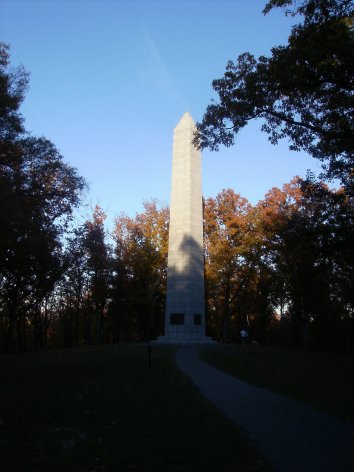
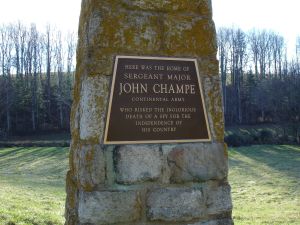
Along Route 50, west of Aldie, Virginia is a small obelisk in the middle of a cow pasture. Thousands of car drive by the marker, not knowing what it is or who it is for. Most people that come to this area of Virginia for history are interested in the American Civil War. In this region of Virginia the legendary John S. Mosby operated behind Union lines for two years. Also here were the hard fought cavalry battles that preluded the Battle of Gettysburg. But this monument doesn’t refer to anything in the Civil War. This monument commemorates a local American Revolutionary War hero. A man that has been mostly forgotten until recently.
John Champe was born in ca. 1755 from a family that was well established on Virginia’s Northern Neck. His family owned substantial land in King George, Stafford and Prince William Counties. At some point, his family moved to the Aldie region of Loudoun County, where John was born. The men of the Champe family were involved in the local militia and civil office as road builders. Though the family had substantial land holdings and slaves, John was one of many siblings and sought out his future with the military at the outbreak of the American Revolution.
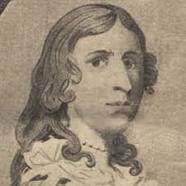
John Champe enlisted as a private in the 1st Regiment, Virginia Light Dragoons in December 1776. Champe’s abilities were quickly noticed and saw himself promoted to corporal by 1778 and then a sergeant by 1779. Champe’s abilities were quickly noticed by his commander, Major “Lighthorse” Harry Lee. Lee described Champe as “rather above the common size – full of bone and muscle; with a saturnine countenance, grave, thoughtful and taciturn – of tried courage and inflexible perseverance.” [i] Though Champe might have quickly risen in the non-commissioned ranks, he desired more. His opportunity for promotion and a date with history came on September 27, 1780 at West Point, NY.
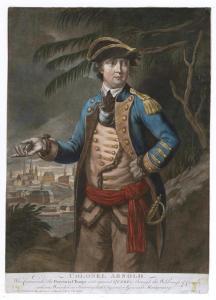
The treachery that took place on September 24th at West Point by once beloved American General Benedict Arnold is well documented. Arnold planned on turning over the fortress at West Point to the British (thus giving up the vital Hudson River). Arnold, receiving command of the post at West Point in August 1780, quickly reduced the viability of the fortifications by neglecting repairs and sending troops away from the post. Arnold’s treachery was not exposed until British officer, Major John Andre was captured, carrying on him copies of letters and Arnold’s plans. Luckily for Arnold, he learned on the morning of September 24th of Andre’s capture and he quickly fled to the HMS Vulture then on to safety in New York City.
Washington also learned of Arnold’s treason on September 24th during his planned visit to West Point. Washington reportedly took the news calmly and began to investigate the depth of treason in his officer corps. Maj. Lee assisted Washington in his investigation, and both found no evidence of other American officers involved in the plot. Washington then turned to the capture of Arnold, and that is where our “hero” comes into the story.
In October of 1780, Washington looked to Lee to find someone in his talented cavalry command that could “defect” to the British and carry out an elaborate plan to capture Arnold. Calling Lee to his headquarters, Washington and Lee discussed the proposition of capturing Arnold and how to carry out such a plan. Lee was tasked with finding someone in his command that could successfully carry out the plan. Lee soon wrote to Washington that he had two men in mind, but his top choice was a sergeant in his cavalry unit
“The chief of the two persons is a sergeant in my Cavalry; to him I have promised promotion…if your Excellency approves of what is done, the sergeant will desert from us tomorrow; the sergeant is a very promising youth of uncommon taciturnity and inflexible perseverance…I have incited his thirst for fame by impressing on his mind the virtue and glory of the act.” [ii]
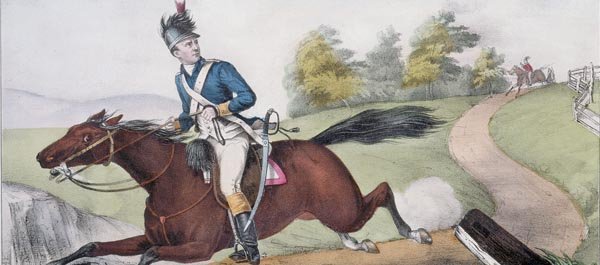
Washington quickly responded and agreed to Champe’s terms of promotion and soon the mission was hatched. Champe would desert to the British and only Lee and Washington would know about it. He would be labeled a traitor and his family name tarnished. If he was captured by the Americans, he would be executed and if he was exposed as an American spy to the British, he would also be executed. Champe accepted the risk and on the night of October 21st, Champe mounted his horse and made way for the Hudson River where he hoped to find either a British picket line or ship. With him Champe carried his orderly book, saddle bags and five guineas (provided to him by Lee).
Quickly Champe was challenged by an American patrol and he quickly fled,. This is exactly what Champe and Lee wanted, for the British to believe him, his desertion had to seem real. Soon the patrol reported to Lee about Champe’s departure. Lee delayed the pursuit, by first inquiring with other patrol members. Surely a man of Champe’s stature was not defecting. Soon though Lee knew he had to order a pursuit, he just hoped Champe had put enough distance between him and the Americans to make his escape.
“Light Horse” Harry Lee
Though Lee’s delay allowed Champe some time, it was not enough to break away cleanly. As Champe was making his way to the Hudson River, the American patrol was on his heels and calling for his halt. In front of him were British warships in the Hudson River and a British patrol on the banks for the river. Now was the time of decision, he could be shot dead by the British or captured and executed by the Americans. The plan to capture Arnold and punish the traitor was already at its first “Rubicon.”
[i]The Revolutionary War Memoirs of General Henry Lee; DeCapo Press, 1998, pg. 396.
[ii] “Sergeant John Champe and Certain of His Contemporaries”; William and Mary College Quarterly, April 1937, pg. 153.
Emerging Revolutionary War is honored to share the post below by guest historian Kerry Mitchell
Thomas Jefferson, George Washington, Richard Henry Lee, George Mason, Patrick Henry…when thinking about the period before and during the American Revolution these names come up as some of the great Virginians who were involved in the founding of our nation. While these men were great on their own accounts, there were other Virginian men who helped shaped our nation. Thomas Blackburn of Prince William County is one of these who history tends to glance over even though during the 1760s and 1770s, he was an important figure in American history.
Rippon Lodge in Prince William County, Virginia, home of Colonel Thomas Blackburn
Thomas was born in Prince William County around 1742 to Richard and Mary (nee Watts) Blackburn. Richard Blackburn was a native from Ripon, England who came over in the early 1700s and settled in Gloucester County, Virginia before moving to Prince William County in 1733. In addition to being a carpenter and farmer, Richard was involved in Prince William County politics and served as a Justice of the Peace. Not much is known about Thomas’s early childhood. He inherits his family home and farm, Rippon Lodge in 1760. That same year he marries Christian Scott with whom he has six children with. By 1762, Thomas receives a captain’s commission from the governor. With the French and Indian War ending it is unclear to what extent he served. We do know that in September 1766 he was serving as a Justice of the Peace for Prince William County. In 1772, Thomas was elected to be one of the Prince William representatives to the House of Burgesses.
A photo of the interior of one of the rooms of Rippon Lodge
Thomas’s election to the House coincided with the brewing unrest brewing between the colonists and Great Britain. After the Boston Tea Party and Britain’s passage of the intolerable Acts, Thomas was amongst the group of members who drafted the resolution that would call for a day of prayer and fasting for the people of Boston. Lord Dunmore believed the resolution was an insult to King George III and he dissolved the House on My 26th. Thomas was among the 22 ex-members who met at Raleigh Tavern and decided they would support a continental boycott of British goods. He went back to Prince William County to have the resolution passed by county leaders (which they did on June 6th). From 1774-1776, Thomas served in the first four Virginia conventions and involved himself in many committees dealing with the unrest. He was part of the committee offering George Washington the command of Virginia’s militia and as well as the committee with George Mason and Henry Lee II raising troops to defend Virginia. In the spring of 1776, Thomas lost his seat to attend the 5th Virginia Convention to Cuthbert Bullitt.
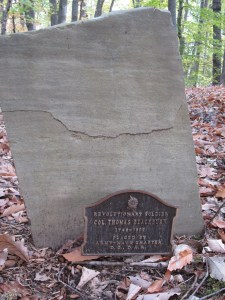
Gravestone and D.A.R. marker for Colonel Thomas Blackburn
After losing his seat to Bullitt, Thomas was appointed as a Lt. Colonel of the 2nd Virginia State Regiment. After being passed over for a promotion, Thomas gave in his resignation on June 10, 1777. While he was out of the army officially, Thomas did not stay out of the fight for long. He rejoined the Virginia Militia as a volunteer. He fought at the battle of Germantown, Pennsylvania in October 1777. During this battle, he was wounded in the leg which ended his military career. He returned to Rippon Lodge in Woodbridge, Virginia to continue farming and entertaining his many friends. This included George Washington whom Thomas became related to through marriage when his daughter, Julia Ann, married George’s nephew, Bushrod Washington. On July 7, 1807, Thomas passed away at Rippon Lodge where he is buried in the family cemetery.
Thomas Blackburn Obituary, Virginia Gazette, August 29, 1807
*Originally from New York, Kerry Mitchell is currently the Historic Interpreter at Rippon Lodge Historic Site, part of Prince William County’s Historic Preservation Division. She has a B.A. in Historic Preservation from the University of Mary Washington, a M.A. in American History from George Mason University and a graduate certificate in Museum Collection Care and Management from The George Washington University. She has previously worked at the National Museum of the Marine Corps, Reston Historic Trust, and the Fire Island National Seashore.*
On Wednesday, June 8, a signing ceremony marked the beginning of an agreement between First Parish in Concord, owner of the Wright Tavern, and the Concord Museum. Starting this fall, the Concord Museum will provide educational programming to school groups in the Wright Tavern and open the historic building to the public for commemorative events in October and April each year. On hand for the signing were representatives of the Concord Museum and First Parish as well as members of the Wright Tavern Exploratory Committee (WTEC), appointed last fall to develop a sustainable, strategic plan to showcase the Wright Tavern as a National Historic Landmark.
Plaque on the Wright Tavern (ERW collection photo)
“Opening the historic Wright Tavern to public and educational access will provide a true sense of place when learning about the historical events of the American Revolution,” said Mel Bernstein, member of WTEC and Chairman of the American Revolution Round Table of the Minute Man National Historical Park.
No building in this historic community was of greater consequence to the beginnings of the American Revolution than the Wright Tavern, built in 1747. The First Provincial Congress met in Concord at the Wright Tavern in October 1774, electing John Hancock as the Congress’s president and making provision for the collection of taxes. The Second Provincial Congress met there again in March and April 1775. Presided over by John Hancock with Samuel Adams and Dr. Joseph Warren in attendance, the Provincial Congress met in defiance of Royal and Parliamentary authority — creating a Massachusetts army, raising taxes, and performing other roles necessary to form its own government, independent of British authority. Then, in the early hours of April 19, 1775, Concord’s Minute Men assembled in the Wright Tavern before setting off to repel the advancing British troops at the North Bridge.
Since 1886, First Parish in Concord has owned and maintained this historic structure. “The Wright Tavern is certainly one of the most important Revolutionary War-era buildings in Concord,” explained Tim Jacoby, Chair of the First Parish Trustees of Parish Donations. “Although the building is owned by the church, we truly feel it belongs to the people of Concord and to the American people. This agreement with the Concord Museum will establish greater public accessibility to the Tavern.”
In 1961, the Wright Tavern was designated a National Historic Landmark by U.S. Secretary Fred Seaton, declaring it “an historical site of exceptional value in commemorating and illustrating the history of the United States.”
Margaret Burke, Executive Director of the Concord Museum, said: “The Museum is thrilled with this partnership to bring the importance of the Wright Tavern to the fore. Concord is home to invaluable historical and cultural resources, and this is a wonderful example of how organizations within the town are working together to promote this history and make it relevant to residents and visitors.”
Leah Walczak, the Concord Museum’s Director of Education and Public Programs, explained the role the Wright Tavern will play in educating visiting school groups: “The Museum currently provides specialized programming to over 10,000 school children each year. Along with hands-on history education using objects from the Museum’s collections, this agreement will allow us to provide programs within the setting of one of the finest historic buildings in Concord.”
This partnership was brought about through the work of the Wright Tavern Exploratory Committee, which convened from September 2015 through January 2016. Members included: John Boynton, Chair of the Exploratory Committee and a First Parish Trustee; Doug Baker, Sacristan and Curator of First Parish; Mel Bernstein, Chair of the American Revolution Round Table of Minute Man National Historical Park; Jim Cunningham, Project Manager for Barrett Farm Restoration, and Treasurer of Save Our Heritage; Sue Gladstone, Director of Development for the Concord Museum; Jayne Gordon, Public Historian for Robbins House, Thoreau Farm, and the Concord Museum; Tim Jacoby, Chair of the First Parish Trustees; Bob Morris, Chair of the Friends of Minute Man National Historical Park; and Tom Wilson, First Parish Treasurer.
A generous gift to the Museum from John and Johanna Boynton is funding this historic partnership.
*About the Concord Museum The Concord Museum is where all of Concord’s remarkable past is brought to life through an inspiring collection of historical, literary, and decorative arts treasures. Renowned for the 1775 Revere lantern and Henry Thoreau’s Walden desk, the Concord Museum is home to a nationally significant collection of American decorative arts, including clocks, furniture, and silver. Founded in 1886, the Museum is a gateway to historic Concord for visitors from around the world and a vital cultural resource for the town and the region. Visit www.concordmuseum.org.*
*For More Information, contact:
Barbara Rhines, Director of Marketing and Public Relations
978-369-9763, ext. 229
Email: brhines@concordmuseum.org
Sitting under a tree in north-central New York, suffering from a painful and mortal leg wound, yet still managing a successful defense after a powerful ambush, is a characteristic of a great military leader. All the while nonchalantly smoking his pipe!
General Nicholas Herkimer (courtesy of the NPS/Fort Stanwix and Oneida County (NY) Historical Society)
Nicholas Herkimer was the epitome of a successful militia commander. The Battle of Oriskany was a turning point. Herkimer, sitting on a once innocuous hillside, was a major reason why.
Even George Washington recognized the importance of Herkimer and made mention of his decision to not seek a commission in anything more than the militia of his home state. Not only that simple fact of service recognized by the commander-in-chief, but also his pivotal role in the Northern campaign of 1777.
“It was Herkimer who first reversed the gloomy scene of the Northern campaign. The hero of the Mohawk Valley served from love of Country, not for reward. He did not want a Continental command or money.”
Herkimer would succumb to the mortal leg wound ten days after the battle, but his role in what was described as “one of the bloodiest battles of the war” solidified his place in the category of “greatest leaders of the American Revolution you have never heard of.”
Born in the Mohawk Valley of New York to Palatinate immigrants, Nicholas was described as a slender built, dark complexioned, dark haired individual. When he was finished growing, he stood near six feet tall, a rather tall height in 18th century Colonial America. He could also boast of being multilingual, fluently speaking English, German, and Iroquois.
He saw action in the French and Indian War, helping to repel the French and Native American attack on German Flatts, New York on November 12, 1757. Although a disastrous day for the German community, as many were taken prisoner by the French and Native Americans, Herkimer’s role led to his promotion to captain in the militia within two months of the fighting on January 5, 1758. Thirty-years after his promotion to captain the town would be renamed “Herkimer” for the actions of this New Yorker during the subsequent war.
In April of 1758, Herkimer was present and assisted in the successful repulse of the French and Indian force.
With peace established in 1763, Herkimer looked toward personal matters, building a house on the south side of the Mohawk River in 1764. He married two ladies, both named Maria. One died and the other would remarry and move north of the border to Canada, after Herkimer’s death in 1777.
With tensions increasing in the 1770s between Great Britain and the colonies, Herkimer led the Tryon County, New York Committee of Safety and was elected colonel of the local militia. The Provincial Congress on September 5, 1776 promoted him to brigadier general of the militia. One of his first roles was to meet with Joseph Brant, a Mohawk military and political leader in an effort to try and keep the Native Americans neutral in the conflict between the colonies and Great Britain. He was unsuccessful.
During the Northern Campaign of 1777, with the thrust southward by British General John Burgoyne being the main column on its way to its destiny at Saratoga, a secondary column entered the Mohawk Valley under British General Barrimore”Barry” St. Leger. The combined British, German, Loyalist, and Native American force laid siege to Fort Stanwix, in present-day Rome, New York.
Herkimer heard about this and marched his militia to help raise the siege. His force was ambushed on August 6, as they were nearing Fort Stanwix. After the initial surprise, in which Herkimer received his wound, the militia responded well and a drawn out battle ensued.
Part of the reason that the majority of the militia recovered from the shock and endured the ensuing bloody carnage was directly related to the inspired leadership of Colonel Samuel Campbell who led one of the militia regiments in the force and Herkimer himself.
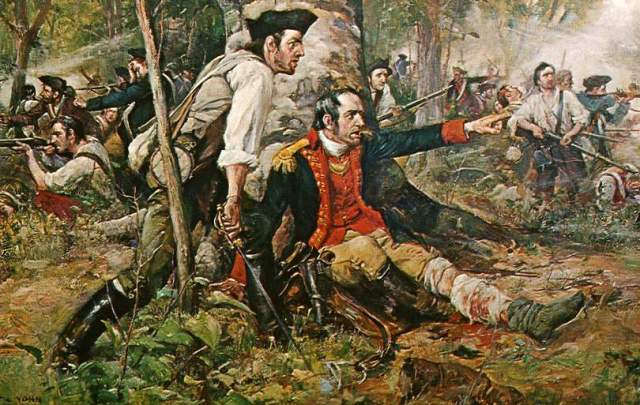
Herkimer, after having his horse shot and receiving his mortal wound in the opening shots of the engagement asked to be propped under a tree on the hillside his forces had utilized for their defensive stand He then calmly lit a pipe and with a continued cool demeanor directed the rest of the engagement.
Famous painting depicting the mortally wounded General Nicholas Herkimer directing his militia from his position seated under a tree, during the Battle of Oriskany on August 6, 1777. (Painting by Frederick C. Yohn)
After the day-long battle, Herkimer ensured he was the last to leave the field, after all the wounded that could be collected had been removed.
Although his wound was dressed on the field, the injury became infected and amputation was the only course of action. In the woods of western New York, the surgeon doing the operation was inexperienced and the wound bled tremendously. Herkimer would succumb to the wound on August 16, at the age of 49. He was buried near Little Falls, where he had built his home in the 1760s. The cemetery today is known as the “Herkimer Home Burial Ground.”
*Nicholas Herkimer’s role in the war and the Battle of Oriskany and the St. Leger campaign is described wonderfully by Michael O. Logusz in Volume 2 of “With Musket and Tomahawk” published by Savas Beatie LLC in March 2012.*
Debuting yesterday, the Campaign 1776, an initiative by the Civil War Trust, released an animated map that covers the “entirety of the American Revolution,” according to Civil War Trust Communications Manager Meg Martin.
At eighteen minutes in length, the video is a “succinct and engaging” access to gaining an overview of the entirety of the American Revolution, from the first shots in Massachusetts at Lexington and Concord to the culmination of the Siege of Yorktown in 1781. The video even includes a segment entitled “The Twilight Years” which explains the two years the war continued on after the victory at Yorktown; from 1781 to 1783. One can also jump to different parts, as the video has subheadings at the bottom to break the eighteen minute video into segments.
The video combines modern photography,with “live-action footage, 3-D animation, and in-depth battle maps” to give the viewer a sense of what the American Revolution, the pivotal event that “shaped America” was like.
Furthermore, “The Revolutionary War” animated map is part of a larger series of animated battle maps of battles on Civil War battles, which can be found here.
This animated map may be the first in the series of American Revolution and War of 1812 battles that the Campaign 1776 and Civil War Trust team is contemplating doing. We will all have to stay tuned and find out.
Yet, this animated map, of the entire American Revolution, is a great beginning introduction, so sit back, dedicate eighteen minutes, and learn about this defining moment in American history.
*Emerging Revolutionary War would like to thank Meg Martin of the Civil War Trust for the information about this release.*
On this date, 241 years ago, the first salvo of what would become the American Revolutionary War, was fired on Lexington Green and North Bridge in Concord.
Historian John Galvin once wrote about the Battles of Lexington and Concord that they were the “least known of all American battles.” I never really understood what Galvin meant, as I had read extensively about April 19, 1775 and thought I understood the details of that day in history.
Yet, until this past weekend, when I spent the better part of four days touring the sites and walking the trails, talking to the historians around the towns, I did not realize how much more there is to what actually happened on that April day.
For starters, did you realize that Paul Revere did not go town-to-town calling out, “The British are Coming” to homesteads and roadside taverns? Instead, he was the catalyst that started a chain reaction of messengers and runners to different towns throughout the countryside that cast the alarm in a wide net.
He also would have told farmsteads and meetinghouses along the way that the “Regulars are Coming,” since the colonists still thought of themselves as British.
Or that the unofficial birth of the United States Army is attributed to the militia that followed Colonel James Barrett and Colonel John Buttrick down the hill toward the British at the North Bridge?
The field where the militia under Colonel James Barrett and Colonel John Buttrick began their advance from toward the North Bridge. The militia would be coming toward us to descend toward the span.
That was the first time that men, formed in regiments with officers, made an advance against what they perceived as an enemy force, and did so in a “very military manner.”
What prompted the various militia companies, which came from other towns than just Concord, to sally forth from the hill toward the now infamous North Bridge? The main reason was what was happening in Concord was the mistaken reason behind the smoke emanating from the town?
In the town, the British were burning military supplies and the wooden gun carriages found in the hamlet. Sparks landed one of the nearby dwellings and British soldiers actually put down their muskets to form a bucket brigade, with civilians, to help put out the flames. The smoke that billowed from the doused fires is what prompted the militia and minutemen response.
With water being dumped on the flames, smoke billowed up, which prompted milita Adjutant Joseph Hosmer to ask the officers; “Will you let them burn the town down?” That prompted the forward movement of the militia down the hill and against the British.
Or did you realize that some of the militia, from the nearby town of Acton, suffered some of the first casualties at North Bridge, including their militia captain, Isaac Davis, who was one of the first killed in the engagement?
View of the Old Manse, built in 1770 for Reverend William Emerson. View from the Concord River/North Bridge direction.
Somewhere in the midst of the action in Concord was Reverend William Emerson, the grandfather of Ralph Waldo Emerson who would later write that the action on April 19, would be known as the “shot heard round the world” years later.
These are just a few of the interesting tidbits that I picked up this past weekend. Altogether, they reinforce the historic events that I knew unfolded on this day in American History. However, along with reflecting on what transpired in my visit to Massachusetts, these new tidbits of valuable information underscore the important stories and accounts that shape this spring day that are beckoning to be told.
There is so much to be gained by walking the grounds, talking to the historians and historical enthusiasts of the area, and just taking time to appreciate what this day, April 19th, meant to the future of the United States and the era it was leaving behind as part of the British Empire.