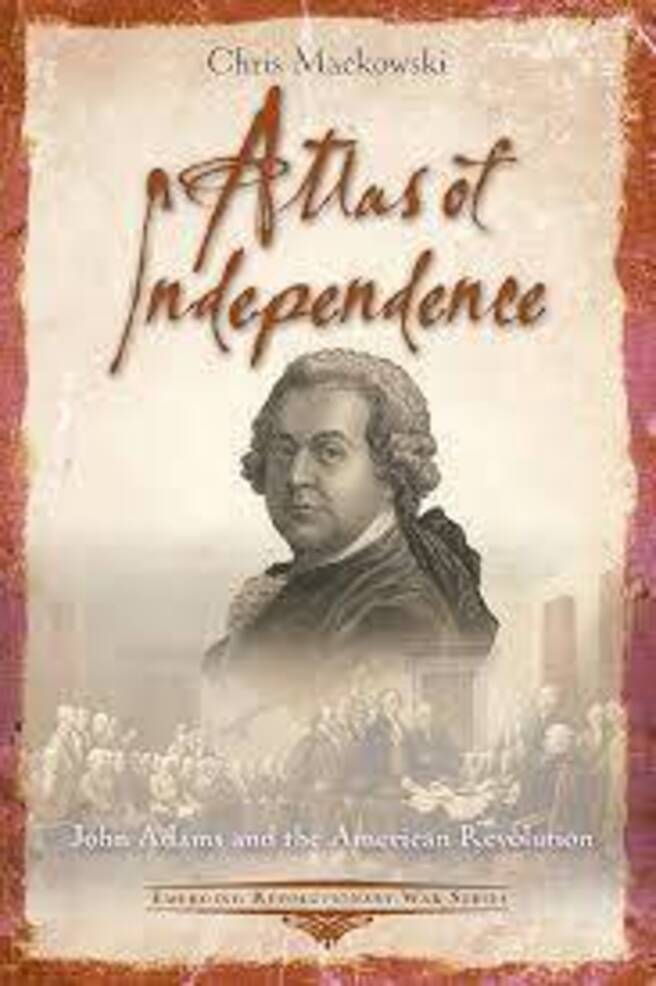
Join us this Sunday at 7pm LIVE on our Facebook page as we focus on ERW’s first 2026 book release, The Atlas of Independence: John Adams and the American Revolution by Dr. Chris Mackowski. Mackowski will discuss why Adams led him to write his first “Rev War book” and the much over looked impact Adams had during the war years. We will discuss some of the more “unique” relationships Adams developed through the war time years and of course his friendship with Thomas Jefferson and his close relationship with his wife Abigail.
To order a copy of “Atlas of Independence” visit Savas Beatie’s website at: https://www.savasbeatie.com/ . Again, this will be a LIVE broadcast on our Facebook page, so grab a drink and join in on the chat!
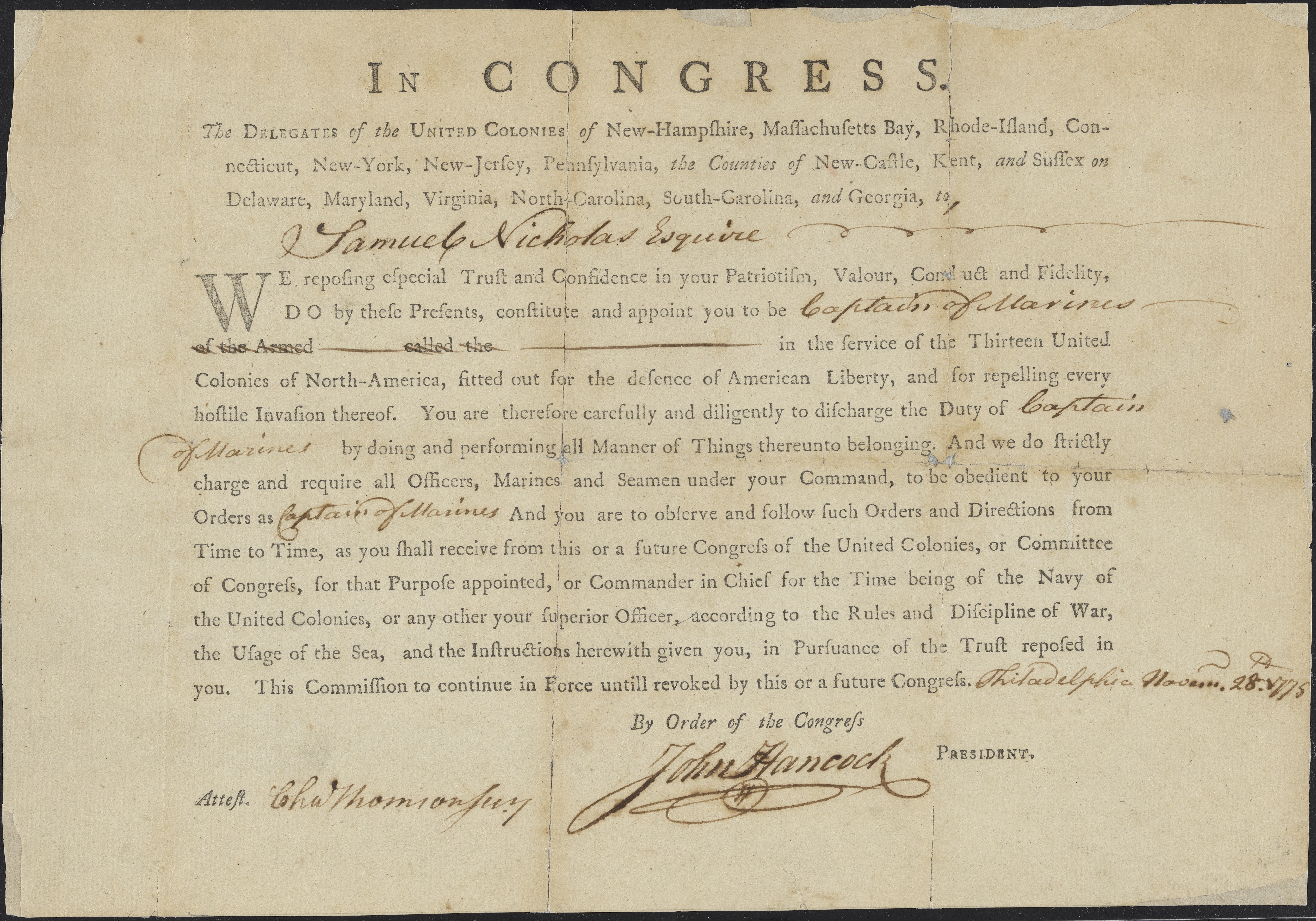
The Commission of Captain Samuel Nicholas, the first American Marine. (USMC)
Today marks the 250th birthday of the Marine Corps. November 10, 1775 was a milestone in the creation of American naval power, but the birthday story is a little more complicated.
The Continental Congress resolved to create a navy under its auspices on October 13, 1775, but much work remained to build American naval power to a point where it might serve a strategic purpose. Individual colonies had already begun creating naval forces and George Washington had leased ships under the army’s authority. Thus, the resolution served as more of milestone on a long road, rather than a fresh beginning.
On October 30, the Continental Congress considered the reports of its naval committee and confirmed recommendations for two vessels of 14 and 10 guns. Moreover, it resolved to add two more ships to its burgeoning navy, one of 20 guns and one carrying up to 36 guns. It also added four new members to the naval committee, bringing it to a total of seven. Stephen Hopkins (RI), Joseph Hewes (NC), Richard Henry Lee (VA), and John Adams (MA) joined John Langdon (NH), Silas Deane (CT), and Christopher Gadsden (SC).[1] On November 2, Congress gave the naval committee authority to call on the treasury for up to $100,000 to acquire a navy and delegated to the committee the authority to recruit officers and seamen, offering them prize money in the amount of one-half the value of all warships and one-third the value of transports made prizes.[2] It also took up a petition from a Committee of Safety in Passamaquoddy, Nova Scotia to join the association represented by the Continental Congress. Naturally, Congress appointed a committee—Silas Deane, John Jay, Stephen Hopkins, John Langdon, and John Adams to consider the matter. The naval expansion and Passamaquoddy petition sparked a new round of thinking about American naval power.
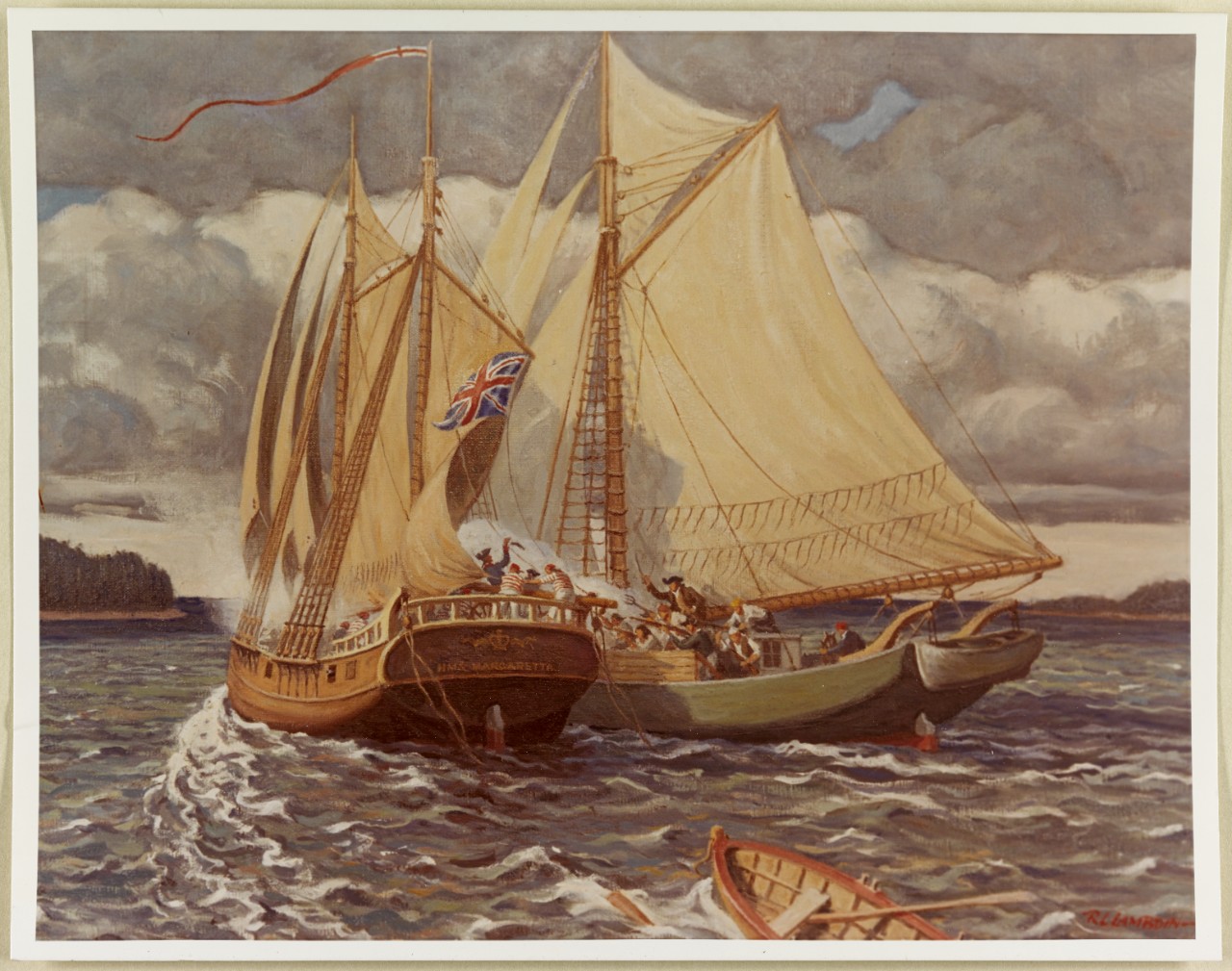
Unity vs. Margaretta, 12 June 1775 by Robert Lambdin (Naval History and Heritage Command). Margaretta was a Royal Navy vessel captured off Machias, then part of Massachusetts but now in Maine. The image illustrates the relatively small sizes of vessels involved in creating the early American navy.
During the first six months of the American rebellion, the colonies inched toward some means of dealing with Britain’s naval superiority. Over the summer the Americans had already waged a sort of whaleboat war among the estuaries and islands around Boston, mainly to deprive the British army couped up there of forage and fodder. Efforts escalated as the war continued. A confrontation between small Royal Navy vessels and the Massachusetts town of Machias over the summer serendipitously resulted in a small Massachusetts Navy created by capture in June 1775.[1] In June, Rhode Island’s General Assembly voted to charter two ships and outfit them for naval operations to protect the colony’s trade, essentially by contesting the Royal Navy’s control of Narragansett Bay.[2] In September, Colonel John Glover in the Continental Army offered his fishing schooner, Hannah, as a charter to wage war on the sea. George Washington naturally accepted, limiting its operations to capturing unarmed supply ships serving the British army.[3] The army had essentially created its own navy out of necessity.
On August 2, 1775, the Second Continental Congress wrapped up its summer session 250 years ago. Philadelphia’s heatwave that summer—described as “Very Close & Hot”—was too much for the delegates. “We have sat much longer than expected,” one Congressman grumbled. “We are all exhausted.”
The Congress had been working tirelessly since its session began on May 10, 1775. In just 12 weeks, the body accomplished an impressive list of tasks, many of which escalated the growing tension with Great Britain:
Declared a state of military readiness across the colonies
Appealed to Canadians for support in the Revolution
Raised companies of riflemen in Pennsylvania, Maryland, and Virginia to reinforce the Boston Army
Elected George Washington as Commander-in-Chief
Appointed four major generals and eight brigadier generals
Adopted the Olive Branch Petition in a final effort for peace
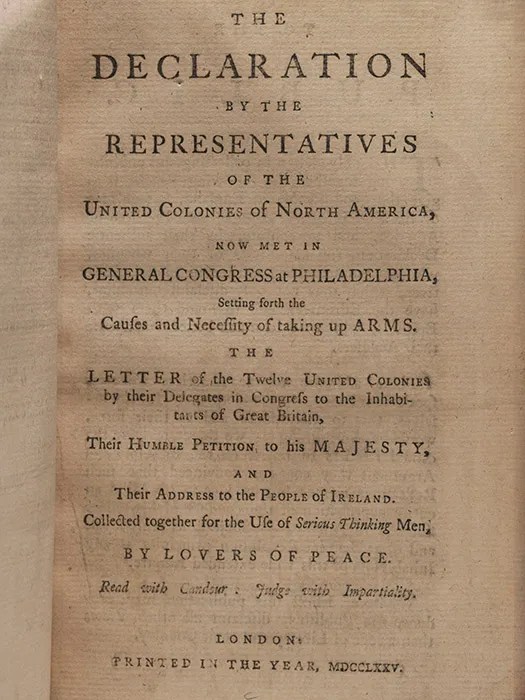
Released the “Declaration of the Causes and Necessities of Taking Up Arms”
Rejected Lord North’s Plan for Reconciliation
Established a postal department
Appointed commissioners to negotiate peace with Indian tribes
Rather than resting from the sessions of the last 12 weeks, many members of the Second Continental Congress continued to work tirelessly to support the colonies’ efforts against Great Britain. Many returned home to ensure these measures were implemented at the local level. But there was still uncertainty about how King George III would respond to the Olive Branch Petition. Would the King accept the offer of peace? Only time would tell.
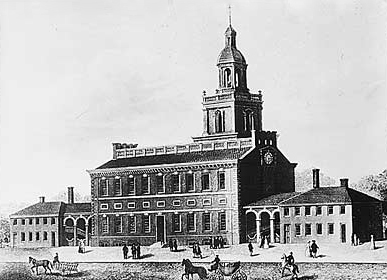
Pennsylvania State House, ca. 1770. Courtesy of the National Park Service
On May 10, 1775, the delegates convened their Second Continental Congress in Philadelphia. Unlike the First Continental Congress held a year before, this Congress had more delegates and met in the Pennsylvania State House and not Carpenters Hall. Also, events spiraled out of control since 1774, and the northern colonies were in outright rebellion with the battles of Lexington and Concord and the capture of Fort Ticonderoga. The delegates dived into several heavy topics as now blood was shed and an army of several thousand besieged the British in Boston.
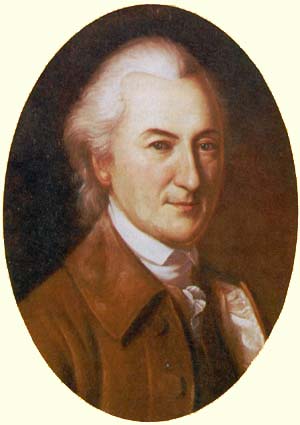
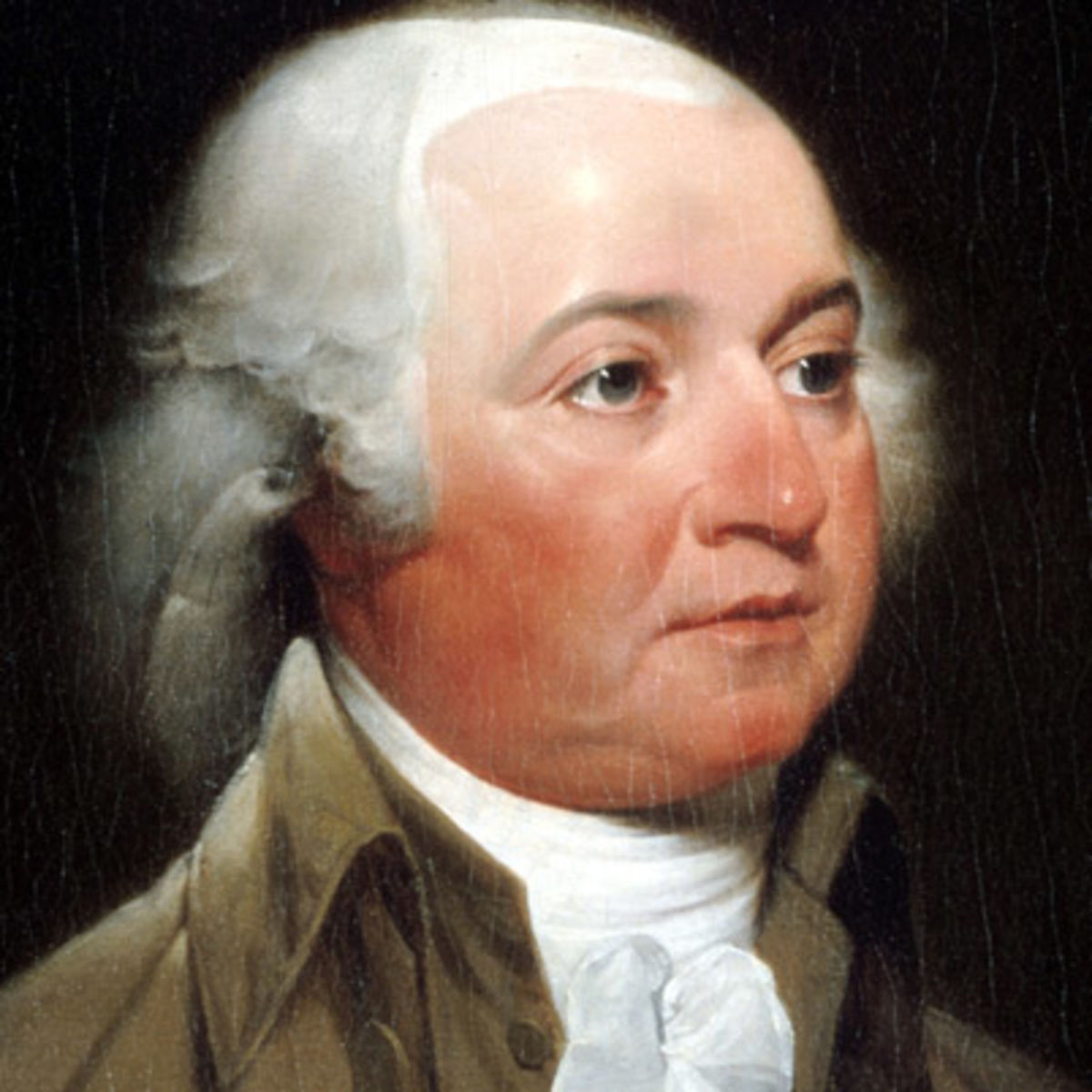
Just before the Congress met John Adams wrote “our prospect of a Union of the Colonies, is promising indeed. Never was there such a Sprit.” It is evident that there were many discussions in the taverns around Philadelphia among the delegates that showed the feelings of many had changed since 1774. Though there were still a large portion of the colonies that were not ready to give up reconciliation with Great Britain. This tug in pull between men like John Adams and men like John Dickenson (more on the side of reconciliation) is shown in two documents passed by the Congress in early July. The “Olive Branch Petition” and the “Declaration of the Causes and Necessity of Taking Up Arms” reflect the mixed views of the Congress and the colonies as a whole of —conciliation and confrontation. Together, they illustrate the ideological crossroads at which the colonies stood, torn between loyalty to the British Crown and the growing necessity of armed resistance.
The “Olive Branch Petition”, drafted primarily by John Dickinson of Pennsylvania and approved by the Continental Congress on July 5, 1775, was a final attempt by the colonies to avoid a full-scale war with Great Britain. Despite the ongoing military engagements at Lexington, Concord, and Bunker Hill, many colonial leaders still hoped for a peaceful resolution to the growing conflict. The petition expressed loyalty to King George III and implored him to intervene in the escalating tensions caused by his ministers and Parliament.
John Dickinson was the leader of the moderates of the Second Continental Congress. Dickinson has the distinction of serving in the Congress as a representative from Pennsylvania and then Deleware. Courtesy of the National Park Service.
The document was rooted in the belief that reconciliation was still possible. It portrayed the colonies as loyal subjects who had been forced into resistance by the oppressive acts of the British government. The petition requested the King to repeal the Coercive Acts and halt hostilities, suggesting that harmony could be restored without further bloodshed.
Key to understanding the “Olive Branch Petition” is the deep-seated colonial belief in the distinction between the King and Parliament. Many colonists viewed Parliament as the source of tyranny but retained faith in the monarch as a potential protector. This petition, therefore, was not revolutionary but reformist. It sought to open a dialogue rather than sever ties.
However, the petition was rejected outright by King George III, who had already declared the colonies in open rebellion in August 1775 (before the Olve Branch petition arrived in London). He refused to read the document and issued the Proclamation of Rebellion, affirming Britain’s intent to suppress the colonial uprising by force. Many believed that the blood shed at Bunker Hill (226 killed and 828 wounded) combined with the fighting on April 19th backed the King into a corner. How could he accept peace when British soldiers were killed by rebels, especially since by the time he received the petition all the colonies were under arms against him. The rejection marked a turning point: it signaled the end of any realistic hopes for a peaceful compromise and pushed more colonists toward the idea of independence.
In stark contrast, the “Declaration of the Causes and Necessity of Taking Up Arms”, approved on July 6, 1775, just one day after the “Olive Branch Petition”, presented a much more assertive stance. Drafted by a committee including Thomas Jefferson and John Dickinson, the document aimed to justify the colonies’ decision to resist British authority through armed force.
The Declaration opened with a powerful assertion of the colonists’ natural rights and their entitlement to resist tyranny. It traced the history of British oppression, citing the Intolerable Acts, the imposition of taxes without consent, the quartering of troops, and the use of military force to suppress civil liberties. Unlike the Olive Branch Petition, which appealed to the King’s mercy, this document framed the conflict as a necessary defense of liberty and justice.
Although it still professed allegiance to the Crown, the Declaration was far more militant in tone. It acknowledged the seriousness of taking up arms but asserted that the colonies had been left with no other choice. It stated:
“Our cause is just. Our union is perfect. Our internal resources are great, and, if necessary, foreign assistance is undoubtedly attainable.”
This language revealed a shift in colonial thinking—from grievances to justification, from negotiation to resistance. The document was an attempt to rally public support and unify the colonies behind a common cause, portraying the struggle not as a rebellion but as a righteous defense against despotism.
Courtesy of Special Collections, University of Delaware Library
The coexistence of these two documents reflects the political complexity and emotional turmoil of the time. The Continental Congress, representing a wide spectrum of colonial opinion, tried to navigate between diplomacy and defiance. The “Olive Branch Petition” sought to appeal to moderates and loyalists who feared war, while the Declaration of the Causes aimed to galvanize patriots and articulate a coherent justification for resistance.
This dual approach was not merely political hedging but a reflection of genuine uncertainty. Many colonists still considered themselves British and hoped to remain within the empire, albeit under reformed governance. At the same time, the continued military aggression from Britain made armed resistance increasingly inevitable.
Ultimately, the failure of the “Olive Branch Petition” and the intensification of British military efforts helped consolidate revolutionary sentiment. The rejection by King George III confirmed to many that reconciliation was no longer possible. Over the following months, radical voices like Thomas Paine’s in Common Sense would build upon the groundwork laid by the “Declaration of the Causes” and push for full independence, culminating in the Declaration of Independence in July 1776.
The “Olive Branch Petition” and the “Declaration of the Causes and Necessity of Taking Up Arms” encapsulate the American colonies’ transition from loyal subjects to revolutionaries. They demonstrate how, in the face of unyielding imperial power, a people once desperate to avoid conflict found themselves compelled to fight. These documents not only reflect the diplomatic and ideological struggles of the Revolutionary era but also serve as enduring symbols of the tension between peace and justice in times of crisis.
“[T]he Battle of Lexington on the 19th of April, changed the Instruments of Warfare from the Penn to the Sword,” John Adams wrote years after the event. He was well acquainted with the pen as an instrument of warfare. By the spring of 1775, he was twelve letters into a thirteen-letter volley that would become known as the “Novanglus letters”—a series that appeared in the Boston Gazette starting January 23.[1]
The final of those letters appeared, by happenstance, on April 19—the same day as the battles of Lexington and Concord. The thirteenth letter of the series never appeared because of the suspension of printing in Massachusetts following the battle.[2]
Adams was, at the time of the battle, preparing to return to Philadelphia for the next session of the Continental Congress. Before his departure, however, he resolved to ride out to the battlefield so he could see with his own eyes the results of the bloodshed that had occurred. He felt it would make him a more reliable witness when he reported on the event to Congress.
On April 22, Adams rode by horseback from his home in Quincy to Cambridge, where the local militia had concentrated. There, Adams met with military leaders, generals Artemis Ward, William Heath, and Joseph Warren. He also informally inspected the troops, “the New England Army,” as he characterized them.[3]
“There was great Confusion and much distress,” Adams recounted: “Artillery, Arms, Cloathing were wanting and a sufficient Supply of Provisions not easily obtained. Neither the officers nor Men however wanted Spirits or Resolution.”
But how long would such spirit and resolve last, Adams wondered? This questions would inform his strategy when he eventually arrived in Philadelphia.
From Cambridge, Adams rode west toward “Lexington and along the Scene of Action for many miles. . . .” Rubble from the battle still laid strewn along the road from Concord to Lexington and from Lexington back into Boston—a route Adams traced in reverse. He did not write down details of what he saw, but they made a deep impression, as would soon become evident in his attitudes about independence.
To help make sense of what he saw, he “enquired of the Inhabitants” about “the Circumstances” of the battle. “These were not calculated to diminish my Ardour in the Cause,” he admitted. “They on the Contrary convinced me that the Die was cast, the Rubicon passed, and as Lord Mansfield expressed it in Parliament, if We did not defend ourselves they would kill Us.”
Just after his visit to the battlefield, illness debilitated Adams, which delayed his departure for Congress. He did manage to catch up to his fellow delegates en route. Along the way, they saw first-hand how the events at Lexingon and Concord had galvanized public opinion, although it would yet be some months before Congress itself followed public opinion.
But for Adams, events had indeed crossed the Rubicon. He began his unceasing, inexorable push toward independence.
Yet it was a two-pronged approach for Adams, who not only operated on that larger existential level but also on a more immediate, pragmatic one. After all, the sword, not the pen, was now the main weapon. He began advocating for measures that would transform “the New England Army” into a Continental one. His nomination of George Washington to lead the fledgling force, for example, was a masterful stroke to diversify the army and, thus, ensure more colonies had skin in the game.
Congress’s slow pace toward independence would frustrate Adams almost to no end over the fifteen months that would follow. However, the bloodshed of Lexington and Concord made an impression on Adams that would drive him onward, inexorably, toward July 1776 and beyond.
[3] Quote from Adams come from John Adams autobiography, part 1, “John Adams,” through 1776, sheet 18 of 53 [electronic edition]. Adams Family Papers: An Electronic Archive. Massachusetts Historical Society. http://www.masshist.org/digitaladams/
We are excited to welcome historian and author J.L. Bell. Few know more about the events around Boston in 1775 than Bell. His blog, Boston 1775 (https://boston1775.blogspot.com/ ) is the most detailed and researched source on everything Boston 1775 (and before and after 1775). As we approach the 250th anniversary of Lexington and Concord, we will continue our on going discussion about the events leading up to the first shots at Lexington. Topics will include the military build up in Massachusetts including cannon (especially four stolen cannon), creation of minute companies and Gage’s military response. Leslie’s expedition to Salem in February as well as the newly created Provincial Congress and Dartmouth’s orders for Gage.
We have a lot to cover, so grab a drink and join us LIVE on our Facebook page on Sunday, February 2nd at 7pm. This will not be one you want to miss!
Everyone has heard of the “shot heard round the world” at the North Bridge, or the first shots of the war on the early morning of April 19, 1775 at the Lexington Green. But few people know about events that transpired in New Hampshire four months before Lexington and Concord. The events at Fort William and Mary on December 13 and 14 1774 were just as critical to the step toward war as the September Powder Alarm or the later Salem Alarm in February 1775.
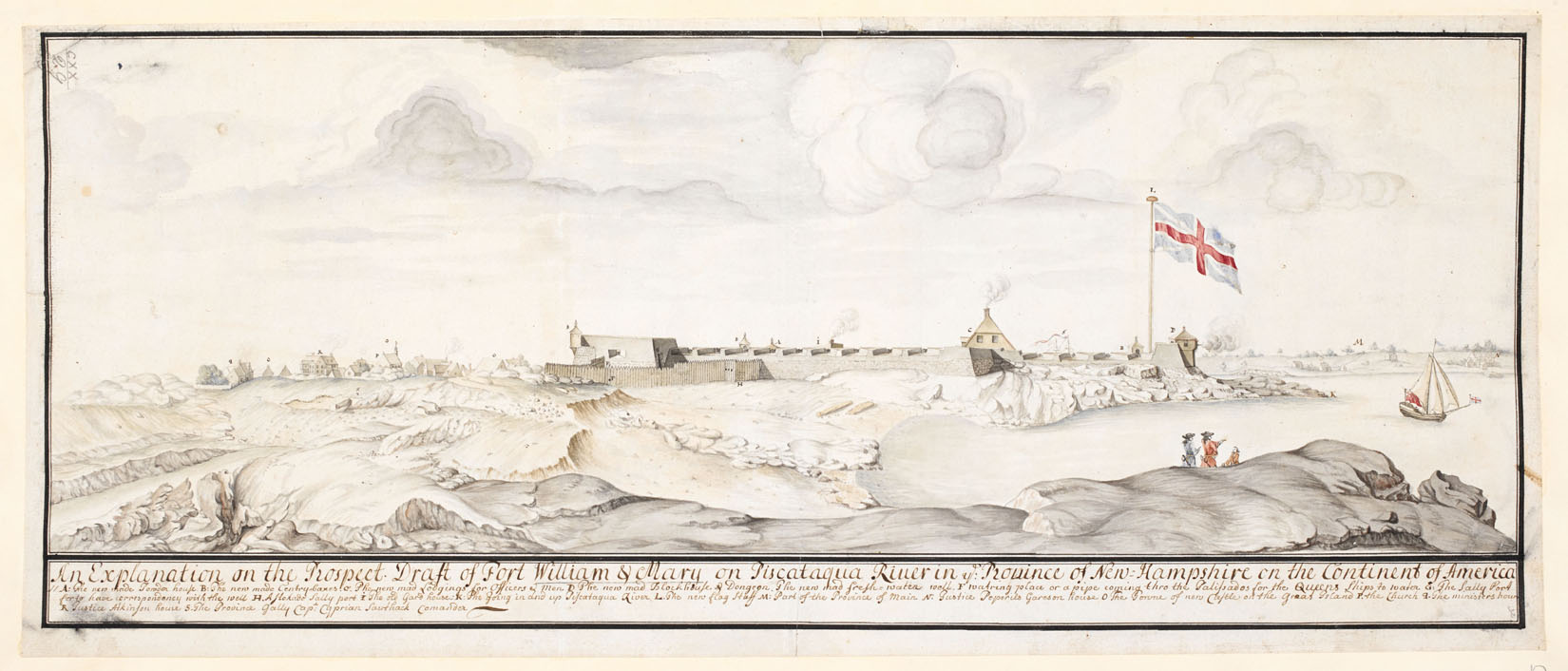
Fort William and Mary, ca. 1705 by Wolfgang William Romer
In response to the Massachusetts Powder Alarm in September 1774, colonial Whig leaders in nearby colonies began to make plans to “capture” local and colonial powder supplies. The crux was the issue of who really owned the gunpowder. Whig leaders believe they owned the power, the colonial militias. Royal leaders, Gen. Gage specifically, believe the powder was the “King’s Powder.” So any attempt to take the powder, was theft and treason. On December 3, 1774 the Rhode Island Assembly ordered the removal of cannons and powder from Fort George in Newport. On December 9, local militia carried out the order without any incident. Gage began to look at larger powder supplies that he believe were vulnerable. One large such supply was located at Fort William and Mary, located near Portsmouth, New Hampshire. This fort was isolated on the island of New Castle, at the mouth of the Piscataqua River. Located here was a small garrison of six men, guarding the fort and its supply of gunpowder.
Paul Revere and his other Patriot leaders in Boston became expert spies and soon received word that Gage was to send a contingent of British marines to Fort William and Mary. On December 13, Revere set out from Boston to Portsmouth to warn them of the coming expedition. Though the British navy was active in the area off of Portsmouth, Gage ironically made no plans to send an expedition to the fort. That would matter little in what happened next.
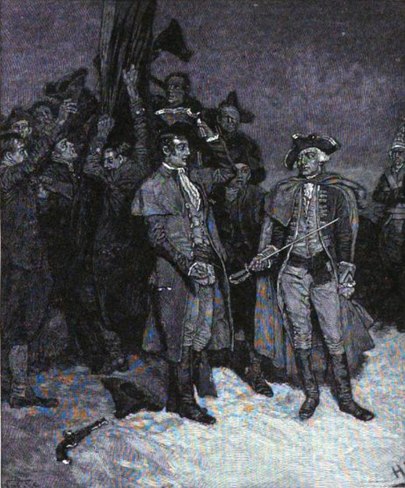
Surrender of Fort William and Mary by Howard Pyle
As Revere arrived in Portsmouth that afternoon, he gave the news of the supposed British expedition to the local Committee of Correspondence. Soon the local militia organized and, on the next day, nearly 400 militiamen assaulted the fort. The six-man British contingent inside the fort refused to surrender. They even fired three of their cannon at the attacking militiamen. For the first time, colonists were in open combat against British troops. The contingent eventually surrendered, having suffered a few injuries but no fatalities. That afternoon, the militia hauled away nearly 100 barrels of gunpowder. The next day nearly a thousand militiamen led by John Sullivan, arrived in Portsmouth due to the rider notification system. With no British to fight, these men assisted in going back to the fort to carry away muskets and cannon. Gage got word of Revere’s presence in Portsmouth and soon sent a small force from Boston to Portsmouth via the British navy. This force arrived the next week and at that point, there was nothing left of substance in Fort William and Mary.
The events at Portsmouth led Gage to be more aggressive in establishing a more coordinated spy network. As the new year began, Gage’s communications with England forced British officials to realize that this opposition was not like those in years past. The Patriots were arming themselves and establishing their own government in an affront to British authority. Former Prime Minister William Pitt, now sitting as a member of the House of Lords, knew the colonies well. He was well liked by the colonists, and he sought a compromise. He predicted the colonials would not back down and soon war would erupt between Great Britain and its colonies. Pitt proposed to remove British troops from Boston to lessen the tensions and to repeal the Coercive Acts. Both ideas were rejected overwhelmingly by Parliament.
In response to the news that the Continental Congress convened, Parliament on February 9, 1775, declared: “We find, that a part of your Majesty’s subjects in the province of the Massachusetts Bay have proceeded so far to resist the authority of the supreme legislature, that a rebellion at this time actually exists within the said province.” Now there was no doubt how the “Patriots” were viewed by Parliament and the King; they were rebels.
The events at Fort William and Mary were part of a succession of tense encounters between British authorities and local Whig leaders. Each one built on the tension from the previous. It is amazing that the “attack” by the New Hampshire militia on the fort, attacking the King’s troops, did not lead directly to war then. It would take four more months before another armed conflict sparked a revolutionary war.
To read more about the events leading up to Lexington and Concord, visit the Savas Beatie website to purchase “A Single Blow: The Battles of Lexington and Concord and the Beginning of the American Revolution” by Phillip S. Greenwalt and Rob Orrison
On September 1, 1774 Massachusetts was on the brink of war. General Thomas Gage, now Governor of Massachusetts was growing more worried about Whig access to gunpowder and weapons. He made a fateful decision to send a small expedition to retrieve the provincial powder stored in Charlestown. This powder in Gages’ mind, was owned by the King. Local leaders felt otherwise and now this grab for powder by Gage nearly sparked war in 1774.
As word of the Boston Tea Party reached the other colonies, the response was mixed. Most colonists believed Bostonians should pay for the ruined tea, but they were also overwhelmingly shocked by the harshness of the Coercive Acts. Support from across the 13 colonies began to pour into Boston. Using an already established “Committee of Correspondence” network created in the early 1770s, colonial leaders began to discuss a proper reaction. Boycotts on imports of British goods and tea especially were accepted broadly. But most importantly, 12 colonies (Georgia abstained) sent representatives to a “Continental Congress” in Philadelphia in September 1774. Unlike the previous Stamp Act Congress, the First Continental Congress was attended by the majority of American colonies. The Congress encouraged boycotts and also petitioned the King and Parliament to rescind the Coercive Acts. In response to their planned attendance, Governor Gage dissolved the Massachusetts Provincial Assembly before the Continental Congress met and called for new elections. This did not deter them from sending representatives (John Adams, Samuel Adams, Thomas Cushing, and Robert Treat Paine) to Philadelphia.
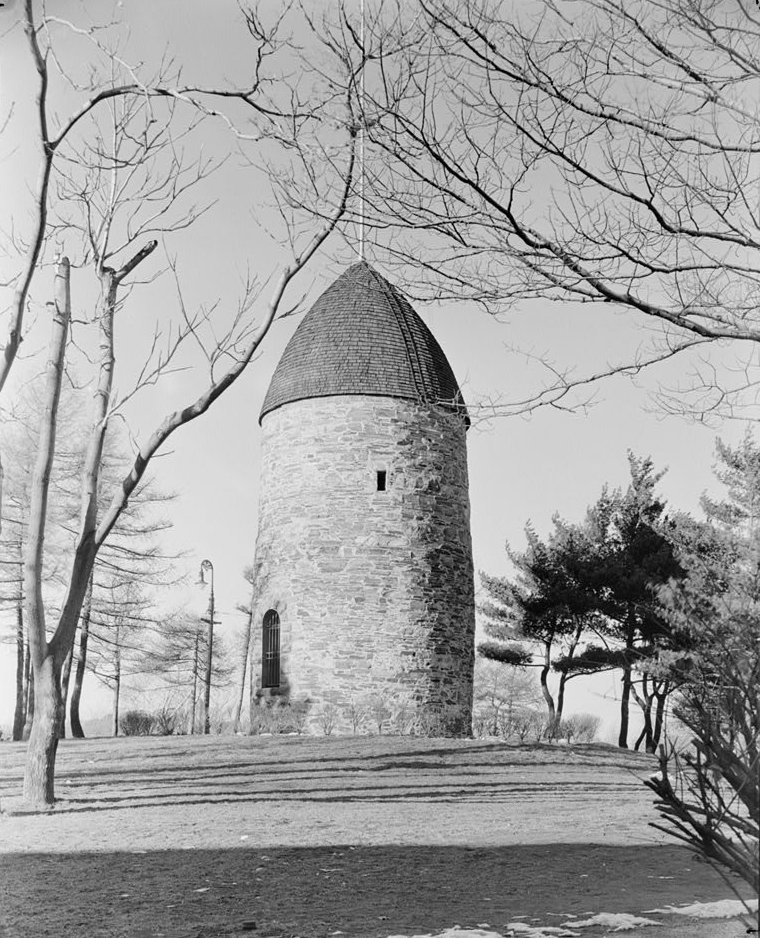
Charlestown (now Somerville) Powder House, ca. 1935
Back in Massachusetts, Gage became wearier of his situation and the possibility of open conflict with colonists. He was active in paying informants and gaining information from local Tories (those loyal to the British government). These sources informed Gage that the people of the countryside were beginning to arm themselves. In an effort to deny them use of the official Royal arms and powder stored across the colony, he began to collect these government-owned supplies. In colonial America, most men served in the local militia. Local towns had powder magazines to store the powder that would be used for training the militia or if the militia was called to defend a portion of the colony. Many of these powder magazines also stored a portion of gunpowder that belonged to the colonial government—the King’s powder.
One such large powder magazine that stored a large quantity of British gunpowder was in nearby Charlestown, now known as Somerville. This powder magazine was the largest in the colony. William Brattle, the commander of the Middlesex County militia and a Royal appointee, notified Gage that he believed the local militia were making plans to steal the Royal gunpowder. Gage moved quickly; he ordered the Middlesex County sheriff to secure the keys. Then early on the morning of September 1, nearly 300 British Regulars made their way to the powder house and removed all of the gunpowder that rightfully belonged to the governor and his agents. By that afternoon, the British troops, powder, and two cannon were in Boston at Castle William (a fort on an island in Boston Harbor).
Word spread quickly that the British came and stole the powder and, in the process, had shot and killed colonials. Now Boston was on fire, and the British navy was bombarding the city. All of this of course was not true, but the word spread like wildfire just the same. Misinformation abounded, and now thousands of locals and militia were gathering in Cambridge looking for revenge. Many loyal to the colonial government were forced to flee to Boston for protection. As time went on, it was evident that the rumors of a battle and Boston burning were untrue. The incident, however, showed how quickly the countryside could mobilize against the governor. Word was quickly sent to Philadelphia where the delegates to the First Continental Congress was aghast at the news. They debated on what to do, and the Massachusetts delegation specifically were on edge for more information. Word eventually arrived that the situation that was first reported was not accurate and no fighting had broken out. John Adams wrote;
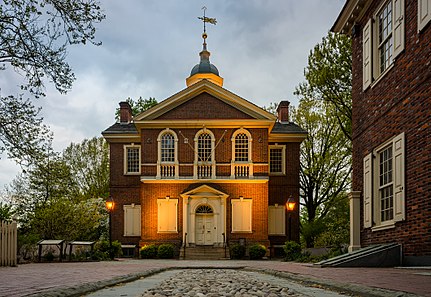
Carpenters Hall, Philadelphia where the First Continental Congress convened on September 5, 1774.
“When the horrid news was brought here of the bombardment of Boston, which made us completely miserable for two days, we saw proofs of both the sympathy and the resolution of the continent. War! war! war! was the cry, and it was pronounced in a tone which would have done honor to the oratory of a Briton or a Roman. If it had proved true, you would have heard the thunder of an American Congress.”
Gage, somewhat shaken by the event, began to concentrate his military strength in the city of Boston and fortified the city against a possible attack. He sent word to England that he needed more men to enforce the Coercive Acts. The “Powder Alarm” proved that, within a day, thousands of armed colonials could assemble. The message he sent London shocked the King: “If you think ten thousand men sufficient, send twenty; if one million is thought enough, give two.” Soon after on September 9th, Whig (Patriot) leaders such as Dr. Joseph Warren and others passed the Suffolk Resolves. These strongly worded resolves called for a boycott of British goods and heavily impacted policies adopted by the First Continental Congress. Parliament badly miscalculated the colonial reaction to the Coercive Acts and the pendulum was beginning to swing to independence. The Powder Alarm quickly taught General Gage that the resistance to Royal authority was not just a small group of rebels, but a growing majority of the population.
You can still today visit the the famous Powder House today. It stands in Nathan Tufts Park at 850 Broadway, Somerville, Massachusetts (GPS: N 42.400675, W 71.116998). There is plenty of street parking available. Take the trails in the park to the Powder House located in the center of the park.
Join us this Sunday, July 7th at 7pm for our next Rev War Revelry as we continue to commemorate the 250th anniversary of the events that led to the American Revolution. We welcome Executive Director Michael Norris to discuss the historic Carpenters Hall in Philadelphia and the role it played in hosting the First Continental Congress. The First Continental Congress convened in Carpenters’ Hall in Philadelphia, Pennsylvania, between September 5 and October 26, 1774. Delegates from twelve of Britain’s thirteen American colonies attended. The Congress was a direct result of the Parliament’s reaction to the Boston Tea Party (December 1773). This gathering of colonial leaders intended to create a united front in their response to what they believed was Parliamentary over reach in the “Coercive Acts.”
Grab a drink and join us on our You Tube Channel: https://www.youtube.com/@emergingrevolutionarywar8217 Feel free to interact with the discussion by adding questions in the video chat. Once the video is over we will repost the video to our Facebook page and our Spotify account. We hope to see you then!


 Emerging Revolutionary War Era