Emerging Revolutionary War welcomes back guest historian Evan Portman
Most historians credit Ann Pamela Cunningham with kickstarting the historic preservation movement with her purchase of Mount Vernon in 1858. However, preservation of historic sites began long before the Mount Vernon Ladies’ Association. In fact, the storied walls of Fort Ticonderoga became the object of a preservation movement 38 years before the Ladies’ Association purchased George Washington’s ancestral home.
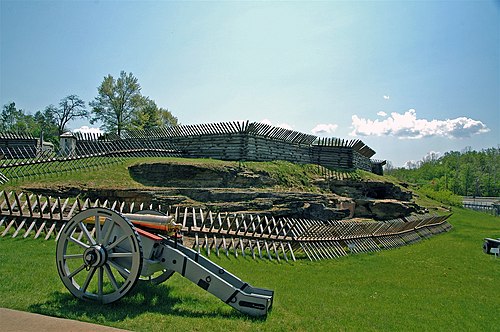
Fort Ticonderoga—known as the Gibraltar of North America—played an integral role in both the French and Indian War and the American Revolution. The fort was originally constructed by the French in 1755 on a portage known to the Iroquois as ticonderoga, meaning a “land between two waters.” Fort Carillon, as it was known to the French, stood strategically between Lake Champlain and Lake George, thereby controlling both the Hudson River Valley and St. Lawrence River Valley. On July 8, 1758, an outnumbered French army successfully defended the fort against British forces in the bloodiest battle of the French and Indian War.[1] However, the following year British General Jeffery Amherst captured the fort and renamed it Fort Ticonderoga.[2]
By the American Revolution, the fort had fallen into disrepair but was still guarded by a small British garrison. In 1775, it was the scene of one of the most famous dramas in American history. On May 10, Col. Benedict Arnold and Col. Ethan Allen led a combined force of the Green Mountain Boys and Massachusetts and Connecticut militiamen across Lake Champlain to capture the fort. “Come out you old Rat!” Allen famously cried to the fort’s commander, Capt. William Delaplace, and demanded he surrender the garrison “in the name of the Great Jehovah and the Continental Congress.”[3] Delaplace agreed, and Ticonderoga quickly fell into American hands.
We take a break from our 250th Revelry series and jump back in time to the French and Indian War. This Sunday, June 29th at 7pm we will welcome Matt Gault, Director of Education at Fort Ligonier, to discuss the fort’s history and its role played during the Forbes Expedition of 1758. General John Forbes’ successful campaign culminated in the capture of French-held Fort Duquesne at the Forks of the Ohio, helping to turn the tide of the French and Indian War.
On this date 167 years ago, the infamous siege of Fort William Henry raged along the southern shore of Lake George, New York. For nearly a week the British and Colonial garrison inside the fort and outside its walls had endured through a near hopeless situation. Casualties had mounted, guns and mortars had burst from incessant firing, and the French siege lines had crawled to within 150 yards of the northwest bastion. Reinforcements were not coming to relieve the defenders. The following day, Lieutenant Colonel George Monro had little choice but to surrender his force under honorable terms to the French commander, General Montcalm. On August 10, the column marched out of the fort and nearby entrenched camp in route to Fort Edward. French-allied Indians fell upon the soldiers, and the women and children who accompanied them, and the “massacre” of Fort William Henry ensued.
The following letter with news relating to the siege, was written to George Washington on August 8, 1757. The author was Beverley Robinson, a Virginian who through marriage inherited a large swath of land in the Hudson Highlands of New York. During the Revolution, Robinson remained loyal to the Crown and was made colonel of the Loyal American Regiment in 1777. He was directly involved in the plot to turn Benedict Arnold. Through reasons not clear, Robinson and Washington became acquainted enough beforehand that during the French and Indian War, the former wrote the young Virginia soldier frequently.
“New York 8th Augt 1757
Dr Sir
The inclosed Lettrs came to my hands Yesterday by a Vassill from Halifax, they will I suppose give you all the News from that Quarter. Except the Arriva⟨l of⟩ the Highlanders wh. has been since they were wrote, all well and in good Order Lord Loudoun had not Left Halifax a fortnight ago.
we are now under the greatest apprehensions for fort Wm Henry having Certain Accots that it is Besieged by a Large Body of French & Indians & Mr Mont Calm himself at the head of them. a fryday Last the Express came away from fort Edward & they were then Very hotly Engaged—our Liut. Governer went up Last week to forward the Militia. Genl [William] Johnson was gone up with two thousand Militia & 100 Indians, and the Militia was going up from the adjacent Counties. Col. Young Command at Wm Henry he had Just got into that place with a Reinforcement of 1000 men. we hope the Best. I am Dr Sir Yr Humble Sert
[1] “To George Washington from Beverley Robinson, 8 August 1757,” Founders Online, National Archives, https://founders.archives.gov/documents/Washington/02-04-02-0239. [Original source: The Papers of George Washington, Colonial Series, vol. 4, 9 November 1756 – 24 October 1757, ed. W. W. Abbot. Charlottesville: University Press of Virginia, 1984, pp. 367–368.]
On this date in 1754, a young George Washington penned the letter below to Thomas Cresap explaining the difficulties of procuring supplies for the Virginian’s expedition to the Ohio River Valley. His main objective was to fortify the land at the confluence of the Allegheny, Monongahela, and Ohio Rivers – the “Forks of the Ohio.” The several hundred mile expedition would have to be made over treacherous terrain and through vast wildernesses, which meant a road needed to be cleared that could carry men, animals, and wagons. Years before, Cresap, while serving as an agent for the Ohio Company, had widened an old Indian trail leading to the west. Washington planned to utilize and improve this same route. That same day, he and 159 men under his command departed Winchester, Virginia, and began their march. Over a month later, they would fire the first shots of the French and Indian War at Jumonville Glen.
“Sir
The difficulty of getting Waggons has almost been insurmountable, we have found so much inconvenience attending it here in these roads that I am determined to carry all our provisions &c. out on horse back and should be glad if Capt. Trent with your Assistance would procure as many horses as possible against we arrive at Wills Creek that as little stoppage as possible may be made there. I have sent Wm Jenkins with 60 Yrds of Oznabrigs [Osnaburg] for Bags and hope you will be as expeditious as you can in getting them made and fill’d.
Majr Carlyle acquainted ⟨me⟩ that ⟨a number of kettles, tomhawks, best gun flints, and axes might be had⟩ from the Companys Store which we are much in ⟨want and s⟩hould be glad to have laid by ⟨for us, Hoes we sh⟩all also want, and several pair of Hand cuffs.
I hope all the Flower [flour] you have or can get you will save for this purpose and other provisions and necessary’s which you think will be of use (that may not occur to my memory at present) will be laid by till our Arrival which I expect will be at Job Pearsalls [20 miles from Wills Creek] abt Saturday night or Sunday next, at present I have nothing more to add than that I am Yr most Hble Servt
[i] “From George Washington to Thomas Cresap, 18 April 1754,” Founders Online, National Archives, https://founders.archives.gov/documents/Washington/02-01-02-0042. [Original source: The Papers of George Washington, Colonial Series, vol. 1, 7 July 1748 – 14 August 1755, ed. W. W. Abbot. Charlottesville: University Press of Virginia, 1983, pp. 82–83.]
This article by ERW’s William Griffith first appeared on the American Battlefield Trust’s websiteon January 4, 2021.The original link can be found here.
The French and Indian War was in its fifth full year, and the tables had turned in Britain’s favor. As the larger conflict, the Seven Years’ War, raged throughout the globe, in North America, the British were one swift strike away from conquering the continent. The French in the Ohio River Valley, Great Lakes region, and Upstate New York had been thrown back on their heels and sent scurrying north into Canada leaving the road open for a British thrust against Montreal and Quebec. For the summer of 1759, the latter city, the capital of New France, would be placed in the crosshairs by an army commanded by Major General James Wolfe. If Quebec, situated along the most important water highway in Canada, the Saint Lawrence River, should fall, the French in North America would be squeezed into the region around Montreal. Pending any catastrophic failures by Britain’s army and navy and their allies elsewhere in the world, it would only be a matter of time than before New France was conquered.
James Wolfe and His Army
Thirty-two year old James Wolfe had served in the British Army for almost eighteen years when he was given command of the roughly 9,000-man force that was tasked with defeating the French in and around Quebec City in 1759. He was hard-nosed and did not always get along with his subordinate generals, Robert Monckton, George Townshend, and James Murray. The previous year he had been a brigadier general under Jeffry Amherst during the successful siege and capture of the fortress city of Louisbourg in Nova Scotia, and afterward led a campaign of destruction against the fishing villages of the Gulf of Saint Lawrence. He then returned to England and secured a major generalship and command of the Quebec expedition. He arrived in Halifax in April 1759 and began training his force and preparing plans for his campaign.
Wolfe’s army was composed predominantly of professional British soldiers. Several hundred North American ranger units also complimented his force, which he described as, “… the worst soldiers in the universe.” He did not have much respect for colonial troops. On June 26, Wolfe’s men began landing at Ile d’Orleans in the middle of the Saint Lawrence River just to the east of Quebec City. Across the river, the French commander, the Marquis de Montcalm, prepared to oppose them.
The Marquis de Montcalm and Quebec’s Defenders
Louis-Joseph, Marquis de Montcalm, had been in command of France’s regular troops in North America since 1756. During that time he had put together an impressive string of victories at places like Fort Oswego, Fort William Henry, and Fort Carillon. As the attack on Quebec loomed, he was given command of all military forces on the continent, including the Canadian militia and marines. The previous harvest had not been good in Canada, and his army and the civilians in the city were on short rations, but relief came during the spring of 1759 when ships arrived carrying food and supplies. With this, Montcalm was determined to hold onto the city at all costs. He dug trenches outside the city and along the Saint Lawrence’s northern shoreline extending for nearly ten miles, welcoming a frontal assault from Wolfe. His army, consisting of over 3,500 French regular troops, included thousands more Native American allies and Canadian militiamen who were not accustomed to fighting in open fields against professional enemy soldiers. This important disadvantage would play a large part in Montcalm’s ultimate defeat.
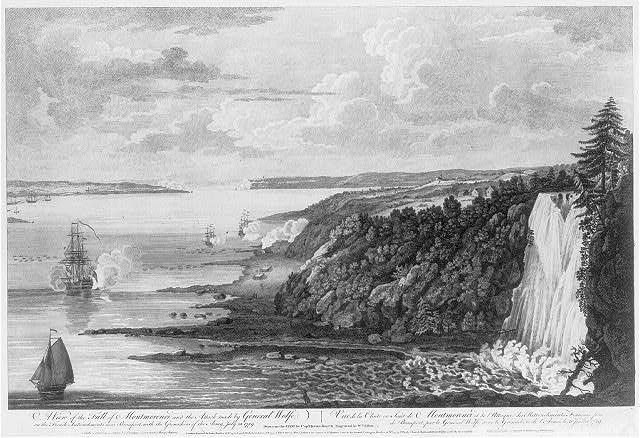
An engraving of General James Wolfe’s failed attack on the Montmorency River, July 31, 1859. Library of Congress
The Campaign
When General Wolfe’s army began landing at Ile d’Orleans and subsequently Point Levis (directly across the river from the city) to the east of Quebec, he had initially hoped to force a landing on the northern shore just a few miles downstream at Beauport. However, he quickly discovered that Montcalm had heavily fortified the landing site, throwing a monkey wrench into his plans. This did not deter Wolfe, however, and by July 12, he had placed ten mortars and cannon at Point Levis and began bombarding the city itself. More guns were brought up and the bombardment continued for weeks in an effort to demoralize those within Quebec City.
The best chance to defeat Montcalm was to force him out of his defenses and into an open field battle. Wolfe understood that his vigorously trained and superior disciplined regular troops would have the upper hand against lesser-numbered French regulars and their militia. His first attempt to accomplish this occurred on July 31, when he landed a force of grenadiers, light infantry, and rangers near Montmorency Falls further downstream from Beauport hoping to ford the Montmorency River and reach a position in the rear of the French lines. It failed miserably. Montcalm guessed correctly that an attack was coming from that direction and rushed men there to meet the enemy. The river’s tide prevented Wolfe from getting all of his troops in position on time and frontal assaults launched from the beach were beaten back with heavy losses. The British retreated, leaving behind 443 men killed and wounded. The first attempt to force a landing on the Quebec side of the river had failed, but it would not be the last. Wolfe turned his attention further upriver, where he hoped his prospects for victory would be more fruitful.
The Plains of Abraham
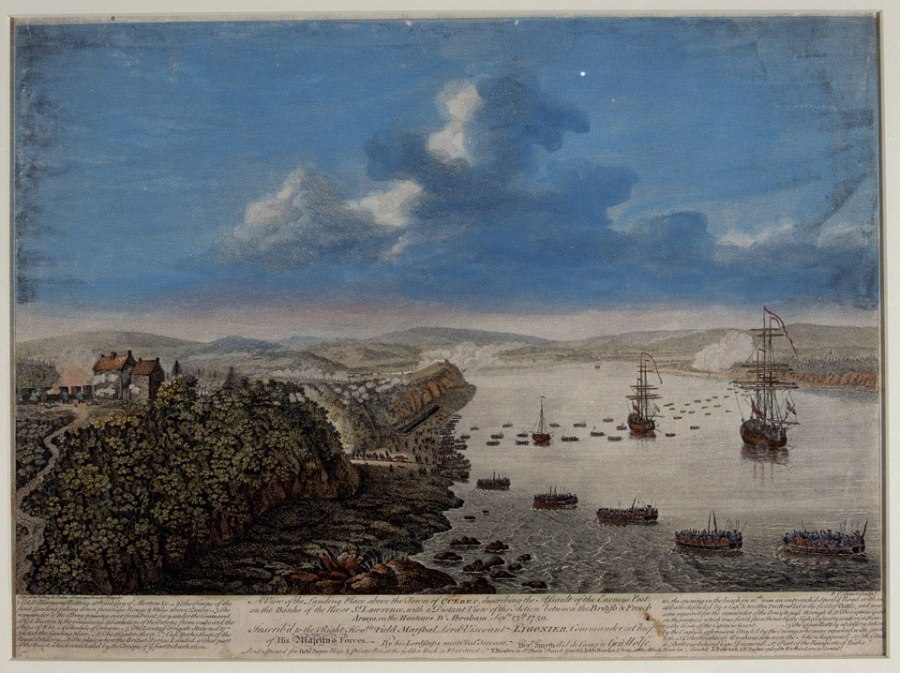
As the weeks passed following the debacle at Montmorency, the British probed the northern shore west of Quebec for a secure landing spot. During this time, Wolfe grew sick with a severe fever and kidney stones and believed his days were numbered. He recovered enough, however, to begin moving his army upriver about eight miles from the city not far across from Cap Rouge. It was decided that the landing would be made at Anse au Foulon, where a narrow gap and trail led to the top of the cliffs just two miles west of the city.
At four in the morning, September 13, Lieutenant Colonel William Howe (who would serve as the commander of the British Army in America during the Revolutionary War) came ashore with the light infantry and surprised and overwhelmed the enemy outpost above the landing site. The conditions for rowing the army into position that early morning had been perfect for Wolfe. Montcalm was caught off guard.
After securing the landing zone, Wolfe began moving his attack force of roughly 4,400 regulars onto the Plains of Abraham, an open field about a mile wide and a half a mile long in front of the city’s western defenses. Responding to the threat as quickly as could be done, Montcalm rushed some 1,900 French regulars and 1,500 militiamen and Native Americans to meet the British line. This was the open field fight that Wolfe had been yearning for ever since the campaign began.
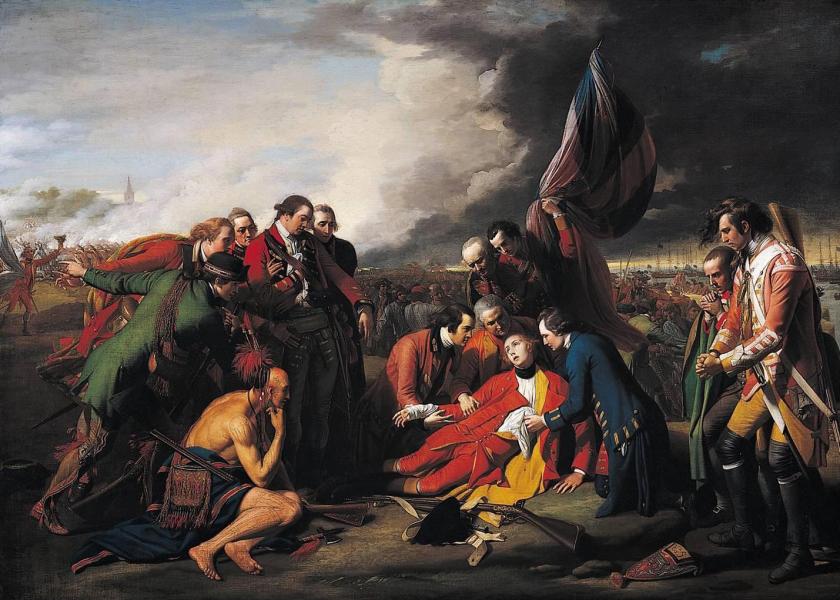
Benjamin West’s depiction of the death of British General James Wolfe during the Battle of Quebec, painted in 1770. Wikimedia Commons
As the French commander formed his men up in a line of battle, the British waited patiently across the field to receive their attack. Montcalm ordered his troops forward, and almost immediately his militiamen’s lack of experience and training in open combat became apparent as their formations wavered and some failed to advance close enough to the enemy line to fire effectively. One British participant described what happened next:
The French Line began … advancing briskly and for some little time in good order, [but] a part of their Line began to fire too soon, which immediately catched throughout the whole, then they began to waver but kept advancing with a scattering Fire.—When they had got within about a hundred yards of us our Line moved up regularly with a steady Fire, and when within twenty or thrity yards of closing gave a general [fire]; upon which a total [rout] of the Enemy immediately ensued.
The battle was over in just fifteen minutes as the British swept forward, claiming the field and capturing hundreds of prisoners. Both sides each lost over 600 men killed and wounded, including both respective commanders. Wolfe was mortally wounded and died a hero on the field. Montcalm, too, was hit by grapeshot in the abdomen and died the next morning. Five days later, Quebec surrendered. The French retreated further downstream to Montreal, attacked and failed to retake Quebec the next spring, and surrendered in whole on September 8, 1760, effectively ending all major military operations in North America during the French and Indian War. The battle for the continent between Britain and France was over.
Join us this Sunday night at 7pm as we welcome Glenn F. Williams, PhD to our popular Sunday night Rev War Revelry! Glenn will examine the political and economic causes of the American Revolution beginning at the end of the Seven Years War / French and Indian War through the resistance movements. He will dispel or clarify some of the popular beliefs about the grievances that eventually led the thirteen colonies to break with the Mother Country. This will be a timely discussion as we approach the 250th anniversary of the Boston Tea Party. Glenn Williams is a retired U.S. Army officer that until recently also enjoyed a “second career” as a military historian. He retired as a senior Historian after 18 years at the U.S. Army Center of Military History and 3 1/2 years as the historian of the American Battlefield Protection Program of the U.S. National Park Service.
Grab your favorite drink and tune in, we will be live so feel free to drop your questions in the live chat. If you are not able to tune in on Sunday, the video will be placed on our You Tube and podcast channels.
They waded ashore during the morning of July 6, 1758. Full of confidence, the vanguard of Major General James Abercromby’s massive army of over 16,000 men had completed its nearly thirty-mile trek northward across the waters of Lake George. They began pushing inland – men from Thomas Gage’s 80th Regiment of Light-Armed Foot, Phineas Lyman’s 1st Connecticut Regiment, and of Robert Rogers’ famed rangers – scattering small pockets of French resistance. By early afternoon the entire army had debarked at the designated landing site and formed into four columns to begin its advance towards the primary objective: Fort Carillon. Moving forward into the thick wilderness with the rightmost column of mixed regular and provincial units was Abercromby’s second-in-command, Brigadier General George Howe. [1]
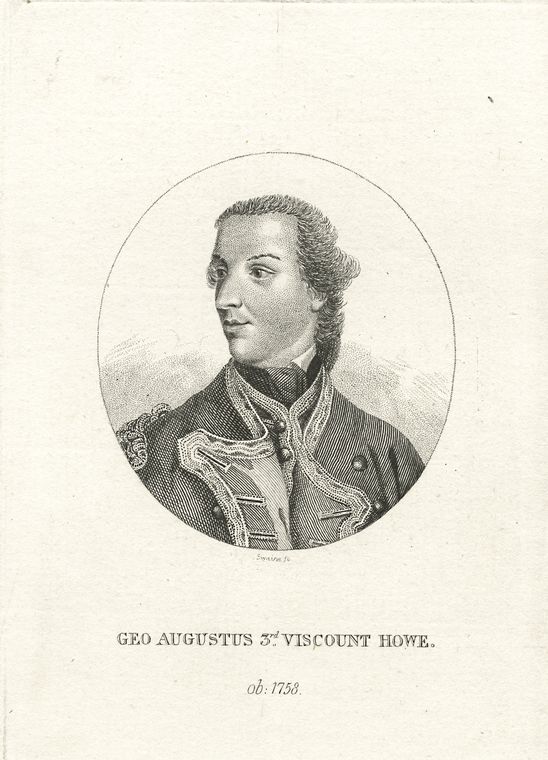
George Augustus, Third Viscount Howe. New York Public Library
George Augustus, Third Viscount Howe, was born in Ireland in 1725. Like his younger brothers, Richard and William, George was destined for a career in His Majesty’s Forces and to serve in North America. His father, Emanuel Scrope, Second Viscount Howe, was a prominent member of parliament and served several years as the Royal Governor of Barbados before dying there of disease in 1735. Upon his father’s death, George assumed the title of Third Viscount and in 1745, at age twenty, was made an ensign in the 1st Foot Guards. Subsequently serving as an aide-de-camp to William Augustus, Duke of Cumberland, Howe fervently studied the strategies and tactics employed by his own commanding officers and the enemy, and witnessed firsthand the carnage of the War of Austrian Succession. Just ten years later, when the world was set ablaze by war yet again, George was ordered to Halifax, Nova Scotia with a commission as colonel of the 60th Regiment of Foot (Royal Americans) that was set to take part in a failed operation to capture Fortress Louisbourg in 1757. He was later made colonel of the 55th Regiment of Foot, and in December, appointed Brigadier General by William Pitt. The following summer, he accompanied the largest field army ever assembled in North America up to that time as its second-in-command. Continue reading ““The soul of General Abercromby’s army seemed to expire”: The Death of George Howe, July 6, 1758”→
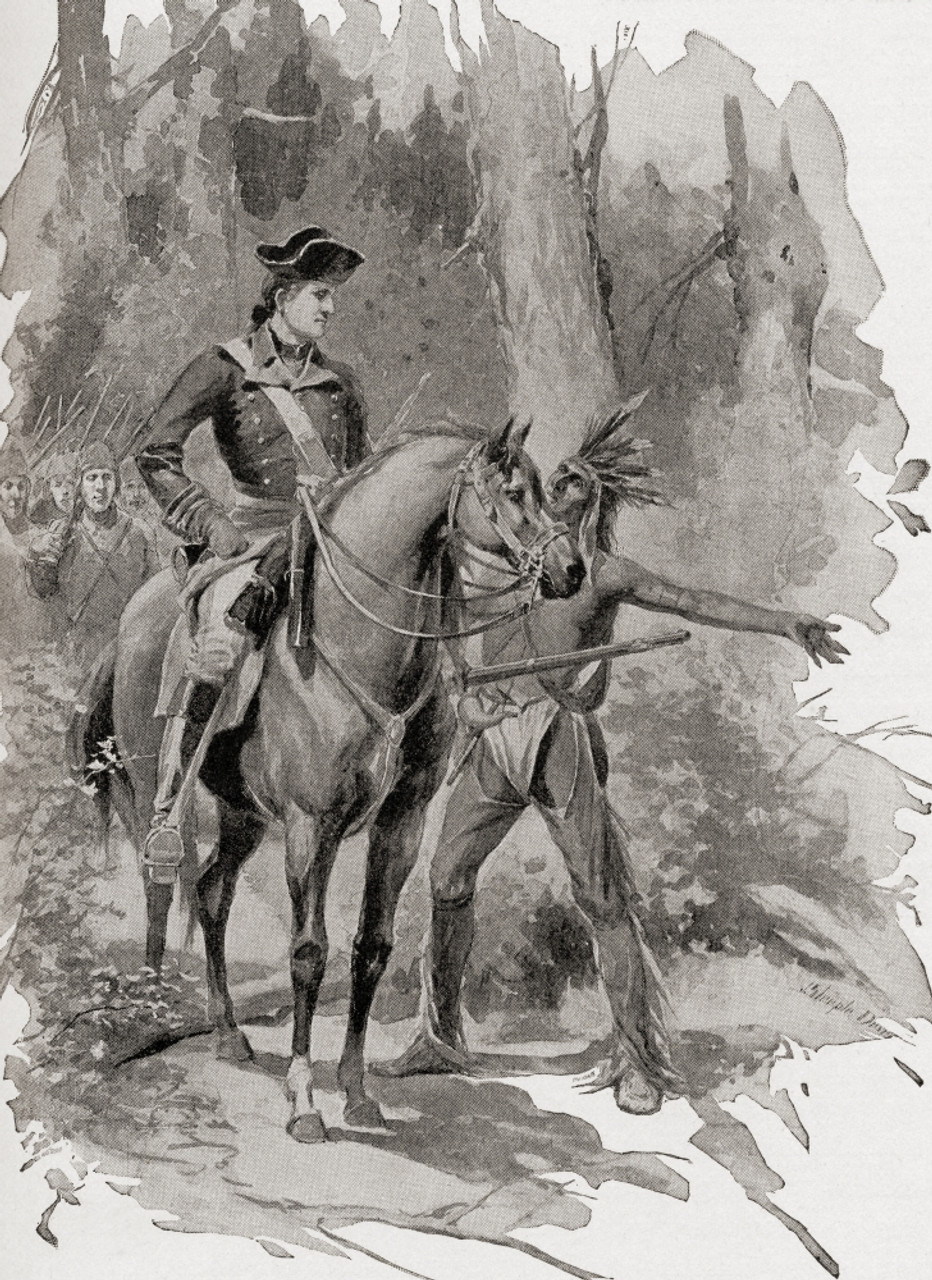
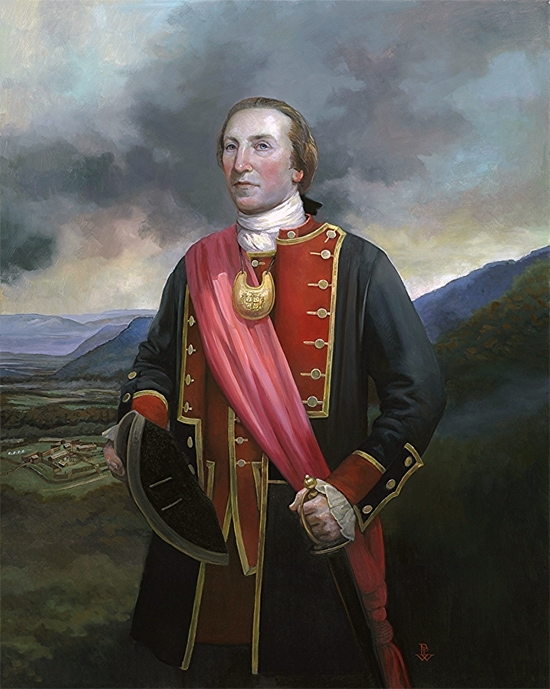
Young George Washington’s performance in the French and Indian War is largely viewed as one of failure and recklessness. His actions in the Ohio River Valley ignited a conflict in North America that in turn lit the world ablaze. He could boast of no great military laurels, other than that he had emerged unscathed from the bloody battle of the Monongahela, and that he had commanded colonial provincials in Gen. John Forbes’ successful campaign against Fort Duquesne. He left military service following the latter event, with his hopes of receiving a commission in His Majesty’s Army worthy of his merit dashed years before.
“Young George Washington” by Pamela Patrick White, White Historic Art (whitehistoricart.com)
However, one aspect of Washington’s service in the French and Indian War has been widely neglected. The commander of the Virginia Regiment was tasked with defending the western frontier from enemy raiding parties. It was an unenviable position that he tackled with limited resources. It was during this period that Washington began to develop the leadership qualities that would inspire others to follow him into the depths of Hell some twenty years later. On the last day of 1758, as Washington prepared to pursue a life outside of military greatness, the officers of the Virginia Regiment drew-up a heartfelt petition to urge the now 26 year-old colonel they had grown to admire to rescind his resignation. Below is that document:
“To George Washington Esqr. Collo. of the Virginia Regiment & Commander of all the Virginia Forces The humble Address of the Officers of the Virginia Regiment
Fort Loudoun, Dec. 31st 1758
Sir,
We your most obedient and affectionate Officers, beg Leave to express our great Concern, at the disagreeable News we h⟨ave received⟩ of your Determination to resign the Command of that Corps, in which we have under you long ⟨served⟩.
The ⟨happine⟩ss we have enjoy’d and the Honor we have acquir’d, together with the m⟨utua⟩l Regard that has always subsisted between you and your Off⟨icers,⟩ have implanted so sensible an Affection in the Minds of us all, that we cannot be silent at this critical Occasion.
In our earliest Infancy you took us under your Tuition, train’d us up in the Practice of that Discipline which alone can constitute good Troops, from ⟨the⟩ punctual Observance of which you never suffer’d the least Deviation.
Your steady adherance to impartial Justice, your quick Discernment and invarable Regard to Merit, wisely intended to inculcate those genuine Sentiments, of true Honor and Passion for Glory, from which the great military Atcheivements have been deriv’d, first heighten’d our natural Emulation, and our Desire to excel. How much we improv’d by those Regulations, and your own Example, with what Alacrity we have hitherto discharg’d our Duty, with what Chearfulness we have encounter’d the severest Toils, especially while under your particular Directions, we submit to yourself, and flatter ourselves, that we have in a great Measure answer’d your Expectations.
Judge then, how sensibly we must be Affected with the loss of such an excellent Commander, such a sincere Friend, and so affable a Companion. How rare is it to find those amiable Qualifications blended together in one Man? How great the Loss of such a Man? Adieu to that Superiority, which the Enemy have granted us over other Troops, and which even the Regulars and Provincials have done us the Honor publicly to acknowledge! Adieu to that strict Discipline and order, which you have always maintain’d! Adieu to that happy Union and Harmony, which has been our principal Cement!
It gives us an additional Sorrow, when we reflect, to find, our unhappy Country will receive a loss, no less irreparable, than ourselves. Where will it meet a Man so experienc’d in military Affairs? One so renown’d for Patriotism, Courage and Conduct? Who has so great knowledge of the Enemy we have to deal with? Who so well acquainted with their Situation & Strength? Who so much respected by the Soldiery? Who in short so able to support the military Character of Virginia?
Your approv’d Love to your King and Country, and your uncommon Perseverance in promoting the Honor and true Interest of the Service, convince us, that the most cogent Reasons only could induce you to quit it. Yet we with the greatest Deference, presume to entreat you to suspend those Thoughts for another Year, and to lead us on to assist in compleating the Glorious Work of extirpating our Enemies, towards which so considerable Advances have been already made. In you we place the most implicit Confidence. Your Presence only will cause a steady Firmness and Vigor to actuate in every Breast, despising the greatest Dangers, and thinking light of Toils and Hardships, while lead on by the Man we know and Love.
But if we must be so unhappy as to part, if the Exigencies of your Affairs force you to abandon Us, we beg it as our last Request that you will recommend some Person most capable to command, whose Military Knowledge, whose Honor, whose Conduct, and whose disinterested Principles we may depend upon.
Frankness, Sincerity, and a certain Openness of Soul, are the true Characteristics of an Officer, and we flatter ourselves that you do not think us capable of saying anything, contrary to the purest Dictates of our Minds. Fully persuaded of this, we beg Leave to assure you, that as you have hitherto been the actuating Soul of the whole Corps, we shall at all times pay the most invariable regard to your Will and Pleasure, and will always be happy to demonstrate by our Actions, with how much Respect and Esteem we are, Sir, Your most affectionate & most obedt humble Servants.”[i]
[i] “Address from the Officers of the Virginia Regiment, 31 December 1758,” Founders Online, National Archives, https://founders.archives.gov/documents/Washington/02-06-02-0147. [Original source: The Papers of George Washington, Colonial Series, vol. 6, 4 September 1758 – 26 December 1760, ed. W. W. Abbot. Charlottesville: University Press of Virginia, 1988, pp. 178–181.]
Slathered on hamburgers across the United States of America. Added to coleslaw recipes. In Germany used to dip pomme frites, French fries into. This condiment or sauce is well-known throughout a large percentage of the globe. However, did you know that this white sauce has a tie to the French and Indian or Seven Years War?
Recently I was reading a book, Gibraltar: The Greatest Siege in British History by Roy and Lesley Adkins. When discussing some of the history leading up to the siege of Gibraltar from 1779-1783, the authors referenced an earlier siege, unrelated to Gibraltar actually, and had a note about the creation of mayonnaise.
Like any good historian, I decided to investigate the founding of this sauce that is used so predominantly in America. Below is what I found.
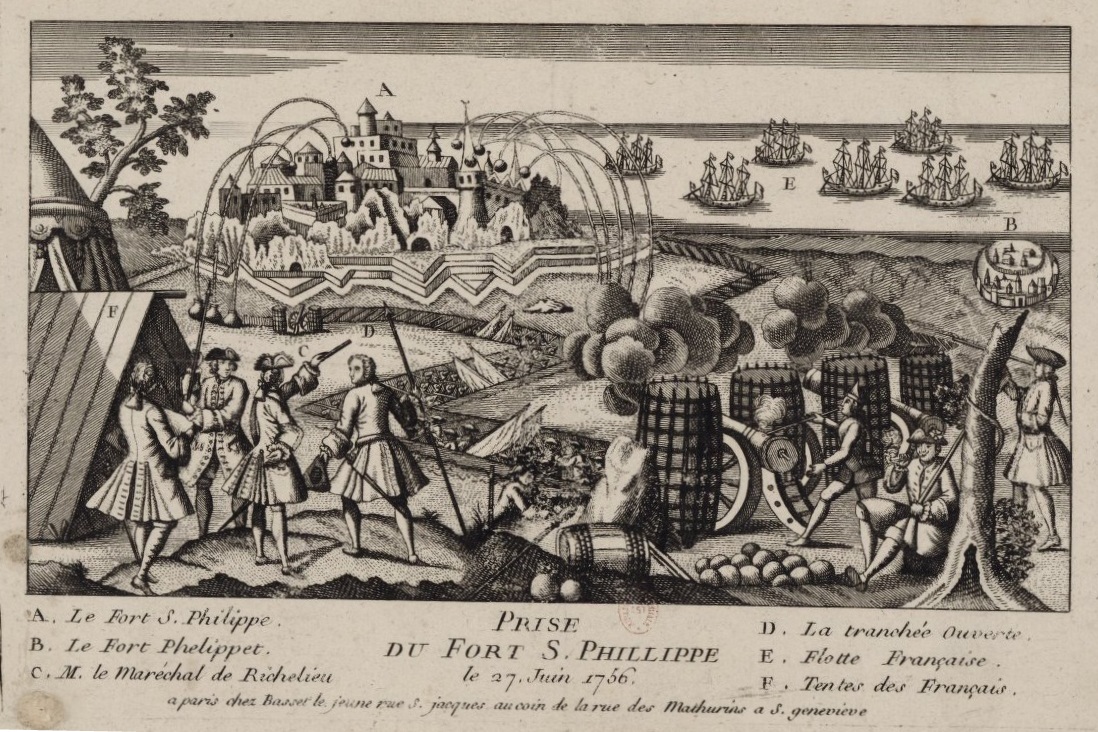
Created for a victory celebration after the French’s successful defeat of the British on the island of Minorca, also spelled Menorca which is the Catalan spelling. The siege and battle had lasted 70 days, from April 20 to June 29, 1756 and had cost the French approximately 3-4,000 casualties. The British loss around 400 men and one of the strategic defenses and the Mediterranean Sea. The French remained in control of the island until the end of the Seven Years’ War. The island recaptured by the Br was returned to the British at the end of the war, trading the island of Guadeloupe for it as part of the peace treaty signed in Paris.
Yet, after the British surrendered Fort St. Philip, in 1756, which protected the town and seaport of Mahon a large victory banquet was held. The French leader, the Duke de Richelieu instructed his chef to to create a feast that would honor the great victory. The island lacked the cream needed for the sauce the chef wanted to make so he invented the egg and oil dressing.
He named the concoction Mahon-aise, after the town he created the sauce in.
Hope you are reading this around lunchtime!
P.S. The author realizes that a few other accounts exist about the creation of the this sauce. Including that the chef of the French duke was told about the sauce by the inhabitants of the island who had already created it.
To usher in the month of May, Emerging Revolutionary War returns to the French and Indian War for a discussion with author and historian Billy Griffith on his book, “The Battle of Lake George: England’s FirstTriumph in the French and Indian War.
On September 8, 1755, two armies clashed along the southern shore of Lake George in New York’s Adirondack Mountains. The battle between William Johnson’s force of colonial provincials and Mohawk allies and Baron de Dieskau’s French and Native American army would decide who possessed the lower part of the strategic water highway system that connected New York City with Quebec.
Join ERW historian Billy Griffith for a discussion about this crucial event in the early stages of the French and Indian War that can be considered one of the first true “American” victories against professional foreign troops. We look forward to you joining us, at 7 p.m. EDT on our Facebook page for the next historian happy hour.






 Emerging Revolutionary War Era