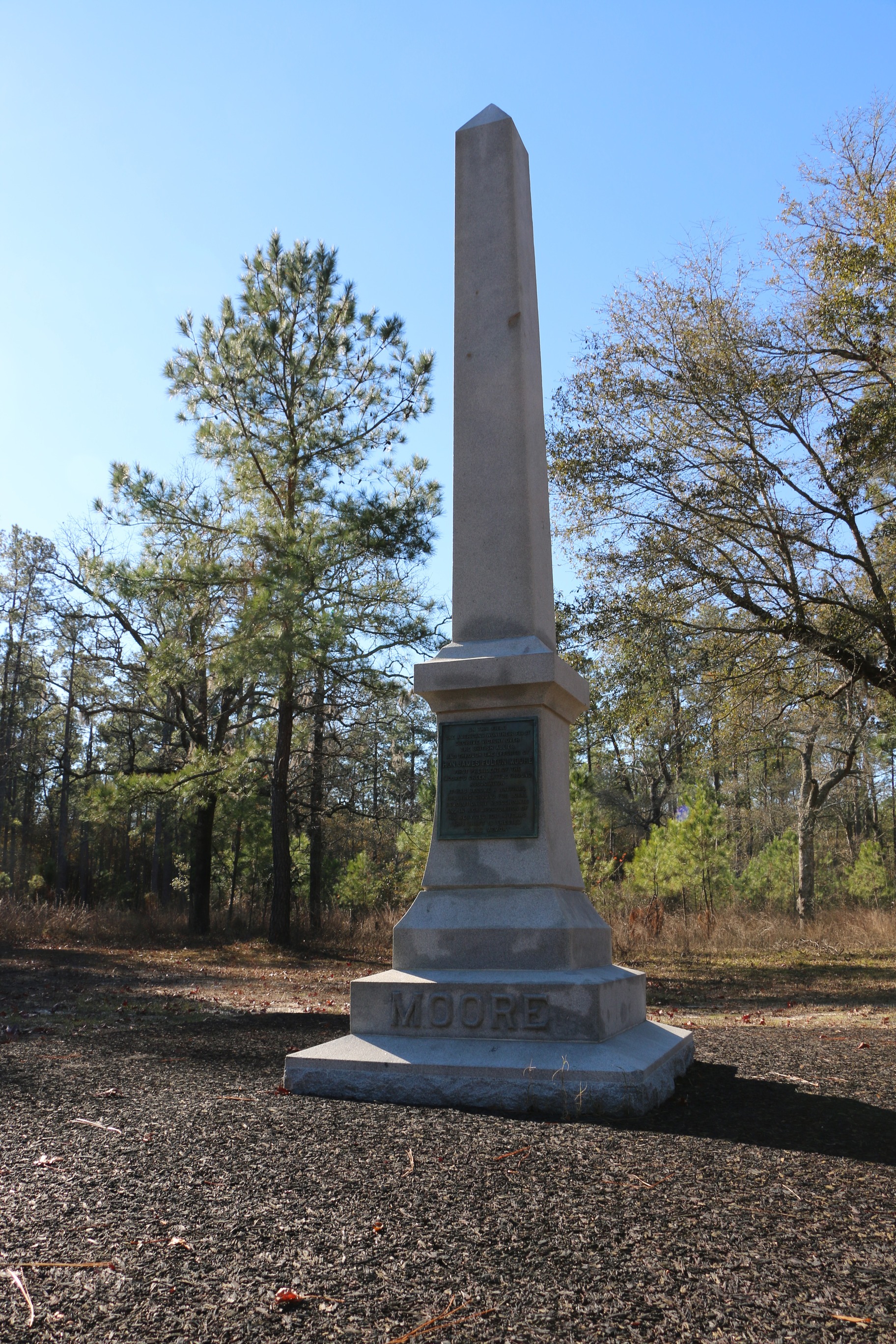
On February 27, 1776 Patriot and Loyalist forces faced off at Moores Creek Bridge in southeastern North Carolina. Loyalist forces anticipated support from a British army arriving along the North Carolina coast and planned to use this combination force to return British authority in North Carolina. Though, when help did not arrive, a mixed bag of North Carolina Patriots turned back an attack at Moores Creek Bridge. Their victory, combined with the Patriot victory at Great Bridge, VA in December 1775, solidified their control of North Carolina. Additionally, the Loyalist defeat served as a major deterrent for Loyalist support until the opening of the Southern Campaign four years later. This small action had long lasting impact on the entire war in the south.
Join us this Sunday night at 7pm on our You Tube Channel ( https://www.youtube.com/@emergingrevolutionarywar8217 ) as we welcome back our own ERW historian Bert Dunkerly. Bert has extensive knowledge on the history of this battle and experience working at the battlefield itself. We will discuss the complex situation leading up to the battle and how this small battle changed the war strategy in the south. Grab a drink and join in on the discussion!
Emerging Revolutionary War welcomes guest author Michael Aubrecht
At the time of the Revolutionary War it is estimated that there were over a half million African-Americans living in the thirteen colonies. As the rebellion’s patriotic call to fight for liberty grew, the British government sought to undermine the expanding Continental Army by soliciting slaves who ran away from their masters. By promising to grant them their freedom and security, the Redcoat ranks were able to boost their manpower on the battlefield instead of constantly relying on the importation of additional troops who took months to travel to the Americas from England. Some of these all-black units even flourished as in the example of the Royal Ethiopian Regiment and later, the Black Pioneers.
According to the Atlantic Canada Virtual Archives Website Black Loyalists in New Brunswick: “In November 1775, Virginia Governor Lord Dunmore, hoping to bolster the British war effort, encouraged slaves and indentured servants of the Patriots to join His Majesty’s army. Many did so. When the British evacuated their army from Boston to Halifax in 1776, a “Company of Negroes” was part of the entourage. British Commander-in-Chief Sir Henry Clinton extended the policy of appealing to African Americans in his Phillipsburg Proclamation of 1779 in which he offered security behind British lines to ‘every negro who shall desert the Rebel Standard.'”
Following the British Army’s surrender, it is estimated that nearly 35,000 loyalists fled the United States to settle north in the provinces of Canada including the maritime regions of New Brunswick and Nova Scotia. Nearly 3,500 free black loyalists were among them including many who had fought alongside the Redcoats on behalf of the English crown. New Brunswick saw thousands of African-Americans settle in as new citizens and many went on to fight again for Britain in the War of 1812. Despite their service to the king, many black loyalists and their families still faced racial discrimination, although it paled in comparison to the institution of slavery that continued to thrive in the southern United States.
Michael Aubrecht is the author of Thomas Jefferson and the Virginia Statute for Religious Freedom: Faith & Liberty in Fredericksburg.
Joseph Galloway is best known as one of the preeminent and prominent Loyalists who remained in the American colonies through the majority of the American Revolution. Prior to the colonies declaring independence, especially during the First Continental Congress, Galloway was active in the debates that decided the path forward. Besides attending and being active in the discussions in Philadelphia he penned a pamphlet entitled A Candid Examination of the Mutual Claims of Great Britain and the Colonies.
Within the pages, he called African American slavery “the dangerous enemy within” and the “natural weakness” of the soon-to-be Southern states. If a division ensued, Galloway predicted that,
“If the colonies happen to vie and try their reciprocal strength with each other, the political force of the Northern Colonies will soon destroy the opulent force of the Southern.”
Furthermore, Galloway pointed to the colonies/states of Georgia, Maryland, North and South Carolina, and Virginia as vulnerable because of the institution of slavery. In a conflict without the overarching guidance by Great Britain, the division between Northern and Southern colonies/states would lead to a domestic civil war and the possibility that African American slaves would join the Northern effort in vanquishing their former owners.
Although Galloway was writing to prop support for remaining loyal to the British crown he foreshadowed accurately the rift that plagued the independent United States. In laying out his views, Galloway quite succinctly predicted what would happen in 78 years after independence was won by the United States.
Galloway left Philadelphia when the British evacuated the city in 1778 and left for England where he would position himself in a leading role for loyalists in exiles. He never returned to the United States. His succinct prediction of the future though proved eerily accurate.
Sources:
Disunion Among Ourselves, The Perilous Politics of the American Revolution by Eli Merritt
University of Michigan, Evans Early American Imprint Collection, click here for the link.
Join us this Sunday night at 7pm as we welcome Glenn F. Williams, PhD to our popular Sunday night Rev War Revelry! Glenn will examine the political and economic causes of the American Revolution beginning at the end of the Seven Years War / French and Indian War through the resistance movements. He will dispel or clarify some of the popular beliefs about the grievances that eventually led the thirteen colonies to break with the Mother Country. This will be a timely discussion as we approach the 250th anniversary of the Boston Tea Party. Glenn Williams is a retired U.S. Army officer that until recently also enjoyed a “second career” as a military historian. He retired as a senior Historian after 18 years at the U.S. Army Center of Military History and 3 1/2 years as the historian of the American Battlefield Protection Program of the U.S. National Park Service.
Grab your favorite drink and tune in, we will be live so feel free to drop your questions in the live chat. If you are not able to tune in on Sunday, the video will be placed on our You Tube and podcast channels.
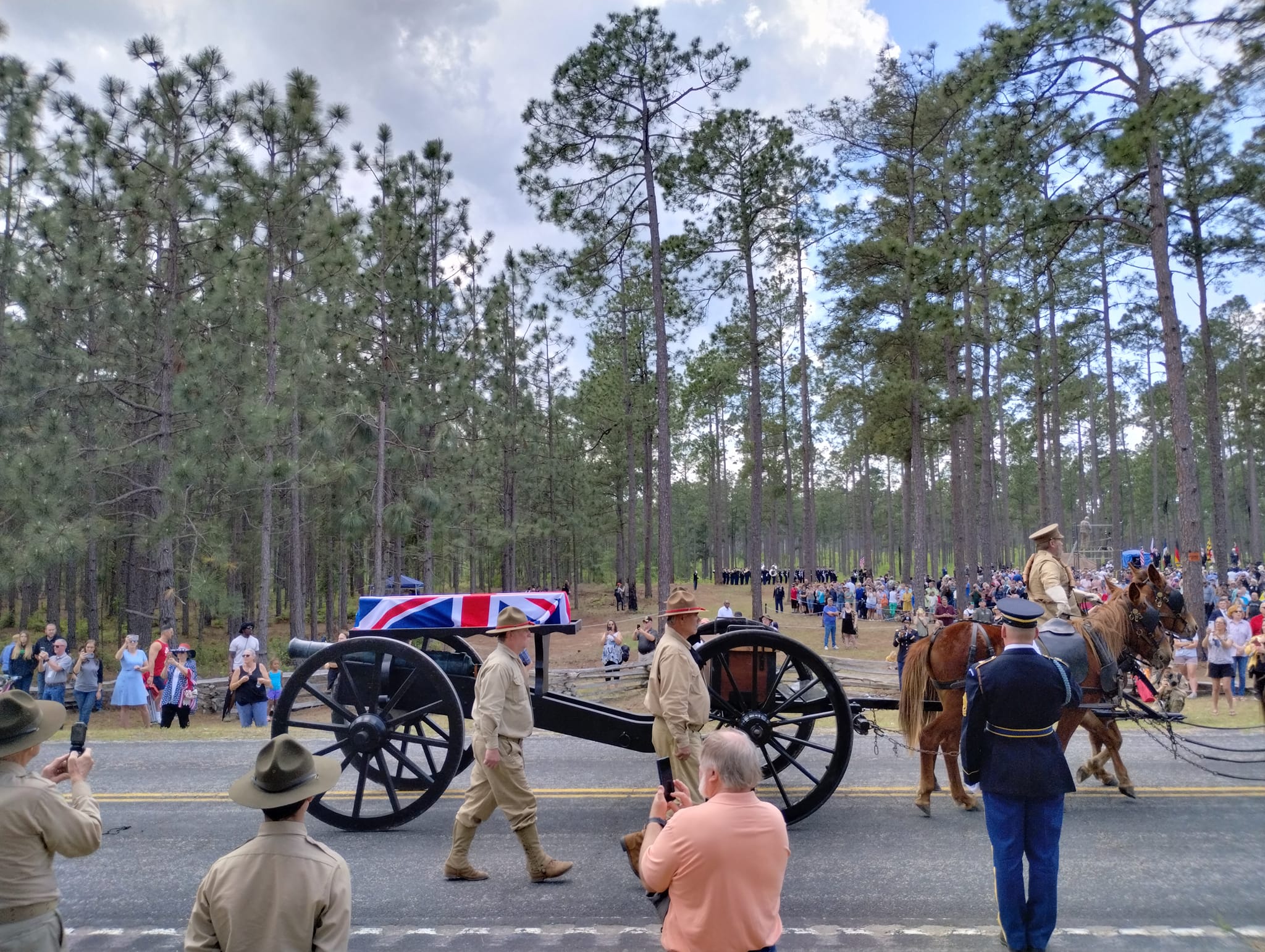
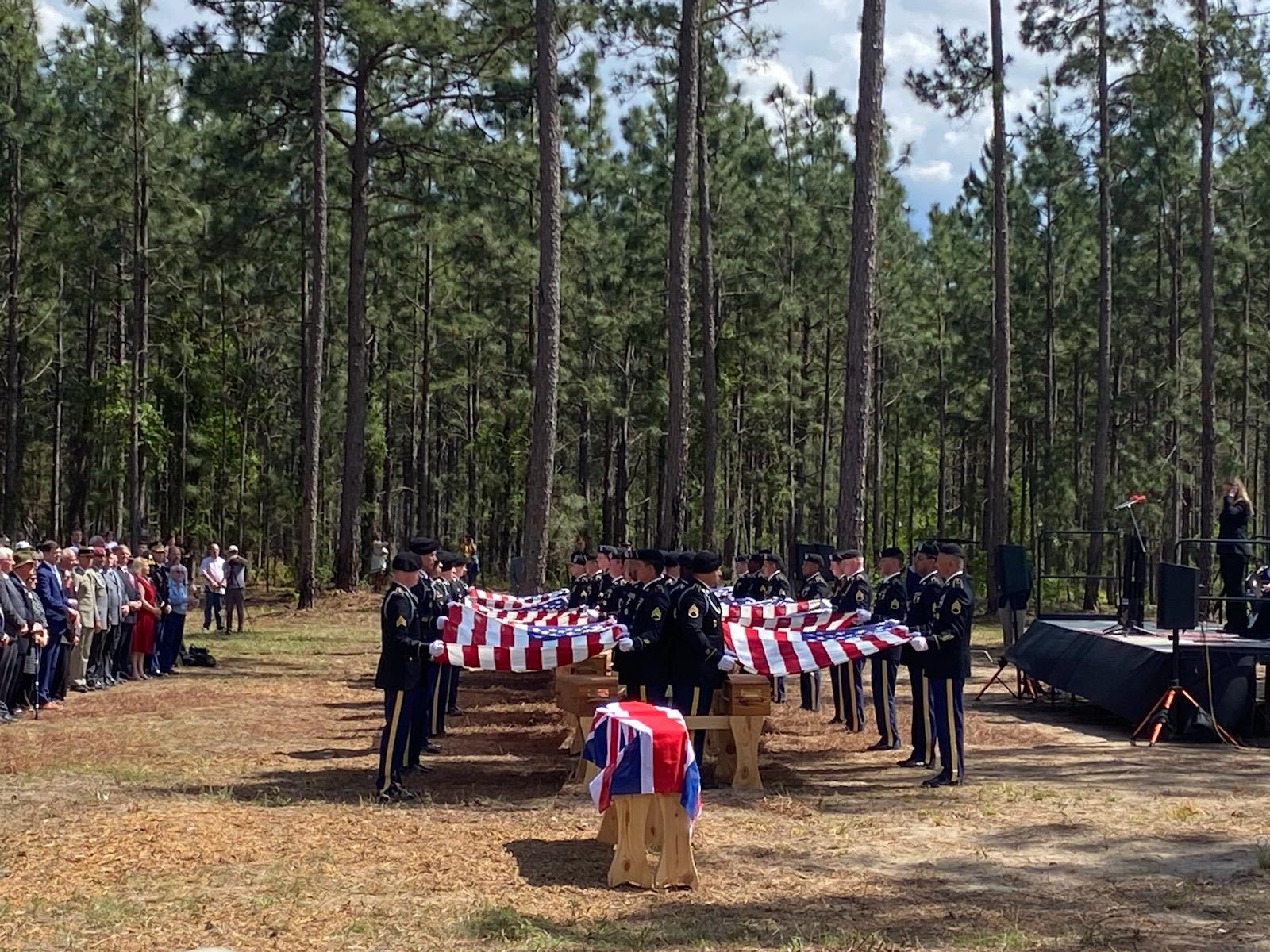
Join us as we discuss the excavation and successful recovery of the remains of 14 veterans of the August 16, 1780, Battle of Camden with James Legg and Steven Smith, Ph.D., the lead archeologists of the Camden Re-Burial Project which began in September 2022. We will discuss the indepth research conducted and the precise archaeological work that was done on the battlefield. Also learn about the reburial ceremony and where the soldiers were finally laid to rest.
This is a great opportunity to learn about a rare discovery on a American Revolutionary War battlefield. The Camden battlefield is a great archaeological site that is revealing multiple stories and helping historians piece together a better understanding of the battle. Grab a drink and join us on our Facebook page for a great evening of archaeology and history!
This Sunday, August 6th at 7pm join ERW series editor Dan Welch and authors Rob Orrison and Mark Wilcox as they discuss one of the worst defeats in American history, the Battle of Camden. How did the hero of Saratoga end up the scapegoat in the south? Learn how a coincidence led to a great British victory. And how did the Patriots recover from such a large defeat and find a path to victory a year later? Orrison and Wilcox will also discuss their upcoming book “All That Can be Expected, The Battle of Camden”. Grab a drink and join us to learn more about the Battle of Camden!
All Rev War Revelries can be found LIVE on our Facebook page, or a week later on our You Tube and Spotify channels.
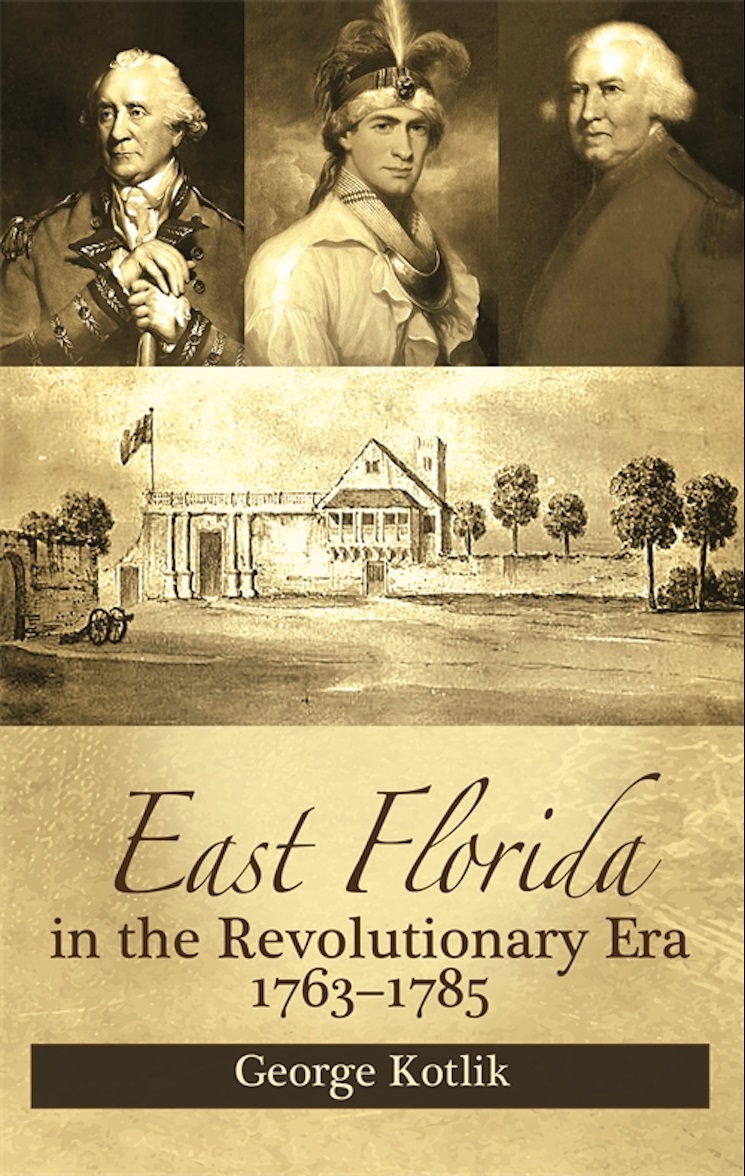
Thirteen of the Great Britain’s North American colonies moved toward independence in 1775, declaring the fact officially the following year with the issuance of the Declaration of Independence. Perched below these thirteen rebellious provinces was the colony of East Florida. Earned after the Seven Year’s War by Great Britain from Spain, the most populous city an oldest permanently established European metropolis was St. Augustine, which was also the capital of the colony. This colony, through the eight years of the American Revolutionary War, had a tenuous connection with their neighbors to the north. Largely forgotten in the pantheon of history describing this period, from the time of Britain gaining possession in 1763 through the end of the Revolutionary era in this historian’s estimation, in 1785.
Entitled, East Florida in the Revolutionary Era, 1763-1785 and penned by George Kotlik, a historian specializing in 18th century North American history, the publication offers “an accessible and detailed narrative of the East Florida during the American Revolution.” (pg. 8).
What ensues in the following pages is a brief yet complete overview of the military, political, social, and economic history within those years of East Florida. Some of the names in the pages are well known to enthusiasts of the American Revolutionary War era whereas others will be new names to add to the repertoire for further study. From Governor Patrick Tonyn, British general and last governor for England of East Florida to bringing attention to the William Augustus Bowles, a Maryland born Loyalist, sympathetic to the Muscogee Native Americans of East Florida who tried in vain from the last decade of the 18th century, to establish an independent state for the tribe, with British support. These are just two of the historical personas that Kotlik discusses in his narrative, the rest await you within the pages of the book!
Although no major military actions happened within the confines of the colony that does not mean the role of East Florida in relation to the American Revolution should not be marginalized. “Militias were raised, a general assembly was postponed, St. Augustine experienced a heightened British troop presence, planters between the St. Johns and St. Marys Rivers suffered at the hands of George raiding parties, and a constant threat of a Spanish or American invasion” all affected the psyches and lives of East Floridians. (pg. 104-105).
The hope from Kotlik is to provide the launching point for further discussion into the role of East Florida specifically and Florida in general during the revolutionary period. “Such a lack of coverage is a reminder for scholars to to emphasize East Florida’s presence in the war that made America.” (pg. 111). With this history in hand, Kotlik has provided the necessary overview for further exploration.
Publisher: NewSouth Books, University of Georgia Press, 2023 156 pages plus images
Lieutenant General Henry Clinton, New York Public Library
With the Charleston in British hands, Clinton believed that all he had to do was establish outposts in South Carolina stationed with British regulars. This be believed would put down what was left of the rebellion in the state. These posts assisted the recruitment and training of the thousands of Loyalist troops he believed would now rally around the King’s Colors. To take the best advantage of his Regular troops, Clinton determined to establish three major outposts in the South Carolina backcountry. Clinton established these posts at Augusta (Georgia), Ninety-Six, and Camden. While these posts were to be centers for the British army, the local Loyalist militias were to serve as the pacification forces in South Carolina while the main British force was freed up for larger strategic goals.
To recruit, enlist, and train the large, expected influx of Loyalist militia, Clinton named Maj. Patrick Ferguson as Inspector of Militia. Ferguson was ordered to enlist younger men, preferably unmarried, into companies that would form battalions. He was instructed to recruit from Georgia to North Carolina and offer short enlistments if necessary. Clinton believed that having the colonists maintain their own law and order (via Great Britain’s authority) would cause less apprehension with those that were mostly undecided about to whom they should throw their support, the Patriots or the British.
By mid-May, the British army set out for their destinations in the back country. Clinton’s second in command, Lieut. Gen. Charles Lord Cornwallis, marched to Camden while Ferguson moved to Ninety-Six. Without much resistance, Clinton’s plan to conquer South Carolina was working perfectly. Patriot leaders scrambled to find ways to organize their resistance. The only organized Continental force remaining in South Carolina was a small force of Virginians under Col. Abraham Buford that was on its way to Charleston when the city surrendered. Ordered by Brig. Gen Isaac Huger to reverse course and make his way north toward Hillsborough, North Carolina. There along with the North Carolina militia, he could be the core of American defense in North Carolina.
On May 27, Cornwallis ordered Lieut. Col. Banastre Tarleton with 300 of his dragoons and mounted infantry in pursuit of Buford. Tarleton’s British Legion was mostly composed of Loyalist recruits, so many in his force were from America. Tarleton pushed him men and horses hard, many horses falling out along the way. Buford was aware of a possible British pursuit but underestimated the speed in which Tarleton closed the gap. On May 29, Tarleton caught up with Buford in a region near the South and North Carolina border called the “Waxhaws.”
Lieutenant Colonel Banastre Tarleton, New York Public Library
The events that took place next are still debated today. Tarleton under a flag of truce tried to get Buford to surrender. Writing to Buford, Tarleton wrote “Resistance being vain, to prevent the effusion of human blood, I make offers which can never be repeated.” Tarleton was already creating an image of himself as an aggressive and brutal fighter. Buford, however, refused, replying, “I reject your proposals, and shall defend myself to the last extremity.” With that, Buford continued his march north towards North Carolina as did Tarleton’s pursuit. Around 3:00 p.m. the lead elements of Tarleton’s force wiped out Buford’s small rearguard, forcing Buford to stop and deal with Tarleton.
Buford decided to create a single battle line east of the Rocky River Road. Tarleton, ever the aggressive commander, ordered his horsemen to charge the Virginians. Here, Buford made what would be a devastating blunder. He ordered his men to not fire until the British cavalry was within ten yards of the American line. This would not allow the Americans a chance to fire another volley before the British charge was upon them. The Virginians fired, taking out some of the British dragoons and horses (Tarleton himself became briefly trapped under his horse), but most charged through Buford’s line, wielding their sabers and cutting down the Virginians. Total chaos ensued, and many of Buford’s men attempted to flee. Some tried to surrender by throwing their arms to the ground, but American accounts state that the British were offering “no quarter” and killing everyone that tried to surrender. Other accounts report that Buford sent a white flag to Tarleton, but probably because he was injured, it was never received, and the fighting continued. Accounts differ widely between the Americans and British on the fighting, but the fact cannot be argued that Buford’s command was destroyed.
Waxhaws Grave and Monument, photo and flags courtesy of the author
American casualties were estimated at 350, 113 men killed, 147 wounded, 50 captured, and 2 six-pound artillery pieces and 26 wagons captured. Buford himself was able to escape the field. Tarleton only suffered 5 killed and 12 wounded, a complete victory. What has become known as “Buford’s Massacre” was not referred to as a massacre at all in many period accounts. Tarleton himself blamed the “slaughter” on the fact that his men thought he was killed in the battle and sought revenge. The disparity in numbers and the reports of indiscriminate British slaughter of Americans led to the creation of “Tarleton’s Quarter.” Patriot leaders quickly pounced on this and began to spread stories about Tarleton’s brutal tactics. This proved to be a public relations coup for the Patriot cause, as it energized their side and led to a more robust recruitment of militia and partisan forces to take on the British who now faced no organized opposition in South Carolina or Georgia.
Stay Tuned for the Emerging Revolutionary War Series newest book releases “To the Last Extremity: The Battles for Charleston, 1776-1782” by Mark Maloy and “All That Can Be Expected: The Battle of Camden and the British High Tide in the South, August 16, 1780” by Rob Orrison and Mark Wilcox to learn more abou the 1780 Southern Campaign. Both releases are published by Savas Beatie Publshing: https://www.savasbeatie.com/american-revolution/
The Battle of Waxhaws, fought on May 29, 1780, was a lopsided British victory by Lieutenant Colonel Banastre Tarleton’s British cavalry over American Colonel Abraham Buford’s Continental forces in Waxhaws South Carolina. Buford lost 316 of 350 men with the British losing less than 20. Known popularly as “Buford’s Massacre,” Continental leaders used the battle as a propaganda tool against the Crown forces in the south. But, was it really a massacre?
Join us as we welcome historian and author Dr. Jim Piecuch as we discuss his research and theory about the Battle of Waxhaws and its aftermath. Dr. Piecuch has written several books on the Southern Campaign of the American Revolution including his book “Blood Be Upon Your Head: Tarleton and the Myth of Buford’s Massacre.” This Rev War Revelry will be pre-recorded and posted on May 28th at 7pm. Grab a drink and a good seat and enjoy this great presentation on one of the most controversial battles of the American Revolution.
On January 17, 1781, General Daniel Morgan and his mixed force of Continental soldiers and militia defeated the British under the command of Lieutenant Colonel Banastre Tarleton. This victory for the patriots in northwestern South Carolina had major implications on the southern theater and the main British force under General Lord Charles Cornwallis. The battle, named after the use of the fields in which it was fought, Cowpens, also included one of the only instances in American history of a successful double envelopment.
On Sunday, at 7 p.m. EDT, Emerging Revolutionary War will be joined by American Battlefield Trust’s Kristopher White, Deputy Director of Education and Daniel Davis, Education Manager, in a discussion about the history and preservation of the Battle of Cowpens.
Round out your January weekend by joining us on our Facebook page for this live historian happy hour.







 Emerging Revolutionary War Era