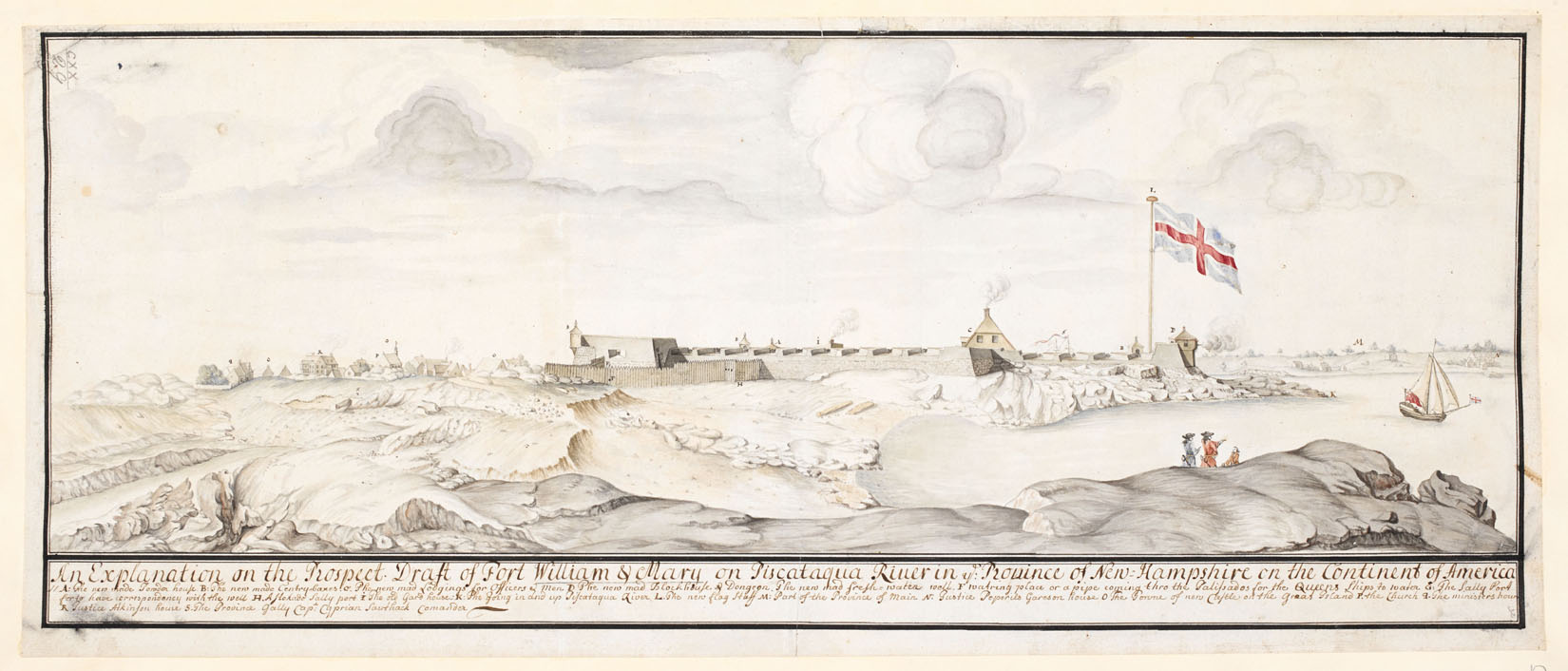
Many have heard of Paul Revere’s ride to Lexington and the shot heard round the world at Concord (and Lexington) but few know about the December 1774 raid and skirmish at Fort William and Mary in New Castle, New Hampshire. Here, inspired by news from Paul Revere, local militia attacked and captured a small British garrison at Fort William and Mary. Join us as we welcome Dr. Dr. Cynthia Hatch to discuss this much over looked action leading up the American Revolution.
Dr. Hatch is an Oklahoma State University Institute of Technology instructor specializing in Revolutionary War history. With a PhD in History, she explores the intricate political, social, and cultural dynamics of the 18th century, with a particular focus on the colonial legal system and the pivotal role of local narratives in shaping historical interpretations during the Revolutionary Era.
Join us as we discuss the events leading up and during the raid of Fort William and Mary and learn, were these the FIRST shots of the American Revolution? This Rev War Revelry will be pre-recorded and posted to our Facebook page at 7pm on Sunday, December 8th.
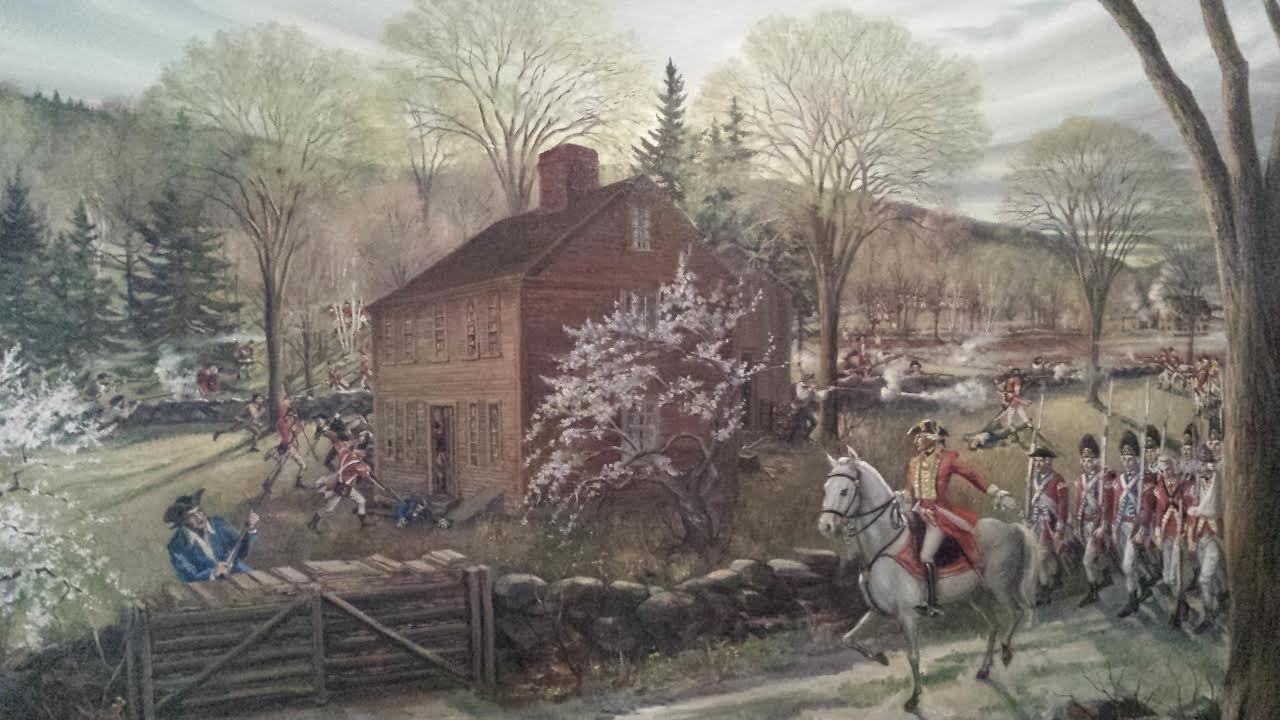
The Fight at the Jason Russell House, bicentennial painting by Ruth Linnell Berry (1974). Appearing with permission from the Arlington Historical Society.
Though the American Revolution started on the green at Lexington and North Bridge in Concord, the bloodiest part of April 19, 1775 took place in the community of Menotomy (modern day Arlington). Join us as we welcome Matt Beres from the Arlington Historical Society. We will discuss the viciousness of the fighting on the afternoon of April 19th along the road back to Boston, including stories like the Jason Russell House, Cooper Tavern and more. Join us as we talk about the much overlooked part of April 19th, 1775 as we move towards the 250th anniversary. This episode is pre-recorded and will be posted on Sunday, November 24th at 7pm on our You Tube and Facebook pages.
This Sunday, August 3rd at 7pm we welcome back to Rev War Revelry historian and author Alex Cain. Alex is a well known expert on everything Lexington, MA (among many other topics) and hosts a well researched blog: https://www.historicalnerdery.com/ . Alex’s book, We Stood Our Ground: Lexington in the First Year of the American Revolution is highly recommended by ERW for a detailed account of Lexington and its role in the beginning of the American Revolution.
The events of Boston leading up 1775 are well documented, but it was in the countryside around Boston where the populace became militarized. Towns such as Lexington was just as influential in the push to revolution as Boston. Join us as we discuss the role of Lexington, Massachusetts before it was made famous in April 1775.
Be sure to visit our Facebook page or You Tube Channel this Sunday at 7pm as we release this prerecorded Rev War Revelry. Alex will also be joining us this October for our ERW Bus Tour of Lexington and Concord, there a few tickets left so be sure to register to experience Lexington with Alex!
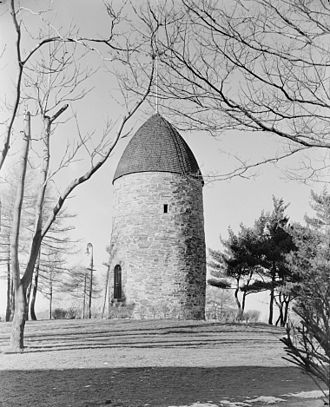
The Charlestown, now Somerville, Powder Magazinewas the focus of the September 1, 1774 Powder Alarm. The historic structure still stands today.
Join ERW this Sunday at 7pm as we welcome back historian and author J.L Bell. We will discuss the events in Boston and Massachusetts in 1774 after the passing of the now popularly called “Intolerable Acts” in response to the Boston Tea Party. A time of political, social and economic upheaval for everyone in the colony, the events that transpired had big impacts across all the colonies and set the stage for April 19, 1775. J.L. Bell is a renowned historian who operates a very comprehensive blog focused on Boston 1775 (https://boston1775.blogspot.com/ )
Grab a drink and sit back and learn about the events that rapidly progressed during 1774 towards warfare and bloodshed. J.L. Bell will provide a great insight into how things quickly deteriorated in Massachusetts and how that impacted all the colonies as a whole. Unlike previous revelries, this revelry will run live on our You Tube channel at: https://www.youtube.com/@emergingrevolutionarywar8217 . Due to new rules and regulations with Facebook, we can no longer stream our revelries live on Facebook. We hope that will change in the future. We will post the You Tube video to our Facebook page after the live broadcast. We hope to see you this Sunday, June 9, 2024 at 7pm on our You Tube Channel!
Approximately 5,000 African-American or Black soldiers fought for the patriot cause in the American Revolution. Some joined state militias, some joined the Continental Army, and some sailed the seas with the fledgling navies of the United Colonies. William and Benjamin Frank were two of those 5,000. Both were free Blacks from Rhode Island who enlisted in the 2nd Rhode Island Regiment in 1777. Their father was a veteran of the French and Indian War, so the family was well-established in military tradition.
The 2nd Rhode Island fought and defended Fort Mercer during the campaigns of 1777 and survived harsh winters at Valley Forge and Morristown before returning to Rhode Island to literally defend the hearth and home from the British. Author and historian Dr. Shirley L. Green, adjunct professor at the University of Toledo, a 26-year veteran of the law enforcement community, and current Director of the Toledo Police Museum in Ohio, “takes the reader on a journey based on her family’s history, rooted in its oral tradition.”
Her book Revolutionary Blacks, Discovering the Frank Brothers, Freeborn Men of Color, Soldiers of Independence was published by Westholme Publishing in November 2023.
Furthermore, Dr. Green puts “together the pieces of the puzzle through archival research, interviews, and DNA evidence” to authenticate and expand the family history. The end result is a very readable and needed addition to the historiography of the American Revolution. Her ability to tell “a complex account of Black life during the Revolutionary Era demonstrates that free men of color…demonstrates that free men of color shared with white soldiers the desire to improve their condition in life and to maintain their families safely in postcolonial North America.”
Emerging Revolutionary War looks forward to an engaging and informative discussion with Dr. Green, this Sunday, at 7 p.m. EDT on our Facebook page. We hope you can tune in for this next episode of Emerging Revolutionary War’s “Rev War Revelry.”
For more information about the book and to order a copy, click here.
We are excited to announce our 2024 (fourth annual!) bus tour location will be Lexington and Concord on October 11-13, 2024. Join historians Phillip Greenwalt, Rob Orrison and Alex Cain as we tour the sites associated with the beginning of the American Revolution on April 19, 1775. The tour will cover events in Lexington, Concord and sites along the “Battle Road.” Tickets are $250 per person and includes a Friday night lecture, all day tour on Saturday and half day tour on Sunday (bus tour transportation and Saturday lunch included in cost).
Join us for our FOURTH annual tour as we take on the beginning of the American Revolution just a few months before the 250th anniversary. Learn about the dramatic events that led to the first shots for the Revolution and the bloody aftermath. We will visit Lexington Green, Buckman’s Tavern, North Bridge in Concord, Battle Road including Merriam’s Corner, Parker’s Revenge and the Jason Russell House. There is no better way to experience history than to stand in the footsteps of where it happened!
Join us this Sunday, October 15th at 7pm as we welcome Matthew Wilding, Director of Education and Interpretation at Revolutionary Spaces. Revolutionary Spaces manages the Old South Meeting House and the Old State House in historic Boston. We will discuss the history of the Old South Meeting House and its important role in the revolutionary movement in Boston (especially during the Boston Tea Party). We will also cover their plans for the 250th anniversary of the Boston Tea Party, including their new exhibit on the destruction of property in public protests.
Grab a drink and follow along as we start to gear up for the 250th anniversary of the Boston Tea Party with Emerging Revolutionary War!
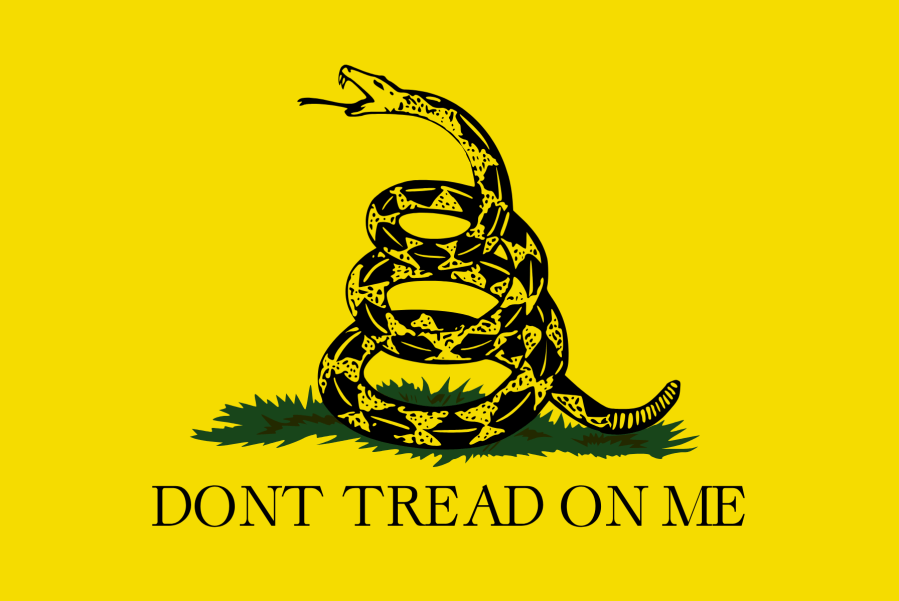
Every so often news stories arise about popular symbols of the American Revolutionary War that are used by various people to promote modern political agendas. One prominent symbol is the yellow flag with a coiled rattlesnake and the words “Don’t Tread on Me” below it. This flag, often referred to as the Gadsden flag, has a fascinating history dating back to the Revolutionary War.
The first real use of the snake representing the colonies begins before the Revolutionary War, during the French and Indian War, when Benjamin Franklin created a cartoon using a snake to represent the various colonies each separated from one another with the words “Join, or Die” under the image. This was an effort to get the various colonies to unite for common defense during that time period.
By the time of the Revolutionary War in 1775, the symbol had become a solitary rattlesnake, coiled and ready to strike often accompanied by the warning “Don’t Tread on Me.” Christopher Gadsden, a prominent South Carolina patriot, served in the Continental Congress and designed the yellow flag as a naval ensign. Beginning in 1776 the flag was hung up in the room where Congress met in Philadelphia and because it was designed by Gadsden, it became known as the Gadsden flag.
Our monthly recap of what our good friend and fellow historian Tom Hand has written on his blog, AmericanaCorner.
The Legacy of Paul Revere November 2, 2021
Paul Revere began his famous ride from Boston to Concord, around 11:00pm on April 18, 1775, informing the residents and militiamen that the British were on the march. He arrived in Lexington, a town about 10 miles from Boston, around midnight. Read more here.
Lexington and Concord: Minutemen in Arms November 9, 2021
The Battles of Lexington and Concord, fought on April 19, 1775, marked the start of America’s war for independence from England. The story of that fight is an inspiring account of how everyday Americans came together to resist the power of Great Britain. Read more here.
Lexington and Concord: The Shot Heard Round the World November 16, 2021
The fight between our Minutemen and the British regulars at Lexington was over in a matter of minutes, and the British began the seven-mile march to Concord. By now, reports of the shooting had reached the minutemen in the surrounding area, and they began to assemble. A bad day for the British was about to begin. Read more here.
The Battle of Bunker Hill November 23, 2021
The Battle of Bunker Hill, fought on June 17, 1775, is one of the most iconic and familiar events in American history. It was our first pitched battle against the British army and, although technically a defeat, the efforts of the American militiamen were inspirational. Read more here.
Did the Battle of Moores Creek Bridge help keep the British away from the southern colonies during the first half of the war?
Months before its colonies officially adopted their Declaration of Independence, the British army was reaching a critical juncture in its war strategy: with the colonies in rebellion, where should they focus their attentions? The war was picking up steam and the British were looking for a stronghold in the colonies that would gain them resources such as men and supplies. They turned their eyes south.
The general impression of the southern colonies was that they were poorer and weaker than their sister colonies in the north. They also had been receiving word of heavy Loyalist sympathies in both the backcountry of South Carolina and the coastal areas of North Carolina, where large populations of German and Scottish immigrants had settled. Indeed, by the fall of 1775, Loyalist recruitment seemed to be quite successful. One evidence of this was at the First Battle of Ninety Six in November 1775, when nearly 2,000 Loyalists met a paltry force of not quite 600 patriots. Though this first Revolutionary War battle south of New England ended in a truce, British confidence was high.
The Royal Governor of South Carolina, Lord William Campbell, had fled the colonies by September 1775, leaving the colony mostly in the hands of the Patriots. That made the ultimate goal at this point in the southern colonies to capture the wealthy and strategic port of Charleston, South Carolina. Meanwhile, the Royal Governor of North Carolina, Josiah Martin, convinced British commanders to target key points along their route through his colony as they advanced on their mission. And as 1775 turned into 1776, plans were set in motion.
On January 10, Martin issued a proclamation calling on all subjects loyal to the Crown to take up arms against the rebellion in the colony. Authority was given to Loyalist leaders throughout the colony to recruit militia and gather all necessary provisions to muster in Brunswick, NC.
A copy of Josiah Martin’s Proclamation from January 10, 1776. Library of Congress.
By mid-February, a contingent of several thousand loyalists was gathered at Cross Creek, NC, preparing to march towards their goal. Among those recruited were the famed Scotch Highlanders. Though not all joined the Loyalist cause, the Highlanders’ reputations as fierce warriors preceded the impending war in the colonies. This reputation may have stemmed from the Jacobite rebellion in the 1740s as well as British assumptions at the time that the HIghlands were a lawless land due their clan-based culture.
Loyalists weren’t the only militias stirring along the Carolina coast. Patriot militias had begun forming at the first news of Loyalists gathering as early as August 1775. In fact, some of those militias formed in Wilmington, NC became the foundation of the 1st North Carolina Regiment of the Continental Army and in February 1776, they were led by Colonel James Moore. At that time, they were joined by additional militiamen from the surrounding area, led by Alexander Lillington and Richard Caswell. Their goal was two-fold: protect Wilmington and prevent the Loyalist forces from reaching the coast.
By February 20, 1776, a clash between the British and Patriot forces was inevitable. British commander Donald MacDonald began to move his 1,600 men from Cross Creek towards his rendezvous point at Brunswick, only to find his way impeded along the Black River by Caswell’s blockade. On February 25, MacDonald had managed to get across the river and Caswell moved his 1,000 Patriots back to Moores Creek Bridge. There they set up defensive earthworks, prepped their two artillery pieces, and prepared for battle.
A map of the Moores Creek campaign, February 1776. NPS/Moores Creek National Battlefield.
At 1:00 am on February 27, 1776, MacDonald’s second-in-command, Donald McLeod, led the British troops on their march towards the Patriot position. Arriving at an abandoned camp on the west side of the bridge around 5:00 am, a brief exchange of fire alerted the Loyalists to the Patriot sentries guarding the bridge, and ultimately, the Patriot forces lying in wait.
McLeod with 50 men attempted to cross the bridge and attack the Patriot defensive position, but the attempt was futile and disastrous. Heavy musket fire coupled with a barrage of two artillery units killed 30 almost immediately, including McLeod. The remaining Loyalists quickly retreated and the battle was over almost as quickly as it had begun.
Bill Ballard’s drawing of the decisive moment during the Battle of Moores Creek Bridge. NPS/Moores Creek National Battlefield.
So how important were these three approximate minutes of battle? This Patriot victory struck a huge blow to Loyalist recruitment in North Carolina – so much so that two months later, North Carolina’s delegates to Continental Congress were the first to vote for independence. And it created a rippling effect throughout the southern colonies, as one by one the royal governors were displaced and revolution took hold.
No longer could the British see the Carolinas as easy targets. They abandoned this initial southern strategy to focus their resources on the war in the northern colonies. For the next three years, significant battles and events that we learn about today took place, thanks in part to the dominating Patriot showing at the Battle of Moores Creek Bridge.
If you’re interested in learning more about the Battle of Moores Creek Bridge, I strongly encourage you to visit Moores Creek National Battlefield’s website as well as their very active Facebook page. Both offer a wealth of information and additional resources for folks to explore.







 Emerging Revolutionary War Era