Emerging Revolutionary War welcomes guest historian Paul F. Soltis
250 years ago in 1775 John Wallace of Philadelphia was preparing to move. Born in Scotland in 1718, John was the youngest son of the minister of the Church of Scotland at Drumelizer in the Scottish Lowlands south of Glasgow and Edinburgh. While his eldest brother William would take over the ministry in the Kirk following their father’s death, John emigrated from Scotland to the colonies of British North America. Like many Scottish emigrants, Mr. Wallace entered the merchant trade, first in Newport, Rhode Island and eventually in Philadelphia where he met and married Mary Maddox of an established Philadelphia family.
At the opening of the Revolutionary War in 1775, John Wallace purchased 95 acres on the Raritan River in Somerset County, New Jersey from the Rev. Jacob Rutsen Hardenbergh, minister to the Dutch Reformed Churches of the upper Raritan River Valley. At this country estate he called “Hope Farm” Mr. Wallace built the largest home constructed in New Jersey during the Revolutionary War, perhaps “hoping” to escape the revolutionary ferment of Philadelphia. Midway between the British garrison at New York and the Continental Congress in Philadelphia, John Wallace instead found himself at the Crossroads of the American Revolution.
In the fall of 1778, the Continental Army arrived to this region of Somerset County where the Middle Brook flows into the Raritan River for the Middlebrook Cantonment of 1778-79. Nathanael Greene, Quartermaster General of the Continental Army, wrote on October 18, “Middle Brook is situate in a plentyful Country, naturally strong and difficult of access and surrounded with a great plenty of Wood. Great security will also be given to this Camp by the militia of the Country.” Col. Sidney Berry, a deputy quartermaster to Gen. Nathanael Greene, arranged with Mr. Wallace for use of the Wallace House at Hope Farm, a few miles west of the village of Middlebrook, as headquarters for George Washington.
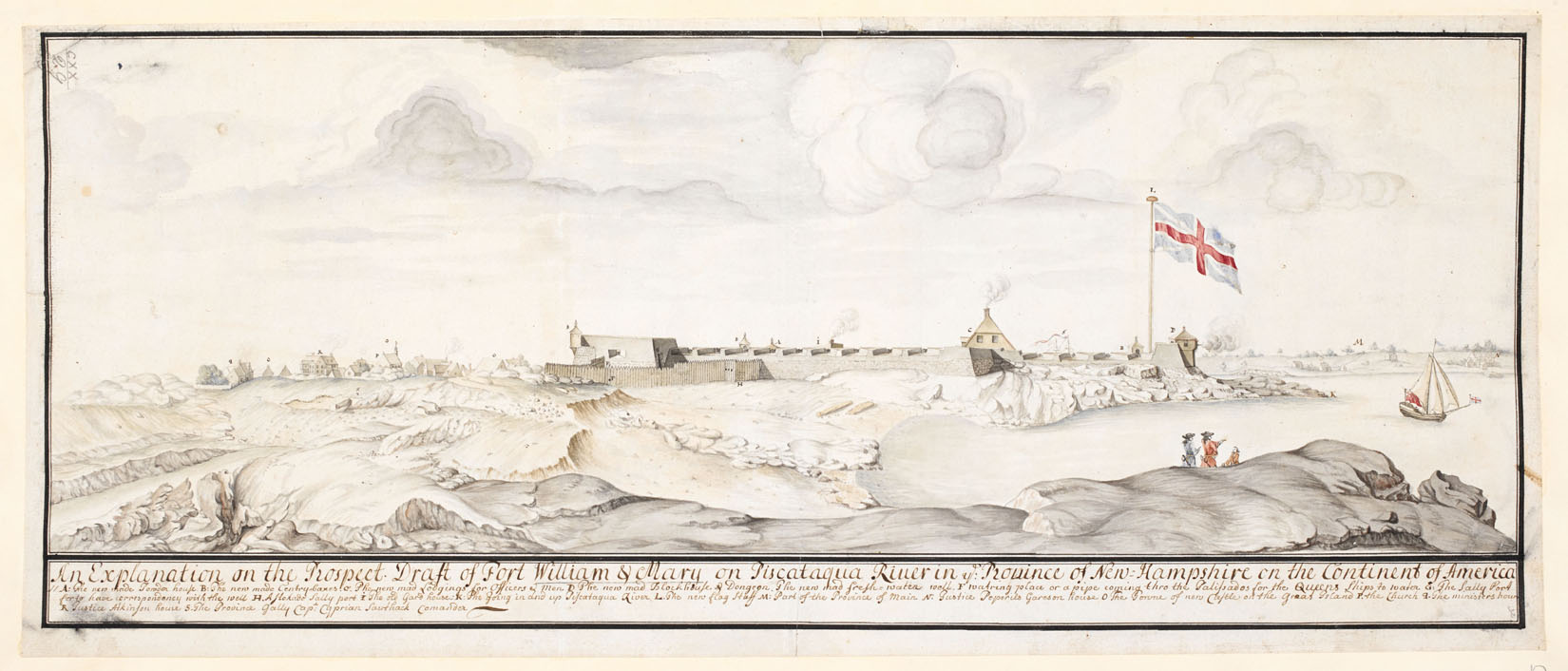
Many have heard of Paul Revere’s ride to Lexington and the shot heard round the world at Concord (and Lexington) but few know about the December 1774 raid and skirmish at Fort William and Mary in New Castle, New Hampshire. Here, inspired by news from Paul Revere, local militia attacked and captured a small British garrison at Fort William and Mary. Join us as we welcome Dr. Dr. Cynthia Hatch to discuss this much over looked action leading up the American Revolution.
Dr. Hatch is an Oklahoma State University Institute of Technology instructor specializing in Revolutionary War history. With a PhD in History, she explores the intricate political, social, and cultural dynamics of the 18th century, with a particular focus on the colonial legal system and the pivotal role of local narratives in shaping historical interpretations during the Revolutionary Era.
Join us as we discuss the events leading up and during the raid of Fort William and Mary and learn, were these the FIRST shots of the American Revolution? This Rev War Revelry will be pre-recorded and posted to our Facebook page at 7pm on Sunday, December 8th.
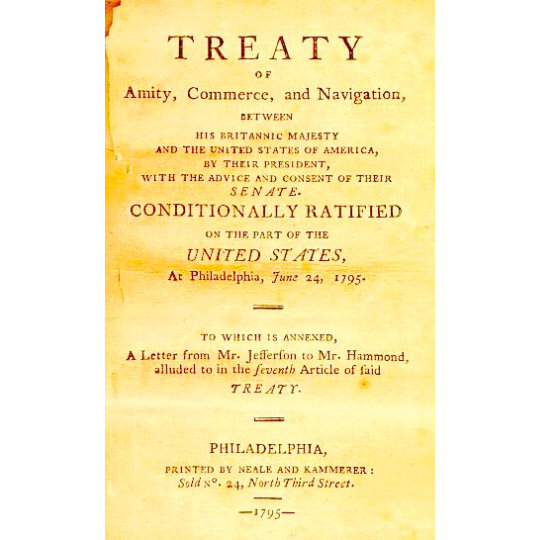
On November 19, 1794, John Jay, representing George Washington’s administration, affixed his signature to a document bearing his name in history. The Jay Treaty. Although the official name of the pact was “The Treaty of Amity, Commerce, and Navigation, Between His Britannic Majesty and the United States of America.”
The treaty’s aim was to resolve outstanding issues from the conclusion of the American Revolutionary War and facilitate economic trade. Although some of the clauses were not fulfilled completely and another war, the War of 1812, erupted because of it, the treaty did serve a purpose. The agreement ushered in a decade of trade between the two countries and gave the fledgling nation a chance to gain footing, a major concern for George Washington, as first president. The treaty also cemented the promise that Great Britain would vacate the forts in the Northwest Territory and agreed to arbitration on the boundary between Canada and the United States and the pre-American Revolutionary War debt.
Yet, the treaty was divisive. Even Jay remarked that he could find his way in the dead of night by the illumination of his own effigy. The treaty angered the French as that country was amid its revolutionary throes, and bitterly divided the nation. Out of it came the separation into two political parties, the Federalists, who supported the treaty, and the Democratic-Republicans who stood opposed to it.
The treaty was ratified by the Senate on June 24, 1795, with an exact two-thirds majority, 20 to 10 along with being passed by William Pitt the Younger, prime minister of Great Britain and his government, and took effect on February 29, 1796.
Historian Joseph Ellis wrote that the Jay Treaty was “a shrewd bargain for the United States” and “a precocious preview of the Monroe Doctrine.” As one of Washington’s most fervent wishes, the treaty “postponed war with England until America was economically and politically more capable of fighting one.”
For this week’s “Rev War Revelry” Emerging Revolutionary War ventures to the west to discuss the recently published book, “Till the Extinction of this Rebellion, George Rogers Clark, Frontier Warfare, and the Illinois Campaign of 1778-1779.” The author, Eric Sterner, is a contributor to the Emerging Revolutionary War, along with the author of An Anatomy of a Massacre: The Destruction of Gnadenhutten, 1782. When not writing history, Sterner had a career in government and public policy besides contributing to the literature and study of the American Revolutionary War era.
This book, published by Westholme Publishing, examines the viewpoints of the American, British, and Indigenous perspectives and illustrates the wide impact of the American Revolution on the peoples west of the Appalachian Mountains. What happened with Clark’s movements and campaign will lay the foundation for American expansion and the “opening of the West” following the American Revolution.
We hope you can join us for this historian happy hour this Sunday at 7 p.m. on our Facebook channel. If you miss it, we will post the revelry on our YouTube channel. Just search “Emerging Revolutionary War” to subscribe.
Emerging Revolutionary War welcomes back guest historian Evan Portman
Two future presidents walk into a Catholic church.
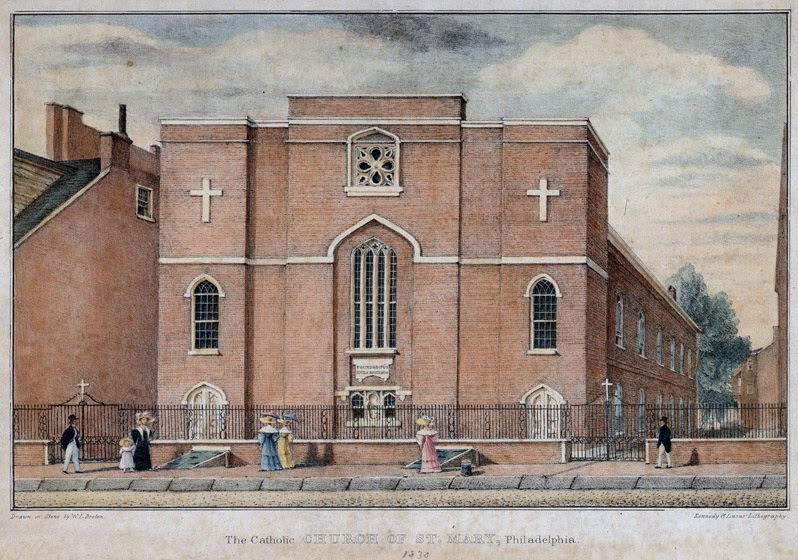
No, that’s not the beginning of a bad historical joke. It’s what happened on October 9, 1774, when George Washington and John Adams wandered into Old St. Mary’s Catholic Church while serving as delegates to the First Continental Congress in Philadelphia.
In September 1774, delegates from twelve of the thirteen colonies convened in Philadelphia for the purpose of discussing a response to Parliament’s recent Intolerable Acts. But after a month of debating (and bickering), Adams wrote that “the Business of the Congress is tedious, beyond Expression.”[1] Seeking a break from the monotony, Adams and Washington ventured to one of the oldest Catholic churches in the colonies. Established in 1763 by parishioners of Old St. Joseph’s, St. Mary’s Church grew from the need for a Catholic cemetery.
“[L]ed by Curiosity and good Company I strolled away to Mother Church or rather Grandmother Church, I mean the Romish Chappell,” Adams wrote to his wife Abigail that day.[2] The church stood just a few blocks south of the Congress’s meeting place at Carpenters’ Hall and starkly contrast anything the Protestant Adams had seen before. A descendant of some of America’s early Puritans, Adams was raised in the Congregational church of Braintree, Massachusetts, where “unfettered daylight through clear window glass allowed for no dark or shadowed corners, no suggestion of mystery.”[3] Old St. Mary’s could not have been more different. Light poured through several stained-glass windows before a large, ornate altar, behind which hung a dramatic depiction of Christ’s passion while burning candles and incense lit the nave.
Adams’s puritanical upbringing taught him to abhor such pageantry in the house of the Lord. He looked with pity upon “the poor Wretches, fingering their Beads, chanting Latin, not a Word of which they understood, their Pater Nosters and Ave Maria’s.” Even “their holy Water—their Crossing themselves perpetually—their Bowing to the Name of Jesus, wherever they hear it” appalled the young lawyer from Boston.[4]
Despite his disdain, some elements of the mass impressed and even moved, Adams. He described the priest’s homily as a “good, short, moral Essay upon the Duty of Parents to their Children, founded in Justice and Charity, to take care of their Interests temporal and spiritual.” Its brevity stood in stark contrast to the long-winded sermons of the Great Awakening, with which Adams would likely have been familiar. Even the priest’s flashy garments were noteworthy to the future president. “The Dress of the Priest was rich with Lace—his Pulpit was Velvet and Gold,” Adams noted.[5]
But most noteworthy of all was the “Picture of our Saviour in a Frame of Marble over the Altar at full Length upon the Cross, in the Agonies, and the Blood dropping and streaming from his Wounds.” That combined with the organ music, which Adams described as “most sweetly and exquisitely” was enough to move him. “This Afternoons Entertainment was to me, most awfull and affecting,” he confessed. But in the eighteenth century, the word “awful” did not mean what it does today. Adams quite literally meant that he was “full of awe” in observing the mass. He was so moved, in fact, that he wondered how “Luther ever broke the spell” of Catholicism.[6]
Perhaps Adams’s experience that day, 250 years ago, is indicative of the Revolution at large, as it brought together men from disparate backgrounds and regions. As a young man in Braintree, Adams likely never imagined he could be moved by a “papist ceremony,” nor could he probably have imagined signing his name on a document securing independence from his former country. In this way, the American Revolution made fantasy a reality, and the impossible, possible.
[1]“John Adams to Abigail Adams, 9 October 1774,” Founders Online, National Archives, https://founders.archives.gov/documents/Adams/04-01-02-0111. [Original source: The Adams Papers, Adams Family Correspondence, vol. 1, December 1761– May 1776, ed. Lyman H. Butterfield. Cambridge, MA: Harvard University Press, 1963, pp. 166–167.]
[3] David McCullough, John Adams, (New York: Simon & Schuster, 2001), 84.
[4] “John Adams to Abigail Adams, 9 October 1774,” Founders Online, National Archives, https://founders.archives.gov/documents/Adams/04-01-02-0111. [Original source: The Adams Papers, Adams Family Correspondence, vol. 1, December 1761– May 1776, ed. Lyman H. Butterfield. Cambridge, MA: Harvard University Press, 1963, pp. 166–167.]
Emerging Revolutionary War welcomes back guest historian Michael Aubrecht
In 1777 Thomas Jefferson and a committee of revisors came to the City of Fredericksburg for the purpose of revising several Virginia statutes. This led to Jefferson drafting the Virginia Statute for Religious Freedom.
When Jefferson and his comrades arrived in Fredericksburg they were met with a town bristling with military activity. Troops were drilling in the public square and filled the crowded streets, buildings and shops. Awaiting travel orders were the men of the Second Virginia and the Seventh Virginia, ordered here on January 9 for a rendezvous just prior to marching to join General Washington at the front. By the time Jefferson arrived in Fredericksburg, sixty of the more than two hundred battles and skirmishes of the war had already taken place.
Emerging Revolutionary War welcomes guest historian Evan Portman
Overlooking the Grand Parade at Valley Forge National Historical Park is a statue almost as solid as the man it portrays. Baron von Steuben helped transform the American army into an effective and efficient fighting force in the winter of 1777-1778, but he also aided the country nearly a century and a half later. Yes, Baron von Steuben helped the United States through World War I—or at least the social turmoil on the home front.
Friedrich Wilhelm August Heinrich Ferdinand Steuben was born in Prussia (modern day Germany) in 1730 and served in the Prussian army through the Seven Years’ War. By 1775, Steuben had accrued a considerable amount of debt (despite his stature within the aristocracy), so he sought a foreign military appointment. Failing to catch the eye of the British, French, or Austrians, the Baron set his sights on the fledgling American government. Congress arranged for Steuben to be paid, depending on the outcome of the war, and sent him to the winter encampment at Valley Forge. There, he began drilling the Continental army and instituted better hygiene and sanitation practices. He also wrote a drill manual, which he published in 1779 as Regulations for the Order and Discipline of the Troops of the United States. After the encampment at Valley Forge, Steuben participated in the Southern Campaign of the Revolutionary War. After the Siege of Yorktown, Congress awarded the Baron a tract of land in New York where he died in 1794.
Emerging Revolutionary War welcomes guest historian Nicholas Benevento.
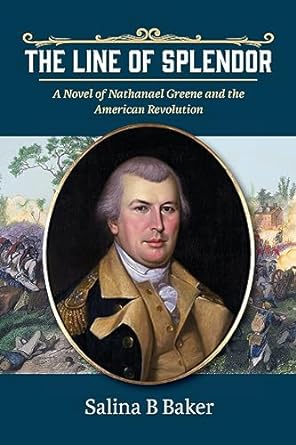
“The Line of Splendor: A Novel of Nathanael Greene and the American Revolution” is a historical novel written by Salina Baker. In her novel, she brings to life a figure who deserves more fame and recognition for his pivotal role in the Revolution. Nathanael Greene was a selfless general and leader who fought valiantly to defend his country and provide for his troops. He was a man who defied the odds and was placed in a position of power and leadership, a favorite of General George Washington. He was a man willing to put everything on the line for the independence and freedom of the United States.
Baker’s book picks up with Nathanael Greene’s life early in the 1770s when Nathanael is about the age of thirty. At this time, there were growing tensions in the American Colonies with Mother England. Shortly before the war broke out, Nathanael married his wife Caty in 1774, and Baker does a masterful job weaving their relationship into the story of his time in the war.
Baker’s work is a fascinating depiction of Nathanael Greene and the American Revolution. Readers of history often read facts and descriptions of events, which Baker provides. But she also takes the reader into the thoughts and conversations of Nathanael Greene, as well as other key figures in his life. Therefore, while this is a fiction novel, enthusiasts of this time period in American history would love this novel. Baker weaves in the history of the war, while also providing us with dialogue and feelings of Nathanael. Baker’s novel is a reminder to the reader that the generals and soldiers who fought in the Revolutionary War were not mythical figures who fought a war that would inevitably end in an American victory. These were real men with real emotions carrying their insecurities and flaws, while experiencing the highs and many lows of the war. Greene was central to many of the key battles early in the war, from the siege of Boston, to the debacle of New York, to the triumph of Washington’s crossing of the Delaware, to the trying times at Valley Forge. Greene held a tremendous weight on his shoulders throughout the war, especially when he led the Southern Army late in the war during the Southern Campaign.
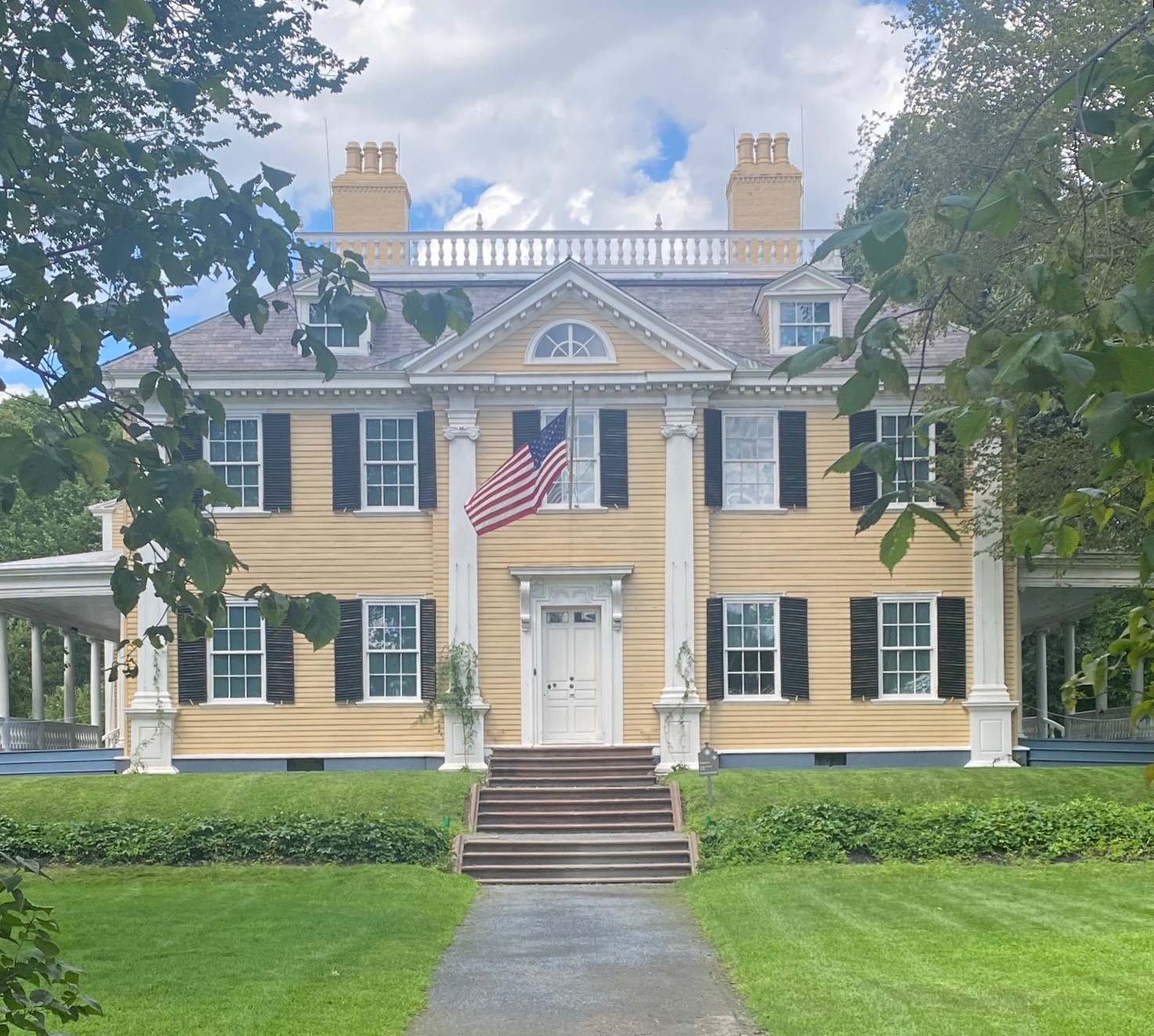
On June 15, 1775, George Washington was appointed by the Second Continental Congress as commander-in-chief of the Continental Army. Approximately a month later he rode into Cambridge, Massachusetts, to the house below, to assume command over that army. After he met the officers at Jonathan Hastings House near Harvard College campus, learning about operations and the siege. He was then directed toward an opulent residence standing about a mile away. Named the Vassall-Craigie-Longfellow residence, this place would become the focal point of the effort against the British in Boston. Washington moved in. He spent the next nine months in residence, overseeing the Siege of Boston and the British evacuation.
From this house, Washington began putting his footprints on the army and met some of the officers that became instrumental in securing American independence. This included the Rhode Islander Nathanael Greene and Massachusetts native and bookseller Henry Knox among others. Martha Washington, in December 1775, traveled over 440 miles from Mount Vernon to Cambridge to winter with her husband in this house. The making of Washington, the general, started here.
The power of place.
Today, the house preserved by the National Park Service today can be toured, click here for information.
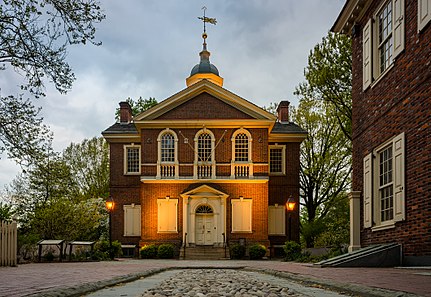
Join us this Sunday, July 7th at 7pm for our next Rev War Revelry as we continue to commemorate the 250th anniversary of the events that led to the American Revolution. We welcome Executive Director Michael Norris to discuss the historic Carpenters Hall in Philadelphia and the role it played in hosting the First Continental Congress. The First Continental Congress convened in Carpenters’ Hall in Philadelphia, Pennsylvania, between September 5 and October 26, 1774. Delegates from twelve of Britain’s thirteen American colonies attended. The Congress was a direct result of the Parliament’s reaction to the Boston Tea Party (December 1773). This gathering of colonial leaders intended to create a united front in their response to what they believed was Parliamentary over reach in the “Coercive Acts.”
Grab a drink and join us on our You Tube Channel: https://www.youtube.com/@emergingrevolutionarywar8217 Feel free to interact with the discussion by adding questions in the video chat. Once the video is over we will repost the video to our Facebook page and our Spotify account. We hope to see you then!





 Emerging Revolutionary War Era