Philip Livingston’s Grave, York, PA

While driving near York, Pennsylvania, I decided to stop by Prospect Hill Cemetery to visit the grave of Union General William Franklin. The cemetery was massive, and after locating Franklin’s grave and snapping a few photographs, I continued up the hill where I saw a plot devoted to dead Union soldiers who died while being treated at the army hospital located in York during the war. They were men from all throughout the North. Many of them simply having volunteered to fight, marched away from home, got sick, and died.

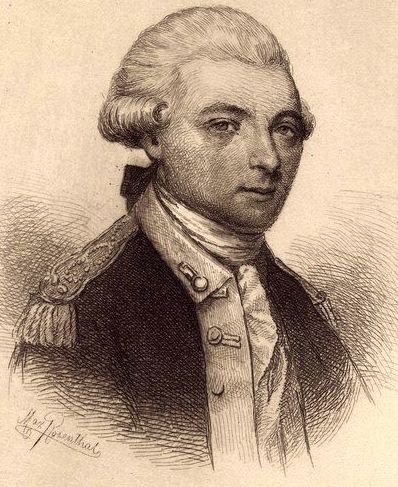
An older grave caught my eye just a stone’s throw away from the Civil War graves – a notable one that I did not know was in the cemetery. It was the grave of another non-Pennsylvanian. In fact, he was a New Yorker, and died in York in June of 1778, while a sitting member of the Continental Congress. It was the final resting place of a signer of the Declaration of Independence – Philip Livingston.

Philip Livingston certainly is not one of the Founding Fathers we remember. In fact, we probably remember his brother, William, who served as New Jersey’s Governor during the war, more. But Philip had a very impressive resume and played a part in nearly every major political conference in the colonies held in the years leading up to and during the early days of the American Revolution.

Born in 1716, Livingston graduated from Yale and pursued a career in the import business. Quickly, he built on his status and influence after relocating to Manhattan. He attended the Albany Congress in 1754, and was a member of the Stamp Act Congress, New York’s Committee of Safety, and president of the New York Provincial Congress in 1775. The prior year, Livingston was appointed to the First Continental Congress and was forced to flee his Manhattan home with his family when the British occupied the city in 1776. While he participated in the Second Continental Congress, he also served in the New York Senate.

Unfortunately, Livingston would never get to see his dream of an independent American nation become a reality. Following the British capture of Philadelphia in 1777, the Continental Congress relocated to York, Pennsylvania. Livingston had been suffering from dropsy, and his health was quickly deteriorating. He died suddenly in York while Congress was in session on June 12, 1778, and was laid to rest on Prospect Hill.

Grave of Philip Livingston, Prospect Hill Cemetery, York, Pennsylvania

If you ever find yourself near York, take the time to visit the grave of a Founding Father who, far from home, died before the cause in which he pledged his life and sacred honor for could be won.

Why Tea? Events Leading up to the Boston Tea Party

As we move towards to the 250th anniversary of the Boston Tea Party, we at ERW have gotten a lot of questions with a central theme…” why was it tea that led to revolution?” Was tea so central to colonial life that it was worth risking war or was it something else? The answer is somewhere in the middle and as with most history, there is nuance to the story (and yes, tea WAS a big part of everyday live in British America).

On May 10, 1773, Parliament passed the Tea Act, this act was a way for the British government to help bail out a major corporation, the British East India Company. The British East India Company was one of the largest global companies and faced immense debt and financial trouble. Furthering their troubles, they held a large amount of tea stored in warehouses in London. The British East India Company sought a way to offload this tea, which was considered some of the best tea in the world. The company’s success was directly tied to Great Britain’s international strategy, as the company spread British influence across the globe especially in India where they basically managed the British colony. The Tea Act reduced the cost on the tea (cutting out the “middleman” in Great Britain), and now the colonists could buy the tea directly from the British East India Company.

The British colonies in North America consumed on average of 1.2 million pounds of black tea annually. In 1773, about 1/3 of the population drank tea at least twice a day. It was a common luxury among most middle- and upper-class colonists. They preferred black tea but also drank green tea. Black tea varieties included Bohea, Congou and Souchong and common green tea varieties included Singlo and Hyson. All the tea that the British East India Company sold was grown and imported from China. Tea from China was preferred by most for better flavor, but it tended to be more expensive. The North American colonies consumed a lot of smuggled tea from the Dutch, the quality of the tea was not the same but much cheaper. A large market grew for smuggled tea with most British port officials looking the other way. All of this changed when the Tea Act was passed.

Nineteenthcentury lithograph depicting a tea plantation in Qing China 

Many in Parliament believed the colonists would have little opposition to this new act. They could now purchase their preferred tea for a cheaper price than the smuggled tea from the Netherlands. Unfortunately for Royal leaders, this was not the case. As word reached the colonies Whig leaders such as Samuel Adams called it nothing more than a British authorized monopoly of the tea market, cutting into the pockets of colonial merchants (though their tea smuggling business was illegal to begin with). The Tea Act also highlighted a British policy that the colonists opposed for many years, the Townshend Acts. The Townshend Acts imposed duties on imported lead, glass, paper, paint, and tea. This “tax” was payable at ports and funded the salaries of colonial judges, governors, and other government officials. This angered many colonial leaders for two reasons. First, it levied another tax on the colonists without having their own representation in Parliament. Secondly, it made the government officials more beholden to the British government (and the tax) than the colonial governments.

Whig groups like the Sons of Liberty used local taverns as places for their meetings. The most famous being the Green Dragon Tavern in Boston. It no longer stands today.

As the news of the Tea Act reached the colonies, the reaction was mixed. Whig leaders in major cities such as Charleston, New York, Philadelphia and Boston saw it as a way to reinvigorate their cause of opposing British rule. Recently things were mostly quiet with little interest by the public for protest. But now the Whig spin machine went into full affect. The Tea Act was a direct affront to colonial self-rule and economic interest. The taxes paid for the tea went to British officials in the colonies and the cheaper priced (and better quality) tea would put many American merchants out of business. Whigs were able to control the message that the Tea Act was just another way for Parliament to make money off the colonists, who did not have representation in Parliament.

As part of the Tea Act, consignees were appointed to oversee the sale of tea and the collection of the taxes on behalf of the British East India Company. As the tea began to arrive in colonial ports, public pressure was put on consignees to resign. This pressure was successful in New York, Philadelphia and in Charleston. Each of these cities were able to either stop the tea from being offloaded or, as in the case of Charleston, they confiscated the tea and didn’t allow any duties to be paid on it. All of these were direct affronts to the law but the events in Boston proved to be the most dramatic.

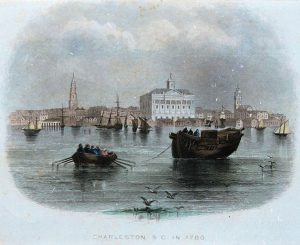
Ca, 1780 view of Charleston Harbor, and the Exchange Building where the confiscated tea was locked away by Whig leaders.

Unlike in other port cities, the consignees in Boston refused to resign. Richard Clarke, leading merchant in Boston and one of consignees faced a mob at his warehouse trying to pressure him and the other consignees to resign. Encouraged by the Massachusetts Governor Thomas Hutchinson (who had two sons serving as tea consignees) to stand their ground, the consignees refused to resign. Soon news arrived that the first ship carrying the tea, the Dartmouth, was arriving in Boston soon.

Hosting several town meetings, some hosting thousands of people, Whig leaders such as Samuel Adams, Dr. Joseph Warren and John Hancock were able to organize a strong opposition to the tea. Of course, Boston was already a tinderbox due to the “Boston Massacre” in 1770 and the large contingent of British regular troops stationed in Boston. Bostonians were reminded daily of Royal influence. The Whigs protested to the Governor to order the ships to return to England, but Hutchinson refused to do so and claimed he didn’t have that authority. Many historians believed Hutchinson, who recently had resigned as Governor and was awaiting his replacement, had grown tired and frustrated with the likes of the Whigs and Sons of Liberty in Boston and was trying to press the issue.

On November 28, the Dartmouth arrived in Boston Harbor. Captain James Hall was turned away at the first wharf he sailed too and was redirected to Griffins Wharf. Everyone knew that once a ship entered the harbor, the captain had twenty days to unload the cargo and pay the custom duties. Soon two more ships arrived at Griffins Wharf with more tea. With the Governor refusing to allow the ships to leave the harbor and local patrols watching the ships to make sure the tea was not offloaded, the stage was set for December 16th, the last day the ship’s captains had to unload their cargo.

Galloway’s Foreshadowing

Joseph Galloway is best known as one of the preeminent and prominent Loyalists who remained in the American colonies through the majority of the American Revolution. Prior to the colonies declaring independence, especially during the First Continental Congress, Galloway was active in the debates that decided the path forward. Besides attending and being active in the discussions in Philadelphia he penned a pamphlet entitled A Candid Examination of the Mutual Claims of Great Britain and the Colonies.

Within the pages, he called African American slavery “the dangerous enemy within” and the “natural weakness” of the soon-to-be Southern states. If a division ensued, Galloway predicted that,

“If the colonies happen to vie and try their reciprocal strength with each other, the political force of the Northern Colonies will soon destroy the opulent force of the Southern.”

Furthermore, Galloway pointed to the colonies/states of Georgia, Maryland, North and South Carolina, and Virginia as vulnerable because of the institution of slavery. In a conflict without the overarching guidance by Great Britain, the division between Northern and Southern colonies/states would lead to a domestic civil war and the possibility that African American slaves would join the Northern effort in vanquishing their former owners.

Although Galloway was writing to prop support for remaining loyal to the British crown he foreshadowed accurately the rift that plagued the independent United States. In laying out his views, Galloway quite succinctly predicted what would happen in 78 years after independence was won by the United States.

Galloway left Philadelphia when the British evacuated the city in 1778 and left for England where he would position himself in a leading role for loyalists in exiles. He never returned to the United States. His succinct prediction of the future though proved eerily accurate.

Sources:

Disunion Among Ourselves, The Perilous Politics of the American Revolution by Eli Merritt

University of Michigan, Evans Early American Imprint Collection, click here for the link.

Rev War Revelry: “For Britannia’s Glory and Wealth” with Author and Historian Glenn Williams, PhD

Join us this Sunday night at 7pm as we welcome Glenn F. Williams, PhD to our popular Sunday night Rev War Revelry! Glenn will examine the political and economic causes of the American Revolution beginning at the end of the Seven Years War / French and Indian War through the resistance movements. He will dispel or clarify some of the popular beliefs about the grievances that eventually led the thirteen colonies to break with the Mother Country. This will be a timely discussion as we approach the 250th anniversary of the Boston Tea Party. Glenn Williams is a retired U.S. Army officer that until recently also enjoyed a “second career” as a military historian. He retired as a senior Historian after 18 years at the U.S. Army Center of Military History and 3 1/2 years as the historian of the American Battlefield Protection Program of the U.S. National Park Service.

Grab your favorite drink and tune in, we will be live so feel free to drop your questions in the live chat. If you are not able to tune in on Sunday, the video will be placed on our You Tube and podcast channels.

Rev War Revelry: Old South Meeting House and the Boston Tea Party

Join us this Sunday, October 15th at 7pm as we welcome Matthew Wilding, Director of Education and Interpretation at Revolutionary Spaces. Revolutionary Spaces manages the Old South Meeting House and the Old State House in historic Boston. We will discuss the history of the Old South Meeting House and its important role in the revolutionary movement in Boston (especially during the Boston Tea Party). We will also cover their plans for the 250th anniversary of the Boston Tea Party, including their new exhibit on the destruction of property in public protests.

Grab a drink and follow along as we start to gear up for the 250th anniversary of the Boston Tea Party with Emerging Revolutionary War!

The Women’s Tea Parties

Examples of women’s political participation in the Revolutionary movement are hard to find. Women were not permitted to be politically active in the eighteenth century, yet many got involved anyway and pushed back against prevailing social norms. There are two examples of women organizing protests within six months of each other in 1774, both in North Carolina. Unfortunately, few details exist of these happenings. Primary sources on many colonial-era events are limited, and they are even more so with these two examples.

By the early 1770s, tensions had been building for a decade between the North American colonists and British officials. Debate swirled around taxes, representation, and rights. Parliament affirmed their right to tax all citizens of the empire, while Americans insisted that only their locally elected representatives (colonial legislatures) could do so.

Continue reading “The Women’s Tea Parties”

Reading Sam Adams…part 2

My recent comments about Stacy Schiff’s The Revolutionary Samuel Adams got me thinking about some of John Adams’s thoughts about his second cousin. In particular, John shared a neat story about Sam’s secretiveness—a problem that has bedeviled biographers, including Schiff, because Sam didn’t leave behind a trove of documentary evidence the way other Founders did.

“I have seen him . . .” said John, “in Philadelphia, when he was about to leave Congress, cut up with his scissors whole bundles of letters, into atoms that could never be reunited, and throw them out at the window, to be scattered by the winds. This was in summer, when he had no fire. In winter he threw whole handfuls into the fire. As we were on terms of perfect intimacy, I have joked him, perhaps rudely, upon his anxious caution. His answer was, ‘Whatever becomes of me, my friends shall never suffer by my negligence.’”[1]

John admired Sam, 13 years his senior, a great deal. The two were hardly acquainted growing up, but as John started off his legal career in Boston, Sam—a great cultivator of talent—pegged him as someone to develop. As tensions in Boston grew between the Sons of Liberty, British officials, and far-off Parliament, Sam brought John into the inner circle because of John’s sharp legal mind. The decision paved John’s eventual path to national politics.

“Mr. Adams was an original,” John said of Sam, saying he was “born and tempered a wedge of steel. . . .”[2]

In his common appearance, he was a plain, simple, decent citizen, of middling stature, dress and manners. He had an exquisite ear for music, and a charming voice, when he pleased to exert it.—Yet his ordinary speeches in town meetings, in the house of representatives and in congress, exhibited nothing extraordinary; but upon great occasions, when his deeper feelings were excited, he erected himself, or rather nature seemed to erect him, without the smallest symptom of affectation, into an upright dignity of figure and gesture, and gave a harmony to his voice, which made a strong impression on spectators and auditors, the more lasting for the purity, correctness and nervous elegance of his style.[3]

John spoke on several occasions of Sam’s “an air of dignity and majesty.” He admired Sam’s “harmonious voice and decisive tone” and his “self-recollection, a self-possession, a self-command, a presence of mind that was admired by every man present. . . .”[4] He also listed “his caution, his discretion, his ingenuity, his sagacity, his self-command, his presence of mind, and his intrepidity” as traits that “commanded the admiration” of friend and foe alike—friends who applauded him and foes who could not help but respect Sam Adams’s considerable populist powers.[5]

It is little doubt why John later said, “Without the character of Samuel Adams, the true history of the American Revolution can never be written.”[6]


[1] “From John Adams to William Tudor, Sr., 5 June 1813,” Founders Online, National Archives, https://founders.archives.gov/documents/Adams/99-02-02-6054. 

[2] “From John Adams to William Tudor, Sr., 5 June 1813,” Founders Online, National Archives, https://founders.archives.gov/documents/Adams/99-02-02-6054. 

[3] “From John Adams to William Tudor, Sr., 15 April 1818,” Founders Online, National Archives, https://founders.archives.gov/documents/Adams/99-02-02-6883.

[4] “From John Adams to William Tudor, Sr., 15 April 1818,” Founders Online, National Archives, https://founders.archives.gov/documents/Adams/99-02-02-6883.

[5] “From John Adams to Jedidiah Morse, 1 January 1816,” Founders Online, National Archives, https://founders.archives.gov/documents/Adams/99-02-02-6563. 

[6] “From John Adams to William Tudor, Sr., 15 April 1818,” Founders Online, National Archives, https://founders.archives.gov/documents/Adams/99-02-02-6883.

Reading Sam Adams…

I’m currently reading Stacy Schiff’s new biography The Revolutionary Samuel Adams. It’s a snappy-to-read, deeply researched book—all the more challenging to write because Sam Adams made careful effort not to leave much of a paper trail about himself.  

Schiff uses her introduction to sketch out this fundamental problem, and in doing so, she creates a compelling flash portrait of Adams that the rest of the book fleshes out. Adams the historiographical sphinx is well served by this portrait. Sam Adams simultaneously led from the front yet operated in the shadows, an apparent contradiction that Schiff nonetheless portrays fully and effectively. 

As the book goes on, Schiff manages to pull from a deep well of primary sources, even if there’s not a mountain from Sam himself. She handles those sources adroitly and comfortably, plucking this bit from here and that bit from there the way a conductor works an orchestra.  

The result is an admiring but not fawning portrait of Adams—a man without whom, said cousin John, “the true history of the American Revolution can never be written.”[1] 

Troubling to me in the text is that, in the late 1760s and early 1770s, the Adams-led Sons of Liberty often employed mob violence—real and threatened—to achieve their aims. Propaganda efforts were often tethered to reality by only thinnest of meager threads, if at all. Men were intimidated, bullied, tarred and feathered, humiliated, assaulted, and run out of town for opposing or even just disagreeing with them. Houses were ransacked. Livelihoods destroyed. Reputations ruined. I could not help but think of the Klan in the Reconstruction-era South—a comparison no-doubt tantamount to sacrilege when talking about a group of Bostonians popularly and fondly remembered as patriots.  

Yet Schiff merrily skates over such rough terrain, sharing vivid details about incidents without exploring the moral morass this tension suggests. Her hero acts in decidedly less-than-heroic ways, arguing that the ends justify the means. We as readers are left to ponder this ambiguity ourselves. Such work on the reader’s part isn’t a bad thing, but it does strike me as somewhat of an abdication on the biographer’s part when the rest of the narrative is so cheerfully pro-Adams. 

Overall, The Revolutionary Samuel Adams is an excellent work so far, and I highly recommend it for anyone who wants a fuller understanding of how the wheels of Revolution started turning—and who started them. 


[1]“From John Adams to William Tudor, Sr., 5 June 1813,” Founders Online, National Archives, https://founders.archives.gov/documents/Adams/99-02-02-6054.  

A “Passion for Superiority,” The Continental Army Officer Corps, and Middle School “Mean Girls”

John Adams woke on the morning of May 21, 1777, feeling light of heart. A spell of bad weather had finally broken, and the bright spring dawn cheered his spirits. He took a few minutes before beginning his day to pen a letter to his “Dearest Friend,” his wife, Abigail.[1]

“The Charms of the Morning at this Hour, are irresistible,” he told her. “The Streakes of Glory dawning in the East: the freshness and Purity in the Air, the bright blue of the sky, the sweet Warblings of a great Variety of Birds intermingling with the martial Clarions of an hundred Cocks now within my Hearing, all conspire to chear the Spirits.” Adams’s letters are filled with such descriptions, which are one of the many reasons they’re a delight to read. But then he got down to business.

As the Second Continental Congress’s de facto Secretary of War, he had spent the previous evening, May 21, at the War Department meeting with General Benedict Arnold. Arnold had been embroiled in controversy with several lower-level officers, one of whom claimed “Money is this man’s God, and to get enough of it he would sacrifice his country.” (The charge was untrue at the time but proved ironically prophetic.)

Adams told Abigail that he’d heard Arnold “fought like Julius Caesar” and came to believe Arnold’s side of the tale. “He has been basely slandered and libeled,” Adams concluded.

His political perch gave Adams a view of the Continental Army that might surprise us today. In his usual candor, he told Abigail:

“I am wearied to Death with the Wrangles between military officers, high and low. They Quarrell like Cats and Dogs. They worry one another like Mastiffs. Scrambling for Rank and Pay like Apes for Nutts.”

As he continued, he made an observation that touched close to home. Adams was notoriously vain—a vice he recognized and continually struggled with—so he was deeply familiar with the human tendency to compare oneself with one’s peers. Particularly early in his legal career, Adams measured himself against other young lawyers and pined for the chance to distinguish himself. It was, he said to Abigail, a “Passion for Superiority”:

“I believe there is no one Principle, which predominates in human Nature so much in every stage of Life, from the Cradle to the Grave, in Males and females, old and young, black and white, rich and poor, high and low, as this Passion for Superiority …. Every human Being compares itself in its own Imagination, with every other round about it, and will find some Superiority over every other real or imaginary, or it will die of Grief and Vexation[. . . .] I never saw it operate with such Keenness, Ferocity and Fury, as among military Officers. They will go terrible Lengths, in their Emulations, their Envy and Revenge, in Consequence of it.”

Adams had seen that sort of cattiness “among Boys and Girls at school, among Lads at Colledge, among Practicers at the Bar, among the Clergy in their Associations, among Clubbs of Friends, among the People in Town Meetings, among the Members of an House of Reps. [Representatives], among the Grave Councillors, on the more solemn Bench of justice, and in that awfully August Body the Congress, and on many of its Committees — and among Ladies every Where. . . . .” No where was it worse than among the “Mean Girls” of the army’s officer corps.

“So much for Philosophy,” Adams decided, and then inquired about his children and Abigail’s asparagus. Then he concluded with a note that resonates with all of us here at Emerging Revolutionary War:

“I would give Three Guineas for a Barrell of your Cyder — not one drop is to be had here for Gold. And wine is not to be had under Six or Eight Dollars a Gallon and that very bad. I would give a Guinea for a Barrell of your Beer. The small beer here is wretchedly bad. In short I can get nothing that I can drink, and I believe I shall be sick from this Cause alone. Rum at forty shillings a Gallon and bad Water, will never do, in this hot Climate in summer where Acid Liquors are necessary against Putrefaction.”

Cheers!


[1] All quotes from: Letter from John Adams to Abigail Adams, 22 May 1777 [electronic edition]. Adams Family Papers: An Electronic Archive. Massachusetts Historical Society. http://www.masshist.org/digitaladams/

On Ending Slavery: George Washington to John Mercer

Sitting down to write on September 9, 1786 from Mount Vernon, George Washington addresses his letter to Virginian, veteran of the late revolution, and plantation owner John Francis Mercer. Mercer’s family had strong ties to Virginia and the Washington family, John’s father was Washington’s attorney for many years during the eighteenth-century. Even though John had married, moved, and settled in Maryland, the two continued to correspond, although this most recent response by Washington took much longer usual. When Mercer’s letter arrived to Mount Vernon several weeks earlier, Washington was able to do little as he was fighting a “fever.” Now, he sat down to reply, and although there were many topics on his mind in which he wished to discuss with Mercer, Washington’s feelings toward slavery were first on his mind.

Read more: On Ending Slavery: George Washington to John Mercer

At the time Washington composed his thoughts to Mercer, particularly on his plan to never purchase another slave, Washington owned approximately 277 slaves. Yet, he expressed his desire to slavery abolished through the gradual abolition of slavery. Washington was a man of principle, displayed time and again during the war, and his aversion to the institution only grew as Washington the man grew as well. And, his was not alone. Many founders of era, including many from the upper South, looked for gradual solutions to ending the institution, despite the modern historical narrative. In the end, Washington ensured the emancipation of his slaves following his wife’s death in his will.

Gov. John F. Mercer, circa 1803.

Mount Vernon 9th. Sep 1786

Dear Sir,

Your favor of the 20th. ulto. did not reach me till about the first inst. – It found me in a fever, from which I am now but sufficiently recovered to attend to business. – I mention this to shew that I had it not in my power to give an answer to your propositions sooner. –

With respect to the first. I never mean (unless some particular circumstances should compel me to it) to possess another slave by purchase; it being among my first wishes to see some plan adopted by, [inserted: The Legislature by] which slavery in this Country may be abolished by slow, sure, & imperceptable degrees. – With respect to the 2d., I never did, nor never intend to purchase a military certificate; – I see no difference it makes with you (if it is one of the funds allotted for the discharge of my claim) who the the purchaser is [2] is. – If the depreciation is 3 for 1 only, you will have it in your power whilst you are at the receipt of Custom – Richmond – where it is said the great regulator of this business (Greaves) resides, to convert them into specie at that rate. – If the difference is more, there would be no propriety, if I inclined to deal in them at all, in my taking them at that exchange.

I shall rely on your promise of Two hundred pounds in five Weeks from the date of your letter. – It will enable me to pay the work men which have been employed abt. this house all the Spring & Summer, (some of whom are here still). – But there are two debts which press hard upon me. One of which, if there is no other resource, I must sell land or negroes to discharge. – It is owing to Govr. Clinton of New York, who was so obliging as to borrow, & become my security for £2500 to answer some calls of mine. – This sum was to be returned in twelve [3] twelve months from the conclusion of the Peace. – For the remains of it [struck: this sum], about Eight hundred pounds york Cy. I am now paying an interest of Seven prCt.; but the high interest (tho’ more than any estate can bear) I should not regard, if my credit was not at stake to comply with the conditions of the loan. – The other debt tho’ I know the person to whom it is due wants it, and I am equally anxious to pay it, might be put of a while longer. – This sum is larger than the other

I am. Dr Sir

Yr. Most Obedt. Hble Sert

Go: Washington

(Letter courtesy the Gilder Lehrman Collection)