“The Unhappy Condition of Our Poor Fellows”

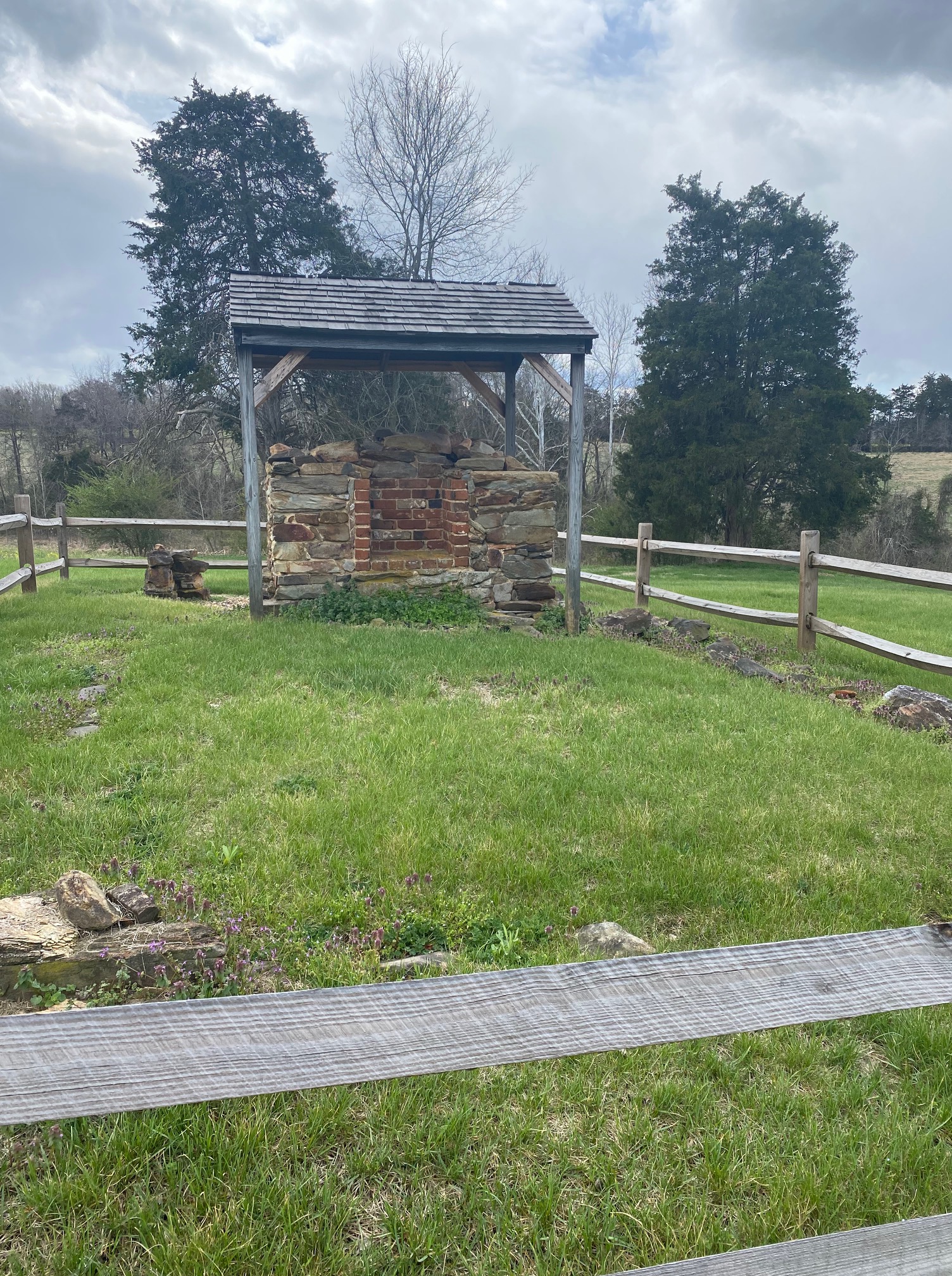
On the edge of the historic town of Litiz, Pennsylvania in Lancaster County stands an impressive, unique, and solemn, historic site. Two stone monuments and a plaque comprise the complex, marking the final burial of Continental soldiers from the hospital that stood nearby.

The historic marker says that wounded from the battles of Brandywine (September 11, 1777) and Germantown (October 4, 1777) were received here. Yet that does not match what I uncovered in researching this. The dates of the Lititz hospital seem to coincide more with the Valley Forge (winter 1777-78) timeframe. 

In late summer, 1777, British General William Howe and his army left New Jersey and invaded Pennsylvania with the object of capturing Philadelphia. General George Washington’s army tried to stop the British at Brandywine but met defeat. The British occupied Philadelphia, and Washington struck back at Germantown, but again came up short. There were many smaller battles across southeastern Pennsylvania like Paoli, Fort Mifflin, and Whitemarsh. 

Continue reading ““The Unhappy Condition of Our Poor Fellows””

The March from White Marsh

From November 2, 1777 until early-December, General George Washington and the Continental Army occupied a defensive position at White Marsh, approximately 13 miles northwest of Philadelphia. In early December, a series of small skirmishes erupted along the American lines in the last actions of the campaigning season of 1777. Frustrated by Washington’s refusal to emerge from his entrenchments, Sir William Howe led his British columns back to their winter abode in Philadelphia.

Washington moved the army shortly thereafter toward Valley Forge and their winter cantonment, arriving in that vicinity on December 19. As Washington prepared for the winter of 1777-1778 you can also start the preparations to follow this route with Emerging Revolutionary War on the weekend of November 11 – 13, 2022 on the Rise of the American Army: Valley Forge and the Battle of Monmouth Bus Tour. To secure your spot and further information, click here (or the link on the banner at the top of this page).

British Military Leadership and Provincial Loyalty

Emerging Revolutionary War welcomes back guest historian George Kotlik

Introduction

By 1775, King George III ruled over nineteen provinces in British North America.[1] Six remained loyal to the Crown during the Revolutionary War. Historians have so far explored, in great depth, the various reasons why the thirteen original colonies rebelled. On the flipside, why did some colonies remain loyal? What role did colonial governors play in securing their province’s loyalty during the rebellion? In an attempt to answer these questions, this research will focus on British North America’s mainland colonial governors and general assemblies during 1775. Data on the backgrounds of each British colonial governor on the North American mainland was gathered from their respective biographies. Hereafter, each governor’s background is considered by colony, listed in alphabetical order. Each biography is brief and not meant to be comprehensive. There is not enough time or space in this paper to accomplish that end. Instead, the biographies help determine the type of individual who governed each province at the rebellion’s onset – a unique factor that I argue contributed, in whatever small way, to a colony’s political disposition during the American Revolution. In addition to looking at provincial executive leadership, I have also inspected general assemblies. General assemblies were an important aspect in this research due to the fact that the mere presence of an assembly influenced a colony’s political disposition in 1775. What’s more, colonial governors wielded the authority to dissolve assemblies. That connection, in addition to the assemblies’ influence on provincial loyalty, I argue, merits their inclusion in this study.[2]

Continue reading “British Military Leadership and Provincial Loyalty”

Americana Corner

Our monthly recap of what our good friend and fellow historian Tom Hand has written on his blog, AmericanaCorner.

The Legacy of Paul Revere
November 2, 2021

Paul Revere began his famous ride from Boston to Concord, around 11:00pm on April 18, 1775, informing the residents and militiamen that the British were on the march. He arrived in Lexington, a town about 10 miles from Boston, around midnight. Read more here.

Lexington and Concord: Minutemen in Arms
November 9, 2021

The Battles of Lexington and Concord, fought on April 19, 1775, marked the start of America’s war for independence from England. The story of that fight is an inspiring account of how everyday Americans came together to resist the power of Great Britain. Read more here.

Lexington and Concord: The Shot Heard Round the World
November 16, 2021

The fight between our Minutemen and the British regulars at Lexington was over in a matter of minutes, and the British began the seven-mile march to Concord. By now, reports of the shooting had reached the minutemen in the surrounding area, and they began to assemble. A bad day for the British was about to begin. Read more here.

The Battle of Bunker Hill
November 23, 2021

The Battle of Bunker Hill, fought on June 17, 1775, is one of the most iconic and familiar events in American history. It was our first pitched battle against the British army and, although technically a defeat, the efforts of the American militiamen were inspirational. Read more here.

Americana Corner

Our monthly recap of what our good friend and fellow historian Tom Hand has written on his blog, AmericanaCorner.

The Midnight Ride of Paul Revere
October 26th

The story of Paul Revere and his Midnight Ride is one of the many fascinating subjects of the grand American past. Taking place in conjunction with the Battles of Lexington and Concord, on April 19, 1775, the tale has passed down from generation to generation. Read more here.

Forefathers Gather at Historic First Continental Congress
October 19th

The First Continental Congress was a key link in the chain of events that led to our nation’s gaining its independence from England. The brief convention brought together most of the influential leaders from colonial America to determine an answer to Parliament’s recently enacted Coercive Acts. Read more here.

The Boston Tea Party Takes Colonists Past the Point of No Return
October 12th

The Boston Tea Party is one of the most iconic moments in American history. In some ways, it sealed our fate to separate from England and become our own nation. The road that led to this watershed event began several years earlier with the Townshend Acts. Read more here.

Aftermath of the Boston Massacre
October 5th

The violence on the evening of March 5, 1770, in Boston is known to us today as the Boston Massacre. It was an unfortunate incident that left five people dead and growing anger between American colonists and leaders in England. Read more here.

“Rev War Revelry” The Battle of Iron Works Hill and the Thirteen Crucial Days

When one thinks of December 1776 in American Revolutionary War history, one’s mind immediately goes to Washington crossing the Delaware River and the Battle of Trenton, fought on December 26th. Historians refer to that engagement as the beginning of the “Ten Crucial Days” that culminated with the American victory at the Battle of Princeton on January 3, 1777.

However, days prior, American militia under Colonel Samuel Griffin fought an engagement with Hessian troops under the command of Colonel Carl von Donop. The actions occurred on December 22 and 23, 1776. Although the American forces were pushed out of their positions, the end result was the occupation of Bordentown by Donop and his troops, approximately 10 miles from their fellow Hessian comrades at Trenton.

To discuss these engagements, collectively known as the Battle of Iron Works Hill, Emerging Revolutionary War welcomes historian Adam Zelinski to “Rev War Revelry.” Zelinski is a writer and published historian and has worked on various projects with the American Battlefield Trust and the American Revolution Museum in Philadelphia. He will also speak on some exciting news coming out of the Iron Works battlefield too.

Emerging Revolutionary War looks forward to you tuning in, this Sunday, at 7 p.m. EST on our Facebook page as we discuss another component of the 1776 campaign season as we prepare for our inaugural bus tour of the Trenton and Princeton battlefields next month (only 4 tickets left!). If you can’t make it on Sunday night, you will be able to find it later (along with all our videos) on our YouTube page.

Artistic License and the French Artillery Park at Yorktown, A Case Study

Emerging Revolutionary War welcomes back guest historian Karl G. Elsea

It is common for artists to use “artistic license” when painting historic events including American Revolutionary War art. The problem is this practice also

aids inaccuracies persisting. Here is one case study of one picture involving an historic event that is presented by the National Park Service (NPS) at Yorktown. Please note the staff is helpful and the grounds are beautiful. As for the severity of the problem, the reader can decide after reading the information.

The following picture is from the field at Yorktown where the French Artillery Park was located. The picture illustrates the idea of what an artillery park was.

The problem is this picture contains a number of images that are wrong. For example, the carriages, wagons, carts, and limbers should be painted light blue. The French Army artillery had been painted light blue prior to 1750. There is a lot of confusion to this day concerning gun and limber carriage colors. This confusion may have been generated by a current belief there was one French artillery color. The French used the color of the items to assist which department owned the material. The French Navy department [Ministry of Marine] was responsible for the colonies, including North America, and their cannon were on red carriages with, in all most all cases, iron barrels. The French Quartermaster’s department had their wagons were painted a brighter red. The French Army artillery was painted light blue with bronze barrels. Thus, the French Army barrels shown should appear to be “brass.”

Continue reading “Artistic License and the French Artillery Park at Yorktown, A Case Study”

“Rev War Revelry” The Battle of Princeton

On January 3, 1777, George Washington’s forces struck the British outside the town of Princeton, New Jersey. The battle culminated a ten-day period that would be crucial to the survival and eventual victory of American independence.

As Emerging Revolutionary War builds up to the first annual bus tour of the Trenton and Princeton in November, this “Rev War Revelry” will provide some of the background of this engagement. Joining Emerging Revolutionary War on this installment of the “Revelry” will be historian and Princeton Battlefield History Educator Will Krakower.

Join us, this Sunday, at 7pm EST on our Facebook page for this great discussion on the Battle of Princeton and the history around it.

Americana Corner

Our monthly recap of what our good friend and fellow historian Tom Hand has written on his blog, AmericanaCorner. Also, check out Emerging Revolutionary War’s YouTube page for a “Rev War Revelry” with Tom Hand done earlier this month.

September 21st:
Americans with a Shared Future Meet at the Stamp Act Congress

The Stamp Act Congress was held in New York in 1765 in response to the Stamp Act, a piece of legislation passed by Parliament. The Act itself and the events that transpired because of it would prove to be hugely impactful on the destiny of America. Read it here.

September 14th:
Fort Ticonderoga: A Key Component in America’s Quest for Independence

Fort Ticonderoga in upstate New York is arguably the best-preserved fort from the 1700s in North America. It was the site of several engagements in both the French and Indian War and the American Revolution. Its military significance is matched only by the natural beauty that surrounds the site. Read it here.

September 7th:
British Colonies Work Together During the Albany Congress of 1754

The Albany Congress was held in the summer of 1754 and represents the first time the British colonies in North America ever attempted joint action. Unlike the conventions held in later decades, which focused on pushing back against England, the goal of this conference was to help the British in their fight against the French and their Indian allies. Read it here.

“Rev War Revelry” Discusses George Washington and John Adams with Tom Hand, Founder of Americana Corner

George Washington and John Adams, arguably, were America’s two most influential Founding Fathers. While General Washington was fighting for our country on the fields of battle, John Adams was fighting for it in the halls of the Continental Congress and overseas in the palaces of Europe.

As our first two Presidents, they guided our young nation through the formative first dozen years of life under the United States Constitution. They wisely and bravely set the example for others to follow.

Join Emerging Revolutionary War this Sunday at 7 p.m. EDT on our Facebook page for this week’s “Rev War Revelry” as we discuss the contributions of George Washington and John Adams to America’s fight for independence. Tom Hand will join ERW to discuss how these two men helped to shape our great nation.

Tom is the creator and publisher of Americana Corner, a site he started in 2020 to celebrate the positive stories, great events, and inspirational leaders who helped create and shape our country. Tom is a West Point graduate who founded Gilman Cheese Corporation after leaving the military.

Tom sold the business and now spends most of his time writing for Americana Corner and helping charities with a focus on early America. Tom serves on the Board of Trustees for the American Battlefield Trust and the National Park Foundation’s National Council.

Please join ERW historians and Tom Hand on September 5 for this lively discussion. We look forward to seeing you.