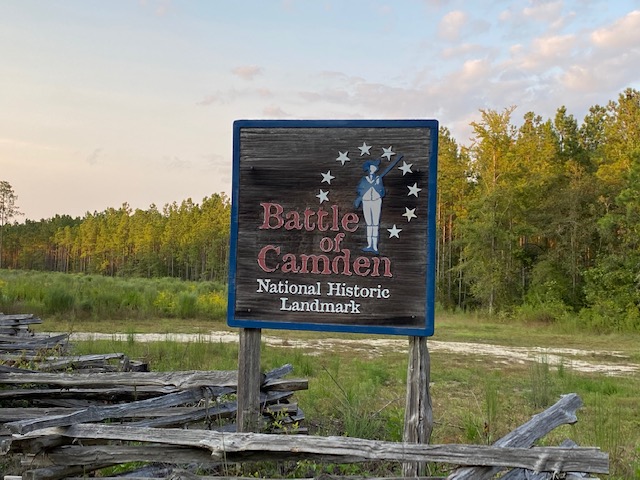
“Colonel Armand’s dragoons and militia displayed a good countenance, but were soon borne down by the rapid charge of the legion. The chase again commenced…” So wrote British Lieutenant Colonel Banastre Tarleton in his work, “A History of the Campaigns of 1780 and 1781, in the Southern Provinces of North America” regarding his pursuit of retreating American militiamen from the disastrous battlefield at Camden, SC in August 1780, and the gallant effort of one Patriot cavalry commander, a foreign officer, who sought desperately to reform the panicked militia and make a stand. He was Lieutenant Colonel Charles Armand Tuffin, Marquis de la Rouerie.
Lieutenant Colonel Charles Armand
French by birth, Armand was one of many European soldiers to come to America in the 1770’s with hopes of obtaining high ranking commissions in the fledgling Continental Army during the Revolution. Arriving in 1776, Armand’s service in the war would generally become overshadowed by that of his more famous countryman, the younger Marquis de Lafayette, who would arrive a year later.
Been a bit since we checked in and shared what our good friend Tom Hand has been doing at Americana Corner. The blog, dedicated to sharing “informative stories of the great events, founding documents, and inspirational leaders” routinely has a new post up every Tuesday. Below is what was on the blog for the month of May. Click the title to read the entire post.
Patriots, Loyalists and America’s First Civil War With the Battles of Lexington and Concord in 1775, the actual fighting of the American Revolution was underway. As it turned out, this open warfare was not reserved just for the new Continental Army formed around Boston and the British Army trapped in the city. It soon spilled over into a fight between neighbors.
Americans Divide Over Independence According to the Merriam-Webster dictionary, a civil war is a war between opposing groups of citizens of the same state or country. By this definition or any objective measure, our nation experienced a civil war from about 1773 to 1783. It was much worse in its intensity and cost than anything from the Civil War, including Sherman’s infamous March to the Sea.
The Quasi-War and Its Aftermath The only fighting in the Quasi-War occurred at sea, and mostly in the Caribbean. But with war at a fever pitch and French interests so close by in Louisiana, there was a very real concern in Congress about a possible French invasion of the United States from the west.
Escalating Tensions with France Lead to Quasi-War The Quasi-War was an undeclared war between France and the United States, largely fought at sea in the Caribbean and along the southern coast of America, between 1798 and 1800. It developed because of a series of related events that soured the formerly strong relationship between the two nations.
April 19th in American Revolutionary War history is usually remembered as the day the “shot heard around the world” happened in the towns of Lexington and Concord, Massachusetts. For the 2022 edition of that day, Emerging Revolutionary War invites you to turn your attention to Valley Forge and a virtual event hosted by the Valley Forge Park Alliance.
Starting at 7 p.m. EDT, Emerging Revolutionary War historian, Phillip S. Greenwalt will present a virtual talk entitled, ‘Timely and Handsome’: Transformation of the Continental Army at Valley Forge. A synopsis of the talk is below.
“As spring began to blossom over Valley Forge, Baron von Steuben’s drilling of the Continental army was in full effect. Although the men and officers of Washington’s army had become proficient on the drill field, there was still the simple question of how would they fare against the British in the upcoming campaign season? A month prior to the end of the winter encampment on June 19, 1778, a small-scale action, at Barren Hill, by a detachment of the Continental army would prove a snapshot into possible future battlefield behavior. The signs were promising. This talk will focus on the training of von Steuben, the composition of the Marquis de Lafayette’s force that marched out of the encampment in middle of May, the action at Barren’s Hill, and the insight this small scale action showed about the transformation of the army during the winter at Valley Forge.”
To register for the event, click here. The link will take you to the Valley Forge Park Alliance website. To learn more about this important aspect of the Valley Forge encampment, Emerging Revolutionary War invites you to click the link on the title bar at the top of this blog labeled “2022 Bus Tour” and secure one of 14 remaining tickets to attend the November 11-13, 2022 tour that will cover Valley Forge and Monmouth.
Reenactors portraying Continental soldiers being trained at Valley Forge (courtesy of Valley Forge Park Alliance)
When studying history we tend to divide time periods up and compartmentalize them for our own ease of study and understanding. Yet when we step back and look, it becomes obvious how events flow one into another. There is a great deal of overlap and often events occurred concurrently.
April 19 will bring the anniversary of the opening of the Revolution at Lexington and Concord. While the conflict with Great Britain was growing and festering, other events were taking place in various colonies. The ending of the French and Indian War is seen as the close of an era and a neat stopping point before the coming of the Revolution. Yet on the heels of the war’s ending, Britain began implementing the taxes and regulations that would anger American colonists.
A few weeks back, you may have noticed a video on Emerging Revolutionary War’s Facebook page about the Marquis de Lafayette and his independent command during the spring and summer of 1781 in Virginia. Along with good pal, Dan Davis, we located a site of where Lafayette encamped while he maneuvers to protect the iron furnaces of the Fredericksburg area, keep a distance from British forces under General Lord Charles Cornwallis, and await reinforcements being sent south under General Anthony Wayne.
He continued to keep his commander-in-chief, General George Washington updated on affairs in the latter’s native state. From a camp in central Virginia the Frenchman penned the following letter.
“Camp Betwen Rappaahonock and North Anna June 3d 1781
My Dear General
Inclosed you will find the Copy of a letter to General Greene. He at first Had-Requested I would directly write to you, Since which His orders Have Been different, But He directed me to forward you Copies of My official Accounts. So many letters are lost in their Way that I do not Care to Avoid Repetitions. I Heartly wish, My dear General, My Conduct may Be approved of particularly By You. My Circumstances Have Been peculiar, and in this State I Have Some times Experienced Strange disappointements. Two of them the Stores at Charlotte’s Ville, and the delay of the [Pensylva] Detachement Have given me Much Uneasiness and May Be attended with Bad Consequences. There is great Slowness and Great Carelessness in this part of the world—But the Intentions are good, and the people want to Be Awakened. Your presence, My dear General, would do a Great deal. Should these deta[chments] Be Increased to three or four thousand, and the french Army Come this way, leaving One of our generals at Rhode island and two or three about New York and in the Jersays you Might be on the offensive in this Quarter, and there Could Be a Southern Army in Carolina. Your presence would do Immense good, But I would wish you to Have a large force—General Washington Before He personally appears must Be Strong enough to Hope Success. Adieu, My dear general, With the Highest Respect and Most Tender affection I Have the Honor to be Yours
Lafayette
If you persist in the idea to Come this Way you may depend upon about 3000 Militia in the field Relieved every two months. your presence will induce them to turn out with great Spirit.“
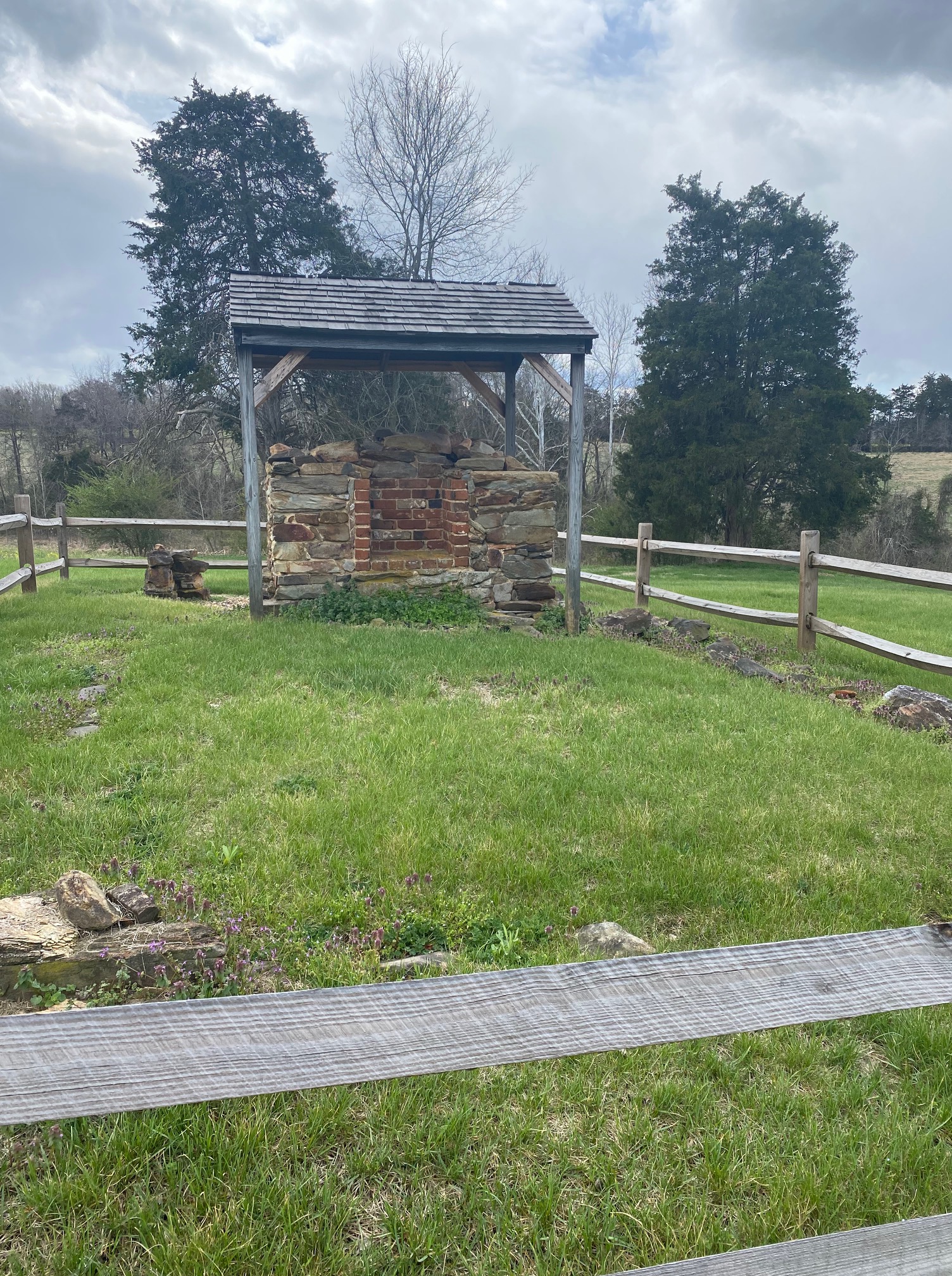
That letter may have been written somewhere around the terrain you see in the photos below. You never know what you can stumble into touring central Virginia!
Wilderness Tavern Ruins, the tavern was built after the American Revolution in 1810 View of the rolling terrain that made the encampment near Wilderness Run, which is in between the two hillsides, defensible View of where Lafayette’s forces were camped
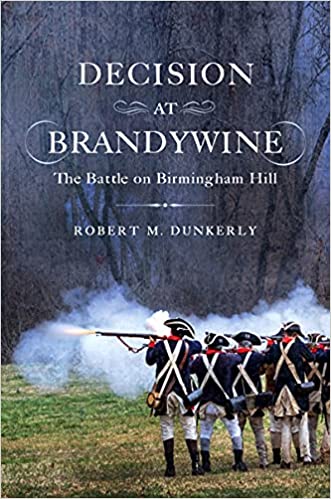
This Sunday on the Emerging Revolutionary War’s Facebook page, Robert Dunkerly will join the “Rev War Revelry” to discuss his newest publication, Decision at Brandywine: The Battle of Birmingham Hill.
The Battle of Brandywine, fought on September 11, 1777, saw the defeat of the American forces in southeastern Pennsylvania. The victory by the British opened the road to Philadelphia, which fell to Sir William Howe’s forces on September 26, fifteen days after the battle.
Dunkerly, a park ranger with Richmond National Battlefield Park and a contributing historian for Emerging Revolutionary War will discuss the pivotal action that happened around Birmingham Hill on that Thursday in 1777. The engagement at Brandywine was the largest and longest battle in the entire American Revolution and the third bloodiest. This new publication examines the action near Birmingham Hill and Meeting House where the action that day turned against George Washington’s forces.
Thus, this Sunday, at 7 p.m. EDT, tune into ERW’s Facebook page for the next historian happy hour as the popular “Rev War Revelry” series continues with this author spotlight.
On October 17, 1777, British General John Burgoyne surrendered his joint British, Canadian, and Hessian and Brunswicker forces to patriot General Horatio Gates near Saratoga, New York. Over 6,000 soldiers, the number placed by one historian is 6,222, became captives of war. Under the terms of the convention agreed upon by Burgoyne and Gates, the vanquished army was to march to Boston, Massachusetts, board British ships, and sail to England, to await formal exchange and to not participate in the war in America further.
When news reached the Continental Congress of this concession, that political body demanded a complete list of the troops surrendered to ensure the terms of the convention was to be upheld. When this was not forthcoming by the British, Congress reacted by vowing to not adhere to the stipulations of the convention. Burgoyne’s forces would not head back to Great Britain to await an exchange that year. Instead, these men were to be confined in camps both in New England and Virginia for the duration of the war. This force came to be called the Convention Army.
This Sunday, March 6, at 7 p.m. EDT, join Emerging Revolutionary War on our Facebook page for the next historian happy hour, as Dan Welch and Phillip S. Greenwalt discuss the Convention Army and what happened after the pivotal battle of Saratoga in October 1777.
This March brings the 241st Anniversary of the pivotal battle of Guilford Courthouse, NC. While this battle is of immense importance to the Southern Campaign, several smaller battles leading up to it have been largely overlooked. Through February and early March of 1781, detachments of the American and British armies maneuvered across the modern-day counties of Alamance, Guilford, Orange, Chatham, and Caswell. The is the second in a series of three articles.
Pyle’s Defeat on February 25, 1781 was a public relations disaster for the British. The next skirmish fought between the opposing forces was at Clapp’s Mill on March 2nd and has also been called the Battle of Alamance. On February 27th, Cornwallis’ army moved from Hillsborough to the Haw River, camping on the south side of Alamance Creek at an important crossroads.
This March brings the 241st Anniversary of the pivotal battle of Guilford Courthouse, NC. While this battle is of immense importance to the Southern Campaign, several smaller battles leading up to it have been largely overlooked. Through February and early March of 1781, detachments of the American and British armies maneuvered across the modern-day counties of Alamance, Guilford, Orange, Chatham, and Caswell. This is the first of a series of three articles.
Having unsuccessfully chased General Nathaniel Greene’s small, ragged army across North Carolina, British forces under Lord Charles Cornwallis moved to the state capital at Hillsborough to announce their liberation of the state and call Loyalists to come forward and support them. Greene’s army retreated across the Dan River into Virginia, where he awaited supplies and reinforcements.
After a circuitous journey, from Paris, France across the Atlantic Ocean and then into Pennsylvania, an eager participant trekked to join the American effort. After an introduction to the Continental Congress this European officer headed toward the Continental army encampment. Baron Frederich William Ludolf Gerhard Augustin von Steuben, 47-years old, rode into camp drawn by horses and relaxing, as much as one can on the roads of Pennsylvania during 1770s, in a sleigh, with a Russian wolfhound dog strolling beside the wooden vehicle. On this date, 244 years ago, General George Washington, his staff, and any inquiring eyes around camp saw von Steuben for the first time.
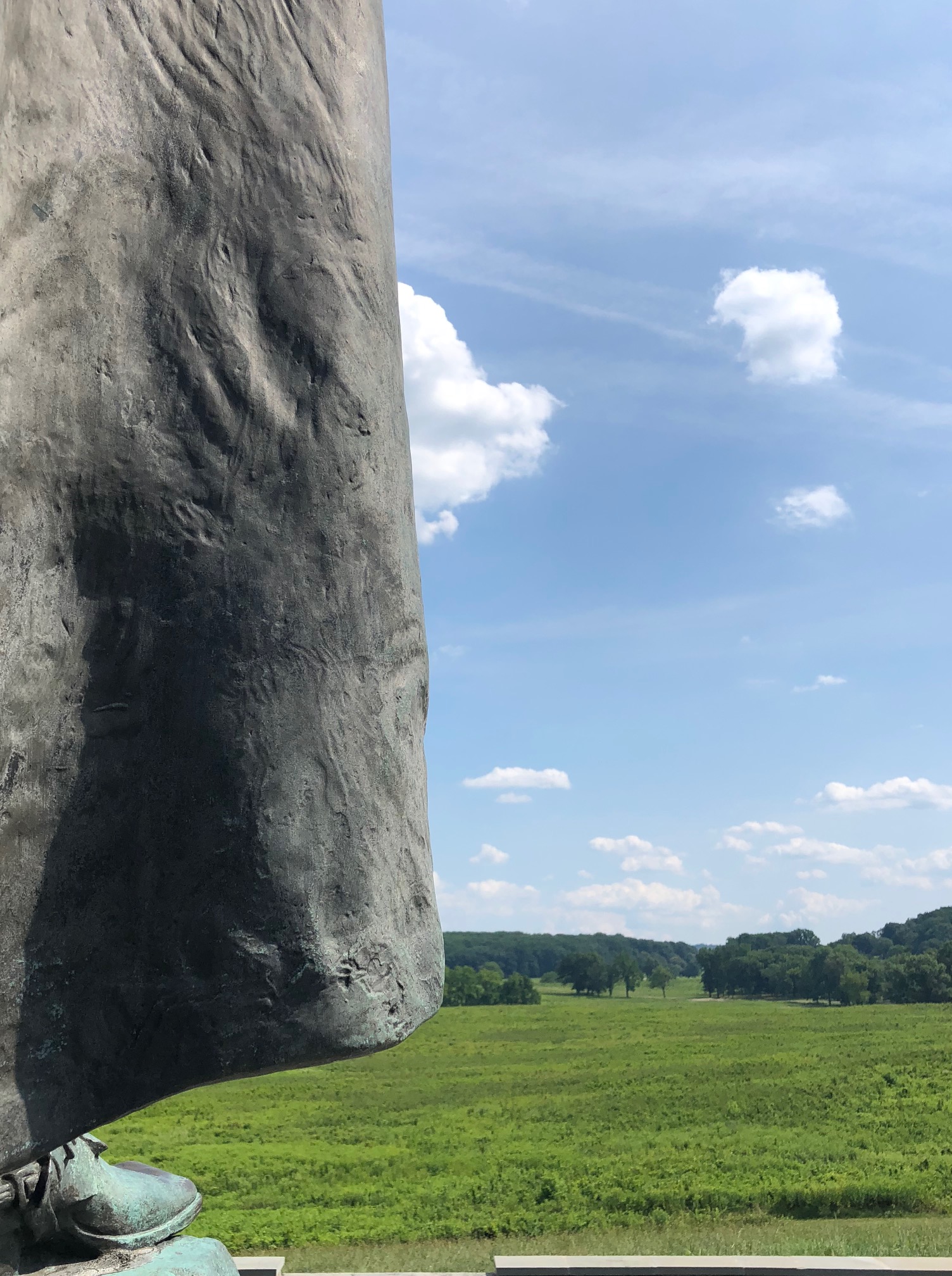
Baron von Steuben Statue, Valley Forge NHP
Although Christmas was almost two months in the past, von Steuben became a late blessing for Washington and his Continental army. Through an adaptation of a military training regimen from continental Europe which became a manual known as the “Blue Book” (this guide was used to train United States Army recruits for decades into the future as well), von Steuben began to morph the rank-and-file and junior officer corps of the Continental army into an actual army that knew how to follow commands and change formations. This training aided the Continentals in the battles of 1778, from a small engagement in May at Barren Hill to the last major fighting in the northern theater at Monmouth in June and into other theaters of the conflict.
Today, the field in which he trained the first model company is preserved by the National Park Service within the boundary of Valley Forge National Historical Park.
This November, during the second annual Emerging Revolutionary War bus tour, attendees will see the field and stand at the foot of the statue to von Steuben, looking over the same ground he first saw on this date, February 23, 1778. To secure your tickets, click the link on the header bar above titled “2022 Bus Tour.”







 Emerging Revolutionary War Era