The Crawford Campaign, 1782: Rout, Retreat, and Recovery

(part four of five)

As the night of June 5 gave way to a dark retreat on June 6, the militia struggled eastward, attempting to reimpose some order on their main body.  According to Rose, Crawford set out after one wayward company that had decided on a more circuitous route of retreat that separated it from the main body.  While he was gone, the Indians began firing into the militia camp in the dark.  At “that instant, every Body was pushing as if it had been a signal agreed for that purpose.”[i]

Rose fell in with a group of about fifty men, who pushed south back toward the abandoned Wyandot town on the Sandusky they had passed through just a few days earlier, seeking to avoid the Shawnee, and then rejoined Williamson with the main body of men as it returned the way the expedition had come.[ii]  In the rush, they lost track of Colonel Crawford.  They moved directly to the route east without much order, placing speed over the coherence of a fighting unit.  Williamson did manage to separate his best horsemen into a smaller group to contest any light horsemen they encountered on the Sandusky plain, but expected to find relative safety when they reached more heavily timbered areas.  On June 6, Rose had a close call.  Riding ahead while trying to keep the group from breaking up into smaller parties, mounted Indians charged him and his companions from a wooded area on the left.  Rose managed to make it back to the main body, which promptly counter-charged with the light horse Williamson had created.[iii] In the process, he lost contact with his two companions, Colonel William Harrison (Colonel Crawford’s son-in-law) and Mr. William Crawford, (Colonel Crawford’s nephew).[iv]

IMG_2448
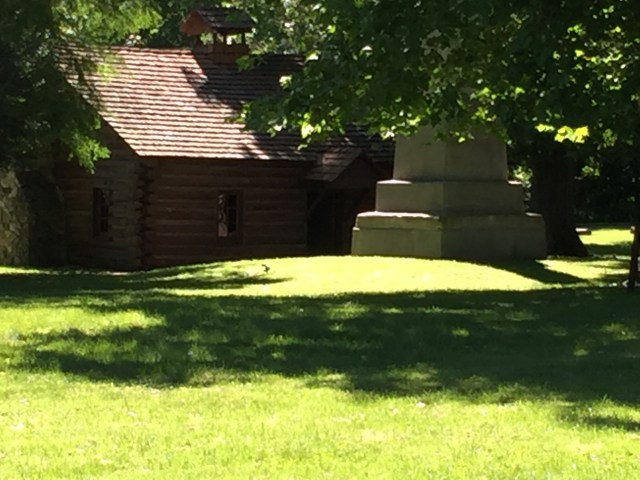
The monument to the “Battle of the Olentangy.”  The battle was more of a skirmish, but marked the end of British pursuit of Williamson’s retreating force.  Native Americans continued to chase and harass the Americans.  (Author Photo)

Later that day, about 24 miles into their march, the militia paused to rest along Olentangy creek.  Their mounted pursuers promptly fired into the main body from behind and the militiamen detected a light screen moving into place ahead of them, the beginning of an encirclement.[v]  The militia started skirmishing while Rose rode to the rear, nearly through the Native Americans behind them, retrieved the rear body, which contained a substantial portion of the light horse, and sent them to clear the woods of enemy skirmishers in front.  The maneuver succeeded and the militia were able to enter the woods, losing three dead and eight wounded in the hour-long fight.  Despite anticipating a degree of relative safety there, pursuers continued to harass the flanks and the rear.  Simultaneously, the poorly organized militia lost still more cohesion as a fighting unit as the woods broke up formations and isolated men in small groups. To make matters worse, the skies opened up and a heavy downpour soaked everyone to the bone.[vi]

Continue reading “The Crawford Campaign, 1782: Rout, Retreat, and Recovery”
The Crawford Campaign, 1782: Battle on the Sandusky

(part three of five)

IMG_2422
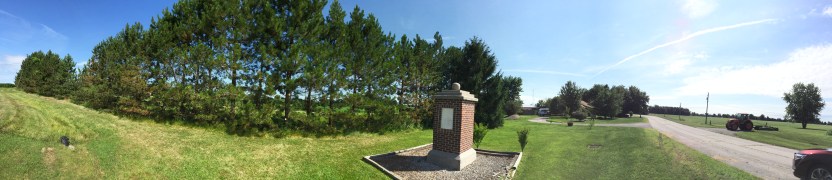
The Battle Monument.  “Battle Island” is likely on a slight rise through the pines.  (Author Photo)

The expedition continued through thick forest until June 4, when it finally came upon a Wyandot town on the upper Sandusky after noon.    It was abandoned to the surprise of Crawford’s guides.[i]  (The Wyandot shifted from “Upper Sandusky,” which became known as “old town” and was above the modern town of Upper Sandusky to a new town of “Upper Sandusky,” which became known as Half-King’s town and was below the modern town of Upper Sandusky.)  At this point, several men expressed their desire to return to the Ohio, complaining they were down to five days provisions.[ii]  Crawford sent a reconnaissance party of about 40 men under Major Rose to the north, where the woods opened up into a gentle plain.  Dr. Knight recalled, “there are a great many extensive plains in that country; The woods in general grow very thin, and free from brush and underwood; so that light horsemen may advance a considerable distance before an army without being much exposed to the enemy.”[iii]  Indeed, northwestern Ohio was a gently rolling plain flattened by glaciers over a million years ago and covered in 1782 with knee- to waist-high grass, interrupted by an occasional grove of trees.  The terrain rolls with small, gentle gulleys and hills rising in quick succession.  The combination limited one’s ability to see great distances.  It was perfect for the mounted force Crawford led, theoretically capable of moving quickly.  But, the slow pace of the advance, the difficulty of terrain, poor availability of forage in the woods, and quality of the horses had worn the mounts out.[iv]

Continue reading “The Crawford Campaign, 1782: Battle on the Sandusky”

The Crawford Campaign, 1782: Birth of an Expedition

(part two of five)

Wiliam Crawford at 40 (Wikimedia Commons)
Colonel William Crawford (Wikimedia Commons)

In April, 1782 local leaders, in particular David Williamson, petitioned Irvine to lead a punitive raid to the Sandusky River aimed at the Wyandot and Hopocan’s Delaware.[i]  While he could provide no material support or leadership, Irvine approved the attack and laid down several conditions: that the expedition operate under laws governing the militia, that their purpose not extend beyond protecting the border, that the force assembled be large enough to accomplish the task, that the raiders equip and sustain themselves on horseback at their own expense, and that the expedition conduct the raid on behalf the United States with an eye toward bringing honor to the United States.  Perhaps he had the brutality of the Gnadenhutten raid in mind and sought to avoid a repeat.[ii]

This Sandusky raid did not reflect Irvine’s strategy of either reducing Detroit or bringing the tribes to battle; it was simply another American raid on Indian towns, which would likely be abandoned by the time the expedition arrived.  Irvine informed Washington that the expedition was going forward and did not seek permission.  Indeed, he may not have had the power to stop it given the restlessness of the local population on the frontier.  Rather that departing in early August, this raid would leave in late May, before the summer heat dried out the countryside.  Speed and surprise would be important, perhaps explaining Irvine’s requirement that every man be mounted, that the expedition dispense with artillery, and that it limit baggage and supplies to 30 days’ worth.[iii]  Irvine wrote Washington, “If their number exceeds three hundred, I am of opinion they may succeed, as their march will be so rapid they will probably in a great degree effect a surprise.”[iv]  But, it would be a risky enterprise.  Continue reading “The Crawford Campaign, 1782: Birth of an Expedition”

The Crawford Campaign, 1782: American Strategy in Ohio, 1781-1782

General William Irvine
General William Irvine (Wikimedia Commons)

(part one of five)

War on the American frontier was generally brutal, but few incidents inflamed American passions in the country’s early history as much as the torture and execution of Colonel William Crawford in June 1782 in Northwestern Ohio.  Crawford’s death marked the emotional climax of another patriot attempt to neutralize British power at Detroit, generally exercised through Native American proxies who had their own reasons for fighting the Americans, and halt the raids against American settlers on the frontier.  The Huron and Wyandot who lived about the Sandusky River, and the Shawnee to their South on the Scioto and Miami Rivers, both occasionally aided by various clans of the Delaware and Mingo tribes, were particularly troublesome in the Ohio River valley.  Colonel Crawford’s campaign, which resulted in his death, was meant to punish the tribes for past raids to forestall future raids.

Continue reading “The Crawford Campaign, 1782: American Strategy in Ohio, 1781-1782”

“In the deepest distress and anxiety of mind…” Gen. Gates letter to Congress on the Battle of Camden

horatio-gates
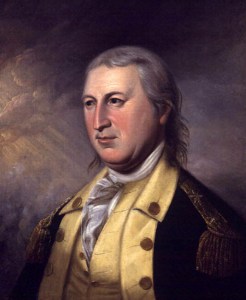
Gen. Horatio Gates by Charles Willson Peale

238 years ago today the United States military suffered one of its worst defeats. The Battle of Camden, fought on August 16, 1780 just a few miles north of Camden, SC was a total defeat for the American “Grand Army” under popular General Horatio Gates. The British under Lord Cornwallis inflicted nearly 1,900 casualties (out of 4,000) at a loss of only 300. One of the biggest losses was the death of  General Baron Johann de Kalb, a popular foreign general in the American army. Though a strategic defeat for Gates, it was the retreat that would lead to Gates’ demise. As the militia broke and ran, Gates was caught up in the panic and fled the field as half of his army was still fighting.

Writing several days later from Hillsborough, NC Gates submitted his account of the battle to Congress. Already, reports of cowardice were starting to spread about Gates’ conduct during the battle. Gates decision to fight and his decision to leave the field during the battle have been debated ever since that August day in 1780. Below is a portion of Gates’ letter.   

“In the deepest distress and anxiety of mind, I am obliged to acquaint your excellency with the defeat of the troops under my command. I arrived with the Maryland line, the artillery, and the North-Carolina militia, on the 13th instant at Rugeley’s, thirteen miles from Camden; and took post there, and was the next day joined by General Stevens, with seven hundred militia from Virginia…. Having communicated my plan to the general officers in the afternoon of the 15th, it was resolved to march at ten at night, to take post in a very advantageous situation, with a deep creek in front, seven miles from Camden; the heavy baggage, &c. being ordered to march immediately by the Waxhaw road. At ten the army began to march in the following order: Colonel Armand’s legion in front, supported on both flanks by Colonel Porterfield’s regiment, and the light infantry of the militia; the advanced guard of infantry, the Maryland line, with their artillery, in front of the brigades, the North-Carolina militia, the Virginia militia, the artillery, &c. and the rear guard. Having marched about five miles, the legion was charged by the enemy’s cavalry, and well supported on the flanks, as they were ordered, by Colonel Porterfield, who beat back the enemy’s horse, and was himself unfortunately wounded; but the enemy’s infantry advancing with a heavy fire, the troops in front gave way to the first Maryland brigade, and a confusion ensued, which took some time to regulate. At length the army was ranged in line of battle, in the following order: General Gist’s brigade upon the right, with his right close to a swamp, the North-Carolina militia in the center, and the Virginia militia, with the light infantry and Porterfield’s corps, on the left; the artillery divided to the brigades; and the first Maryland brigade as a corps de reserve, and to cover the can non in the road, at a proper distance in the rear. Colonel Armand’s corps were ordered to the left, to support the left flank, and oppose the enemy’s cavalry. At daylight the enemy attacked and drove in our light party in front, when I ordered the left to advance and attack the enemy; but to my astonishment, the left wing and North -Carolina militia gave way. General Caswall and myself, assisted by a number of officers, did all in our power to rally the broken troops, but to no purpose, for the enemy coming round the left flank of the Maryland division, completed the rout of the whole militia, who left the continentals to oppose the enemy’s whole force. I endeavoured, with General Caswall, to rally the militia at some distance, on an advantageous piece of ground, but the enemy’s cavalry continuing to harass their rear, they ran like a torrent, and bore all before them. Hoping yet, that a few miles in the rear they might recover from their panic, and again be brought into order, I continued my endeavour, but this likewise proved in vain. The militia having taken the woods in all directions, I concluded, with General Caswall [sic], to retire toward Charlotte.”

th2NMLN0S2

Uncovering the Continental Army in Morristown

Part of an ongoing series about the Continental Army in Morristown, New Jersey. To read previous posts, click here.

IMG_3370
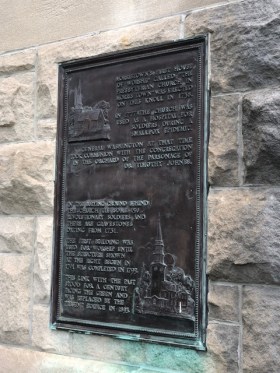
Plaque on wall of the Presbyterian Church

During the winter encampment, in 1777, at Morristown, George Washington ordered the inoculation for smallpox of the Continental Army. Although knowing the probability that some of his men would succumb to the disease when infected with even a small dosage of the puss, the commander-in-chief knew that the necessity of the process. By the end of the American Revolutionary War, more American soldiers would die of smallpox than British shot and shell.


With a population of 700 people and less than 70 dwellings, any public space of size was utilized to treat and quarantine the soldiers undergoing the smallpox inoculation. One of the religious establishments that was used was the Presbyterian Church across the street from Morristown Green, the center of town.

The Presbyterian Church already had a long history in Morristown, being the first congregation founded in the town, dating back to 1733 (the one you see today is actually the third to grace the same site).

IMG_3369

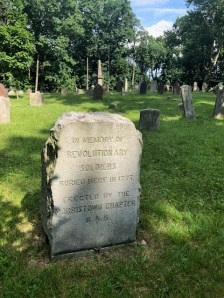
Behind the church is a graveyard referred to as “The Burying Ground” which holds the remains of over 1,700 individuals. Included in that number are the remains of numerous soldiers that succumbed to the smallpox inoculation during the winter encampment of 1777. From the burials that are known, 138 remains are those of soldiers from the American Revolution.IMG_3383

During the annual commemoration of Independence Day, the town of Morristown will offer guided programs of “The Burying Ground.” At other times throughout the year, the church itself will offer tours. You can find information about the church programs of the  cemetery here.

Whether you visit on a guided tour or independently stroll the ground, the though to keep in mind is; the men who died whether on the field of battle, succumbed to smallpox, or lived a long life as a veteran, the all helped make Morristown the placed where “America Survived.”

A new park and museum for Great Bridge

Most of us who study the Revolution know of the battle of Great Bridge, fought December 9, 1775. While short and small, it was extremely significant, resulting in British evacuation of Virginia and allowing the colony to move forward with independence and unhindered support of the war effort.

Until recently, the site of this important local landmark, and significant battle, were unpreserved. Nearby, thousands of vehicles drive on the Chesapeake Expressway, largely unaware that they are whizzing past the site of a significant Revolutionary War site. Area preservationists intend to change that.

Local citizens began the effort in 1999. Realizing that the site was unmarked, residents of Chesapeake began working with the city and the Army Corps of Engineers. The result was the Great Bridge Battlefield and Waterways History Foundation.

Thus far they have created a public park with an interpretive trail, historic markers, monuments, and are building a museum/visitor center on the site. Future plans include another monument and interpretive signage and public access at the rest of the battlefield.

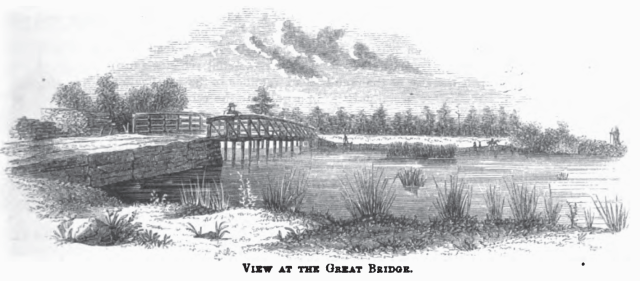
The area south of Norfolk, the Great Dismal Swamp, was largely inaccessible in the Eighteenth Century. A solitary road ran south from Norfolk, crossing the Southern Branch of the Elizabeth River at Great Bridge. Here local citizens were responsible for maintaining the bridge for public use. The road continued on into North Carolina.

Great_Bridge_view_LossingSketch by artist Benson Lossing, 1850s. Continue reading “A new park and museum for Great Bridge”
Burning Colonel Crawford

Last year I came across Dr. John Knight’s account of the torture and execution of Colonel William Crawford by members of the Delaware Indian tribe in 1782.  It was a vicious execution, but not unheard of in the wars on the American frontier, where violence and brutality from both sides were common.

Wiliam Crawford at 40 (Wikimedia Commons)
Crawford at about 40, twenty years before his execution (Wikimedia Commons)

Born in 1722, Crawford was a long-time business partner of George Washington, particularly in the acquisition of land in the Ohio River valley.  A veteran of frontier conflicts, during the Revolution he had served as the Lieutenant Colonel of the 5th Virginia Regiment, commanded the 7th Virginia in the east, and then returned to the Pittsburgh area to raise the 13th Virginia.  Sidelined during the war’s last years, he commanded local Pennsylvania militia and was largely retired by 1782.  For years, settlers in the Ohio Valley had agitated for punitive raid against the Ohio Tribes along the Sandusky River in today’s northwestern Ohio.  Their goal was to retaliate for Indian raids across the Ohio and spoil future raids.  By the spring of 1782, they could not be restrained.  After the militia massacred defenseless Christian Indians at Gnadenhutten in March, Brigadier General William Irvine, the Continental Commander at Pittsburgh, arranged for Colonel Crawford to lead the inevitable militia expedition, likely in hopes that Crawford could prevent a repeat.  (Crawford had taken no part in the Gnadenhutten Massacre).

Continue reading “Burning Colonel Crawford”

Visiting a Tragedy: Gnadenhutten, OH

Few places in the American Revolution evoke sorrow like Gnadenhutten, Ohio.  There, in March 1782, militia from Western Pennsylvania bludgeoned, scalped, and burned to death some ninety-six bound Indians who had adopted the Christian faith preached by missionaries from the church of the United Brethren.  Thirty-four of the victims were children.  Benjamin Franklin called the killings “abominable murders.”[1]

IMG_2540
The Chapel at Gnadenhutten with the 1872 memorial.  The Cooper’s Hut is to the right.  (ES Photo)

Continue reading “Visiting a Tragedy: Gnadenhutten, OH”

“It is my father!”: Francis Halkett’s Mission to the Monongahela Battlefield

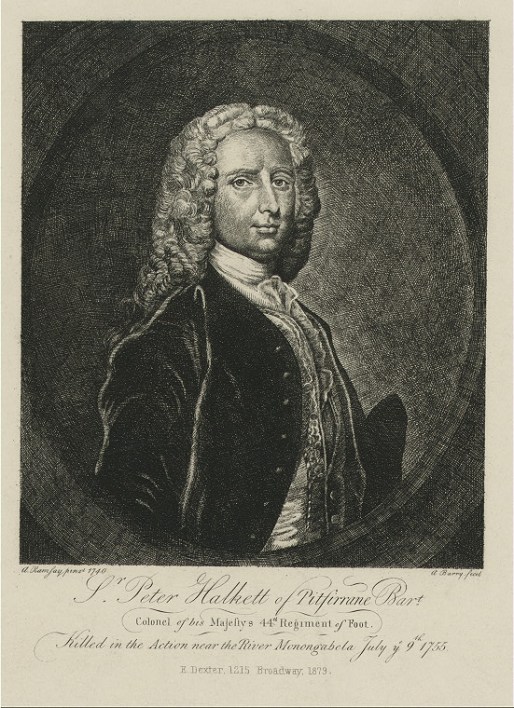
Two-hundred and sixty-three years ago, July 9, 1755, Britain suffered one of the country’s most humiliating military defeats along the banks of the Monongahela River in western Pennsylvania. Only miles away from its objective – Fort Duquesne – Maj. Gen. Edward Braddock’s army of some 1,400 men was attacked and cut to pieces by a detachment of Canadians and their Indian allies. In several hours of vicious fighting, Braddock’s force sustained over 900 casualties and was sent fleeing from the Ohio River Valley. Among the dead was the commanding officer of the 44th Regiment of Foot, Col. Peter Halkett.

Sir Peter Halkett
Col. Peter Halkett, 44th Regiment of Foot. New York Public Library

Three years following Braddock’s Defeat, another British Army trudged its way west with its crosshairs set yet again on Fort Duquesne. Accompanying General John Forbes’ expeditionary force was an officer of the 42nd Regiment of Foot, Maj. Francis Halkett – Sir Peter’s son. He had attached himself to Forbes’ command with the desire to return to the battlefield of 1755 and locate the remains of his father and younger brother, James, who served as a subaltern and was also killed in action that day. Because of the army’s hasty retreat, the British dead and dying that could not be carried from the field were left behind. It would be a near impossible task to identify the remains if any could be found, but Halkett was determined to try. Continue reading ““It is my father!”: Francis Halkett’s Mission to the Monongahela Battlefield”