The Experience of Freehold’s Civilians during the Battle of Monmouth Courthouse

Amid the hot weather of June 28, 1778, the British army under General Henry Clinton battled General George Washington’s Continental Army in the fields outside Freehold, New Jersey. The Battle of Monmouth Courthouse ranks as the eleventh deadliest battle of the Revolutionary War, claiming at least 700 casualties between the two armies. While the armies moved on after the sharp fight, the citizens of Freehold were left to deal with the battle’s aftermath.

Below are excerpts from two letters written by citizens of Freehold in the immediate aftermath of the battle that describes the toll the armies and battle took on their homes.

An unidentified “young gentleman, an inhabitant of Freehold,” penned the first letter on June 29, 1778. This citizen marched during the battle with Nathanael Greene’s troops, who only arrived on the battlefield proper near the end of the fight. Thus, he could “form an idea of the particular movements of the…engagement only from the dead…” There was abundant evidence provided by the corpses on the battlefield as the British “left very many dead upon the field of action…” Beyond the furrowed ground sliced by artillery shots and musket balls, the British columns left a path of destruction in their wake. “The destruction the enemy have made is dreadful. A great number of houses, barns and out-houses, on and near the public roads, are entirely reduced to ashes. They have been all round us, and yet we have escaped.”

A lady of Freehold wrote her letter two days after the battle. She equally said the horrid aftermath of an 18th-century conflict. “The enemy declared, at Robert McKnight’s, they intended to pay us a visit the next day, as they went down to the Court-house, and said their orders were to burn all the houses in this neighborhood. Doctor Henderson is burnt out, as also Peter Foreman, David Foreman, Benjamin Covenoven, George Walker, Mr. Solomon, David Covenoven, Garret Vanderveer, David Clayton, and a number of others. Most of the people on the public road have lost every thing the enemy could carry off or destroy.”

This anonymous woman was pleased that the British army had passed on, though they left their dead behind “as thick as bees round Mr. Sutfin’s.”

The occupation of the area by the warring armies “I fear…will make a famine among us,” she sadly concluded.

The Battle of Monmouth Courthouse was only one of a long stretch of days for central New Jersey’s civilians between 1775 and 1783.

This sketch of British troops burning homes around Lexington, Massachusetts, is a view similar to the one had by Freehold’s citizens as the British army passed through their homes.

Rev War Revelry: Women of the Revolution with Saratoga Historian Lauren Roberts

Join us this Sunday at 7 pm as we welcome Saratoga historian Lauren Roberts. Lauren will discuss with us the upcoming as we discuss their upcoming Women in War Symposium and Bus Tour hosted by the Saratoga County 250th Commission. The third Annual Women in War Symposium will be held on May 4, from 8:15 a.m. to 3:30 p.m. at the Old Saratoga American Legion Post, located at 6 Clancy St. As an enhancement to the Symposium, a bus tour of historic sites will be offered on May 5.

Lauren will also discuss some of the topics being covered at the Symposium and some of the diverse history in Saratoga that relates to the American Revolution. We all know about the Battle of Freeman’s Farm and Bemis Heights, but how many know about the “witch of Saratoga”? Grab a drink and join us this Sunday night at 7pm on our Facebook page for a fun and insightful discussion into the great work that Saratoga County is doing to commemorate “America’s Turning Point.”

With Lucy Knox on the Home Front

Henry Knox received much of the glory and distinction in the Knox family during the war years. Yet, his wife, Lucy Knox, had much to say to her husband regrading the future if the war effort turned out successfully for the colonies. Lucy, a daughter of loyalists who ultimately sailed for England at the start of war, remained in Boston, Massachusetts while her husband rode off to war and Washington’s army. Much of her correspondence to Henry during the war focused on events in and around Boston, news from the various battlefield fronts that had reached the city, the family business, and many other assorted topics. But, she also made sure to remind Henry that upon his return home, he would no longer be in command, nor have a generalship around the house; rather he would need to be willing to share “equal command” within the household.

Read more: With Lucy Knox on the Home Front

The following letter, written on August 23, 1777, finds Lucy at home, slowly recuperating from a days-long illness. Wanting to hear more of her daily routine while he was gone, she obliged Henry’s request to write about the ebb and flow of her life at home each day. She notes her solitary lifestyle now that both her parents are gone as well as her husband but shares with him the comfort she finds when opportunity allows to spend time with friends. Lucy, like many other wives and families left behind on the homefront fears that she may be forgotten during his extended time with the army. Then, Lucy shifts to news from the war front and requests information regarding several in the army in which Henry might know. It is also evident, as the letter draws to an end, that inflation on goods, and subsequent supply thereof, has led her to need more money from her husband in which to purchase linen.

The following letter is courtesy of The Gilder Lehrman Institute of American History.

Boston August 23rd 1777 –

My Dearest Friend –

I wrote you a line by the last post just to lett you know I was alive which indeed was all I could then say with propriety for I [struck: then] had serious thoughts that I never should see you again – so much was I reduced by only four days illness but by help of a good constitution I am surprisingly better today – I am now to answer your three last letters in one of which you ask for a history of my life. it is my love so barren of adventures and so replete with repetition that I fear it will afford you little amusement – however such as it is I give it you – In the first place, I rise about eight in the morning (a lazy hour you will say – but the day after that, is full long for a person in my situation) I presently after sitt down to my breakfast, where a page in my book, and a dish of tea, employ me alternately for about an hour – when after seeing that family matters go on right, I [struck: repeair] repair to my work, my book, or my pen, for the rest of the forenoon – at two oclock I usually take my solitary dinner where I reflect upon my past happiness when I used to sitt at the window watching for my Harry – and when I saw him coming my heart would leap for joy – when he was all my own and never happy from me when the bare thought of six months absence would have shocked him – to divert these ideas I place my little Lucy by me at table – but the more engaging her little actions are so much the more do I regret the absence of her father who would take such delight in them. – in the afternoon I commonly take my chaise, and ride into the country or go to drink tea with one of my few [struck: acquaintance] [inserted: friends]. They consist of Mrs Jarviss Mrs Sears Mrs Smith Mrs Pollard and my Aunt Waldo – I have many acquaintance beside these whom I visit but not without ceremony – when with any of [inserted: the] former I often spend the evening – but when I return home – how shall describe my feelings to find myself intirely alone – to reflect that the only friend I have in the world is at such an imense distance from me – to think that [inserted: he] may [inserted: be] sick and I cannot assist him ah poor me my heart is ready to burst, you who know what a trifle would make me unhappy, can conceive what I suffer now. –

when I seriously reflect that I have lost my father Mother Brother and Sisters – intirely lost them – I am half distracted true I chearfully resigned them for one far dearer to me than all of them – but I am totaly deprived of him – I have not seen him for almost six months – and he writes me without pointing out any method by which I may ever expect to see him again – tis hard my Harry indeed it is I love you with the tenderest the purest affection – I would undergo any hardships to be near you and you will not lett me – suppose this campaign should be like the last carried into the winter – do you intend not to see me in all that time – tell me dear what your plan is –

I wrote you that the Hero Sailed while I was at Newburg – She did but has [jnserted: been] cruiseing about from harbour to harbour since – to get met – she is now here, and will sail in a day or two for france –

I wish I had fifty guinies to spare to send by her for necessarys – but I have not – the very little gold we have must be reserved for my Love in case he should be taken – for friends in such a case are not too common. – I am more distressed from the hott weather than any other fears – God grant you may not go farther south’ard – if you should I possitively will come too – I believe Genl Howe is a paltry fellow – but happy for as that he is so – are you not much pleased with the news from the Northard we think it is a great affair and a confirmation of StClairs villainy baseness – I hope he will not go unpunished – we hear also that Genl Gates is to go back to his command. – if so Master Schuyler, cannot be guiltless – it is very strange, you never mentioned that affair in any of your letters –

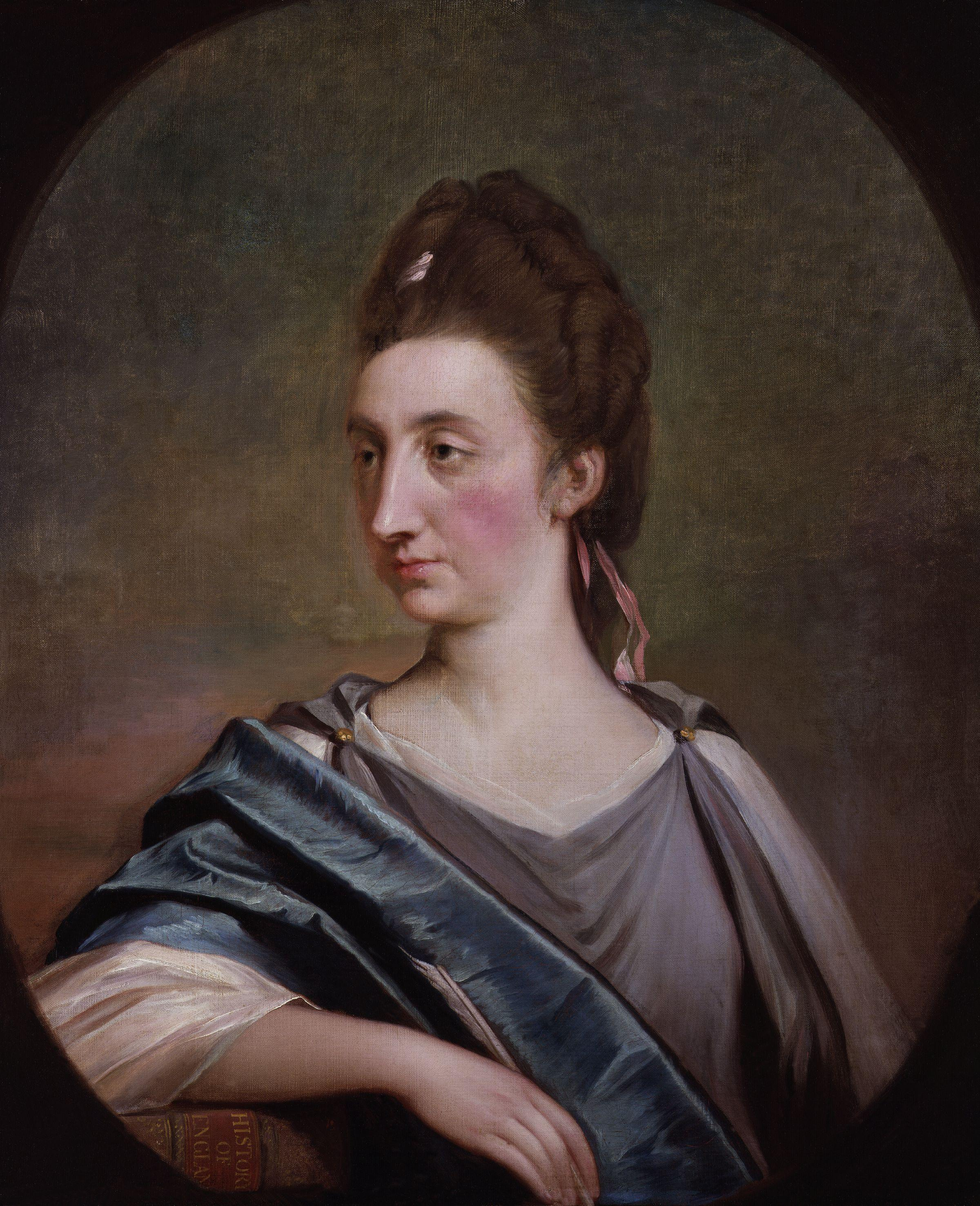
Catharine Littlefield Greene – Courtesy Telfair Museums

What has become of Mrs Greene, do you all live together – or how do you manage – is Billy to remain with you payless or is he to have a com[inserted: m]ission – if the former I think he had much better remained where he was – if he understood business he might without a capital have made a fortune – people here – without advanceing a shilling frequently clear hundreds in a day – such chaps as Eben Oliver – are all men of fortune – while persons – who have ever lived in affluence – are in danger of want – oh that you had less of the military man about you – you might then after the war have lived at ease all the days of your life – but now I don’t know what you will do – your being long acustomed to command – will make you too haughty for mercantile matters – tho I hope you will not consider yourself as commander in chief of your own house – but be convinced tho not in the affair of Mr Coudre that there is such a thing as equal command – I send this by CaptRandal who says he expects to remain with you – pray how many of these lads have have you – I am sure they must be very expensive – I am in want of some square dollars – which I expect from you to by me a peace of linen an article I can do no longer without haveing had no recruit of that kind for almost five years – girls in general when they marry are well stocked with those things but poor I had no such advantage –

little Lucy who is without exception the sweetest child in the world – sends you a kiss but where [inserted: shall] I take it from say you – from the paper I hope – but dare I say I sometimes fear [struck: what] [inserted: that] a long absence the force of bad example may lead you to forget me at sometimes – to know that it ever gave you pleasure to be in company with the finest woman in the world, would be worse that death to me – but it is not so, my Harry is too just too delicate too sincere – and too fond of his Lucy to admit the most remote thought of that distracting kind –away with it – don’t be angry with me my Love – I am not jealous of you affection – I love you with a love as true and sacred as ever entered the human heart – but from a diffidence of my own merit I sometimes fear you will Love me less – after being so long from me – if you should may my life end before I know it – that I may die thinking you wholly mine –

Adieu my love
LK

Celebrate Mother’s Day with Emerging Revolutionary War!

The Mary Ball Washington Monument and grave site, Fredericksburg, VA

Happy Mother’s Day to all the moms out there! In honor of Mother’s Day, Emerging Revolutionary War welcomes will be welcoming historians and staff from the Washington Heritage Museums to tonight’s Rev War Revelry. WHM manages and operates the home and grave site of Mary Ball Washington, the mother of George Washington located in Fredericksburg, VA.

The relationship between George Washington and his mother has been of interest in historians. Their relationship was complicated and much debated by Washington contemporaries and historians today. Mary never remarried when her husband passed (rare for the time period) and mostly lived on her own in Fredericksburg. She also was not afraid to complain about her lack of resources and once applying to the Virginia General Assembly for financial support (to much frustration from George Washington). We will cover many of the myths and interpretations of Mary and her relationship with her son.

So grab a drink and join us as we discuss Mary Ball Washington, her relationship with her son George and what the Washington Heritage Museums are doing today to interpret and preserve her story. Our revelry tonight is previously recorded so we could spend time with the mom’s in our life, but as always we will respond to any comments and questions posted.

The Women’s Tea Parties

Examples of women’s political participation in the Revolutionary movement are hard to find. Women were not permitted to be politically active in the eighteenth century, yet many got involved anyway and pushed back against prevailing social norms. There are two examples of women organizing protests within six months of each other in 1774, both in North Carolina. Unfortunately, few details exist of these happenings. Primary sources on many colonial-era events are limited, and they are even more so with these two examples.

By the early 1770s, tensions had been building for a decade between the North American colonists and British officials. Debate swirled around taxes, representation, and rights. Parliament affirmed their right to tax all citizens of the empire, while Americans insisted that only their locally elected representatives (colonial legislatures) could do so.

Continue reading “The Women’s Tea Parties”

Rounding out the year with a round-up from our friends at Americana Corner

As 2022 winds down, Emerging Revolutionary War wanted to share one more round-up of what our good friends at Americana Corner were doing in this last month of the year. We hope to continue to partner with Americana Corner in the 2023 and bring new content and new enthusiasm for this critical period in American history to the forefront. To all our readers, thank you and we all at Emerging Revolutionary War hope you have a great ending to 2022 and a Happy New Year!

A few blog posts for light reading as you wind down December…

Washington Takes Command
December 27, 2022

When it came to finding the right man to command the new Continental Army assembled around Boston, George Washington was the logical choice. John Adams quickly nominated Washington and Congress unanimously approved. As Adams stated, “This appointment will have a great effect in cementing and securing the Union of these colonies.”

Read More

George Washington Enters Politics
December 20, 2022

As befitting a wealthy landowner in colonial Virginia, George Washington became active in the colony’s politics in the 1750s. He first ran for a seat representing Frederick County in the Virginia House of Burgesses in 1755 but lost the election. Interestingly, it was the only political race he would ever lose. Washington ran for that same seat in 1758 and was victorious, and he held this seat for seven years.

Read More

The Life of Martha Washington
December 13, 2022

Martha Washington was our nation’s first First Lady and lived in the shadow of her larger-than-life husband George. However, most Americans do not realize that she was a very capable woman and, when given the opportunity, managed her own affairs quite well.

Read More

George Washington’s Life at Mount Vernon
December 6, 2022

When George Washington resigned as Colonel and Commander of the Virginia Regiment in 1758, he returned to Mount Vernon to begin his life as a gentleman planter. Although in less than twenty years Washington would be called away by his country, his time between the French and Indian War and the American Revolution was a significant portion of this great man’s life.

Read More

“Rev War Revelry” Ladies Night & Loyalist Women

Earlier this year, three great historians, in their words, “took over” the “Rev War Revelry” in a discussion that they dubbed “Ladies Night.” That particular Sunday night historian happy hour was well received, so Emerging Revolutionary War historians Kate Gruber and Vanessa Smiley have decided to have another “Ladies Night” but this time discuss the role of Loyalist women during and after the American Revolution.

Joining this dynamic duo will be Dr. Stephanie Seal Walters, who is currently the Digital Liaison in the Humanities for the University of Southern Mississippi. She earned her bachelor’s and graduate degrees in history from the University of Southern Mississippi and a doctorate in United States History from George Mason University. You may also recognize her from the first annual Emerging Revolutionary War Symposium held in Historic Alexandria, Virginia in September 2019.

We hope that you can tune in, on Sunday night, at 7pm EDT, to catch the next installment of “Rev War Revelry” on our Facebook page.

The Forgotten Woman of Valley Forge from America’s Forgotten Ally

During the winter encampment at Valley Forge, as thousands of men huddled around drafty wooden cabins, with dwindling supplies, and battled boredom and disease, a relief effort was organized hundreds of miles away.

George Washington, ensconced at the Potts House in the heart of the Valley Forge encampment, was very aware of the dire straights that his forces were exposed to. Throughout the winter he sent missives, directly and through intermediaries, discreetly asking for more aid, for supplies, for changes to military bureaucracy. He even consented to a delegation of congressmen to visit Valley Forge and see first-hand the situation in the winter of 1777-1778.

In a proverbial sense, he did not leave any stone unturned to try and ease the plight of his forces or continue to stay abreast of British designs, less than twenty-miles away in Philadelphia, Pennsylvania.

After hearing of the contributions of the Oneidas and Tuscaroras at the Battle of Oriskany in New York, Washington sent a letter of invitation for the Native Americans to visit his army. Approximately 50 warriors along with supplies made the few hundred mile journey from upstate New York to eastern Pennsylvania. They left their villages on April 25 and arrived on May 15,1778 in Valley Forge. The leaders of the Oneida party dined with Washington. Five days later some of the warriors participated in the engagement at Barren Hill under the Marquis de Lafayette. Six of the warriors gave their life in service to their ally.

In 2007 historian Joseph T. Glatthaar published a book about the Oneidas and their contributions to the American victory in the war. The title, in part, is Forgotten Allies. A fitting testament to the service and sacrifice this tribe underwent in their partnership with the fledgling American nation.

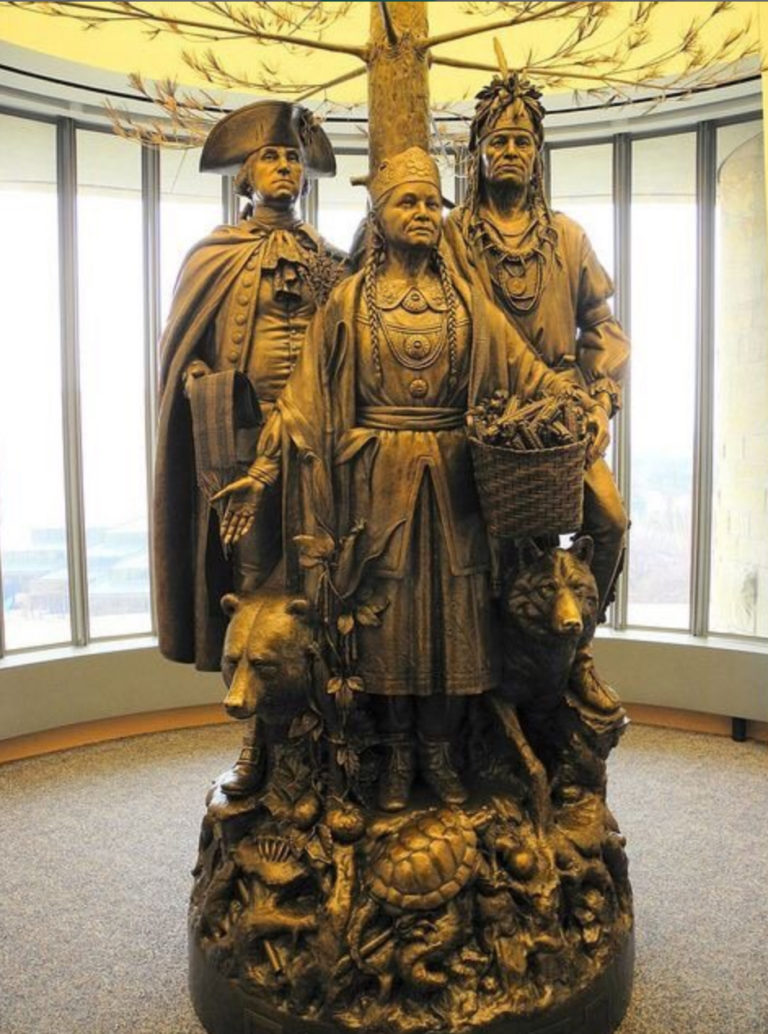
In 2004 a sculpture was completed of Polly Cooper, Chief Skenandoah, and George Washington
(courtesy of King of Prussia Historical Society)

If the Oneidas were the “forgotten allies” than in the winter encampment at Valley Forge there was a forgotten woman that tramped south with her fellow Oneidas. Her name was Polly Cooper.

Along with the warriors, whom Washington wanted to serve as scouts, the Oneidas brought much needed supplies, including bushels of white corn. While the leaders dined at the Potts House, Cooper established a de-facto cooking show. She handed out the white corn to the soldiers and taught them how to use husks to make soup and ground grain to make it palatable.

This much needed food sources, along with an improved supply chain under quartermaster Nathanael Greene rounded out the bleak winter with the glimmer of hope for better supplies in the upcoming campaign season.

The Oneida, including Polly Cooper for her services, refused any and all payment. Friends help friends in need is what the Oneida told Washington and his officers. However, a tradition exists in the history of the Oneida nation. That story, passed down orally from generation to generation, highlights that Marth Washington, in her gratitude for what Polly Cooper did for the rank-and-file of the Continental army, presented the Oneida heroine with a shawl and bonnet.

Another account reads that Cooper was gifted a black shawl that she saw for sale in a store window. The Continental Congress appropriated the money for the clothing item and gifted it as their thanks to her. This shawl is still in the ownership of her descendants and has been loaned to the Oneida cultural center from time to time.

The black shawl that Polly Cooper received for her services to the Continental Army at Valley Forge
(courtesy of the Oneida Indian Nation
http://www.oneidaindiannation.org)

Women in the Revolutionary War: A List of Resources

This past Sunday’s Rev War Revelry was a great success! Thank you to all who watched live and watched the replay of ERW historians Vanessa Smiley and Kate Gruber and special guest Heidi Campbell-Shoaf, Executive Director of the Daughters of the American Revolution Museum in Washington D.C., discussing and interpreting women in Early American History.

A number of folks were interested in the resources that were shared during the program. We have compiled a list of those mentioned as well as additional resources to dive deeper into the stories of women during this pivotal time in American history.

“The women of ’76: “Molly Pitcher” the heroine of Monmouth”
by Currier & Ives. Library of Congress.

Books:

Revolutionary Backlash: Women and Politics in the Early Republic by Rosemarie Zagarri

The Diary of Elizabeth Drinker: The Life of an Eighteenth-Century Woman by Elaine Forman Crane (editor)

Book of Ages: The Life and Opinions of Jane Franklin by Jill Lepore

Betsy Ross and the Making of America by Marla Miller

The Needle’s Eye: Women and Work in the Age of Revolution by Marla Miller

Women of the Revolution by Robert Dunkerly

Women of the Republic by Linda Kerber

Articles:

Jane Bartram’s “Application”: Her Struggle for Survival, Stability, and Self-Determination in Revolutionary Pennsylvania by Wayne Bodie (article link courtesy of Pennsylvania Magazine of History and Biography)

Digital Resources

DAR Library – A wealth of American Revolution resources! “The DAR Library collection contains over 225,000 books, 10,000 research files, thousands of manuscript items, and special collections of African American, Native American, and women’s history, genealogy and culture.”

Library of Congress – always a good source if you know what you’re looking for.

Have a great resource on women in the American Revolution? Share in the comments!

A Casualty Not Counted: Faith Trumbull Huntington and the Battle of Bunker Hill

“I cannot pretend to describe the Horror of the Scene within the Redoubt when we enter’d it,” British Marine Lt. John Waller wrote to a friend on June 21, 1775, four days after the British Pyrrhic victory at the Battle of Bunker Hill on June 17, “’twas streaming with Blood & strew’d with dead & dying Men the Soldiers stabbing some and dashing out the Brains of others was a sight too dreadful for me to dwell any longer on.”[1]  All said and done, the bloody exchange claimed 226 British and 450 Patriot lives, with still over 1,000 more wounded, captured, or missing from both belligerents.[2]

This unspeakable carnage, which proved too distressing for even a seasoned British Marine to recount, surely imprinted itself in the hearts and minds of all who witnessed it—but not all witnesses to the battle’s shocking scenes were soldiers. One was a young woman named Faith Trumbull Huntington. She too would find the bloody Battle of Bunker Hill, and the anxieties and unknowns of her world at war, heavy burdens to bear.

Double Portrait of Governor Jonathan and Faith Trumbull, John Trumbull, 1778, Connecticut Historical Society

Born in 1743 to Jonathan and Faith Trumbull in Lebanon, daughter Faith came of age in a prominent and respected Connecticut family, which also included younger brother John Trumbull, born in 1756, who was destined to become one of the era’s most important artists. On May 1, 1766 Faith married Jedidiah Huntington, and the couple welcomed a son, Jabez, in September 1767. At the onset of the war, the Trumbulls and the Huntingtons quickly mobilized and made known their patriot loyalties. Faith’s father, at that time the Royal Governor of Connecticut, refused to deliver manpower to support the British army’s advances against the colonists in Boston, and became a patriot hero whom George Washington held in high esteem. Jedidiah advanced to colonel in the Connecticut militia, and soon saw action at the Siege of Boston. Faith’s father, husband, and brothers dedicated themselves to the patriot cause. Her sister Mary was married to a member of the Sons of Liberty and future signer of the Declaration of Independence.

Jedediah Huntington, John Trumbull, about 1790, Bequest of Frederick Jabez Huntington, Connecticut Historical Society
Continue reading “A Casualty Not Counted: Faith Trumbull Huntington and the Battle of Bunker Hill”