Celebrate Mother’s Day with Emerging Revolutionary War!

The Mary Ball Washington Monument and grave site, Fredericksburg, VA

Happy Mother’s Day to all the moms out there! In honor of Mother’s Day, Emerging Revolutionary War welcomes will be welcoming historians and staff from the Washington Heritage Museums to tonight’s Rev War Revelry. WHM manages and operates the home and grave site of Mary Ball Washington, the mother of George Washington located in Fredericksburg, VA.

The relationship between George Washington and his mother has been of interest in historians. Their relationship was complicated and much debated by Washington contemporaries and historians today. Mary never remarried when her husband passed (rare for the time period) and mostly lived on her own in Fredericksburg. She also was not afraid to complain about her lack of resources and once applying to the Virginia General Assembly for financial support (to much frustration from George Washington). We will cover many of the myths and interpretations of Mary and her relationship with her son.

So grab a drink and join us as we discuss Mary Ball Washington, her relationship with her son George and what the Washington Heritage Museums are doing today to interpret and preserve her story. Our revelry tonight is previously recorded so we could spend time with the mom’s in our life, but as always we will respond to any comments and questions posted.

The Tea Act – 250th Anniversary (May 10, 1773)

May 10, 2023 marks the 250th anniversary of the passing of the infamous Tea Act. Though a seemingly innocuous Parliamentary action, it had dire impacts in the British North American colonies. Parliament was known to enact various laws to provide guidance and management of her colonies across the globe. Some like the Stamp Act led to direct protest and eventual repeal. But the Tea Act was something totally different. It focused on the North American colonies and was meant to benefit a single entity, the East India Company. These two variables, plus the on going strife in North America over British influence led to various protests in the American colonies. This ultimately resulted in the Boston Tea Party on December 16, 1773 (and other lesser known “tea parties” in Charleston, Philadelphia and other port cities).

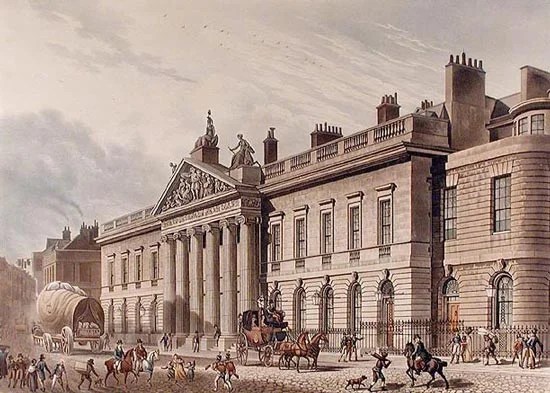
East India House in London, ca 1800

The East India Company was a joint stock company founded in 1600 and became one of the largest companies in the world. Tea was not their only commodity, however as they also traded spices, sugar, indigo, silk and much more. Parliament was heavily vested in the company’s success and began to enact laws that benefited the company. This included the Tea Act of 1773, passed to help the company divest itself of an over abundance of tea stored in its warehouses. The Crown and Parliament was worried that the prices of tea and the large supply would lead to serious financial strain on the company. The Tea Act also aimed to clamp down on the massive amounts of “illegal” tea that was being smuggled into the colonies. Some historians argued that men like John Hancock, who was deeply involved in smuggling, saw the Tea Act as his “rubicon” towards independence. He believed the act would impact his revenues via his smuggling. Now the American colonies were forced to purchase East India Company Tea (that could directly ship to the colonies) and which was taxed. Many colonial leaders saw this is as a backwards way to impose a tax without their consent and to force them to prop up a struggling East India Company

The road to revolution in the American colonies does not have a single starting point, but one could argue that 250 years ago the Tea Act was the last straw. It led to direct and open opposition (and destruction) of British rule and property in several ports along the Atlantic. These brazen “parties”, mainly the Boston Tea Party, led Parliament to pass the Coercive (Intolerable) Acts, which in turn united the various colonies like never before. Open armed conflict with Great Britain was just a year away.

Montgomery County, Maryland

Tell me I am not the only one that randomly goes on a car ride to a random town in their home state to just “see what is there?”

Regardless, that is what I decided to do on a sunny late April Sunday afternoon. I ended up in Rockville, Maryland. The town astride I-270 today was also on a major thoroughfare during both the 18th and 19th centuries that brought armies from the area, like General Edward Braddock’s in 1755 or General Jubal Early’s in 1864.

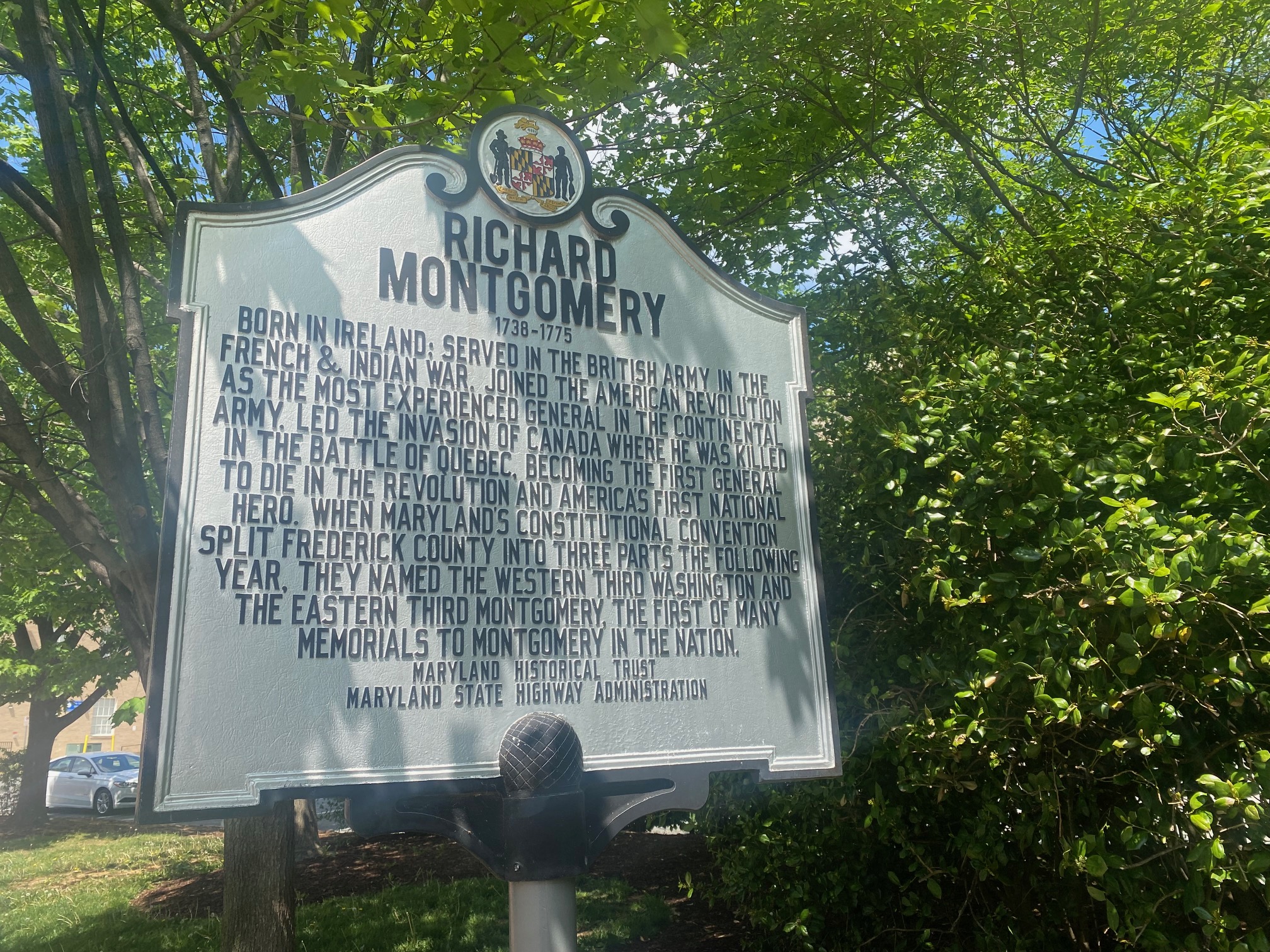
However, a different historical sign attracted my attention on this excursion.

I read the title and the first line, Richard Montgomery…Born in Ireland. Served..” Which was all I could read as I slowly drove by, since it is near the court house and county government buildings. Even though it was a Sunday still not wanting to speed through. So…Naturally, I pulled over, as evidenced by the vehicle you see in the background!

I knew Montgomery, as the sign reads, died at the Battle of Quebec in a futile attempt to take the city for the American cause. He was the first general–Continental–to die in the cause of American independence.

On September 6, 1776 Thomas Sprigg Wootton, who hailed from Rockville, introduced legislation in the Maryland Constitutional Convention to separate the Frederick County into three. The upper or most western half, to become Washington County, named in honor of George Washington and the lower half, or most eastern, to be named Montgomery, in honor of Richard Montgomery. The remaining middle portion would retain the name Frederick. This may be the first recorded instance in the rebellious British colonies of names of counties, towns, or cities that did not refer to something in British history or famous persons. Another act of defiance at the beginning of the American Revolution!

With a random Sunday excursion one never knows what one will find. History is all around us, beckoning to be explored.

Air Lafayettes?

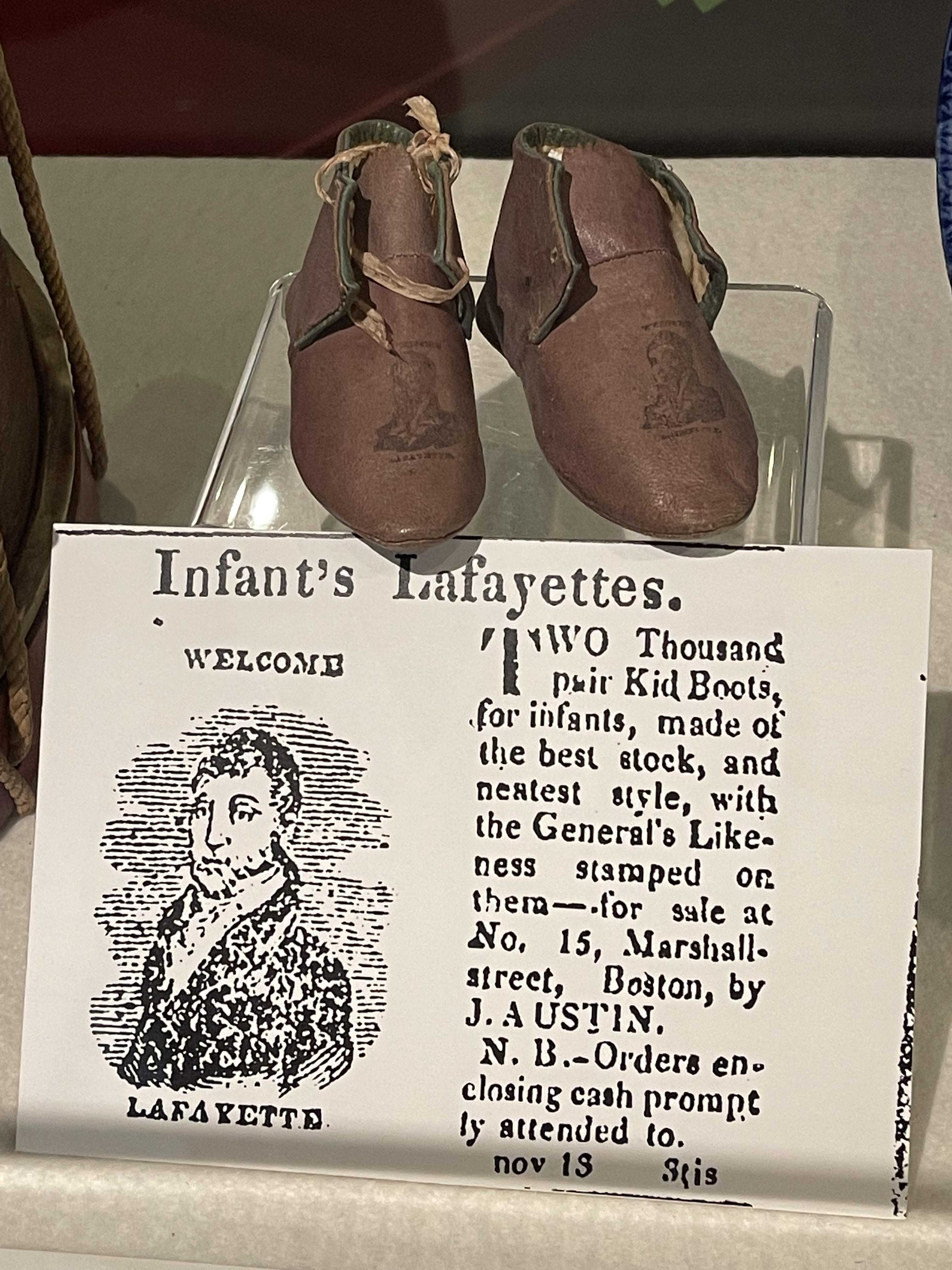
Emerging Revolutionary War thanks historian Christian Di Spigna for the picture.

With the release of the motion picture, Air, about the recruitment to Nike of Michael Jordan in the 1980s, Emerging Revolutionary War wanted to bring our readers attention to an older model of a shoe. That predates Nike by a century and a half. But, who knows, could come into vogue again right?

The Marquis de Lafayette returned to the United States in August 1824 to September 1825 and toured all 24 states at the time. Feted as a living link to the American Revolution and the independence movement, he was dined, celebrated, and asked to speak at many, many events. Commemorative items were created in his image and likeness, including, apparently a pair of shoes.

These shoes can be viewed today at Old Sturbridge Village in Massachusetts. A link to their website and to plan a visit can be found here.

“Rev War Revelry” Before the Dawn’s Early Light: Bladensburg and the Prelude to Fort McHenry

This Sunday, join Emerging Revolutionary War as we explore the prelude to Fort McHenry and the actions in Maryland and Washington D.C. in the summer of 1814. Joining Emerging Revolutionary War will be the American Battlefield Trust’s Senior Education Manager, Dan Davis.

This historian happy hour will discuss the first part of the campaign that eventually led to the climactic Battle of Baltimore, which included both the unsuccessful British attempts at Fort McHenry and North Point. Before that success for American arms, the United States suffered through the defeat at Bladensburg and the capture of the nation’s capital.

We hope you can join us on our Facebook page, on Sunday, April 30th at 7 p.m. EDT .

The Revolutionary War Conference 250 in the Mohawk Valley – June 9-11, 2023

There are many great Revolutionary War events coming up in 2023! Last week we highlighted the American Revolutionary War in the West conference and this week we highlight a great event with our friends at Fort Plain Museum and Historical Park in New York. Also Save the Date for our very own Emerging Revolutionary War Symposium on October 20-21, 2023 in partnership with the North Carolina Museum of History in Raleigh, NC.

Below are the details of the great event at Fort Plain this June!

Returning for 2023 as Conference Master of Ceremonies is Mohawk Valley Legend and “Voice”, Historian Bob Cudmore

Fireside Chat – James Kirby Martin with Guest Host Mark Edward Lender (Sponsored by Westholme Publishing and the Journal of the American Revolution)– Professor and Student Discuss the American Revolutionary War, the Upcoming 250th Anniversary and Their Legacies

Friederike Baer – Hessians: The German Soldiers in the American Revolutionary War

John “Jack” Buchanan – The Battle of Musgrove’s Mill, 1780

Benjamin L. Carp – The Boston Tea Party at 250: Reflections on the Radicalism of the Revolutionary Movement

Vivian E. Davis – Over 250 Years Ago! The Battle of Golden Hill, January 19, 1770

Holly A. Mayer – Congress’s Own A Canadian Regiment, the Continental Army, and American Union

Steven Park – 250 Years of Remembering: The Changing Landscape of Gaspee History

Nina Sankovitch – The Abiding Quest of a Forgotten Hero: How Josiah Quincy Battled Overwhelming Odds to Bring Together the Northern and Southern Colonies in 1773, Fanning the Flames of Revolution and Laying the Groundwork for Independence from England

Eric H. Schnitzer – Picturing History: The Images of the American War for Independence

Sergio Villavicencio – St Eustatius and the American Revolution

Mohawk Valley Resident Historian – Terry McMaster – A Revolutionary Couple on the Old New York Frontier: Col. Samuel Clyde & Catharine Wasson of Cherry Valley 

New York State and the 250th: Where Things Stand – Presenters: Devin R. Lander, New York State Historian, Phil Giltner, Director of Special Projects, NYS Office of Parks, Recreation and Historic Preservation, Constance M. Kehoe, President, Revolutionary Westchester 250 and Lauren Roberts, Saratoga County Historian        

The Fort Plain Museum Board Chairman – Norman J. Bollen – The Fort Plain Museum & Historical Park’s Grand Enhancement Plan – Rebuilding the Blockhouse for the 250th

Good News! We have added a 2nd Bus. We do need to have a certain number before we can run it. Please sign up right away or reach out to us at info@fortplainmuseum.org

Bus Tour – Forts and Fortified Homes of the Mohawk Valley – Join Tour Leaders Bruce Venter, Wayne Lenig and Norm Bollen as they guide you through the Mohawk River Valley touring the many sites that housed troops during the Revolutionary War. This is an in-depth, never done before tour of the historic forts, fortified homes and sites that formed the defensive perimeter around Fort Rensselaer (Fort Plain).

Site visits will include Fort Failing, Fort Ehle, Fort Clyde, Fort Plank, Fort Rensselaer, Fort Kayser, Fort Paris, Fort Nellis, Fort Klock and more. Lunch and a Bus Tour Booklet are included. This Bus Trip will start at the Fulton-Montgomery CC – 2805 NY-67, Johnstown, NY 12095 – Parking Lots B & C – Please wear comfortable walking shoes and bring snacks/beverages. This is a rain or shine Bus Tour.

Registration:

LodgingPlease Click Here for the Hotel-Lodging Information – 2023 Rev War Conference

Conference Location – The Fulton-Montgomery Community College‘s Theater – The Visual Arts & Communications Building (Campus Map Building #2) – 2805 NY-67, Johnstown, NY 12095 – Please Park in Lots 5, 4 or Visitor’s Lot – Please Click Here – FMCC Campus Map

Conference Schedule – 2023 Rev War Conference 250 Schedule – (Please note, this Schedule is subject to changes and will change – last changed 4/25/2023)


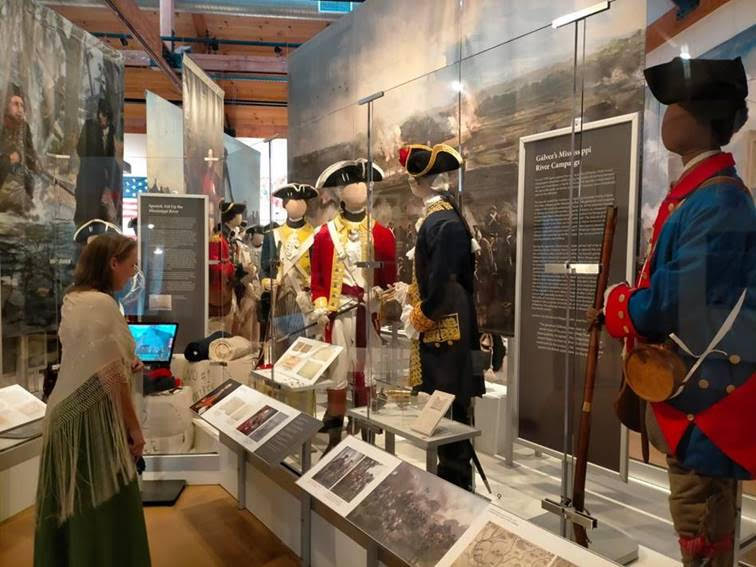
The American Revolutionary War in the West History Conference – October 27-29, 2023

This conference will focus on the military, political, social and material culture history of the western theater of the American Revolutionary war, featuring scholars from across the U.S. and from Spain.

Location: The Sheraton Westport Plaza Hotel, St. Louis County, Missouri

Speakers and Topics:

Larry L. Nelson—”George Rogers Clark, the Illinois Campaign, and American Ambitions in the West”

Robert M. Owens – “Jean Baptiste Ducoigne, the Kaskaskias, and Pragmatic Patriotism in the Revolutionary Era”

José Manuel Guerro Acosta – “Spain and the Support for the American Revolution”

Friederike Baer – “’O, how the Mississippi is costing us many a good man!’: German Soldiers in West Florida, 1779-1781”

Frances Kolb Turnbell – “Indian Politics and the American Politics in the Lower Mississippi Valley”

Stephen L. Kling, Jr. – “An Opportunity to be Seized: The British Grand Plan to Conquer the Entire Mississippi River Valley”

Alexander S. Burns – “The Worst Looking Soldiers and the Drunkest Men to Ever Carry a Musket?: The 8th Regiment and the War in the West”

Kristine L. Sjostrom – “Valentía y Visión: Lt. Governor Fernando de Leyba and the Defense of St. Louis” 

Kimberly Alexander – “O What Can These Things Tell Us: Material Culture at Revolutionary War St. Louis”

Jim Piecuch – “Fighting from Horseback: A Comparison of Revolutionary War Cavalry in the Eastern and Western Theaters”

Paul Douglas Lockhart – “For Want of a Good Musket and a Sharp Knife: Weaponry and Wilderness Warfare”

Evening Events: A cocktail reception will be held on Friday evening at 6:00pm at the Sheraton Westport Plaza Ballroom. A private party on Saturday evening at 6:30pm at the St. Charles County Heritage Museum will include a private tour of The American Revolutionary War in the West museum exhibit.

Registration:  Conference registration cost including evening events: $75.00. Registration can be made through the St. Charles County Historical Society by 1) mailing a check to The St. Charles County Historical Society, 101 S. Main St., St. Charles, MO 63301, Attn: Joan Koechig; 2) credit card or PayPal by calling at (636) 946-9828 MWF, 10am-3pm; or 3) online at scchs.org. Registrations are limited and will be filled on a first come, first served basis. Questions, call Melissa at: (314)-561-5077. NOTE, online registration will be available starting April 19, 2023.

Evacuation Day

Emerging Revolutionary War welcomes guest historian Christopher of The British-American Historian blog.

Almost two years after debating a joint French-American assailment of Lord Cornwallis’ precarious position in Yorktown, Virginia over Washington’s grand plan to recapture New York long after being swept from the city and its environs as independence was officially declared in 1776, the implacable Washington prepared to reenter New York in triumph.

Eight years after making New York the center of the British war effort in the American Revolution, the massive garrison was greatly reduced and preparing for its final retirement from the new nation. The new commander in chief of North America, Sir Guy Carleton, arrived in New York on May 5, 1782[1] to relieve Sir Henry Clinton. Carleton won accolades for holding Quebec City when the Continental Army struck during a late night blizzard, an accomplishment that was all the more vaunted now that the British were losing territory that did not include Canada. Carleton lost no time in notifying Washington of his arrival in an affable letter sent on May 7th, 1782 in which Carleton wrote “if the like pacific disposition should prevail in this country, both my inclination and duty will lead me to meet it with the most zealous concurrence”[2].

A notable disruption in the growing amity was the unresolved Asgill Affair. Exasperated with wanton assailments of loyalists in New Jersey, a prominent rebel militia commander named Joshua Huddy was plucked from the provost in New York by an American member of the Associated Loyalists[3]. The Associated Loyalists were presided over by William Franklin, the loyalist son of Benjamin who had endured arduous captivity before being exchanged[4]. In response to the wanton execution of Joshua Huddy, Washington ordered a British officer to await reprise. Charles Asgill was selected, but pleas from the French along with Washington’s honorable disposition prevailed and the captain was spared[5].

 The city and Long Island were swarming with thousands of loyal “Refugees” who had fled from every rebellious colony to seek the king’s protection. Ranging from itinerant tenant farmers to some of the largest landlords in America such as Beverly Robinson and Frederick Philipse, Carleton’s task of evacuating the troops could not be fulfilled until such persons were safely resettled in the empire. While many of the men joined provincial regiments that saw combat in the south (playing a pivotal role defending Savannah and being routed at Kings Mountain) and performed prodigious woodcutting on Lloyd Neck for the insatiable demand for firewood[6]flocks of women and children crowded the city. A subset of the refugees were former slaves who had flocked to the British cause for the promise of freedom under Dunmore’s Proclamation and the Philipsburg Proclamation, a promise Washington would vigorously contest in negotiations.

Continue reading “Evacuation Day”

Rev War Revelry Discusses NEW Emerging Rev War Book!

Charleston, South Carolina is one of the most beautiful and historic cities in the United States. Numerous sites, battlefields, and buildings from the period of the Revolution still exist.

Join us this Sunday at 7pm as we discuss ERW’s newest release “To The Last Extremity: The Battles for Charleston” by Mark Maloy. In To the Last Extremity: The Battles for Charleston, historian Mark Maloy not only recounts the Revolutionary War history of Charleston, he takes you to the places where the history actually happened. He shows you where the outnumbered patriots beat back the most powerful navy in the world, where soldiers bravely defended the city in 1779 and 1780, and where thousands suffered under occupation. Through it all, brave patriots were willing to defend the city and their liberty “to the last extremity.”

We will talk to Mark about his research, his favorite and most compelling stories and why this book is a “must have” for any history buff. Join us this Sunday, April 16 at 7pm on our Facebook page to join in on the conversation. As always, if you can not join us live you can catch the talk at any time on our You Tube or podcast channel.

Rev War Revelry Three Year Anniversary!

It is hard to believe but three years ago on April 2020 we, like the rest of the country, were on lock down looking for a way to interact with others (and share our love of history). Thus was born our Rev War Revelry, which started off as every Sunday and morphed into a bi-weekly affair as the world got back to normal. Since April 2020, we have provided nearly 100 hours of free historic content covering a wide array of topics focusing on the Revolutionary Era.

Join us this Sunday at 7pm on our Facebook page as we share drinks, stories and our favorite moments and people in American history. We also will share some exciting plans on for our 2023 Symposium and 2024 bus tour. See you on Sunday night! **cant make it Sunday, all of our Rev War Revelries live on your You Tube and Spotify channels, where you can hear them any time **