George Washington’s July 4th

As July 4th approaches, many of us turn our thoughts to the Declaration of Independence and the early years of the Revolution. I do too, but I also recall another July 4th, the one in 1754 when a Virginia militia officer named George Washington surrendered the crudely built Fort Necessity to the French. The battle touched off the French and Indian War.

General George Washington looks back at us from marble statues or stiff paintings with a grim-faced and determined look. Known for his dignity, resolve, and sound leadership, he seems cold and reserved. Yet he was also quite sentimental. In the midst of a grueling campaign, with a massive British invasion force set to descend on him at New York City in July, 1776, Washington paused to pen these words: “I did not let the Anniversary of the 3rd or 9th of this Inst pas[s] of[f] without a grateful remembrance of the escape we had at the Meadows and on the Banks of the Monogahela. [T]he same Providence that protected us upon those occasions will, I hope, continue his Mercies, and make us happy instruments in restoring Peace & liberty to this once favour’d, but now distressed Country”.

Washington was writing to General Adam Stephens, his subordinate in the French and Indian War twenty years earlier, who now commanded a division in the Continental Army. These lines give us a unique insight into the mind of the Revolution’s commanding general.

The French and Indian War years were Washington’s formative years as a military officer. He learned the art of war on the Pennsylvania, Virginia, and Maryland frontier: tackling supply and logistical challenges, dealing with recruitment and discipline, and working patiently-though not always successfully- with elected officials.
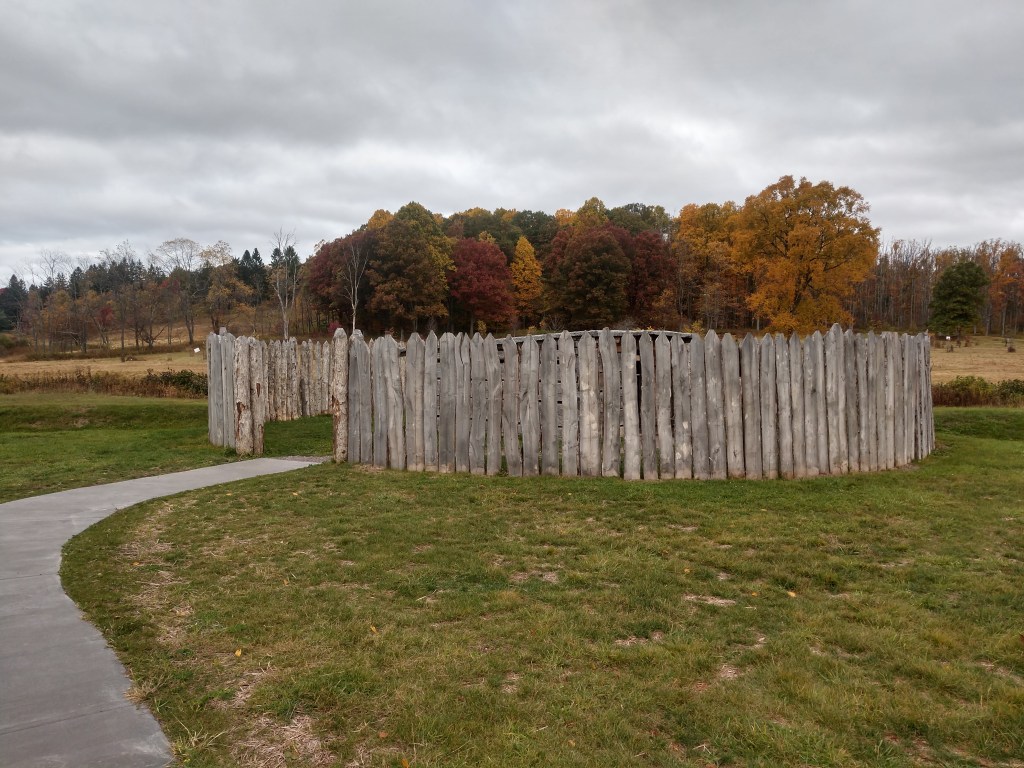
He lost his first major battle (Fort Necessity) to the French, fighting with the British. He won his last major battle (Yorktown) against the British, with the help of the French.   The irony is deeper, for the surrender at Fort Necessity (the only time Washington ever surrendered), was July 4, 1754. Twenty years later, when celebrating American independence, he no doubt reflected on the juxtaposition.

The two battles Washington reflected upon, Fort Necessity (the Meadows) and Braddock’s Defeat (the Monongahela) were both defeats- disasters, really. Yet the experiences were powerful for the young Virginian; Braddock’s Campaign especially.

British troops and colonial forces were attempting to remove the French from western Pennsylvania and the Ohio country. The first few campaigns ended in failure, but Washington was able to participate in the final victorious effort in 1758.

Washington saw good and poor leadership, good and poor discipline, and good and poor coordination. When making decisions on conducting the war and running the army twenty years later, his decisions were informed by his earlier experiences.

He wrote of these experiences again later, and their impact on him was clearly profound. Washington also kept the sash and pistols that Braddock had given him before he died. These treasures reside in the collection at Mount Vernon today.

So strong were the memories of his youth in the woods of the frontier, that he even purchased the very land on which the battle of Fort Necessity was fought (How many Generals in American history can claim that?). In 1784 he visited the area, bought lands, and tried to find Braddock’s Grave. Washington wrote that he was “desirous of erecting a monument over it.” Unable to find the grave, Washington satisfied himself with viewing places where he learned the art of war three decades earlier.

A swivel gun at Fort Necessity. Author photo.

Washington himself was one of the new nation’s first battlefield tourists. He enjoyed visiting battlefields and retracing the movements of the armies. During his Presidency, he visited many Revolutionary battle sites, including some where he commanded. One has to wonder what ran through his mind as he re-examined the ground as a seasoned veteran and commander, without the urgency and chaos of battle unfolding around him.

Most of us have had close calls: an accident, medical emergency, or in military service. These events are life- changing. Reading Washington’s reflections allows us to better know the person, and understand his complex personality.

Being sentimental as he was, we might also wonder, what might Washington have thought of those battle sites today. Many are preserved as historic sites, though a good many have been lost to development. Hopefully he would applaud our current efforts at preservation, scholarship, and interpretation.

Continue reading “George Washington’s July 4th”

Henry Clinton and “A Miracle on Sullivan’s Island”

By the Red Sea the Hebrew host detained

Through aid divine the distant shore soon gained;

The waters fled, the deep passage a grave;

But thus God wrought a chosen race to save.

Though Clinton’s troops have shared a different fate

‘Gainst them, poor men! Not chosed sure of heaven,

The miracle reversed is still as great—

From two feet deep the water rose to seven.[6]

–St. James Chronicle

While delegates to the Second Continental Congress debated the matter of Independence in 1776, the British brought the war to Charleston, South Carolina.  Defense of the city focused on Fort Sullivan, on Sullivan’s Island at the northern mouth of Charleston Harbor.  Major General Henry Clinton, commanding an Army expedition against the Americans, was determined to exploit the fort’s vulnerabilities.  He ultimately failed, but his effort, or lack thereof, prompted a British newspaper to craft a little ditty taunting the poor general.

Fort Sullivan
The Attack on Fort Sullivan, June 28, 1776 from Edward McCrady, The History of South Carolina in the Revolution, 1775-1780
Continue reading “Henry Clinton and “A Miracle on Sullivan’s Island””

“Rev War Revelry” The Winter that Won the War, Valley Forge

In June 1778, the Continental army marched out of their winter encampment in Valley Forge, Pennsylvania and headed toward New Jersey in pursuit of the retreating British army. The past six months, from December 1777 to June 1778, ushered in a period of suffering, renewal, and change.

Valley Forge is imprinted into the psyche of Americans as the the toughest winter of the entire American Revolution. In fairness, it was one of many tough winters that the Continental army survived. However, the reasons why this winter stands out will be part of the discussion of this Sunday evening’s “Rev War Revelry” which can be found on Emerging Revolutionary War’s Facebook page at 7 pm. EDT.

This week’s historian happy hour includes a discussion with Philip S. Greenwalt author of the recently released Emerging Revolutionary War Series title, The Winter that Won the War. This is the fourth volume in the series, with previous ones covering Lexington and Concord, Trenton and Princeton, and Monmouth.

Greenwalt will discuss how the Valley Forge winter was the intersection of various issues and how the decisions made and the determination of survival by the army made this the winter that won the war.

Tune in as well to hear how you can purchase a copy of this book to take with you as you plan that summer trip to Valley Forge and the Philadelphia area!

Patriot Field Gun Horse Harness

Emerging Revolutionary War welcomes back guest historian Karl G. Elsea

When visiting Revolutionary War battlefields there are often replica field guns (sometimes with original barrels) on the grounds. What is often not shown is the equipment needed for the gun to get to the field. That movement required horse(s) and harness and a limber. An earlier article provided information on Patriot limbers. This article concerns the horse harness.


NPS Yorktown, Author’s photo. Original 4-pounder barrel on reproduction carriage

There are inventories and paintings that show British harness used during the war. Muller’s A Treatise of Artillery shows the horse harness hook-ups on British limbers for medium and heavy artillery, and it is somewhat unique. The British hook-up appears more restrictive as to horse size. The cart-saddle used by the British was ubiquitous. It seems reasonable that the Patriots would have used the same harness with the exception of the specialized hook-up hardware on the limber. The following part of a Philipp Loutherbourg painting of Warley Camp detailing a review in 1778 clearly shows the cart-saddle with chain on the thill horse and the rest of the British harness.

Continue reading “Patriot Field Gun Horse Harness”

Marching Out of Valley Forge

On this date, in 1778, the Continental army, under the command of General George Washington broke winter camp and began the spring campaign. Their objective was to catch the British army, under Sir Henry Clinton, retreating across New Jersey to the safety of New York City.

Nine days later, in the last major action in the northern theater, Washington’s forces would engage their adversary in the Battle of Monmouth. The army that fought this engagement in one of the hottest recorded days of any battle in American history, was a much improved military organization. Not perfect but much improved from the force that marched into Valley Forge six months prior.

During that half-year, from December 19 to June 19, the army saw an improved quartermaster department, the formation of a military handbook and tactical training, and the news that a powerful European nation had agreed to become allies in the quest for American independence.

Much is made of turning points or the critical importance of an event so I do not want to retread that argument here. However, what happened at Valley Forge was significant in the path to eventual American victory and the formation of the United States of America.

There is an old saying that even the greatest fiction writers cannot envision a story that is unbelievable as actual events can be. Or to sum it up more succinctly, a coincidence. After delays due to the pandemic, the latest volume of the Emerging Revolutionary War Series was released, in time for the 243rd anniversary of the end of the winter cantonment at Valley Forge.

The book is authored by yours truly and can be found via the publisher’s website by clicking here or through your favorite bookseller or by emailing Emerging Revolutionary War.

Then follow in the footsteps of Washington’s forces to Monmouth.

Help Expand a Battlefield Memorial Park

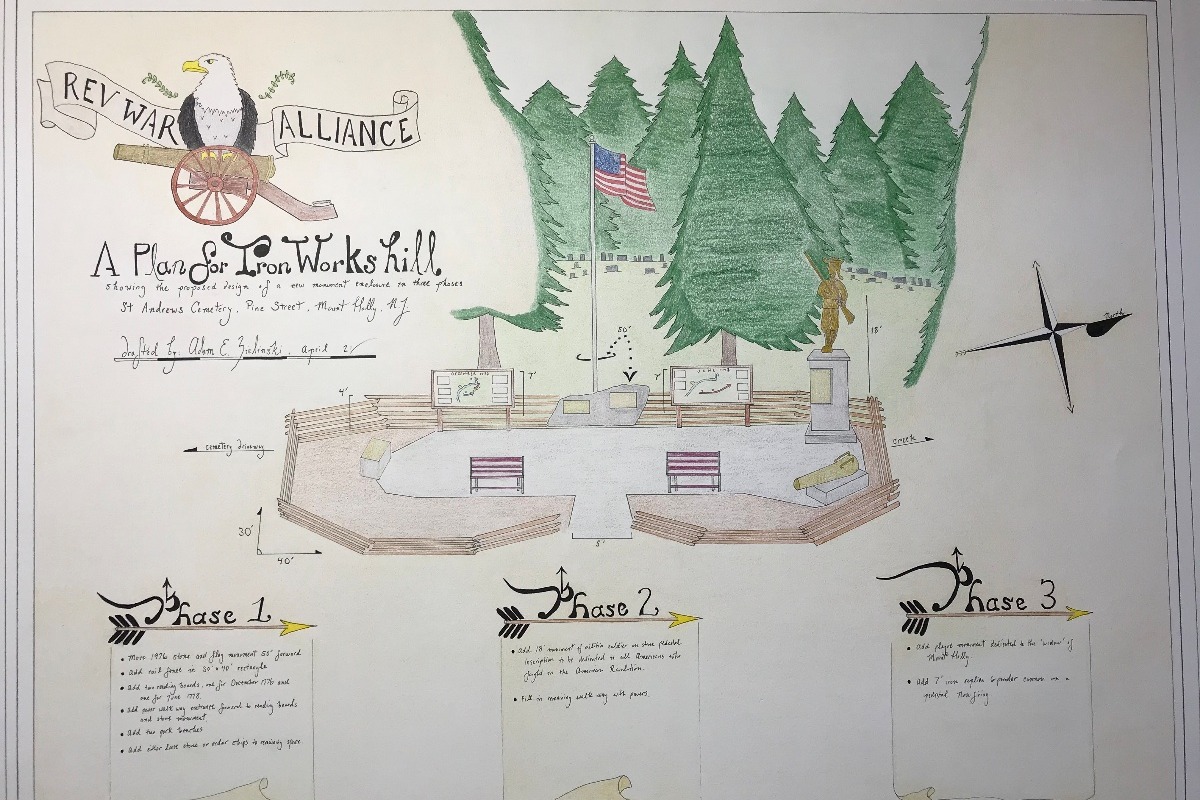
Iron Works Hill Battle Memorial

To support this effort, please see the GoFundMe page.

From our friends at the Rev War Alliance of Burlington County (New Jersey):

In December 1776, the American Cause for independence was at an all-time low. After losing New York to the British, General George Washington’s Continental army limped into eastern Pennsylvania broken and on the verge of defeat. Against all odds, Washington chose to attack the garrison at Trenton on December 26. The crossing of the Delaware River and victory that followed are widely recognized as having saved the American Revolution. What is less known are the events that occurred in Burlington County, New Jersey that affected this battle. 

Between December 21-23, 1776, Hessian detachments under the command of Colonel Carl von Donop were busy prodding the countryside south of Bordentown. American Colonel Samuel Griffin, with a force of 600 mixed units (more than half no older than 15 years old), established a foothold at Mount Holly. Two days of harassment at Petticoat Bridge (Mansfield Township) convinced von Donop that rumors of an American force of 3,000 at Mount Holly were true. On his own authority, the Hessian colonel moved his force of 2,400 on the morning of December 23. What transpired were a series of firefights at Petticoat Bridge, the Mount (along Woodlane Road) and finally at Iron Works Hill on the southside of the Rancocas Creek. The American forces retreated to Moorestown, leaving Mount Holly fully occupied by the Hessian forces. Instead of returning to Bordentown, von Donop stayed. Why? Our answer comes in the journals of Burlington resident Margaret Hill Morris and Hessian Jager Captain Johann Ewald. Both write of a “beautiful young widow” who kept von Donop occupied for three days. The Hessians remained at Mount Holly, more than a day’s march from Trenton. On December 26, a bugler rode into town delivering the news of Washington’s victory. Had Colonel von Donop remained or returned to Bordentown prior to the attack, he would have been readily available to reinforce Colonel Johann Rall at Trenton, likely changing the outcome of the battle.

In 1976, a stone monument was erected at St. Andrew’s Cemetery on Pine Street in Mount Holly to honor the events that took place in December 1776. While this monument has served its purpose, we, the Rev War Alliance of Burlington County, feel the time has come to enhance the visitor experience with a new monument project. To coincide with the coming 250th of American Independence, we have received permission to add/build to the existing monument along Pine Street.

The provided sketch/plan is broken down into three phases with Phase 1 being the purpose of this fundraiser.

Continue reading “Help Expand a Battlefield Memorial Park”

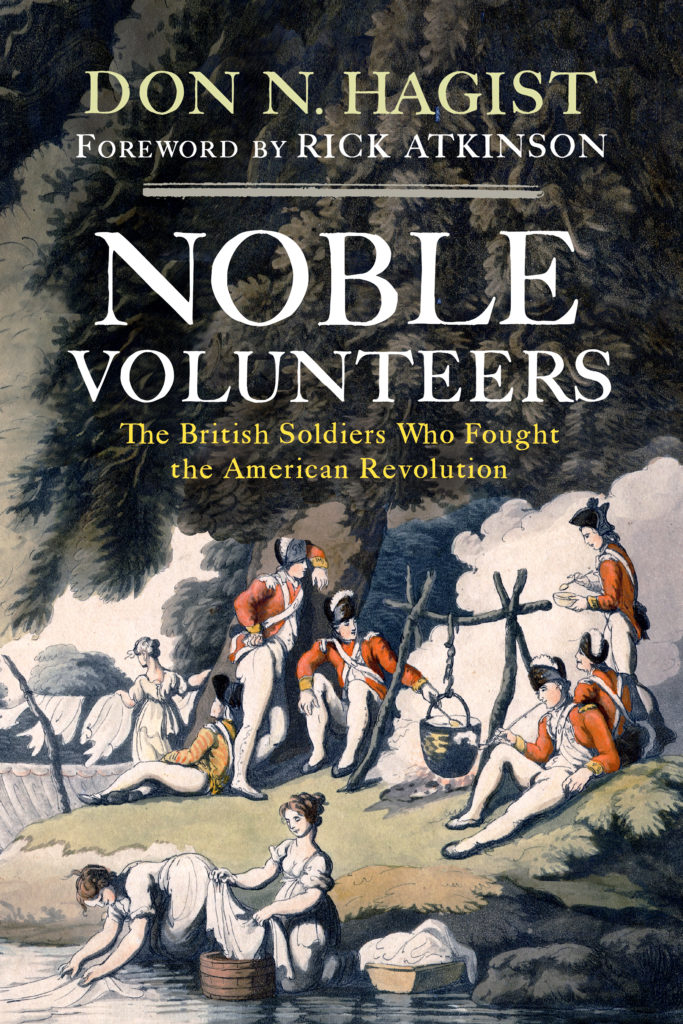
Review: Noble Volunteers: The British Soldiers Who Fought the American Revolution by Don Hagist

Don Hagist is one of our foremost American authorities on the common British soldier during the American Revolution. His latest book, Noble Volunteers: The British Soldiers Who Fought the American Revolution, is an institutional portrait of the British army that fought the American Revolution. Hagist has walked this ground before, most notably in British Soldiers, American War, which dedicated a chapter to a specific individual as a way of illustrating the experience of the common soldier. Noble Volunteers extrapolates on that, using soldier accounts, regimental paybooks, muster rolls, pension applications, and any other available material to give us an integrated picture of the entire army and how it functioned. It’s an extraordinarily valuable book.

Continue reading “Review: Noble Volunteers: The British Soldiers Who Fought the American Revolution by Don Hagist”

Review: To The End of the World, Nathaniel Greene, Charles Cornwallis, and the Race to the Dan by Andrew Waters

Writing over thirty years after the fact, Henry “Light Horse Harry” Lee summed up the events of February 14, 1780 with the line, “Thus ended, on the night of the 14th of February, this long, arduous, and eventful retreat” (190). Upon hearing of General Nathanael Greene’s exploits in this movement, General George Washington wrote, “You may be assured that your Retreat before Lord Cornwallis is highly applauded by all Ranks and reflects much honor on your military Abilities.” (198).

What Lee would remember as “eventful” and Washington and fellow military ranks “highly applauded” is remembered today as the “Race to the Dan.” This retrograde movement, undertaken by Greene’s forces from South Carolina to the Dan River in southern Virginia, is sandwiched between the engagements at the Battle of Cowpens in January 1781 and the British pyrrhic victory at Guilford Court House in March 1781. Yet, this retreat may be on the turning points in the southern theater that led the British, under Lord Charles Cornwallis to his eventual demise at Yorktown in October 1781.

Great historians, such as John Buchanan is his monumental work The Road to Guilford Court House have covered with broad strokes this period of time but a dedicated study was much needed in the historiography of the American Revolution. Insert Andrew Waters, writer, editor, and conservationist, whose name may be familiar from previous works such as The Quaker and the Gamecock: Nathanael Greene, Thomas Sumter, and the War for the Soul of the South. His latest book, To The End of the World, Nathanael Greene, Charles Cornwallis, and the Race to the Dan, captures this important military movement while providing an expose on the leadership of Greene woven in. The title of the book is pulled from a quote by Brigadier General Charles O’Hara, Cornwallis’s second-in-command during this campaign. With a background in land conservation with a focus on river corridors and watersheds, Waters found a connection with Greene, who studied the various waterways—or ordered subordinates—to study the various rivers, to better understand the topography for military campaigns.

After a stint in Salisbury, North Carolina, Waters became fascinated with the Race to the Dan story and decided to plunge in to understanding this period of the American Revolution. He found that “the Race to the Dan is a remarkable tale, fit for cinema or an epic novel, and not only for its accounts of four narrow escapes across its four rivers” (xv). He was drawn “to its story” (xx) and any reader of the book is the beneficiary of that discovery.

Along with weaving in the innate leadership qualities of Greene, Waters brings to light the importance of military leaders not as well-known such as William Lee Davidson, William R. Davie, and Edward Carrington with more household names of Lee, Daniel Morgan, and Otho Holland Williams. Throw in the names of Cornwallis, O’Hara, and Banastre Tarleton, and the pantheon of American Revolutionary personas is complete.

In this approximate month-long retreat, Greene saved the American Revolution in the southern theater and set in motion the events that led to the climactic victory at Yorktown. Waters, with his 2020 publication, has now helped save the story of the Race to the Dan from its unintended lapse into obscurity.

Information:

Published: 2020 (Westholme Publishing)

264 pages, including index, footnotes, images, and maps

Secrets of the Patriot Limbers

Emerging Revolutionary War welcomes back guest historian Karl G. Elsea

When visiting Revolutionary War battlefields there are often replica field guns on the grounds. Not shown, in almost all cases, is the vehicle that pulled the gun to the battle – the limber. Though less “cool” it was essential.

Author’s limber and photo. Obsolescent British design with cart hook-up hardware modification

Today, there is no surviving original Patriot field gun limber from the American Revolutionary War. That is a problem when attempting to reproduce representative Patriot field gun limbers. The normal starting place, Muller’s A Treatise of Artillery, does not include information concerning British field (light) gun limbers. Muller’s Treatise only contains information on limbers for medium and heavy guns.

The absence of any original limbers is especially gulling because the Patriots had access to both obsolescent designs and the most advanced designs. The Hessian field gun limber was probably the most advanced limber design in 1776, and the Patriot forces captured six of them at Trenton on December 26, 1776. The Hessian limber design had three important improvements; firstly, the pintle (pin that connects the gun carriage to the limber) was behind the axle of the limber thus allowing a shorter turning radius and less likely damage to the gun carriage. Secondly, an ammunition box containing sixty rounds was on the limber. Thirdly, two wheel-horses were used instead of one thill horse thus providing twice the braking power. It would be interesting to know if the Patriots reproduced or incorporated those design elements.

Continue reading “Secrets of the Patriot Limbers”

“Rev War Revelry” War on the Chesapeake!

The Star-Spangled Banner and the burning of Washington City are the enduring legacies of the 1814 Chesapeake Campaign. These two events provide contrasting impressions of the American experience in the War of 1812. One conjures up an image of an American flag resiliently flying above Fort McHenry’s ramparts, denying the British entry into Baltimore. The other marks a low point in the American war effort, when politicians fled the nation’s capital followed by British soldiers, who burned many government buildings in the new nation’s capital city.

War along the Chesapeake Bay was not a limited episode in the War of 1812. There, Americans and British soldiers waged a hard and destructive war against one another. They fought pitched battles at Bladensburg and North Point. This campaign, remembered in popular memory for the creation of a national anthem and the burning of a nation’s capital, is more complex than just these two events.

Join Emerging Revolutionary War historians and guest historians John Nathan McDonald and George Best as we discuss the causes, movements, and impact of the 1814 Chesapeake Campaign. So, with your favorite beverage log onto our ERW Facebook page for the next historian happy hour as we discuss the obscure War of 1812 this Sunday, May 30, at 7 pm.