Join ERW this Sunday evening, December 12 at 7 p.m. ET on our Facebook page to watch John Diaconis, President, Libby Del Greco, Secretary, and Lynn Briggs, Board Member of the Friends of Miller House/Washington’s HQ as they discuss George Washington during the battle of White Plains in late October 1776. Since their formation in 2011, the Friends of Miller House / Washington’s Headquarters have spent hundreds of hours working with Westchester County and the Town of North Castle trying to save Miller House / Washington’s Headquarters. Hear their preservation story, new exciting research and interpretation, and the importance of this site during the entirety of the Revolution.
Ms. Briggs is the Chairman of the Yorktown Heritage Preservation Commission, and a member of the Board of Trustees for the Westchester County Historical Society and the Board of Directors for Friends of Miller House/Washington’s Headquarters, Inc. She is a former executive with three Fortune 200 companies, with domestic and international management experience.
Libby Del Greco is the Board Secretary of the Friends of Miller House/Washington’s Headquarters, Inc. She has worked as a fundraiser for nearly fifteen years for the Wildlife Conservation Society at the Bronx Zoo, and holds a degree in American Studies from Siena College. She is also an alum of the Gettysburg Semester, Fall 2005 at Gettysburg College.
John S. Diaconis practices in the area of insurance and reinsurance claims and acts as an arbitrator in reinsurance matters, having been certified by ARIAS U.S. He has almost thirty years of experience in the industry as both in-house and outside counsel. He received his J.D. from Drake University Law School, where he was a member of Law Review, and his LL.M. from New York University School of Law.
As always, if you are unable to make it Sunday evening, you can catch this and dozens of other Rev War Revelries on our YouTube page!
Often around the Christmas holiday, history enthusiasts don reproduced uniforms of American, British, and Hessian soldiers and reenact the crossing of the Delaware River, the Battles of Trenton, and the Battle of Princeton. These historical reenactments are usually well attended by reenactors and visitors, and they offer an opportunity to celebrate the important military actions and give a small glimpse into the past at the sites where these historical events actually happened.
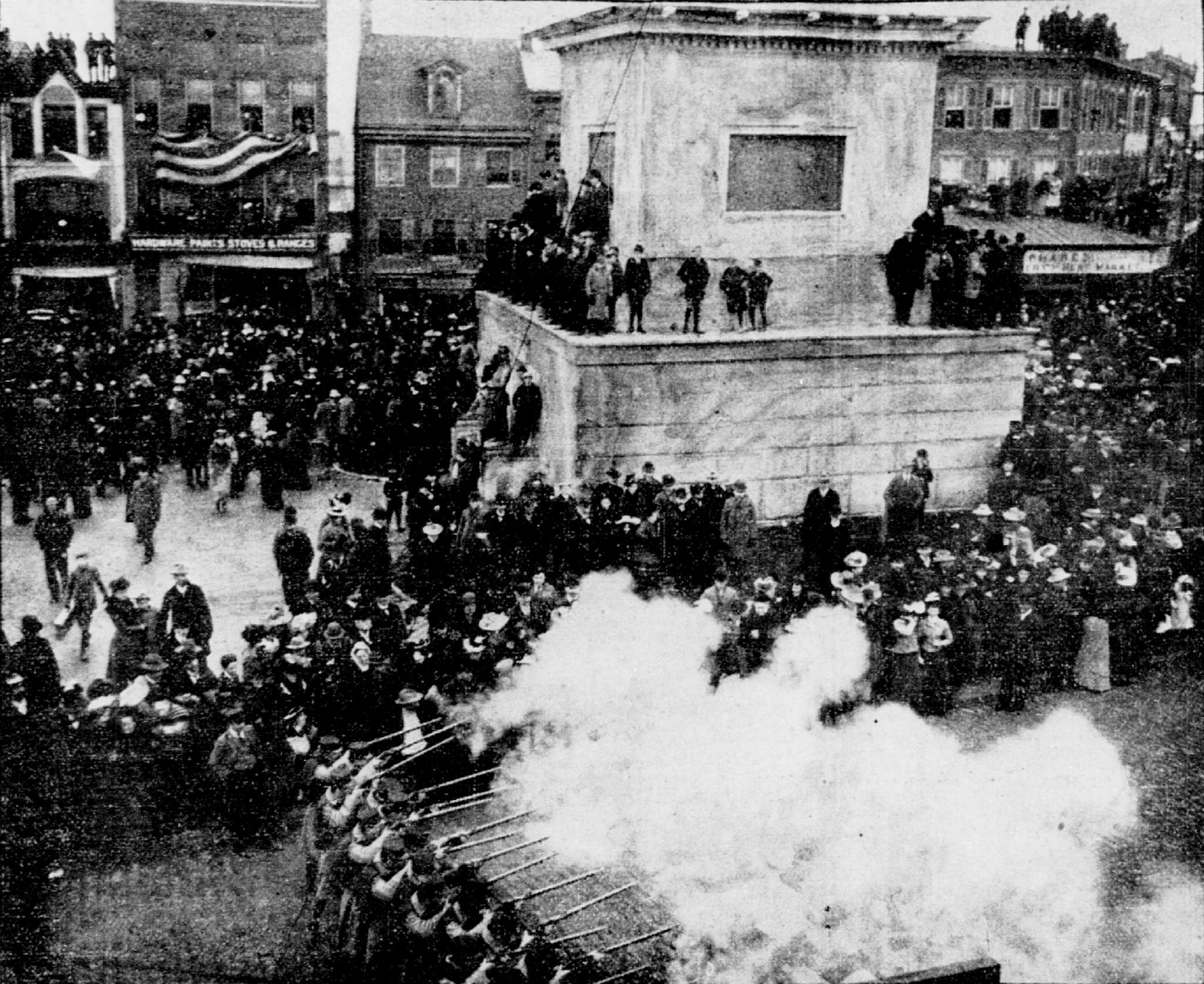
Battle reenactments are not a new phenomenon. In fact, George Washington’s army engaged in battle reenactments, or as they often described them “sham fights” or “sham battles”, at Morristown in 1780. In the early and mid-nineteenth century, many of these sham battles occurred to mark historic anniversaries of Revolutionary War battles, sometimes with veterans of the battles engaged in the sham fights themselves. Trenton would often host a sham fight in the streets of the city to mark the anniversary of that important battle in the 1840s and 1850s. But perhaps the most significant one occurred to mark the centennial of the battles of Trenton and Princeton in December of 1876 and January of 1877 when among others, veterans of the American Civil War participated in the reenactment of the battles.
Spectators watch a sham battle at the Trenton Battle Monument in the 125th anniversary sham battle in 1901. (The New York Herald)
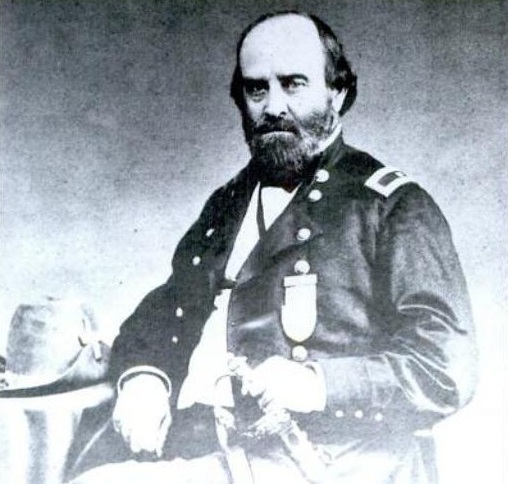
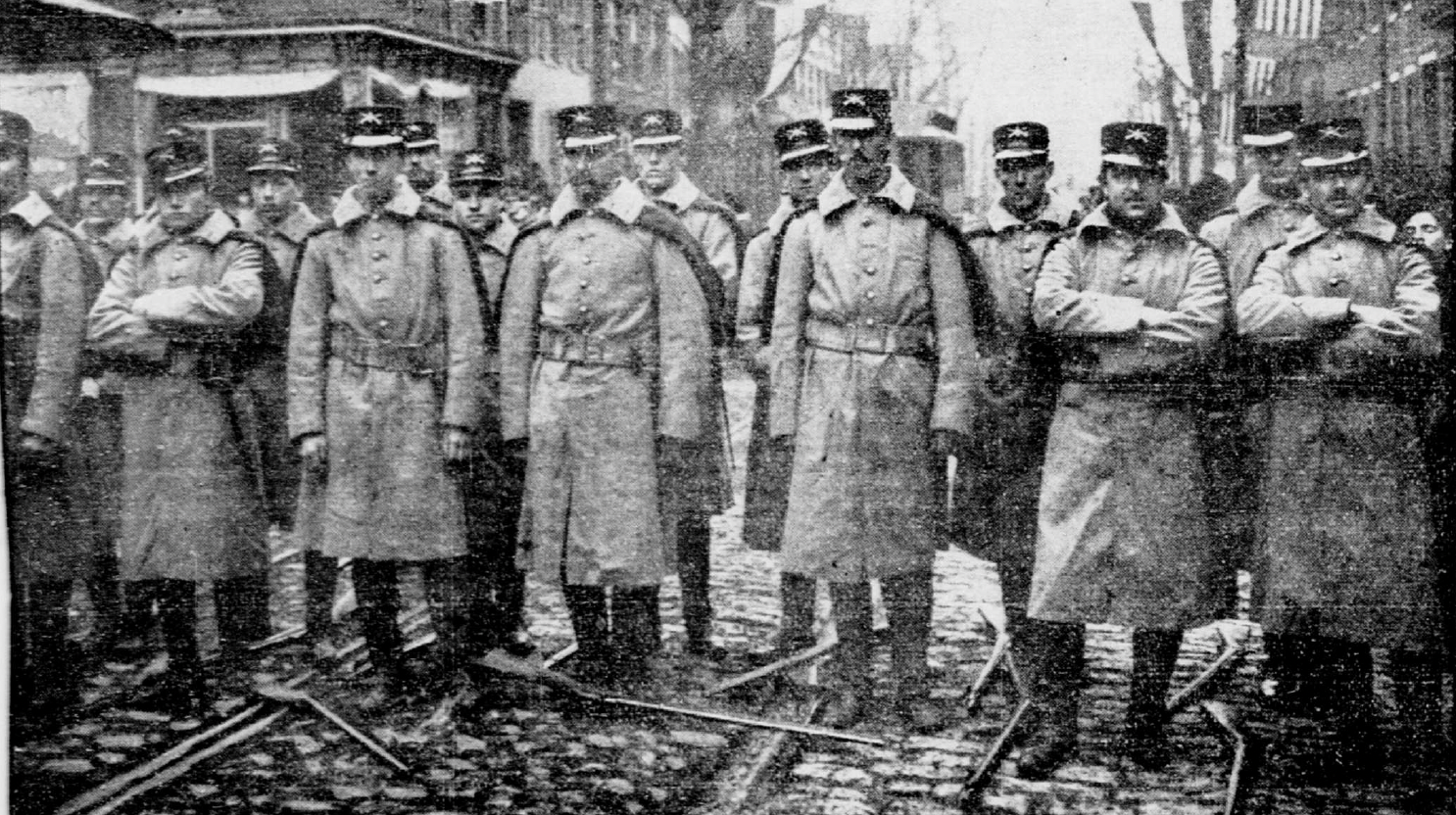
While the nation did a major anniversary celebration in Philadelphia for the centennial of July 4th in 1876, the people of Trenton and Princeton did not forget to mark the important battles that helped to secure our independence. Despite the national importance of this campaign, it was primarily a regional affair, with most participants coming from New Jersey or Pennsylvania. On December 26, 1876, about 1,200 men reenacted the crossing of the Delaware, the march on Trenton, and the battle of Trenton. Just eleven years following the end of the American Civil War, many of the participants were veterans of that recent conflict. Many local militias and national guard units formed the groups of men portraying the Continentals and Hessians. At this time, there was little emphasis on historical accuracy with regards to the uniforms and weapons that were used in 1776. Many of the men used percussion cap rifled muskets instead of the flintlocks used in during the real battle and wore 1876 style clothing. The honor of portraying General George Washington was awarded to General William Snyder Truex, who commanded a brigade of Union soldiers during the 1864 Battle of Monocacy, which played a pivotal role in preventing the Confederates from capturing Washington, DC. The New York Herald noted that Truex was “an old soldier and whose short stumpy figure and thick set, round head and dark, fall, stubbly beard, as well as the general outline of whose face, strongly reminded one of the hero of the last war, by some considered our second Washington, General Grant.”
William Snyder Truex, who portrayed General Washington at the 1876 Trenton sham battle. (Find-a-Grave)
The volunteer “Continentals” began the day by marching from Trenton up to McConkey’s Ferry in the middle of the night. They arrived around one in the morning and enjoyed “centennial whiskey” by a fire at the ferry house inn before they crossed the river. However, it was so cold that the Delaware River was completely frozen over. Undaunted the men walked across the ice to the New Jersey side of the river. From there they marched 9 miles to Trenton, following the same path Washington’s troops took. They arrived at about 9 a.m. and engaged the “Hessians” in town. The two sides fired blank cartridges at each other through the town and fired cannons as well. The generals ordered the Continentals to charge into the Hessians and they engaged in mock hand to hand combat. The New York Herald noted that not all the fighting was fake, as two drunken “Continentals” engaged in a real fist fight and some other minor injuries occurred as the two sides fired at each other at point blank range. Finally, the “Hessians” surrendered and two sides enjoyed a large parade. Among the participants in the parade was Adam Exton, a mainstay in Trenton society (and interestingly, the inventor of the oyster cracker) and a major proponent of the Trenton sham battle. After the parade they all enjoyed a feast with toasts, addresses, and patriotic songs.
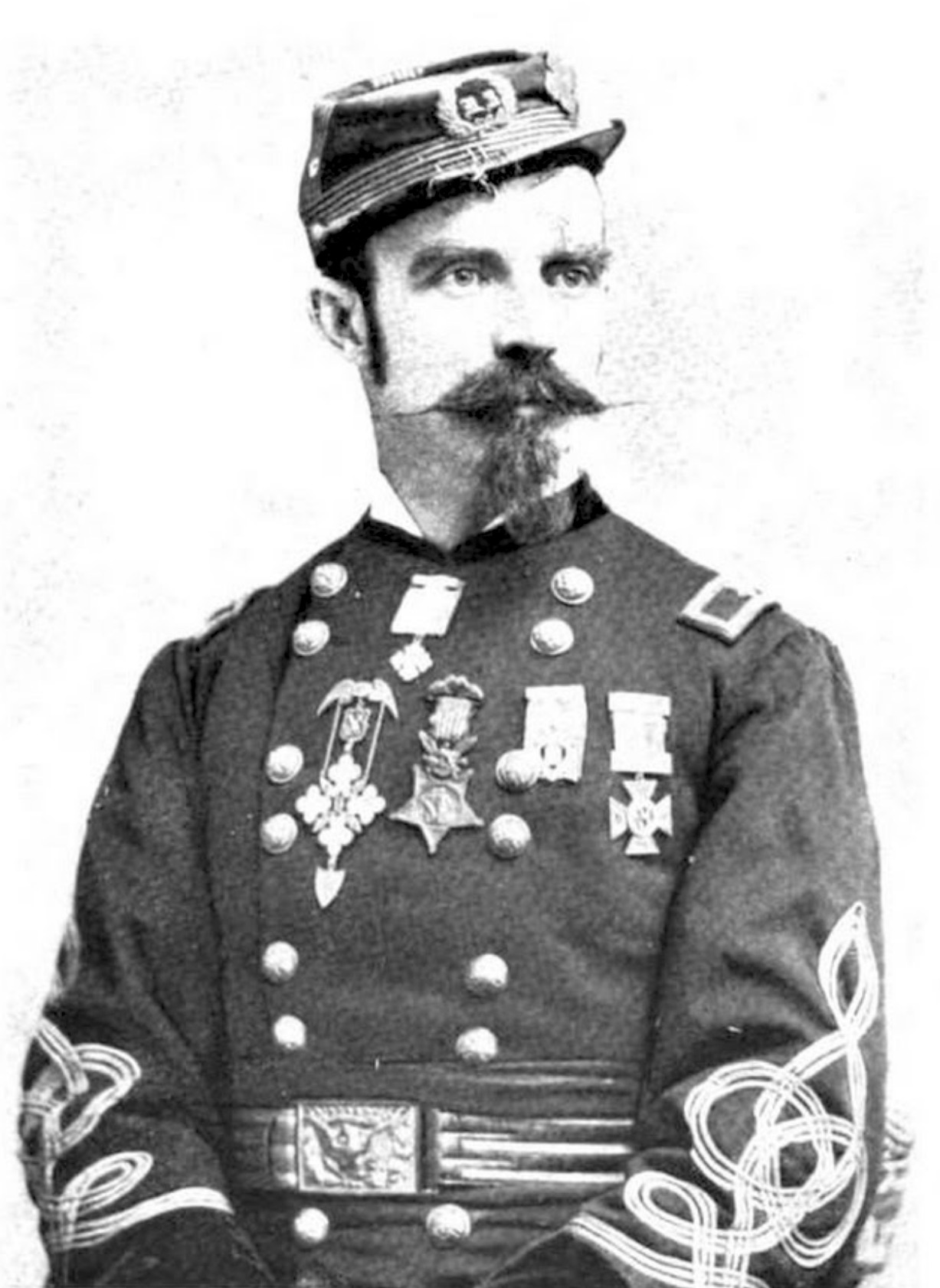
James Madison Drake, who portrayed General Washington at the 1877 sham battle at Princeton. (Wikipedia)
Not to be outdone by their neighbors in Trenton, on January 3, 1877, Princeton celebrated their history with another sham battle. Hundreds of militia men gathered to recreate the battle on the anniversary. Portraying General Washington in this battle was James Madison Drake, who was awarded the Congressional Medal of Honor for heroics while serving as a lieutenant in the 9th New Jersey during the Battle of Bermuda Hundred. Again, the troops largely wore their modern militia uniforms and Drake wore his Medal of Honor in the sham battle. (Drake’s ancestor was the owner of the Drake House, where Washington held a council of war in 1777 and is now a museum). Among the troops he commanded was Company C of the 3rd New Jersey National Guards (Phil Kearny Guards). General Philip Kearny had been killed during the Civil War at the Battle of Chantilly on September 1, 1862. The Sun newspaper noted that the Kearny Guards carried with them “the battle flag of the lamented General in whose honor it is named. In the center of the flag is a red Greek cross, Gen. Kearny had it with him at the battle of Chantilly, in which he yielded up his life blood on the altar of his country. It is but a remnant now; not more than half of it still clings to the staff.”
January 3 was a cold clear day, but there was more than a foot of snow on the ground. The troops paraded out of Princeton south to the site of the old battleground. The “Continentals” marched first and were followed by the “British.” On account of the snow, they didn’t make it all the way to the original battleground where the Mercer oak marked the traditional location where General Hugh Mercer was dragged to after being bayoneted. Instead, they stopped a little closer to the town and engaged each other in the sham battle. The men portraying Mercer’s brigade were driven back by the “British” and the man portraying Mercer fell to the ground “mortally wounded.” As The Sun noted, “Just then Gen. Drake, in imitation or Washington, appeared above the crest, leading the Philadelphians.” In dramatic fashion, the “Continentals” drove the “British” back onto the road and up into the town. The sham battle continued up around Nassau Hall, where the “British” finally surrendered ending the battle. The day ended with a feast for the participants.
“Hessian” soldiers throw down their arms following the 1901 sham battle in Trenton. This shows how these early reenactments were less concerned on historic clothing and weapons. (New York Herald)
The tradition of holding a reenactment or sham battle has continued off and on over the past 150 years. Usually, Washington Crossing Historic Park hosts a reenactment of Washington crossing the Delaware every Christmas and the city of Trenton and the Old Barracks Museum hosts a reenactment of the battles of Trenton on the weekend after Christmas (known as Patriots Week). While the crossing is happening this year, the 2021 battle reenactment has been canceled due to COVID. Also, this year, the Princeton Battlefield Society will be hosting a reenactment of the Battle of Princeton on the original ground on January 2. These anniversary reenactments are great ways to remember our nation’s history and a perfect time to make a pilgrimage to visit the historic sites, something we just did a few weeks ago. While it is great to see a modern reenactment and think of the sacrifice of those original patriots, it is fascinating to think of veterans of America’s bloodiest war taking part in the reenacting of America’s Revolutionary War.
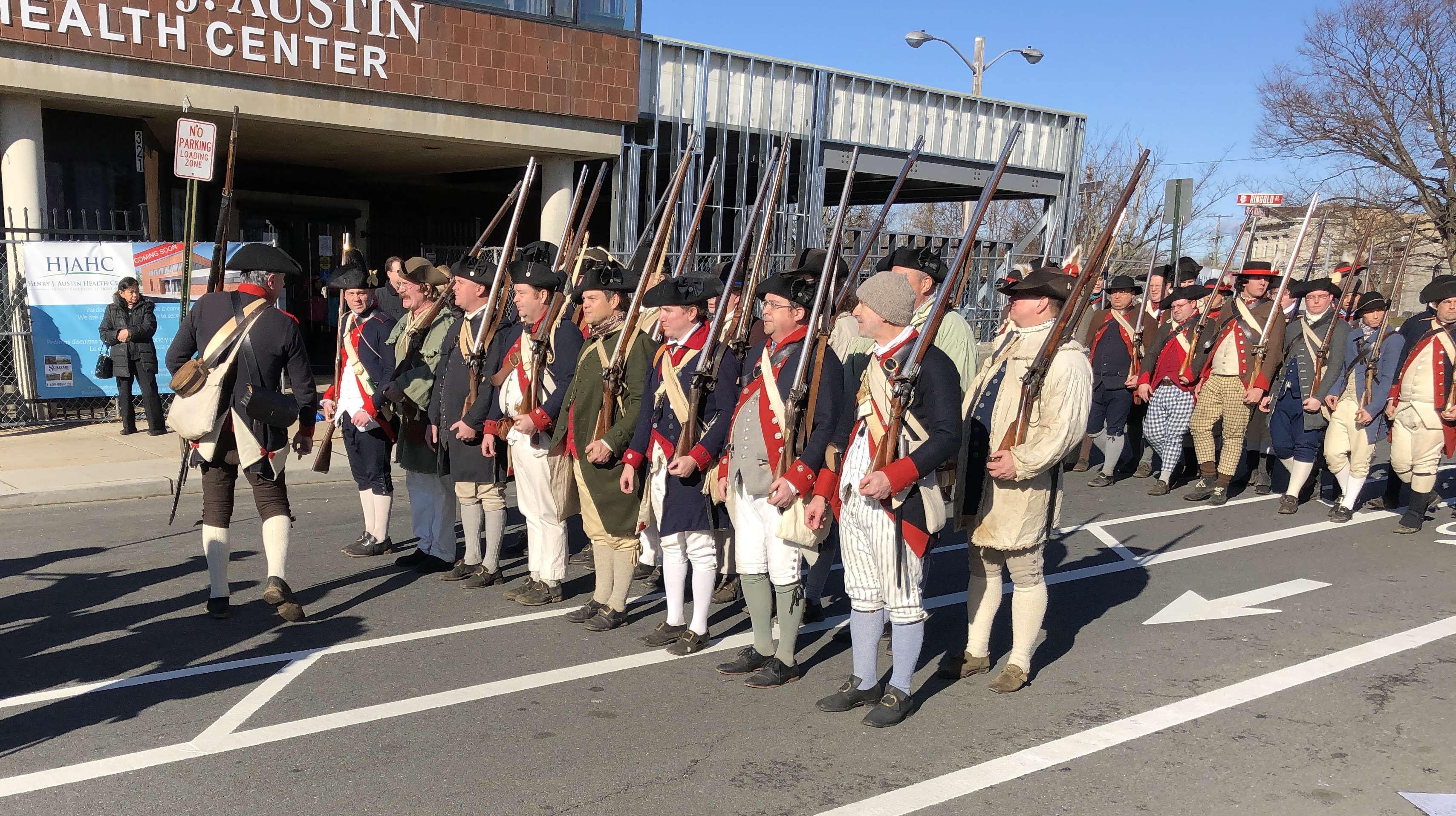
Revolutionary War reenactors (including the author) march down Warren Street in the 2018 reenactment of the Battle of Trenton. (author photo)
From November 2, 1777 until early-December, General George Washington and the Continental Army occupied a defensive position at White Marsh, approximately 13 miles northwest of Philadelphia. In early December, a series of small skirmishes erupted along the American lines in the last actions of the campaigning season of 1777. Frustrated by Washington’s refusal to emerge from his entrenchments, Sir William Howe led his British columns back to their winter abode in Philadelphia.
Washington moved the army shortly thereafter toward Valley Forge and their winter cantonment, arriving in that vicinity on December 19. As Washington prepared for the winter of 1777-1778 you can also start the preparations to follow this route with Emerging Revolutionary War on the weekend of November 11 – 13, 2022 on the Rise of the American Army: Valley Forge and the Battle of Monmouth Bus Tour. To secure your spot and further information, click here (or the link on the banner at the top of this page).
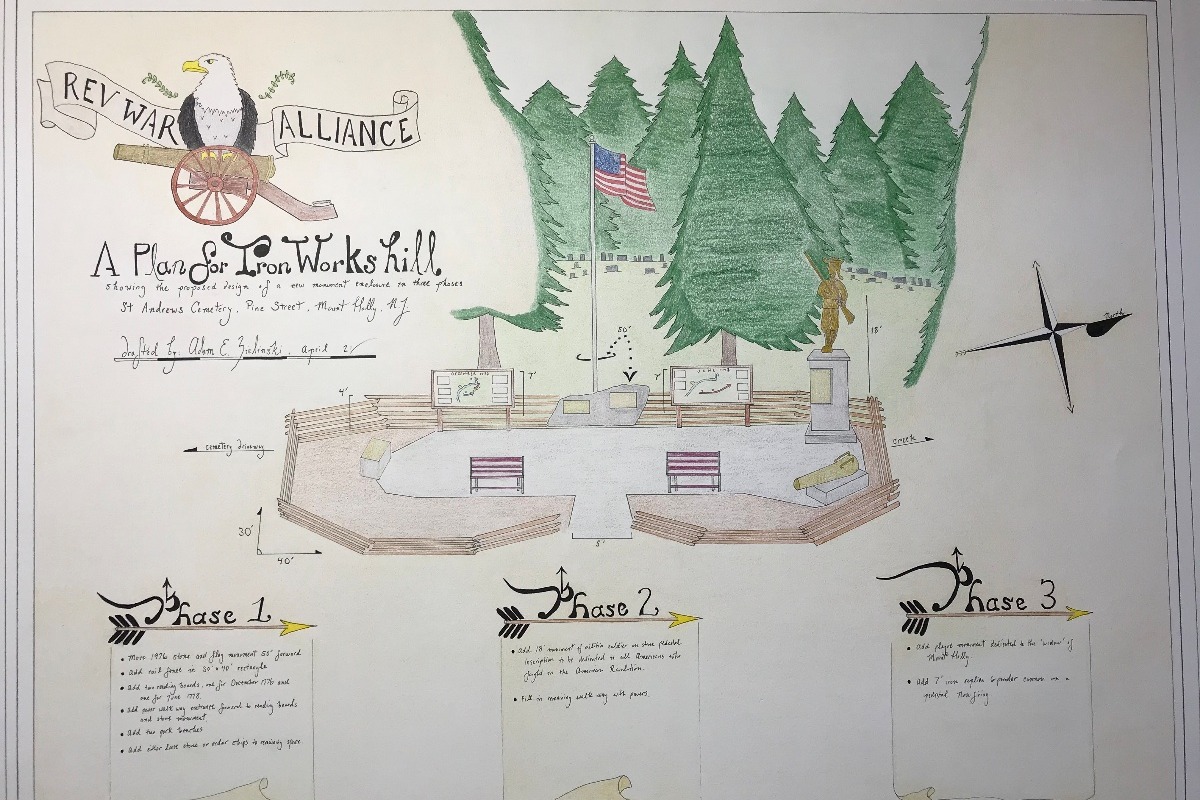
After a successful fundraising, the Alliance will be hosting a ribbon cutting for the public at the site of the monument (128 Pine St, Mt Holly, New Jersey) this Saturday (December 11) at 11 a.m. There will be reenactors and fife and drums. This project demonstrates how important local preservation groups are in memorializing the sites of our nation’s founding and the telling the story of the fight for freedom for future generations.
Searching for the perfect gift this year for the Revolutionary War enthusiast in your life? Looking to put something on your own list for Santa this year? Get one of the Emerging Revolutionary War books, or get them all! This year we have four titles available:
These heavily illustrated books offer a great, readable overview of these important military campaigns and include self guided driving tours of the battlefields.
Here’s some praise from participants on our first bus tour this year at Trenton and Princeton:
“Loved learning the story of what happened in Trenton and Princeton during that part of the Revolutionary War. I was amazed at the distances Washingtons men had to travel for each part of the battles. Wonderful presentations and the intelligent questions asked by participants!”
“You guys all did an excellent job. The live interp was why we came; and it was great.”
“Excellent tour; I tried to do both battles on my own several years ago but my self-tour was a complete failure compared to this ERW tour.”
“Loved the tour! Cannot wait for future tours!”
“Having toured some of these sites previously it was most enjoyable and I learned much more.”
We hope you all plan to join us in 2022 in exploring the battlefields where our liberty and independence was won!
Merry Christmas from all of us at Emerging Revolutionary War!
Emerging Revolutionary War welcomes back guest historian George Kotlik
Introduction
By 1775, King George III ruled over nineteen provinces in British North America.[1] Six remained loyal to the Crown during the Revolutionary War. Historians have so far explored, in great depth, the various reasons why the thirteen original colonies rebelled. On the flipside, why did some colonies remain loyal? What role did colonial governors play in securing their province’s loyalty during the rebellion? In an attempt to answer these questions, this research will focus on British North America’s mainland colonial governors and general assemblies during 1775. Data on the backgrounds of each British colonial governor on the North American mainland was gathered from their respective biographies. Hereafter, each governor’s background is considered by colony, listed in alphabetical order. Each biography is brief and not meant to be comprehensive. There is not enough time or space in this paper to accomplish that end. Instead, the biographies help determine the type of individual who governed each province at the rebellion’s onset – a unique factor that I argue contributed, in whatever small way, to a colony’s political disposition during the American Revolution. In addition to looking at provincial executive leadership, I have also inspected general assemblies. General assemblies were an important aspect in this research due to the fact that the mere presence of an assembly influenced a colony’s political disposition in 1775. What’s more, colonial governors wielded the authority to dissolve assemblies. That connection, in addition to the assemblies’ influence on provincial loyalty, I argue, merits their inclusion in this study.[2]
Our monthly recap of what our good friend and fellow historian Tom Hand has written on his blog, AmericanaCorner.
The Legacy of Paul Revere November 2, 2021
Paul Revere began his famous ride from Boston to Concord, around 11:00pm on April 18, 1775, informing the residents and militiamen that the British were on the march. He arrived in Lexington, a town about 10 miles from Boston, around midnight. Read more here.
Lexington and Concord: Minutemen in Arms November 9, 2021
The Battles of Lexington and Concord, fought on April 19, 1775, marked the start of America’s war for independence from England. The story of that fight is an inspiring account of how everyday Americans came together to resist the power of Great Britain. Read more here.
Lexington and Concord: The Shot Heard Round the World November 16, 2021
The fight between our Minutemen and the British regulars at Lexington was over in a matter of minutes, and the British began the seven-mile march to Concord. By now, reports of the shooting had reached the minutemen in the surrounding area, and they began to assemble. A bad day for the British was about to begin. Read more here.
The Battle of Bunker Hill November 23, 2021
The Battle of Bunker Hill, fought on June 17, 1775, is one of the most iconic and familiar events in American history. It was our first pitched battle against the British army and, although technically a defeat, the efforts of the American militiamen were inspirational. Read more here.
Emerging Revolutionary War wishes everyone a “Happy Thanksgiving!”
On October 3, 1789, George Washington, as president of the United States of America, issued a “thanksgiving proclamation” designating November 26 as a day of “public thanksgiving.” The statement found its way into newspapers, as depicted in the image below. The text of Washington’s proclamation is typed out below as well.
(courtesy of Mount Vernon)
“By the President of the United States of America, a Proclamation.
Whereas it is the duty of all Nations to acknowledge the providence of Almighty God, to obey his will, to be grateful for his benefits, and humbly to implore his protection and favor– and whereas both Houses of Congress have by their joint Committee requested me to recommend to the People of the United States a day of public thanksgiving and prayer to be observed by acknowledging with grateful hearts the many signal favors of Almighty God especially by affording them an opportunity peaceably to establish a form of government for their safety and happiness.
Now therefore I do recommend and assign Thursday the 26th day of November next to be devoted by the People of these States to the service of that great and glorious Being, who is the beneficent Author of all the good that was, that is, or that will be– That we may then all unite in rendering unto him our sincere and humble thanks–for his kind care and protection of the People of this Country previous to their becoming a Nation–for the signal and manifold mercies, and the favorable interpositions of his Providence which we experienced in the course and conclusion of the late war–for the great degree of tranquility, union, and plenty, which we have since enjoyed–for the peaceable and rational manner, in which we have been enabled to establish constitutions of government for our safety and happiness, and particularly the national One now lately instituted–for the civil and religious liberty with which we are blessed; and the means we have of acquiring and diffusing useful knowledge; and in general for all the great and various favors which he hath been pleased to confer upon us.
and also that we may then unite in most humbly offering our prayers and supplications to the great Lord and Ruler of Nations and beseech him to pardon our national and other transgressions– to enable us all, whether in public or private stations, to perform our several and relative duties properly and punctually–to render our national government a blessing to all the people, by constantly being a Government of wise, just, and constitutional laws, discreetly and faithfully executed and obeyed–to protect and guide all Sovereigns and Nations (especially such as have shewn kindness unto us) and to bless them with good government, peace, and concord–To promote the knowledge and practice of true religion and virtue, and the encrease of science among them and us–and generally to grant unto all Mankind such a degree of temporal prosperity as he alone knows to be best.
Given under my hand at the City of New York the third day of October in the year of our Lord 1789.
With the turkey eaten, Black Friday shopping completed, and a slate of American football watched, and prior to cyber Monday beginning, Emerging Revolutionary War invites you to tune in for a historian happy hour. This week “Rev War Revelry” returns to the French and Indian War and welcomes as guests Lake George Battlefield Park Alliance President John DiNuzzi and the Board of Trustee Member Lyn Hohmann.
The discussion will entail their organizations effort to preserve and interpret one of the America’s most historical places and hallowed ground.
“The Lake George Battlefield Park was the scene of major battles during the French and Indian War and American Revolutionary War, and the home of Fort George, a key anchor of first British and then American military strategies in those world-changing conflicts. Enveloped by the natural beauty of the Adirondack Mountains in the town of Lake George, the site’s history reflects its prominence as part of the crucial Hudson River-Lake George-Lake Champlain corridor in the mid-to-late 18th Century.”
The Lake George Battlefield Park Alliance’s effort to commemorate the ground is so invaluable to telling the overall story. Joining the two guest historians and preservationists will be ERW historian Billy Griffith who is an author on a book with the HistoryPress on the actions around Lake George.
Grab that last remaining beer, tune in to our Facebook page this Sunday, at 7 p.m. EDT, and hear the amazing work being done in New York. How else would you want to round out the holiday weekend?
The group at Washington’s Crossing with George Washington himself!
Over the past weekend, Emerging Revolutionary War historians led a bus tour of the battlefields of Trenton and Princeton. Based on Mark Maloy’s book, Victory or Death, the tour took participants throughout Pennsylvania and New Jersey following in the footsteps of George Washington’s army. Led by Mark Maloy and Billy Griffith, attendees were treated first to a Friday night lecture that explained the American defeats in the summer of 1776 that put Washington and his army in a dire position. That night guests were given tour packets and free tee shirts provided by our friends at Americana Corner. People were also able to purchase books from the Emerging Revolutionary War series, as all the authors were in attendance.
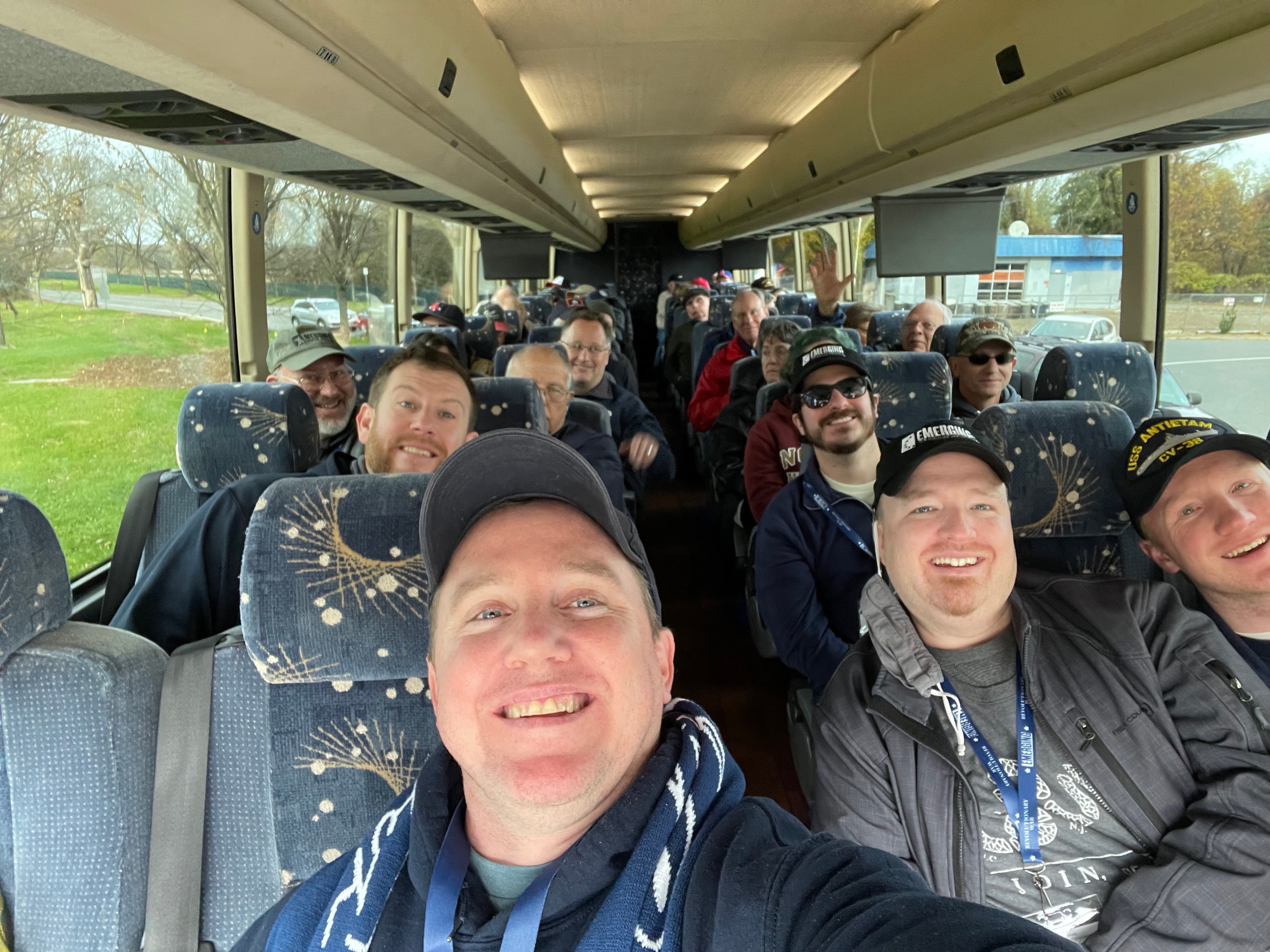
On Saturday, guests from as far as Alabama, Maine, and Ohio piled into a sold out 56 passenger bus. First we visited Washington’s headquarters from early December 1776 at Summerseat in Morrisville, Pennsylvania before driving by Washington’s headquarters where he hatched the plan to attack Trenton. We then drove by Nathanael Greene’s headquarters where Washington informed his commanders at a council of war about the plan. We visited the Thompson-Neely House and the nearby soldiers’ graves where numerous unknown patriots lie buried. Our last stop before lunch was the location location where Washington crossed the Delaware River at McConkey’s Ferry on Christmas night.
After a picnic lunch, the group crossed the Delaware themselves and traveled the same path the patriots took to Trenton. As we arrived in downtown Trenton a sudden and severe storm blew through, which added a flash of drama to an already dramatic story. The attendees braved the gusty winds and raindrops to listen about how the battle played out from the location of Col. Henry Knox’s artillery and walk down the streets those brave men fought on almost 250 years ago.
Mark Maloy describes the Battle of Trenton.
After looking at the site of some of the heaviest fighting on December 26, 1776, the group traveled down to the banks of the Assunpink Creek. There we learned about the intervening time between December 26, 1776 and January 2, 1777 and the Battle of Assunpink Creek that occurred on that day. After looking at a statue to George Washington, we went and saw the house Washington held a council of war in and made one of the boldest decisions of the war: to disengage the British and make an overnight 12 mile march to strike the British rearguard at Princeton.
We then loaded on the bus and traveled most of the route of Washington’s army and made it back to our hotel. After a fun evening of enjoying the company of others, we were ready for our final day of touring.
Mark Maloy and Billy Griffith describe the lead up to the crossing of the Delaware River.
On Sunday, the day was cool and clear. We traveled to Princeton Battlefield State Park. Here we learned about the meeting engagement that occurred on the morning of January 3, 1777. We learned how Washington rallied his breaking troops and led a charge against the British regulars. Following in the footsteps of the patriots from 1777, we walked across the field they did and saw the Mercer oak and learned of the brutal hand to hand combat that occurred in that area. We then walked to the site of a mass grave of British and American troops and listened to how the battle and campaign ended.
Afterwards we were treated to a look inside the Thomas Clarke House, where General Hugh Mercer died, and then traveled to our final stop. At the Princeton Battle Monument, we closed out the tour focusing on how the campaign has been remembered over the years and the importance of keeping those memories alive for future generations.
The tour was an outstanding success with many positive reactions and many signups for next year. Next year we are planning a tour of Monmouth battlefield and Valley Forge. Emerging Revolutionary War loves connecting the stories from history to the places where they occurred. If you would like to have a fun, engaging, and unique experience learning about the Revolutionary War, sign up today, as we expect it will sell out again!
A happy bus full of people after two days of exploring the Ten Crucial Days!








 Emerging Revolutionary War Era