I’m Too Sexy for My…Bavarian Fly

Emerging Revolutionary War welcomes guest historian Werther Young.

I’m Too Sexy for My…Bavarian Fly

By Werther Young

        Of all of the unique things that have managed to make it to the internet, a concise history of colonial men’s pants flies is surprisingly not one of them.

        Our story begins in the Renaissance in, where else, France.  King Henry III of France eschewed the old-fashioned dress and hose and embraced a new fashion, culottes, now known as “knee breeches.”

Henry III in his dress and hose

Henry III in his tony new culottes.

The fly of Henry’s pants was a simple affair, a rectangular panel sewn to the left side with buttonholes that buttoned over the right.  This simple and practical design became known as the “French fly” and became almost universal in Western Europe over the next 60 years.

Ann Bonny the pirate, in French fly trousers, ca. 1721.

Over time, Ann Bonny’s “long” French fly was perfected into the “short” French fly.  Anne’s fly extends from the inseam to the waistband. By merely sewing a few inches of the front seam together, the fly can be made shorter, removing a buttonhole and button or two. 

        These fly designs apparently did not reach into Eastern Europe, where presumably leather pants were as expensive as wool ones but lasted much longer, because they were never washed. Translating the French Fly into leather posed some problems, and so these leather pants had a different fly, essentially a hole in the center front with a panel buttoned over it that flipped or dropped up and down as necessary. This design caught on in the Alpine areas of central Europe, and especially in Bavaria under the label of “Lederhosen,” which is German for “leather pants.”  

“Short” French Fly Breeches, ca. 1750.

The Bavarian fly migrated further north, as in the Deutsches Museum in Berlin can be found a pair of enlisted trousers from the mid-1700s,  with a half drop front fly; that is, it opens only the right side.  This is essentially a cheaper fly, because it needs only one button to close, and does the same thing.

        By the middle 1700s, the French fly had been around for over 150 years, and someone in France started a different fashion (and outdoing the Huns) by putting the two -opening Bavarian fly on culottes, thus making the culottes “a la Bavarois,” French for “like the Bavarians.”  This was runway level high fashion for the time, and quickly spread among the well to do as the latest thing, with a new name, the “drop front” or “fall front” fly. Unfortunately, translating the design from leather, which does not unravel, to fabric, which does, made the Bavarian fly extremely complicated and therefore expensive. This of course added to its cachet, so much so that by 1775, it had reached the aristocracy even in the backwater of Colonial America.

Lederhosen

        Colonial Williamsburg has a fabulous collection of high-status men’s pants from the 18th century.  A survey thereof shows the number of French flies waning into the 1770s, and the number of Bavarian drop front flies waxing beginning in 1775, reaching a height about 1800.   Unfortunately, these are all very high-status garments, such as a pair of “button front breeches of cream-colored silk velvet, with repeat of small pink and green flowers self-covered buttons, those at knee embroidered with metallic silver thread. Silver galloon strap at knee.”  But did the states and Continent really issue enlisted soldiers what amounts to hand made Givenchy trousers? Of course not.

        The false idea that they did partially comes from a series of paintings done by Charles M. Lefferts in the early 1900s, later published as Uniforms of the Armies in the War of the American Revolution, 1775–1783. in 1926.

A Lefferts rendering of trousers a la Bavarois, 2d Maryland 1777.

Measuring this man’s height against the known length of his musket makes him about 6’4 inches tall, the height of actors Clint Walker, Chuck Connors, Clint Eastwood, and the average NBA basketball player.  If you look below the point of his vest, he is wearing drop front pants over his massive thighs. Curiously, he is also wearing a 1760s style skirted vest and long regimental coat.  Are we to believe that Maryland issued its men old fashioned vests and coats, but high fashion breeches?  Since Lefferts was born in 1873, he had no first-hand knowledge of his subject, we must look to period images.    

Alas, these are of little help.  It is difficult to discern whether any of the men in period paintings are wearing French Fly pants, Bavarian drop front pants, or anything else. The most informative images, the von German drawings, are unfortunately from the side, and of no help.

Von German “American Soldier” New York Hist Soc.  
Amerikanische Scharfschutz, Brown University

        Since information is so scarce, we must turn to the other reason we believe that rev war soldiers wore drop front pants.  Klinger’s Sketchbook ’76. Page 9 shows a pair of Bavarian drop front breeches, based on George Washington’s uniform in the Smithsonian, and Lt. Col. Tench Tilghman’s uniform from the Maryland Historical Society.  This is odd, because Washington’s uniform is from the 1794, 15 years after the war and at the height of the drop front craze.  Tilghman was the scion of a blue blood family, owned half of Baltimore, was an aide to Washington, and hobnobbed with Lafayette. Even if his uniform can be dated to the war years, it is not only a high-status uniform, but one of the highest status possible in America at the time; his not wearing Bavarian trousers would be of greater note. Neither are evidence that any of the 13 colonies nor the Continent paid to make their enlisted men such high fashion trousers. 

On Sketchbook page11, Klinger bases his Bavarian drop front overalls on unspecified plates in “Bernard’s History of England” and the images above. While these may establish Bavarian drop front flies supplied by the King George, it certainly does not necessarily mean that the colonies were doing so.

        Surprisingly, two pairs of enlisted overalls are known to exist, mistakenly labelled as “Pantaloons,” and residing in the Metropolitan Museum of Art’s Costume Department.  These are exquisitely made, and probably military examples, but unfortunately European, and from 1793 and later.  

        No credible evidence exists that any of the 13 colonies nor the Continent issued its troops Bavarian drop front pants.  This makes sense, as that design is difficult to make, does the exact same thing as the simple French fly, and fashionable pants do not really contribute much extra to Liberty.  Additionally, with all but the highest status clothiers making French fly pants, retraining them to cut out and make the new design would seriously impede production, even assuming that patterns and training could be somehow provided from Georgia to Vermont at a time when the men could barely be supplied a musket or shirt. In the War of the Revolution, the colonists were by all indications wearing French fly breeches and overalls, not drop front ones a la Bavarois.
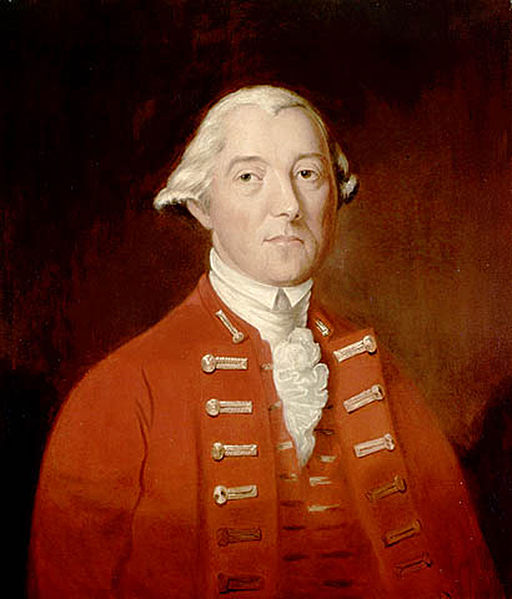
British Military Leadership and Provincial Loyalty

Emerging Revolutionary War welcomes back guest historian George Kotlik

Introduction

By 1775, King George III ruled over nineteen provinces in British North America.[1] Six remained loyal to the Crown during the Revolutionary War. Historians have so far explored, in great depth, the various reasons why the thirteen original colonies rebelled. On the flipside, why did some colonies remain loyal? What role did colonial governors play in securing their province’s loyalty during the rebellion? In an attempt to answer these questions, this research will focus on British North America’s mainland colonial governors and general assemblies during 1775. Data on the backgrounds of each British colonial governor on the North American mainland was gathered from their respective biographies. Hereafter, each governor’s background is considered by colony, listed in alphabetical order. Each biography is brief and not meant to be comprehensive. There is not enough time or space in this paper to accomplish that end. Instead, the biographies help determine the type of individual who governed each province at the rebellion’s onset – a unique factor that I argue contributed, in whatever small way, to a colony’s political disposition during the American Revolution. In addition to looking at provincial executive leadership, I have also inspected general assemblies. General assemblies were an important aspect in this research due to the fact that the mere presence of an assembly influenced a colony’s political disposition in 1775. What’s more, colonial governors wielded the authority to dissolve assemblies. That connection, in addition to the assemblies’ influence on provincial loyalty, I argue, merits their inclusion in this study.[2]

Continue reading “British Military Leadership and Provincial Loyalty”

“This Sudden Expedition”: The Capture of Fort Ticonderoga – 246 Years Later

On this date in 1775, an early victory was secured for the American cause along the western shore of Lake Champlain in New York. Led by Colonel Benedict Arnold and Ethan Allen, over eighty men surprised and overwhelmed Fort Ticonderoga’s garrison, capturing the strategic stronghold and much needed supplies and cannon for the Americans. On May 22, the Pennsylvania Packet reported on the news received from the north:

On Wednesday evening last arrived here, John Brown, Esq; from Ticonderoga, express to the General Congress, from whom we learn, that on the beginning of this instant, a company of about fifty men, from Connecticut, and the western part of Massachusetts, and joined by upwards of one hundred from Bennington, in New-York government, and the adjacent towns, proceeded to the eastern side of Lake Champlain, and on the night before the 11th current, crossed the Lake, with 85 men, (not being able to obtain craft to transport the rest,) and about daybreak invested the fort, whose gate, contrary to expectation, they found shut, but the wicker open, through which, with the Indian war whoop, all that could, entered one by one, others scaling the wall on both sides of the gate, and instantly secured and disarmed the sentries, and pressed into the parade, where they formed the hollow square;  but immediately quitting that order, they rushed into the several barracks on three sides of the fort, and seized on the garrison [commanded by Captain William Delaplace], consisting of two officers, and upwards of forty privates, whom they brought out, disarmed, put under guard, and have since sent prisoners to Hartford, in Connecticut. All this was performed in about ten minutes, without the loss of a life, or a drop of blood on our side, and but very little on that of the King’s troops.

In the fort were found about thirty barrels of flour, a few barrels of pork, seventy odd chests of leaden ball, computed at three hundred tons, about ten barrels of powder in bad condition, near two hundred pieces of ordnances of all sizes, from eighteen pounders downwards, at Ticonderoga and Crown Point, which last place, being held only by a corporal and eight men, falls of course into our hands.

By this sudden expedition, planned by some principal persons in the four neighboring colonies, that important pass is now in the hands of the Americans, where we trust the wisdom of the Grand Continental Congress, will take effectual measures to secure it….

The story of the capture of Fort Ticonderoga is as confusing as it is epic. Arnold, a Connecticut man, held a colonel’s commission to take the fort from the Massachusetts Committee of Safety, but he rode ahead to be part of the action without the men he was ordered to raise for the expedition; and Ethan Allen and his Green Mountain Boys of the Hampshire Grants were anti-New York and in search of their own glory after being asked to join a separately organized assault on the fort by Colonel Edward Mott sanctioned by Connecticut.

Ethan Allen demands the surrender of Fort Ticonderoga in this dramatized illustration. NYPL

The irony of all of this is that each plan formulated by those involved was done entirely without the advice or consent of New York, the very colony whose boundaries the fort was within. This occurred all during the commencement of the Second Continental Congress when New York was still weary of escalating hostilities with the King. Regardless of the awkward and unconcerted circumstances, it is undeniable that the fort’s capture helped secure victory for the Americans during the siege of Boston when fifty-eight pieces of ordnance were transported to assist General Washington in driving the British out of the city. Whether or not Allen heroically demanded Capt. Delaplace to surrender, “In the name of the Great Jehovah and the Continental Congress!” as is remembered (he almost definitely did not), is an entirely different question.

“Rev War Revelry” Returns to Lexington with Alex Cain

Approximately one year ago, Emerging Revolutionary War began a historian happy hour virtual chat on Sunday evenings. The goal was to share our passion for history, connect with each other during the pandemic, and have an excuse to drink a beer. Pretty much what we would be doing if we could gather in person.

Fast forward one year and the “Rev War Revelry” that was created has now become a fixture of our Sunday evenings; well every other Sunday after 36-consecutive weeks from April 2020 to November 2020.

The brain trust at Emerging Revolutionary War convened to discuss what we should do for the one-year anniversary. One logical conclusion came up. A return to Massachusetts!

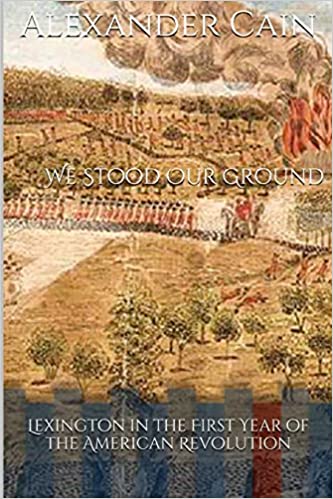
ERW welcomes guest historian Alex Cain, a Lexington historian and author, who will discuss what the Massachusetts town was like in 1775, the details of what happened on both April 18 and 19, 1775, and the misconceptions that sprung up from the beginning of the American Revolution. Of course, we welcome comments and questions through the hour.

Thank you for being part of the “Rev War Revelry” experience as we enter the second year of the historian happy hour. We look forward to seeing you on Sunday evening at 7pm EST on our Facebook page with your favorite beverage and question in hand.

The program can be accessed through Emerging Revolutionary War’s Facebook page. For those that cannot make the program when it is live, there will be a recording posted to our YouTube page within a few days following.

The Supreme Court at Risk

Emerging Revolutionary War welcomes back guest historian Dan Welch.

It’s December 9, 1775. Not only was the future of the fledgling Patriot’s cause at stake, but the future of our yet-to-be created Supreme Court was as well. 

Over the previous months, rebel forces in the area had been engaged with Lord Dunmore’s troops for control of military supplies in the colony of Virginia. This eventually led towards the area around Norfolk, where Dunmore’s forces had fortified a position opposite a river crossing that was strategic both militarily and economically. The position, south of Norfolk, at Great Bridge, was not uncontested. Just opposite Dunmore’s stockade, known as Fort Murray, on the other side of the river, rebel forces settled in, arriving on December 2.

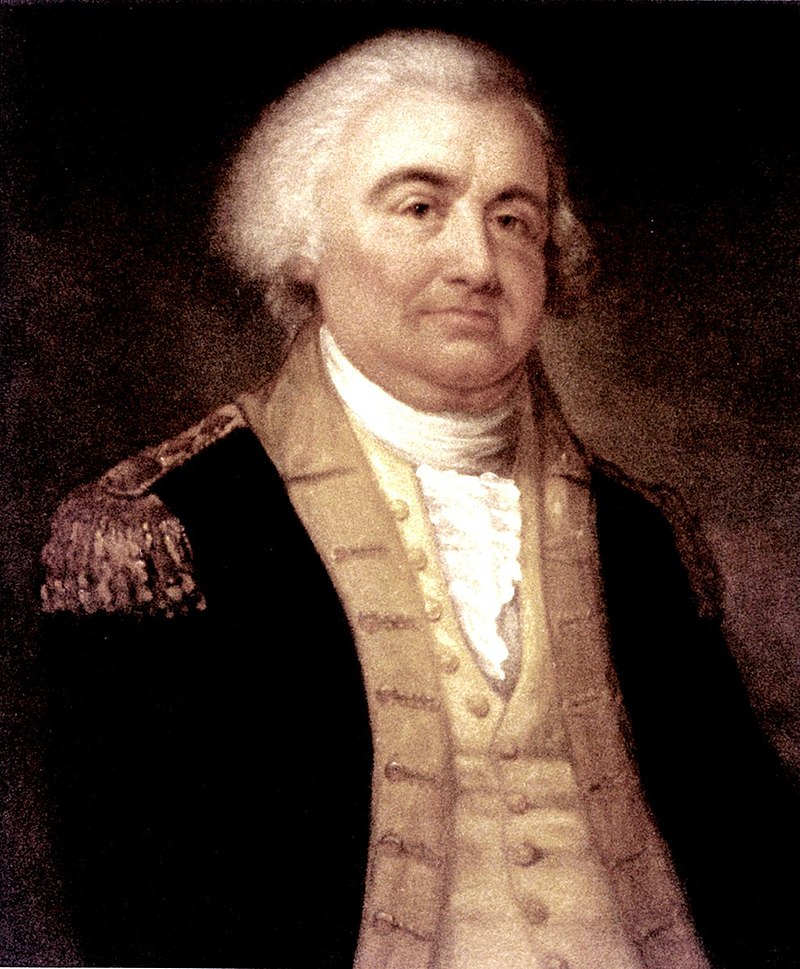
Col. William Wofford, in command of the 2nd Virginia Regiment and about 100 men of the Culpeper Minutemen battalion, began entrenching their position opposite Fort Murray while more militia from surrounding Virginia counties and North Carolina marched towards their aid. As more men arrived, as well as several pieces of field artillery, Lord Dunmore grew wary. He believed his only course of action was to attack Wofford’s men and drive them from the field. The attack was set to begin by dawn’s early light on December 9, 1775.

Found in the ranks of Wofford’s command that morning as the battle opened was a father and son, Thomas and John Marshall. Thomas, a vestryman, High Sheriff, and a member of the House of Burgesses had brought his son with him into the patriot ranks from Fauquier County.  By the time of the battle, Thomas, who had been active in the organizing and raising the Culpeper Minutemen, had been appointed its major. His son John, age 20, its first lieutenant.

John Marshall’s biographer later recounted the importance of this moment on the young nineteen-year-old, writing “The young soldier in this brief time saw a flash of the great truth that liberty can be made a reality and then possessed only by men who are strong, courageous, unselfish, and wise enough to act unitedly…He began to discern, though vaguely as yet, the supreme need of the organization of democracy.”

John Marshall went on to serve as the fourth Chief Justice of the United States Supreme Court in 1801. Marshall remained at the post for thirty-four years, and, during his tenure, the Marshall Court brought the role of the Supreme Court to the fore, issued more than 1,000 decisions, and set the precedent of handing down a single majority opinion.  These accomplishments and influences are just some of many that Marshall had on the Court, the federal government, and American history.  Today, on the 245th anniversary of the battle of Great Bridge, it’s interesting to pause, reflect, and wonder how very different the United States and the Supreme Court might have been had Colonel Wofford’s forces, among them John Marshall, been defeated that day at the “second Bunker’s Hill affair….”

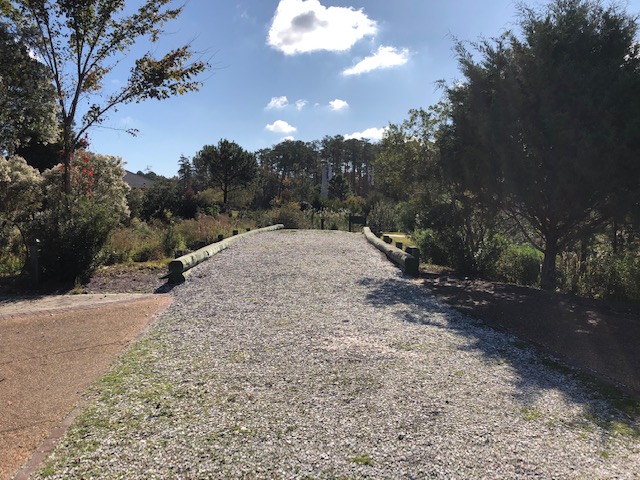
Pictures of Great Bridge Battlefield and monuments.

The Other Great Artilleryman

Mention the words “artillery” and “American Revolution” and what name instantly pops into your mind? Henry Knox.

Rightfully so.

Yet, like George Washington, Knox needed competent officers under him to successfully organize, train, lead, and develop the artillery arm of the Continental Army.

Enter John Lamb.

John Lamb
John Lamb

Born on the first day of 1735 in New York City, he was destined to rebel. The reason he was even born in New York City was due to the fact that his father, a convicted burglar had been sentenced for deportation to the colonies in the 1720s.

His early upbringing saw him become a prosperous wine merchant and he quickly ingratiated himself into the burgeoning patriot movement by becoming an integral part of the Sons of Liberty in New York City.  Continue reading “The Other Great Artilleryman”

“Rev. War Roundtable with ERW” Introducing Guest Historian….

Emerging Revolutionary War invites you to attend our “Rev War Revelry” tonight at 7 p.m. EST as we discuss the beginning of the American Revolution on April 19, 1775, 245 years ago today.

Yet, not only will Emerging Revolutionary War historians be on the call but we have a special guest historian joining us as well.

Stacey Fraser

Stacey Fraser is the Collections and Outreach Coordinator for the Lexington Historical Society. She has overseen new exhibits in the town and has assisted with the annual Patriots Day events. She will be on to share her expertise in this momentous day in American history and about what is happening, both virtually, and in the future with the Lexington Historical Society.

ERW looks forward to welcoming Stacey and all of you to our inaugural Zoom history call tonight!

Announcing “Rev War Roundtable with ERW” on Zoom!

On April 19, 1775, Massachusetts militia and minutemen responded to the call of British Regulars, “redcoats” marching from Boston to the town of Concord. What ensued was the “shot heard around the world” at the North Bridge in that town. What that shot signified was the changing course from words to war, that would define the relationship between 13 British North American colonies and Great Britain.

Now, 245 years later, Emerging Revolutionary War will turn that war back into words with its inaugural Rev War Revelry Zoom series. On Sunday, 7 p.m. EST, tune in to listen and watch historians from Emerging Revolutionary War discuss in an informal setting this momentous day in American history. Other topics are welcomed that pertain to the American Revolutionary War era as well.

As the title of the Zoom series relates, this will be similar to a tavern talk, much like the talks and information sharing rendezvous that went on in the 18th century, in places like Boston, where the road to revolution gained momentum as ales and spirits flowed. Thus, grab your favorite beverage, rest assured that ERW historians will be doing the same and join us, virtually, in our tavern Sunday evening.

The 245th Anniversary of "Give Me Liberty or Give Me Death"

On this date, in 1775, Virginian Patrick Henry, a delegate to the Second Virginia Convention from Hanover County, Virginia sat in on the ongoing debate at St. John’s Episcopal Church in Richmond, Virginia.

Patrick Henry

The 28-year old then stood to give his defense of his proposed amendments to the petition then being debated. Below is the last few lines of his now famous statement, with the last sentence being the one most remembered;

If we were base enough to desire it, it is now too late to retire from the contest. There is no retreat but in submission and slavery! Our chains are forged! Their clanking may be heard on the plains of Boston! The war is inevitable and let it come! I repeat it, sir, let it come.

Continue reading “The 245th Anniversary of "Give Me Liberty or Give Me Death"”

ERW Weekender: Ninety Six, The Site That Has It All

Emerging Revolutionary War welcomes historian Vanessa Smiley to the blog.

The thing about Ninety Six National Historic Site is that it’s unassuming exterior hides a wealth of history. It’s also nowhere near a major highway, meaning you have to want to get there if you’re thinking of visiting. And when you do get there, you will realize that there’s more history per acre than its demur entrance lets on. Located in the back country of South Carolina, Ninety Six has a history that speaks to the stories of Native Americans, the American frontier of the 18th century, and the American Revolution.

Entrance to the park
(courtesy of Ninety Six NHS, NPS)

The site at Ninety Six holds a treasure trove of study on these subjects. Native American, mostly Cherokee, activity was heavy in the area long before European settlers arrived. One of the earliest backcountry trading posts, established by Robert Gouedy in 1759, made Ninety Six a hotbed of trading activity thanks to its location at the crossroads of twelve different roads and paths, linking the area to nearly all parts of the colonies.

Continue reading “ERW Weekender: Ninety Six, The Site That Has It All”