“Rev War Roundtable with ERW” Focuses on African American soldiers during the American Revolution with author and historian, John U. Rees

Baron Ludwig von Closen, aide–de–camp to French General Rochambeau, wrote in July 1781: 

 “I had a chance to see the American Army, man for man. It is really painful to see those brave men, almost naked with only some trousers and little linen jackets, most of them without stockings, but, would you believe it, very cheerful and healthy in appearance … It is incredible that soldiers composed of men of every age, even children of fifteen, of whites and blacks, unpaid and rather poorly fed, can march so fast and withstand fire so steadfastly’.” 

During the American Revolution, African-Americans, both freed and enslaved, fought for the patriots. Some wielded muskets in militia outfits whereas others were part of the Continental army. African-Americans were there from the Siege of Boston through the end of the conflict. In fact, until the Korean War the American Revolution was the last time a United States military force was integrated in time of war.

Although publications have been printed about the 1st Rhode Island or comparative studies between Africans that served for the British or patriots. However, the field needed a dedicated study of African-Americans that served in the Continental army. Enter John U. Rees.

A lifelong Bucks County, Pennsylvanian who has studied and written about the soldiery of the American Revolution for the past three decades. He is published many times over and this Sunday, he will join Emerging Revolutionary War at 7 p.m. on “Rev War Revelry.”

The discussion will include his new book, “They Were Good Soldiers’: African-Americans Serving in the Continental Army, 1775-1783.” Which is now available for purchase online. ‘They Were Good Soldiers’: African Americans Serving in the Continental Army, 1775-1783 begins by discussing the inclusion and treatment of black Americans by the various Crown forces (particularly British and Loyalist commanders, and military units). The narrative then moves into an overview of black soldiers in the Continental Army, before examining their service state by state. Each state chapter looks first at the Continental regiments in that state’s contingent throughout the war, and then adds interesting black soldiers’ pension narratives or portions thereof. The premise is to introduce the reader to the men’s wartime duties and experiences. The book’s concluding chapters examine veterans’ post-war fortunes in a changing society and the effect of increasing racial bias in the late eighteenth and early nineteenth centuries. 

Besides the book dialogue, a general conversation about the roles of African-Americans in the American Revolutionary period. So, find your favorite brew, bring your questions and insights, and join John Rees and ERW on Sunday evening on our Facebook page.

For more articles by our guest historian John Rees, visit https://tinyurl.com/Rees-author-only . An online compendium of articles on African Americans in the Revolutionary era is available at https://tinyurl.com/Afr-Amer-Rev-War . 

What’s So Bonhomme about Richard?

Emerging Revolutionary War welcomes guest historian Dwight Hughes

The recent disastrous conflagration aboard the USS Bonhomme Richard (LHD-6) in San Diego harbor brings to mind the original warship by that name and its fiery fate, a tale excellently told in a previous post by Eric Sterner (“I Have not Yet Begun to Fight!” or Words to that Effect (September 23, 1779)).  “Bonhomme Richard” means “good man Richard” in French. So, who is Richard? What was good about him? Why is his name on a man-of-war?

The United States Navy likes to carry forward the labels of famous vessels. This is one of the oldest and most revered monikers in navy history, originally assigned in 1779 by Captain John Paul Jones to a rather decrepit French merchantman armed with a motley collection of guns. The French government donated the former Duc De Duras to Jones to sail against their mutual enemies, the British.

John Paul Jones

Jones famously engaged the powerful frigate HMS Serapis on September 23, 1779 in English waters off Flamborough Head, Yorkshire. The ships grappled together and blasted away at point blank range. Both were battered and ablaze in sinking condition with many casualties when the British captain surrendered. With Bonhomme Richard going down fast, the Americans took over Serapis and managed to save her.

John Paul Jones became the “Father of the U. S. Navy” (or one of them). Bonhomme Richard entered legend as the warship that won and sank. She and her successors also represent those rare U. S. Navy vessels whose names are rendered in a foreign language.

Continue reading “What’s So Bonhomme about Richard?”

“Rev War Roundtable with ERW” Presents 1776!

This Sunday, at 7 p.m. join Emerging Revolutionary War on our Facebook page for a happy hour historian discussion on the play. 1776. Joining ERW historians, will be historian Liz Williams from Historic Alexandria.

And making her debut on “Rev War Revelry” will be Rebecca Grawl from “DC by Foot” and a “Tour of Her Own.” Welcome Rebecca!

For those unfamiliar, the play, “1776” premiered on Broadway in 1969 but has a longer history than just that debut. One can easily guess the synopsis of the production; centering around the pivotal year in American history that same year. A revival of the play is on tap for next spring.

A few weeks ago we had a discussion on “Hamilton” so we hope you are ready for another discussion about American Revolutionary history on the stage and screen. Remember to grab your favorite brew and a place of comfort and sit back and enjoy your Sunday night with Emerging Revolutionary War as the historians harangue, mildly, the history and play “1776.”

“Rev War Roundtable with ERW” Author Interview: William “Billy” Griffith

This Sunday, at 7 p.m. join Emerging Revolutionary War on our Facebook page as we interview William “Billy” Griffith, author of the latest volume in the Emerging Revolutionary War Series.

His book, A Handsome Flogging, The Battle of Monmouth, June 28, 1778 was just released by Savas Beatie, LLC this month. The book is so new that Amazon still has it listed for pre-sale, but don’t worry, you can purchase the book directly from Savas Beatie by clicking here.

Billy Griffith is a full-time contributor to ERW and is also the author of The Battle of Lake George: England’s First Triumph in the French and Indian War, which was released in 2016 by HistoryPress. A native of Branchburg, New Jersey, he has a family connection to the the Monmouth area; he graduated with a degree in history from Shepherd University and holds a graduate degree in military history from Norwich University. He currently works as a full-time Gettysburg Licensed Battlefield Guide. We would be remiss if we did not include his other passion, besides American military history, the New York Yankees. Feel free to join the Facebook Live to disparage his love of the Evil Empire!

ERW looks forward to seeing you, hearing your questions, comments, and what personalized message you want inscribed on your copy of Billy’s latest publication. Although this happy hour historian discussion centers on an author interview, it is still a “happy hour” so bring your favorite brew; we can guarantee the two historians on the program will be imbibing theirs!

“Rev War Roundtable with ERW” Epic Moments of the American Revolution

This Sunday, at 7 pm, EST on our Facebook page, join Emerging Revolutionary War historians as they discuss “Epic Moments of the American Revolution.”

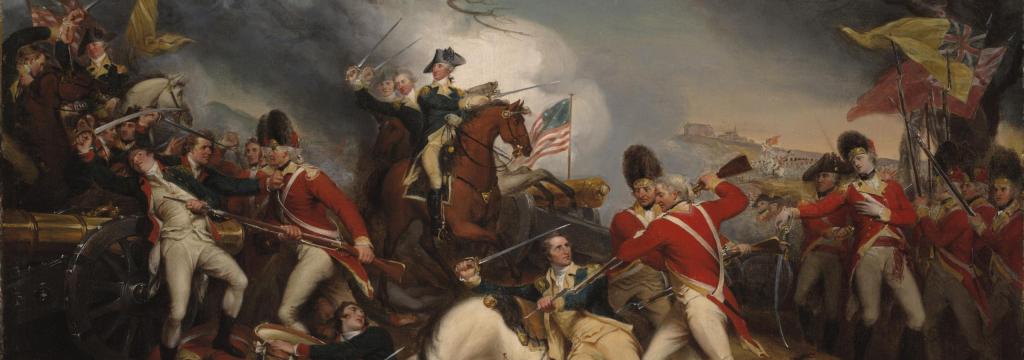
What is an epic moment? This umbrella term will be discussed by using examples from the eight-year conflict that spawned American independence. As ERW historian Mark Maloy relates, one such moment came in early 1777 at Princeton, New Jersey, as explained by a participant in that engagement:

“I saw [Washington] brave all the dangers of the field and his important life
hanging as if it were by a single hair with a thousand deaths flying around him.” –
Pennsylvania officer at Princeton”

Moments of bravery, of personal sacrifice, be it in a battle, skirmish, raid, siege, political moment or on a mission of importance, the American Revolution has a multitude of them. During the hour-ish long historian happy hour, the panel will describe the ones that they deem as important or noteworthy. Bring your own as well, as we encourage comments, opinions, and dialogue via the comments section of our Facebook live.

Looking forward to sharing a brew and an epic moment from the War of Independence with you, this Sunday, on Emerging Revolutionary War‘s “Rev War Revelry.”

“Rev War Roundtable with ERW” Father’s Day, Father of the Country

This Sunday, Father’s Day in the United States, join Emerging Revolutionary War for the next historian happy hour on the proverbial “Father of the Country” George Washington.

As our historians discuss, converse, and share their knowledge, the “Rev War Revelry” will not just be dedicated to one man, George Washington. But, also, to the “Fathers’ of the Father of the Country.” The generations prior to Washington who are buried in eastern Virginia, on the historic Northern Neck of Virginia, and within the boundary of George Washington Birthplace National Monument, a part of the National Park Service.

Joining the ERW crew this week will be guest historian Scott S. Hill, who is the Chief of Interpretation and Education at George Washington Birthplace National Monument and Thomas Stone National Historic Site.

So, if you are a father, we wish you a great Father’s Day. We also encourage you to share an hour and a brew, with your father, if able, and tune into our Facebook page at 7 p.m. EST to catch the discussion that ensues.

Burial Ground, George Washington Birthplace NM (courtesy of Project Gutenberg)

“Rev War Roundtable with ERW” Tavern Talk

When the idea was formulated, back in April, to do a Sunday evening Zoom/Facebook live type history hour, the emphasis behind this “happy hour” was to style it as a more informal chat. Our goal was to create a virtual adaptation of what would occur if the same historians met at a tavern/bar/pub to casually chat about American history.

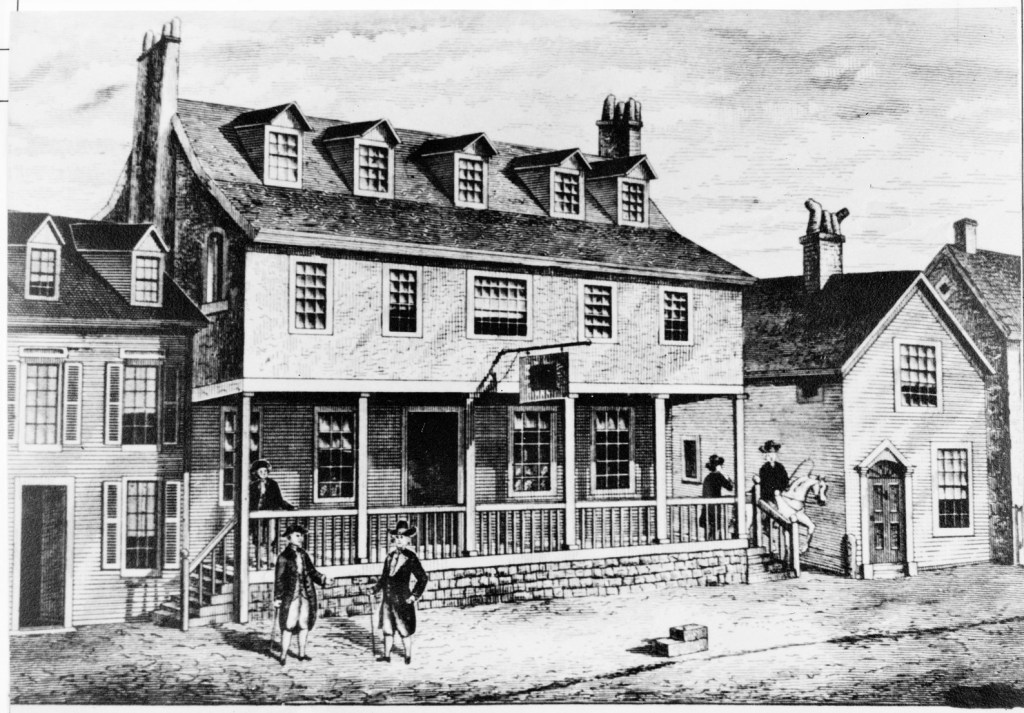
Speed up to this Sunday, June 7th, Emerging Revolutionary War will welcome three guest historians, who all have a connection to a historic tavern to join co-founder Rob Orrison on a talk about 18th century taverns. Yes, a “tavern talk about taverns.”

Joining Orrison on the hour-long happy hour chat will be:

Liz Williams, Executive Director of Gadsby’s Tavern in Alexandria, Virginia, part of The Office of Historic Alexandria, in which she has been employed with since 2004. She is a graduate of Mary Washington College in Fredericksburg, Virginia with a degree in Historic Preservation and a graduate degree in Tourism Administration from George Washington University. She has also worked at various historic sites in the Virginia and Washington D.C. area.

An ERW favorite and returning to the “Rev War Revelry” is Stacey Fraser, the Collections and Outreach Manager with Lexington (MA) Historical Society. One of the sites she oversees the collection of is Buckman Tavern, which played a role in the April 19, 1775 engagements that rolled through Lexington and Concord, Massachusetts.

The third guest historian is Sarah Kneeshaw, the Education and Public Programs Coordinator at Fraunces Tavern Museum. The tavern was built in 1719 in New York City by the De Lancey family. She joined the staff at the downtown New York City site (which is directly across from Federal Hall where George Washington was inaugurated president in April 1789) in 2016. Sarah holds a bachelor’s degree in Anthropology from Fordham University and also attained a graduate degree in Museum Studies from John Hopkins University. She is a native of Staten Island.

Thus, this Sunday, set a side an hour-ish, starting at 7pm EST, to hear these four historians discuss taverns, their importance, and roles in the 18th century social, military, and political history of the burgeoning United States. With your preferred drink, be it an 18th century tavern concoction or not, in hand, we look forward to your questions, comments and insights.

Rediscovery number 27587

“Rev War Roundtable with ERW” Lays Siege at Yorktown

After our sojourn to the French and Indian War last Sunday, “Rev War Roundtable with ERW” returns to the American Revolution this weekend at 7 p.m. EST. Join Emerging Revolutionary War and a guest historian as they discuss, comment, and chat about the pivotal Siege of Yorktown in 1781.

Although the war did not officially end with the capitulation of Lord Charles Cornwallis’ German and British forces on October 19, 1781, the major loss reverberated in in both the colonies and the halls of Parliament. The euphoria on one side of the Atlantic will be matched in this happy hour historian discussion, with no set agenda, and your comments, toasts, thoughts, opinions, and questions will be strongly encouraged.

Joining ERW will be Kirby Smith, formerly of Colonial National Historical Park and currently a Training Instructor for the Department of Defense. He is a 16-year veteran of the United States Army and is native of the Yorktown area. Kirby is also an expert on the Battle of Green Spring that occurred during the summer of 1781 and can be considered part of the Yorktown Campaign. This last major land battle prior to the siege featured such military luminaries as Marquis de Lafayette, Anthony Wayne, Lord Cornwallis, and the infamous Banastre Tartleton.

Besides Kirby, Kate Gruber, Special Collections Curator for the Jamestown-Yorktown Foundation and Mark Maloy a National Park Service ranger will be joining the happy hour discussion.

As we bid adieu to the month of May, let’s all grab a drink and discuss the beginning of the end of the American Revolution. We invite you to join us in our virtual tavern via our Facebook page this Sunday.

Stolen Honor in Georgia

Emerging Revolutionary War welcomes back guest historian Gabriel Neville.

Thirty years ago, Dutch Henderson was “stomping through the woods” near Lake Sinclair in central Georgia when he stumbled upon an old gravestone. Some might have thought it an odd spot for a grave, but Dutch knew the history of the area and it made sense. In fact, the setting told him the man six feet under had played an important role in American history.

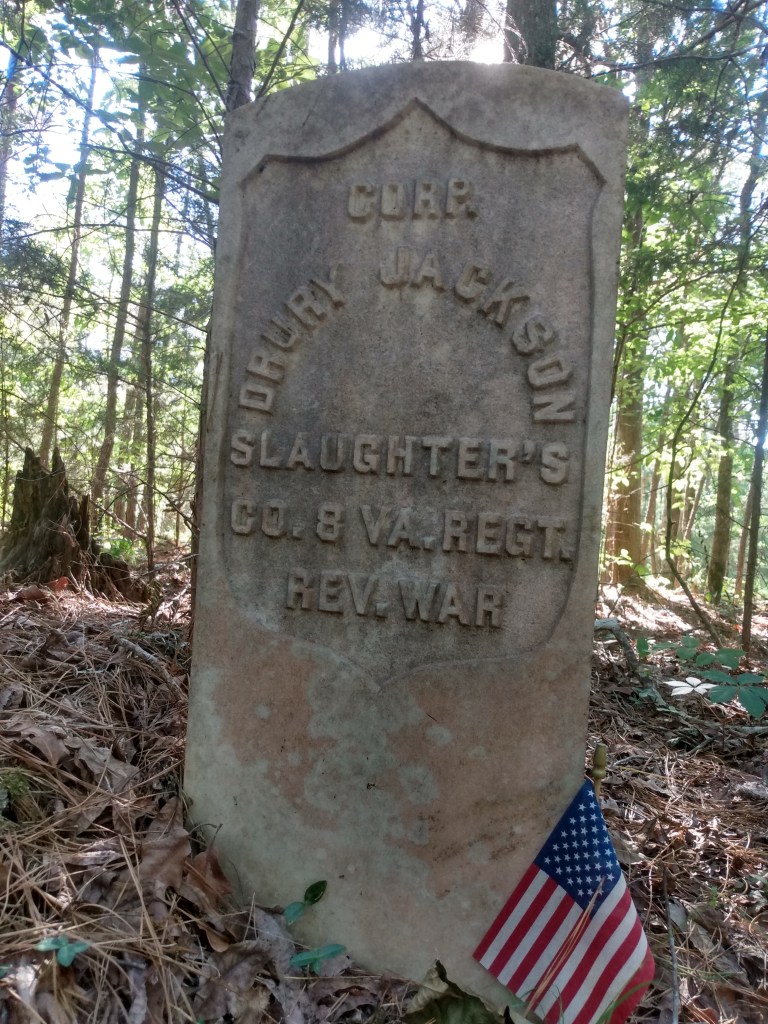
The inscription on the marker read: “CORP. DRURY JACKSON, SLAUGHTER’S CO. 8 VA. REGT. REV. WAR.” Why was this headstone for a Revolutionary War soldier all alone in the woods near a lake? Time changes things. Neither the lake nor the woods were there when Drury Jackson died. Back then the grave was on cleared ground overlooking the Oconee River. Depressions in the soil still reveal to the trained eye that Drury was buried in proper cemetery. The river became a lake in 1953 when it was dammed up to create a 45,000-kilowatt hydroelectric generating station. When Dutch found the grave, the cemetery had been neglected and reclaimed by nature. Today it is in a copse of trees surrounded by vacation homes.

The mysterious headstone for veteran Drury Jackson provides no dates to help us identify the man in the ground. (Dutch Henderson)

Dutch spends his free time studying local history and conducting archeology. He has made some important finds, including a string of frontier forts along what was once the “far” side of the Oconee. He’s pretty sure that Drury’s burial in that spot is an important clue to his life in the years following the Revolutionary War. From there, however, things get complicated.[1]

A genealogy site sporting a photo of the headstone tells us that Drury Jackson was born in Brunswick County, Virginia on February 2, 1745, married Lucy Dozier and then Nancy Ann Kennedy, and died in Wilkes County, Georgia before 1794. This seems possible, but Wilkes County is about seventy miles northeast of the grave. Another source tells us that Drury Jackson was born in 1767 in Franklin County, Tennessee, married Lucy B. Myrick, and died in Baldwin County, Georgia in 1823. This seems more likely, since the grave is in Baldwin County.

So, which of the two men is the right Drury Jackson? The easy assumption is that the stone properly belongs to the one who died nearby. The grave marker itself is of no help. It provides neither the date of his birth nor the date of his death. Moreover, it is the kind of marker that was issued after 1873 by the federal government for the graves of veterans of the Civil and Spanish-American wars (and the unmarked graves of veterans of earlier wars). It is clear that the marker was placed there long after the man’s death by descendants or others in the community.[2]

Continue reading “Stolen Honor in Georgia”

“Rev War Round Table with ERW” Talks Turning Points

On Sunday, May 17th sy 7 p.m. EST, join Emerging Revolutionary War on our Facebook page for the next “Rev War Revelry” happy hour round-robin historian discussion.

This week’s theme is “Turning Points” a broad term that will most certainly conjure up an interesting conversation.

Word around the ol’ pub about potential topics that will be discussed include Valley Forge, Ten Crucial Days, Guilford Court House. Maybe a mention even of one of the more obvious, Saratoga?

But, you know how gossip goes! So, tune in on Sunday and bring your favorite drink, give the ERW historians a toast and a “Huzzah.”

We look forward to your comments, counterpoints, and conversation.