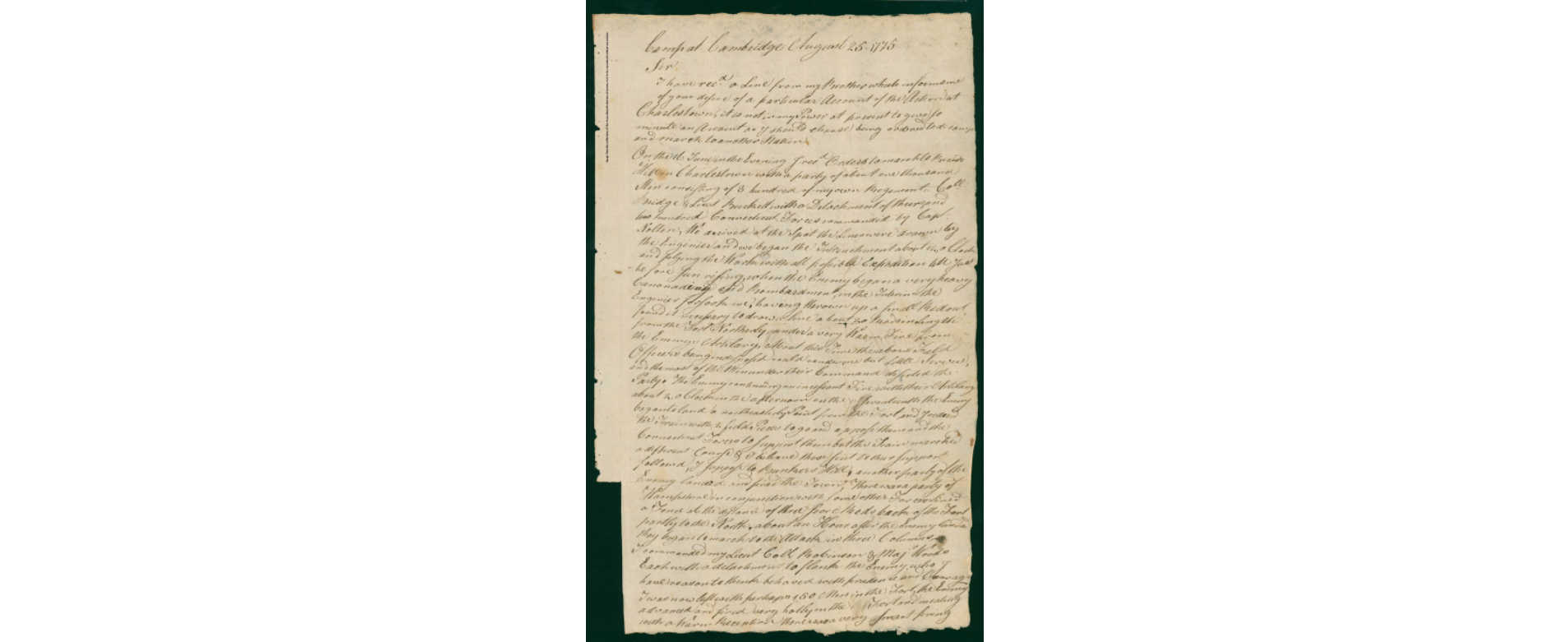
Approximately two months after waging the defense of Breed’s Hill, on the Charlestown peninsula, against the British, Colonel William Prescott put quill to paper to write to John Adams. In this communique, he discussed the action at Breed’s Hill, known as the Battle of Bunker Hill, fought on June 17, 1775, to his fellow Massachusetts native. Take note that he even wrote his account about the orders he received and which hill that missive directed him to. Since the waft of smoke has drifted from the battle on that June day, veterans, officers, and historians have debated why Prescott and company chose Breed’s Hill instead of Bunker Hill. This letter is just another wrinkle in that timeless debate.
Camp at Cambridge August 25.1775
Sir
I have recd. a Line from my Brother which informs me of your desire of a particular Account of the Action at Charlestown, it is not in my Power at present to give so minute an Account as I should choose being ordered to decamp and march to another Station.
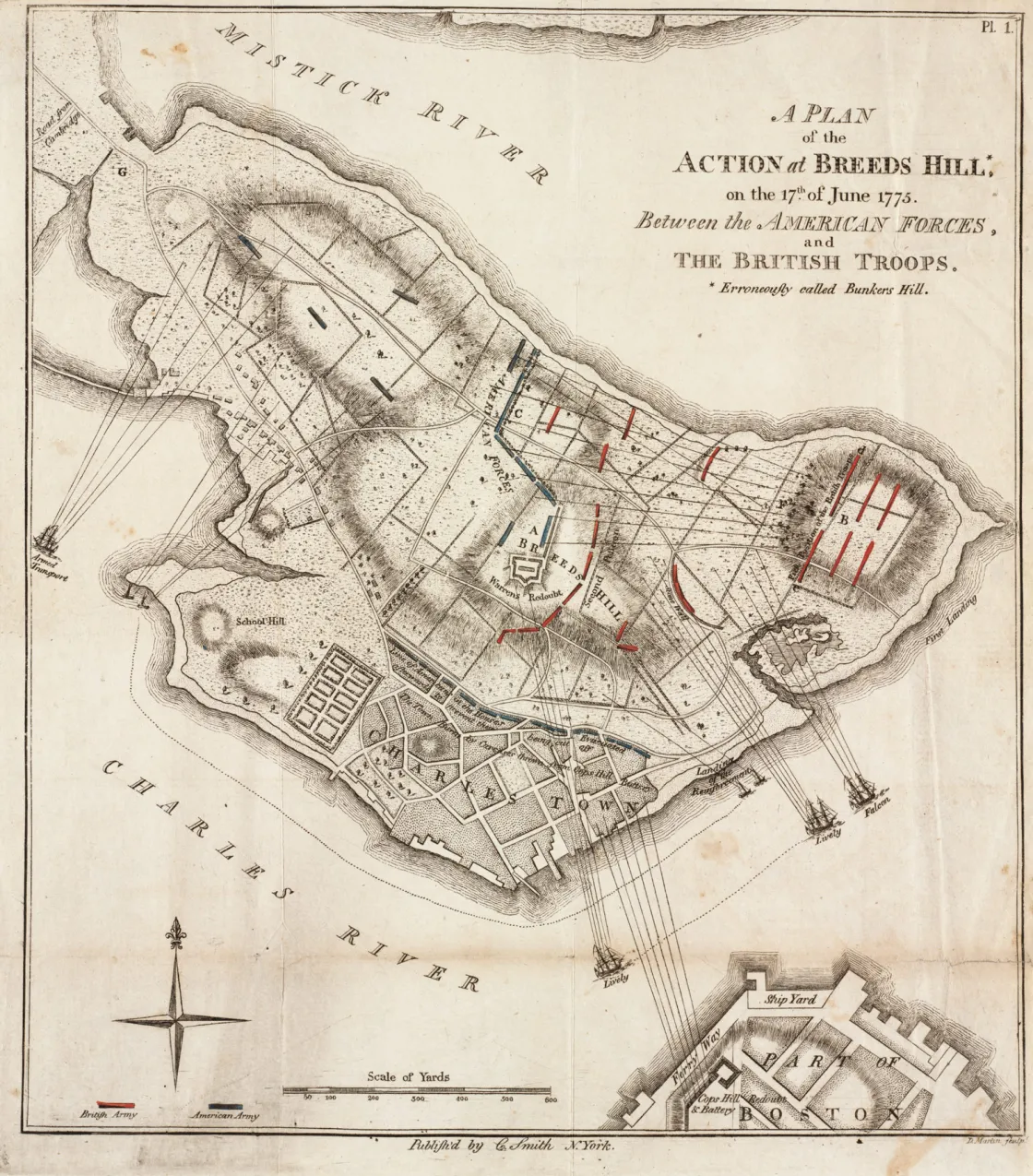
On the 16 June in the Evening I recd. Orders to march to Breeds Hill in Charlestown with a party of about one thousand Men consisting of 3 hundred of my own Regiment, Coll. Bridge & Lieut Breckett with a Detachment of theirs, and two hundred Connecticut Forces commanded by Capt. Nolten, We arrived at the Spot the Lines were drawn by the Enginier and we began the Intrenchmant about 12, o Clock and plying the Work with all possible Expodition till Just before sun rising, when the Enemy began a very heavy Canonading and Bombardment, in the Interin [Interim] the Enginier forsook me, having thrown up a small Redout, found it necessary to draw a Line about 20 Rods in length from the Fort Northerly, under a very Warm Fire from the Enemys Artilary, About this Time the above Field Officers being indisposed could render me but Little Service, and the most of the Men under their Command deserted the Party. The Enemy continueing an incessant Fire with their Artilary. about 2, o Clock in the afternoon on the seventeenth the Enemy began to land a northeasterly Point from the Fort, and I orderd the Train with 2 field Pieces to go and oppose them and the Connecticut Forces to support them but the Train marched a different Course & I believe those sent to their support followd, I suppose to Bunkers Hill, another party of the Enemy landed and fired the Town, There was a party of Hampshire in conjunction with some other Forces Lined a Fence at the distance of three score Rods back of the Fort partly to the North, about an Hour after the Enemy landed they began to march to the Attack in three Columns, I commanded my Lieut Coll. Robinson & Majr. Woods Each with a detachment to flank the Enemy, who I have reason to think behaved with prudence and Courage.
I was now left with perhaps 150 Men in the Fort, the Enemy advanced and fired very hotly on the Fort and meating with a Warm Reception there was a very smart firing on both sides. after a considerable Time finding our Amunition was almost spent I commanded a sessation till the Enemy advanced within 30 yards when we gave them such a hot fire, that the [y] were obliged to retire nearly 150 yards before they could Rally and come again to the Attack. Our Amunition being nea [r ]ly exaustid could keep up only a scattering Fire. The Enemy being numerous surrounded our little Fort began to mount our Lines and enter the Fort with their Bayonets, we was obliged to retreat through them while they kept up as hot a fire as it was possible for them to make we having very few Bayonets could make no resistance, we kept the fort about one hour and twenty Minutes after the Attack with small Arms, This is nearly the State of Facts tho’ imperfect & too general which if any ways satisfactory to you will afford pleasure to your most obedient humble Servt.
William Prescott To the honble John Adams Esqr.
Image of original letter from Prescott to Adams, courtesy of Massachusetts Historical Society
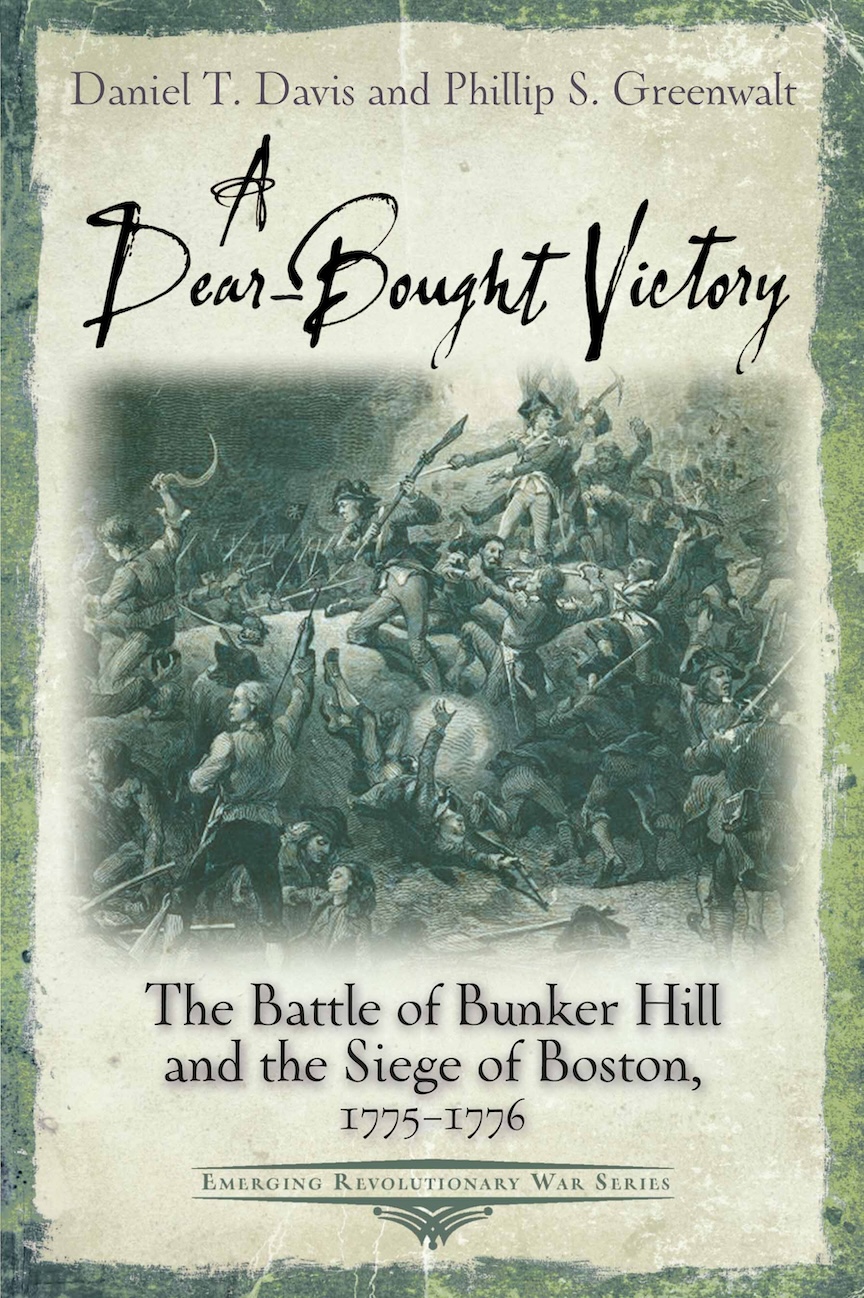
We’re excited to share one of the 2026 new releases in the Emerging Revolutionary War Series. Published by Savas Beatie, a sneak peek, including the cover, is below.
About the Book:
“I wish we could sell them another hill at the same price we did Bunkers Hill,” Nathanael Greene wrote to the governor of Rhode Island after the battle of June 17, 1775.
Actually fought on Breed’s Hill outside Boston, Massachusetts, the battle of Bunker Hill proved a pyrrhic victory for British forces. Confident in their ability to overwhelm the New England militia that opposed them, long lines of neatly uniformed British infantry and marines swept uphill toward a quickly built earthen redoubt defended by a motely collection of farmers, shopkeepers, and tradesmen.
“Don’t fire until you see the whites of their eyes!” the colonials urged each other—or did they?
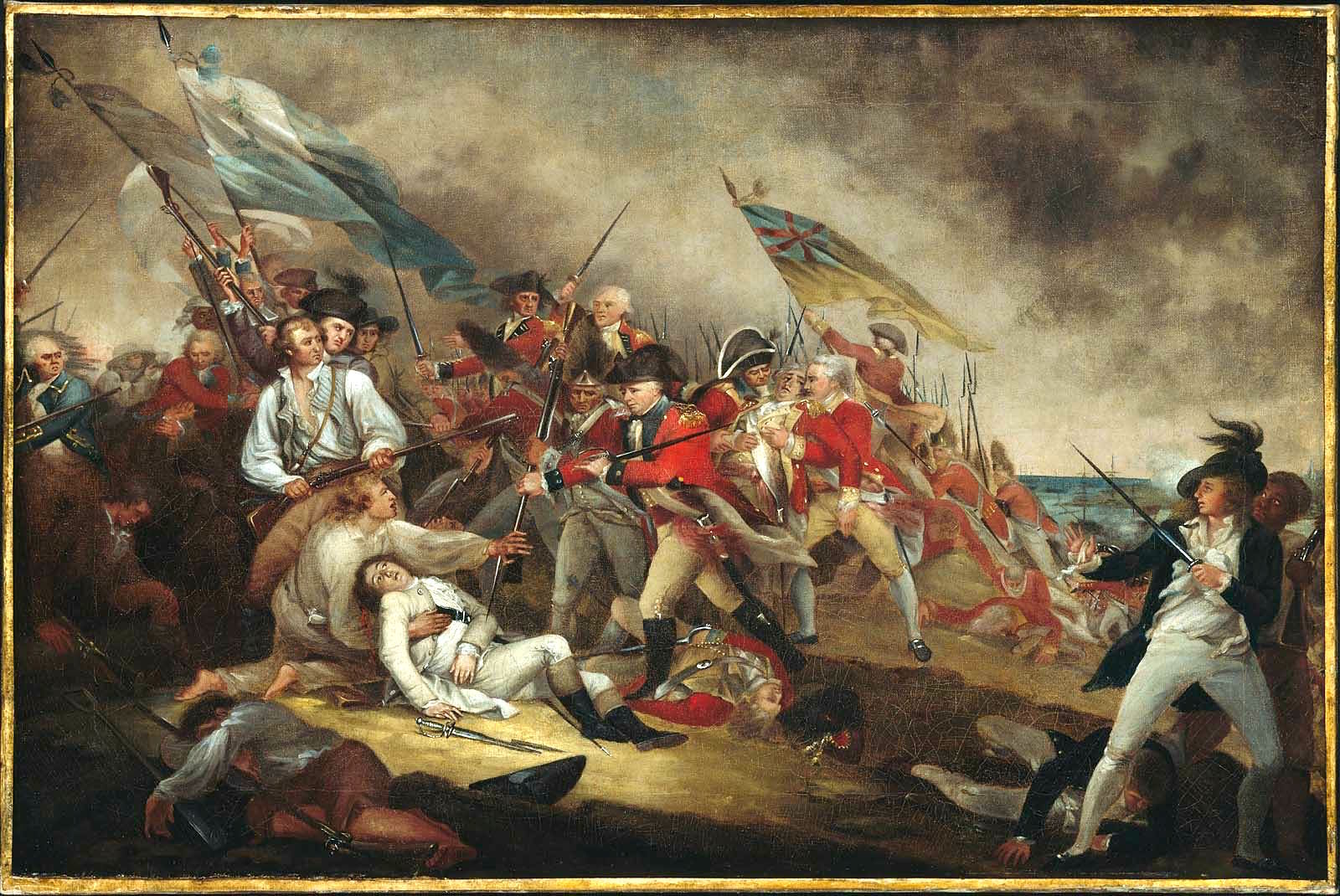
By the end of the fight, the British gained the summit and Colonial forces scattered. One of the patriot leaders, Dr. Joseph Warren, lay dead—one of the first martyrs of the American Revolution. But for the British, the scene was far, far worse: it would be the greatest number of casualties they would ever suffer in any battle of the American Revolution. As British General Henry Clinton commented afterward, “A few more such victories would have surely put an end to British dominion in America.”
The siege of Boston would continue, but the sobering lesson of Bunker Hill changed British strategy—as did the arrival soon thereafter of a new commander-in-chief of Continental forces: General George Washington.
In A Dear-Bought Victory, historians Daniel T. Davis and Phillip S. Greenwalt separate the facts from the myths as they take readers to the slopes of Breed’s Hill and along the Boston siege lines as they explore a battle that continues to hold a place in popular memory unlike few others.
About the Authors:
Daniel T. Davis is the Senior Education Manager at the American Battlefield Trust. He is a graduate of Longwood University with a bachelor’s degree in public history. Dan has worked as a Ranger/Historian at Appomattox Court House National Historical Park and Fredericksburg and Spotsylvania National Military Park. He is the author or co-author of numerous books on the American Civil War. This is his first co-authored book in the Emerging Revolutionary War Series. Dan is a native of Fredericksburg, Virginia.
Phillip S. Greenwalt is the co-founder of Emerging Revolutionary War and a full-time contributor to Emerging Civil War. He is a graduate of Wheeling Jesuit University with a bachelor’s degree in history along with graduate degrees in American History and International Studies and Leadership from George Mason University and Arizona State University, respectively. He is the author of co-author of seven books on the American Revolutionary and Civil Wars. Phill has worked for the National Park Service for the last 17 years at numerous natural and cultural sites. He is a native of Baltimore, Maryland.
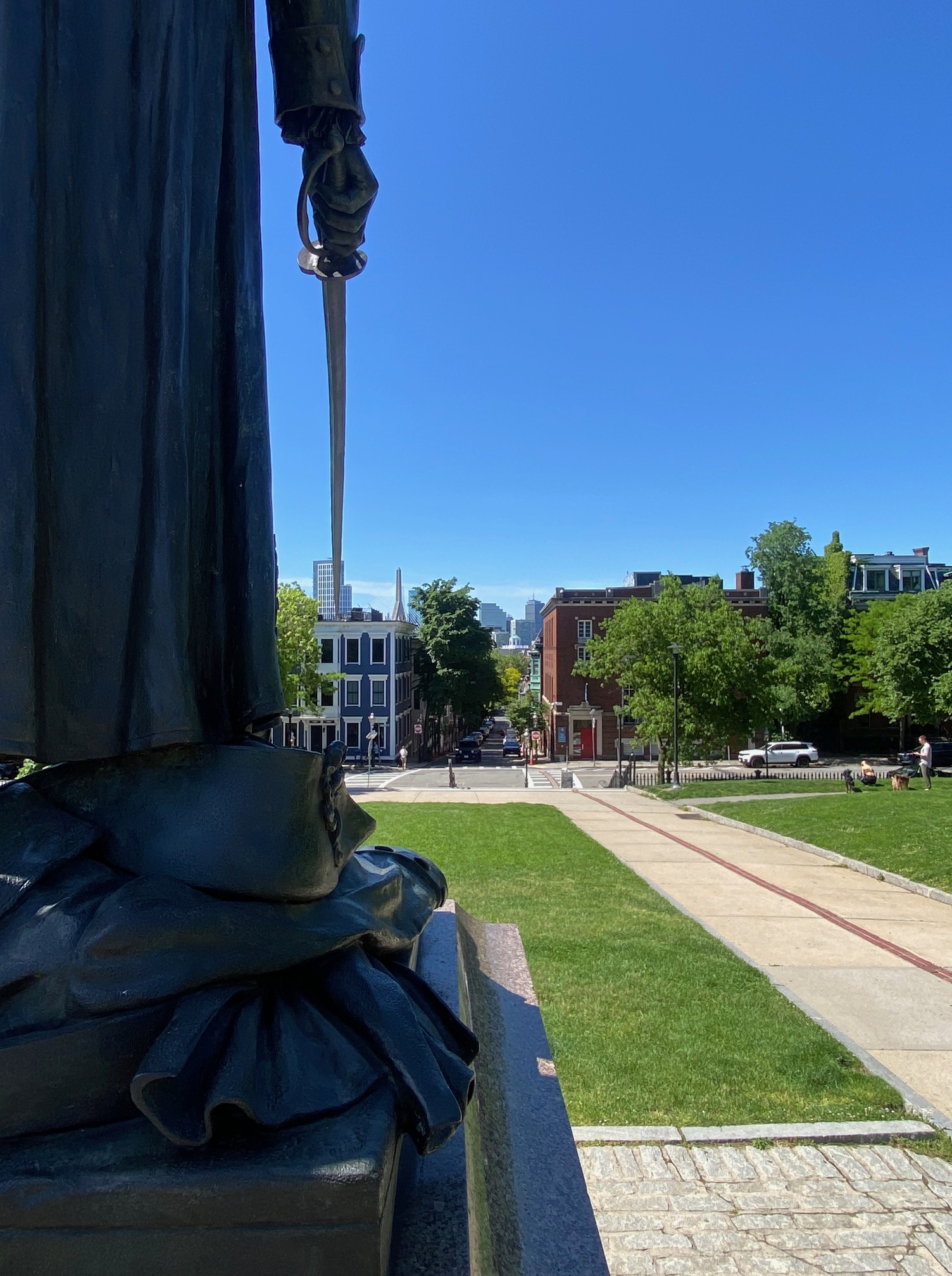
Dedicated in 1881 and made of bronze, the statue of Colonel William Prescott stands over nine feet tall. Although the man who stood steadfast on the earthen parapet of Bunker Hill was not quite that tall. Yet, on June 17, 1775, the men of New England looked up to the approximately 50-year-old that day.
A National Park Service page on Colonel Prescott and Bunker Hill is titled, “A Glorious Immortality.”An account that was passed down about the Massachusetts militia officer vividly describes why he deserves that moniker.
“The breast work or redoubt was only constructed of such earth as the party had thrown up after the middle of the night and was not more than breast high to a man of medium height. Colonel Prescott being a very tall man, six feet and two or three inches in height, his head and shoulders and a considerable portion of his body must have been exposed during the whole of the engagement. He wore a three-cornered cocked hat and a ban-yan or calico coat. After one of his men was killed by cannon ball, Prescott, perceiving that this had made some of the soldiers sick at heart, mounted tile para-pet and walked leisurely around it, cheering his soldiers by approbation and humor. His clothing was repeatedly spattered with the blood and the brains of the killed and wounded.”
Leadership. Example. Personal bravery. He was also one of the last to leave the earthwork as the British captured it.
He now stands, in bronze, watching over the scene where he proved he was a match for the moment.
After years of political unrest between Great Britain and her North American colonies, tension finally boiled over into armed conflict on April 19, 1775, at Lexington and Concord. The British expedition to capture arms and munitions held by the colonists at Concord disintegrated into a panic-ridden retreat to Boston as local militias struck the column as it moved through the Massachusetts countryside. As often happens in war, seeds planted during a battle often sow the next.
Rather than enter march through Boston Neck British officers diverted to Cambridge and proceeded to the Charlestown Peninsula. Bordered by the Charles and Mystic Rivers, the peninsula jutted out into Boston Harbor northeast of the city. As darkness settled in, exhausted British soldiers made their way onto 110-foot high Bunker Hill. This eminence, commanded Charlestown Neck, a narrow sliver of land connecting to the mainland, along with the surrounding landscape.
That night, Lt. Gen. Thomas Gage, the British Commander-in-Chief met with Vice Admiral Samuel Graves, head of the North Atlantic Squadron. Among other suggestions, Graves urged Gage to burn Charlestown and occupy Bunker Hill. Graves likely knew that his ships in the harbor could not elevate their artillery to reach the high ground. Additionally, Bunker Hill was out of range of the Copp’s Hill Battery located in the city’s North End.
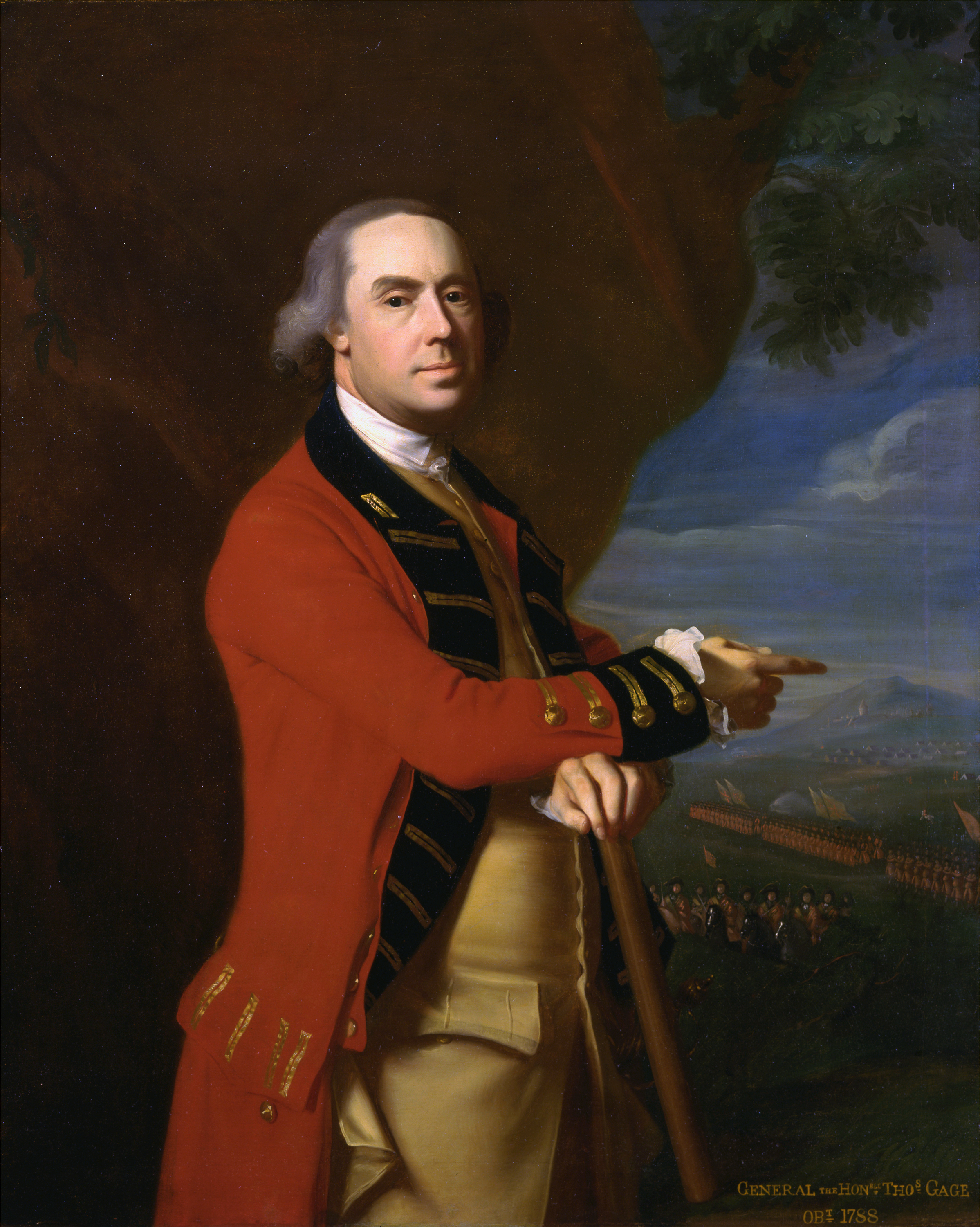
Thomas Gage
Gage recognized the long-simmering pot would eventually boil over with the colonists. “If you think ten thousand men sufficient, send twenty; if one million thought enough, give two; you save both blood and treasure in the end,” he wrote the previous fall to his superiors in London. Now, seemingly distant from the tactical situation on the ground, the survivor of the Monogahela rejected Graves’ proposal, claiming “the weakness of the army.” One must wonder if this was a decision Gage came to privately regret.
The arrival of reinforcements at the end of May, along with Maj. Gens. John Burgoyne, Henry Clinton, and William Howe may have buoyed Gage’s spirits. He soon began making plans to break out of Boston. In consultation with his subordinates, Gage formulated a plan to strike first across Boston Neck to capture Dorchester Heights, which commanded the southern end of the city. A second attack would capture Charlestown then move the three miles to Cambridge to hopefully destroy the Massachusetts army. The offensive was slated to take place on June 18.
Unfortunately, Boston leaked like a sieve and Gage failed to maintain what is known today as operational security. His plans were soon known in Cambridge where the Massachusetts Committee of Safety authorized their own effort to occupy Bunker Hill ahead of the British. On the night of June 16, colonial units led by Col. William Prescott marched out of Cambridge toward Charlestown. Rather than follow his orders, Prescott moved to the 60 foot high Breed’s Hill, located slightly to the southeast of Bunker Hill. Prescott’s decision remains one of the great mysteries surrounding the battle. His men began construction of a redoubt.
Another question surrounding the engagement rests with Henry Clinton. Sometime on the evening of June 16, Clinton wrote he conducted a reconnaissance and claimed he witnessed Provincial activity. He did not, however, explain where he went nor reported the type of actions he saw. Additionally, visibility would be difficult in the growing dusk. Clinton further stated he reported his findings to Gage and Howe but Gage elected to wait for daylight.
Sunrise revealed Prescott’s men atop Breed’s Hill, hard at work on the redoubt, which threatened the northern end of the city. Gage and his officers quickly convened at his headquarters at the Province House. Howe, the senior officer, would be in command. Some thought was given to sail up the Mystic to land on Charlestown Neck well in the rear of the redoubt. This plan was quickly nixed for fear the force could be isolated and cut off by reinforcements from Cambridge and militia on Breed’s Hill. It was eventually decided Howe would land below and out of range of the redoubt. Orders soon went out for the mustering of the “ten oldest companies” the flank and grenadiers, each – along with several regiments to prepare for the operation.
Each British regiment consisted of ten companies, eight line, with two flank and grenadier companies. The flank companies consisted of men who were often the shortest and fastest, who could operate in open order tactics, moving quickly to engage and skirmish with the enemy. The grenadiers, identified by their bear skin hats, were often the tallest men in the regiment and were used as the shock troops during an attack. By the time of the American Revolution, they were no longer carrying hand grenades but the name remained. Oftentimes these companies were separated from their regiments and placed in their own battalions.
Howe disembarked from Long Wharf, going over himself in the second wave, that afternoon. The British landed at Moulton’s Hill, near the modern Navy Yard. Stepping ashore, Howe observed his objective. “On first view it was clearly seen that the rebels were in forced and strongly entrenched upon their right in the Redoubt that had been seen from the town at daybreak,” he reported. “Their left and center were covered by a breastwork which reached from the Redoubt to the Mystick, the space from the Redoubt to that river being about 380 yards, and the whole extent they occupied about 600 yards”. The extent of the defenses compelled Howe to call for reinforcements.
Toward the middle of the day, the British launched their assault. Although Howe’s second in command, Brig. Gen. Robert Pigot was present and directed the left of the line, Howe also decided to take a stronger role and led the center himself on foot. Howe directed his light infantry to advance along the beach of the Mystic, likely with the hope in mind of getting behind the redoubt. This attack was met and repulsed by New Hampshire militia under Col. John Stark. So too were Howe’s and Pigot’s attacks. Watching his men come stumbling back after the failed attempt prompted Howe to later write “it was a moment I had not felt before.”
In the second assault, Howe attempted to further squeeze off the redoubt, pulling the light infantry from the beach to augment his center. At the same time, Pigot sent the 1st Marine Battalion and the 47th Regiment of Foot to get between Charlestown and the redoubt. During the assault, which also failed, the light infantry fired into the rear of the grenadiers, inflicting casualties.
Once again, the British lurched forward, determined to overwhelm the redoubt by a sheer force of numbers. This time, luck was with them as the militia were running out of ammunition. Francis, Lord Rawdon, an officer in the 5th Regiment of Foot who would go on to distinguish himself in the Southern Campaigns recalled “our men grew impatient, and all crying Push on, Push on, advanced with infinite spirit to attack the work with their small arms. As soon as the rebels perceived this, they rose up and poured in so heavy a fire upon us that the oldest officers say they never saw a sharper action. They kept up this fire until we were within ten yards of them…there are few instances of regular troops defending a redoubt till the enemy were in the very ditch of it.”
The British infantry swarmed into Prescott’s redoubt. Somewhere in the maelstrom was British lieutenant and adjutant of the 1st Marines, John Waller. “Nothing could be more shocking than the carnage that followed the storming of this work,” he wrote “We tumbled over the dead to get at the living who were crowding out of the gorge of the redoubt…’twas streaming with blood and strewed with the dead and dying men, the soldiers stabbing some and dashing out the brains of the others.” The colonials managed to retreat across Charlestown Neck, the British too exhausted to give chase.
Bunker Hill became the first of many pyrrhic victories for the British over the course of the American Revolution. Still, there were a number of shortcomings. Howe, rather than oversee the attacks from Moulton’s Hill, led the assaults himself. Perhaps he needed to inspire his men or he recognized the importance of the situation but he reverted to being a battalion commander. One must wonder whether the initial attacks could have been more effective had he delegated authority and used more of a guiding hand. Howe’s experience that day may have influenced him for the remainder of the war. Rather than rely on frontal assaults, he utilized flanking maneuvers such as those at Long Island and Brandywine. The friendly fire casualties can be attributed to inexperience amongst the ranks. Gage, along with his subordinates also share, the blame for not maintaining operational security and letting their plans slip out of Boston. Additionally, Gage failed to heed the advice of Graves and secure Charlestown Peninsula in April when he had the opportunity. The result nearly two months to the day resulted in over 1,000 British soldiers killed and wounded, a high cost of blood and treasure, in a war that would lead to the independence of the United States.
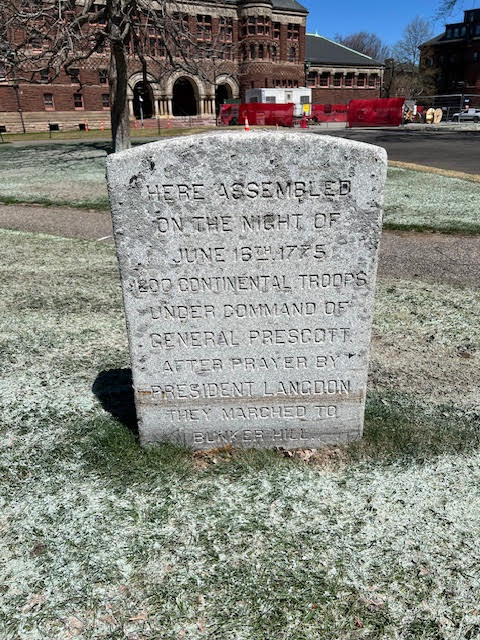
Shortly after 11 p.m. on the night of June 16, Colonel (although the monument calls him general) William Prescott led approximately 1,200 Massachusetts soldiers toward the Charlestown Peninsula from Cambridge Common. These men would spend the night fortifying Breed’s Hill before spending the majority of the next day defending the earthen redoubt from successive British attacks. Although forced to evacuate due to low ammunition and the British breaching the redoubt, the defeat had a positive impact on the morale of the “Grand Army” as the New England militia soon-to-be-Continental Army.
On Tuesday, the 250th anniversary of the Battle of Bunker Hill, fought on Breed’s Hill on Charlestown Peninsula, will be remembered. On June 17, 1775, the last major engagement before George Washington arrived in Massachusetts to take command was fought between militia under Colonel William Prescott and British forces under General William Howe. Although a defeat for the patriots, resulting in the death of Dr. Joseph Warren, the victory was a pyrrhic one for the British.
Join Emerging Revolutionary War historians as they discuss the engagement, the personas, and the ramifications of the Battle of Bunker Hill. Also, stay tuned until the end for an announcement as well.
So, two days before the 250th, grab your favorite beverage and tune into our Facebook page at 7 p.m. EDT and have your questions ready. If you are unable to attend the live on Sunday evening, don’t fret, the video will be posted to YouTube by the anniversary and to our podcast channel as soon as possible
Following the initial skirmishes at Lexington and Concord on April 19, 1775, colonial militias from throughout New England converged around Boston, with the area of Cambridge and Roxbury serving as the epicenters of the camps. These New England militia effectively layed siege to the city where British General Thomas Gage concentrated after April 19th. The British, cut off from the countryside, relied heavily on supplies brought in by sea. At the same time, American forces were eager to secure resources and deny the British any additional supplies from nearby coastal areas.
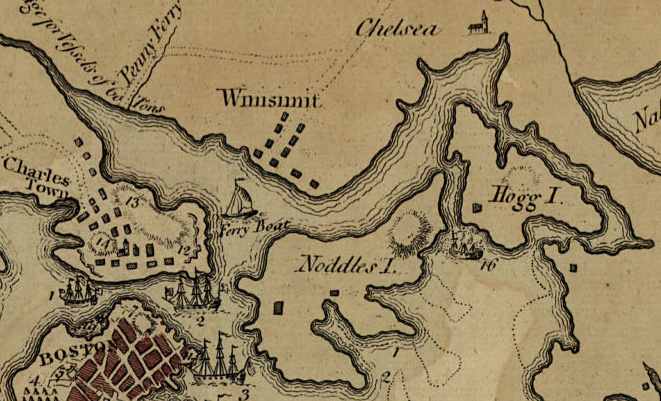
The location of the HMS Diana is marked with “16” on the map
One such resource-rich area was Noddle’s Island and Hog Island both located in Boston Harbor. These islands contained valuable livestock and hay, which the British had been attempting to secure to feed their troops and horses. American intelligence reported that the British were planning to remove these resources, prompting a proactive operation by the colonial forces to beat them to it.
In early May, Dr. Joseph Warren led a group inspecting the islands and recognized their imporance. As part of the Massachusetts Committee of Safety, Warren led the effort for a reslolution to be passed to either capture or destroy the supplies on the islands. On May 14th, the Committee stated “Resolved, as their opinion, that all the live stock be taken from Noddle’s Island and Hog Island, and from that part of Chelsea near the sea coast, and be driven back; and that the execution of this business be committed to the selectmen of the towns of Medford, Malden, Chelsea, and Lynn, and that they be supplied with such a number of men, as they shall need, from the regiments now at Medford.” Soon the commander of the New England army around Boston, General Artemas Ward, put a plan in motion to quickly strike both islands.
The American expedition was led by Colonel John Stark and Colonel Israel Putnam, both future generals in the Continental Army. The colonial forces, primarily composed of New Hampshire and Massachusetts militias, planned a nighttime amphibious raid to remove the livestock and destroy hay supplies that might benefit the British. On the night of May 27, colonial forces quietly moved onto Hog Island and began driving off livestock and burning haystacks. British forces, stationed in Boston and alerted to the colonial activity, responded by dispatching marines and the British schooner HMS Diana, a lightly armed but maneuverable vessel well-suited for operations in the shallow waters of the harbor.
As the colonists worked to transport livestock to the mainland, they encountered resistance from British marines who had landed on Noddle’s Island and began advancing toward their position. A sharp skirmish ensued, during which the American militia used the terrain to their advantage, fighting from behind trees, stone walls, and other natural cover. The colonial forces managed to repel the British marines, inflicting casualties and forcing a retreat.
Lieutenant Thomas Graves (nephew of Vice Admiral Samuel Graves) commander of the HMS Diana. Shown in his rear admiral uniform in ca. 1801. Often confused with Lord Thomas Graves, British commander during the Battle of the Capes
The turning point of the engagement came with the involvement of the HMS Diana. The schooner attempted to support the marines by moving up the narrow Chelsea Creek to engage the colonial militia and cut off their withdrawal. However, as the tide receded and the ship ventured too far inland, it became grounded in the shallow, muddy waters.
Seeing an opportunity, the colonists brought up field artillery from shore and opened fire on the stranded vessel. Over the course of the battle, they subjected the Diana to intense musket and cannon fire. Unable to refloat the ship due to the falling tide and increasing colonial pressure, the British crew was forced to abandon it. American forces quickly boarded the vessel, stripped it of usable supplies, weaponry and its 76 foot mast, and then set it ablaze, destroying the schooner completely.
The Battle of Chelsea Creek resulted in a clear American victory, both strategically and psychologically. The destruction of the HMS Diana marked the first loss of a Royal Navy vessel in the Revolutionary War, dealing a symbolic blow to British morale. For the colonists, it was a tangible demonstration of their ability to challenge British authority not only on land but at sea.
Major General Israel Putnam said after the fight on Chelsea Creek “I wish we could have something of this kind to do every day,”
Tactically, the victory helped to solidify American control of the Boston-area islands and limited the British army’s ability to forage for supplies. This contributed to the worsening conditions inside besieged Boston and increased pressure on General Gage. The morale boost for the colonial militias was significant; it reinforced the notion that British troops and naval forces were not invincible and that well-coordinated militia operations could succeed.
In addition, the battle was notable for showcasing early instances of American military ingenuity and leadership. Figures like Israel Putnam and John Stark went on to distinguish themselves in later battles, and the ability of the militia to effectively coordinate a land-sea operation foreshadowed the more sophisticated tactics that would develop over the course of the war. A few months later on August 1st, the mast of the HMS Diana was raised on Prospect Hill as a liberty pole. A symbol that was seen by not just the Americans around Cambridge but also the British in Boston. This location was also where legend states that George Washington ordered the first American flag, the Grand Union, to be raised on January 1, 1776.
While over shadowed by Lexington, Concord, or Bunker Hill, the Battle of Chelsea Creek played a crucial role in the early war. It helped secure the outer perimeter of the Siege of Boston, denied the British critical supplies, and emboldened the colonial cause at a time when confidence was still fragile. The success of the operation, including the destruction of the Diana, offered a dramatic image of colonial resistance and ingenuity that resonated beyond New England.
Today, the location of Noddle’s and Hog Island are gone. Nineteenth century and modern infill has completely reshaped the area from mudflats and tidal marshes to buildable land. Modern day East Boston, Winthrop and Logan Airport cover the area. The community of Somerville contines to commemorate the raising of the Grand Union flag on January 1 Diana‘s mast with a flag raising ceremony. Though mostly forgotten, the fighting along Chelsea Creek continued to embolden men like Joseph Warren and Israel Putnam and encourage their agressiveness a few weeks later on the Charlestown peninsula.
The Battle of Bunker Hill is routinely mentioned in the pantheon of memorable American military victories. Although myths of the engagement have obscured some of the history, much like the smoke of battle, the patriot victory on June 17, 1775, was another pivotal moment in the early stages of what became the American Revolutionary War.
To discuss the engagement, ramifications, and interpretation of the battle, Emerging Revolutionary War welcomes historian Dr. Paul Douglas Lockhart, Professor of History at Wright State and author of “The Whites of Their Eyes, Bunker Hill, the First American Army, and the Emergence of George Washington.” A full biography of Dr. Lockhart, including his other works, is at the bottom of this post.
As a teaser, this may be the first time in “Rev War Revelry” history that we mention Artemas Ward, who according to Dr. Lockhart is the “unsung hero of the battle (and indeed of 1775).” Come hear why! And full disclosure, I agree.
We hope you can join us on Sunday, January 21 at 7 p.m. EDT on Emerging Revolutionary War’s Facebook page for the next installment of the popular “Rev War Revelry.” Be ready to ask questions as you sip your favorite beverage during this historian happy hour.
Biography of Dr. Lockhart
“Paul Douglas Lockhart is Professor of History at Wright State University in Dayton, Ohio, where he has taught since earning his PhD in 1989. A native of Poughkeepsie, New York, Lockhart completed the PhD at Purdue University, where he studied military history with the late Gunther Rothenberg, the renowned Napoleonic scholar, and early modern European history with Charles Ingrao. He has seven single-author books to his credit. Four of them deal with the history of Scandinavia during the “Age of Greatness,” including Denmark, 1513-1660: The Rise and Decline of a Renaissance Monarchy, published by Oxford University Press in 2007. He is probably better known for his books on military history: The Drillmaster of Valley Forge: The Baron de Steuben and the Making of the American Army (2008), The Whites of Their Eyes: Bunker Hill, The First American Army, and the Emergence of George Washington (2011), and most recently his study of the parallel evolution of warfare and firearms: Firepower: How Weapons Shaped Warfare (2021). Wright State has awarded him the Brage Golding Distinguished Professorship and the Trustees’ Award for Faculty Excellence, the University’s highest academic honor. The Ohio Academy of History named him Distinguished Historian for 2020-21, and in 2021 he was elected to membership in The Royal Society for Danish History for his contributions to the history of Denmark, an honor rarely accorded to foreigners. He lives in Centerville, Ohio, with his family.”
Dr. Joseph Warren is considered by many “the lost hero of the American Revolution.” Warren was the brainchild of the revolution movement in Boston. Warren was involved in almost every major insurrectionary act in the Boston area for a decade, from the Stamp Act protests to the Boston Massacre to the Boston Tea Party, and his incendiary writings included the famous Suffolk Resolves, which helped unite the colonies against Britain and inspired the Declaration of Independence.
Joining Emerging Revolutionary War will be historian and author Christian Di Spigna. He is the author of Founding Martyr: The Life and Death of Dr. Joseph Warren, the American Revolution’s lost hero. He is the Executive Director of the Dr. Joseph Warren Foundation and is the vice chairman for the Revolution 250 committee of Massachusetts Freemasons. He also serves on the board of the Bunker Hill Monument Association.
As we approach the 250th commemoration of the Boston Tea Party, we will focus on Warren’s life, his role in the Boston Tea Party and his lasting impact on the Revolution. Grab a drink and join us as we talk with author and historian Di Spigna about Warren, the patriot who once said…
“When Liberty is the prize, who would shun the warfare? Who would stoop to waste a coward thought on life?”
See you Sunday at 7 p.m. EDT on Emerging Revolutionary War’s Facebook page!
Doctor. Major General. President of the Provincial Congress. Author of political tracts. A true patriot. Forgotten.
All these words, plus many more, are titles that depict the life of Dr. Joseph Warren. However, the last term is most synonymous with the Massachusetts doctor who fell in the Battle of Bunker Hill on June 17, 1775 in the early stages of the American Revolutionary War. That last word, forgotten, is exactly what author and historian Christian Di Spigna is hoping to expunge with his new biography, Founding Martyr.
Di Spigna, an early American history expert and Colonial Williamsburg volunteer, focuses his account of Dr. Warren on not the events immediately surrounding his death at Bunker Hill and subsequent martyrdom but “to fill in the more obscure parts of Warren’s life” which will lead to understanding more of the “key period in the formation of his character, his special networks, and ultimately his medical and political careers” (pg. 7). Continue reading “Review: Founding Martyr, The Life and Death of Dr. Joseph Warren, the American Revolution’s Lost Hero by Christian Di Spigna”→


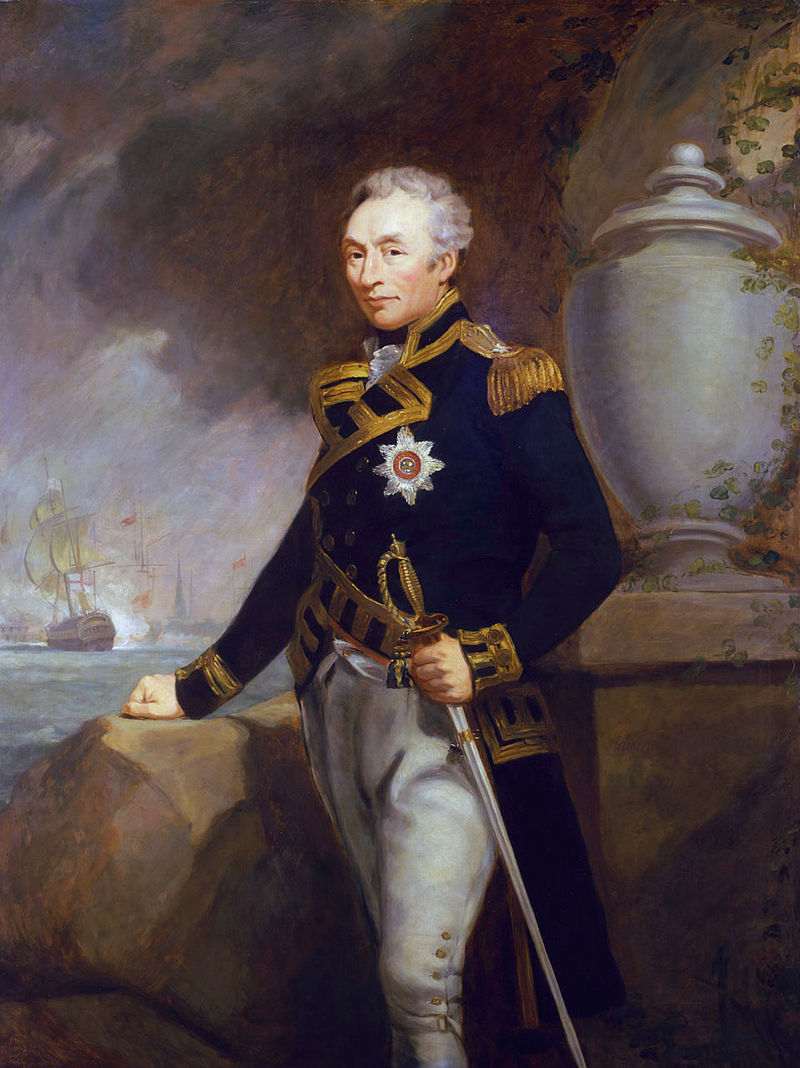
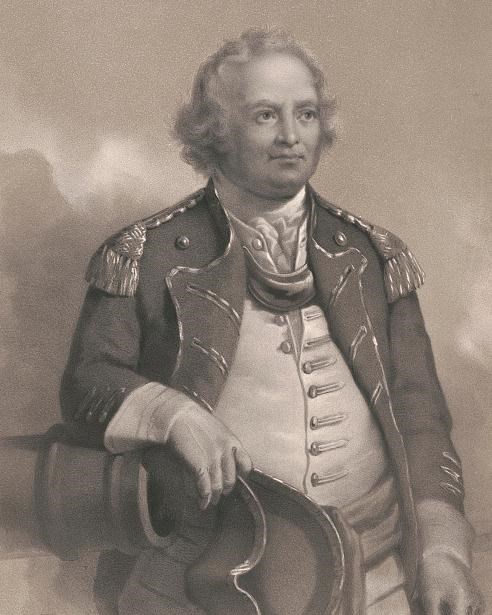

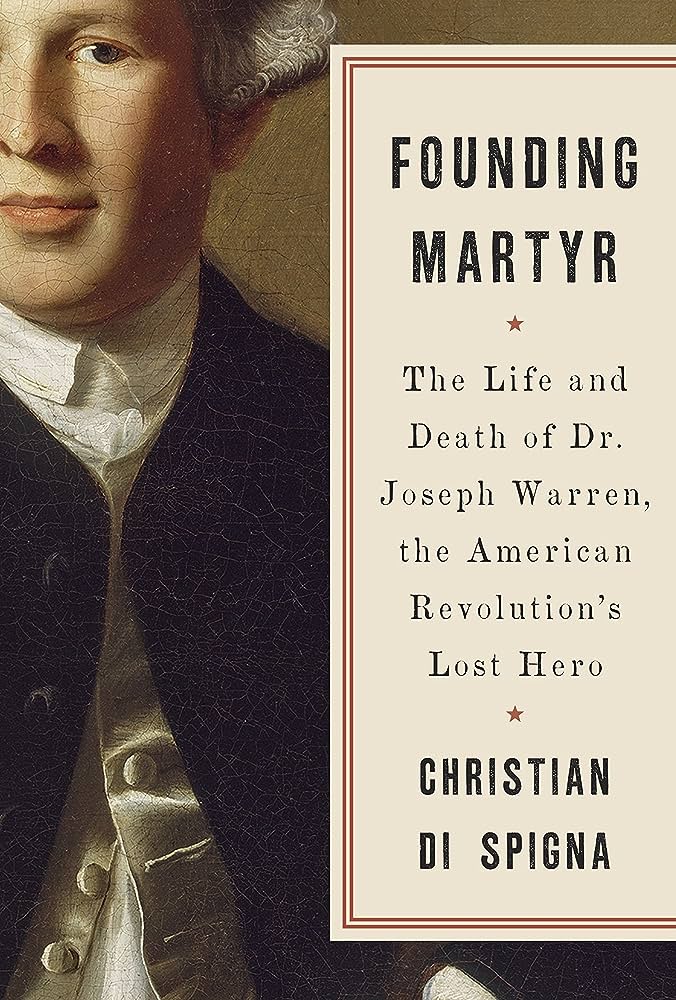

 All these words, plus many more, are titles that depict the life of Dr. Joseph Warren. However, the last term is most synonymous with the Massachusetts doctor who fell in the Battle of Bunker Hill on June 17, 1775 in the early stages of the American Revolutionary War. That last word, forgotten, is exactly what author and historian Christian Di Spigna is hoping to expunge with his new biography, Founding Martyr.
  Emerging Revolutionary War Era