Amid the hot weather of June 28, 1778, the British army under General Henry Clinton battled General George Washington’s Continental Army in the fields outside Freehold, New Jersey. The Battle of Monmouth Courthouse ranks as the eleventh deadliest battle of the Revolutionary War, claiming at least 700 casualties between the two armies. While the armies moved on after the sharp fight, the citizens of Freehold were left to deal with the battle’s aftermath.
Below are excerpts from two letters written by citizens of Freehold in the immediate aftermath of the battle that describes the toll the armies and battle took on their homes.
An unidentified “young gentleman, an inhabitant of Freehold,” penned the first letter on June 29, 1778. This citizen marched during the battle with Nathanael Greene’s troops, who only arrived on the battlefield proper near the end of the fight. Thus, he could “form an idea of the particular movements of the…engagement only from the dead…” There was abundant evidence provided by the corpses on the battlefield as the British “left very many dead upon the field of action…” Beyond the furrowed ground sliced by artillery shots and musket balls, the British columns left a path of destruction in their wake. “The destruction the enemy have made is dreadful. A great number of houses, barns and out-houses, on and near the public roads, are entirely reduced to ashes. They have been all round us, and yet we have escaped.”
A lady of Freehold wrote her letter two days after the battle. She equally said the horrid aftermath of an 18th-century conflict. “The enemy declared, at Robert McKnight’s, they intended to pay us a visit the next day, as they went down to the Court-house, and said their orders were to burn all the houses in this neighborhood. Doctor Henderson is burnt out, as also Peter Foreman, David Foreman, Benjamin Covenoven, George Walker, Mr. Solomon, David Covenoven, Garret Vanderveer, David Clayton, and a number of others. Most of the people on the public road have lost every thing the enemy could carry off or destroy.”
This anonymous woman was pleased that the British army had passed on, though they left their dead behind “as thick as bees round Mr. Sutfin’s.”
The occupation of the area by the warring armies “I fear…will make a famine among us,” she sadly concluded.
The Battle of Monmouth Courthouse was only one of a long stretch of days for central New Jersey’s civilians between 1775 and 1783.
This sketch of British troops burning homes around Lexington, Massachusetts, is a view similar to the one had by Freehold’s citizens as the British army passed through their homes.
Though it is most commonly associated with its Civil War history, Jefferson County, West Virginia, boasts a large amount of Revolutionary War history, too. One does not have to travel far in the county to stumble on a Washington family home (there were ten, seven still stand) or find Washington family members buried in the Zion Episcopal Cemetery in Charlestown, the county seat (this cemetery supposedly boasts more Washington family graves than any other place in the United States).
Beyond Washington, though, Jefferson County can claim at least two other well-known Revolutionary War generals on its citizen rolls: Horatio Gates and Charles Lee. Both of their countryside estates still stand today but are privately owned.
Traveller’s Rest (Library of Congress)
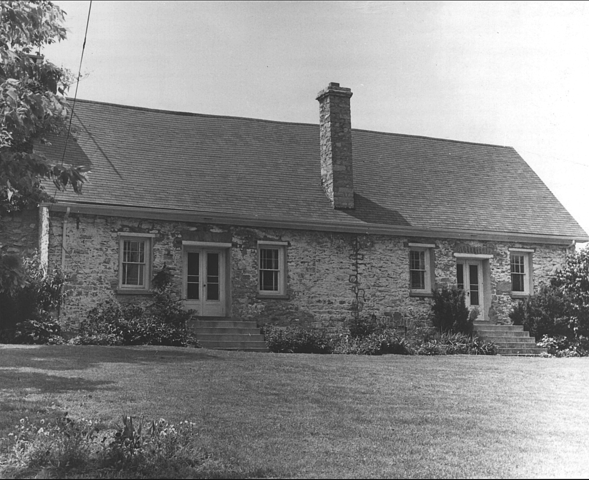
Traveller’s Rest, built by Horatio Gates in 1773, stands west of Kearneysville in the western section of the county. Gates employed carpenter John Ariss for the wooden portions of the construction project, a man who also worked on many of the local Washington homes. Gates lived at Traveller’s Rest until his service in the Continental Army took him away from his home. Following his defeat at the Battle of Camden in 1780 and his subsequent sidelining by the Continental Congress, Gates returned to his plantation, where he lived quietly. In 1790, the former general freed his slaves, sold the house, and moved to New York, where he died in 1806.
Three miles south of Gates lived Charles Lee at Prato Rio, a Portuguese phrase meaning “Stream on the meadow.” Lee did not build his home but purchased the 1733 structure in 1774 after some urging from Gates. Following his own sacking in the wake of the Battle of Monmouth, Lee returned to his home in 1779, a place he referred to as “The Hut.” Lee spent his last years there quietly surrounded by his three dogs, Father, Son, and Holy Ghost. Supposedly, when he learned of a possible visit from George Washington, Lee attached a note to his door that read, “No dinner cooked here to-day.”
Lee’s house was less conventional than Gates’ home. The inside contained no walls—only chalk lines delineated the different rooms. Lee remarked, “I can sit in any corner, and give orders, and overlook the whole, without moving my chair.”
Prato Rio (West Virginia State Historic Preservation Office)
While both homes can be seen from public roads today, they are not open to the public. Please respect the owners’ privacy.
Emerging Revolutionary War welcomes the contribution of Eric Olsen, Park Ranger/Historian at Morristown National Historical Park
Military history tends to be a lot of “so and so’s” brigade advanced on the left wing, while “what’s his face’s” division withdrew.” Lots of movements of large faceless masses of soldiers. Personally, I prefer the little personal stories of individuals in the face of battle. Here is one such story from the battle of Monmouth in June 1778.
Sir Henry Clinton
I recently ran across this little tidbit in a July 7, 1778, letter written by the Adjutant General of the Hessian forces in America, Major Carl Leopold Baumeister. He described an incident during the battle of Monmouth involving the British commander in chief, Sir Henry Clinton. “General Clinton in the thickest fire, was saved by one of his adjutants, Captain Sutherland, when a rebel colonel aimed at him, but missed. Captain Sutherland’s horse was wounded. Another adjutant, Lloyd, stabbed the colonel.”
The story sounded vaguely familiar. Then I recalled something I’d read written by a British officer named Thomas Anbury. He was a prisoner of war, part of Burgoyne’s captured “Convention Army.” Anbury and the other prisoners were being held near Charlottesville, Virginia. At a place called Jones’s Plantation, Anbury related the following story on May 12, 1779,
“A very singular circumstance took place in that battle [Monmouth], which fully marks the coolness and deliberation, though in the heat of action, of Sir Henry Clinton: As he was reconnoitering, with two of his Aide de Camps, at the short turning of two roads, they met with an American officer, exceedingly well mounted upon a black horse, who, upon discerning them, made a stop, and looked as if he wished to advance to speak to them, when one of Sir Henry Clinton’s Aid de Camps fired a pistol at him, and he instantly rode off. Sir Henry was much displeased at his Aide de Camp, and censured him for being so hasty, adding, he was confident that the man wished to speak to him, and perhaps, might have given intelligence that would have been very essential, remarking, that when he was in Germany last war, and reconnoitering with Prince Ferdinand, a man rode up in a familiar manner, and gave such intelligence as decided the fate of the day.”
To read more about the Battle of Monmouth, check out “A Handsome Flogging, the Battle of Monmouth, June 28, 1778 by William Griffith, part of the Emerging Revolutionary War Series.
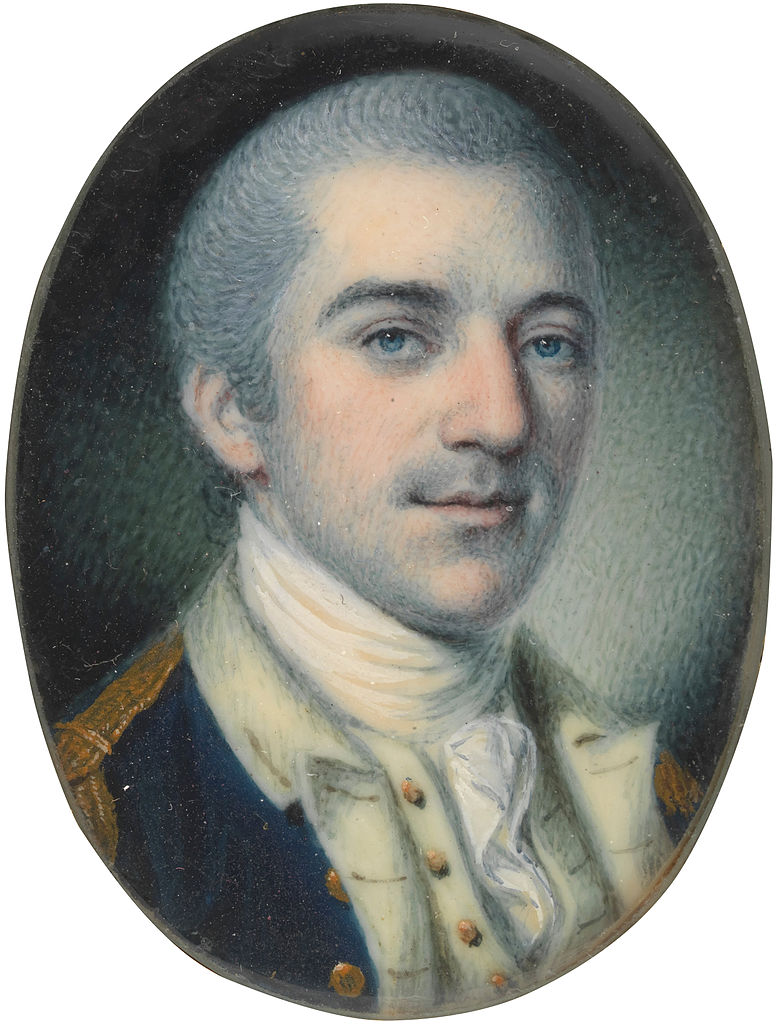
Lieutenant Colonel John Laurens of South Carolina had served as part of George Washington’s military family since early August 1777. Just 23-years-old during the summer of 1778, Laurens had established himself as one of Washington’s most trusted aides, as well as a close friend to Alexander Hamilton and the Marquis de Lafayette.
During the Battle of Monmouth Courthouse, fought June 28, 1778, Laurens was sent ahead of the army early in the morning to assist Baron von Steuben in reconnoitering the British Army’s position around the village. The party was fired upon and chased westward by the Queen’s Rangers back to a hedgerow defended by New Jersey militiamen. When the battle began in earnest later in the morning, Laurens found himself back at the same hedgerow assisting Continental troops in conducting a delaying action to by time for Washington to establish a strong defensive position further to the west. It was during this action that the young officer from the Palmetto State lost his mount.
The following letter was written by Lt. Col. Laurens on June 30, 1778, to his father, Henry Laurens, who was then serving as the President of the Continental Congress. It is a fascinating look at one soldier’s experience during a battle in which he was right in the thick of things, selflessly exposing himself to the enemy.
Portrait of John Laurens painted in 1780 by Charles Wilson Peale.
“HEAD QUARTERS, ENGLISH TOWN, 30th June, 1778.
My Dear Father:
I was exceedingly chagrined that public business prevented my writing to you from the field of battle, when the General sent his dispatches to Congress. The delay, however, will be attended with this advantage, that I shall be better able to give you an account of the enemy’s loss; tho’ I must now content myself with a very succinct relation of this affair. The situation of the two armies on Sunday was as follows: Gen’ Washington, with the main body of our army, was at 4 miles distance from English Town. Gen’ [Charles] Lee, with a chosen advanced corps, was at that town. The enemy were retreating down the road which leads to Middle Town; their flying army composed (as it was said), of 2 [battalions] of British grenadiers, 1 Hessian [grenadiers], 1 [battalion] of light infantry, 1 regiment of guards, 2 brigades of foot, 1 [regiment] of dragoons and a number of mounted and dismounted Jägers. The enemy’s rear was preparing to leave Monmouth village, which is 6 miles from this place, when our advanced corps was marching towards them. The militia of the country kept up a random running fire with the Hessian Jägers; no mischief was done on either side. I was with a small party of horse, reconnoitering the enemy, in an open space before Monmouth, when I perceived two parties of the enemy advancing by files in the woods on our right and left, with a view, as I imagined, of enveloping our small party, or preparing a way for a skirmish of their horse. I immediately wrote an account of what I had seen to the General, and expressed my anxiety on account of the languid appearance of the Continental troops under Gen’ Lee.
Some person in the mean time reported to Gen’ Lee that the enemy were advancing upon us in two columns, and I was informed that he had, in consequence, ordered Varnum’s brigade, which was in front, to repass a bridge which it had passed. I went myself, and assured him of the real state of the case; his reply to me was, that his accounts had been so contradictory, that he was utterly at a loss what part to take. I repeated my account to him in positive distinct terms, and returned to make farther discoveries. I found that the two parties had been withdrawn from the wood, and that the enemy were preparing to leave Monmouth. I wrote a second time to Gen’ Washington. Gen’ Lee at length gave orders to advance. The enemy were forming themselves on the Middle Town road, with their light infantry in front, and cavalry on the left flank, while a scattering, distant fire was commenced between our flanking parties and theirs. I was impatient and uneasy at seeing that no disposition was made, and [endeavored] to find out Gen’ Lee to inform him of what was doing, and know what was his disposition. Ile told me that he was going to order some troops to march below the enemy and cut off their retreat. Two pieces of artillery were posted on our right without a single foot soldier to support them. Our men were formed piecemeal in front of the enemy, and there appeared to be no general plan or disposition calculated on that of the enemy; the nature of the ground, or any of the other principles which generally govern in these cases.
The enemy began a cannonade from two parts of their line; their whole body of horse made a furious charge upon a small party of our cavalry and dissipated them, and drove them till the appearance of our infantry, and a judicious discharge or two of artillery made them retire precipitately. Three regiments of ours that had advanced in a plain open country towards the enemy’s left flank, were ordered by Gen’ Lee to retire and occupy the village of Monmouth. They were no sooner formed there, than they were ordered to quit that post and gain the woods. One order succeeded another with a rapidity and indecision calculated to ruin us. The enemy had changed their front and were advancing in full march towards us; our men were fatigued with the excessive heat. The artillery horses were not in condition to make a brisk retreat. A new position was ordered, but not generally communicated, for part of the troops were forming on the right of the ground, while others were marching away, and all the artillery driving off. The enemy, after a short halt, resumed their pursuit; no cannon was left to check their progress. A regiment was ordered to form behind a fence, and as speedily commanded to retire. All this disgraceful retreating, passed without the firing of a musket, over ground which might have been disputed inch by inch. We passed a defile and arrived at an eminence beyond, which was defended on one hand by an impracticable fen, on the other by thick woods where our men would have fought to advantage. Here, fortunately for the honour of the army, and the welfare of America, Gen’ Washington met the troops retreating in disorder, and without any plan to make an opposition. He ordered some pieces of artillery to be brought up to defend the pass, and some troops to form and defend the pieces. The artillery was too distant to be brought up readily, so that there was but little opposition given here. A few shot though, and a little skirmishing in the wood checked the enemy’s career. The Gen’ expressed his astonishment at this unaccountable retreat. Mr. Lee indecently replied that the attack was contrary to his advice and opinion in council. We were obliged to retire to a position, which, though hastily reconnoitered, proved an excellent one. Two regiments were formed behind a fence in front of the position. The enemy’s horse advanced in full charge with admirable bravery to the distance of forty paces, when a general discharge from these two regiments did great execution among them, and made them fly with the greatest precipitation. The grenadiers succeeded to the attack. At this time my horse was killed under me. In this spot the action was hottest, and there was considerable slaughter of British grenadiers. The General ordered Woodford’s brigade with some artillery to take possession of an eminence on the enemy’s left, and cannonade from thence. This produced an excellent effect. The enemy were prevented from advancing on us, and confined themselves to cannonade with a show of turning our left flank. Our artillery answered theirs with the greatest vigour. The General seeing that our left flank was secure, as the ground was open and commanded by it, so that the enemy could not attempt to turn it without exposing their own flank to a heavy fire from our artillery, and causing to pass in review before us, the force employed for turning us. In the mean time, Gen’ Lee continued retreating. Baron Steuben was order’d to form the broken troops in the rear. The cannonade was incessant and the General ordered parties to advance from time to time and engage the British grenadiers and guards. The horse shewed themselves no more. The grenadiers showed their backs and retreated every where with precipitation. They returned, however, again to the charge, and were again repulsed. They finally retreated and got over the strong pass, where, as I mentioned before, Gen’ Washington first rallied the troops. We advanced in force and continued masters of the ground; the standards of liberty were planted in triumph on the field of battle. We remained looking at each other, with the defile between us, till dark, and they stole off in silence at midnight. We have buried of the enemy’s slain, 233, principally grenadiers; forty odd of their wounded whom they left at Monmouth, fell into our hands. Several officers are our prisoners. Among their killed are Co’ Moncton, a captain of the guards, and several captains of grenadiers. We have taken but a very inconsiderable number of prisoners, for want of a good body of horse. Deserters are coming in as usual. Our officers and men behaved with that bravery which becomes freemen, and have convinced the world that they can beat British grenadiers. To name any one in particular wd be a kind of injustice to the rest. There are some, however, who came more immediately under my view, whom I will mention that you may know them. B. Gen’ Wayne, Col. Barber, Col. Stewart, Col. Livingston, Col. Oswald of the artillery, Capt. Doughty deserve well of their country, and distinguished themselves nobly.
The enemy buried many of their dead that are not accounted for above, and carried off a great number of wounded. I have written diffusely, and yet I have not told you all. Gen’ Lee, I think, must be tried for misconduct. However, as this is a matter not generally known, tho’ it seems almost universally wished for, I would beg you, my dear father, to say nothing of it.
You will oblige me much by excusing me to Mr. Drayton for not writing to him. I congratulate you, my dear father, upon this seasonable victory, and am ever
Your most dutiful and affectionate
JOHN LAURENS.
The [Honorable] Henry Laurens, Esqr.
We have no returns of our loss as yet. The proportion on the field of battle appeared but small. We have many good officers wounded.”
The hottest part of the hotttest temperature engagement in the American Revolution happened on June 28, 1778 at Monmouth Court House in New Jersey. The portion that gets the most attention out of this entire battle was the supposedly heated exchange between General George Washington and his second-in-command, General Charles Lee.
What ensued was the end of an American military career, as Lee would face a court martial, a suspension from duty, and a fall into obscurity. Historians have sorted through the primary sources of the time period to reconstruct what exactly happened on that balmy June day.
Yet, for the first time, a dedicated study, from the lens of both a historian and a practicing attorney, brings into focus the details of that fateful day in New Jersey. That topic, his new book, and historian Christian McBurney will be the focal point of this week’s “Rev War Revelry” as a Facebook live, this Sunday at 7 p.m. EST.
McBurney, an attorney in Washington D.C. and president of the George Washington American Revolution Round Table of Washington D.C. will speak on his latest publication, George Washington’s Nemesis, The Outrageous Treason and Unfair Court Martial of Major General Charles Lee during the Revolutionary War. This book is one of five that McBurney has written on the subject of the American Revolution.
For more information on those books, click here. To read up or read the synopsis of the book at the center of the historian happy hour this Sunday, click here.
We look forward to welcoming you this Sunday; whether you read the book or on the fence about adding this volume to your expanding library or just want to know the history behind this last major battle in the northern theater in the American Revolution. Or all three! Remember to bring your comments, questions, and a favorite beverage to sip on as you tune in.
This Sunday, at 7 p.m. join Emerging Revolutionary War on our Facebook page as we interview William “Billy” Griffith, author of the latest volume in the Emerging Revolutionary War Series.
His book, A Handsome Flogging, The Battle of Monmouth, June 28, 1778 was just released by Savas Beatie, LLC this month. The book is so new that Amazon still has it listed for pre-sale, but don’t worry, you can purchase the book directly from Savas Beatie by clicking here.
Billy Griffith is a full-time contributor to ERW and is also the author of The Battle of Lake George: England’s First Triumph in the French and Indian War, which was released in 2016 by HistoryPress. A native of Branchburg, New Jersey, he has a family connection to the the Monmouth area; he graduated with a degree in history from Shepherd University and holds a graduate degree in military history from Norwich University. He currently works as a full-time Gettysburg Licensed Battlefield Guide. We would be remiss if we did not include his other passion, besides American military history, the New York Yankees. Feel free to join the Facebook Live to disparage his love of the Evil Empire!
ERW looks forward to seeing you, hearing your questions, comments, and what personalized message you want inscribed on your copy of Billy’s latest publication. Although this happy hour historian discussion centers on an author interview, it is still a “happy hour” so bring your favorite brew; we can guarantee the two historians on the program will be imbibing theirs!
Lt. Col. Alexander Hamilton at Yorktown, VA by Alonzo Chapel
Alexander Hamilton has reappeared as a modern pop star with the wide success of the Broadway musical “Hamilton.” Due to this success, most people today know that Alexander Hamilton met his end in a duel with Aaron Burr on the banks of the Hudson River. But this was not Hamilton’s first involvement in a duel, nearly 26 years earlier Hamilton found himself embroiled in a feud with one of highest ranking Continental officers, Maj. Gen. Charles Lee.
It all started on June 28, 1778 at the Battle of Monmouth. The beginning of the battle had gone against the Americans and Lee, who was in command of the vanguard was ordering a retreat in front of the British. Washington, seeing the retreat rode ahead and encountered Lee. What was said between the men has been debated since that day, but what is not indisputable is that Lee took offense.Continue reading “Alexander Hamilton’s “First” Duel”→
In 2018, the inaugural two volumes, of the Emerging Revolutionary War Series published by Savas Beatie, LLC. Those first two volumes were; A Single Blow, The Battles of Lexington and Concord and The Beginning of the American Revolution and Victory or Death, The Battles of Trenton and Princeton.
In 2019, the series is set to release the next two volumes. The Winter that Won the War, The Winter Encampment at Valley Forge, 1777-1778 and A Handsome Flogging, The Battle of Monmouth, June 28, 1778. This past week, the covers of both were released by Savas Beatie so get a sneak peak below.
Both titles are scheduled for a release later this year. Stay tuned for updates!










 Emerging Revolutionary War Era