Lt. Col. John Laurens’ Post-Monmouth Letter

Lieutenant Colonel John Laurens of South Carolina had served as part of George Washington’s military family since early August 1777. Just 23-years-old during the summer of 1778, Laurens had established himself as one of Washington’s most trusted aides, as well as a close friend to Alexander Hamilton and the Marquis de Lafayette.

During the Battle of Monmouth Courthouse, fought June 28, 1778, Laurens was sent ahead of the army early in the morning to assist Baron von Steuben in reconnoitering the British Army’s position around the village. The party was fired upon and chased westward by the Queen’s Rangers back to a hedgerow defended by New Jersey militiamen. When the battle began in earnest later in the morning, Laurens found himself back at the same hedgerow assisting Continental troops in conducting a delaying action to by time for Washington to establish a strong defensive position further to the west. It was during this action that the young officer from the Palmetto State lost his mount.

The following letter was written by Lt. Col. Laurens on June 30, 1778, to his father, Henry Laurens, who was then serving as the President of the Continental Congress. It is a fascinating look at one soldier’s experience during a battle in which he was right in the thick of things, selflessly exposing himself to the enemy.   
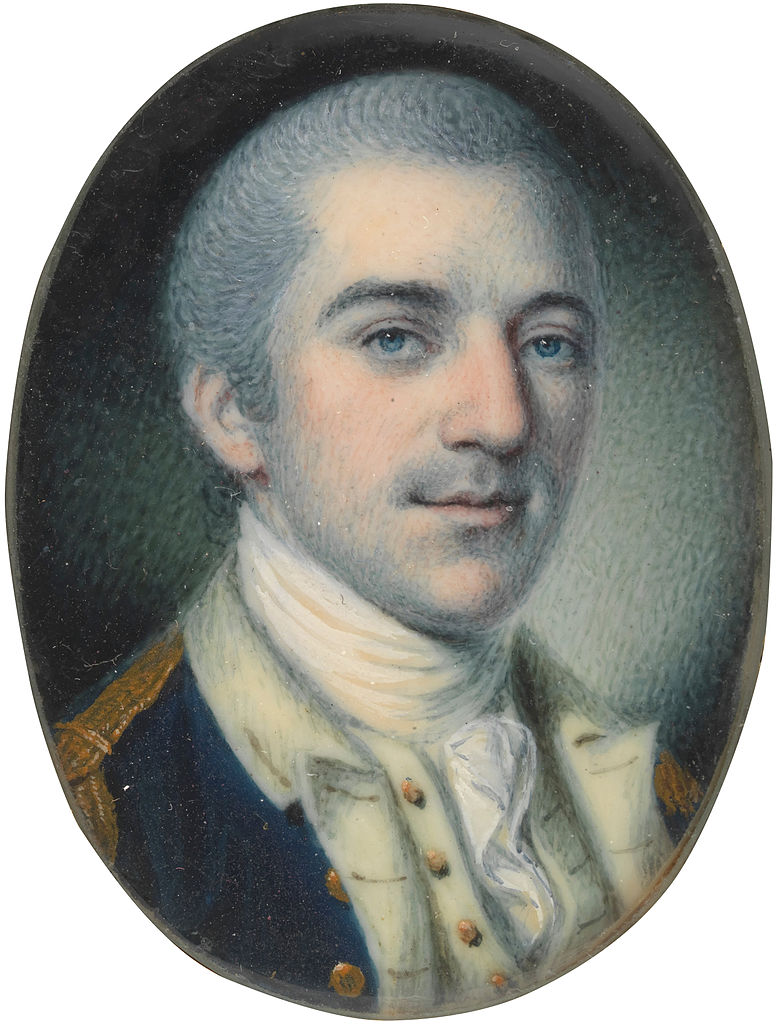
Portrait of John Laurens painted in 1780 by Charles Wilson Peale.

“HEAD QUARTERS, ENGLISH TOWN, 30th June, 1778.

My Dear Father:

I was exceedingly chagrined that public business prevented my writing to you from the field of battle, when the General sent his dispatches to Congress. The delay, however, will be attended with this advantage, that I shall be better able to give you an account of the enemy’s loss; tho’ I must now content myself with a very succinct relation of this affair. The situation of the two armies on Sunday was as follows: Gen’ Washington, with the main body of our army, was at 4 miles distance from English Town. Gen’ [Charles] Lee, with a chosen advanced corps, was at that town. The enemy were retreating down the road which leads to Middle Town; their flying army composed (as it was said), of 2 [battalions] of British grenadiers, 1 Hessian [grenadiers], 1 [battalion] of light infantry, 1 regiment of guards, 2 brigades of foot, 1 [regiment] of dragoons and a number of mounted and dismounted Jägers. The enemy’s rear was preparing to leave Monmouth village, which is 6 miles from this place, when our advanced corps was marching towards them. The militia of the country kept up a random running fire with the Hessian Jägers; no mischief was done on either side. I was with a small party of horse, reconnoitering the enemy, in an open space before Monmouth, when I perceived two parties of the enemy advancing by files in the woods on our right and left, with a view, as I imagined, of enveloping our small party, or preparing a way for a skirmish of their horse. I immediately wrote an account of what I had seen to the General, and expressed my anxiety on account of the languid appearance of the Continental troops under Gen’ Lee.

Some person in the mean time reported to Gen’ Lee that the enemy were advancing upon us in two columns, and I was informed that he had, in consequence, ordered Varnum’s brigade, which was in front, to repass a bridge which it had passed. I went myself, and assured him of the real state of the case; his reply to me was, that his accounts had been so contradictory, that he was utterly at a loss what part to take. I repeated my account to him in positive distinct terms, and returned to make farther discoveries. I found that the two parties had been withdrawn from the wood, and that the enemy were preparing to leave Monmouth. I wrote a second time to Gen’ Washington. Gen’ Lee at length gave orders to advance. The enemy were forming themselves on the Middle Town road, with their light infantry in front, and cavalry on the left flank, while a scattering, distant fire was commenced between our flanking parties and theirs. I was impatient and uneasy at seeing that no disposition was made, and [endeavored] to find out Gen’ Lee to inform him of what was doing, and know what was his disposition. Ile told me that he was going to order some troops to march below the enemy and cut off their retreat. Two pieces of artillery were posted on our right without a single foot soldier to support them. Our men were formed piecemeal in front of the enemy, and there appeared to be no general plan or disposition calculated on that of the enemy; the nature of the ground, or any of the other principles which generally govern in these cases.

The enemy began a cannonade from two parts of their line; their whole body of horse made a furious charge upon a small party of our cavalry and dissipated them, and drove them till the appearance of our infantry, and a judicious discharge or two of artillery made them retire precipitately. Three regiments of ours that had advanced in a plain open country towards the enemy’s left flank, were ordered by Gen’ Lee to retire and occupy the village of Monmouth. They were no sooner formed there, than they were ordered to quit that post and gain the woods. One order succeeded another with a rapidity and indecision calculated to ruin us. The enemy had changed their front and were advancing in full march towards us; our men were fatigued with the excessive heat. The artillery horses were not in condition to make a brisk retreat. A new position was ordered, but not generally communicated, for part of the troops were forming on the right of the ground, while others were marching away, and all the artillery driving off. The enemy, after a short halt, resumed their pursuit; no cannon was left to check their progress. A regiment was ordered to form behind a fence, and as speedily commanded to retire. All this disgraceful retreating, passed without the firing of a musket, over ground which might have been disputed inch by inch. We passed a defile and arrived at an eminence beyond, which was defended on one hand by an impracticable fen, on the other by thick woods where our men would have fought to advantage. Here, fortunately for the honour of the army, and the welfare of America, Gen’ Washington met the troops retreating in disorder, and without any plan to make an opposition. He ordered some pieces of artillery to be brought up to defend the pass, and some troops to form and defend the pieces. The artillery was too distant to be brought up readily, so that there was but little opposition given here. A few shot though, and a little skirmishing in the wood checked the enemy’s career. The Gen’ expressed his astonishment at this unaccountable retreat. Mr. Lee indecently replied that the attack was contrary to his advice and opinion in council. We were obliged to retire to a position, which, though hastily reconnoitered, proved an excellent one. Two regiments were formed behind a fence in front of the position. The enemy’s horse advanced in full charge with admirable bravery to the distance of forty paces, when a general discharge from these two regiments did great execution among them, and made them fly with the greatest precipitation. The grenadiers succeeded to the attack. At this time my horse was killed under me. In this spot the action was hottest, and there was considerable slaughter of British grenadiers. The General ordered Woodford’s brigade with some artillery to take possession of an eminence on the enemy’s left, and cannonade from thence. This produced an excellent effect. The enemy were prevented from advancing on us, and confined themselves to cannonade with a show of turning our left flank. Our artillery answered theirs with the greatest vigour. The General seeing that our left flank was secure, as the ground was open and commanded by it, so that the enemy could not attempt to turn it without exposing their own flank to a heavy fire from our artillery, and causing to pass in review before us, the force employed for turning us. In the mean time, Gen’ Lee continued retreating. Baron Steuben was order’d to form the broken troops in the rear. The cannonade was incessant and the General ordered parties to advance from time to time and engage the British grenadiers and guards. The horse shewed themselves no more. The grenadiers showed their backs and retreated every where with precipitation. They returned, however, again to the charge, and were again repulsed. They finally retreated and got over the strong pass, where, as I mentioned before, Gen’ Washington first rallied the troops. We advanced in force and continued masters of the ground; the standards of liberty were planted in triumph on the field of battle. We remained looking at each other, with the defile between us, till dark, and they stole off in silence at midnight. We have buried of the enemy’s slain, 233, principally grenadiers; forty odd of their wounded whom they left at Monmouth, fell into our hands. Several officers are our prisoners. Among their killed are Co’ Moncton, a captain of the guards, and several captains of grenadiers. We have taken but a very inconsiderable number of prisoners, for want of a good body of horse. Deserters are coming in as usual. Our officers and men behaved with that bravery which becomes freemen, and have convinced the world that they can beat British grenadiers. To name any one in particular wd be a kind of injustice to the rest. There are some, however, who came more immediately under my view, whom I will mention that you may know them. B. Gen’ Wayne, Col. Barber, Col. Stewart, Col. Livingston, Col. Oswald of the artillery, Capt. Doughty deserve well of their country, and distinguished themselves nobly.

The enemy buried many of their dead that are not accounted for above, and carried off a great number of wounded. I have written diffusely, and yet I have not told you all. Gen’ Lee, I think, must be tried for misconduct. However, as this is a matter not generally known, tho’ it seems almost universally wished for, I would beg you, my dear father, to say nothing of it.

You will oblige me much by excusing me to Mr. Drayton for not writing to him. I congratulate you, my dear father, upon this seasonable victory, and am ever

Your most dutiful and affectionate

JOHN LAURENS.

The [Honorable] Henry Laurens, Esqr.

We have no returns of our loss as yet. The proportion on the field of battle appeared but small. We have many good officers wounded.”

To hear more stories like John Laurens’s and to walk the ground in which he fought, join Emerging Revolutionary War historians Billy Griffith and Phillip S. Greenwalt this November on a bus tour covering Valley Forge and the Monmouth campaign. More in formation can be found on our website, www.emergingrevolutionarywar.org, or on our Facebook page, https://www.facebook.com/events/632831987720200/?acontext=%7B%22event_action_history%22%3A[%7B%22surface%22%3A%22page%22%7D]%7D .

‘Timely and Handsome’: Transformation of the Continental Army at Valley Forge (Virtual Event)

April 19th in American Revolutionary War history is usually remembered as the day the “shot heard around the world” happened in the towns of Lexington and Concord, Massachusetts. For the 2022 edition of that day, Emerging Revolutionary War invites you to turn your attention to Valley Forge and a virtual event hosted by the Valley Forge Park Alliance.

Starting at 7 p.m. EDT, Emerging Revolutionary War historian, Phillip S. Greenwalt will present a virtual talk entitled, ‘Timely and Handsome’: Transformation of the Continental Army at Valley Forge. A synopsis of the talk is below.

“As spring began to blossom over Valley Forge, Baron von Steuben’s drilling of the Continental army was in full effect. Although the men and officers of Washington’s army had become proficient on the drill field, there was still the simple question of how would they fare against the British in the upcoming campaign season? A month prior to the end of the winter encampment on June 19, 1778, a small-scale action, at Barren Hill, by a detachment of the Continental army would prove a snapshot into possible future battlefield behavior. The signs were promising. This talk will focus on the training of von Steuben, the composition of the Marquis de Lafayette’s force that marched out of the encampment in middle of May, the action at Barren’s Hill, and the insight this small scale action showed about the transformation of the army during the winter at Valley Forge.”

To register for the event, click here. The link will take you to the Valley Forge Park Alliance website. To learn more about this important aspect of the Valley Forge encampment, Emerging Revolutionary War invites you to click the link on the title bar at the top of this blog labeled “2022 Bus Tour” and secure one of 14 remaining tickets to attend the November 11-13, 2022 tour that will cover Valley Forge and Monmouth.

Reenactors portraying Continental soldiers being trained at Valley Forge
(courtesy of Valley Forge Park Alliance)

Marquis de Lafayette, Virginia 1781

A few weeks back, you may have noticed a video on Emerging Revolutionary War’s Facebook page about the Marquis de Lafayette and his independent command during the spring and summer of 1781 in Virginia. Along with good pal, Dan Davis, we located a site of where Lafayette encamped while he maneuvers to protect the iron furnaces of the Fredericksburg area, keep a distance from British forces under General Lord Charles Cornwallis, and await reinforcements being sent south under General Anthony Wayne.

He continued to keep his commander-in-chief, General George Washington updated on affairs in the latter’s native state. From a camp in central Virginia the Frenchman penned the following letter.

Camp Betwen Rappaahonock and North Anna June 3d 1781

My Dear General

Inclosed you will find the Copy of a letter to General Greene. He at first Had-Requested I would directly write to you, Since which His orders Have Been different, But He directed me to forward you Copies of My official Accounts. So many letters are lost in their Way that I do not Care to Avoid Repetitions. I Heartly wish, My dear General, My Conduct may Be approved of particularly By You. My Circumstances Have Been peculiar, and in this State I Have Some times Experienced Strange disappointements. Two of them the Stores at Charlotte’s Ville, and the delay of the [Pensylva] Detachement Have given me Much Uneasiness and May Be attended with Bad Consequences. There is great Slowness and Great Carelessness in this part of the world—But the Intentions are good, and the people want to Be Awakened. Your presence, My dear General, would do a Great deal. Should these deta[chments] Be Increased to three or four thousand, and the french Army Come this way, leaving One of our generals at Rhode island and two or three about New York and in the Jersays you Might be on the offensive in this Quarter, and there Could Be a Southern Army in Carolina. Your presence would do Immense good, But I would wish you to Have a large force—General Washington Before He personally appears must Be Strong enough to Hope Success. Adieu, My dear general, With the Highest Respect and Most Tender affection I Have the Honor to be Yours

Lafayette

If you persist in the idea to Come this Way you may depend upon about 3000 Militia in the field Relieved every two months. your presence will induce them to turn out with great Spirit.

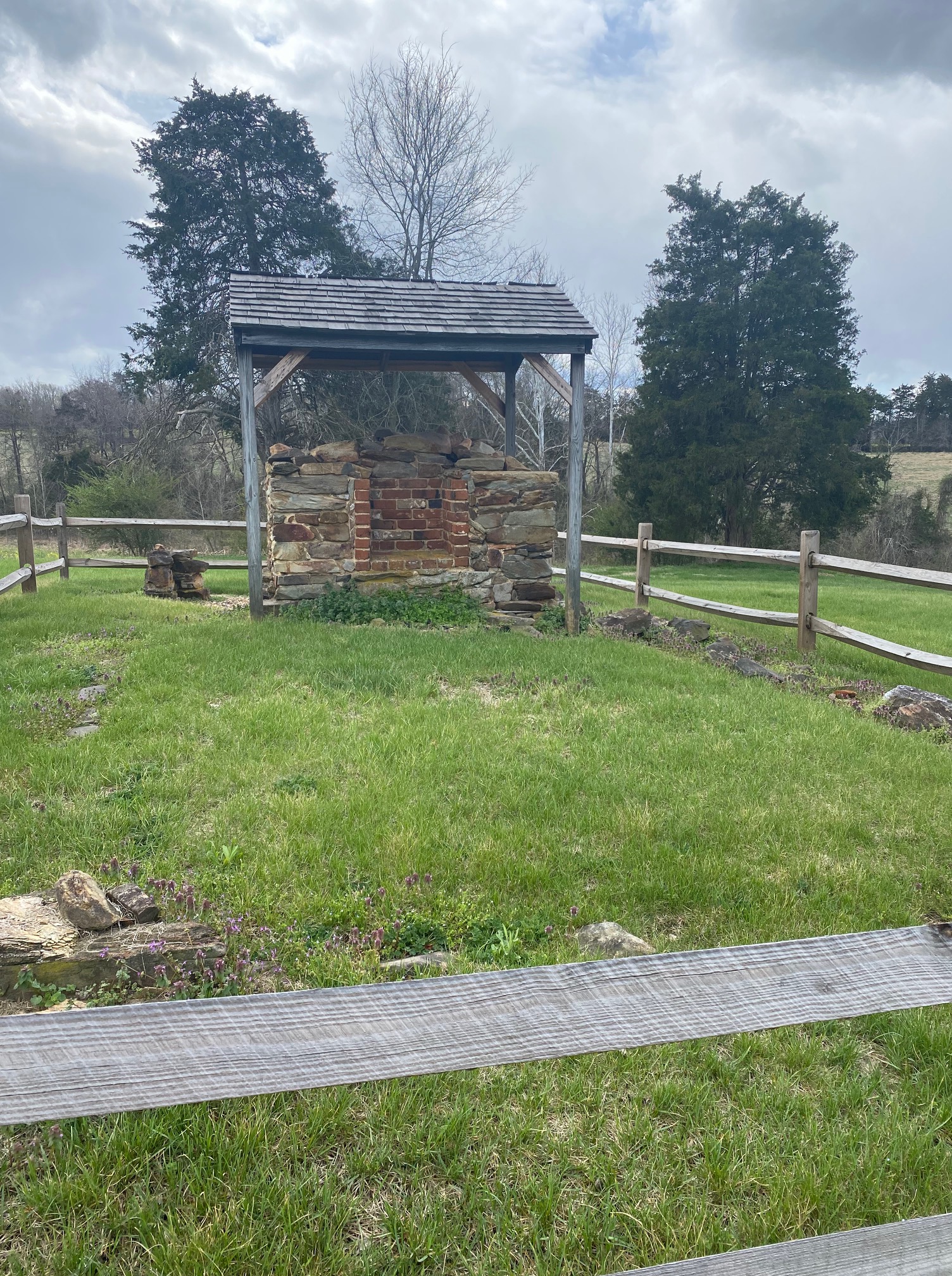
That letter may have been written somewhere around the terrain you see in the photos below. You never know what you can stumble into touring central Virginia!

*Link to the letter can be found here.

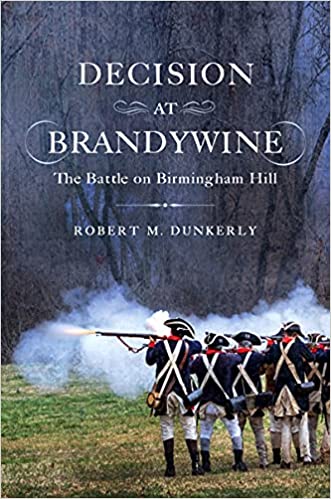
“Rev War Revelry” Author Spotlight  Decision at Brandywine: The Battle on Birmingham Hill with Robert Dunkerly

This Sunday on the Emerging Revolutionary War’s Facebook page, Robert Dunkerly will join the “Rev War Revelry” to discuss his newest publication, Decision at Brandywine: The Battle of Birmingham Hill.

The Battle of Brandywine, fought on September 11, 1777, saw the defeat of the American forces in southeastern Pennsylvania. The victory by the British opened the road to Philadelphia, which fell to Sir William Howe’s forces on September 26, fifteen days after the battle.

Dunkerly, a park ranger with Richmond National Battlefield Park and a contributing historian for Emerging Revolutionary War will discuss the pivotal action that happened around Birmingham Hill on that Thursday in 1777. The engagement at Brandywine was the largest and longest battle in the entire American Revolution and the third bloodiest. This new publication examines the action near Birmingham Hill and Meeting House where the action that day turned against George Washington’s forces.

Thus, this Sunday, at 7 p.m. EDT, tune into ERW’s Facebook page for the next historian happy hour as the popular “Rev War Revelry” series continues with this author spotlight.

Prelude to Guilford Courthouse: Weitzel’s Mill

This March brings the 241st Anniversary of the pivotal battle of Guilford Courthouse, NC. While this battle is of immense importance to the Southern Campaign, several smaller battles leading up to it have been largely overlooked. Through February and early March of 1781, detachments of the American and British armies maneuvered across the modern-day counties of Alamance, Guilford, Orange, Chatham, and Caswell. The is the third in a series of three articles.  

            The last of the skirmishes occurred at Weitzel’s Mill, also spelled as Wetzel’s, and Wiley’s. Cornwallis was becoming more determined to strike at the Americans to either force a general battle, which he felt his veteran army could win, or destroy the isolated detachments operating near him. 

Continue reading “Prelude to Guilford Courthouse: Weitzel’s Mill”

“Rev War Revelry” Convention Army Discussion

On October 17, 1777, British General John Burgoyne surrendered his joint British, Canadian, and Hessian and Brunswicker forces to patriot General Horatio Gates near Saratoga, New York. Over 6,000 soldiers, the number placed by one historian is 6,222, became captives of war. Under the terms of the convention agreed upon by Burgoyne and Gates, the vanquished army was to march to Boston, Massachusetts, board British ships, and sail to England, to await formal exchange and to not participate in the war in America further.

When news reached the Continental Congress of this concession, that political body demanded a complete list of the troops surrendered to ensure the terms of the convention was to be upheld. When this was not forthcoming by the British, Congress reacted by vowing to not adhere to the stipulations of the convention. Burgoyne’s forces would not head back to Great Britain to await an exchange that year. Instead, these men were to be confined in camps both in New England and Virginia for the duration of the war. This force came to be called the Convention Army.

This Sunday, March 6, at 7 p.m. EDT, join Emerging Revolutionary War on our Facebook page for the next historian happy hour, as Dan Welch and Phillip S. Greenwalt discuss the Convention Army and what happened after the pivotal battle of Saratoga in October 1777.

Prelude to Guilford Courthouse: Clapp’s Mill

This March brings the 241st Anniversary of the pivotal battle of Guilford Courthouse, NC. While this battle is of immense importance to the Southern Campaign, several smaller battles leading up to it have been largely overlooked. Through February and early March of 1781, detachments of the American and British armies maneuvered across the modern-day counties of Alamance, Guilford, Orange, Chatham, and Caswell. The is the second in a series of three articles.  

            Pyle’s Defeat on February 25, 1781 was a public relations disaster for the British. The next skirmish fought between the opposing forces was at Clapp’s Mill on March 2nd and has also been called the Battle of Alamance. On February 27th, Cornwallis’ army moved from Hillsborough to the Haw River, camping on the south side of Alamance Creek at an important crossroads.

Continue reading “Prelude to Guilford Courthouse: Clapp’s Mill”

Prelude to Guilford Courthouse: Pyle’s Defeat

This March brings the 241st Anniversary of the pivotal battle of Guilford Courthouse, NC. While this battle is of immense importance to the Southern Campaign, several smaller battles leading up to it have been largely overlooked. Through February and early March of 1781, detachments of the American and British armies maneuvered across the modern-day counties of Alamance, Guilford, Orange, Chatham, and Caswell. This is the first of a series of three articles.

Having unsuccessfully chased General Nathaniel Greene’s small, ragged army across North Carolina, British forces under Lord Charles Cornwallis moved to the state capital at Hillsborough to announce their liberation of the state and call Loyalists to come forward and support them. Greene’s army retreated across the Dan River into Virginia, where he awaited supplies and reinforcements.

Continue reading “Prelude to Guilford Courthouse: Pyle’s Defeat”

von Steuben arrives…

After a circuitous journey, from Paris, France across the Atlantic Ocean and then into Pennsylvania, an eager participant trekked to join the American effort. After an introduction to the Continental Congress this European officer headed toward the Continental army encampment. Baron Frederich William Ludolf Gerhard Augustin von Steuben, 47-years old, rode into camp drawn by horses and relaxing, as much as one can on the roads of Pennsylvania during 1770s, in a sleigh, with a Russian wolfhound dog strolling beside the wooden vehicle. On this date, 244 years ago, General George Washington, his staff, and any inquiring eyes around camp saw von Steuben for the first time.

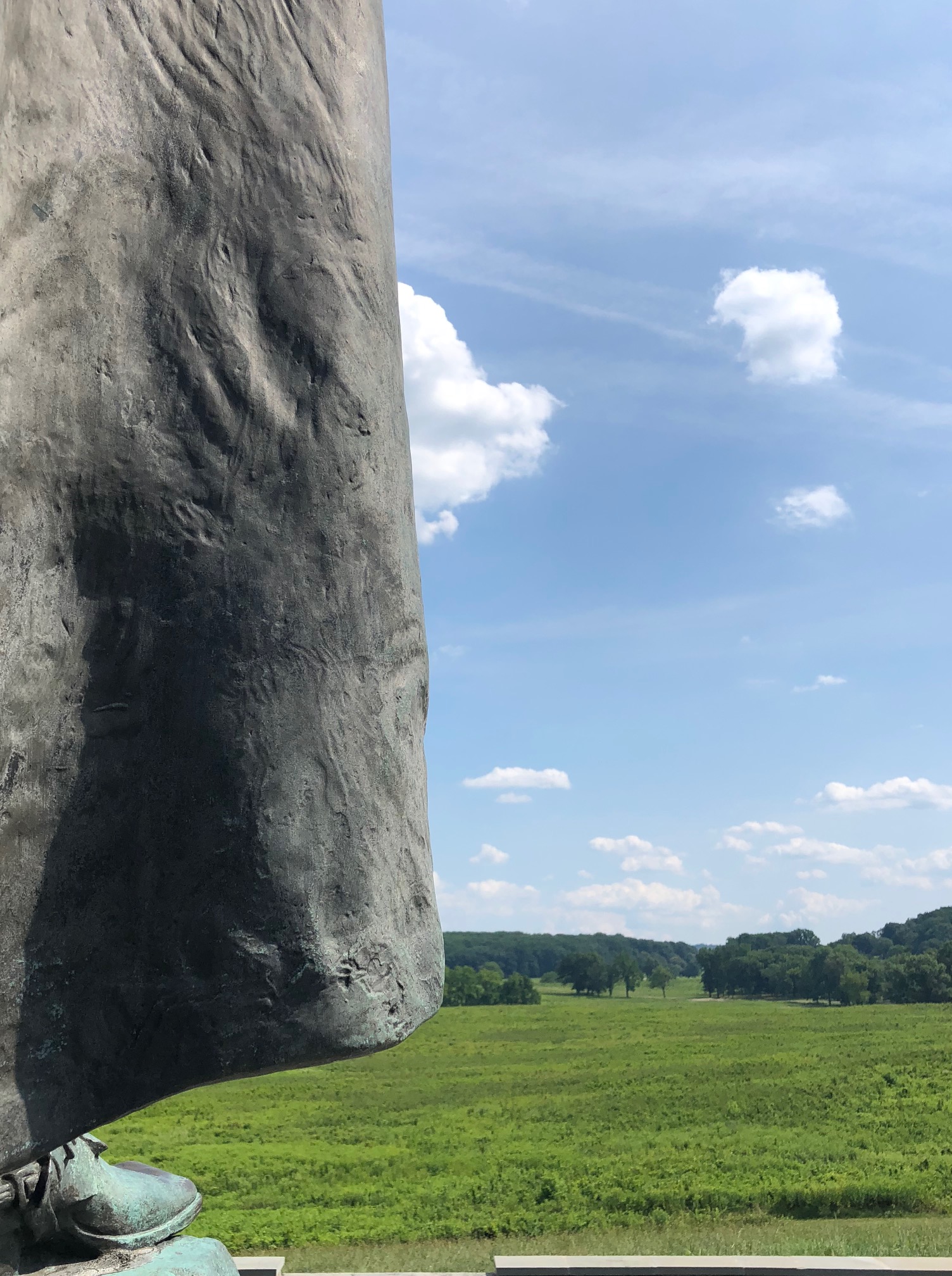
Baron von Steuben Statue, Valley Forge NHP

Although Christmas was almost two months in the past, von Steuben became a late blessing for Washington and his Continental army. Through an adaptation of a military training regimen from continental Europe which became a manual known as the “Blue Book” (this guide was used to train United States Army recruits for decades into the future as well), von Steuben began to morph the rank-and-file and junior officer corps of the Continental army into an actual army that knew how to follow commands and change formations. This training aided the Continentals in the battles of 1778, from a small engagement in May at Barren Hill to the last major fighting in the northern theater at Monmouth in June and into other theaters of the conflict.

Today, the field in which he trained the first model company is preserved by the National Park Service within the boundary of Valley Forge National Historical Park.

This November, during the second annual Emerging Revolutionary War bus tour, attendees will see the field and stand at the foot of the statue to von Steuben, looking over the same ground he first saw on this date, February 23, 1778. To secure your tickets, click the link on the header bar above titled “2022 Bus Tour.”

See you in November!

“It it with great reluctance, I trouble you on a subject.”

In the throes of the winter of 1778, spent at Valley Forge, General George Washington and his staff formulated a mountain of paperwork to multiple recipients of the American cause. On February 16, 1778, Alexander Hamilton composed a letter for the commander-in-chief of the Continental army to a gentleman who had moved from the military to the political ranks; George Clinton of New York.

George Clinton

He had seen service in the Hudson Highlands and had been commissioned a brigadier general in the Continental army on March 25, 1777. Later that same year both governor and lieutenant governor of New York, formally resigning the latter and accepting the former on July 30, 1777. In that capacity, he received the letter, excerpts below, from Valley Forge.

“It is with great reluctance, I trouble you on a subject, which does not properly fall within your province; but it is a subject that occasions me more distress, than I have felt, since the commencement of the war; and which loudly demands the most zealous exertions of every person of weight and authority, who is interested in the success of our affairs.” I mean the present dreadful situation of the army for want of provisions and the miserable prospects before us, with respect to futurity. It is more alarming, than you will probably conceive, for to form a just idea, it were necessary to be on the spot.2 For some days past, there has been little less, than a famine in camp. A part of the army has been a week, without any kind of flesh & the rest three or four days.3 Naked and starving as they are, we cannot eno⟨ugh⟩ admire the incomparable patience and fidelity of the soldiery, that they have not been, ere this, excited by their sufferings, to a general mutiny and dispersion. Strong symptoms however of discontent have appeared in particular instances; and nothing but the most active effort⟨s⟩ every where, can long avert so shocking a catastrophe.

Washington then asks for any help or supplies that Clinton can send his way, even though the army is outside the state lines of New York. Washington’s mindset is that the cause of the army in Pennsylvania is the cause of American independence and that Clinton, who had served would recognize that and do his utmost to provide what he can.

“I am calling upon all those, whose stations and influence enable them to contribute their aid upon so important an occasion, and from your well known zeal, I expect every thing within the compass of your power, and that the abilities and resources of the state over which you preside, will admit. I am sensible of the disadvantages it labours under, from having been so long the scene of war, and that it must be exceedingly drained by the great demands to which it has been subject, But though you may not be able to contribute materially to our relief, you can perhaps do something towards it; and any assistance, however trifling in itself, will be of great moment, at so critical a juncture, and will conduce to keeping the army together, ’till the Commissary’s department can be put upon a better footing, and effectual measures concerted to secure a permanent and competent supply. What methods you can take, you will be the best judge of; but if you can devise any means to procure a quantity of cattle or other kind of flesh, for the use of this army, to be at camp in the course of a month, you will render a most essential service to the common cause.

Not only did Clinton receive this missive from Washington, dated February 16, but the following day Gouverneur Morris from a camp committee established by the Continental Congress also sent the New York governor a letter asking for any assistance he could provide for the army at Valley Forge.

These letters underscore the seriousness of the plight of the army encamped at Valley Forge as the winter slowly turned to spring. The action at Washington’s headquarters and from the camp committee helped create a path forward through that pivotal winter. To learn more about what transpired during those six months from December 1777 to June 1778, follow the link above to the “2022 Bus Tour” and join Emerging Revolutionary War on our second annual bus tour November 11-13, 2022.

The entire letter from Washington (Hamilton) to George Clinton can be found here.