Review: To The End of the World, Nathaniel Greene, Charles Cornwallis, and the Race to the Dan by Andrew Waters

Writing over thirty years after the fact, Henry “Light Horse Harry” Lee summed up the events of February 14, 1780 with the line, “Thus ended, on the night of the 14th of February, this long, arduous, and eventful retreat” (190). Upon hearing of General Nathanael Greene’s exploits in this movement, General George Washington wrote, “You may be assured that your Retreat before Lord Cornwallis is highly applauded by all Ranks and reflects much honor on your military Abilities.” (198).

What Lee would remember as “eventful” and Washington and fellow military ranks “highly applauded” is remembered today as the “Race to the Dan.” This retrograde movement, undertaken by Greene’s forces from South Carolina to the Dan River in southern Virginia, is sandwiched between the engagements at the Battle of Cowpens in January 1781 and the British pyrrhic victory at Guilford Court House in March 1781. Yet, this retreat may be on the turning points in the southern theater that led the British, under Lord Charles Cornwallis to his eventual demise at Yorktown in October 1781.

Great historians, such as John Buchanan is his monumental work The Road to Guilford Court House have covered with broad strokes this period of time but a dedicated study was much needed in the historiography of the American Revolution. Insert Andrew Waters, writer, editor, and conservationist, whose name may be familiar from previous works such as The Quaker and the Gamecock: Nathanael Greene, Thomas Sumter, and the War for the Soul of the South. His latest book, To The End of the World, Nathanael Greene, Charles Cornwallis, and the Race to the Dan, captures this important military movement while providing an expose on the leadership of Greene woven in. The title of the book is pulled from a quote by Brigadier General Charles O’Hara, Cornwallis’s second-in-command during this campaign. With a background in land conservation with a focus on river corridors and watersheds, Waters found a connection with Greene, who studied the various waterways—or ordered subordinates—to study the various rivers, to better understand the topography for military campaigns.

After a stint in Salisbury, North Carolina, Waters became fascinated with the Race to the Dan story and decided to plunge in to understanding this period of the American Revolution. He found that “the Race to the Dan is a remarkable tale, fit for cinema or an epic novel, and not only for its accounts of four narrow escapes across its four rivers” (xv). He was drawn “to its story” (xx) and any reader of the book is the beneficiary of that discovery.

Along with weaving in the innate leadership qualities of Greene, Waters brings to light the importance of military leaders not as well-known such as William Lee Davidson, William R. Davie, and Edward Carrington with more household names of Lee, Daniel Morgan, and Otho Holland Williams. Throw in the names of Cornwallis, O’Hara, and Banastre Tarleton, and the pantheon of American Revolutionary personas is complete.

In this approximate month-long retreat, Greene saved the American Revolution in the southern theater and set in motion the events that led to the climactic victory at Yorktown. Waters, with his 2020 publication, has now helped save the story of the Race to the Dan from its unintended lapse into obscurity.

Information:

Published: 2020 (Westholme Publishing)

264 pages, including index, footnotes, images, and maps
“Rev War Revelry” Author Interview: John Maass

In March 1781, General Charles Lord Cornwallis finally caught up with his antagonist, General Nathanael Greene and his joint Continental and militia forces in North Carolina. On March 15, 1781, the British scored a pyrrhic victory over the American forces, securing the field but losing approximately 25% of their field force in the process.

With the victory, Cornwallis was forced to retreat to the North Carolina coast, to Wilmington, where he could rest and refit. He then led his forces north and into Virginia, to his destiny at Yorktown.

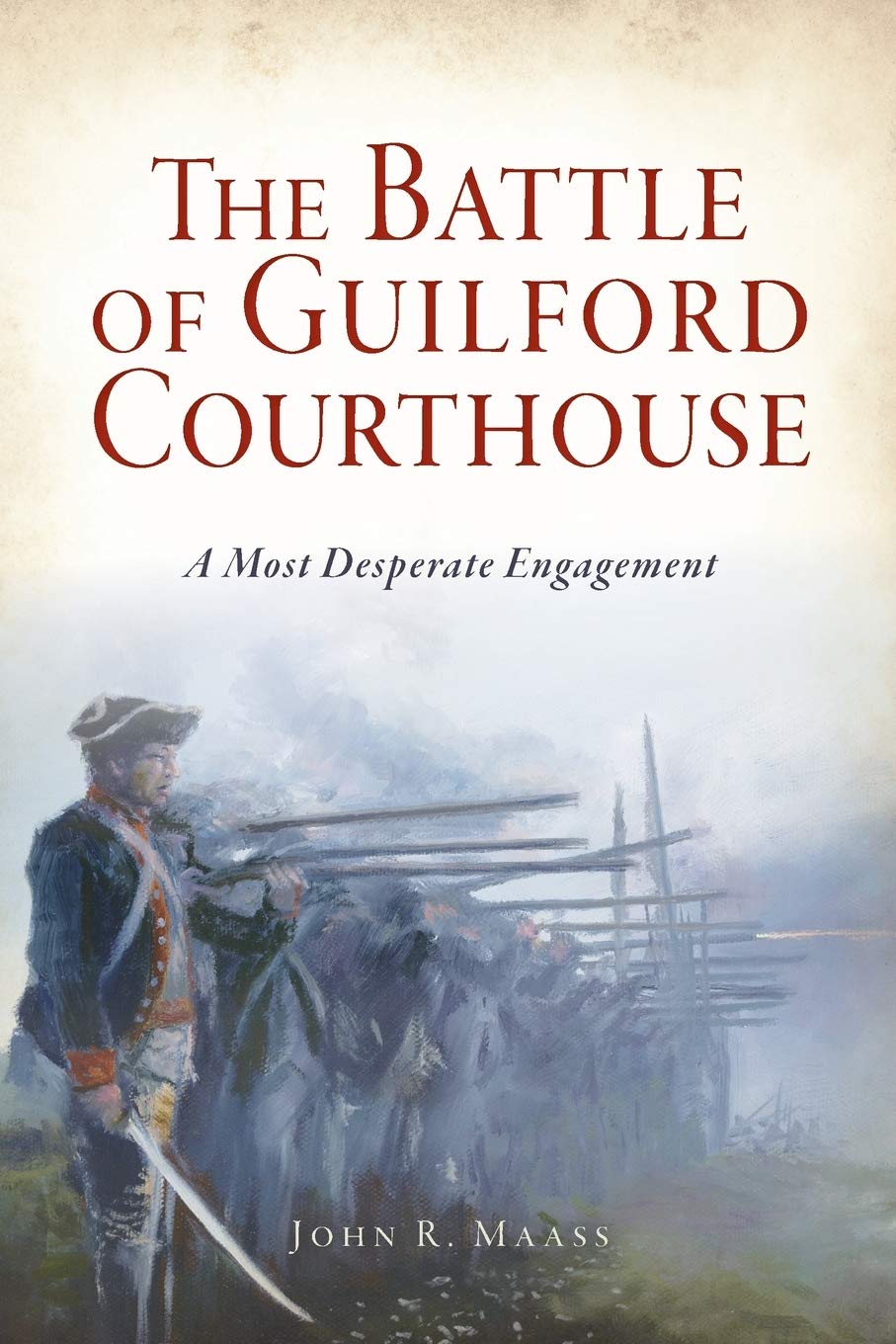
Yet, the road to Guilford Court House, for both sides, started in South Carolina, across the entire breadth of North Carolina, and into the southern reaches of Virginia before returning to the Old North State. This road and the history of the campaign, along with the March 15th engagement, unfolds in a new history by Dr. John Maass, author and historian, currently at the U.S. Army Center of Military History in Washington D.C.

His book, The Battle of Guilford Court House, A Most Desperate Engagement will be the focus of this week’s “Rev War Revelry.” The book is now available from book retailers and online. We hope you can join us this Sunday, at 7 p.m. EST, for our next installment of a historian happy hour.

To access, just head to Emerging Revolutionary War’s Facebook page, go to the “Events” tab and follow the prompt at 7 p.m.

George Washington’s Commitment to the Southern Theater

Although the American Revolutionary War staggered into a period of inaction after the Battle of Monmouth Court House in June 1778, General George Washington, in charge of all Continental forces, remained steadfast in New York until the late summer of 1781. Even though the principal actions of the war moved to the southern colonies, resulting in catastrophic losses at Charleston, Waxhaws, and Camden in 1780 through 1781, Washington did his utmost to quell British incursions, reinforce public opinion, and provide whatever succor he could from a distance. What is evidence of his mindset and depth of concern for this theater of operations?

Simple. Look at the general officers he dispatched south from the main army to help the American cause in the Carolinas and Virginia. The list includes some of the most trusted officers that served Washington.

First, Benjamin Lincoln, who met his fate at Charleston, but had served ably in the north, even working in the tense environment of the Saratoga campaign, between the volatile Benedict Arnold and the complacent Horatio Gates.

Second, Nathanael Greene, who had overcome growing pains, the recommendation to hold onto Fort Washington in New York in 1776 comes to mind, to swallowing his pride and taking the thankless job of quartermaster general during the winter that won the war at Valley Forge. Greene was probably second to Washington in understanding the political, social, economic, even the geographical components of warfare. Although a decisive battlefield victory constantly eluded him, his leadership at Guildford Court House set in motion Lord Charles Cornwallis’s eventual demise at Yorktown in October of that same year.

Moving into the Old Dominion, Washington dispatched Baron von Steuben with Greene to recruit, train, gather supplies, and provide the steady hand that the Prussian born leader had shown so admirably at Valley Forge. As inspector general of the Continental army, Washington’s orders sending the baron south was a major testament to the importance of stopping British incursions into Virginia.

Following the baron, was another European born officer, the Marquis de Lafayette, one of Washington’s favorites. This independent field command showed the growing confidence in the young Frenchman who responded admirably to the task at hand, doing what he can and for the most part, swallowing his brashness, except at Green Spring when he precipitously attacked what he thought was a rearguard of the British. Yet, his actions, coupled with the next general to be discussed, helped keep Cornwallis in the area of operations that would lead to his demise.

“Mad Anthony” Wayne and his Pennsylvania Continentals were also ordered south to join Lafayette in campaigning in Virginia. Wayne, arguably the best combat general in the Continental army, bordering on reckless to his critics though, had masterminded the storming of Stony Point, the last major action in the northern theater. Lafayette and he would be a solid tandem as they worked with limited resources and supplies in the summer of 1781 to contain the British.

Besides these general officers of high rank, “Light Horse” Harry Lee also was sent south to assist Greene and militia, most notably Francis Marion. The partnership between Lee and Marion worked as close to perfection as humanly possible and a model for regular and militia force combined operations.

Another cavalry commander that was sent for duty in the southern colonies was a second cousin of George Washington, William. In charge of light dragoons, mounted infantry who could dismount to fight as infantry, he served admirably in the southern army until his capture at the Battle of Eutaw Springs on September 8, 1781.

William Washington

This list, not intended to be exhaustive but just exploratory, is an example of the importance the southern theater had to the strategic mindset of George Washington. Although the Virginian was fixated on the recapture of New York City until the opportunity to ensnare Cornwallis at Yorktown presented itself, he provided an amazing array of officers of capability to quelling British intensions in the southern theater.

Feel free to comment below on other officers that were sent south that played vital role in the ultimate American victory in this theater of operations.

Return to Command

Emerging Revolutionary War welcomes back guest historian Dan Davis

Like my last post at Emerging Revolutionary War on the “Race to the Dan”, the origins of this post lie in a conversation with blog co-founder, Phill Greenwalt. The topic of our discussion revolved around the aftermath of the British victory at the Battle of Camden. The engagement ultimately brought two American officers to the Southern Theater: Nathanael Greene and Daniel Morgan. Greene accepted the position as the new head of the Southern Department’s co two months to the day after the battle while commanding the post at West Point, New York. Morgan’s story, however, is much more fascinating.

In the spring of 1779, George Washington created a light infantry corps within the Continental Army. Such a command fit Morgan’s skillset. He previously commanded the army’s provisional rifle corps. Additionally, Morgan, then a colonel, had compiled a record that arguably warranted elevation to brigadier general. After fighting broke out at Lexington and Concord, Morgan led a rifle company to the aid to the American army besieging Boston. Morgan participated in Col. Benedict Arnold’s Canadian Expedition and was captured during the assault on Quebec. He also played a critical role in the Battles of Saratoga. Morgan’s home state of Virginia, however, had met its quota for general officers and a vacancy was not available.

On June 30, 1779, Morgan learned Brig. Gen. Anthony Wayne received command of the new corps. With his pride devastated, Morgan traveled to Philadelphia. There, on July 19, Congress read his resignation.

Continue reading “Return to Command”

ERW Weekender: Ninety Six, The Site That Has It All

Emerging Revolutionary War welcomes historian Vanessa Smiley to the blog.

The thing about Ninety Six National Historic Site is that it’s unassuming exterior hides a wealth of history. It’s also nowhere near a major highway, meaning you have to want to get there if you’re thinking of visiting. And when you do get there, you will realize that there’s more history per acre than its demur entrance lets on. Located in the back country of South Carolina, Ninety Six has a history that speaks to the stories of Native Americans, the American frontier of the 18th century, and the American Revolution.

Entrance to the park
(courtesy of Ninety Six NHS, NPS)

The site at Ninety Six holds a treasure trove of study on these subjects. Native American, mostly Cherokee, activity was heavy in the area long before European settlers arrived. One of the earliest backcountry trading posts, established by Robert Gouedy in 1759, made Ninety Six a hotbed of trading activity thanks to its location at the crossroads of twelve different roads and paths, linking the area to nearly all parts of the colonies.

Continue reading “ERW Weekender: Ninety Six, The Site That Has It All”

“Judiciously Designed and Vigorously Executed”: The March to the Dan River

Emerging Revolutionary War welcomes back guest historian Daniel T. Davis. 

Last month, I heard Emerging Revolutionary War co-founder Phill Greenwalt remark “when you think about retreats, victory is a word that doesn’t come to mind.” The period of January 18 to February 14, 1781 is the exception to the rule. During this time frame, the American army under Maj. Gen. Nathanael Greene and the British under Charles, Lord Cornwallis, marched across the backcountry of the Carolinas. Known as the “Race to the Dan”, this episode between the engagements at Cowpens and Guilford Courthouse, is a largely forgotten but consequential even in the Southern Campaign of 1781.

13615353_10154159045361343_4661891239939243645_n
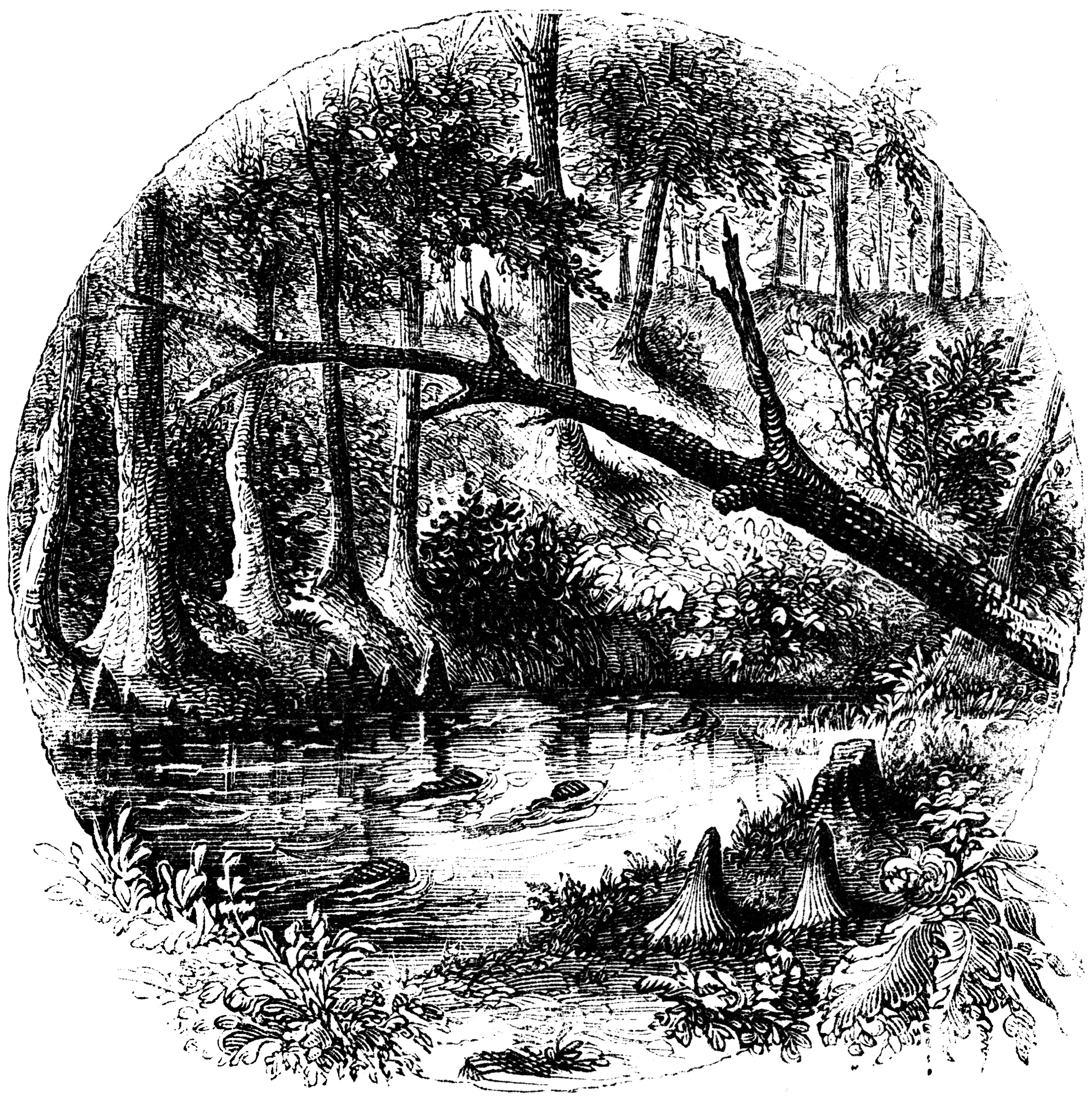
The Dan River (courtesy of Rob Orrison)

Continue reading ““Judiciously Designed and Vigorously Executed”: The March to the Dan River”

After Eutaw Springs

Part Two
Click here for Part One.

Fig 37
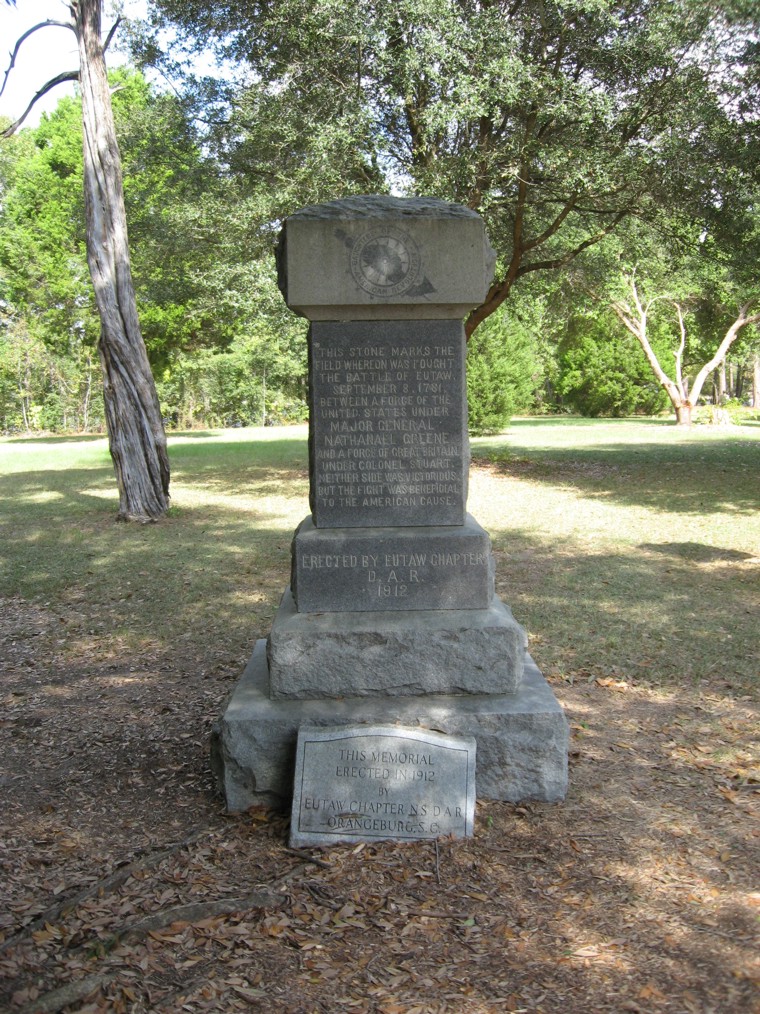
Daughter’s of the American Revolution (D.A.R.) Monument, Eutaw Springs Battlefield (author collection)

In many ways, the battle of Eutaw Springs was a disappointment for both commanders.  Greene’s troops at one point broke through the British lines, but they recovered, and the Americans failed to drive them off the field.  Stewart, in a letter to Cornwallis, wrote that there were two things he would regret the rest of his life: the loss of an early morning supply gathering party and his lack of cavalry.  Having them, he felt, would have enabled him to decisively defeat Greene.  Probably both commanders, and many of their officers, reflected upon these events and second guessed themselves for the rest of their days.  Although both armies fought well at Eutaw Springs, a clear cut victory eluded both of them. Continue reading “After Eutaw Springs”

Eutaw Springs

Emerging Revolutionary War is pleased to welcome back historian Bert Dunkerly, who is the co-author (with Irene B. Boland) of the upcoming book; “Eutaw Springs; The Final Battle of the American Revolution’s Southern Campaign” slated to be released this month. 

Part One

The weather was warm and the men had been marching for days, but their morale was high.  They had been through a lot recently: caught off guard and defeated at Hobkirk’s Hill, a month of grueling siege work – and for naught, at Ninety Six.   Not to mention the engagements that many of them had fought in previously: Kings Mountain, Cowpens, Guilford Courthouse, and dozens of smaller battles.

Yet the army that General Nathanael Greene led forward on the morning of September 8, 1781, was confident and ready to come to grips with its adversary.  Everyone from the private in the ranks on up to the commanding general knew that ahead lay an opportunity.

Battles in the Revolution were, in fact, rare opportunities for commanders.  Engagements were the short, pulse-pounding events that broke up the monotony of marching and maneuvering.  An army spent most of its time in garrison, in camp, or on the road.  In battle the infrequent opportunity came to crush an opponent and influence the outcome of a campaign, or the war.  These chances were few and far between.

Fig 8
“Eutaw Springs” by Benson Lossing

Both commanders at Eutaw Springs appreciated this fact.  General Nathanael Greene’s forces had experienced a series of close calls at Guilford Courthouse, Ninety Six, and Hobkirk’s Hill.  The American army fought well in all of these engagements, save Hobkirk’s Hill, yet they met defeat in every one.  Greene hoped Eutaw Springs would put the finishing touches on his South Carolina campaign, and end it with a clear cut victory.[i]

Eutaw Springs was a rare chance for Greene to pick the time and place of engagement, array his forces to his choosing, and initiate the battle, and control its \tempo.  It was the only set engagement of the campaign, other than Guilford Courthouse, in which Greene chose the ground and initiated the battle.  Commanders do not often have this luxury, and Greene earnestly hoped to make the most of it. Continue reading “Eutaw Springs”

Two Patriots: One Slave and One Free – James Armistead Lafayette and James Forten

Part Two by Malanna Henderson 

A hero who championed American independence was Revolutionary War hero James Forten; not particularly for what he did, but for what he didn’t do.

james-forten
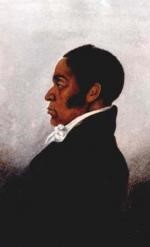
James Forten, Possible attribution: Raphaelle Peale, c. 1800-1810, (Explorepahistory.com)

At the tender age of fourteen, Forten became a prisoner of war aboard the notorious British prison ship, the HMS Jersey, anchored in New York. Like nearly all of his fellow inmates who perished or survived the horrific tribulation, he remained loyal to the patriot cause in the face of death. Continue reading “Two Patriots: One Slave and One Free – James Armistead Lafayette and James Forten”

Defense in Depth as a Revolutionary War Battlefield Tactic

Part Three (click here for first two installments)

Determined to avenge his embarrassing defeat at Cowpens, Lt. Gen. Charles Lord Cornwallis set his army out in a determined pursuit of the American army. Knowing that he was too weak to face Cornwallis in a pitched battle, Maj. Gen. Nathanael Greene, the Southern Department commander, retreated northeastward from Salisbury, North Carolina toward the Virginia state line, where he hoped that additional militia troops would reinforce his army and he would receive supplies. The British chased Greene to the Dan River, near the Virginia border, but Greene wisely put the river between his army and the enemy. Cornwallis and his weary soldiers arrived at the rain-swollen river on February 15, too late to catch Greene’s army, which had finished crossing earlier that day. Frustrated, Cornwallis withdrew to Hillsborough, North Carolina.

LC
Lord Charles Cornwallis

After receiving both the expected supplies and reinforcements, and after an opportunity to rest his command, Greene soon marched back into North Carolina to face Cornwallis’ tired and poorly supplied army, which now numbered less than 2000 men. After several weeks of skirmishing with Loyalist militiamen and a great deal of maneuvering Greene assumed a defensive position around Guildford Courthouse (near modern Greensboro, North Carolina) on March 14, 1781. Greene had more than 4000 Continentals, militiamen and cavalry, meaning that his army outnumbered Cornwallis’ by more than twice their strength. Continue reading “Defense in Depth as a Revolutionary War Battlefield Tactic”