For this week’s “Rev War Revelry” Emerging Revolutionary War ventures to the west to discuss the recently published book, “Till the Extinction of this Rebellion, George Rogers Clark, Frontier Warfare, and the Illinois Campaign of 1778-1779.” The author, Eric Sterner, is a contributor to the Emerging Revolutionary War, along with the author of An Anatomy of a Massacre: The Destruction of Gnadenhutten, 1782. When not writing history, Sterner had a career in government and public policy besides contributing to the literature and study of the American Revolutionary War era.
This book, published by Westholme Publishing, examines the viewpoints of the American, British, and Indigenous perspectives and illustrates the wide impact of the American Revolution on the peoples west of the Appalachian Mountains. What happened with Clark’s movements and campaign will lay the foundation for American expansion and the “opening of the West” following the American Revolution.
We hope you can join us for this historian happy hour this Sunday at 7 p.m. on our Facebook channel. If you miss it, we will post the revelry on our YouTube channel. Just search “Emerging Revolutionary War” to subscribe.
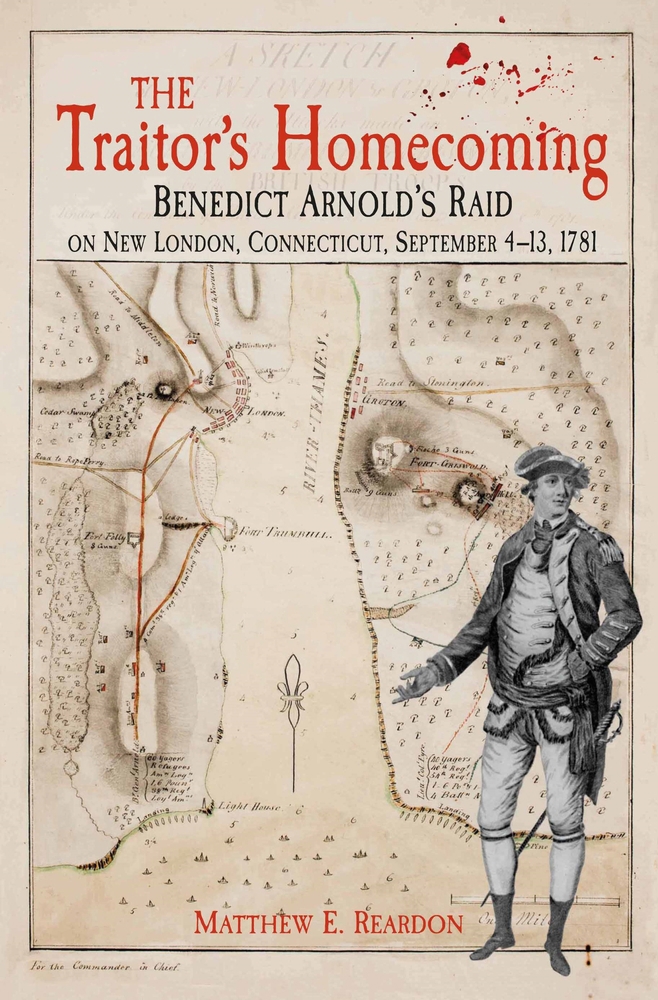
Although 1781 is most known for the pivotal and successful victory at Yorktown, action in the American Revolution unfolded throughout the eastern seaboard. In early September 1781, Benedict Arnold returned to the land of his birth to lead a raid on New London and the port that harbored preying privateers.
During this raid, the American militia under Lieutenant Colonel William Ledyard especially, stoutly defended Fort Griswold until overcome by superior numbers. The town of New London was also torched and saw a rarity like the battle of Trenton, in that combatants fought through the very streets of the town.
Capturing all this and uncovering new primary sources, Matthew Reardon weaves a narrative that balances military history, from the fighting to the strategies, with the impact on New London and Connecticut. His book, “The Traitor’s Homecoming, Benedict Arnold’s Raid on New London, Connecticut, September 4 – 13, 1781” was recently published by Savas Beatie, LLC. Matthew is a native of northeastern Connecticut and is a public educator along with being a command historian for the Connecticut Military Department. He can be reached for inquiries on speaking engagements or how to purchase the book here.
The book will be the focus of this week’s “Rev War Revelry.” We hope you can join us on our Facebook page on Sunday, 7 p.m. EDT.
*Note* This “Rev War Revelry” will be recorded in advance as the Emerging Revolutionary War crew will be in Lexington and Concord, Massachusetts for the 4th Annual Emerging Revolutionary War bus tour.
The ground fog was thick off the Ohio; the air was chilly on that early October morning. Two groups of hunters moved north along the river in the pre-dawn darkness, hoping to shoot a deer for their breakfast. Instead, they stumbled across something unexpected: Shawnee warriors! The battle of Point Pleasant was on.
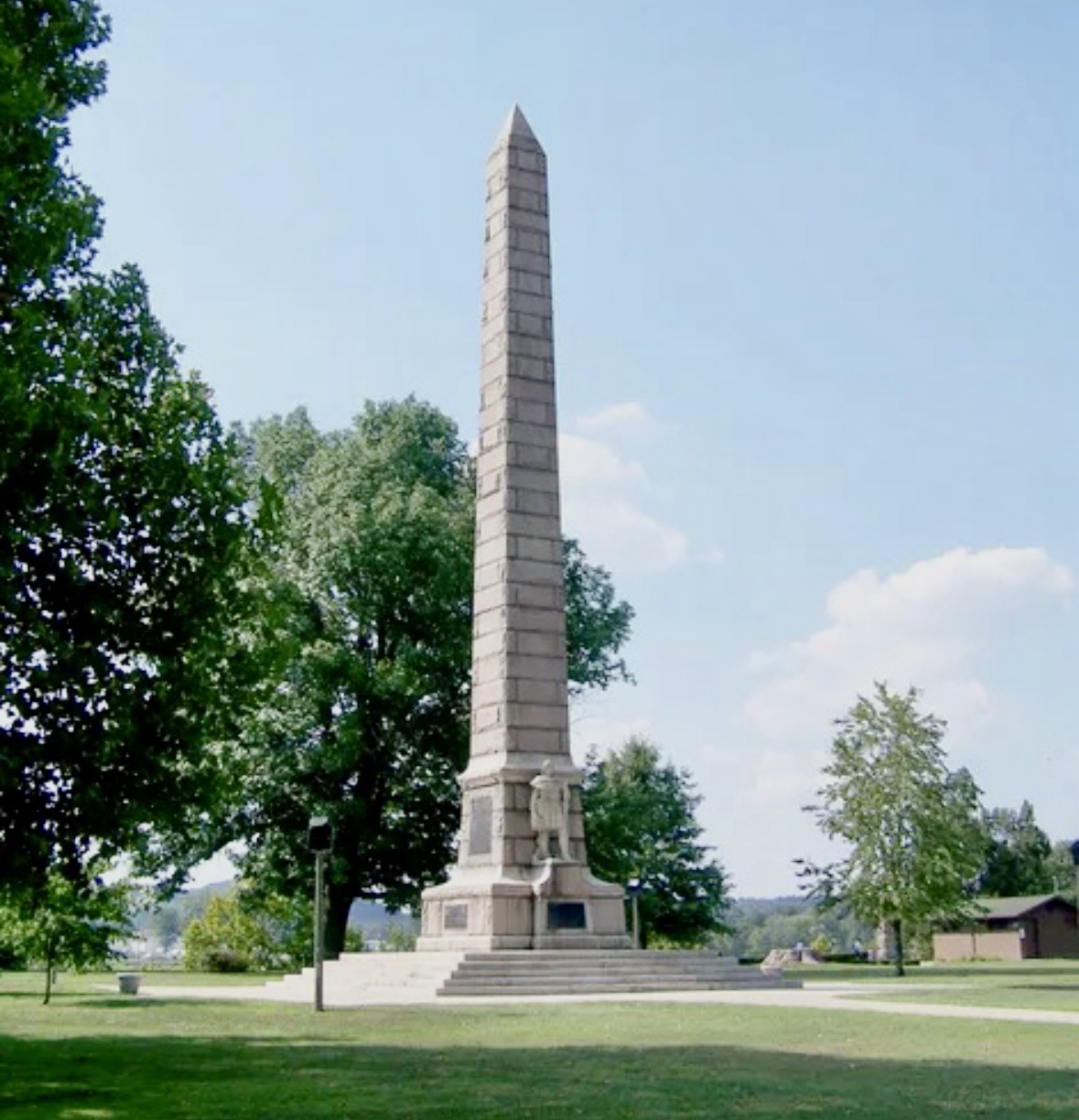
Point Pleasant Monument
In the summer of 1774, exactly 250 years ago and on the very eve of the American Revolution, the Virginia Colony went to war, but not with the British. In fact, the colonists at this stage still considered themselves to be British. Virginia went to war that summer against the Shawnee, Mingo, Wyandot, and other Native American tribal nations west of the Appalachian Mountains. As wars go, this wasn’t much of one, lasting barely six months and with only one decisive battle.
It stemmed from what one side called emigration and what the other considered encroachment. Bodies of English settlers, in ever increasing numbers, were crossing the mountains in hopes of settling land in the Ohio River Valley. This was territory that had been claimed by the French and transferred over to the British at the end of the Seven Year’s War. To the tribal nations in the Ohio Valley, like the powerful Shawnee, it was an affront. The settlers were looked upon as invaders, encroaching upon ancestral hunting grounds. Inevitably, the stage was set for violent and bloody clashes between these two peoples.
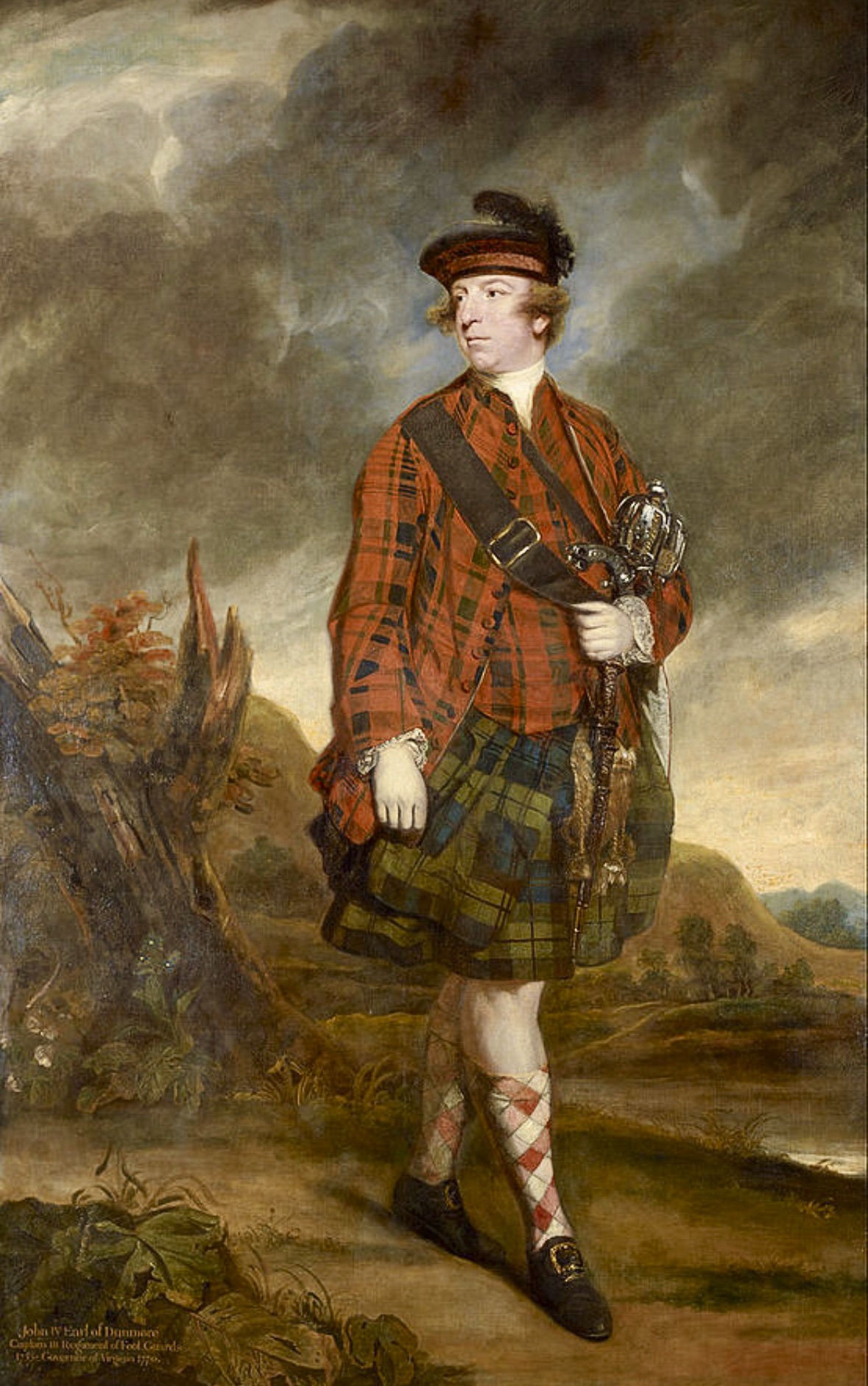
Hoping to pacify the frontier and establish once and for all Virginia’s jurisdiction over the Ohio Valley, the colony’s royal governor, John Murray, 4th Earl of Dunmore, asked the House of Burgesses to declare war and he called out the Virginia militia. In the years to come, many of the men serving in these militia companies would go on to distinguish themselves as officers and soldiers in the Continental army during the Revolution. For them, the fighting on Virginia’s frontier, in what came to be called Dunmore’s War, would serve as a dress rehearsal. This would be the last time in our nation’s history that a colonial American militia would march to war under the banner of the British crown.
John Murray, 4th Earl of Dunmore
At the Treaty of Fort Stanwix in 1768, the Iroquois peoples of the powerful Six Nations sold lands south of the Ohio River to the British, from Fort Pitt (modern-day Pittsburgh) down to the Louisa River (now the Kentucky River). This was territory the Iroquois believed to be part of their domain. For money and gifts totaling around £10,000, the Six Nations ceded to the Crown lands making up the modern states of Kentucky and West Virginia. The Shawnee and other western tribes in the Ohio Valley were outraged as white hunters, surveyors, land agents and settlers began to pour over the mountains. A trade-off of terror began, with both sides viciously attacking the other.
In the late summer of 1773, the first planned emigration into the new territory of Kentucky was undertaken. A prominent leader of this enterprise was Captain William Russell, a substantial landowner in southwestern Virginia and a magistrate of the newly created Fincastle County. Another organizer and the man who would act as guide for this first emigration attempt, made up of his and several other families from the Yadkin River Valley in North Carolina, was an obscure hunter named Daniel Boone. Boone led a party of 50 men, women and children through Powell’s Valley in southwestern Virginia, hoping to pass through Cumberland Gap into Kentucky. On October 10, just three miles behind Boone’s main party, his 17-year-old son James, 17-year-old Henry Russell, and a small group of young men, bringing up cattle and other supplies, were attacked by 19 Shawnee, Cherokee, and Delaware warriors. Both Boone and Russell were shot and hideously tortured to death. Word of the attack spread, causing the elder Boone’s party to turn back, abandoning all hopes of settling in Kentucky.
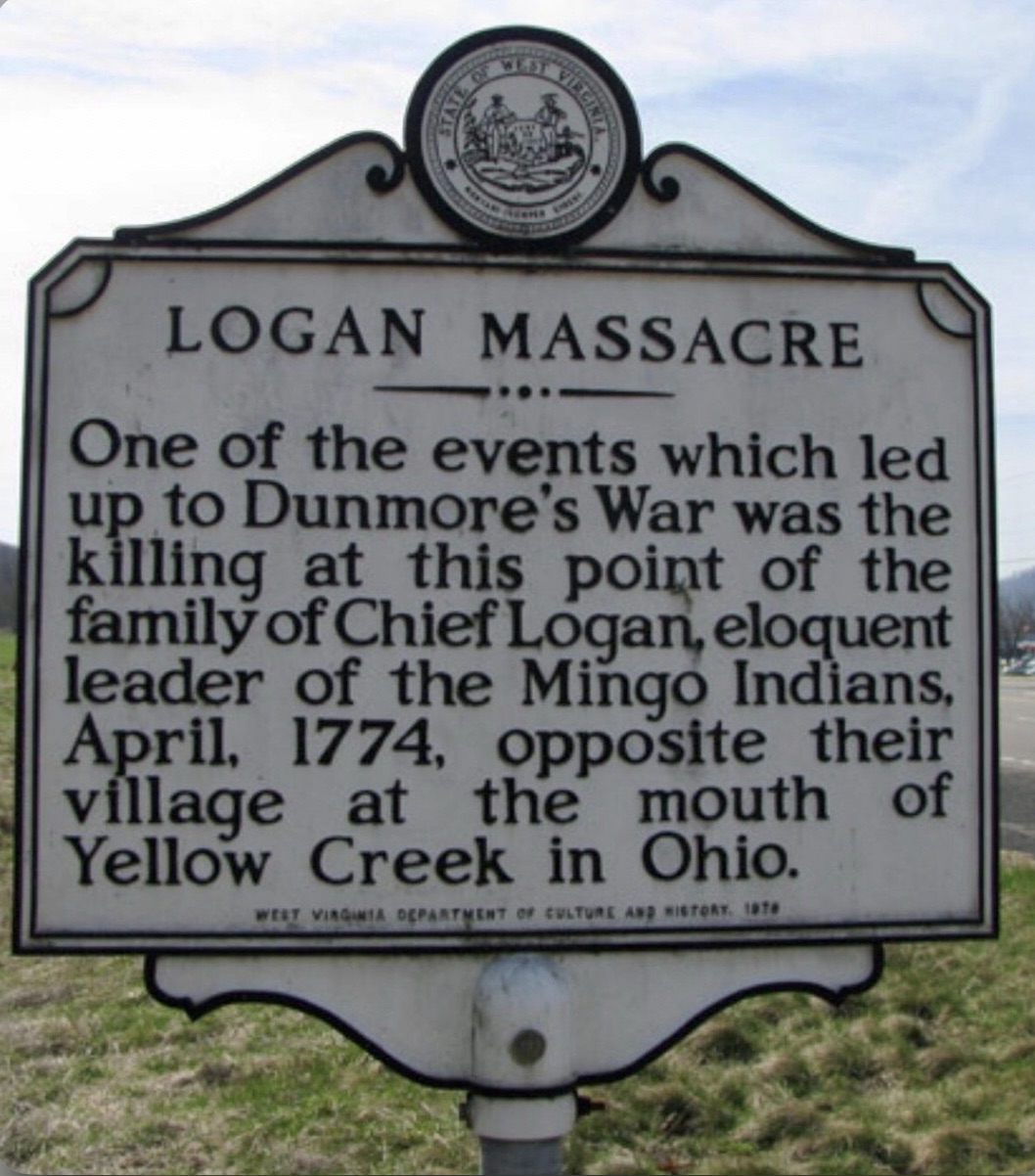
In late April of 1774, at a white trading post on the south bank of the Ohio River called Baker’s Bottom, several peaceful men and women of the Mingo tribe were murdered and scalped by white settlers believed to be under the leadership of a man named Daniel Greathouse. Among the victims were family members of a Mingo leader named Talgayeeta; he was known to the English as John Logan. As a result of the attack, the once peaceful Logan swore vengeance and, accepting help from the Shawnee, began indiscriminately attacking isolated white farmsteads along the Monongahela River throughout the summer.
With word of the atrocities reaching Williamsburg, Governor Dunmore sent out a circular letter to all county lieutenants to be on the alert, build small forts and blockhouses for more security and to send out rangers to watch the trails. He was growing frustrated with the Virginia House of Burgesses for not creating regular, provincial military units to defend the frontier. The burgesses were preoccupied with the political unrest in the east, mainly due to parliamentary taxation. They passed a resolution to observe a day of humiliation, fasting, and prayer in response to the Boston Port Bill, which had resulted from the Boston Tea Party in December 1773. On May 26, Lord Dunmore dissolved the House of Burgesses and under his authority as royal governor, mobilized the Virginia Militia.
In late July came the first action of the militia. An expedition against an important Shawnee village on the Muskingum River, Wakatomika, was led by Major Angus McDonald. At Fort Fincastle, near modern-day Wheeling, WVA, McDonald’s battalion of 400 men pushed off in canoes and small boats on the Ohio River. Among his company commanders were two future Patriot leaders of the Revolutionary War, George Rogers Clark and Daniel Morgan. Combat with the Shawnee was minimal, although McDonald’s force did suffer some casualties. Wakatomika was plundered and burned, along with several other villages before the militiamen returned to Fort Fincastle. On the whole, the expedition had accomplished very little and, instead of curbing the Native American attacks on settlers, actually caused the attacks to increase. Lord Dunmore now knew that overwhelming force would be needed.
In the late summer of 1774, Dunmore authorized the creation of two divisions of his militia, north and south. At Winchester, he mustered around 700 men from Virginia’s eastern counties. The Governor was disappointed, however, to learn that his invitation to join the division, made to a retired British army officer living in Berkeley County, was turned down. He was Horatio Gates, future major general in the Continental army, victor at the battle of Saratoga in 1777, and the man who suffered a devastating loss to the British at Camden in August 1780.
To the south, at Staunton, VA, militia Colonel Andrew Lewis, a future brigadier general during the Revolution, mustered ultimately around 1,100 men from the western counties of Augusta, Botetourt, Fincastle, Bedford, and Culpepper. With negotiations failing, by late August, Lord Dunmore put the Northern and Southern Divisions into motion. Their plan was to rendezvous on the Ohio River and march on the upper Shawnee villages on the Scioto River, in modern-day Ohio. Dunmore’s Northern Division marched west from Winchester to Fort Pitt, then down the Ohio to Fort Fincastle. There, 500 more men joined the division. Many of Dunmore’s troops had no weapons so he sent back to Williamsburg for 300 stands of arms. Dunmore’s second-in-command was Colonel Adam Stephen, another future major general in Washington’s Continental army. On October 2, the division moved farther south down the Ohio, to Fort Gower on Hockhocking Creek.
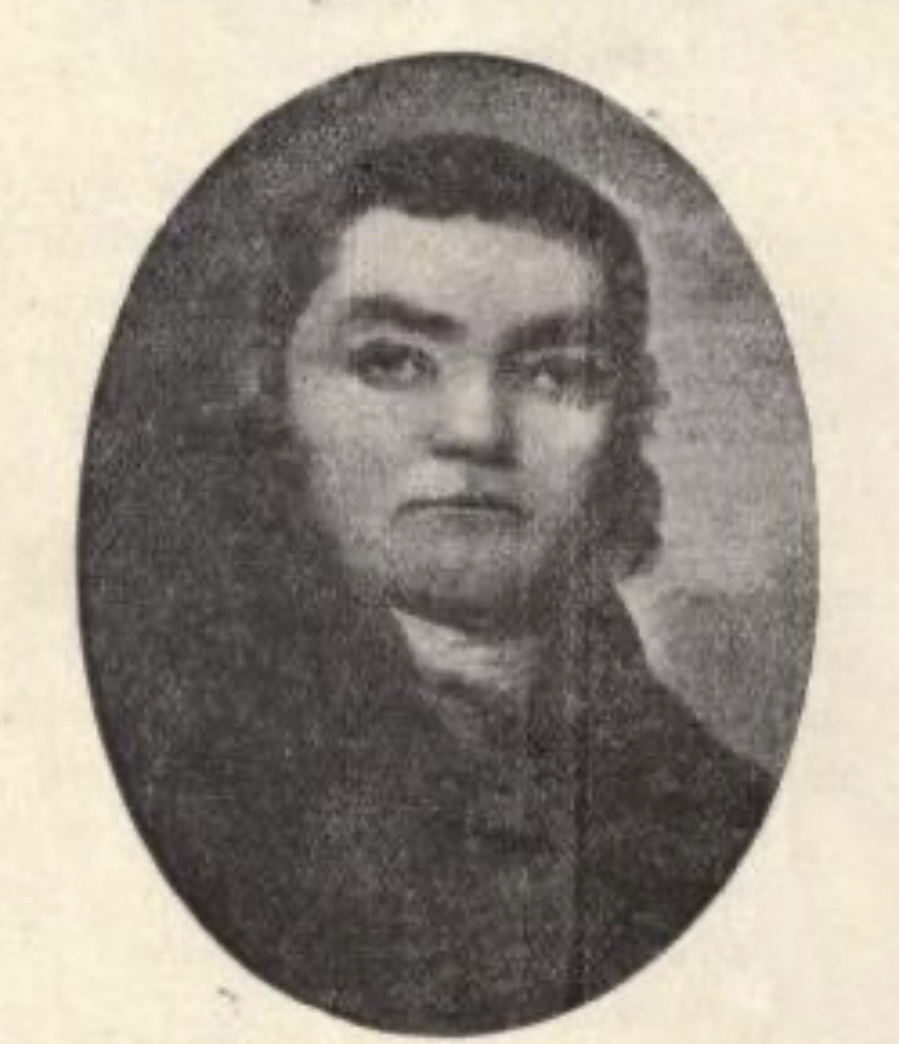
Colonel Andrew Lewis
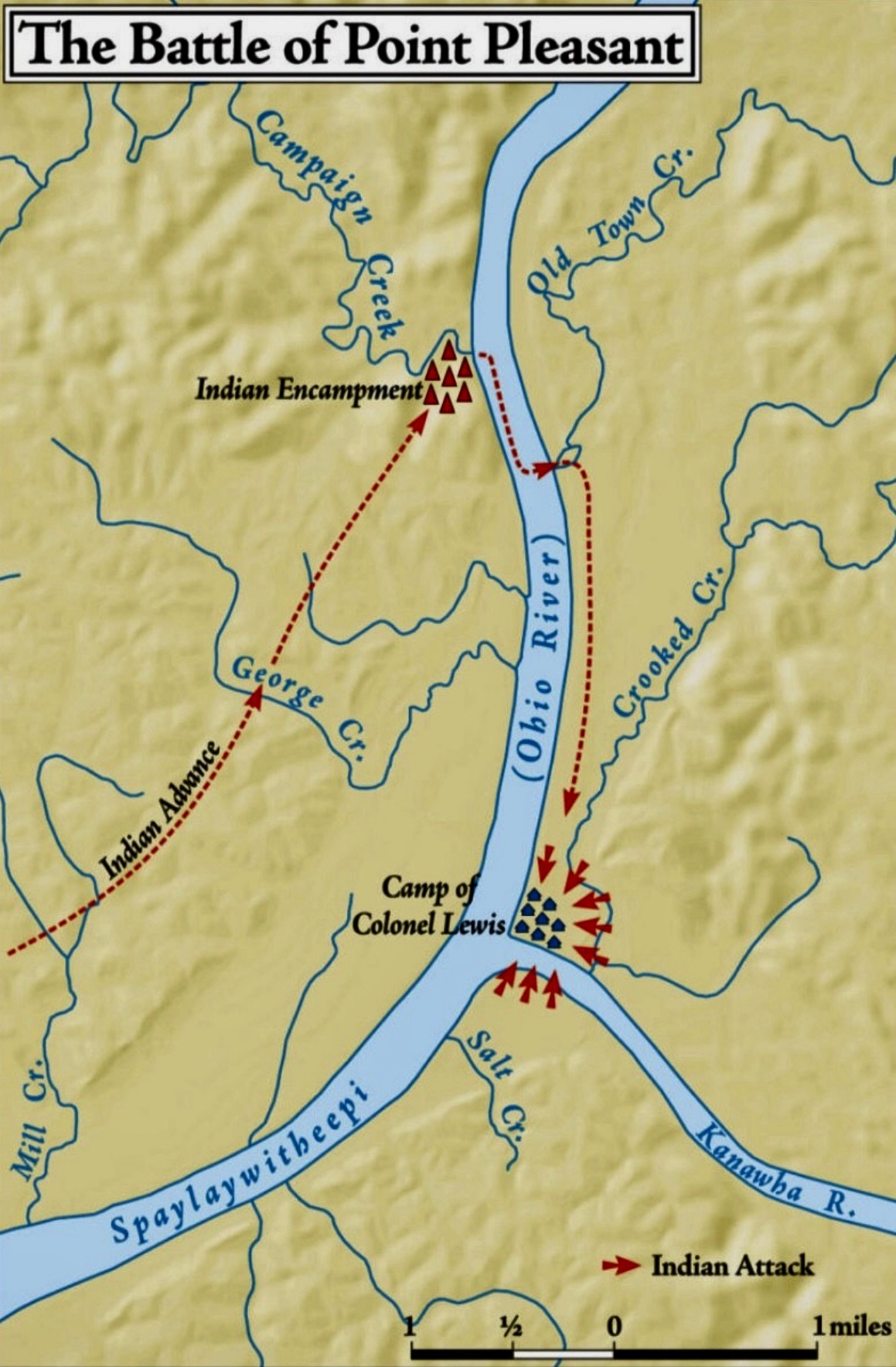
From Staunton, Andrew Lewis marched his Southern Division west to a place called Great Levels, on the Greenbriar River. He named it Camp Union, on the site of modern-day Lewisburg, WVA. He then headed south, hitting the Kanawha River and following it west to where it empties into the Ohio at a place called Point Pleasant. Lewis’ lead elements arrived there on October 6 and began building barricades from the Ohio River on their left around to the Kanawha, which was at their backs. They also built pens and corrals for the livestock that would feed Lewis’ companies.
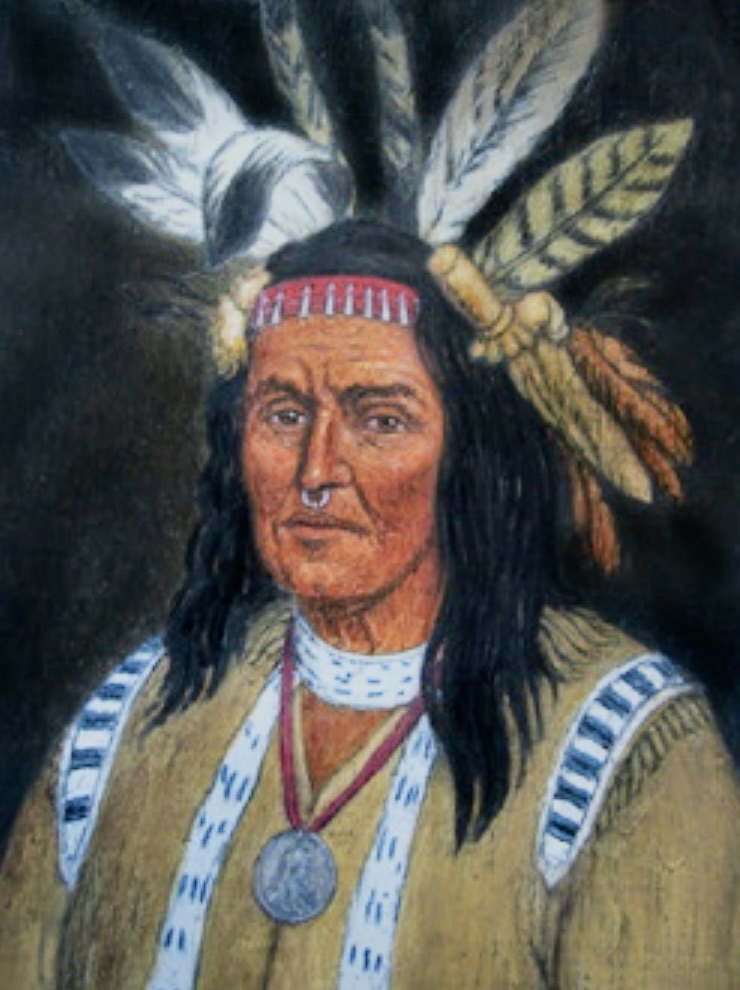
Leading the Shawnee and several other allied tribes as head war chief was a man named Hokoleskwa, also called Cornstalk. He commanded a force of around 1,000 warriors, which possibly included the future Shawnee war chief, Blue Jacket. Though his army was equal in size to both of the Virginia militia divisions individually, Cornstalk would be greatly outnumbered were those divisions to rendezvous, as planned. He decided, then, to attack each division separately and destroy them in detail. Being closer to the Southern Division, he chose to attack it first. On the night of October 9, Cornstalk rafted his army across the Ohio River at Old Town Creek, about five miles above Col. Lewis’ encampment. They then marched south to within two miles of the militia.
Shawnee Chief Cornstalk
In camp, Lewis issued a rather unpopular order. Feeding his troops from the livestock he had brought along from Camp Union, Lewis ordered the oldest and poorest quality beeves butchered first. Not having a taste for stringy beef, two separate, two-man hunting parties set out before dawn on the foggy morning of October 10, moving north along different paths, looking for deer. After walking nearly two miles, both hunting parties stumbled upon Cornstalk’s warriors. Shots were fired and one of the hunters, Pvt. Joseph Hughey of Fincastle, was killed. The other three made their escape and brought news of the enemy presence back to Col. Lewis.
Thinking this was possibly a large scouting party, Lewis ordered two detachments of 150 men each to move up and reconnoiter. On the left, close to the Ohio River, were men from Botetourt County, commanded by Col. William Fleming. On the right, farther inland, were Augusta County militiamen commanded by Lewis’ own brother, Col. Charles Lewis. Around sunrise, Cornstalk’s warriors attacked, opening a brisk fire on the Virginians. Charles Lewis was hit almost immediately, in the abdomen. While being helped back to the encampment, he called to his men: “I am wounded, but go on and be brave.” Fleming’s Botetourt men also came under fire. The militiamen were outnumbered and the Shawnee attack was so fierce that both Virginia detachments faltered and were forced to fall back, ultimately around 200 yards. William Fleming was likewise hit, with wounds to the head and left arm. He continued to direct his men, though, until weakening from his wounds. Under his own power, he walked back to the encampment. A gap in the line separated the militia detachments. Warriors began rushing forward to exploit that breach. Directing the battle from the encampment, Andrew Lewis ordered Col. John Field of Culpepper forward with 200 men to assume command on the right, with orders to extend his left flank to link up with the Botetourt contingent. Lewis sent another 200 troops to join the Botetourt men, with orders for Captain Evan Shelby to assume command on the left. With more Virginia troops becoming engaged, Cornstalk’s initial superiority in manpower was starting to fade. The tide was turning.
Battle Map – Point Pleasant
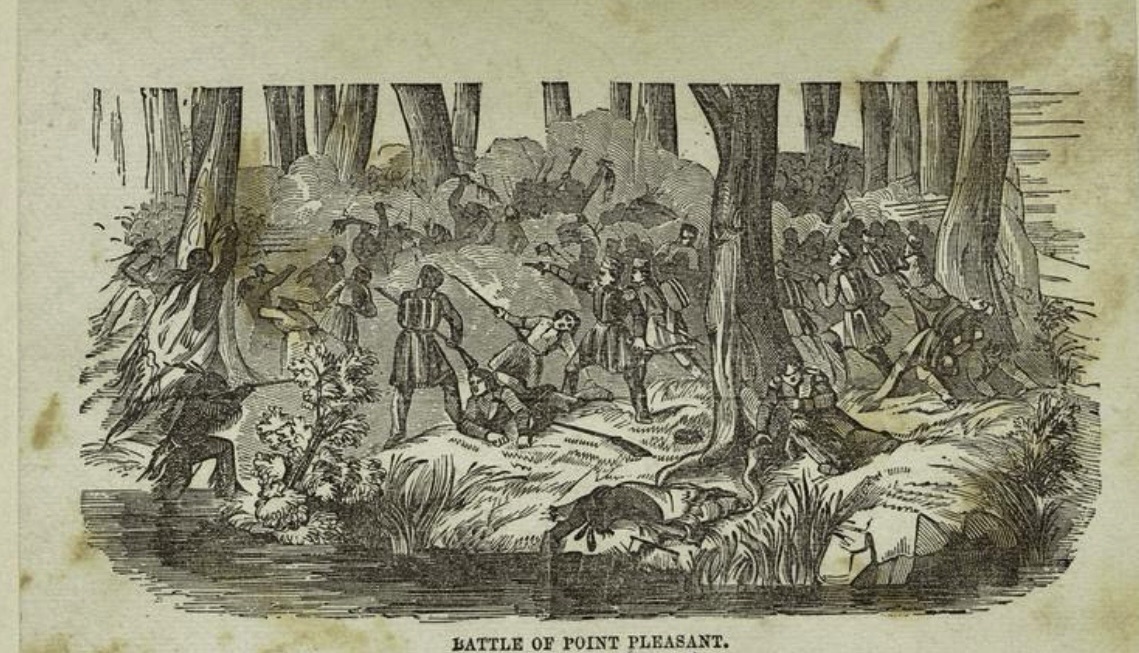
Under sustained fire, the militia detachments were finally able to link up. With their flanks no longer in the air, the battle line now stretched from the Ohio River over to Crooked Creek, making a flanking maneuver by the warriors next to impossible. John Field was killed; Evan Shelby took command of the entire line of battle. The fight had turned hand-to-hand. For several hours the bloody contest continued. Those Virginians who understood the Shawnee dialect afterwards claimed they had heard the sound of Cornstalk’s voice over the din of battle encouraging his warriors to “Fight and be strong”. Hand-to-hand combat, by its very nature, can be brutal and bloody. Both sides were suffering severe losses as the contest continued but Cornstalk made the decision to stay in the fight at Point Pleasant in order to inflict more damage to Lewis’ men. Withdrawing from the battle in order to fight another day put Cornstalk’s forces under a decided disadvantage. It would allow the wings of the Virginia militia to combine, closer to the Shawnee villages. He had to continue to fight as long as possible. But after so many hours, the allied warriors were beginning to falter, falling back under the pressure from the militia. The long rifles of the Virginians were now taking a heavy toll.
Battle of Point Pleasant, October 10, 1774
Col. Lewis sent orders to Capt. Shelby to advance his troops. With this surge, Cornstalk’s braves began to give more ground. Lewis earlier had ordered three companies of Augusta militia to move to the right, along the heights above Crooked Creek in order to flank the enemy. Now they opened fire, surprising the warriors on Cornstalk’s left. With knowledge that more militiamen were coming up from Camp Union, Cornstalk had no choice but to disengage at this point. Close to sunset, after hours of bloody combat, Cornstalk’s army began to withdraw, hoping to get back across the Ohio. They largely carried off their dead, throwing some of the bodies into the river to hide their losses. They were successful, however, and made the north bank of the river but Chief Cornstalk’s attempt to destroy the Southern Division had failed.
The Virginia militia had won the field, but at a terrible cost. Andrew Lewis lost around 75 men killed in the engagement with 140 more wounded. It’s believed that Cornstalk’s casualties were similar. Just before the battle, Lord Dunmore had moved his division inland, closer to the Shawnee villages, and established Camp Charlotte at Pickaway Plains. With his allied warriors not willing to engage further, Cornstalk had no choice but to initiate peace talks. His decision did, however, save the upper Shawnee towns from destruction.
With the subsequent Treaty of Camp Charlotte, Lord Dunmore’s War came to an end, but peace on the frontier would be fleeting. Within six months, shots were fired at Lexington and Concord, plunging America into war with Great Britain. More settlements were established in Kentucky and Shawnee raids would continue throughout the next twenty years.
With the coming of the American Revolution, Lord Dunmore himself would eventually be forced out of Virginia, pursued by some of the same militia officers he had commanded in the war that took his name.
For more about Point Pleasant and Dunmore’s War, check out our Rev War Revelry with Dr. Glenn Williams on our Facebook page or You Tube Channel.
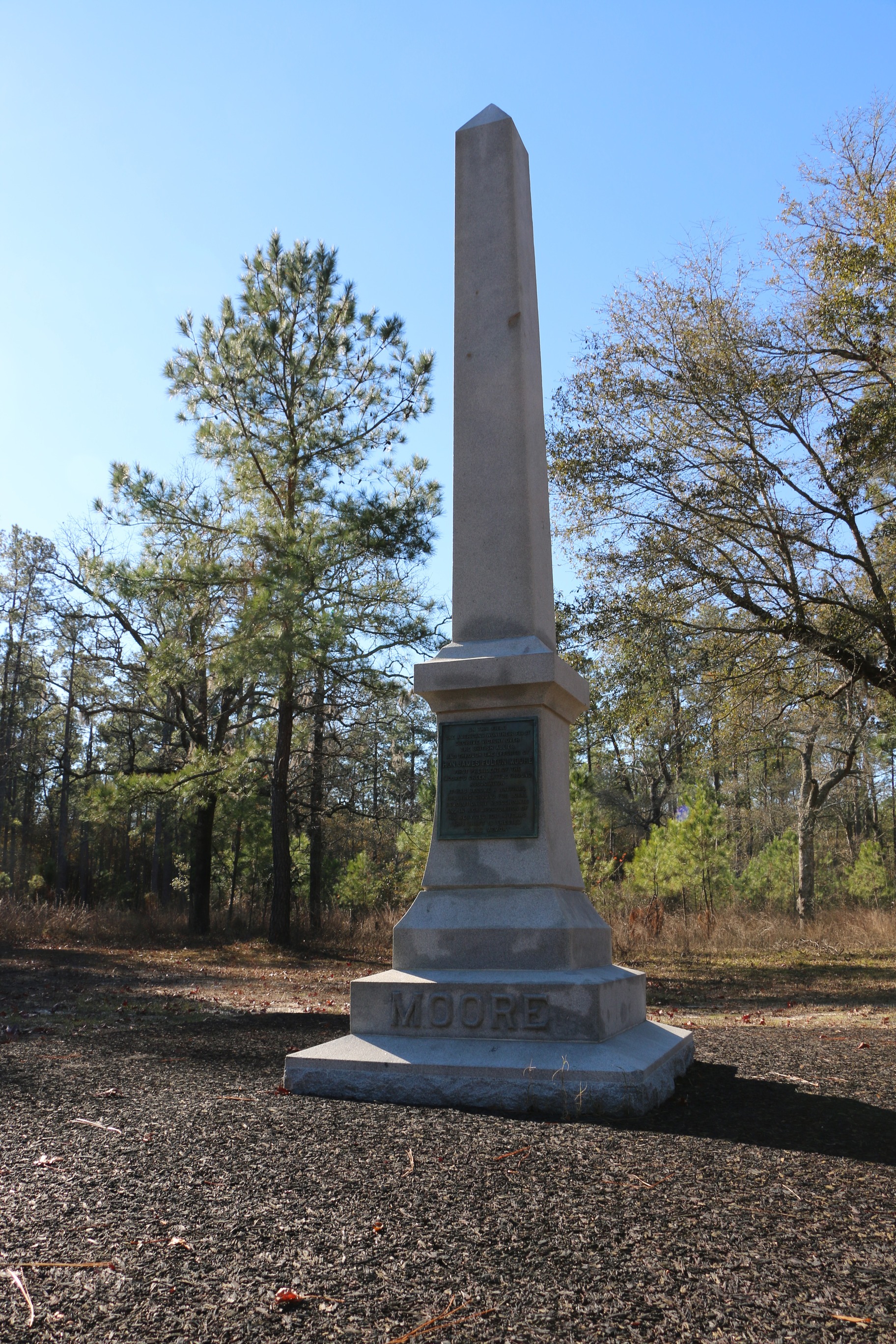
On February 27, 1776 Patriot and Loyalist forces faced off at Moores Creek Bridge in southeastern North Carolina. Loyalist forces anticipated support from a British army arriving along the North Carolina coast and planned to use this combination force to return British authority in North Carolina. Though, when help did not arrive, a mixed bag of North Carolina Patriots turned back an attack at Moores Creek Bridge. Their victory, combined with the Patriot victory at Great Bridge, VA in December 1775, solidified their control of North Carolina. Additionally, the Loyalist defeat served as a major deterrent for Loyalist support until the opening of the Southern Campaign four years later. This small action had long lasting impact on the entire war in the south.
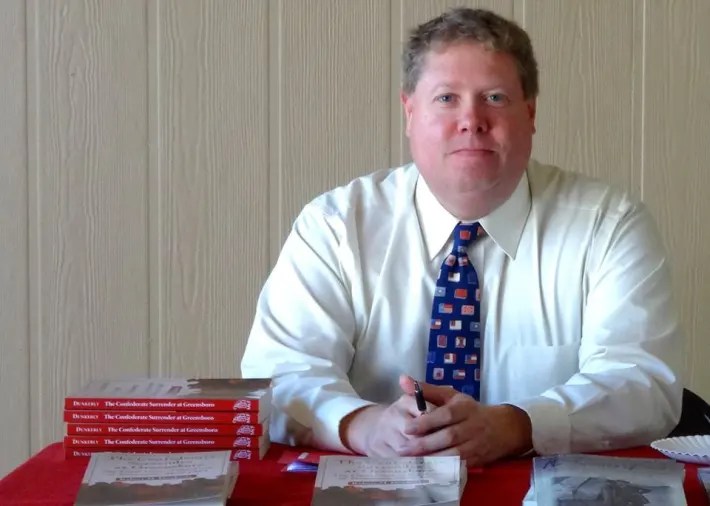
Join us this Sunday night at 7pm on our You Tube Channel ( https://www.youtube.com/@emergingrevolutionarywar8217 ) as we welcome back our own ERW historian Bert Dunkerly. Bert has extensive knowledge on the history of this battle and experience working at the battlefield itself. We will discuss the complex situation leading up to the battle and how this small battle changed the war strategy in the south. Grab a drink and join in on the discussion!
This Sunday, August 3rd at 7pm we welcome back to Rev War Revelry historian and author Alex Cain. Alex is a well known expert on everything Lexington, MA (among many other topics) and hosts a well researched blog: https://www.historicalnerdery.com/ . Alex’s book, We Stood Our Ground: Lexington in the First Year of the American Revolution is highly recommended by ERW for a detailed account of Lexington and its role in the beginning of the American Revolution.
The events of Boston leading up 1775 are well documented, but it was in the countryside around Boston where the populace became militarized. Towns such as Lexington was just as influential in the push to revolution as Boston. Join us as we discuss the role of Lexington, Massachusetts before it was made famous in April 1775.
Be sure to visit our Facebook page or You Tube Channel this Sunday at 7pm as we release this prerecorded Rev War Revelry. Alex will also be joining us this October for our ERW Bus Tour of Lexington and Concord, there a few tickets left so be sure to register to experience Lexington with Alex!
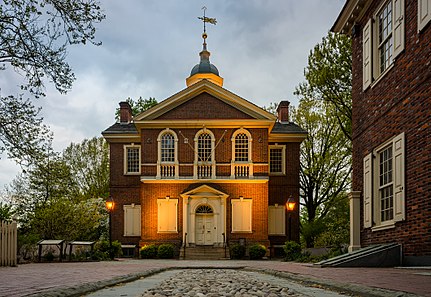
Join us this Sunday, July 7th at 7pm for our next Rev War Revelry as we continue to commemorate the 250th anniversary of the events that led to the American Revolution. We welcome Executive Director Michael Norris to discuss the historic Carpenters Hall in Philadelphia and the role it played in hosting the First Continental Congress. The First Continental Congress convened in Carpenters’ Hall in Philadelphia, Pennsylvania, between September 5 and October 26, 1774. Delegates from twelve of Britain’s thirteen American colonies attended. The Congress was a direct result of the Parliament’s reaction to the Boston Tea Party (December 1773). This gathering of colonial leaders intended to create a united front in their response to what they believed was Parliamentary over reach in the “Coercive Acts.”
Grab a drink and join us on our You Tube Channel: https://www.youtube.com/@emergingrevolutionarywar8217 Feel free to interact with the discussion by adding questions in the video chat. Once the video is over we will repost the video to our Facebook page and our Spotify account. We hope to see you then!
On September 20, 1777 an American force under General Anthony “Mad Anthony” Wayne was surprised and routed by British forces under General Charles Grey. Wayne’s entire division was put to flight losing nearly 300 men (with the British losing just a dozen). Called by many the “Massacre at Paoli”, the fight was one of many that was part of the 1777 Philadelphia Campaign.
Join ERW on Sunday, April 14th at 7pm on our Facebook page as we welcome back historian and author Michael C. Harris, expert on the Philadelphia Campaign, we will discuss the battle, its role in the campaign, the personalities and the myths around Paoli. Harris is now working on his third volume in his much acclaimed Philadelphia Campaign trilogy, that will include the Battle of Paoli. If you can not make the livestream, the Revelry will be posted to our You Tube and Spotify channels.
Approximately 5,000 African-American or Black soldiers fought for the patriot cause in the American Revolution. Some joined state militias, some joined the Continental Army, and some sailed the seas with the fledgling navies of the United Colonies. William and Benjamin Frank were two of those 5,000. Both were free Blacks from Rhode Island who enlisted in the 2nd Rhode Island Regiment in 1777. Their father was a veteran of the French and Indian War, so the family was well-established in military tradition.
The 2nd Rhode Island fought and defended Fort Mercer during the campaigns of 1777 and survived harsh winters at Valley Forge and Morristown before returning to Rhode Island to literally defend the hearth and home from the British. Author and historian Dr. Shirley L. Green, adjunct professor at the University of Toledo, a 26-year veteran of the law enforcement community, and current Director of the Toledo Police Museum in Ohio, “takes the reader on a journey based on her family’s history, rooted in its oral tradition.”
Her book Revolutionary Blacks, Discovering the Frank Brothers, Freeborn Men of Color, Soldiers of Independence was published by Westholme Publishing in November 2023.
Furthermore, Dr. Green puts “together the pieces of the puzzle through archival research, interviews, and DNA evidence” to authenticate and expand the family history. The end result is a very readable and needed addition to the historiography of the American Revolution. Her ability to tell “a complex account of Black life during the Revolutionary Era demonstrates that free men of color…demonstrates that free men of color shared with white soldiers the desire to improve their condition in life and to maintain their families safely in postcolonial North America.”
Emerging Revolutionary War looks forward to an engaging and informative discussion with Dr. Green, this Sunday, at 7 p.m. EDT on our Facebook page. We hope you can tune in for this next episode of Emerging Revolutionary War’s “Rev War Revelry.”
For more information about the book and to order a copy, click here.
“Given the order to defend the American withdrawal from Long Island, the Maryland Line saved the Continental Army from annihilation in the first major battle of the war.” wrote historian Ryan Polk.
Tench Tilghman, staff officer to George Washington and a native Marylander wrote about his fellow soldiers, “bore the palm…by behaving with as much Regularity as possible.”
Furthermore, if you Google “Battle of Guilford Court House” the image used by Wikipedia depicts an artist’s rendition of the 1st Maryland defending Nathanael Greene’s last line during the March 1781 engagement. The particular image is below.
The Continental Maryland Line was one of the preeminent stalwarts of the American army, both in the northern and southern theaters of the war. Join Emerging Revolutionary War historians in a discussion about the men from the Old Line State and their military acumen during the American Revolutionary War. The discussion will also highlight their memory and memorialization. We hope you can join us Sunday at 7 p.m. EST on the Facebook page of Emerging Revolutionary War.
The Battle of Bunker Hill is routinely mentioned in the pantheon of memorable American military victories. Although myths of the engagement have obscured some of the history, much like the smoke of battle, the patriot victory on June 17, 1775, was another pivotal moment in the early stages of what became the American Revolutionary War.
To discuss the engagement, ramifications, and interpretation of the battle, Emerging Revolutionary War welcomes historian Dr. Paul Douglas Lockhart, Professor of History at Wright State and author of “The Whites of Their Eyes, Bunker Hill, the First American Army, and the Emergence of George Washington.” A full biography of Dr. Lockhart, including his other works, is at the bottom of this post.
As a teaser, this may be the first time in “Rev War Revelry” history that we mention Artemas Ward, who according to Dr. Lockhart is the “unsung hero of the battle (and indeed of 1775).” Come hear why! And full disclosure, I agree.
We hope you can join us on Sunday, January 21 at 7 p.m. EDT on Emerging Revolutionary War’s Facebook page for the next installment of the popular “Rev War Revelry.” Be ready to ask questions as you sip your favorite beverage during this historian happy hour.
Biography of Dr. Lockhart
“Paul Douglas Lockhart is Professor of History at Wright State University in Dayton, Ohio, where he has taught since earning his PhD in 1989. A native of Poughkeepsie, New York, Lockhart completed the PhD at Purdue University, where he studied military history with the late Gunther Rothenberg, the renowned Napoleonic scholar, and early modern European history with Charles Ingrao. He has seven single-author books to his credit. Four of them deal with the history of Scandinavia during the “Age of Greatness,” including Denmark, 1513-1660: The Rise and Decline of a Renaissance Monarchy, published by Oxford University Press in 2007. He is probably better known for his books on military history: The Drillmaster of Valley Forge: The Baron de Steuben and the Making of the American Army (2008), The Whites of Their Eyes: Bunker Hill, The First American Army, and the Emergence of George Washington (2011), and most recently his study of the parallel evolution of warfare and firearms: Firepower: How Weapons Shaped Warfare (2021). Wright State has awarded him the Brage Golding Distinguished Professorship and the Trustees’ Award for Faculty Excellence, the University’s highest academic honor. The Ohio Academy of History named him Distinguished Historian for 2020-21, and in 2021 he was elected to membership in The Royal Society for Danish History for his contributions to the history of Denmark, an honor rarely accorded to foreigners. He lives in Centerville, Ohio, with his family.”






 Emerging Revolutionary War Era