On this day, in 1780, Baron de Kalb, died at 59 years old. He had commanded admirably at the Battle of Camden, on August 16, 1780, overseeing the right of the American line where he received his mortal wounds.
Marker on the Camden Battlefield, although not in the “exact spot” that Baron de Kalb fell (author collection)
Below are a few excerpts about the German-born de Kalb.
On his deathbed, as noted by his aide, the Chevalier du Buysson, de Kalb wanted it known that:
His most affectionate compliments to all the officers and men of his division; he expressed the greatest satisfaction in the testimony given by the British army of the bravery of his troops….and the exemplary conduct of the whole division gave him an endearing sense of the merit of the troops he had the honor to command.
Although just a child, at seven years old, in August 1780, Mary Kershaw remembered the day de Kalb was buried in Camden. She lived until 1848 but would regale people with her reminiscences.
She also witnessed the burial of Baron de Kalb, with his sword at his side, between two British officers. It would later be found that “he lay, it seems, in the ‘custom of knighthood’ as last of his race, buried in his armor, that is to say his helmet, his sword, and his spurs were in the grave with him.
Original grave location for de Kalb in Camden (author collection)
General Horatio Gates, who commanded the American forces at Camden, penned the following to General George Washington, upon the news of de Kalb’s passing.
Too much honor cannot be paid by Congress to the memory of Baron de Kalb; he was everything an excellent officer should be, and in the cause of the United States he sacrificed his life.
Lastly, the French ambassador and former staff officer of de Kalb, the Duke de la Luzerne, wrote:
The fall of that excellent Officer, the Baron de Kalb–so much to be regretted by France and the United States…
Yet, the spirit of de Kalb. the resolute soldier, would live. Both within his former division and in the reconstituted Continental forces in the southern theater, as these regular army soldiers (and militia) would see the cause through to a successful conclusion.
For more information and the source of these excerpts please consult:
“De Kalb, One of the Revolutionary War’s Bravest Generals” by John Beakes
There are important stories often hidden in the threads of our American history. It won’t be a surprise to many that these stories desperately need to come to light. But sometimes research is scarce, with limited or hard-to-find resources to fully tell these stories to their fullest. One such example are the stories of the enslaved and free African-American people who helped build the nation, starting back even before the colonies fought for independence. America’s fight for freedom from Britain is oxymoronic considering an entire population of blacks were still kept in chains after the war. But their contributions to that fight should not go unnoticed.
The history of the construction of the British defense fortifications, including the Star Fort, at Ninety Six, South Carolina, has many layers of these diverse stories that make up the fabric of the site’s history. Lt. Colonel Nisbet Balfour set up an outpost at Ninety Six after the fall of Charleston in early 1780. In terms of fortifications – specifically the stockades and protections around the town and the jail – during this initial occupation, Balfour wrote to Cornwallis on June 24, 1780, “As to this post, it is so situated, that three small redoubts, well Abbattis [sic], I think, can easily defend it…”
Balfour also encouraged using slave labor, stating that “we have carpenters enough, and ammunition.” Balfour’s plan to construct fortifications was similar to a more extensive defense system suggested by Patrick Ferguson in his “Plan for Securing the Province of So. Carolina, &c.” dated May 16, 1780. Ferguson also recommended using slaves to construct the fortifications.
In fact, in that same June 24 letter to Cornwallis, Balfour writes that most of the labor that was used to construct the Ninety Six fortifications was from roughly 200 enslaved blacks that the British took from area plantations. Who were these 200 men? Were they promised freedom in exchange for their labor? We may never know. While research is underway to uncover the stories of these 200 individuals, very little primary resources remain. But we can still acknowledge that the British defense of Ninety Six relied heavily on the forced labor of these black men.
Work continued into the fall and winter of 1780 on the defense structures at Ninety Six, this time under Lt. Colonel John Harris Curger, including several field fortifications called abatis: defensive obstacles formed by felled trees with sharpened branches facing the enemy. The trunks are put deep into the ground, usually 4-5 feet, and is typically hard manual labor in the hard red clay of South Carolina. In a letter on December 29, 1780, Lt. Colonel Isaac Allen wrote to Cornwallis’s aide, Lt. Henry Haldane, of the hard work of the men constructing the abatis. And yes, those men were enslaved men. “I… have orderd [sic] the Abattiss [sic] cut, but Kings work like Church work goes on slow. The Poor naked Blacks can do but little this cold weather.”
The Star Fort at Ninety Six, South Carolina. Photo: NPS/Ninety Six NHS
Next up in the defense plan was the Star Fort itself, a large earthen redoubt whose remains are still the best-preserved earthen fort from the American Revolution. Once again, those approximately 200 enslaved men were used in its construction. Upon the completion of the fort, additional work included a network of ditches and trenches both for communication and transport of supplies.
By spring of 1781, the defenses were ready. Lt Colonel Cruger’s military force was nearly 600 but this was supplemented by a large number of Loyalist civilians in the town as well as several hundred enslaved African Americans from the surrounding country. Most likely, though it’s not known for sure, these were the roughly 200 men who helped build those very physical defenses.
But the hidden story of the enslaved at Ninety Six does not stop there, nor is their story solely on the shoulders of the British. During the Siege of Ninety Six in May and June of 1781, there are several instances that beg for more research. The first is from the morning of May 23, when Patriot forces had been digging trenches towards the Star Fort throughout the night. An attack by Loyalist militia from the fort pushed the Patriots back and they managed to capture not only the tools the Patriots were using, but “several Negro laborers abandoned by the Americans.” (Greene, 128)
It should come as no surprise that the Patriots were also using slave labor. James Mayson, a wealthy Patriot supporter living just a few miles from Ninety Six, described later how foraging parties were dispatched to the countryside to get food and supplies for Greene’s army, which included slaves “not earlier recruited by the British.”
As the Siege dragged on into June, there is one more hidden story that deserves additional research to discover the identities of the enslaved men who risked their lives for the British military garrisoned at the Star Fort. As the heat of the early Carolina summer sapped water supplies, Lt Colonel Cruger needed to get water from a nearby stream, Spring Branch, to keep their supply up. But Patriot marksmen were at the ready to prevent this from happening. Turning to the enslaved in their midst, a handful of them were ordered to strip out of their clothing and go at night to the stream to file buckets. They apparently succeeded. A British lieutenant by the name of Hatton would later recall that their naked bodies were indistinguishable “in the night from the fallen trees, with which the place abounded.”
These are just snippets of hidden stories at just one site of the American Revolution. And that’s only during one specific time in Ninety Six’s history; additional stories exist for both before and after the war, during the French and Indian War, and during the Regulator movement, as well as stories of enslaved Natives from the time of early settlement in the region.
How many stories are yet untold? Who were these men and women who currently remain nameless? For these stories aren’t just tidbits of historical facts – they represent real people who experienced real emotions and a real existence at the time when our nation was first figuring out what it wanted to be. The stories of black Loyalists and Patriots deserve to be told and in doing so, will add a new layer of complexity and understanding to the story of America during the Revolutionary War and beyond.
Bibliography
Government Documents Greene, Jerome A. Historic Resource Study and Historic Structure Report, Ninety Six: A Historical Narrative. National Park Service: Denver Service Branch of Historic Preservation, 1978.
Manuscripts & Papers Ann Arbor. University of Michigan. William L. Clements Library. Patrick Ferguson, “Plan for Securing the Province of So, Carolina, &c,” May 16, 1780.
Ann Arbor. University of Michigan. William L. Clements Library. Nathanael Greene Papers. James Mayson to Greene, May 29, 1781.
Washington. Manuscript Division of the Library of Congress. British Public Record Office. Cornwallis Papers. Balfour to Comwallis, June 24, 1780. BPRO 30/11/2 (1)
Washington. Manuscript Division of the Library of Congress. British Public Record Office. Amherst Papers. Thomas Anderson. “Journal of Thomas Anderson’s” 1st Delaware regiment [May 6, 1780-April 7, 1782].”
Books and Pamphlets Haiman, Miecislaus. Kosciuszko in the American Revolution. New York: Polish Institute of Arts and Sciences in America, 1943. Reprint; Boston: Gregg Press, 1972.
Mackenzie, Roderick. Strictures on Lt. Col. Tarleton’s “History of the Campaigns of 1780 and 1781, in the Southern Provinces of North America.” London: Printed for the Author, 1787.
Stedman, Charles. The History of the Origin, Progress, and Termination of the American War, Volume 2. London: Printed for the Author, 1794.
Ward, Christopher. The War of the Revolution, Volume 2. New York: The Macmillan Company, 1952.
Weigley, Russell F. The Partisan War: The South Carolina Campaign of 1780-1782. Columbia: University of South Carolina Press, 1970.
Emerging Revolutionary War welcomes back guest historian Dan Davis
Like my last post at Emerging Revolutionary War on the “Race to the Dan”, the origins of this post lie in a conversation with blog co-founder, Phill Greenwalt. The topic of our discussion revolved around the aftermath of the British victory at the Battle of Camden. The engagement ultimately brought two American officers to the Southern Theater: Nathanael Greene and Daniel Morgan. Greene accepted the position as the new head of the Southern Department’s co two months to the day after the battle while commanding the post at West Point, New York. Morgan’s story, however, is much more fascinating.
In the spring of 1779, George Washington created a light infantry corps within the Continental Army. Such a command fit Morgan’s skillset. He previously commanded the army’s provisional rifle corps. Additionally, Morgan, then a colonel, had compiled a record that arguably warranted elevation to brigadier general. After fighting broke out at Lexington and Concord, Morgan led a rifle company to the aid to the American army besieging Boston. Morgan participated in Col. Benedict Arnold’s Canadian Expedition and was captured during the assault on Quebec. He also played a critical role in the Battles of Saratoga. Morgan’s home state of Virginia, however, had met its quota for general officers and a vacancy was not available.
On June 30, 1779, Morgan learned Brig. Gen. Anthony Wayne received command of the new corps. With his pride devastated, Morgan traveled to Philadelphia. There, on July 19, Congress read his resignation.
Emerging Revolutionary War welcomes back guest historian Daniel T. Davis.
Last month, I heard Emerging Revolutionary War co-founder Phill Greenwalt remark “when you think about retreats, victory is a word that doesn’t come to mind.” The period of January 18 to February 14, 1781 is the exception to the rule. During this time frame, the American army under Maj. Gen. Nathanael Greene and the British under Charles, Lord Cornwallis, marched across the backcountry of the Carolinas. Known as the “Race to the Dan”, this episode between the engagements at Cowpens and Guilford Courthouse, is a largely forgotten but consequential even in the Southern Campaign of 1781.
From our friends at American Battlefield Trust (ABT). To learn more about the ABT, click here.
At stake are 31 acres associated with two Southern Campaign Revolutionary War battlefields, Hanging Rock in South Carolina and Guilford Courthouse in North Carolina.
At Hanging Rock, generous battlefield preservationists like you have already secured 141 acres. These 30 acres in the part of the battlefield where the initial Patriot attack began will add significantly to the land we have saved there already.
At Guilford Courthouse, the half-acre tract at stake may be small, but it’s part of a larger strategy to deal with the modern development crowding in on this battlefield from all points of the compass. Our plan is to buy up plots of battlefield land – including small ones and those with non-historic structures on them like this one – remove all non-historic structures and restore the battlefield. The Guilford Courthouse National Military Park has generously agreed to take responsibility for demolishing and removing the house on this plot, a considerable cost that we would typically need to cover. Continue reading “Rise and Fight Again for Southern Revolutionary History”→
Our friends at Campaign 1776, an initiative of the Civil War Trust, have passed along a few important updates from their very busy September.
First, another installment of their very popular “In4” video series sheds light on the Battle of Brandywine, fought in southeastern Pennsylvania on September 11, 1777. The video is narrated by Thomas McGuire, historian and author. Check out the video here.
Switching gears to the Southern Theater, Campaign 1776 has kicked off an initiative to save 1,037 acres at six sites in South Carolina. Those sites include land on Port Royal Island, Fort Fair Lawn, Colleton Castle, Lewisfield Plantation, Hanging Rock, and Waxhaws.
This appeal is the “first of its kind”, according to Civil War Trust Communication Manager Meg Martin, “to save land at these sites.” Furthermore, some of these sites were pivotal to the eventual outcome of the American Revolution, as some historians believe that the war was essentially won in the Southern Theater.
Learn more about the Campaign’s involvement here. But, feel free to leave your opinion on whether you agree that the American Revolution was won in the South or not in the comments below.
*Thank you to Meg Martin for her contributions to this post.*
Part Three (click here for first two installments)
Determined to avenge his embarrassing defeat at Cowpens, Lt. Gen. Charles Lord Cornwallis set his army out in a determined pursuit of the American army. Knowing that he was too weak to face Cornwallis in a pitched battle, Maj. Gen. Nathanael Greene, the Southern Department commander, retreated northeastward from Salisbury, North Carolina toward the Virginia state line, where he hoped that additional militia troops would reinforce his army and he would receive supplies. The British chased Greene to the Dan River, near the Virginia border, but Greene wisely put the river between his army and the enemy. Cornwallis and his weary soldiers arrived at the rain-swollen river on February 15, too late to catch Greene’s army, which had finished crossing earlier that day. Frustrated, Cornwallis withdrew to Hillsborough, North Carolina.
Lord Charles Cornwallis
After receiving both the expected supplies and reinforcements, and after an opportunity to rest his command, Greene soon marched back into North Carolina to face Cornwallis’ tired and poorly supplied army, which now numbered less than 2000 men. After several weeks of skirmishing with Loyalist militiamen and a great deal of maneuvering Greene assumed a defensive position around Guildford Courthouse (near modern Greensboro, North Carolina) on March 14, 1781. Greene had more than 4000 Continentals, militiamen and cavalry, meaning that his army outnumbered Cornwallis’ by more than twice their strength. Continue reading “Defense in Depth as a Revolutionary War Battlefield Tactic”→
As a general statement, most people don’t think of the Revolutionary War as a testing ground for battlefield tactics. That assumption would not be correct. In fact, the Revolutionary War proved beyond doubt that traditional European set-piece battlefield tactics were largely ineffective against a determined enemy that was not bound by the traditional rules of war. As just one example, the extremely effective hit and run tactics used by the Minutemen to harass and deplete the British forces that marched to Lexington and Concord that were based on the tactics used by Native American fighters prove this beyond doubt. The British Regulars had no experience or training in dealing with these tactics, and they suffered as a result.
Also, in the European model, wherein gentlemen fought wars and assiduously avoided civilian casualties, it was considered impolite and improper to target the other side’s officers during the course of battle. American forces refused to comply with these rules, causing serious losses among the ranks of British officers, and the British had to adapt to these tactics also.
Another tactic adopted by American officers proved to be incredibly effective during the campaigns in the South in 1781. Brig. Gen. Daniel Morgan and Maj. Gen. Nathanael Greene, in particular, made extremely effective use of the defense in depth in carrying out their Fabian strategy during the Southern Campaigns of the Revolutionary War.
A Fabian strategy—named for its most famous practitioner, the Roman dictator, Quintus Fabius Maximus Verruscosus—avoids pitched battles and frontal assaults in favor of wearing down an opponent through a war of attrition and indirection. While avoided decisive battles, the side employing a Fabian strategy harassed the enemy through skirmishes to inflict losses, disrupt supply, and affect enemy morale. Typically, the employment of this strategy suggests that the side adopting it believes that time is on its side. George Washington was absolutely convinced that a Fabian strategy would ultimately wear down the British, and he was right.
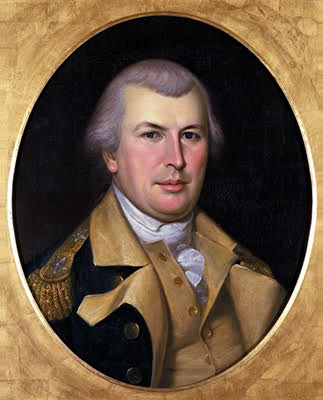
General Nathanael Greene, who mastered the Fabian strategy in the Southern Campaign of 1781
His protégé, Greene, also believed that a Fabian strategy was the way to defeat the British. Faced with the task of defending a large swath of the South with a small army, he had little choice. His subordinate, Brig. Gen. Daniel Morgan, a rough but extremely effective amateur soldier, pioneered the use of a defense in depth at the Battle of Cowpens in January 1781, and Greene then used it on a larger scale at the Battle of Guilford Courthouse about sixty days later. That two untrained amateur soldiers could develop and use such a tactic so effective demonstrates their genius.
A defense in depth, also known as a deep or elastic defense, seeks to delay, rather than prevent, the advance of an attacker, buying time and inflicting additional casualties by trading time for space. Instead of facing an attacker with a single, strong defensive position, a defense in depth relies upon the tendency of an attack to lose momentum and cohesion over time as it covers a larger area. Thus, a defender can yield lightly defended territory in an effort to outstrip an attacker’s logistics or spread out a numerically superior attacking force. Once that attacker has lost momentum, or has become spread out to hold territory, well-planned and well-placed counterattacks can be directed at the attacker’s weak points, with the objective of causing attrition warfare or driving the attacker back to its original starting position.
A conventional defensive strategy concentrates all of a defender’s military resources in a well-defended front line, which, if breached by an attacker, would expose the remaining troops in danger of being flanked, cut off, and surrounded, and leaving lines of supply, communications, and command vulnerable to being cut.
By contrast, a defense in depth requires that defenders deploy their resources, such as prepared fortifications, earthworks, and additional forces at and well behind the front line. Once an attacker breaches the weaker initial position, it continues to meet resistance as it presses on. As the attacker penetrates further, its flanks become vulnerable, and if the advance stalls, the attacking force can find itself completely surrounded and subject to being destroyed or forced to surrender. Thus, a defense in depth is particularly effective against an attacker that can concentrate its force to attack a small number of places along an extended defensive position.
In a well-designed and properly implemented defense in depth, the defending forces fall back to a succession of prepared positions designed to inflict a heavy price on the advancing enemy while minimizing the risk of being overrun or outflanked. By delaying the enemy’s advance, a defense in depth neutralizes manpower advantages and the element of surprise, and buys time for additional forces to be readied for well-timed counterattacks. A well-designed defense in depth will use its forces in mutually supporting positions and in appropriate roles. In this scenario, poorly trained soldiers—such as militiamen—can be used in static positions at the front line, while more experienced and better-trained soldiers can form a mobile reserve, or man the ultimate defensive position to be defended. Further, a well-designed defense in depth will make good use of the natural advantages offered by terrain features and other natural obstacles such as streams, ponds, etc.
General Nathanael Greene, who mastered the Fabian strategy in the Southern Campaign of 1781
There are disadvantages associated with the defense in depth. For one thing, constantly retreating can take a toll on the morale of defending forces. Further, these forces also require a high degree of mobility to accommodate those retreats, and also the space to do so.
Morgan designed and implemented a very effective defense in depth at Cowpens that proved so effective that Greene adopted that tactic and, while he lost the Battle of Guilford Courthouse, the heavy losses his army imposed on Lord Cornwallis’ army prompted Greene to note that the British, “have met with a defeat in a victory.”
Emerging Revolutionary War is dedicated to promoting the continued learning and interest in the American Revolutionary War era. Starting this month, the blog will highlight one American Revolutionary War Round Table. So, continue to check back for a round table, historical society, and/or history study group near your neck of the woods.
Founded in 2004 with a “magnificent seven” men that were interested in visiting the hallowed fields of the American Revolution and having a forum to discuss the events that unfolded on those grounds.
However, unlike the majority, if not all, of military round tables around the country, the Southern Campaigns American Revolutionary War Roundtable (SCARWRT) does not have the traditional “dinner-speaker” setup for their meetings. Their meeting happens semi-annually at historic sites in Georgia and the Carolinas and constitutes an all-day Saturday gathering with numerous speakers and a field trip to sites to conclude.
There are no member dues, by-laws, or even a round table constitution and one can be a novice student in the era of American history or a life-long enthusiast. More information can be found on the Southern Campaigns of the American Revolution website; http://www.southerncampaigns.org.
One caveat, the website mentioned above does not belong to the SCARWWT but there has been a strong connection over the years between the two.
Check the website above or the “American Revolutionary War Round Table” link at the top of this page to get in contact with the SCARWRT.





 First, another installment of their very popular “In4” video series sheds light on the Battle of Brandywine, fought in southeastern Pennsylvania on September 11, 1777. The video is narrated by Thomas McGuire, historian and author. Check out the video

 Emerging Revolutionary War Era