On January 29, 1756, Henry Lee III is born at Leesylvania Plantation in Prince William County, Virginia. Part of the prestigious Lee family of Virginia, his father was a cousin of Richard Henry and Francis Lightfoot Lee, two brothers who signed the Declaration of Independence.
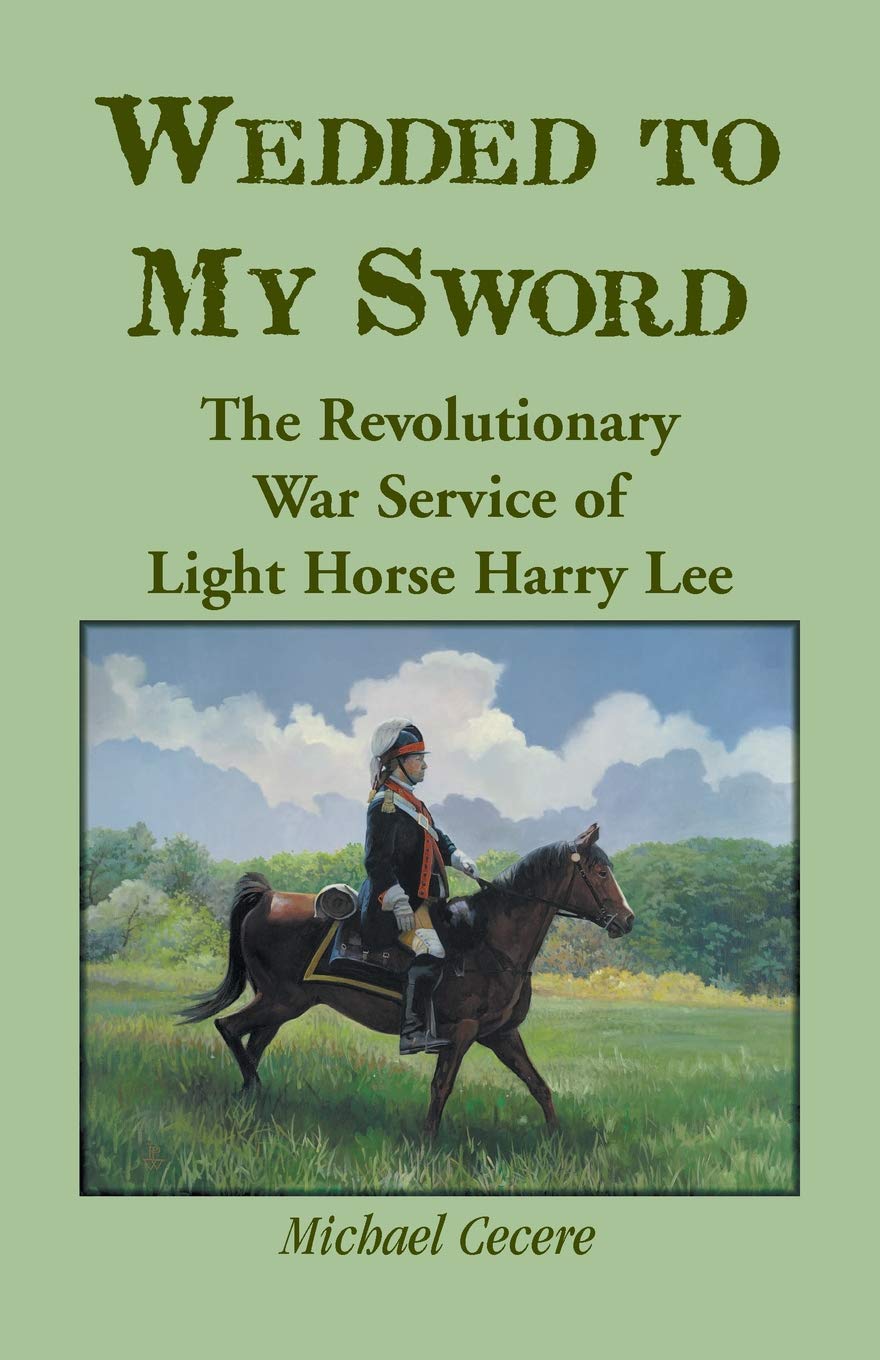
Henry Lee would blossom into one of the better cavalry commanders in the American Revolution, earning the nickname, “Light Horse Harry” Lee because of his accomplishments. With January being his birth month, Emerging Revolutionary War welcomes historian and author Mike Cecere, who will discuss his book, “Wedded to my Sword, The Revolutionary War Service of Light Horse Harry Lee.”
Cecere, former high school and community college history teacher is the author of thirteen books on the American Revolution, most focused on aspects of the colony of Virginia and/or her native sons.
This Sunday we hope you spend some time joining us on the next installment of “Rev War Revelry’ as we discuss the Lee that was born in January and became a military hero of the American Revolution. This historian happy hour will be live on our Facebook page at 7 pm EST.
(Yes, we do know there is another Lee that is born in January and plays a prominent role in history).
Emerging Revolutionary War welcomes back guest historian Dan Welch.
It’s December 9, 1775. Not only was the future of the fledgling Patriot’s cause at stake, but the future of our yet-to-be created Supreme Court was as well.
Over the previous months, rebel forces in the area had been engaged with Lord Dunmore’s troops for control of military supplies in the colony of Virginia. This eventually led towards the area around Norfolk, where Dunmore’s forces had fortified a position opposite a river crossing that was strategic both militarily and economically. The position, south of Norfolk, at Great Bridge, was not uncontested. Just opposite Dunmore’s stockade, known as Fort Murray, on the other side of the river, rebel forces settled in, arriving on December 2.
Col. William Wofford, in command of the 2nd Virginia Regiment and about 100 men of the Culpeper Minutemen battalion, began entrenching their position opposite Fort Murray while more militia from surrounding Virginia counties and North Carolina marched towards their aid. As more men arrived, as well as several pieces of field artillery, Lord Dunmore grew wary. He believed his only course of action was to attack Wofford’s men and drive them from the field. The attack was set to begin by dawn’s early light on December 9, 1775.
Found in the ranks of Wofford’s command that morning as the battle opened was a father and son, Thomas and John Marshall. Thomas, a vestryman, High Sheriff, and a member of the House of Burgesses had brought his son with him into the patriot ranks from Fauquier County. By the time of the battle, Thomas, who had been active in the organizing and raising the Culpeper Minutemen, had been appointed its major. His son John, age 20, its first lieutenant.
John Marshall’s biographer later recounted the importance of this moment on the young nineteen-year-old, writing “The young soldier in this brief time saw a flash of the great truth that liberty can be made a reality and then possessed only by men who are strong, courageous, unselfish, and wise enough to act unitedly…He began to discern, though vaguely as yet, the supreme need of the organization of democracy.”
John Marshall went on to serve as the fourth Chief Justice of the United States Supreme Court in 1801. Marshall remained at the post for thirty-four years, and, during his tenure, the Marshall Court brought the role of the Supreme Court to the fore, issued more than 1,000 decisions, and set the precedent of handing down a single majority opinion. These accomplishments and influences are just some of many that Marshall had on the Court, the federal government, and American history. Today, on the 245th anniversary of the battle of Great Bridge, it’s interesting to pause, reflect, and wonder how very different the United States and the Supreme Court might have been had Colonel Wofford’s forces, among them John Marshall, been defeated that day at the “second Bunker’s Hill affair….”
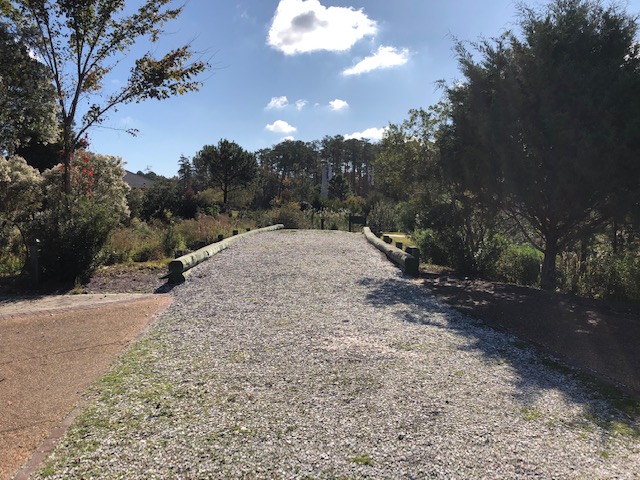
Pictures of Great Bridge Battlefield and monuments.
Mention the following words to any casual student or enthusiast of the American Revolutionary War and we can almost guarantee what the first word(s) or topic out of their mouths will be.
Virginia.
1781.
American Revolution.
If you are thinking, Yorktown, or Siege of Yorktown or Surrender of Yorktown, then our rhetorical question above is correct.
Most people know about the Siege and Surrender at Yorktown, but Virginia was a hot spot of activity the summer leading up to Yorktown. With British troops, led by the likes of Benedict Arnold, William Phillips, Alexander Leslie, and lastly by Lord Charles Cornwallis in the Old Dominion throughout the year and American leaders like the Marquis de Lafayette and Baron von Steuben, Virginia saw very active campaigning ranging through most of the central and eastern parts of the colony.
That is why you need to tune in and Join Emerging Revolutionary War this Sunday, on our Facebook page, at 7p.m EST for the next “Rev War Revelry” as we discuss the events leading up to Yorktown in October 1781.
We will cover actions such as Spencer’s Ordinary, Green Spring, Gloucester Point and of course Yorktown.
ERW will be joined by historians J. Michael Moore, Kirby Smith and Drew Gruber. All three live and work in the “Historic Triangle” of Virginia. The three gentlemen all have researched, led tours and have written published works about this important period of the American Revolution.
Map by Michel du Chesnoy (1746-1804)
This will be a precursor to ERW’s annual fall trip, when we will visit Gloucester Point, Spencer’s Ordinary, Green Sping and Yorktown (which we invite you to follow along with on our Facebook page).
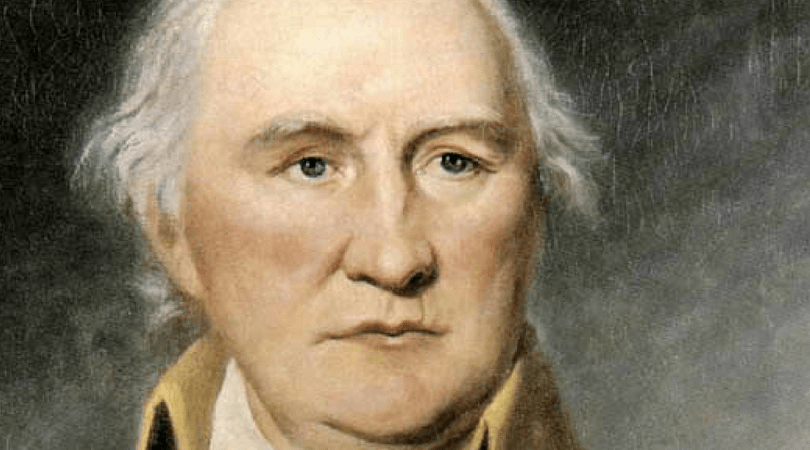
In the pantheon of American military leaders, Daniel Morgan’s place is definitely warranted. Innovative rifleman, heroic actions, backwoodsman, skillful tactician, and charismatic leader. He performed admirably at the Battle of Quebec in the winter of 1775, led the American forces at one of the climatic and complete victories of the war at the Battle of Cowpens in 1781, and distinguished himself in many a field and campaign in between.
For those reasons and a further discussion into the life and career of this American military hero, Emerging Revolutionary War invites you to listen and chime in during the next “Rev War Revelry” this Sunday at 7pm EST on our Facebook page.
In addition to the cadre of Emerging Revolutionary War historians, including Rob Orrison and Travis Shaw, there will be another talking head this weekend.
Joining ERW this Sunday will be historian Nathan Stalvey. He is the Director of the Clarke County Historical Association and a member of the Virginia Association of Museums Council. He started his 20-year career at the University of South Carolina’s McKissick Museum where he worked as the Curator of Traveling Exhibitions and Design. Nathan then served as the Director of Exhibitions and Head of Collections at the Louisville Slugger Museum & Factory in Louisville, Kentucky prior to his hiring in 2014 as the Director at CCHA. As Director, he oversees the operations of both a museum in downtown Berryville, as well as the historic 18th-century Burwell-Morgan Mill in Millwood.
As Daniel would have enjoyed an adult beverage in his day, make sure to bring one to this “Rev War Revelry” Sunday night!
Benedict Arnold, the mere mention of the name seems permanently intertwined with the word “treason.” His name has even made it into popular vernacular, being called a “Benedict Arnold” as an insult. Yet, there is more to the man than just that infamous moment along the banks of the Hudson River in West Point, New York in 1780.
Prior to that turning point, Arnold was one of the greatest battlefield leaders the Americans had at that rank. His inspiring leadership on the field of battle at Saratoga led to a climactic charge and one of the greatest monuments to a leader on any hallowed ground. He survived the cold and assaults in Canada in the winter of 1776 as well.
After being a turncoat he was a menace in Virginia in 1781, raiding in Richmond and the Tidewater of Virginia. One of ERW’s historians will discuss Arnold’s role in the state capital of Virginia.
A lot to unpack and that is why this Sunday, at 7pm, live on our Facebook page, Emerging Revolutionary War historians will be joined by Dr. Powell, who spoke on the French and Indian War with us back in June, to discuss Benedict Arnold. So, bring those pre-conceived notions but an open mind to fully appreciate Arnold. This “Rev War Revelry” will discuss the before reasons for, and the after of his switching allegiances.
This Sunday, at 7 p.m. EST, Emerging Revolutionary War invites you to a “Rev War Revelry” dedicated to General Peter Muhlenberg. This Continental Army officer is the subject of a new biography, by historian Michael Cecere, who, along with Gabe Neville, will be joining us for the evening.
Gabe Neville, the author of the blog, The 8th Virginia Regiment in the Revolutionary War, returns to “Rev War Revelry” for a second time. General Muhlenberg, at the time a colonel, was the first commanding officer of the 8th Virginia Regiment. Click here to access Gabe’s blog.
Michael Cecere, the author of the biography, is an active American Revolutionary reenactor, author, and high-school history teacher in Virginia. He is making his debut on “Rev War Revelry.” For more information on this and his other works, click here.
We hope you can join us, this Sunday, as we discuss the life and military career of Peter Muhlenberg, the 8th Virginia Regiment, and the broader military history of the American Revolution.
Tim McGrath has written two award-winning winning books about the early history of the United States Navy: Give Me a Fast Ship and John Barry. For his third book, he switched gears to tackle an oft-overlooked soldier, lawyer, politician, and president: James Monroe. In what will likely be the definitive Monroe biography, McGrath tackles the entirety of our fifth president’s life. Born in 1758, Monroe joined the American army in the Revolution’s early days until he was sidelined with a serious wound at Trenton.
As McGrath tells it, the story of Monroe’s early life was a constant search for a mentor and sponsor, which eventually landed him on William “Lord Stirling” Alexander’s staff. It was enough to bring him the attention and lukewarm friendship or support of many of the army’s leading lights and the country’s future leaders, but not enough to really launch his career. Eventually, he landed a legal apprenticeship with Virginia’s Governor Thomas Jefferson. It changed Monroe’s life, giving him a path forward professionally, politically, and intellectually.
Emerging Revolutionary War welcomes back guest historian Dan Davis
Like my last post at Emerging Revolutionary War on the “Race to the Dan”, the origins of this post lie in a conversation with blog co-founder, Phill Greenwalt. The topic of our discussion revolved around the aftermath of the British victory at the Battle of Camden. The engagement ultimately brought two American officers to the Southern Theater: Nathanael Greene and Daniel Morgan. Greene accepted the position as the new head of the Southern Department’s co two months to the day after the battle while commanding the post at West Point, New York. Morgan’s story, however, is much more fascinating.
In the spring of 1779, George Washington created a light infantry corps within the Continental Army. Such a command fit Morgan’s skillset. He previously commanded the army’s provisional rifle corps. Additionally, Morgan, then a colonel, had compiled a record that arguably warranted elevation to brigadier general. After fighting broke out at Lexington and Concord, Morgan led a rifle company to the aid to the American army besieging Boston. Morgan participated in Col. Benedict Arnold’s Canadian Expedition and was captured during the assault on Quebec. He also played a critical role in the Battles of Saratoga. Morgan’s home state of Virginia, however, had met its quota for general officers and a vacancy was not available.
On June 30, 1779, Morgan learned Brig. Gen. Anthony Wayne received command of the new corps. With his pride devastated, Morgan traveled to Philadelphia. There, on July 19, Congress read his resignation.
The odds are good that you haven’t been able to visit some of your favorite Revolutionary War sites during the Covid-19 pandemic. Many of these locations rely on foot traffic for their annual income and may be struggling to stay afloat amidst various state lockdowns and a smaller number of visitors. (We left out many national, state, and local parks, which sometimes have access to government funds. But, they often have partnerships with non-profit foundations that provide vital support for their activities.) So, we decided to start a list of museums and parks that you can help out now and visit as circumstances allow. No doubt it will grow. The list does not constitute a solicitation or endorsement, but many of our historians visited some of these museums in the past and found them really helpful to our own work. (You may need to copy and paste some links.) If you search our “weekender” posts, there are even more sites to support and visit when you can.
Emerging Revolutionary War would like to thank Drew Gruber, for bringing this connection to our attention.
During the May 5th, 1862 Battle of Williamsburg as Confederate soldiers ran down into what would be called the bloody ravine they ran headlong into men from New Jersey, New York, and Massachusetts. In an effort to push the Union soldiers out of the ravine and sweep them from the field brigade after brigade was sent into the fight. Among those was four Virginia regiments under AP Hill. After leaving the relative safely of the City they deployed in some form of a line and pitched down into the ravine too.
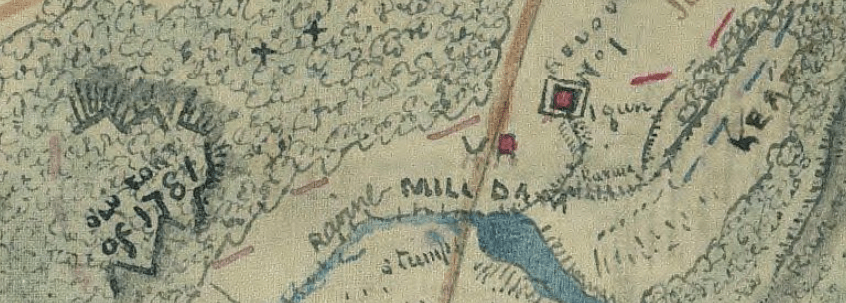
Portion of the map of the Battle of Williamsburg, showing the land the American Battlefield Trust is currently working to purchase (map courtesy of LOC)
In the ravine hand-to-hand combat, fallen trees, driving rain, and the thick smoke made communication almost impossible and command fell on company commanders to keep the battle moving in their favor. Among the men in Hill’s brigade fighting down in the bloody ravine was Tipton Davis Jennings of the 11th Virginia Infantry. His account of the fighting here at Williamsburg will be of particular interest to your readers of the ERW blog.
Writing in 1897 his “Incidents in the Battle of Williamsburg” appeared in the Confederate Veteran Magazine. In fact Kate and I covered this in an earlier ERW post titled, Revolutionary Memory. (click here to read that post).
“Just then,” he wrote, “we happened upon what was apparently an ancient line of grass-grown earthworks. We learned afterward that portions of Washington’s line of entrenchment were yet discernible thereabouts. And so it is possible that we ragged ‘Rebs’ were actually defending the same works were [sic] once stood the ragged continental ‘Rebs’ fighting, the hessian of Europe, as we were now, some eighty years later. So doth history repeat itself.”
At first glance is this a cool anecdote and yet rather odd. However, when you consult french maps from the Williamsburg region created during the Yorktown Campaign you’ll find references to Mulhenburg’s “lights” camped in this very area. Moreover, almost hidden in plain sight on one of Sneden’s 1862 maps is and “Old Fort of 1781.” Civil War soldiers seemed wholly cognizant of the Revolutionary landscape around them and like Jennings used it to spur on their cause(s).
Yesterday, on the 158th anniversary of the May 5th, 1862 battle the American Battlefield Trust launched a campaign to save the 29 acres over which Jennings charged. Perhaps it is this very same ground where the original cast of “ragged continental ‘Rebs'” also campaigned. Click here to read about that initiative and for further information on how to donate.






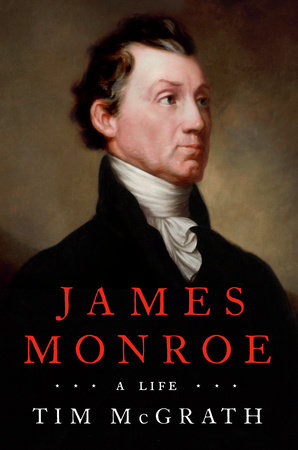 Tim McGrath has written two award-winning winning books about the early history of the United States Navy: Give Me a Fast Ship and John Barry. For his third book, he switched gears to tackle an oft-overlooked soldier, lawyer, politician, and president: James Monroe. In what will likely be the definitive Monroe biography, McGrath tackles the entirety of our fifth president’s life. Born in 1758, Monroe joined the American army in the Revolution’s early days until he was sidelined with a serious wound at