Since the besieged British soldiers in Boston under General William Howe’s command awoke on the morning of March 5, 1776, and saw American cannon overlooking the city from Dorchester Heights, Howe prepared to evacuate Boston. Orders to prepare the embarkation of the troops and military stores and depart Boston went out to his command of 9,000 soldiers on March 7. It took days to organize the large-scale movement, and the British Navy did not have enough space on their ships to carry everything the army had. Decisions had to be made, supplies had to be destroyed or left behind. The military had to make room for loyalists wanting to depart the city as well.
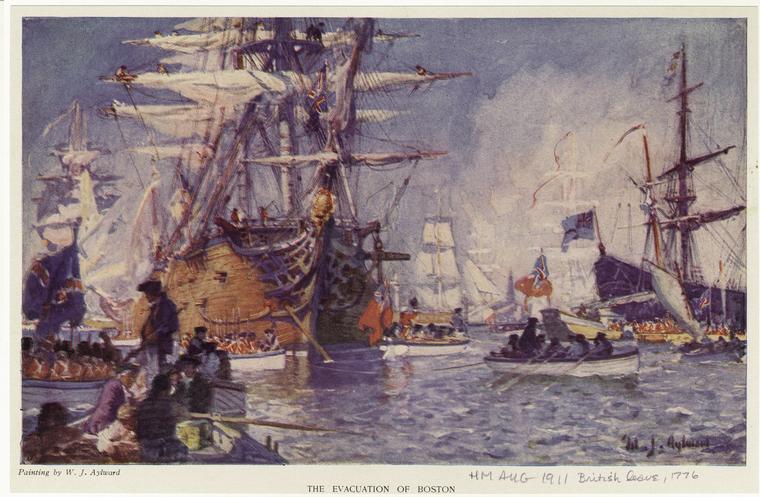
After unfavorable winds delayed the original departure date of March 13, British troops formed into marching columns at 4 a.m. on March 17. Four hours later, General Howe’s army rocked aboard boats in Boston Harbor, abandoning their hold on the American seaport city. General George Washington’s Continental Army did not interfere with the British evacuation, honoring an agreement trading a pause in military action for a promise that British troops would not harm the city as they departed.
While morale sagged on the British boats, Patriots in Boston were jubilant that their city was free from British army. Boston selectman Timothy Newell recorded in his journal the momentous day of Boston’s freedom from British occupation:
This morning at 3 o’clock, the troops began to move–guards, chevaux de freze, crow feet strewed in the streets to prevent being pursued. They all embarked at about 9 oclock and the whole fleet came to sail. Every vessel which they did not carry off, they rendered unfit for use. Not even a boat left to cross the river.
Thus was this unhappy distressed town (through a manifest interposition of divine providence) relieved from a set of men whose unparralleled wickedness, profanity, debauchery and cruelty is inexpressible, enduring a siege from the 19th April 1775 to the 17th March 1776. Immediately upon the fleet’s sailing the Select Men set off through the lines to Roxbury to acquaint General Washington of the evacuation of the town. After sending a message Major Ward, aid to General Ward, came to us at the lines and soon after the General himself, who received us in the most polite and affectionate manner, and permitted us to pass to Watertown to acquaint the Council of this happy event. The General immediately ordered a detachment of 2000 troops to take possession of the town under the command of General Putnam who the next day began their works in fortifying Forthill, etc., for the better security of the town. A number of loaded shells with trains of powder covered with straw were found in houses left by the Regulars near the fortifycation.
In March 1776, a quiet hill overlooking Boston Harbor became one of the first turning points of the American Revolutionary War. Dorchester Heights, rising above the southern approaches to Boston in what is now South Boston, played a decisive role in forcing the British Army to evacuate the city. The dramatic occupation and fortification of the Heights by American forces under General George Washington transformed a long, grinding siege into a strategic victory that reshaped the war’s momentum.
After the battles of Lexington and Concord in April 1775 and the bloody clash at Bunker Hill in June, British forces under General Thomas Gage and then William Howe found themselves effectively trapped in Boston. Surrounding militia units from Massachusetts and neighboring colonies formed a loose ring around the city, beginning what became known as the Siege of Boston. When George Washington arrived in July 1775 to take command of the newly formed Continental Army, he inherited a force that was determined but poorly supplied and short on artillery.
Throughout the fall and winter of 1775–1776, Washington searched for a way to break the stalemate. A direct assault on Boston would have been costly and risky. Instead, he looked to geography. Dorchester Heights, commanding sweeping views of the harbor and the city, offered a strategic advantage. If American forces could fortify the Heights with cannon, they would threaten both the British fleet and the troops stationed in Boston. Control of this high ground would make the British position untenable. The British Navy had encouraged British General Howe (now commanding the British forces in Boston) to take the position due to the Navy’s vulnerability if the Americans were able to command the heights with artillery. Howe underestimated the importance of the heights and also believed the Americans lacked the proper artillery and strength to hold it.
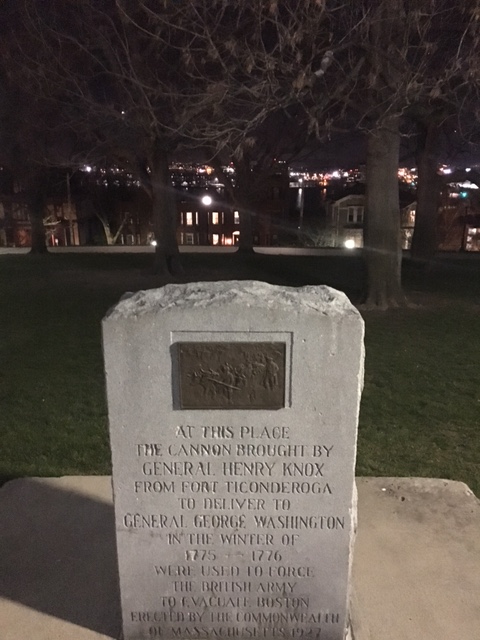
Knox marker on Dorchester Heights
The key to Washington’s plan lay in artillery. In late 1775, Colonel Henry Knox undertook an audacious mission to transport heavy cannons captured from the British at Fort Ticonderoga in upstate New York. Over the winter, Knox and his men hauled approximately 60 tons of artillery—an operation later dubbed the “Noble Train of Artillery”—over 300 miles of frozen rivers and snow-covered terrain to Cambridge, Massachusetts.
These cannons provided Washington with the firepower necessary to implement his strategy. By early March 1776, conditions were ripe. The ground was still frozen, making it easier to move heavy equipment and but would challenge their skills at building fortifications.
On the night of March 4, American troops moved silently toward Dorchester Heights. Under the cover of darkness and diversionary bombardments from other positions, they began constructing fortifications with remarkable speed. Using pre-prepared materials—fascines (bundles of sticks), chandeliers (wooden frames filled with earth), and hay bales—they built defensive works capable of withstanding British cannon fire.
By dawn on March 5, the anniversary of the Boston Massacre, British sentries were stunned to see formidable American fortifications atop the Heights, bristling with cannon aimed at the city and harbor. General Howe reportedly exclaimed that the rebels had accomplished more in one night than his army could have done in months. The strategic implications were clear. From Dorchester Heights, American artillery could rain fire down on British ships and troop positions. The Royal Navy, essential to British supply and mobility, was now vulnerable. Remaining in Boston was a risk that Admiral Molyneux Shuldham was not willing to take and pushed Howe to respond quickly.
General Howe initially planned a counterattack to dislodge the Americans. However, a fierce storm on March 6 disrupted preparations and made an amphibious assault difficult. Also, Washington got word of the planned British assault and increased his manpower on Dorchester Heights to nearly 6,000. The memory of heavy British casualties at Bunker Hill also weighed heavily. Dorchester Heights were even stronger and more defensible than Breed’s Hill had been the previous year.
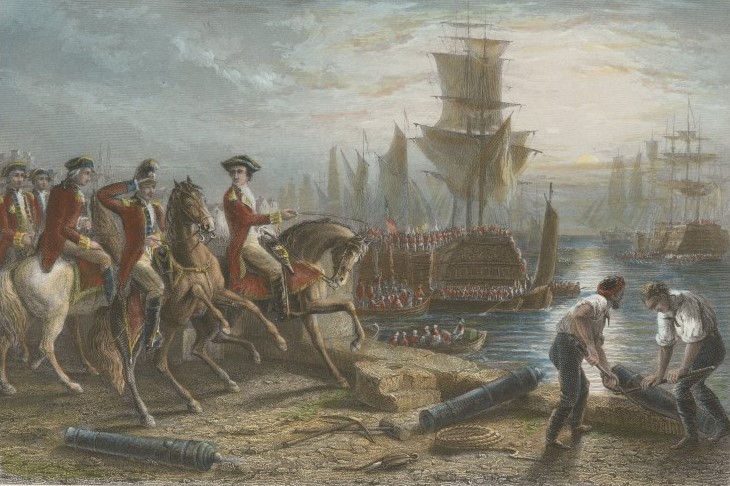
Howe evacuating Boston, courtesy New York Public Library
Facing the prospect of severe losses and an increasingly precarious situation, Howe reconsidered. Negotiations—informal and indirect—suggested that if the British evacuated Boston without destroying the town, American forces would not attack during the withdrawal.
On March 17, 1776, British troops and Loyalists began evacuating the city. More than 11,000 soldiers and nearly 1,000 Loyalists boarded ships and sailed to Halifax, Nova Scotia. The Siege of Boston was over, and the city was firmly in American hands for the remainder of the war.
The occupation of Dorchester Heights marked the first major strategic victory for the Continental Army under Washington’s leadership. It demonstrated the effectiveness of coordinated planning, logistical ingenuity, and the intelligent use of terrain. Rather than launching a costly frontal assault, Washington had leveraged geography and artillery to compel the enemy’s withdrawal.
This victory also boosted American morale at a critical time. The war was far from won—indeed, it would intensify dramatically later in 1776 with British campaigns in New York—but the successful eviction of British forces from Boston showed that the Continental Army could achieve meaningful results.
Moreover, Dorchester Heights solidified Washington’s reputation as a capable commander. His cautious but decisive approach, combined with Knox’s logistical triumph, set a pattern for future operations. The event underscored the importance of high ground in military strategy, a lesson that had already been evident at Bunker Hill but was applied with even greater effect in March 1776.
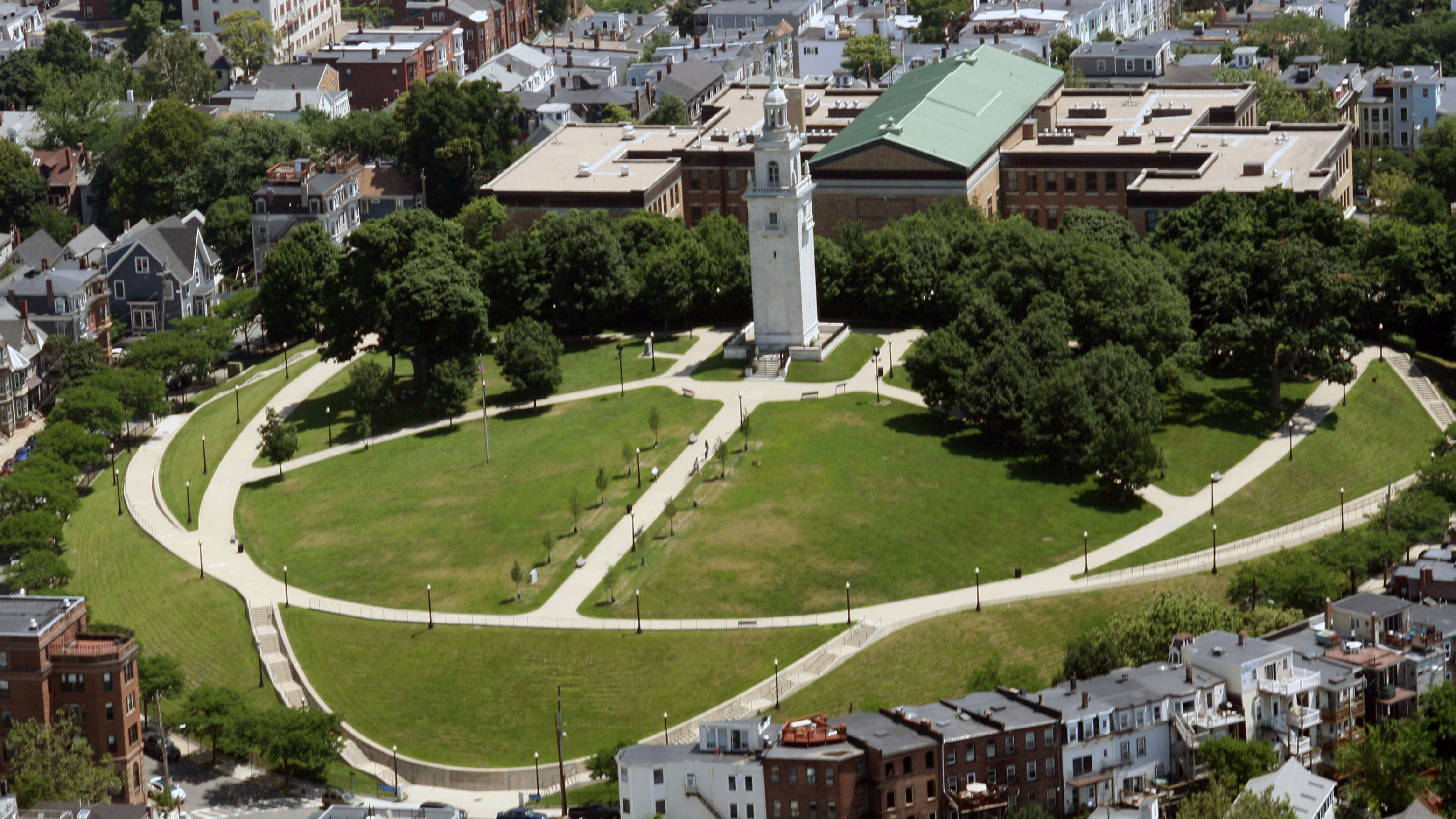
Dorchester Heights and the 1902 monument today, part of the Boston National Historical Park, courtesy of NPS
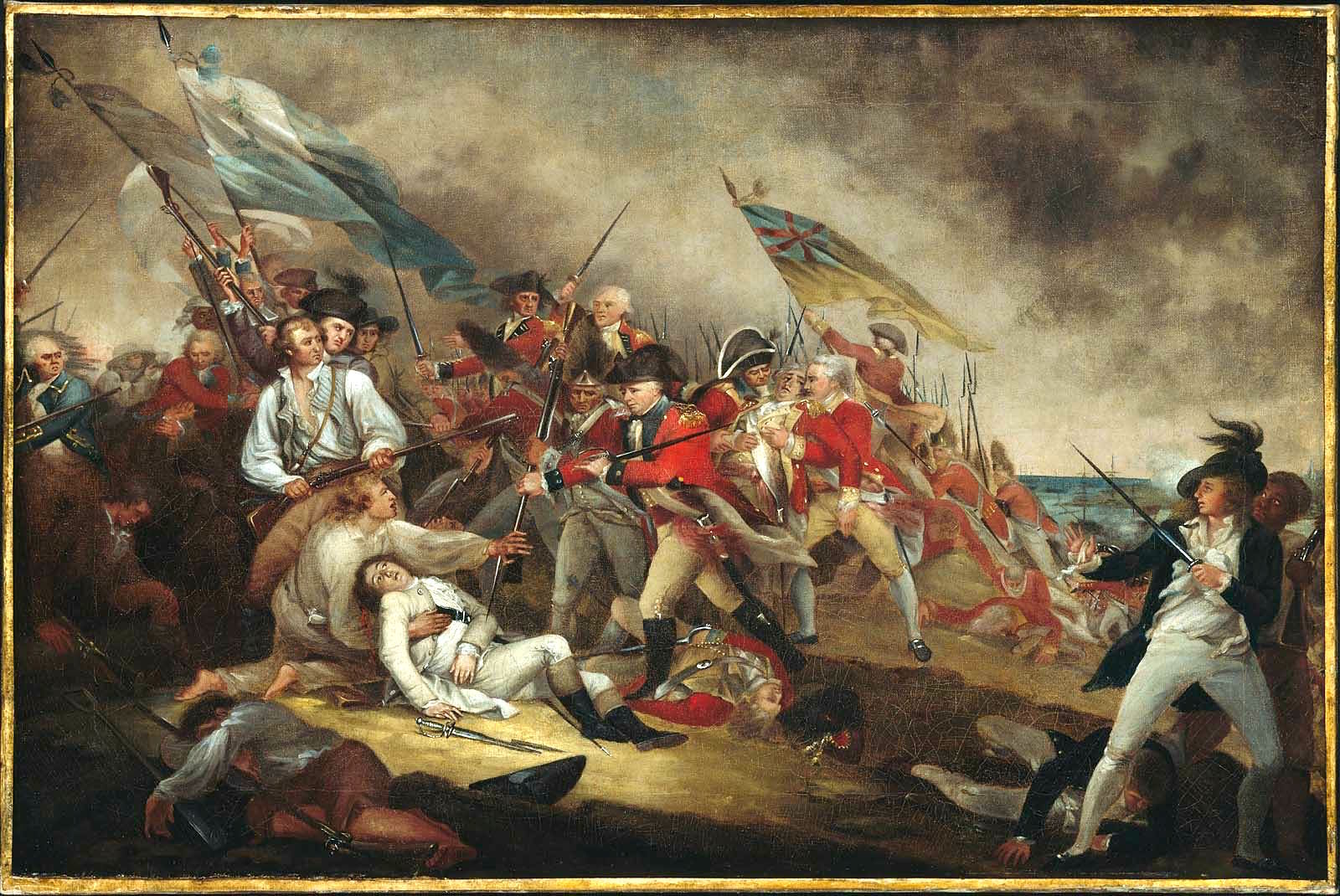
On Tuesday, the 250th anniversary of the Battle of Bunker Hill, fought on Breed’s Hill on Charlestown Peninsula, will be remembered. On June 17, 1775, the last major engagement before George Washington arrived in Massachusetts to take command was fought between militia under Colonel William Prescott and British forces under General William Howe. Although a defeat for the patriots, resulting in the death of Dr. Joseph Warren, the victory was a pyrrhic one for the British.
Join Emerging Revolutionary War historians as they discuss the engagement, the personas, and the ramifications of the Battle of Bunker Hill. Also, stay tuned until the end for an announcement as well.
So, two days before the 250th, grab your favorite beverage and tune into our Facebook page at 7 p.m. EDT and have your questions ready. If you are unable to attend the live on Sunday evening, don’t fret, the video will be posted to YouTube by the anniversary and to our podcast channel as soon as possible
We are excited to announced our FIFTH annual ERW bus tour will be on November 7-9, 2025 and will cover the 1777 Philadelphia Campaign.
Author and historian Michael Harris will join us as we cover the fall of 1777 campaign. The British Army under Gen. William Howe made a concerted effort to take the American capital of Philadelphia. George Washington and the Continental Army fought major actions at Brandywine and Germantown in an effort to hold and take back the city. The tour will cover sites associated with the Philadelphia Campaign, such as Brandywine, Germantown, Paoli and others.
Tickets are $250 per person and will include Friday night lecture at the host hotel, all day bus tour on Saturday and half day bus tour on Sunday. A lunch is included for Saturday.
Our host hotel is the Holiday Inn Express and Suites – King of Prussia. Lodging is NOT included in the registration fee. A room bloc has been established under the name of “Emerging Revolutionary War.” A link will be provided in the future for hotel lodging.
Join us for our FIFTH annual tour as we take on the beginning of the American Revolution just a few months before the 250th anniversary. Learn about the dramatic events that led to some of the bloodiest days in the American Revolution. There is no better way to experience history than to stand in the footsteps of where it happened!
From November 2, 1777 until early-December, General George Washington and the Continental Army occupied a defensive position at White Marsh, approximately 13 miles northwest of Philadelphia. In early December, a series of small skirmishes erupted along the American lines in the last actions of the campaigning season of 1777. Frustrated by Washington’s refusal to emerge from his entrenchments, Sir William Howe led his British columns back to their winter abode in Philadelphia.
Washington moved the army shortly thereafter toward Valley Forge and their winter cantonment, arriving in that vicinity on December 19. As Washington prepared for the winter of 1777-1778 you can also start the preparations to follow this route with Emerging Revolutionary War on the weekend of November 11 – 13, 2022 on the Rise of the American Army: Valley Forge and the Battle of Monmouth Bus Tour. To secure your spot and further information, click here (or the link on the banner at the top of this page).
On the night of September 20, 1777, while encamped in Chester County, PA just outside Philadelphia, a division of American soldiers was defeated in a swift surprise attack by a slightly smaller British force. American propagandists, in an effort to galvanize Patriot support, would make the most of this encounter to show the British Army as overly brutal and bloodthirsty. On the foggy morning of December 9, 2019, members of the ERW paid a call on this battle site; Paoli Battlefield Historical Park.
David Smith, Whispers Across the Atlantick: General William Howe and the American Revolution, (NY: Osprey Publishing, 2017).
If it’s true that George Washington lost all his battles, but won the war, then it’s equally true that Sir William Howe won all his battles and lost the war. Of course, neither premise is accurate, but they pithily sum up the conventional interpretation of each commander’s accomplishments on the battlefield, wrong as they may be. Washington’s role as Commander-in-Chief has come under increased scrutiny as Americans revisit their history. His chief adversary, however, Sir William Howe, has largely escaped focused study. David Smith set out to rectify that shortfall in his doctoral dissertation, which became the basis of Whispers Across the Atlantick. Historians should thank him for it. Continue reading “Winning the Battles and Losing the War: A Review of Whispers Across the Atlantick: General William Howe and the American Revolution, by David Smith”→
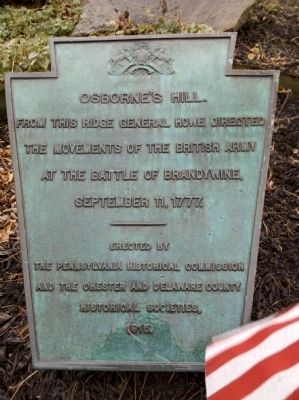
From a Pennsylvania State Historical Commission marker, one quickly can find out the importance of Osborne Hill to the Battle of Brandywine, fought on September 11, 1777.
Osborne Hill Marker (courtesy of Keith Smith, hmdb.org)
The hillside was the site of British General William Howe’s post in which he coordinated and commanded the different components of the British and Hessian forces that day. The battle opened the way for the British conquest of Philadelphia and was the largest, in terms of manpower fighting, of any American Revolutionary War battle.
In southeast Pennsylvania on September 11, 1777, the largest battle, by number of combatants, was fought between the British forces under Lord General William Howe and the Continental and militia forces under General George Washington. After the day long engagement, one of the bloodiest of the entire American Revolution, approximately 1,900 men were killed, wounded, or captured. Washington lost 8% of his entire force that day, Howe 4%.
Brandywine, A Military History of the Battle that Lost Philadelphia but Saved America, September 11, 1777
Yet, the Battle of Brandywine has been eclipsed by the history that followed shortly thereafter the bloody engagement. Fifteen days after the battle along Brandywine Creek, Howe’s British and Hessian forces will capture Philadelphia and Washington’s army will spend the pivotal 1777-1778 winter at Valley Forge. Although the battle has been the subject of a few histories and folded into larger campaign studies, Michael C. Harris’s book-length treatment is the first to take an analytical and discerning eye to the engagement and separate myth from fact. Published by Savas Beatie, LLC, in 2014 in hardcover, the book has now been released in paperback. Continue reading “Review: Brandywine, A Military History of the Battle that Lost Philadelphia but Saved America, September 11, 1777 by Michael C. Harris”→
On a recent trip to Boston, I was shown by fellow Emerging Revolutionary War historian Rob Orrison, Dorchester Heights. One of my favorite quotes of the entire American Revolutionary War was in reference to the Continental Army’s move to fortify the very heights at Dorchester.
“My God, these fellows have done more work in one night than I could make my army do in three months.” Uttered by General William Howe the morning after the Americans had used the night to build an entire fortification network on the commanding hillsides of Dorchester.
This move, conducted in the secrecy of the night, led to the British evacuation of Boston, after an aborted offensive by the British do a providential snowstorm. Less than two weeks after that influential night, on March 17, 1776, the British evacuated Boston, never to return.
I did not get to spend too much time on the heights but I was able to snap a few pictures, shown below. But, I did have the great fortune to be on the heights at night, looking out over Boston, which has grown just slightly since 1776. A few moments of silence ensued, where I had the chance to mull over what that view must have looked like and what the soldiers who hurriedly dragged the fascines and gabions, and shoveled dirt that night must have worried about as they feverishly tried to finish their duties.
Stone monument marking the spot where the cannon that Henry Knox brought from Fort Ticonderoga to Boston stood. You can see the lights of Boston in the background with the reflection of the lights on the water past the first row of houses in the foreground.
The cannon that bore down on Boston from the heights of Dorchester Heights were a product of one of the greatest feats of the entire war. Former Boston bookseller turned artillerist extraordinaire had brought the heavy armament on an arduous trek, through the late stages of winter from upstate New York to the Continental Army besieging Boston.
Henry Knox was the man behind the delivery and he would serve as George Washington’s Chief of Artillery before the war was over. Afterwards, Knox would become the first Secretary of War in Washington’s Administration. At Dorchester Heights, with Washington’s planning and Knox’s delivery the city of Boston was liberated without firing a shot.
A view of the monument
The heights retained its military importance through the end of the War of 1812. By the end of the 19th century, in 1898, the General Courts of Massachusetts had commissioned a monument to stand on what remained of the heights. The white marble Georgian revival tower that stands 115 feet, commemorates that night in 1776 that American soldiers did what British soldiers would take months to complete. By 1978, after a listing on the National Register of Historic Places, the monument and remaining hill site was handed to the National Park Service by the city of Boston. Dorchester Heights became part of Boston National Historical Park which was established in 1974.
When planning a visit to Boston National Historical Park and to Dorchester Heights, which is open to visitation, both during the day and at night please consult the website for the national park here. That way you can familiarize yourself with the regulations and how to make the most of your visit.







 Emerging Revolutionary War Era