Rev War Revelry: The 1775 Canadian Campaign

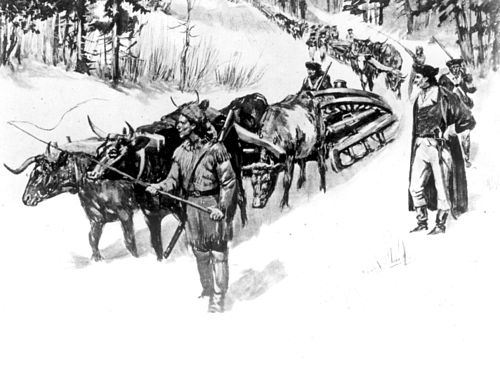
Join us this Sunday, December 14th at 7pm as we return LIVE for this Rev War Revelry on the Canadian Campaign of 1775. We will discuss Arnold, Montgomery, Morgan and others on America’s attempt to capture Montreal, Quebec and create a “14th state.” From Arnold’s arduous march to Quebec through the wilds of Maine to Montgomery’s capture of Montreal, our historians Alex Cain and Mike Cecere will cover the entire campaign and answer the question “was the capture of Canada possible?”

This fall and winter mark the 250th anniversary of the campaign and the battles of Montreal and Quebec, and both of our speakers have taken part in the commemorative events. Grab a drink and watch live on our Facebook page, also add questions in the chat.

Holiday Kick-Off from Mt. Vernon….Place, Baltimore

On the first Thursday of December, the unofficial kick-off to the holiday season takes place in Baltimore, Maryland. This year, on December 4, was the 54th year of the celebration. The 178-foot-tall George Washington Monument, the construction of which started on July 4, 1815, and was completed in 1829, is graced with lights and fireworks that light up the city sky about the figure of Washington.

On both sides of the Washington Monument stand two equestrian statues grace the grounds. One is of a local American Revolutionary War hero, John Eager Howard, born in Baltimore County in 1752. On the other side is honorary American, the Honorable Marquis de Lafayette.

If you peer to the left of the Howard equestrian statue photo, you see the spire of a Victorian Gothic church. Built in 1872, the church stands on the location of the Howard residence. On January 11, 1843, Francis Scott Key died there, at the age of 63.

If you celebrate, Emerging Revolutionary War hopes your holiday season kicks off grandly as well. If I may, if looking for a gift for that history enthusiast, check out the Emerging Revolutionary War store here. Or the Emerging Revolutionary War Series, here.

A Letter from William Prescott to John Adams

Approximately two months after waging the defense of Breed’s Hill, on the Charlestown peninsula, against the British, Colonel William Prescott put quill to paper to write to John Adams. In this communique, he discussed the action at Breed’s Hill, known as the Battle of Bunker Hill, fought on June 17, 1775, to his fellow Massachusetts native. Take note that he even wrote his account about the orders he received and which hill that missive directed him to. Since the waft of smoke has drifted from the battle on that June day, veterans, officers, and historians have debated why Prescott and company chose Breed’s Hill instead of Bunker Hill. This letter is just another wrinkle in that timeless debate.

Camp at Cambridge August 25.1775

Sir

I have recd. a Line from my Brother which informs me
of your desire of a particular Account of the Action at
Charlestown, it is not in my Power at present to give so
minute an Account as I should choose being ordered to decamp
and march to another Station.

On the 16 June in the Evening I recd. Orders to march to Breeds
Hill in Charlestown with a party of about one thousand
Men consisting of 3 hundred of my own Regiment, Coll.
Bridge & Lieut Breckett with a Detachment of theirs, and
two hundred Connecticut Forces commanded by Capt.
Nolten, We arrived at the Spot the Lines were drawn by
the Enginier and we began the Intrenchmant about 12, o Clock
and plying the Work with all possible Expodition till Just
before sun rising, when the Enemy began a very heavy
Canonading and Bombardment, in the Interin [Interim] the
Enginier forsook me, having thrown up a small Redout,
found it necessary to draw a Line about 20 Rods in length
from the Fort Northerly, under a very Warm Fire from
the Enemys Artilary, About this Time the above Field
Officers being indisposed could render me but Little Service,
and the most of the Men under their Command deserted the
Party. The Enemy continueing an incessant Fire with their Artilary.
about 2, o Clock in the afternoon on the seventeenth the Enemy
began to land a northeasterly Point from the Fort, and I orderd
the Train with 2 field Pieces to go and oppose them and the
Connecticut Forces to support them but the Train marched
a different Course & I believe those sent to their support
followd, I suppose to Bunkers Hill, another party of
the Enemy landed and fired the Town, There was a party of
Hampshire in conjunction with some other Forces Lined
a Fence at the distance of three score Rods back of the Fort
partly to the North, about an Hour after the Enemy landed
they began to march to the Attack in three Columns,
I commanded my Lieut Coll. Robinson & Majr. Woods
Each with a detachment to flank the Enemy, who I
have reason to think behaved with prudence and Courage.

I was now left with perhaps 150 Men in the Fort, the Enemy
advanced and fired very hotly on the Fort and meating
with a Warm Reception there was a very smart firing
on
both sides. after a considerable Time finding our
Amunition was almost spent I commanded a sessation
till the Enemy advanced within 30 yards when we gave
them such a hot fire, that the [y] were obliged to retire
nearly 150 yards before they could Rally and come again
to the Attack. Our Amunition being nea [r ]ly exaustid could
keep up only a scattering Fire. The Enemy being numerous
surrounded our little Fort began to mount our Lines and
enter the Fort with their Bayonets, we was obliged to
retreat through them while they kept up as hot a fire
as it was possible for them to make we having very few
Bayonets could make no resistance, we kept the fort
about one hour and twenty Minutes after the Attack with
small Arms, This is nearly the State of Facts tho’ imperfect &
too general which if any ways satisfactory to you will
afford pleasure to your most obedient humble Servt.

William Prescott
To the honble John Adams Esqr.

Image of original letter from Prescott to Adams, courtesy of Massachusetts Historical Society

Rev War Revelry: The Battle of Great Bridge with Patrick Hannum

Join us this Sunday as we welcome historian Patrick H. Hannum, as we discuss the events leading up to and including the Battle of Great Bridge, fought on December 9, 1775. Patrick will also share his research of the men who were there at the battle and the long lasting impacts his small battle had on Virginia in the American Revolution. With the 250th anniversary of the Battle of Great Bridge upon us, this is a great time to catch up on the events in Virginia during the fall of 1775.

Patrick H. (Pat) Hannum served for 45 years the Department of Defense, 29 years as a U.S. Marine (Assault Amphibious Vehicle Officer), including battalion command, and 16 years as a civilian professor at the Joint Forces Staff College, National Defense University, where he specialized in operational-level warfare and Phase II Joint Professional Military Education. He continues to study and promote the history and relevance of the American Revolution through membership in the Norfolk Chapter of the Sons of the American Revolution and the Great Bridge Battlefield & Waterways History Foundation, including staff rides, battlefield tours and other educational venues.

This Rev War Revelry will be recorded and placed on our Facebook page this Sunday at 7pm and subsequently on our You Tube and Spotify Channels. So after you fill up on turkey and football, tune in to catch a little history!

Coming Soon: A Dear-Bought Victory: The Battle of Bunker Hill and the Siege of Boston 1775-1776

We’re excited to share one of the 2026 new releases in the Emerging Revolutionary War Series. Published by Savas Beatie, a sneak peek, including the cover, is below.

About the Book:

“I wish we could sell them another hill at the same price we did Bunkers Hill,” Nathanael Greene wrote to the governor of Rhode Island after the battle of June 17, 1775.

Actually fought on Breed’s Hill outside Boston, Massachusetts, the battle of Bunker Hill proved a pyrrhic victory for British forces. Confident in their ability to overwhelm the New England militia that opposed them, long lines of neatly uniformed British infantry and marines swept uphill toward a quickly built earthen redoubt defended by a motely collection of farmers, shopkeepers, and tradesmen.

“Don’t fire until you see the whites of their eyes!” the colonials urged each other—or did they?

By the end of the fight, the British gained the summit and Colonial forces scattered. One of the patriot leaders, Dr. Joseph Warren, lay dead—one of the first martyrs of the American Revolution. But for the British, the scene was far, far worse: it would be the greatest number of casualties they would ever suffer in any battle of the American Revolution. As British General Henry Clinton commented afterward, “A few more such victories would have surely put an end to British dominion in America.”

The siege of Boston would continue, but the sobering lesson of Bunker Hill changed British strategy—as did the arrival soon thereafter of a new commander-in-chief of Continental forces: General George Washington.

In A Dear-Bought Victory, historians Daniel T. Davis and Phillip S. Greenwalt separate the facts from the myths as they take readers to the slopes of Breed’s Hill and along the Boston siege lines as they explore a battle that continues to hold a place in popular memory unlike few others.

About the Authors:

Daniel T. Davis is the Senior Education Manager at the American Battlefield Trust. He is a graduate of Longwood University with a bachelor’s degree in public history. Dan has worked as a Ranger/Historian at Appomattox Court House National Historical Park and Fredericksburg and Spotsylvania National Military Park. He is the author or co-author of numerous books on the American Civil War. This is his first co-authored book in the Emerging Revolutionary War Series. Dan is a native of Fredericksburg, Virginia.

Phillip S. Greenwalt is the co-founder of Emerging Revolutionary War and a full-time contributor to Emerging Civil War. He is a graduate of Wheeling Jesuit University with a bachelor’s degree in history along with graduate degrees in American History and International Studies and Leadership from George Mason University and Arizona State University, respectively. He is the author of co-author of seven books on the American Revolutionary and Civil Wars. Phill has worked for the National Park Service for the last 17 years at numerous natural and cultural sites. He is a native of Baltimore, Maryland.

Early Preservation at Fort Ticonderoga

Emerging Revolutionary War welcomes back guest historian Evan Portman

Most historians credit Ann Pamela Cunningham with kickstarting the historic preservation movement with her purchase of Mount Vernon in 1858. However, preservation of historic sites began long before the Mount Vernon Ladies’ Association. In fact, the storied walls of Fort Ticonderoga became the object of a preservation movement 38 years before the Ladies’ Association purchased George Washington’s ancestral home.

Fort Ticonderoga—known as the Gibraltar of North America—played an integral role in both the French and Indian War and the American Revolution. The fort was originally constructed by the French in 1755 on a portage known to the Iroquois as ticonderoga, meaning a “land between two waters.” Fort Carillon, as it was known to the French, stood strategically between Lake Champlain and Lake George, thereby controlling both the Hudson River Valley and St. Lawrence River Valley. On July 8, 1758, an outnumbered French army successfully defended the fort against British forces in the bloodiest battle of the French and Indian War.[1] However, the following year British General Jeffery Amherst captured the fort and renamed it Fort Ticonderoga.[2]

By the American Revolution, the fort had fallen into disrepair but was still guarded by a small British garrison. In 1775, it was the scene of one of the most famous dramas in American history. On May 10, Col. Benedict Arnold and Col. Ethan Allen led a combined force of the Green Mountain Boys and Massachusetts and Connecticut militiamen across Lake Champlain to capture the fort. “Come out you old Rat!” Allen famously cried to the fort’s commander, Capt. William Delaplace, and demanded he surrender the garrison “in the name of the Great Jehovah and the Continental Congress.”[3] Delaplace agreed, and Ticonderoga quickly fell into American hands.

Continue reading “Early Preservation at Fort Ticonderoga”

ERW Reviews Ken Burns “The American Revolution” via Live Stream nightly

Starting on Sunday, November 16, 2025 PBS will air the much anticipated “The American Revolution” documentary. The 12 hour documentary will run every night from 8pm-10pm, Sunday through Friday (November 21st). Years in the making, the documentary coincides with the 250th anniversary of the American Revolution and the birth of our nation.

We are excited to announce that every night during the documentary at 10pm, Emerging Revolutionary War will live stream a discussion on our Facebook page with ERW historians discussing that night’s episode. You can join in via the online chat to ask questions and respond to our reviews of each episode. There will be different historians on each night, so tune in and join the lively discussion!

Rev War Revelry: The Culpeper Minutemen of 1775

One of the first infamous miltiary units in Virginia during the American Revolution was the Culpeper Minute Men. Remebered and memorialized throughout the years, we welcome James Bish back to discuss the history of the men, the unit and what role they played in the early days of the Revolution in Virginia.

Jim will also talk about some of the upcoming commemorative events planned around the 250th anniversary of the formation of the Culpeper Minutemen. To learn more about the events, visit: https://culpepermuseum.com/culpeper-minutemen-250th-anniversay-week/ . This Rev War Revelry is recorded and will be posted to our Facebook page on Sunday, October 5th at 7pm. It will also be posted to our You Tube and Spotify channels.

A Peculiar Beginning to the Canadian Campaign: Benedict Arnold and the Great Awakening at Newburyport – September 20, 1775

Modern view of the “Old South
Presbyterian Church, Newburyport, MA

As Benedict Arnold assembled his small army of 1,100 men in Newburyport for his bold cooridinated strike on Canada (with General Richard Montgomery attacking via Montreal), there was one last stop before the men boarded the boats in the Merrimack River. From here they would hug the coast on their way to Maine, then overland to Quebec. It was a bold strategy for the inexperienced army and army commander. Though the was just started in April, and peace was still spoken by many political leaders, Washington approved this first American offensive. Strike the British forces in the Canadian colonies, with the hope of encouraging their northern colonial neighbors to join their cause.

Arnold felt it was appropriate that his mission have the blessing of God, so hundreds of men squeezed into the First Presbyterian Church (now called Old South Presbyterian Church). One of the largest churches in the city, it was the spiritual home of the Great Awakening in New England. Here, evangelist preacher George Whitefield, preached from when the church was built in 1756 until his death in 1770. Whitefield was buried in the crypt of the church. His fame was well known to Arnold and others, Whitefield is considered one of the founders Methodism and a great public speaker.

What men could not fit into the church pressed up against the doors and windows. Today’s service, held on Wednesday, September 20, was a dedication service. To bless the men and their task at hand. Reverand Samuel Spring, a popular orator in his own right, and he was now to serve as chaplain of Arnold’s small army on its way to Canada.

The scene was recounted in J. T. Headley’s, 1864 “The Chaplains and Clergy of the Revolution“:

Reverand Samuel Spring

“There sat the fearless Arnold, the bold rifleman, Morgan, and a host of other brave men, who, notwithstanding their dauntless courage, felt that the perils of the untrodden, mysterious wilderness, they were about to penetrate, might be too great for human energy and endurance, and the hour come, that their only hope would rest in the God whose spirit the chaplain [Samuel Spring] invoked as their guide and stay. The citizens, who crowded the gallery, never forgot that sermon. It became the talk of the place, and was the cause of his eventually settling over them as their pastor.”

After the sermon, a surreal experience took place. Soon, someone on Arnold’s staff wanted to go to the crypt and see the tomb of Whitefield. Headley quoted Rev. Spring:

“I preached over the grave of Whitefield. After the service the general officers gathered around me. Some one requested a visit to Whitefield’s tomb. The sexton was hunted up, the key procured, and we descended to his coffin. It had lain in the tomb six years, but was in good preservation. The officers induced the sexton to take off the lid of the coffin. The body had nearly all returned to dust. Some portions of his grave-clothes remained. His collar and wristbands, in the best preservation, were taken and carefully cut in little pieces, and divided among them.”

A modern view of the crypt of Rev.
George Whitefield

Headley continued; “The chaplain, with the haughty Arnold, the chivalrous Morgan, and group of officers, gathered in the dark vault around the tomb of Whitefield, formed a scene worthy of a painter. The clank of steel had a strange sound around the sainted sleeper, while the hallowed atmosphere filled all hearts with solemn awe and reverence.”

Now, with their good luck token from the grave of Whitefield, Arnold and his staff made their way to the shore where his men were boarding their boats in the Merrimack River. Arnold and his men saw their mission blessed by God, and wanted to tie their cause with that of the Great Awakening. They believed their cause was right and just. The process of visiting a tomb and taking pieces of a dead man’s clothing may seem a tad bit of “macbre” to us today, to Arnold it was a way to bless his mission. One that he believed would bring him and his men glory.

The Coming of War in Culpeper Virginia, 1775

By guest author James Bish

Two hundred fifty years ago Culpeper residents were uneasy. Virginians were in a war of words with their mother country, as evidenced by the published Culpeper Resolves of 1774 against England’s abuses. Little did they know that by the end of 1775 fighting men from Culpeper would be at the forefront to depose the British government from Virginia forever.

On March 23, 1775 Patrick Henry rose to speak at the Second Virginia Revolutionary Convention held at Richmond’s Saint John’s Church. The Convention’s presiding officer, Peyton Randolph, gave Henry the floor as debate swirled concerning approving a resolution forming and arming of Virginia Patriot militia forces. In attendance were Culpeper’s representatives Henry Pendleton and Henry Field Jr. as were Fauquier County’s representatives, and future Culpeper Minutemen, Thomas Marshall and James Scott. Henry stated:

Romanticsized version of Henry’s
speech at St. John’s Church

“Gentlemen may cry, Peace, Peace but there is no peace. The war has actually begun! The next gale that sweeps from the north will bring to our ears the clash of resounding arms! Our brethren are already in the field! Why stand we here idle? What is it that gentlemen wish? What would they have? Is life so dear, or peace so sweet, as to be purchased at the price of chains and slavery? Forbid it, Almighty God! I know not what course others may take; but as for me, give me liberty or give me death!

Thomas Marshall later told his son, also future Culpeper Minutemen and U.S. Chief Justice John Marshall, that the speech was “one of the boldest, vehement, and animated pieces of eloquence that had ever been delivered.”

As Henry predicted a gale did come down from the north in the form of British troops trying to control arms and gunpowder stockpiles on April 19 in Lexington and Concord, Massachusetts, resulting in the first bloodshed of what Henry predicted as “the clash of resounding arms.”   Just weeks earlier, William Legge, Earl of Dartmouth, Britain’s Secretary of State for the colonies, issued a warning to the Royal Governors and suggested they take control of such gunpowder and weapon strongholds. He especially targeted the governors of Massachusetts and Virginia.

News of the events in Massachusetts was still over a week away in Virginia when early in the morning of April 21, colonists in Williamsburg awoke to find royal marines removing the gunpowder from the public powder magazine. Virginia’s Royal Governor, John Murray, Earl of Dunmore, ordered the aggression respecting Dartmouth’s warning. This “Gunpowder Incident”, ignited the already simmering spark of discontent and suspicion between Dunmore and the patriot colonists.

Henry quickly formed some local militias into companies near Williamsburg and requested militia’s throughout the colony to muster. In northern Virginia, Fredericksburg became the rendezvous location for local militias. In Culpeper County men from throughout the area quickly assembled in their traditional muster and drilling location of Major Philp Clayton’s field by Mountain Run, today’s Yowell Meadow Park. Once organized, Culpeper Captain Edward Stevens marched his Culpeper militiamen to Fredericksburg joining other county militias.

Dunmore was well aware that Henry was actively recruiting militias to march on Williamsburg. Henry publicly called for Dunmore to return the powder or pay for its value, £330 (near $18,000 today) or patriot forces would march against him. As the situation escalated, Dunmore reportedly said, “I have once fought for the Virginians, and by God I will let them see that I can fight against them.” On May 3, after over ten days of maneuvering, Dunmore agreed to Henry’s monetary demands as peace was preserved. Militia’s throughout the colony, including those of Culpeper in Fredericksburg, were ordered to return to their home counties. The Gunpowder Incident proved to be a milestone event in Virginia’s turn towards revolution. As 1775 moved into summer open rebellion against royal authority began and Culpeper residents prepared for the upcoming conflict.

Earlier, in March 1775, Culpeper County representatives, Henry Field Jr. and Henry Pendleton, attended the Second Virginia Convention where Peyton Randolph, Richard Henry Lee, George Washington, Patrick Henry, Richard Bland, Benjamin Harrison, and Edmund Pendleton were selected as delegates representing Virginia at the Second Continental Congress. Field and Pendleton knew the representatives well from their years in the House of Burgesses. They especially knew George Washington who earlier served as Culpeper County’s first surveyor and Edmund Pendleton was Henry Pendleton’s uncle. On May 10, 1775, the Second Continental Congress convened in Philadelphia.

After the Battles of Lexington and Concord and Virginia’s gunpowder incident, the first order of business for the Congress was to prepare for war. On June 14, 1775, Congress voted to establish the Continental Army which incorporated patriot forces already in place in Massachusetts and New York while also raising the first ten companies of Continental Army troops on a one-year enlistment. These included two regiments of Virginia riflemen, one raised from Berkeley County (now in West Virginia) led by Captain Hugh Stephenson and the other from Frederick County led by Daniel Morgan, along with rifle regiments from Pennsylvania and Maryland. The very next day, Congress unanimously elected George Washington as commander-in-chief of the Continental Army and he immediately departed for Boston.

Meanwhile, Boston area patriots learned that the British were planning to fortify the unoccupied hills surrounding the city, which, if successful, would give the British control of Boston Harbor. Patriot leader William Prescott quickly responded, utilizing his 1,200 troops to occupy and build defense works on Bunker and nearby Breed’s Hill. At daybreak on June 17, the British mounted an attack against them. The Boston patriots fought gallantly, and enacted tremendous casualties upon the British, but eventually they ran out of ammunition allowing the British to control the high ground of the Peninsula. Newly assigned commander, George Washington, had just arrived in New York on his way to Boston when he received news of the battle and the death of patriot Major General Joseph Warren (for whom Warrenton, Virginia was later named).

Monument dedicated to the Culpeper
Minute Men muster site in Yowell Meadow
Park, Culpeper, VA

On July 8th, 1775, Congress directed each of the colonies to start forming land and naval military units. Virginia’s Third Convention assembled in Richmond on July 17, 1775 and began drafting legislation for the defense of Virginia titled, “An Ordinance for raising and embodying a sufficient force for the defense and protection of this Colony.” Following the guidance of Congress, an ordinance was worked upon to create a Committee of Safety to govern Virginia and to prepare for war. Although the details of the legislation took over a month to form, the earliest specifics created 16 military districts from Virginia’s 62 counties. Each military district was to support a 68-man regular, or rifle, company and a ten-company minute battalion of 500 men in preparation for war.

On August 21, 1775 “An Ordinance for raising and embodying a sufficient force for the defense and protection of this Colony.” was read for a third and final time and then passed unanimously by the delegates of Virginia’s Third Convention. On August 25th Alexander Purdie’s Virginia Gazette published the ordinance as directed by the Convention. Delegates worked strenuously on the ordinance for over five weeks before getting passage. George Mason wrote, “I have not since I came to this place, except the fast-day of Sunday, had an hour which I could call my own – this is hard duty.” This was by far the largest ordinance produced by any of the Conventions as it contained over 13,000 words and took up six pages of Purdie’s eight-page Gazette. Earlier readings of the ordinance alerted many leaders throughout Virginia to begin the process of recruiting, possibly as early as late July and certainly by the first week of August, to fulfill the legislation’s manpower needs. The ordinance created 16 military districts including the Culpeper District, which also included Orange and Fauquier County.

This legislation meant that the Culpeper Military District was now tasked with providing manpower of almost 600 men including officers. In August, the local delegates, Thomas Marshall and James Scott from Fauquier County, Field and Pendleton from Culpeper, and Thomas Barbour and James Taylor from Orange returned home to aid in the recruitment throughout their district. For the first time, Fauquier, Culpeper, and Orange County men were recruiting for war, not against the Native Americans, the French, or the Spanish. This time they were recruiting for war against their own British empire.

Each military district was to raise one 68-man regular or rifle company in addition to the 500 man minute battalion, rank and file, from the age of 16 to that of 50, to be divided into ten companies plus officers. Every man enlisted was required to “furnish himself with a good rifle, if to be had, otherwise a tomahawk, common firelock bayonet, pouch, or cartouche box, and three charges of powder and ball.” If the minute-man was not able to furnish his arms, they were to be supplied at public expense. Six privates were allowed one shared tent from the public supply. For pay, the Battalion Colonel was allowed 15 shillings per day, Lt. Colonel 12 shillings, and a Major 10 shillings. The pay for Captains and lower ranks was the same as Culpeper’s Regular Company at 6 shillings per day, Lieutenants at 4 shillings, Ensigns at 3 shillings and Privates earning one shilling and four pence per day. The difference in pay came from days a year in service. Both privates for the regular rifle company and the minute battalion were enlisted for a year’s service. However there was certainty that the rifle company would be away from home during the year while the minute battalion might not get called up, meaning that they would be paid for local drilling of 76 days per year instead of 360. As a result, the regular rifle company recruits expected to earn a yearly pay of 480 shillings/year while a minute battalion privates were guaranteed 101 shillings, that is of course unless the minute company was activated, which the Culpeper Minute Battalion was.

In the newly formed Culpeper Military District local leaders met and made commitments for recruiting individual companies and decided to meet on September 1st in the central county of Culpeper at the traditional militia muster site of Philip Clayton’s property just west of Culpeper Court House. It seems clear that some of the most experienced riflemen and former militia veterans would make up the district’s needs for the 68-man rifle company that would be incorporated into either Patrick Henry’s 1st Virginia Regiment or William Woodford’s 2nd Second Virginia Regiment. Certainly military district rifle competitions pushed the expert riflemen toward the rifle company. However, some expert riflemen appreciating the idea of remaining at home most of the time, chose to stay in the minute battalion.  Because of its size, recruitment for the manpower needs for the ten-company minute battalion was going to be the greatest challenge.

In Fauquier County, Delegates Thomas Marshall and James Scott began recruiting officers and in turn, those officers were charged with recruiting the needed manpower for each company to fulfill Fauquier’s obligations. Besides Marshall and Scott, officers placed in charge of recruiting their own companies included William Pickett, John Chilton, William Blackwell, George Johnston, Elias Edmunds, Francis Triplett, and William Payne.  Orange County leaders Lawrence Taliaferro, Richard Taylor, Joseph Spencer, John Williams, and Willliam Taliaferro began recruiting their own companies. In Culpeper County, highest ranking militia officers, John Green and Edward Stevens, took the lead in recruitment efforts. Other Culpeper leaders recruiting included Abraham Buford, John Jameson, William McClanahan, George Slaughter, Philip Clayton, and James Slaughter. Their upcoming muster on September first at Clayton’s Field would determine how effective their August recruitment efforts were.

As the September first rendezvous approached, recruiting captains from each of the three counties of Orange, Culpeper, and Fauquier made plans to meet at Clayton’s muster field along Mountain Run. It appears that the many recruitment captains had their specific areas in the region they had recruited. In Culpeper, Abraham Buford recruited in southwestern Culpeper County (today’s Madison County), John Jameson recruited close to the village of Culpeper Courthouse, William McClanahan northwestern Culpeper County into present day Rappahannock County. James Slaughter recruited in the area of Culpeper Courthouse and south and east to the Rapidan River. John Green recruited the northeastern areas of the county.

In Orange County Joseph Spencer recruited in southeastern Orange. His recruits journey to Clayton’s muster field has been recorded.  Spencer made an initial rendezvous location of his recruits at “Porter’s Old Courthouse” probably on August 31st.  In 1775 this property was owned by Charles Porter and it had been the site of the first Orange County Courthouse from 1738 until 1749 before the courthouse was moved to near present-day Orange. The first courthouse location today is on the eastern side of Route 522 just northeast, and on the hill, from E.V. Baker’s Store. From that location it is roughly 12 miles to Clayton’s muster field, roughly a half-day march. It is assumed that other recruiters made rendezvous in a similar fashion, however many of the recruits in Culpeper County probably just sent word to directly meet at Clayton’s field.

Most of the Culpeper Military District recruits likely arrived by September 1, but some probably lingered into the next few days. There the recruited men would have been sworn in, given rank, and told their paygrade. The Committee of Safety would have also been involved fulfilling the officer ranks and in reducing the number of minute battalion companies and captains to ten. Some of the recruiting captains filled senior officer ranks and their recruits were assimilated into other companies to complete their needed numbers. Certainly rifle competitions were held and most of those who were most skilled filled into John Green’s Rifle Company. There appears to have been enough good riflemen above the 68 needed for the rifle company and they were placed in a variety of the battalion companies. John Green of Culpeper County led the rifle company as Captain with Richard Taylor of Orange 1st Lt. and John Eustice of Fauquier as 2nd Lt. The senior leaders of the Minute Battalion were Col. Lawrence Taliaferro from Orange, Lt. Col. Edward Stevens from Culpeper, and Major Thomas Marshall from Fauquier. The 10 Battalion Company Captains included Abraham Buford, John Jameson, William McClanahan, and John Williams, all from Culpeper; William Blackwell, John Chilton, William Pickett, and James Scott from Fauquier; and William Payne and Joseph Spencer of Orange.

Sixteen year old recruit, Philip Slaughter penned a diary account of which we get an image as to what Clayton’s muster site appeared. According to Slaughter,

Modern interpretation of the Culpeper Minute Men Flag,
courtesy of the Sons of the American Revolution

“Some had tents, and others huts of plank, etc. The whole regiment appeared according to order in hunting shirts made of strong, brown linen, dyed the color of the leaves of the trees, and on the breast of each hunting shirt was worked in large white letters the words, ‘Liberty or Death’ and all that could procure for love or money bucks’ tails, wore them in their hats. Each man had a leather belt around his shoulders, with a tomahawk and scalping knife.  The flag had in the center a rattlesnake coiled in the act to strike. Below it were the words, ‘Don’t tread on me.’ At the sides, ‘Liberty or Death’ and at the top, ‘The Culpeper Minute Men.’

The According to Culpeper’s Ensign David Jameson, the Culpeper Battalion “was raised in less than three weeks.” The men on Clayton’s field proved to be special in liberating Virginia from the British. Leadership on the field was not in shortage. On that field was a brother (Ambrose Madison) to a future president (James Madison), a father (Richard Taylor) to a future president (Zachary Taylor) and future Chief Justice of the U.S. Supreme Court (John Marshall) among countless other state leaders. Slaughter also stated, “During out encampment an express arrived from Patrick Henry, commandant of the First Virginia Continental Regiment, by order of the committee of safety, then sitting in the city of Williamsburg, requesting the Minute Men to march immediately to that city. The Minute Men immediately made ready.” It is not known for sure when the Virginia’s Committee of Safety issued the request to “March immediately,” but John Green’s Regular Rifle Company certainly left Culpeper in late September for the 140-mile march of roughly six days arriving by October 4.  The Culpeper Minute Battalion followed a few weeks later and arrived in Williamsburg by October 23.

Between late September and mid-October 1775, over 600 Culpeper Military District recruits marched from the muster and drilling site of “Clayton’s Old Field” in response to Patrick Henry’s request of immediate mobilization to Williamsburg for the protection of Virginia. The Culpeper deployment proved to be by far the largest deployment from any location in Virginia in 1775-76 to answer the call of defending the Commonwealth from the British. While every Virginia Military District fulfilled their requirements for a regular company, Culpeper’s “Minutemen” were Virginia’s only fully-manned minute battalion to respond in Virginia’s critical hour of need. After arriving at Williamsburg, Culpeper’s expert riflemen immediately moved into action against Lord Dunmore’s Royal and Loyalists forces. The rifle company was immediately pressed into action guarding James River crossings while the minute battalion was immediately ordered to protect the local magazine, and like the rifle company, James River crossings. Upon arriving Slaughter continued to tell about their arrival in Williamsburg stating, “Many people hearing that we were from the backwoods, near the Indians, and seeing out dress, were as much afraid of us for a few days as if we had been Indians; but finding that we were orderly and attentive in guarding the city, they treated us with great respect.”

Although there were many “riflemen” in the battalion, Slaughter also stated, “The Minute Men were chiefly armed with fowling-pieces and squirrel-guns.” Upon arrival, Col. William Woolford designated Captain Abraham Buford, and a hand-selected company of minute battalion riflemen, to move immediately, marching through the night of October 26, to defend Hampton from attack by a British naval squadron. Hampton would be there first of several weeks of fighting Lord Dunmore and his mixed force of Regulars, Loyalists and former slaves.

For more information on commemorative events this fall commemorating the Culepeper Minute Men, visit the Culpeper Museum at https://culpepermuseum.com/