The Tea Act – 250th Anniversary (May 10, 1773)

May 10, 2023 marks the 250th anniversary of the passing of the infamous Tea Act. Though a seemingly innocuous Parliamentary action, it had dire impacts in the British North American colonies. Parliament was known to enact various laws to provide guidance and management of her colonies across the globe. Some like the Stamp Act led to direct protest and eventual repeal. But the Tea Act was something totally different. It focused on the North American colonies and was meant to benefit a single entity, the East India Company. These two variables, plus the on going strife in North America over British influence led to various protests in the American colonies. This ultimately resulted in the Boston Tea Party on December 16, 1773 (and other lesser known “tea parties” in Charleston, Philadelphia and other port cities).
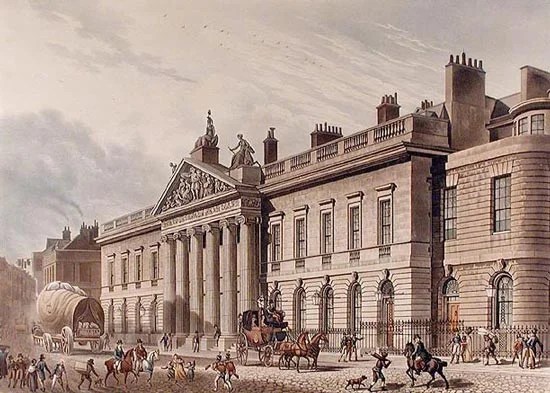
East India House in London, ca 1800

The East India Company was a joint stock company founded in 1600 and became one of the largest companies in the world. Tea was not their only commodity, however as they also traded spices, sugar, indigo, silk and much more. Parliament was heavily vested in the company’s success and began to enact laws that benefited the company. This included the Tea Act of 1773, passed to help the company divest itself of an over abundance of tea stored in its warehouses. The Crown and Parliament was worried that the prices of tea and the large supply would lead to serious financial strain on the company. The Tea Act also aimed to clamp down on the massive amounts of “illegal” tea that was being smuggled into the colonies. Some historians argued that men like John Hancock, who was deeply involved in smuggling, saw the Tea Act as his “rubicon” towards independence. He believed the act would impact his revenues via his smuggling. Now the American colonies were forced to purchase East India Company Tea (that could directly ship to the colonies) and which was taxed. Many colonial leaders saw this is as a backwards way to impose a tax without their consent and to force them to prop up a struggling East India Company

The road to revolution in the American colonies does not have a single starting point, but one could argue that 250 years ago the Tea Act was the last straw. It led to direct and open opposition (and destruction) of British rule and property in several ports along the Atlantic. These brazen “parties”, mainly the Boston Tea Party, led Parliament to pass the Coercive (Intolerable) Acts, which in turn united the various colonies like never before. Open armed conflict with Great Britain was just a year away.

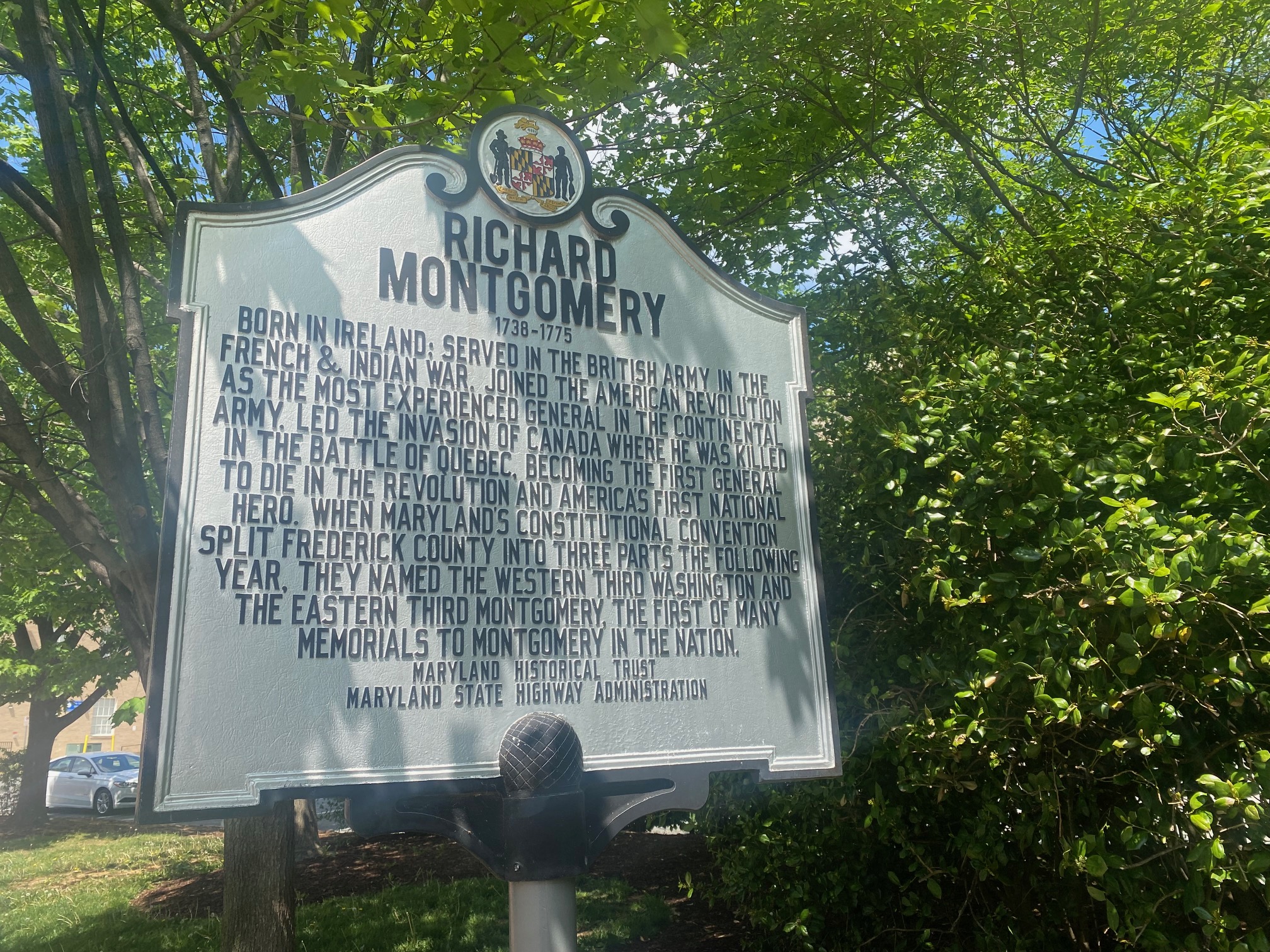
Montgomery County, Maryland

Tell me I am not the only one that randomly goes on a car ride to a random town in their home state to just “see what is there?”

Regardless, that is what I decided to do on a sunny late April Sunday afternoon. I ended up in Rockville, Maryland. The town astride I-270 today was also on a major thoroughfare during both the 18th and 19th centuries that brought armies from the area, like General Edward Braddock’s in 1755 or General Jubal Early’s in 1864.

However, a different historical sign attracted my attention on this excursion.

I read the title and the first line, Richard Montgomery…Born in Ireland. Served..” Which was all I could read as I slowly drove by, since it is near the court house and county government buildings. Even though it was a Sunday still not wanting to speed through. So…Naturally, I pulled over, as evidenced by the vehicle you see in the background!

I knew Montgomery, as the sign reads, died at the Battle of Quebec in a futile attempt to take the city for the American cause. He was the first general–Continental–to die in the cause of American independence.

On September 6, 1776 Thomas Sprigg Wootton, who hailed from Rockville, introduced legislation in the Maryland Constitutional Convention to separate the Frederick County into three. The upper or most western half, to become Washington County, named in honor of George Washington and the lower half, or most eastern, to be named Montgomery, in honor of Richard Montgomery. The remaining middle portion would retain the name Frederick. This may be the first recorded instance in the rebellious British colonies of names of counties, towns, or cities that did not refer to something in British history or famous persons. Another act of defiance at the beginning of the American Revolution!

With a random Sunday excursion one never knows what one will find. History is all around us, beckoning to be explored.

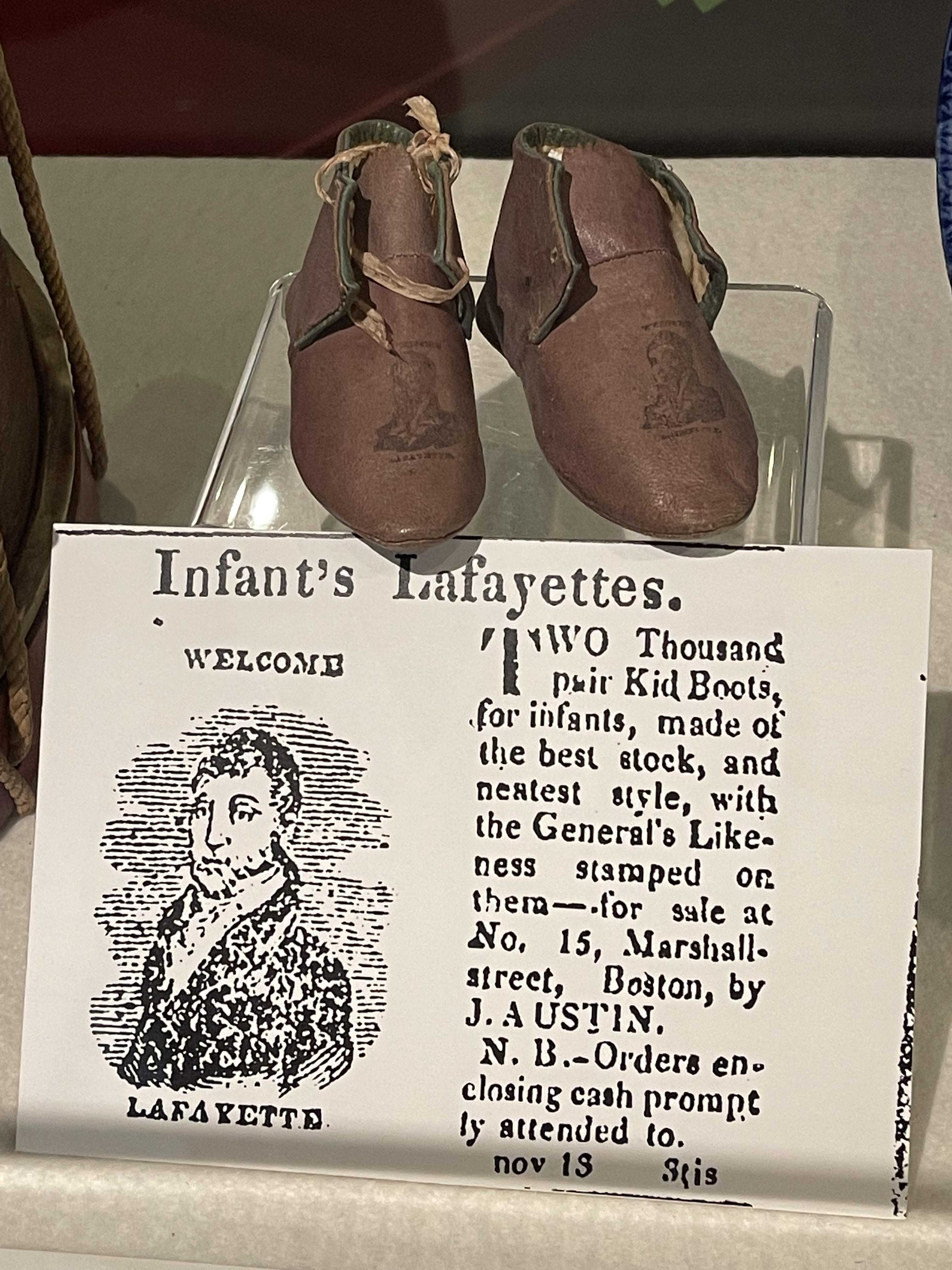
Air Lafayettes?

Emerging Revolutionary War thanks historian Christian Di Spigna for the picture.

With the release of the motion picture, Air, about the recruitment to Nike of Michael Jordan in the 1980s, Emerging Revolutionary War wanted to bring our readers attention to an older model of a shoe. That predates Nike by a century and a half. But, who knows, could come into vogue again right?

The Marquis de Lafayette returned to the United States in August 1824 to September 1825 and toured all 24 states at the time. Feted as a living link to the American Revolution and the independence movement, he was dined, celebrated, and asked to speak at many, many events. Commemorative items were created in his image and likeness, including, apparently a pair of shoes.

These shoes can be viewed today at Old Sturbridge Village in Massachusetts. A link to their website and to plan a visit can be found here.

Rev War Revelry Discusses NEW Emerging Rev War Book!

Charleston, South Carolina is one of the most beautiful and historic cities in the United States. Numerous sites, battlefields, and buildings from the period of the Revolution still exist.

Join us this Sunday at 7pm as we discuss ERW’s newest release “To The Last Extremity: The Battles for Charleston” by Mark Maloy. In To the Last Extremity: The Battles for Charleston, historian Mark Maloy not only recounts the Revolutionary War history of Charleston, he takes you to the places where the history actually happened. He shows you where the outnumbered patriots beat back the most powerful navy in the world, where soldiers bravely defended the city in 1779 and 1780, and where thousands suffered under occupation. Through it all, brave patriots were willing to defend the city and their liberty “to the last extremity.”

We will talk to Mark about his research, his favorite and most compelling stories and why this book is a “must have” for any history buff. Join us this Sunday, April 16 at 7pm on our Facebook page to join in on the conversation. As always, if you can not join us live you can catch the talk at any time on our You Tube or podcast channel.

Isaac Shelby State Historical Site

Entry to Traveler’s Rest. (Author Photo)

The American Revolution in the east has its share of founding fathers while war in the west has its share of legendary characters.  Few could claim to be both.  Isaac Shelby was born in western Maryland in 1750 and migrated with his family farther south and west in 1770, near Bristol Tennessee.  Shelby in Lord Dunmore’s War and became a surveyor for North Carolinian Richard Henderson’s Transylvania Company, created to secure land west of the Appalachians just before the American Revolution.  (Daniel Boone was the best known of Henderson’s surveyors).  

            When the Revolution broke out, Shelby served first with the Virginians and then accepted roles handling logistics for Virginians, Continentals, and North Carolinian units operating along the frontier. Organizational structures were fluid along the Appalachians, more often centered around communities and available manpower than formal state boundaries, and Shelby participated in a variety of actions against British and Loyalist forces in North and South Carolina.  The personal nature of the partisan conflict eventually led Shelby and others on the frontier, including John Sevier, to organize the so-called “Overmountain Men” in a pursuit of Loyalists led by British Major Patrick Ferguson.  The two sides eventually clashed in the Battle of King’s Mountain, a resounding victory for American forces in October 1780.

Continue reading “Isaac Shelby State Historical Site”

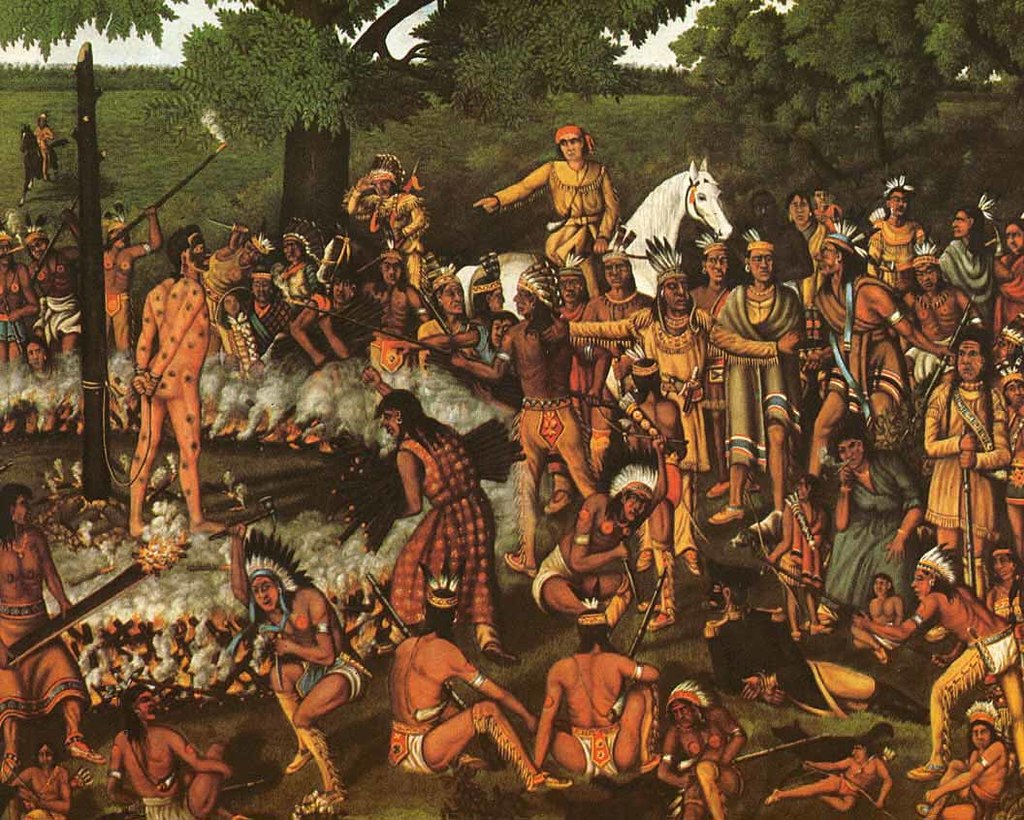
This Sunday’s Rev War Revelry: Battle of the Upper Sandusky, A Chat with historian and author Eric Sterner

In May 1782, Colonel William Crawford led over 450 volunteers across Ohio to attack British-allied Native Americans who had been raiding the frontiers of Pennsylvania and Virginia for years. An experienced yet reluctant commander, Crawford and his men clashed with a similarly sized force of British Rangers and Wyandot, Delaware, and Shawnee Indians on the Sandusky River in early June. After three days, the Americans were routed in one of the worst defeats American arms suffered on the frontier during the American Revolution. During the retreat, Native American warriors captured dozens of men, including Colonel Crawford. Many were horrifically tortured to death in revenge for the Gnadenhutten massacre earlier that spring, when American volunteers bludgeoned nearly one hundred unarmed and unresisting Delaware Indians to death.

Join us on our Facebook page this Sunday at 7pm for a recorded talk with historian and author Eric Sterner as he discusses Crawford’s Campaign and his new book “The Battle of Upper Sandusky, 1782” due out this spring. The talk will be availble on our You Tube page next week.

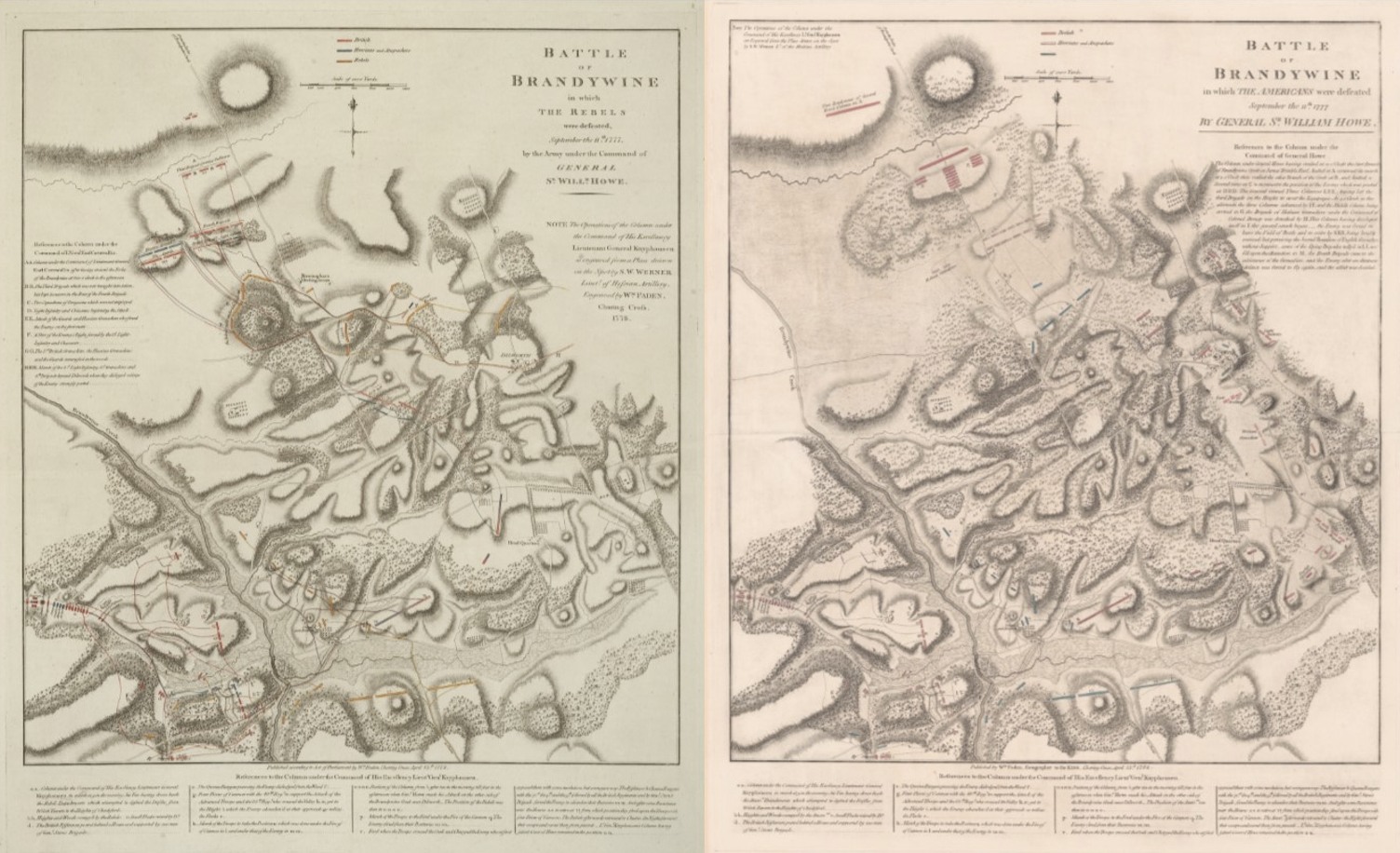
Rev War Revelry This Sunday: William Faden’s 1778 & 1784 Maps of the Battle of Brandywine with Andrew Outten

British cartographer William Faden is well known for his maps depicting major battles of the Revolutionary War. Unusually, he produced two maps of the Battle of Brandywine, one in 1778 and the other in 1784. Each map shows troop movements and positions along with other aspects of the overall battlefield landscape, but each conveys significantly different information.

Join us this Sunday night at 7p.m. on our Facebook page as we chat with Andrew Outten, historical programs manager for the American Revolution Institute of the Society of the Cincinnati. Andrew will discuss the Battle of Brandywine, key differences between the two maps, and recent discoveries pertaining to those differences. Should be a great night sharing new research so grab a drink and join us for our January 8th Rev War Revelry!

Jack Jouett, Jefferson’s Paul Revere, after the War

Jack Jouett House

Jack Jouett was Thomas Jefferson’s Paul Revere, most famous for riding pell mell through the night to warn Virginia’s governor in 1781 that Banastre Tarleton and his men were on their way to Charlottesville to capture the governor and Virginia’s General Assembly.  Given Tarleton’s reputation for speed, surprise, and route, Jouett had to ride down back roads and country lanes with low hanging-trees, cattle paths, and foot paths to get ahead of the British officer with enough time to warn Virginia’s government-in-exile.  https://emergingrevolutionarywar.org/2016/08/02/jack-jouett-midnight-rider-of-the-south/  Unlike Revere, whom the British famously captured, Jouett arrived in Charlottesville with enough time for Jefferson and most legislators to escape.

Read more: Jack Jouett, Jefferson’s Paul Revere, after the War
Jack Jouett House with earlier stone kitchen visible at the rear

            It’s a great story and Jouett makes it into standard biographies of Jefferson, histories of the war in Virginia, or campaign studies of Cornwallis and Tarleton.  But, Jouett’s story doesn’t end there.  Like many veterans—Jouett served in the Virginia militia—he headed west, over the Appalachians, in search of land and new opportunities.   The next year found Jouett in Kentucky County, Virginia.  Despite the bloodletting that went on in Kentucky during the Revolution, families continued to flock there.  Shortly after his arrival, he married, eventually fathering twelve children.  Given Kentucky’s exploding growth, the Virginia legislature divided Kentucky County into Lincoln, Jefferson, and Mercer counties and the people of Lincoln county elected Jouett as their representative in the Virginia General Assembly.  But, at heart, he remained a Virginia farmer, raising crops and livestock.  Sadly, he continued the practice of slavery, eventually owning twenty-five people.

Historical Marker at Jack Jouett House in Versailles, Kentucky

            In 1797, Jouett and his family bought a 530-acre farm in Woodford County and built one of Kentucky’s earliest brick homes, a step up from the log and stone buildings many settling the frontier built on their arrival.  Reflecting the period, it adopted design features from Virginia with a central hall and parlor and bedrooms in a half-floor attic.  The building included an earlier stone-walled kitchen built in the 1780s.  Jouett eventually moved away to Bath County in 1809 and died in 1822.  The house 1797 house, however, remains and was restored between 1972-1978 and opened for public tours in 1978.  Many of the interior contents are from the period and a small museum telling Jouett’s story in Virginia and Kentucky is in a separate building nearby.  It is not far from Lexington or some of Kentucky’s other Revolutionary War sites like Harrodsburg or Boonesborough.  It can be visited at:

Jack Jouett House Historic Site
255 Craig’s Creek Road
Versailles, Kentucky 40383
(859) 873-7902

It is best to visit the location’s website (http://jouetthouse.org) or call ahead for operating hours.

“Rev War Revelry”: The Saratoga Campaign

The Saratoga Campaign and Battle of Saratoga sit near the top of numerous “Turning Points of the Revolutionary War” lists. It is a story that has been told many times. New research has shed additional light on the campaign’s well-known and trivial parts.

Join Saratoga National Historical Park interpreter and historian Eric Schnitzer for Emerging Revolutionary War’s Revelry on October 2, 2022, at 7 pm to learn about new research being conducted about the campaign.

We hope you can join us on Sunday at 7 p.m EDT on our Facebook page for this historian happy hour.

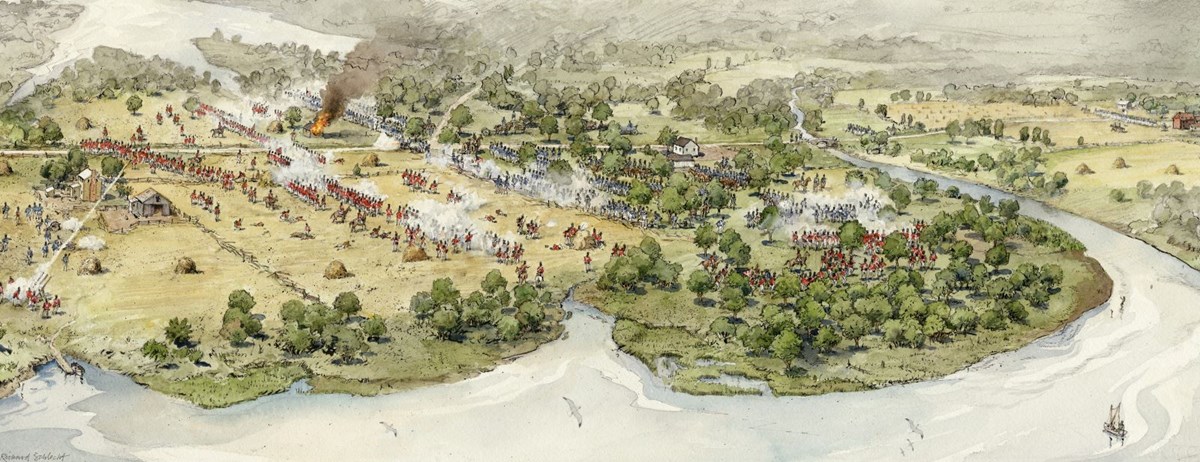
“Rev War Revelry” Battle of North Point

On September 12, 1814, approximately 4,700 soldiers, a mix of British infantry and marines, were landed on the North Point peninsula, a jut of land between the Back and Patapsco River and on a direct line of march toward Baltimore. While the infantry and marines advanced toward the city, the British Navy’s task was to subdue the American fortifications in Baltimore harbor. The latter was foiled by the stout defense of Fort McHenry which served as the backdrop for the future national anthem, the Star-Spangled Banner.

Less is known about the accompanying land engagement, fought at North Point between the British and American militia. That battle, which cost the life of Major General Robert Ross, the British commander, saw the American militia retreat, but in order, and stymied the initial approach of the British toward Baltimore. Furthermore, the battle gave the Americans more time to add to their defenses.

To shed light on this aspect of the Battle of Baltimore, Emerging Revolutionary War will be joined by two historians, both of who have worked on volunteered at Fort McHenry National Monument and Historic Shrine.

Jim Bailey is now the Chief of Visitor Services and Education at Manassas National Battlefield Park but is a former park ranger at Fort McHenry. The other guest historian is Chris Boyle who has been a National Park Service volunteer at Fort McHenry National Monument & Historical Shrine since 2005 in both the Fort McHenry Guard living history program and as an historical interpreter focusing on the Fort’s history from the War of 1812 through the Civil War. While not a native Baltimorean, he has called the city home for the last 20 years.

We hope you can join us on Sunday at 7 p.m EDT on our Facebook page for this historian happy hour.