“Rev War Revelry” The Winter that Won the War, Valley Forge

In June 1778, the Continental army marched out of their winter encampment in Valley Forge, Pennsylvania and headed toward New Jersey in pursuit of the retreating British army. The past six months, from December 1777 to June 1778, ushered in a period of suffering, renewal, and change.

Valley Forge is imprinted into the psyche of Americans as the the toughest winter of the entire American Revolution. In fairness, it was one of many tough winters that the Continental army survived. However, the reasons why this winter stands out will be part of the discussion of this Sunday evening’s “Rev War Revelry” which can be found on Emerging Revolutionary War’s Facebook page at 7 pm. EDT.

This week’s historian happy hour includes a discussion with Philip S. Greenwalt author of the recently released Emerging Revolutionary War Series title, The Winter that Won the War. This is the fourth volume in the series, with previous ones covering Lexington and Concord, Trenton and Princeton, and Monmouth.

Greenwalt will discuss how the Valley Forge winter was the intersection of various issues and how the decisions made and the determination of survival by the army made this the winter that won the war.

Tune in as well to hear how you can purchase a copy of this book to take with you as you plan that summer trip to Valley Forge and the Philadelphia area!

“Rev War Revelry” War on the Chesapeake!

The Star-Spangled Banner and the burning of Washington City are the enduring legacies of the 1814 Chesapeake Campaign. These two events provide contrasting impressions of the American experience in the War of 1812. One conjures up an image of an American flag resiliently flying above Fort McHenry’s ramparts, denying the British entry into Baltimore. The other marks a low point in the American war effort, when politicians fled the nation’s capital followed by British soldiers, who burned many government buildings in the new nation’s capital city.

War along the Chesapeake Bay was not a limited episode in the War of 1812. There, Americans and British soldiers waged a hard and destructive war against one another. They fought pitched battles at Bladensburg and North Point. This campaign, remembered in popular memory for the creation of a national anthem and the burning of a nation’s capital, is more complex than just these two events.

Join Emerging Revolutionary War historians and guest historians John Nathan McDonald and George Best as we discuss the causes, movements, and impact of the 1814 Chesapeake Campaign. So, with your favorite beverage log onto our ERW Facebook page for the next historian happy hour as we discuss the obscure War of 1812 this Sunday, May 30, at 7 pm.

North Carolina’s Regulators, the Battle of Alamance, and Public Memory

Emerging Revolutionary War welcomes guest historian Jeremiah DeGennaro, Historic Site Manager for Alamance Battleground

In the summer of 1773, Josiah Quincy made a trip to North Carolina. A well-known lawyer and Son of Liberty in Boston, Quincy headed south with the aim of gauging support for a coming revolution, and establishing correspondence with those who were “warmly attached to the cause of American freedom.” Quincy was received by many of the movers and shakers of North Carolina politics. The same men who hosted him—Cornelius Harnett, William Hooper, Robert Howe, and others—later became influential figures in the American Revolution. But upon his arrival, Quincy was quite curious about a different group of North Carolinians: the Regulators. Years before, this group of poor and middling farmers in backcountry North Carolina organized a grassroots movement that called for an end of government corruption, reformation of the rigged justice system controlled by elite “courthouse rings,” and progressive taxation in which citizens paid according to their wealth. At their peak they had thousands of supporters. Their detractors called it a rebellion. In 1773, it had been less than two years since they had been defeated at the Battle of Alamance by Governor William Tryon and his volunteer militia, the movement abruptly crushed. Quincy must have been curious about the motives of former Regulators as potential allies to what he called the “Cause of America.” How warmly attached to the cause of American freedom were they?

He spoke to three different sources, all with firsthand knowledge of events. He sat through a 3-hour lecture against the Regulators by Robert Howe, who commanded the artillery that devastated the Regulators at Alamance. The next day, Quincy met Colonel William Dry for breakfast. Quincy identified Dry as “a friend to the Regulators…he gave me an entire different account of things.” After hearing a few different accounts of the now-defunct Regulators, Quincy abandoned the topic, noting in his journal: “I am now left to form my own opinion.”

Continue reading “North Carolina’s Regulators, the Battle of Alamance, and Public Memory”

Hindsight is 2020 (or 2021)

Emerging Revolutionary War welcomes guest historian Liz Williams, from Historic Alexandria, the host of the second annual symposium

When we planned our 2nd Annual Revolutionary War Symposium for 2020, our theme came easily – Hindsight is 2020. Little did we know that our cheeky title would take on a different meaning as we had to navigate a global pandemic. But I am excited that we can still offer our symposium (yes 6 months later) and virtual!  In this format, we can zoom our experts to computers and smartphones across the country. And this year we have a great variety of topics – from Drunken Hessians to African American Continentals. Learn about Loyalists, battles in the Southern Theatre, and along a creek in southeastern Pennsylvania.

As we move toward the 250th anniversary of the nation, it is critical for us all to look with fresh eyes at our founding. At Gadsby’s Tavern Museum, we engage with the complexity and challenges of early America, many of which were rooted in what transpired before and during the Revolutionary War. By understanding our past, we can continue the work of creating a better United States for all.

The Symposium costs $40 per person, $20 OHA Members & Students and reservations can be made at AlexandriaVa.gov/Shop. Looking forward to seeing everyone on May 22!

North Carolina’s Response to the 1775 Battle of Lexington and Concord

Emerging Revolutionary War welcomes guest historian Travis Copeland

Rumors roared throughout the Colonies in the Spring of 1775. From Watertown, Massachusetts with an earnest pen, a letter was taken down at 10am on Wednesday Morning, April 19, 1775. Reports had been sent to New London, Rhode Island, and we’re beginning to extend south to the Carolinas. There were reports that, “action had happened between the King’s Troops and the inhabitants of Boston.” The shot fired in Lexington, Massachusetts on April 19 was “heard around the world,” and North Carolina would be no exception. The above, brief sentence recount of the battle was enclosed with the expanded statement,

To All Friends of American Liberty let it be known,

That this morning before break of day a [British] Brigade consisting of about one thousand or twelve hundred men landed at Phipp’s farm in Cambridge, and marched to Lexington, [Massachusetts] where they found a Company of our Colony Militia in arms upon whom they fired without any provocation and killed six men and wounded four others. By an Express from Boston we find that other Brigades are upon their march from Boston supposed to be about one thousand…I have spoken with several who have seen the dead and wounded.[1]

In the age of foot-speed news, a letter penned on April 19 could take weeks to reach the inhabitants of North Carolina. From the Massachusetts committee of safety, the letter was dispatched with earnest haste to Worcester and then beyond the Massachusetts borders. Connecticut, New York, and British Canada were given a recount of the events by April 25, although news by mouth spread as rapid as fire.[2] In the last week of April, no news had yet reached deep South. New Jersey and Maryland were informed by pen just before April became May, but the southern colonist was still much in the dark. Finally, on Friday, April 28th at 8pm colonists from Alexandria, Virginia sent the statement and letter to Fredericksburg and from there to Surry County, Chowan, and Onslow, North Carolina. A flurry of exchange between Virginia and North Carolina created a clamor. War! 

Each county repeated to the next, “disperse the material passages through all your parts.”[3] On May 3, Edenton and Chowan passed-on the news of the clash with his Majesty’s troops.[4] The delegates at Craven County received the news on May 6th. It was ordered that they, “in haste have sent to request you will pursue the enclosed papers and you will do by opening the packet herewith sent the moment it comes your house.”[5] No more important news than the coming of the Revolution, although unknown in the fullest sense, could create such an exasperated command. Yet, the Bath delegates were not done with their orders. They further demanded that Craven county, “get three or four of your Committee to write a line and send the whole enclosed to the next Southward Committee with the utmost dispatch.”[6]

The clamor of excitement came from a colony that was thought to be deeply sympathetic to the British. Regards for the crown were certainly present in the Southern colonies, but the circular letter’s earnest nature displays the patriotic fervor that ran through the colonists. Finally, the letter was directed to Abner Nash, who represented the provision rebel government in North Carolina. As the news reached the upper echelons of society, directions were given to extend the news to anyone using a horse or bearer.[7] Cornelius Harnett, prominent Patriot politician in Wilmington, directed those who would receive the letter to, “for God’s sake send the man on without the least delay and write…to forward it by night and day.”[8] Others shared Harnett’s tone, writing, “Pray don’t neglect a moment in forwarding” and “I cannot avoid writing to you to beg you to forward the Paper containing such important news and pray order the express you send to ride night and day.”[9] Finally, directions were given to move the letter to South Carolina, “to be forwarded to Charlestown.”[10]

Several weeks after the initial fury of letter exchange, another letter was written from Lieutenant Governor Bull of South Carolina to the Earl of Dartmouth. The provisional governor allied with the Crown reflected on the disposition of the Carolinas. Despite the growing desire to show British force against the rebellious colonists, Lt. Gov. Bull stated plainly that, “The account of the Skirmish or Engagement between the King’s Troops and the Provincials of Massachusetts near Lexington on the 19th of last month, seems to produce effects here [the Carolinas] very different from intimidation.”[11] The southern colonist of North and South Carolina would not be thrown back or made afraid by the acts of British commanders and their regulars in the North.

The Continental Congress would not be intimated. It’s North Carolina representatives William Hooper, Joseph Hewes, and Richard Casewell issued a circular letter which shared the tone of Lt. Gov. Bull’s correspondence. They stated plain, with the April 19, 1775 battles of Lexington and Concord in mind, 

Heaven seems to have assumed the protection of the injured insulted Colonists and signally to have appeared in their Favour: when in the last Battle at Lexington six hundred raw, undisciplined Provincials defeated eighteen Hundred regular Troops and pursued them into their Camp…It becomes the duty of us in whom you have deposited the most sacred trusts to warn you of your danger and of the most effectual means to ward it off. It is the Right of every English Subject to be prepared with Weapons for his defense. We conjure you by the Ties of Religion Virtue and Love of your Country to follow the Example of your sister Colonies and to form yourselves into a Militia. The Election of the officers and the Arrangement of the men must depend upon yourselves. Study the Art of Military with the utmost attention, view it as the Science upon which your future security depends.[12]

The colony of North Carolina and its leadership was moved by the initial recount of battle and the circular letter’s news of Massachusetts. The waters of Revolution were rising and the Patriot leaders were beginning to call for more than just a uniform exchange of words. They desired for the state to take its formidable place in as rebels in the South. Further, the flurry of response to the Lexington engagement shows the prominent place of North Carolina in the revolution from the earliest days. Leaders in the South did not wait until the war moved South in 1779, 1780, and 1781 to throw their pens, support, and persons behind the cause of Gen. Washington, the Continental Congress, and the New England colonies. North Carolina was revolutionary from the start.

Sources:

[1] “Letters Concerning the News of the Battle of Lexington in Massachusetts, April 20 – May 9, 1775,” Colonial and State Records of North Carolina, vol. 9, p. 1234.

[2] “Letters Concerning the News of the Battle of Lexington in Massachusetts, April 20 – May 9, 1775,” Colonial and State Records of North Carolina, Documenting the American South, https://docsouth.unc.edu/csr/index.php/document/csr09-0412. vol. 9, p. 1230-31.

[3] “Letters Concerning the News of the Battle of Lexington in Massachusetts, April 20 – May 9, 1775,” Colonial and State Records of North Carolina, vol. 9, p. 1236.

[4] “Letters Concerning the News of the Battle of Lexington in Massachusetts, April 20 – May 9, 1775,” Colonial and State Records of North Carolina,. 9, p. 1237.

[5] “Letters Concerning the News of the Battle of Lexington in Massachusetts, April 20 – May 9, 1775,” Colonial and State Records of North Carolina, vol. 9, p. 1237.

[6] “Letters Concerning the News of the Battle of Lexington in Massachusetts, April 20 – May 9, 1775,” Colonial and State Records of North Carolina, vol. 9, p. 1237.

[7] “Letters Concerning the News of the Battle of Lexington in Massachusetts, April 20 – May 9, 1775,” Colonial and State Records of North Carolina, vol. 9, p. 1238.

[8] “Letters Concerning the News of the Battle of Lexington in Massachusetts, April 20 – May 9, 1775,” Colonial and State Records of North Carolina, vol. 9, p. 1238.

[9] “Letters Concerning the News of the Battle of Lexington in Massachusetts, April 20 – May 9, 1775,” Colonial and State Records of North Carolina, vol. 9, p. 1238.

[10] “Letters Concerning the News of the Battle of Lexington in Massachusetts, April 20 – May 9, 1775,” Colonial and State Records of North Carolina, vol. 9, p. 1239.

[11] “Letter from William Bull to William Legge, Earl of Darmouth, May 15, 1775,” Colonial and State Records of North Carolina, Documenting the American South, https://docsouth.unc.edu/csr/index.php/document/csr09-0426. vol. 9, p. 1258-1260.

[12] “Letter from William Hooper, Joseph Hewes, and Richard Casewell to the Inhabitants of North Carolina, June 19, 1775,” Colonial and State Records of North Carolina, Documenting the American South, https://docsouth.unc.edu/csr/index.php/document/csr10-0011. vol. 10, p. 20-23.

Travis Copeland is a North Carolina native with a love for early American history. He holds a B.A in History and Humanities and is studying for a postgraduate history degree. His research interests include North Carolina history and the early southern United States from the Revolutionary War to the Civil War with a particular interest in military conflict, political-social integration, and local history. When not researching and writing, he enjoys teaching, the outdoors, gardening, and good food and beer. Travis lives and teaches in North Carolina.


“I gave my parole once…”

On the morning of August 27, 1780 there was a knock on the door of the Charleston, South Carolina residence of Christopher Gadsden, lieutenant governor of South Carolina. He had stayed when the city capitulated to British forces in May. Gadsden had represented the civil government and handed the city over to the British commander, Sir Henry Clinton. He was released on parole.

Christopher Gadsden

Now, approximately three months later, Clinton was back in New York, and the new British commander Lord Charles Cornwallis had reneged on the parole agreement. Along with another 20 civil officers, Gadsden was led through the town to the docks to a waiting ship, set to sail for St. Augustine in British East Florida.

Upon arrival in the oldest city in European North America, Gadsden was given the opportunity by Governor Tonyn to avoid incarceration in Florida. This is when the 56-year old patriot probably uttered the phrase below.

“I gave my parole once, and it has been shamefully violated by the British Government: I shall not give another to people on whom no faith can be reposed.”

With that decision, Gadsden landed himself in Castillo de San Marcos the large coquina stone fortress that stood guard over St. Augustine. Not only was the South Carolinian kept in a cell, he was kept in solitary confinement for the next 42 weeks!

Upon his release in September 1781, Gadsden and the rest of the civil prisoners were sent by merchant vessel to Philadelphia. Gadsden wasted no time in hurrying southward to South Carolina and a return to the state House of Representatives. He served in various political roles, although he had to decline the governorship because of the affects of his imprisonment. He died in 1805. A grandson, James Gadsden would give his name to the Gadsden Purchase.

Gadsden was held in the cell to the right
(author photo)

Today one can visit Castillo de San Marcos, a national park unit within the National Park Service. When touring the Castillo you can view the cell where Gadsden spent his solitary confinement and read the accompanying exhibits.

The First American Civil War

Emerging Revolutionary War welcomes guest historian Sean Chick

On October 7, 1780, Britain’s attempt to regain at least part of the rebellious North American colonies was dealt a major blow at King’s Mountain. The rebels rejoiced, since it was their first major victory since 1777 and it came after the twin disasters at Charleston and Camden. Thomas Jefferson, then governor of Virginia, considered it the decisive battle of the war. Years later, Theodore Roosevelt echoed that sentiment. In 1930, when the site was set to become a national park, Herbert Hoover gave a speech. For the embattled president, it was an attempt to shore up his falling support and vindicate his strategy to peel southern states away from the Democratic Party. Hoover said “This is a place of inspiring memories. Here less than a thousand men, inspired by the urge of freedom, defeated a superior force entrenched in this strategic position. This small band of Patriots turned back a dangerous invasion well designed to separate and dismember the united Colonies.”

Hoover, understandably, never mentioned the atrocities committed. Many were executed after the battle. Nor did he mention that King’s Mountain was not a contest between redcoats and rebels, but brother against brother. The only British man present was Major Patrick Ferguson. His command was made up entirely of Loyalists. His second in command, Captain Abraham de Peyster, was from New York City.

Joseph Galloway
(courtesy of NYPL)

Few groups in American history are as forgotten as the Loyalists and few were as complex. They were a varied lot, often making up the highest in colonial society, including wealthy merchants and colonial officials. They often included the very lowest in the society, such as recent immigrants, slaves, indigenous, and subsistence farmers. Their ideology was in many ways not radically different from those who rebelled. They were generally not in favor of absolute monarchy or the supremacy of Parliament but simply favored union with Britain and slow reform. A few, such as Joseph Galloway, were part of early protests against British colonial policy, but were unwilling to jump into the chasm of revolution. Some, such as South Carolina merchant David Fanning, were merely aggrieved and sought to settle scores. Others were on the margins of society and saw the colonists, or at least the revolutionary colonial elite, as their real oppressors.

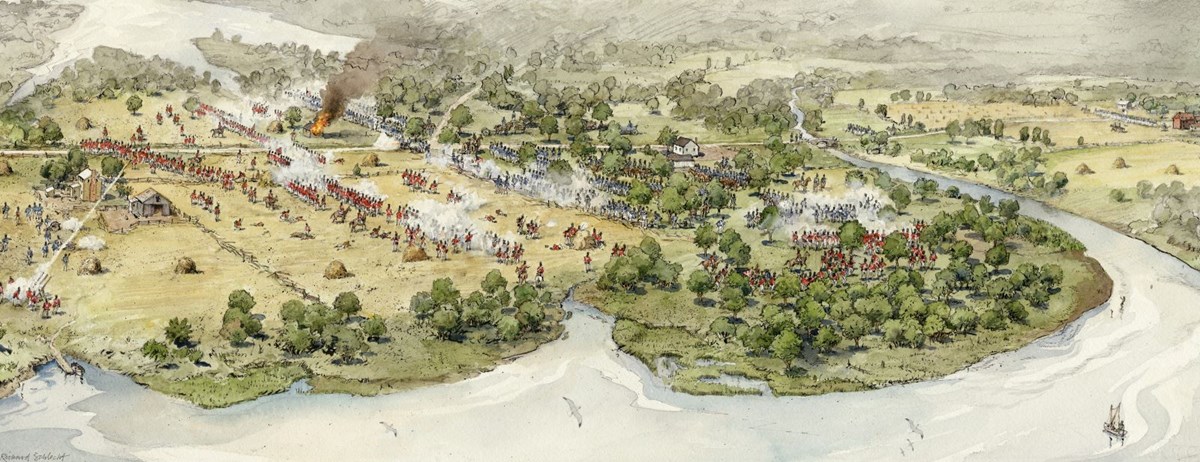
The Loyalists were at first spurned by the British high command. Major General William had over 30,000 men under his command in 1776 and Loyalists would have added to the logistical strain. He also thought a soft war policy that he hoped would induce the colonies to return, and therefore it was reasonable to avoid civil war. Yet, by 1777 the British were using some Loyalist regiments. They would fight in John Burgoyne’s ill-fated drive on Albany and served as rangers at Brandywine.

Continue reading “The First American Civil War”

The Battle of Moores Creek Bridge: How Three Minutes Affected Three Years of War Strategy

Did the Battle of Moores Creek Bridge help keep the British away from the southern colonies during the first half of the war?

Months before its colonies officially adopted their Declaration of Independence, the British army was reaching a critical juncture in its war strategy: with the colonies in rebellion, where should they focus their attentions? The war was picking up steam and the British were looking for a stronghold in the colonies that would gain them resources such as men and supplies. They turned their eyes south.

The general impression of the southern colonies was that they were poorer and weaker than their sister colonies in the north. They also had been receiving word of heavy Loyalist sympathies in both the backcountry of South Carolina and the coastal areas of North Carolina, where large populations of German and Scottish immigrants had settled. Indeed, by the fall of 1775, Loyalist recruitment seemed to be quite successful. One evidence of this was at the First Battle of Ninety Six in November 1775, when nearly 2,000 Loyalists met a paltry force of not quite 600 patriots. Though this first Revolutionary War battle south of New England ended in a truce, British confidence was high.

The Royal Governor of South Carolina, Lord William Campbell, had fled the colonies by September 1775, leaving the colony mostly in the hands of the Patriots. That made the ultimate goal at this point in the southern colonies to capture the wealthy and strategic port of Charleston, South Carolina. Meanwhile, the Royal Governor of North Carolina, Josiah Martin, convinced British commanders to target key points along their route through his colony as they advanced on their mission. And as 1775 turned into 1776, plans were set in motion.

On January 10, Martin issued a proclamation calling on all subjects loyal to the Crown to take up arms against the rebellion in the colony. Authority was given to Loyalist leaders throughout the colony to recruit militia and gather all necessary provisions to muster in Brunswick, NC.

A copy of Josiah Martin’s Proclamation from January 10, 1776.
Library of Congress.

By mid-February, a contingent of several thousand loyalists was gathered at Cross Creek, NC, preparing to march towards their goal. Among those recruited were the famed Scotch Highlanders. Though not all joined the Loyalist cause, the Highlanders’ reputations as fierce warriors preceded the impending war in the colonies. This reputation may have stemmed from the Jacobite rebellion in the 1740s as well as British assumptions at the time that the HIghlands were a lawless land due their clan-based culture.

Loyalists weren’t the only militias stirring along the Carolina coast. Patriot militias had begun forming at the first news of Loyalists gathering as early as August 1775. In fact, some of those militias formed in Wilmington, NC became the foundation of the 1st North Carolina Regiment of the Continental Army and in February 1776, they were led by Colonel James Moore. At that time, they were joined by additional militiamen from the surrounding area, led by Alexander Lillington and Richard Caswell. Their goal was two-fold: protect Wilmington and prevent the Loyalist forces from reaching the coast.

By February 20, 1776, a clash between the British and Patriot forces was inevitable. British commander Donald MacDonald began to move his 1,600 men from Cross Creek towards his rendezvous point at Brunswick, only to find his way impeded along the Black River by Caswell’s blockade. On February 25, MacDonald had managed to get across the river and Caswell moved his 1,000 Patriots back to Moores Creek Bridge. There they set up defensive earthworks, prepped their two artillery pieces, and prepared for battle.

A map of the Moores Creek campaign, February 1776.
NPS/Moores Creek National Battlefield.

At 1:00 am on February 27, 1776, MacDonald’s second-in-command, Donald McLeod, led the British troops on their march towards the Patriot position. Arriving at an abandoned camp on the west side of the bridge around 5:00 am, a brief exchange of fire alerted the Loyalists to the Patriot sentries guarding the bridge, and ultimately, the Patriot forces lying in wait. 

McLeod with 50 men attempted to cross the bridge and attack the Patriot defensive position, but the attempt was futile and disastrous. Heavy musket fire coupled with a barrage of two artillery units killed 30 almost immediately, including McLeod. The remaining Loyalists quickly retreated and the battle was over almost as quickly as it had begun.

Bill Ballard’s drawing of the decisive moment during the Battle of Moores Creek Bridge.
NPS/Moores Creek National Battlefield.

So how important were these three approximate minutes of battle? This Patriot victory struck a huge blow to Loyalist recruitment in North Carolina – so much so that two months later, North Carolina’s delegates to Continental Congress were the first to vote for independence. And it created a rippling effect throughout the southern colonies, as one by one the royal governors were displaced and revolution took hold. 

No longer could the British see the Carolinas as easy targets. They abandoned this initial southern strategy to focus their resources on the war in the northern colonies. For the next three years, significant battles and events that we learn about today took place, thanks in part to the dominating Patriot showing at the Battle of Moores Creek Bridge.


If you’re interested in learning more about the Battle of Moores Creek Bridge, I strongly encourage you to visit Moores Creek National Battlefield’s website as well as their very active Facebook page. Both offer a wealth of information and additional resources for folks to explore.

Lieutenant CFighting between soldiers from Tarleton's Legion (British) and Morgan's Army (American Continental).

Life Lessons from the Battle of Cowpens

Two hundred and forty years ago, January 17, 1781, Brigadier General Daniel Morgan strategically manuevered his Colonial forces to defeat the British, led by Lieutenant Colonel Banastre Tarleton, at the Battle of Cowpens.

What can we learn from the Battle of Cowpens? Military strategy, yes. Historical knowledge, absolutely. But as we near the 250th commemoration of the American Revolutionary War, how do we turn the battle into relevancy for today’s modern society?

As historians, we can find meaning and connection to places and events at their face value. It’s a natural ability we have ingrained in our knowledge-seeking souls. What about those that can’t and don’t? How do we make them relevant to them so that our history is not forgotten?

The answers lie in the stories we tell and how we tell them. Instead of rehashing the specific details of the Battle of Cowpens, I’m going to try something a little different: think of a time when you were able to not only prove that someone’s opinion of you was wrong, you used it to your advantage to achieve a goal. Go ahead, I’ll wait.

Now recall that a key element of Morgan’s strategy was his use of the British underestimation of the Colonial militia forces. Before the Battle of Cowpens, Tarleton, like many British commanders, believed that the militia were mostly untrained or inexperienced civilians that would flee in face of a real battlefield. To be fair, this was witnessed at several battles (Battle of Camden on August 16, 1780 immediately comes to mind) so it’s a fair assessment.

Using this knowledge to his advantage, Morgan set a trap. Putting his militia front and center of his second battle line, he ordered them to fire off two volleys at the oncoming British before falling back. The perspective fueled the British assumption that the militia were fleeing the battlefield, and Tarleton drove his men forward… and right into Morgan’s trap.

Fighting between soldiers from Tarleton’s Legion (British) and Morgan’s Army (American Continental)
by Don Troiani. NPS Commissed Artwork.

Perhaps if Tarleton had not underestimated the militia, he would not have found himself in the only successful double envelopment in the American Revolution. But more to the point, Morgan took strategic advantage of the British perception of the militia’s capabilities.

While this battle’s lessons learned are easily applied to modern military education, how can we apply them to our everyday civilian life, particularly the lesson that comes from Tarlton’s mistake and Morgan’s strategy relating to the militia? The motto “never assume” comes to mind first. At the very least, it compels the message “Don’t let what other people may or may not think of you prevent you from achieving what matters most to you.” I personally like the potential of “If someone doesn’t see value in your abilities, prove them wrong.”

What life lesson do you pull from the battle’s story?

“they have totally destroyed it…” The Chickahominy Shipyard

Emerging Revolutionary War welcomes back guest author Drew Gruber.

Since Arnold’s raid in January the situation for Virginians in the Spring of 1781 was deplorable and growing worse. Keeping soldiers shod and fed (besides properly armed and equipped) proved difficult. For example, Gen. Baron von Steuben noted that despite receiving 100,000 cartridges the Virginians simply lacked cartridge boxes to store them or even an adequate number of muskets to fire them. In Virginia, a colony defined by its deep waterways finding vessels to move men and supplies was also a major piece of the puzzle. 

The Chesapeake Bay and navigable rivers provided quick access into the interior of Virginia and both sides vied to control them. Previous campaigns in Virginia and along the Bay highlighted why towns like Portsmouth, near the confluence of the James River, and the Chesapeake Bay could help armies control large swaths of the largest and most prosperous colony. Of course, access to vessels of a variety of sizes was necessary to ensure the control of not only Virginia but Coastal North Carolina and Maryland. 

Gloucester Point 1755, inset from original owned by the Mariners Museum.

Thankfully by March 1781 Virginians had an upper hand over their adversaries not only in the number of boats but the means to outfit, repair, and support an ad-hoc navy. It was the culmination of years of effort and ingenuity which began just after Virginia declared its independence. 

Alongside Virginia’s establishment of a system of public stores and the creation of a standing army a shipyard was on the short-list of priorities for the fledgling independent state. In June 1776 the Virginia Committee of Safety empowered shipbuilder John Herbert to “examine all such places upon the James River or its branches…proper and convenient for erecting ship-yards…”1 Herbert selected a bend in the Chickahominy River just a dozen miles west of Williamsburg. 

The Virginia State Navy appears to have been amorphous and inconsistently armed between June 1776 and the spring of 1781. At various points it consisted of about a dozen ships, although the term ‘ship’ may be generous descriptions for some of these vessels.2 According to Charles Paulin’s Navy of the American Revolution despite Virginia leadership’s zeal to fund additional ships, marines, and infrastructure to support coastal defense, the vessels were largely undermanned and poorly armed. To our modern sensibilities and perhaps to the men and women of the Revolutionary era the names of the “armed boats” which comprised Virginia’s navy are less than inspiring. For instance, the ships Experiment and the Dolphin don’t give off an air of martial prowess but still sound better when compared to my personal favorite, the Fly

Still, the Virginia General Assembly pushed to create and maintain a more effective naval system and in 1777 appointed James Maxwell as Superintendent. He apparently oversaw the operation at the various shipyards, rope works, foundries and all the materials and men needed to create and maintain an effective navy. Maxwell’s base of operations at the Chickahominy yard included over 150 acres of stores, barracks, and other infrastructure essential to the maintenance and creation of a vast flotilla. 

Although the Chickahominy yard was ably led and with copious old growth timber at their disposal the lack of manpower persisted. Maxwell reported to Virginia’s Gov. Jefferson that in outfitting two vessels they relied on volunteers.3 In the same letter to the governor, Maxwell noted that the term of service for the crew of the Jefferson expired and he was “detaining them Against their will.” Despite setbacks and the shortage of able bodies the shipyard kept Virginia float. 

The information available in the papers of Williamsburg Public Store and the Calendar of State Papers provides a snapshot into the day-to-day operations in the naval yard.4 However, a letter written in February 1781 provides the best insight into the effectiveness of the operation. Capt. Beesly Edgar Joel wrote Gov. Jefferson from Williamsburg commenting that the Dragon (a much better name) was under water rendering it, obviously, unfit for service. Within five days it was floating and on day six was sailing down the James River.5 In an era obviously devoid of pneumatic lifts this quick turnaround speaks volumes as to the facility’s capabilities despite its handicaps. 

Early American Shipyard, image from Abbot’s 1908, “American Merchant Ships and Sailors.”

Maxwell’s operation at the Navy Yard grew slightly by March 1781 as the state prepared for what was certain to be an intense spring campaign. Maxwell reported that he had 96 guns with the majority being four pounders but lamented that his full compliment of sailors should be 590 whereas he had 78 men to staff 7 ships. Two additional ships were ready but had no crew to speak of while 4 of his operable boats had less than 10 men serving on them.6 This would have to suffice. 

That same month, reports flooded into Richmond from various points near the Chesapeake Bay that British reinforcements had arrived in Portsmouth to support Arnold. Within a few short days various Virginia arsenals, warehouses, and even shipyards were being instructed to police up their men and materials and move them west out of the possible path of destruction. Virginia could not afford another disastrous raid like the one they experienced in January. 

As predicted, British Gen. Phillips left Portsmouth on April 18th, with over two dozen boats and approximately 2,000 men. It happened quickly. Virginian Rodham Kenner recalled their retreat as Phillips combined force sailed west up the James River. 

“the whole of our little fleet which was in this part of the Bay was driven up James River a much Superior British force, and into the Chickahominy River to what was called the Ship Yard: whilst our little fleet composed of the following Vessels to wit the Ship Dragon, the Brigg Jefferson and the Thetis a 36 gun Ship”7

The following morning, on April 19, British Col. John Simcoe landed at Burwell’s Ferry with a force of Jagers, light infantry and the Queen’s Rangers. The Ferry, located at the confluence of the James and Chickahominy rivers sat scarcely a few miles from Maxwell’s shipyard. Phillips ordered Simcoe to “beat up any party who might be in ambuscade there.”8 Finding no ambush this elite force quickly marched across the Virginia Peninsula towards Williamsburg. 

Burwell’s Ferry Landing, photo from “The Post Script” published in April 2020 by Kate Gruber

A small force of Virginians, apparently under the command of Maj. Armistead briefly skirmished with Simcoe’s men as they pushed east towards Williamsburg.9 Simcoe’s men continued east along the old Yorktown road as various Virginia militia units melted away before them eventually arriving in Yorktown itself. As this was unfolding British Lt. Col. Robert Abercromby (Ambercombie) with his light infantry paddled up the Chickahominy towards the shipyard. Over a dozen flat boats, supported by perhaps as many as a dozen additional vessels turned into the mouth of the Chickahominy River from the James River – a few miles of the shipyard. 

Although few primary source accounts describe the British attack on the shipyard Virginia pensioner Joseph Saunders provided the best description so far. Although he was recalling the event almost fifty years after the fact, his deposition has a surprising amount of detail. 

“They sent a number of gun boats up to our shipyard to destroy what was there. I had filled my galley with naval stores to take up the River to conceal them but wind and tide being against me could not go on, came to, put a spring on my cable, and awaited their arrival. It was not long before they came in sight and as soon as near enough I discharged my cannon at them, sunk my vessel, and made my escape to shore…”10

Arnold’s report to Henry Clinton is rather vague as was Virginia’s Lt. Governor David Jameson when he wrote James Madison seven days later on April 28. “When they went into Wbg some of their Vessels with the flat Bottomed Boats moved up to Chickahominy—while there they destroyed the Ship Yard, the Thetis, the Stores &c. &c.”11 Besides untold stores, and raw and finished materials, at least two large vessels were destroyed, either at the hands of their own crew or Ambercromby’s amphibious infantrymen. Besides the limited contemporary reports from soldiers, sailors, and Virginia legislators, myriad archaeological reports highlight the effectiveness of the British raid.

The inferno of the burning yard, ships, stores, and supplies was so large that it could be seen several miles away later that evening. James Innes, commanding Virginia militia who were fleeing west towards New Kent County, recalled in his letter to Thomas Jefferson that, “They possessed themselves of the Ship Yard about 4 o’Clocke yesterday, and I am apprehensive from the fire discoverd in that Quarter last night they have totally destroyed it.”12 

According to William Lowrie, the Dragon was “burnt by the British at Chickahominy Ship yard.”13 Both Lowrie and Saunders have ties to the Dragon and it must have been difficult to watch the ship which had served the cause of liberty for almost five years slip beneath the surface. In fact, The Dragon was approximately 81 feet long and roughly matches the size of a one of the two vessels still sitting in the bottom of the bottom of the Chickahominy River today.14 The second vessel which has also been surveyed in myriad cultural resource reports is substantially shorter and has been hypothesized to be either the Lewis or Safeguard.15 In fact, on March 20th 1781 Saunders was placed in command of the Lewis which he scuttled almost a month later a few yards from the wharf at the shipyard.16 


Artist interpretation of vessel Remains, “Historical and Arcehaological Investigation of the Chickahmoiny Shipyard Site,” a thesis by Jeffrey D. Morris, C. 2000., Pg. 109

Today the site of the shipyard is on private property and the underwater resources are protected by the Code of Virginia § 10.1-2214 which empowers the Virginia Marine Resources Commission with the authority to permit underwater archaeological investigations and makes recovery of underwater archaeological materials illegal without a permit. Trespassing on both land and water is unlawful which helps protect the known and unknown archaeological resources. Without stronger primary source materials like pensions, maps, and letters from soldiers and citizens artifacts become the key to understanding many Revolutionary War events like this one. Every button, nail, and cannonball when professionally recovered and systemically documented will provide us with the best chance to fully understanding how this shipyard contributed to the war for American independence.17

Maxwell’s shipyard never recovered however the Virginia State Navy has escaped wholesale destruction and would live to fight another day. As Phillip’s soldiers and sailors moved west up the James River, with the smoke from the Shipyard bellowing another naval showdown was brewing closer to Richmond.

Sources:


  1. Naval Document of the American Revolution, Page 342
  2.  Paullin, Charles O., Navy of the American Revolution. (1906). Page 413
  3. “Capt: Jas: Maxwell to the Governor, January 1, State Ship Yard.” Calendar of Virginia State Papers. Vol. 1., Page 409. 
  4. Williamsburg Public Store records, transcribed by Katherine Egner Gruber. Unpublished. 
  5. “B. Edgar Joel to the Governor, February 9, Williamsburg.” Calendar of Virginia State Papers, Vol. 1., Page 501. A day later, after hiring a pilot the Dragon ran aground and sat on the bar for three days and returned to the ship yard. 
  6. “To Thomas Jefferson from James Maxwell, 26 April 1781,” Founders Online, national Archives, last modified November 26, 2017
  7. Rodham Kenner S1228 transcribed by Will Graves http://revwarapps.org/s1228.pdf
  8. “Simcoe’s Military Journal…By John Graves Simcoe.” Bartlett and Welford, NY, 1844. Page 191
  9. This may refer to William Armistead. 
  10. Joseph Saunders 217073 Transcribed by Will Graves. http://revwarapps.org/s17073.pdf
  11. “To James Madison from David Jameson, 28 April 1781,” Founders Online, National Archives, https://founders.archives.gov/documents/Madison/01-03-02-0044
  12. To Thomas Jefferson from James Innes, 22 April 1781,” Founders Online, National Archives, https://founders.archives.gov/documents/Jefferson/01-05-02-0658
  13. William Lowrie VAS986 transcribed by Will Graves. http://revwarapps.org/VAS986.pdf
  14. American War of Independence At Sea. Accessed on April, 5, 2020. https://awiatsea.com/sn/va/Dragon%20Virginia%20Navy%20Ship-Galley%20%5bCallender%20Markham%20Singleton%20Travis%20Chandler%20Joel%5d.html
  15. National Register of Historic Places. Nomination. 6/28/79. https://www.dhr.virginia.gov/wp-content/uploads/2018/04/047-0078_Chickahominy_Shipyard_AE_Site_1979_Final_Nomination_REDACTED.pdf
  16. A letter from Thomas Jefferson to Benjamin Harrison on April 22nd notes the two ships in the Chickahominy as the Lewis and Safeguard
  17. To find out more about underwater archaeology check out the Maritime Heritage Chapter of the Archaeological Society of Virginia.  https://maritimeheritageva.org/