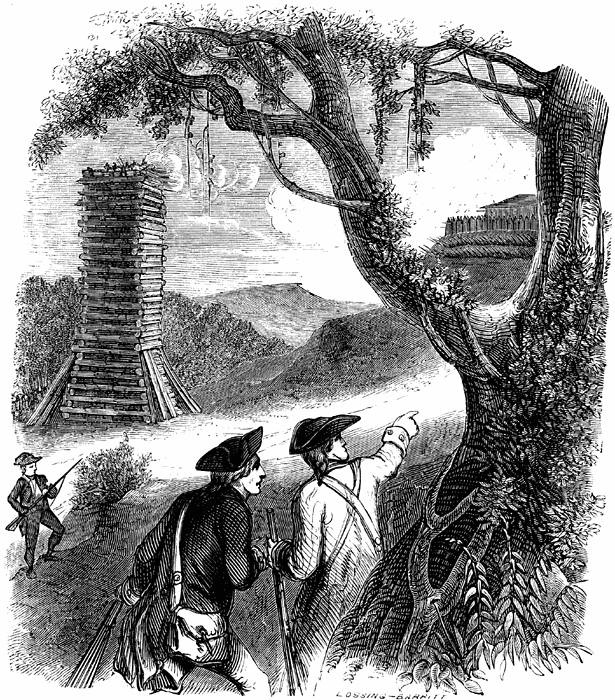
Join us as we welcome back Dr. Steven Smith as he discusses his new book “The Battles of Fort Watson and Fort Motte, 1781.”
Dr. Smith will discuss the history of four critical weeks from April 12 until May 12, 1781, in which the tide of the Southern Campaign of the Revolutionary War turned in favor of the Americans. Focusing on General Francis Marion’s and Colonel Henry Lee’s capture of two key British forts, Fort Watson and Fort Motte, coordinating with Nathanael Greene in retaking the South Carolina backcountry. These posts defended the supply line between Charleston and the British-occupied villages of Camden and Ninety Six. Although there would be much more fighting to do, once the two forts were lost, the British had to abandon the backcountry or starve. The British would never again be on the strategic offensive and were confined to the Charleston environs until they abandoned the city in December 1782.
Smith will also discuss how archaeological investigations have helped change the interpretation and mythology of both battles. Join us for a livestream on our You Tube channel in what will be a great discussion. The video will be posted to our Facebook page at its conclusion
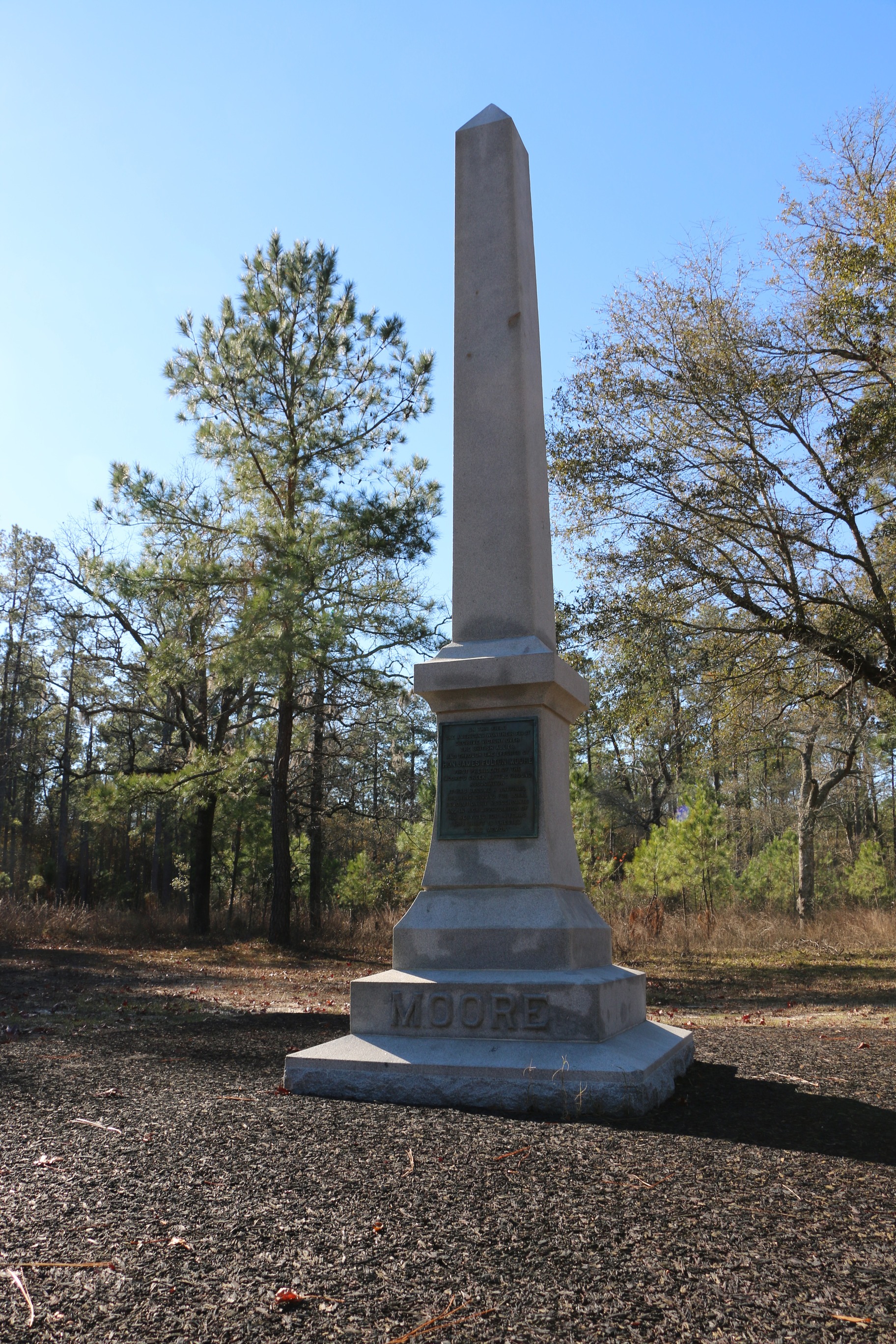
On February 27, 1776 Patriot and Loyalist forces faced off at Moores Creek Bridge in southeastern North Carolina. Loyalist forces anticipated support from a British army arriving along the North Carolina coast and planned to use this combination force to return British authority in North Carolina. Though, when help did not arrive, a mixed bag of North Carolina Patriots turned back an attack at Moores Creek Bridge. Their victory, combined with the Patriot victory at Great Bridge, VA in December 1775, solidified their control of North Carolina. Additionally, the Loyalist defeat served as a major deterrent for Loyalist support until the opening of the Southern Campaign four years later. This small action had long lasting impact on the entire war in the south.
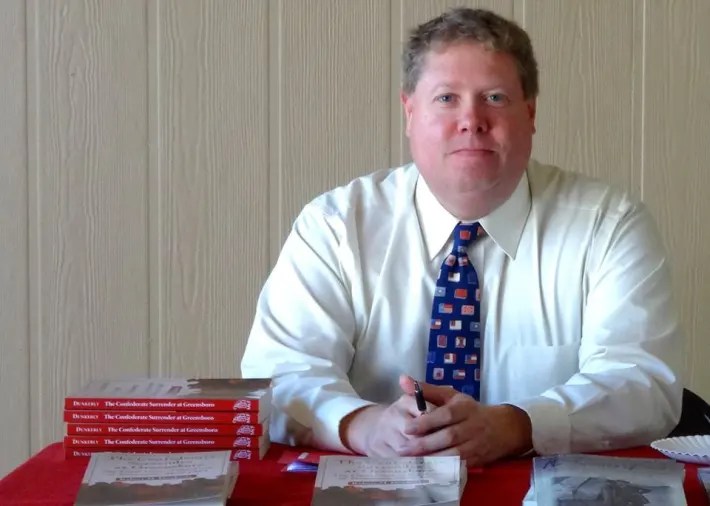
Join us this Sunday night at 7pm on our You Tube Channel ( https://www.youtube.com/@emergingrevolutionarywar8217 ) as we welcome back our own ERW historian Bert Dunkerly. Bert has extensive knowledge on the history of this battle and experience working at the battlefield itself. We will discuss the complex situation leading up to the battle and how this small battle changed the war strategy in the south. Grab a drink and join in on the discussion!
Emerging Revolutionary War welcomes guest author Michael Aubrecht
At the time of the Revolutionary War it is estimated that there were over a half million African-Americans living in the thirteen colonies. As the rebellion’s patriotic call to fight for liberty grew, the British government sought to undermine the expanding Continental Army by soliciting slaves who ran away from their masters. By promising to grant them their freedom and security, the Redcoat ranks were able to boost their manpower on the battlefield instead of constantly relying on the importation of additional troops who took months to travel to the Americas from England. Some of these all-black units even flourished as in the example of the Royal Ethiopian Regiment and later, the Black Pioneers.
According to the Atlantic Canada Virtual Archives Website Black Loyalists in New Brunswick: “In November 1775, Virginia Governor Lord Dunmore, hoping to bolster the British war effort, encouraged slaves and indentured servants of the Patriots to join His Majesty’s army. Many did so. When the British evacuated their army from Boston to Halifax in 1776, a “Company of Negroes” was part of the entourage. British Commander-in-Chief Sir Henry Clinton extended the policy of appealing to African Americans in his Phillipsburg Proclamation of 1779 in which he offered security behind British lines to ‘every negro who shall desert the Rebel Standard.'”
Following the British Army’s surrender, it is estimated that nearly 35,000 loyalists fled the United States to settle north in the provinces of Canada including the maritime regions of New Brunswick and Nova Scotia. Nearly 3,500 free black loyalists were among them including many who had fought alongside the Redcoats on behalf of the English crown. New Brunswick saw thousands of African-Americans settle in as new citizens and many went on to fight again for Britain in the War of 1812. Despite their service to the king, many black loyalists and their families still faced racial discrimination, although it paled in comparison to the institution of slavery that continued to thrive in the southern United States.
Michael Aubrecht is the author of Thomas Jefferson and the Virginia Statute for Religious Freedom: Faith & Liberty in Fredericksburg.
Amid the hot weather of June 28, 1778, the British army under General Henry Clinton battled General George Washington’s Continental Army in the fields outside Freehold, New Jersey. The Battle of Monmouth Courthouse ranks as the eleventh deadliest battle of the Revolutionary War, claiming at least 700 casualties between the two armies. While the armies moved on after the sharp fight, the citizens of Freehold were left to deal with the battle’s aftermath.
Below are excerpts from two letters written by citizens of Freehold in the immediate aftermath of the battle that describes the toll the armies and battle took on their homes.
An unidentified “young gentleman, an inhabitant of Freehold,” penned the first letter on June 29, 1778. This citizen marched during the battle with Nathanael Greene’s troops, who only arrived on the battlefield proper near the end of the fight. Thus, he could “form an idea of the particular movements of the…engagement only from the dead…” There was abundant evidence provided by the corpses on the battlefield as the British “left very many dead upon the field of action…” Beyond the furrowed ground sliced by artillery shots and musket balls, the British columns left a path of destruction in their wake. “The destruction the enemy have made is dreadful. A great number of houses, barns and out-houses, on and near the public roads, are entirely reduced to ashes. They have been all round us, and yet we have escaped.”
A lady of Freehold wrote her letter two days after the battle. She equally said the horrid aftermath of an 18th-century conflict. “The enemy declared, at Robert McKnight’s, they intended to pay us a visit the next day, as they went down to the Court-house, and said their orders were to burn all the houses in this neighborhood. Doctor Henderson is burnt out, as also Peter Foreman, David Foreman, Benjamin Covenoven, George Walker, Mr. Solomon, David Covenoven, Garret Vanderveer, David Clayton, and a number of others. Most of the people on the public road have lost every thing the enemy could carry off or destroy.”
This anonymous woman was pleased that the British army had passed on, though they left their dead behind “as thick as bees round Mr. Sutfin’s.”
The occupation of the area by the warring armies “I fear…will make a famine among us,” she sadly concluded.
The Battle of Monmouth Courthouse was only one of a long stretch of days for central New Jersey’s civilians between 1775 and 1783.
This sketch of British troops burning homes around Lexington, Massachusetts, is a view similar to the one had by Freehold’s citizens as the British army passed through their homes.
Kentuckians knew 1777 as the “Bloody Sevens” due to the severity and frequency of Native American attacks. Those raids were difficult in the spring, but only intensified after June, when Henry Hamilton, a Detroit-based lieutenant governor of Quebec, executed his orders to actively promote and support Native American offensives across the Ohio River. In particular, war parties from the Ohio and Great Lakes Indian nations allied with Britain crossed the Ohio and struck the region’s three largest towns: Harrodsburg, Boonesborough, and St. Asaph’s/Logan’s Fort. Of the three, the last was the smallest by far, and yet it was the scene of some of the year’s most dramatic moments.
In the spring of 1775, Benjamin Logan led a surveying party into Kentucky and established a “town” of sorts—mostly surveyor’s huts—that they dubbed St. Asaph’s. For his part, Logan built a log cabin and planted a corn crop that later established his land claim. Logan’s group did not remain long as Kentucky was already under attack, but he and several others, including his family, eventually returned in March 1776.[1] A raid on Boonesborough that summer prompted the St. Asaph’s residents to begin fortifying their town. Logan’s family left for the additional safety of Boonesborough, but he remained behind with several enslaved people to continue working on the fort.
Fortified towns were typically established by building two lines of cabins in parallel lines with their fronts face one another. Windows were limited to the front and perhaps the sides, but the rear wall was solid with narrow firing slits. Gaps in between cabins were then closed by digging a trench and standing cut posts in them upright, then filling in the trench and creating a wall. It was a fast means of quickly building a fort. More robust defenses would include blockhouses at the corners with overhanging rooms on a second story enabling defenders to fire down and along walls. There would be a substantial gate on one side and then perhaps a sally port or two along the walls or in a corner blockhouse. The common area between the rows of cabins would often have common buildings and facilities, such as a smithy, herb gardens, a powder magazine, etc. Several buildings, ranging from cabins to storehouses and horse stalls, might remain outside the walls. Residents of the community would then retreat into town when concerned about attack. Logan moved his family back to the fortifying town in February.[2] Logan took the additional step of digging a trench to a nearby spring to create a secure water supply. He then covered it and it was sometimes referred to as a tunnel, even though it was not completely underground.[3] The fort at St. Asaph’s, now more widely known as Logan’s Fort, was completed just in time.
Join us this Sunday at 7 pm as we welcome Saratoga historian Lauren Roberts. Lauren will discuss with us the upcoming as we discuss their upcoming Women in War Symposium and Bus Tour hosted by the Saratoga County 250th Commission. The third Annual Women in War Symposium will be held on May 4, from 8:15 a.m. to 3:30 p.m. at the Old Saratoga American Legion Post, located at 6 Clancy St. As an enhancement to the Symposium, a bus tour of historic sites will be offered on May 5.
Lauren will also discuss some of the topics being covered at the Symposium and some of the diverse history in Saratoga that relates to the American Revolution. We all know about the Battle of Freeman’s Farm and Bemis Heights, but how many know about the “witch of Saratoga”? Grab a drink and join us this Sunday night at 7pm on our Facebook page for a fun and insightful discussion into the great work that Saratoga County is doing to commemorate “America’s Turning Point.”
On September 20, 1777 an American force under General Anthony “Mad Anthony” Wayne was surprised and routed by British forces under General Charles Grey. Wayne’s entire division was put to flight losing nearly 300 men (with the British losing just a dozen). Called by many the “Massacre at Paoli”, the fight was one of many that was part of the 1777 Philadelphia Campaign.
Join ERW on Sunday, April 14th at 7pm on our Facebook page as we welcome back historian and author Michael C. Harris, expert on the Philadelphia Campaign, we will discuss the battle, its role in the campaign, the personalities and the myths around Paoli. Harris is now working on his third volume in his much acclaimed Philadelphia Campaign trilogy, that will include the Battle of Paoli. If you can not make the livestream, the Revelry will be posted to our You Tube and Spotify channels.
Reverend John Gano served as a pastor of a Baptist Church in New York City before the Revolution. When the British occupied the city, his congregation split and dispersed. Although he resisted attempts to recruit him as a chaplain, the minister accepted an invitation to preach to a Continental regiment on Sundays until the Royal Navy cut him off from Manhattan. Recalled Gano, “I was obliged therefore, to retire, precipitately, to our camp.”[1] The preacher would become a chaplain after all. Gano joined Colonel Charles Webb’s Connecticut Regiment and followed it.
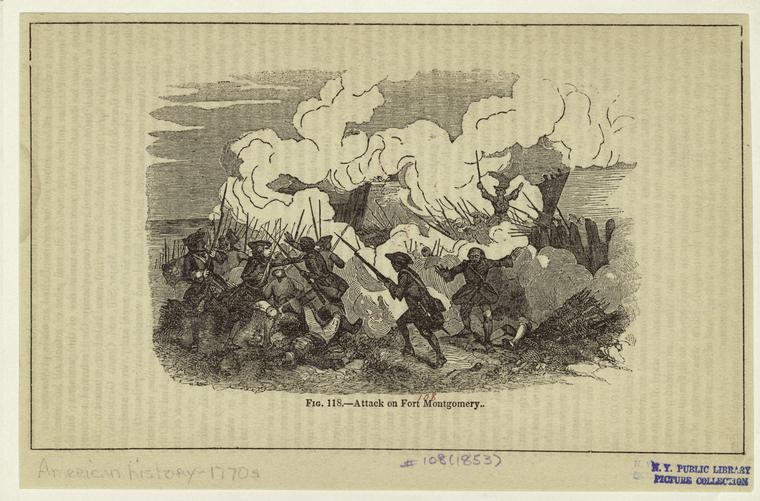
Gano stayed with the army, was there during the battles in New York and mistakenly found himself in front of his regiment at White Plains. He remained with the unit until enlistments expired at the beginning of 1777. The minister pledged to rejoin if Webb and his officers raised a new regiment, but instead found himself at Fort Montgomery on the Hudson, eventually succumbing to arguments from General James Clinton and Colonel “Dubosque” to join the men stationed there as a chaplain. (This was probably Colonel Lewis Dubois of the 5th New York.) He remained there until Sir Henry Clinton launched his autumn attack into the Hudson Highlands to support General Burgoyne’s campaign to Albany. Allowing for the uncertainties and errors of first-hand experiences and perspectives, the happenstance-chaplain provided an excellent first-hand account of the battles for Fort Montgomery and Fort Clinton on October 6, 1777.
“We had, both in Fort Montgomery, and Fort Clinton, but about seven hundred men. We had been taught to believe, that we should be reinforced, in time of danger, from the neighbouring militia; but they were, at this time, very inactive. We head of the approach of the enemy, and that they were about a mile and a half from Fort Clinton. That fort sent out a small detachment, which was immediately driven back. The British army surrounded both our forts, and commenced universal firing. I was walking on the breastwork, viewing their approach, but was obliged to quit this station, as the musquet balls frequently passed me. I observed the enemy, marching up a little hollow, that the might be secured from our firing, till they came within eighty yards of us. Our breast-work, immediately before them, was not more than waist-band high, and we had but a few men. The enemy, kept up a heavy firing, till our men gave them a well directed fire, which affected them very sensibly. Just at this time, we had a reinforcement from a redoubt, next to us, which obliged the enemy to withdraw. I walked to an eminence, where I had a good prospect, and saw the enemy advancing toward our gate. This gate, faced Fort Clinton, and Captain Moody, who commanded a piece of artillery at that fort, seeing our desperate situation, gave the enemy a charge of grape-shot, which threw them into great confusion. Moody repeated his charge, which entirely dispersed them for that time.
About sun-set, the enemy sent a couple of flags, into each of our forts, demanding an immediate surrender, or we should all be put to the sword. General George Clinton, who commanded Fort Montgomery, returned for answer, that the latter was preferable to the former, and that he should not surrender the fort. General Hames Clinton, who commanded in Fort Clinton, answered the demand in the same manner. A few minutes after the flags had returned, the enemy commenced a very heavy firing, which was answered by our army. The dusk of the evening, together with the smoke, and the rushing in of the enemy, made it impossible for us to distinguish friend, from foe. This confusion, have us an opportunity of escaping, through the enemy, over the breastwork. Many escaped to the water’s side and got on board a scow, and pushed off.”[2]
In his recent history of the Saratoga Campaign, Kevin Weddle cites General Clinton’s estimate of 350 American casualties: 70 killed, 40 wounded, and 240 captured, roughly half of the combined garrison of both forts. (Weddle estimates the American garrison at 700, not the 800 Gano believed). British losses amounted to forty killed and 150 wounded out of 2,150 in the assaulting forces.[3]
Gano spent the remainder of his service in the northeast, accompanying the men during General Sullivan’s campaign against the Iroquois, but otherwise spending the time in encampents. He finally returned to New York and reoccupied his house after war: “My house needed some repairs, and wanted some new furniture; for the enemy plundered a great many articles.”[4] After the war, the minister rebuilt his congregation in New York before relocating to Kentucky, where he died in 1804.
[1]Biographical Memoirs of the Late Rev. John Gano (New York: Printed by Southwick and Hardcastle for John Tiebout, 1806), 93.
Emerging Revolutionary War welcomes guest historian Eric Wiser to the blog.
This is a brief story of my first and memorable visit to the Camden Battlefield in South Carolina this September past. I am a husband and father living in the suburbs of Chicago. I make my living as an accountant. As rewarding as my career has been, it’s my strong interest in early American history that stirs my imagination. My pilgrimage to Camden was part of a visit to my friend Phil Kondos who moved to eastern Georgia with his family over a decade ago. Phil is a gifted musician and wonderful father and happens to share a mutual love of history. This narrative of our visit will hopefully inspire others to place Camden Battlefield on their bucket list.
My interest in the Battle of Camden mostly derives from having a Patriot ancestor who fought there. Pvt. Michael Wiser, a 23-year-old grist miller from Frederick County, Maryland, was with the First Maryland Brigade and captured by the British at Camden.[i]
“Given the order to defend the American withdrawal from Long Island, the Maryland Line saved the Continental Army from annihilation in the first major battle of the war.” wrote historian Ryan Polk.
Tench Tilghman, staff officer to George Washington and a native Marylander wrote about his fellow soldiers, “bore the palm…by behaving with as much Regularity as possible.”
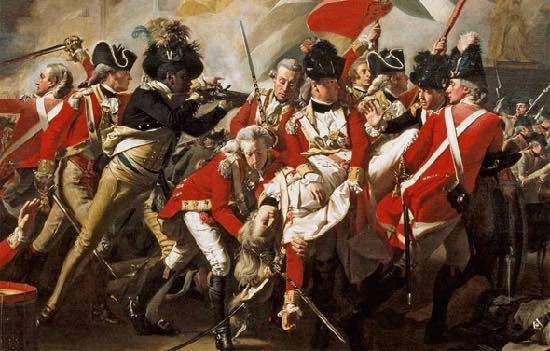
Furthermore, if you Google “Battle of Guilford Court House” the image used by Wikipedia depicts an artist’s rendition of the 1st Maryland defending Nathanael Greene’s last line during the March 1781 engagement. The particular image is below.
The Continental Maryland Line was one of the preeminent stalwarts of the American army, both in the northern and southern theaters of the war. Join Emerging Revolutionary War historians in a discussion about the men from the Old Line State and their military acumen during the American Revolutionary War. The discussion will also highlight their memory and memorialization. We hope you can join us Sunday at 7 p.m. EST on the Facebook page of Emerging Revolutionary War.





 Emerging Revolutionary War Era