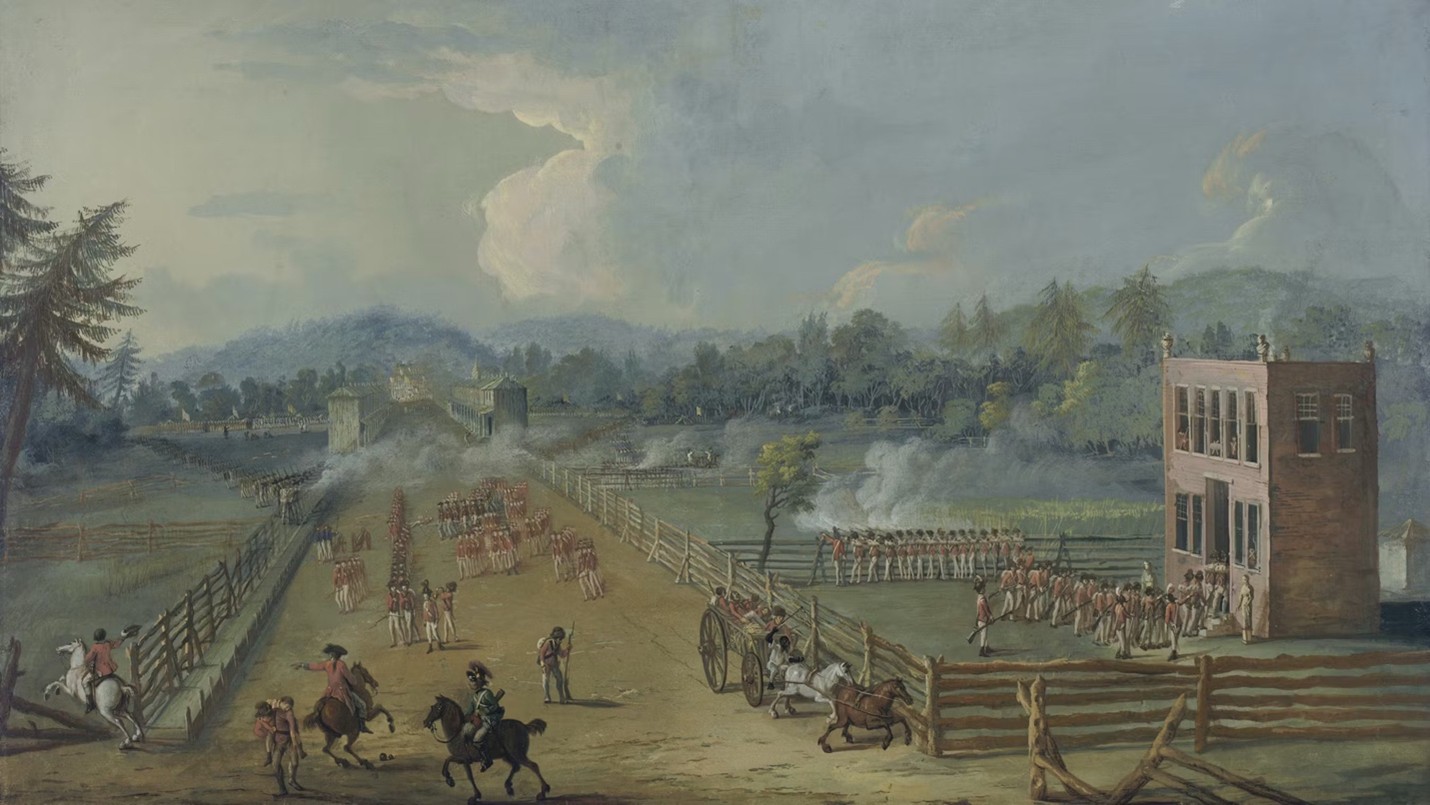
Was the Battle of Germantown an American failure or a British success? Did the Continental Army lose due to an overly complicated plan, environmental factors such as fog, and poorly applied military judgment, or was the British Army’s resistance a decisive factor? The defense of the Chew House demonstrates that the British were professional, tenacious, and courageous, rather than the fortunate recipients of the fruits of an American blunder. Led by Lieutenant Colonel Thomas Musgrave, the men of the 40th Regiment of Foot established a strongpoint that disrupted American momentum and derailed the attack. Musgrave and the 40th Regiment of Foot transformed the Chew House into an obstacle that delayed the American advance long enough for British forces to reform and counterattack. This episode reveals the significance of British leadership and discipline under severe conditions, thereby reframing the context of the Battle of Germantown.¹
Germantown occurred at a time when the Continental Army was undergoing a transformation from an amateur to a professional military. American officers engaged in self-directed study of “books upon martial science” and were known to carry such texts among their baggage and haversacks when on campaign.² In this manner, Continental officers sought to emulate their European counterparts.³ One officer known to have made a detailed study of the art and science of war was Washington’s Chief of Artillery, Henry Knox.⁴ At the time of Germantown, the officers of the Continental Army had been at war for over two years and had learned many practical lessons; however, many officers, including Washington, continued to hold Knox’s auto-didactic military education in high esteem. The gap between knowing theory and its practical application would become apparent, to the detriment of the Continentals, at Germantown.
In contrast, the British Army officer corps had been fully engaged in a minor military enlightenment through the latter half of the eighteenth century. While British officers engaged in self-study programs similar to Knox’s, they could more readily share the results of their study within an established army, comparing and contrasting ideas and adopting best practices.⁵ The British Army was able to synthesize the best practices from both theory and combat experience into regulations that informed the training and operational deployment of all its formations.⁶
Early interpretations of the battle frequently emphasized confusion and poor execution, particularly the American decision to attack the Chew House. Yet the battle was “very much more than a contest… for the possession of a country house.” More recent scholarship describes the plan for the attack on Germantown as a sophisticated maneuvering scheme that nearly succeeded. Its subsequent failure owes more to British action than American incompetence.
Emerging Revolutionary War welcomes guest historian Drew Palmer. A biography follows at the end of this post.
What does it look like when veteran soldiers do not want to fight anymore? When morale plummets and the realities of war take their toll on men. This is exactly what happened to 150 men in the Maryland Line of the Continental Army in the late summer of 1780.
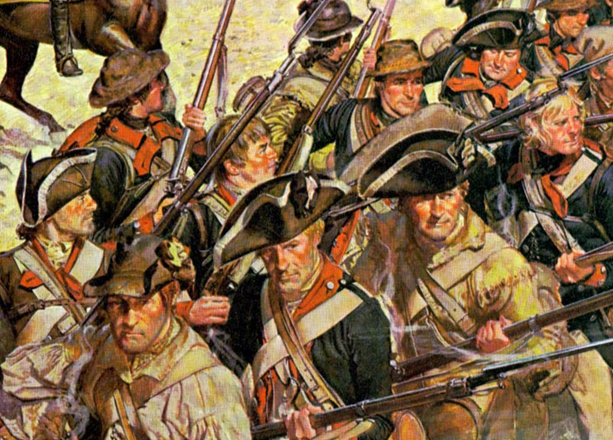
The 1st Maryland Regiment holds the line at the Battle of Guilford Courthouse, March 15, 1781
The continental regiments of Maryland that made up what became known as the “Maryland Line” or “Old Line State” had earned the reputation as a reliable, brave, and disciplined fighting force as early as 1776 after their actions in the Battle of Long Island.1 At the Battle of Camden on August 16, 1780, the 1st and 2nd Maryland Brigades offered a stout defense as Gen. Charles Cornwallis’s British force crashed into Continental soldiers from Maryland and Delaware. In the end, though, Maj. General Horatio Gates’s Southern Continental Army was completely routed from the field, with many of the Maryland Continental troops taken prisoner and held in the small village of Camden after the battle.2
The village of Camden, South Carolina, was an unpleasant place to be after the battle. The crowded conditions and brutal summer climate of South Carolina began to produce sickness amongst Cornwallis’s men and the American prisoners that were held in Camden. To prevent further sickness from spreading, Cornwallis decided to split the American prisoners held at Camden into divisions of around 150 men. These divisions were guarded by small detachments of the British army and marched from Camden to Charlestown, South Carolina.3 One detachment of the British 63rd Regiment of Foot escorted 150 prisoners of the 1st Maryland Brigade captured at Camden. The division made it to Thomas Sumter’s abandoned plantation at Great Savannah, about 60 miles northwest of Charleston. As the Maryland prisoners and their British guards halted for the night, militia commander Francis Marion received word from a Loyalist deserter that the Marylanders were nearby and decided to ambush the British element in hopes of freeing the Maryland prisoners.4 In the early morning hours of August 25, 1780, Marion’s militia attacked.
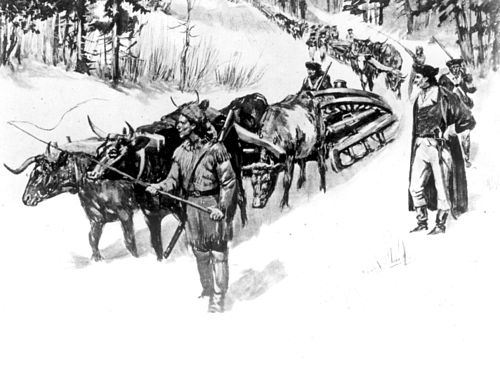
In December 1775, Henry Knox wrote to General George Washington, “I hope in 16 or 17 days to be able to present your Excellency a noble train of artillery”. However, the train of artillery would not arrive until the end of January 1776. Still an impressive feat, as Knox with his team moved 60 tons (119,000 pounds) of artillery over 300 miles from upstate New York to the environs of Boston in 70 days in the midst of winter.
This impressive feat enabled Washington to evict the British from Boston, winning the siege and giving the fledgling rebellion a victory to build momentum from.
To discuss this amazing feat and part of American military history, Emerging Revolutionary War welcomes Dr. Phillip Hamilton, a professor of history at Christopher Newport University. A historian of the American Revolutionary and Early Republican periods, he has edited and written “The Revolutionary War Lives and Letters of Lucy and Henry Knox.”
Although the program is pre-recorded, Emerging Revolutionary War hopes you still tune in on Sunday, February 22 at 7 p.m. EDT. We promise the revelry will be enlightening. If you have any questions, please drop them in the chat during the program, and we will ensure Dr. Hamilton receives them.
Have you ever thrown a rock into a pond? The ripple effect spreads outward for quite a distance along the surface of the water. The American Revolutionary War had the same effect in the late 18th century world as that pebble did to the body of water.
Historian, author, and University of Maryland professor of history, Dr. Richard Bell, focused on those fringes with this publication, bringing them into focus and discussion that was much needed in the historiography. Indeed, this is a new must-have addition to the bookshelf of American Revolutionary Era publications. His book, The American Revolution and the Fate of the World aim to “trace the sinews of the great war from its familiar epicenter outward to all those corners of the Earth” in which the conflict affected (pg. 9). Bell’s unique background, as he describes it, being an “English-born, American trained historian” is optimal to tackling this type of endeavor. As he elaborates, he attempts—successfully this reviewer’s estimation—to peel back the “amnesia…that has its own unique form” respectively on both sides of the Atlantic Ocean when discussing the history of the American Revolution. Between the two main antagonists, Great Britain and the rebelling thirteen North American colonies, “the ways individuals and communities, then as now, are entwined” will be the central theme running like a current through his book (pg. 2).
How does Bell aim to accomplish this approach and subsequent goal? Through seven core arguments, laid out briefly here. The American Revolution “stirred the mass migration and circulation of enormous numbers of people.” Second, the cost of the war was catastrophic, and victory was not certain for the patriots but a “highly contingent result of improbable choices and last-minute improvisations.” Naval power also played “an important key to military success” and “governments, soldiers, and civilians…often acted on the understanding that trade was power. The last two core arguments, patriot “struggle for self-determination stirred imperial authorities to increase oversight and security” on their remaining controlled territories and the American Revolution “was a conflict in which the call for liberty rang around the world as never before” (pg. 10).
Does he succeed? Admirably. By taking the reader through fourteen chapters that seem to be standalone essays but instead bring subjects usually forced to the fringes of histories of the period into focus. From female personas such as Molly Brant, the great leader for indigenous independence to using Peggy Shippen as the focal point for Loyalists and the throes of the great migration that followed the patriot victory in the American Revolution. From other exalted leaders, such as Baron von Steuben and King Louis XVI of France to ordinary citizens and the enslaved, trying to improve and sustain life during the conflict.
His astute insight and impeccable research acumen brings to life William Russell a privateer that might have some of the worst luck of any that sailed the Atlantic Ocean during the war to Bell, uncovering interesting snippets such as the twisted tale of tea. Americans are most familiar with the Boston Tea Party of December 1773, but did you know that by “the early 1800s, taxes levied on the tea trade had become a vital source of US government revenue and, ironically, “became a major contributor of funds to pay the nation’s war debts” (pg. 33).
Did you ever think of the central importance of trade to war? Maintaining colonies and trade routes that kept soldiers, sailors, and citizens fed and government coffers filled? Bell rightly traces the integral connection as “cargo vessels laden with Cuban gold, Barbadian sugar, Irish meat, and Dutch munitions bound together the conflict’s several theaters just as tightly as troops transports and naval fleets…” (pg. 360).
This was a whirlwind synopsis of Bell’s seven core arguments and a sneak peek into the dept of his research and viewpoints. He has filled in the foundation of those fringes of the American Revolutionary War era history. Like those ripples from that proverbial rock, there is still more to discover that have direct ties to the defining era of the American Revolution. One example that he discusses in need of further study is “in the 250 years since 1776, rebels, separatists, and state makers on every settled continent have crafted more than a hundred declarations of independence in imitation of the American original” (pg. 361). Another ripple, started by Bell, that can be explored more fully. The fate of the world rested with the tremors started by the American Revolution, and one can argue the fate of the world still relies on those same tremors of a 21st-century variety today.
Book Information:
The American Revolution and the Fate of the World Richard Bell Riverhead Books (Penguin Random House, INC), New York, 406 pages with images $35.00
Emerging Revolutionary War welcomes back guest historian Evan Portman
It’s often said that politics makes strange bedfellows, but that’s also true of war. On a blistering December night in 1775, Col. Henry Knox found himself sharing a cabin with the unlikeliest of people: the British officer John André.
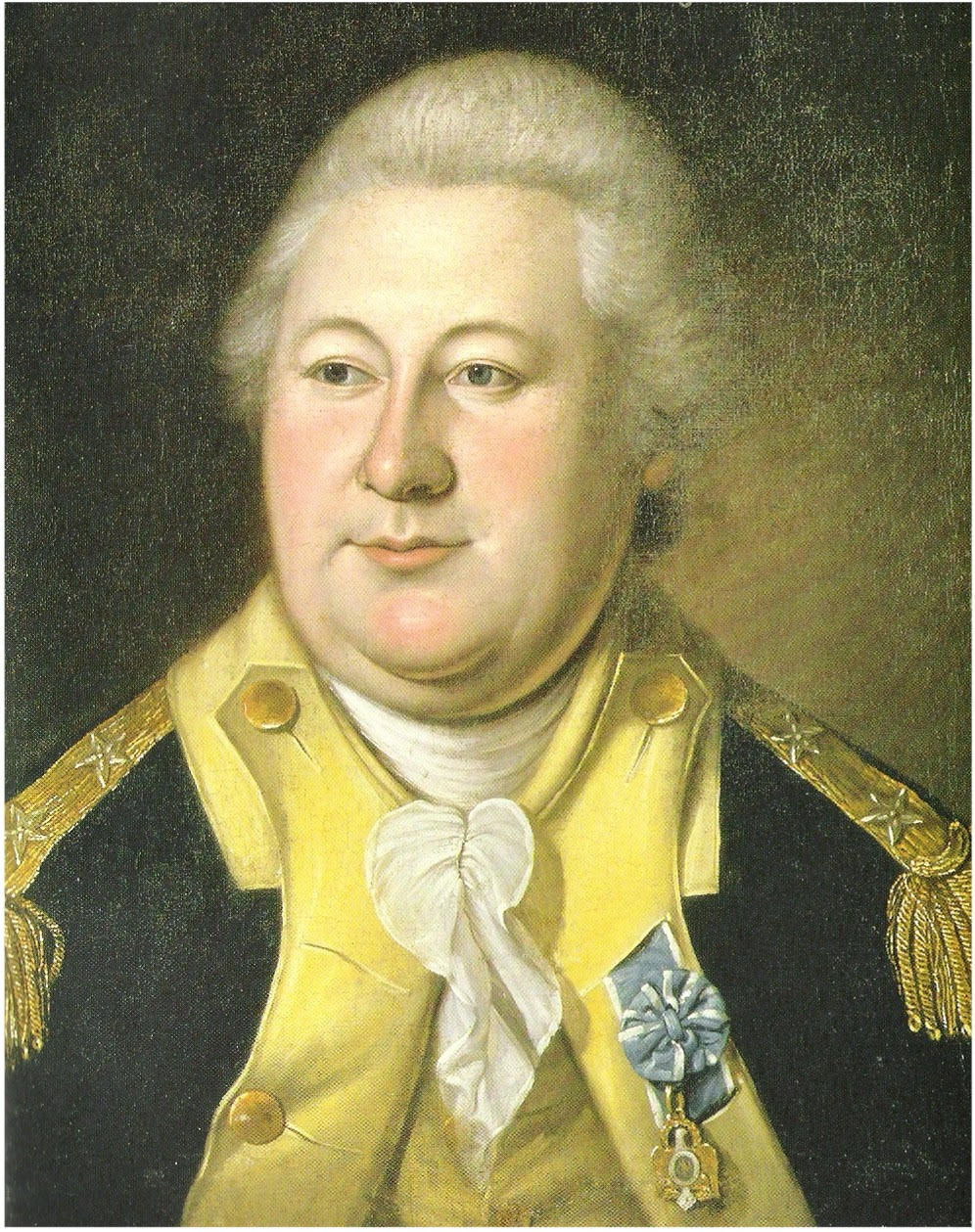
Henry Knox
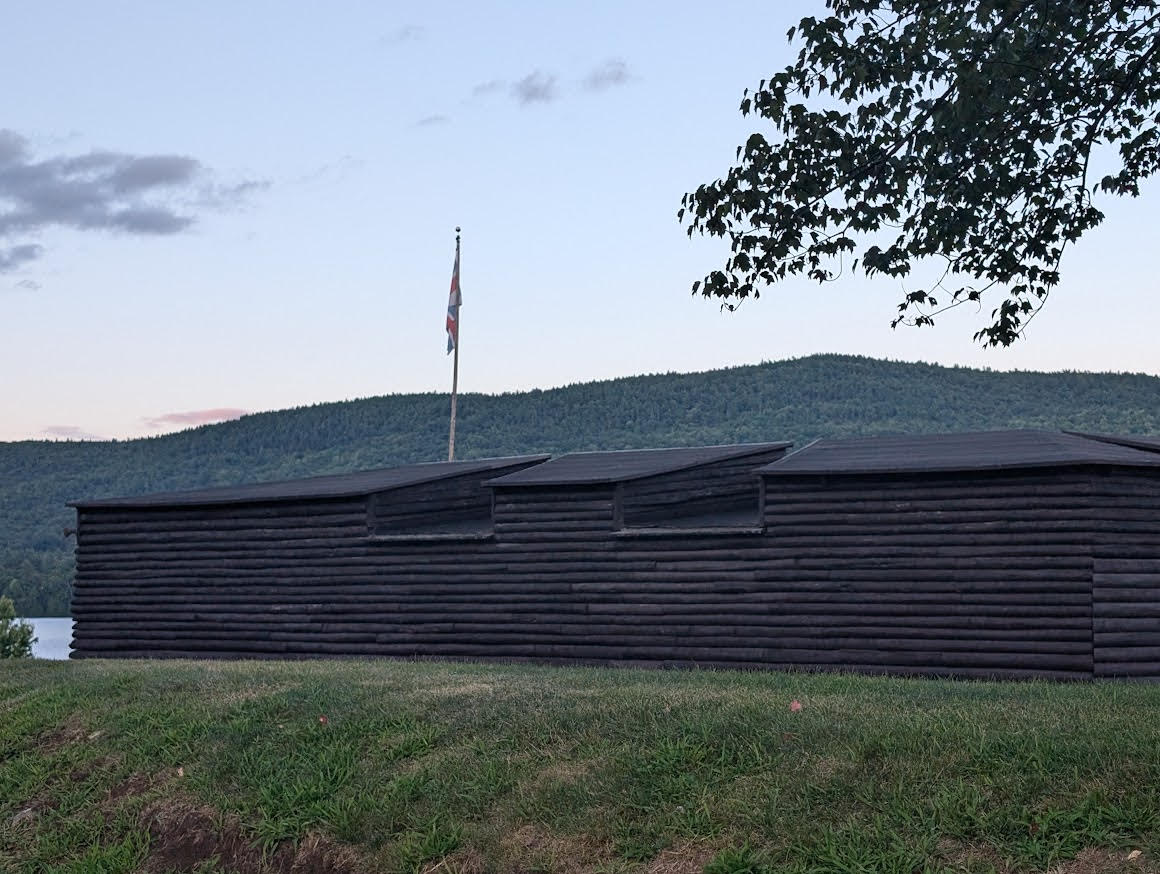
Knox was on his way to retrieve captured artillery at Fort Ticonderoga alongside his brother, William. The pair traveled up the Hudson River, facing heavy winds and harsh winter weather along the way. On December 4, a snowstorm hit just as Knox and his brother reached Fort George at the south end of Lake George, about 40 miles from Ticonderoga. Colonel Knox decided to spend the night there and sail up the lake to Fort Ticonderoga the following day.[1]
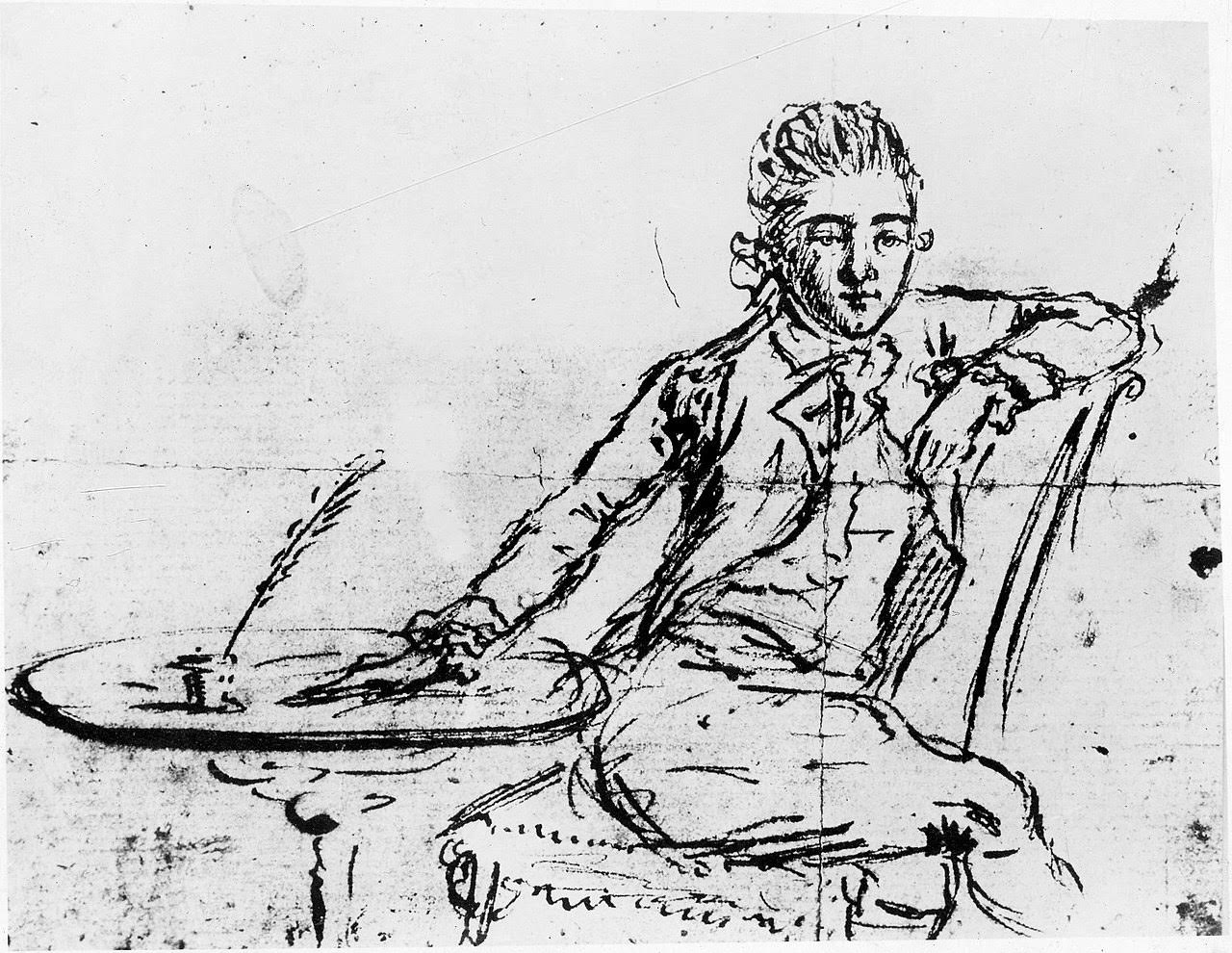
Knox received a one-room log cabin for the night, which, for lack of proper quarters, he shared with a captured British lieutenant named John André. André had surrendered during the American siege of Fort Saint-Jean in November 1775 and was being transported as a prisoner of war to Lancaster, Pennsylvania. The chance encounter sparked a brief companionship between the two men. Knox and André were the same age and shared a variety of intellectual pursuits, including a deep passion for art and literature. Both had also given up their respective trades to pursue a military career.[2]
However, Knox was careful not to betray the secrecy of his mission. The colonel, who was dressed in civilian clothes, probably did not reveal his military affiliation as a chief lieutenant of George Washington. Nonetheless, the two bedfellows passed the night by the firelight discussing their common interests. André charmed Knox, as he did most men who made his acquaintance, and the British officer’s intelligence and charisma made left a lasting impression on the artilleryman. Alexander Hamilton later recalled that “there was something singularly interesting in the character and fortunes of André” who “united a peculiar elegance of mind and manners, and the advantage of a pleasing person.”[3] The two men cordially parted ways the following day, as Knox made his way to Fort Ticonderoga and André departed for Lancaster.[4]
John André
Five years later Knox and André met again under much different circumstances. By 1780, André had risen to the rank of major and taken charge of the British spy network. It was in this role that the young officer found himself caught up in one of the great dramas of American history: the treachery of Benedict Arnold. André helped facilitate Arnold’s betrayal and eventual defection to the British army, but he was captured by American sentries in the process. Washington appointed a tribunal of 14 Continental Army officers to try André. Among them was Brig. Gen. Henry Knox.
The tribunal unanimously found André guilty of espionage and therefore ordered his death by hanging—the typical form of execution spy in the eighteenth century. Knox did not record his feelings on the matter, and André did not relate whether he recognized the portly artilleryman with whom he had once shared a cabin. Regardless, any companionship between the two men had evaporated as Knox signed André’s death warrant alongside his Continental comrades.[5]
Despite his tragic circumstances, André maintained marked civility even in the face of his execution. Knox looked on as André approached the gallows and declared, “I have said all I have to say before, and have only to request the gentlemen present to bear testimony that I met death as a brave man.”[6] With that, the cart moved out from under André’s feet, and Knox watched as his one-time companion hung.
Despite his role in André’s untimely death, Knox looked back fondly upon his one-time companion. James Thacher, who was stationed at West Point in 1780 and witnessed André’s trial, recalled that Knox “often afterward expressed the most sincere regret, that he was called by duty, to act on the tribunal that pronounced his condemnation.”[7] Though André’s life ended that October day, Knox served in the Continental army with distinction for the rest of the war. However, he never forgot his chance encounter with the charming British officer on that cold, winter night in 1775.
Fort George
[1] Mark Puls, Henry Knox: Visionary General of the American Revolution (New York: St. Martin’s Press, 2008), 37.
[2] Puls, Henry Knox, 37; Noah Brooks, Henry Knox: A Soldier of the Revolution, Major-General in the Continental Army, and Washington’s Chief of Artillery (New York: Cosimo, Inc., 2007), 42.
[3] Alexander Hamilton to Lieutenant Colonel John Laurens, 11 October 1780, The Papers of Alexander Hamilton, vol. 2, 1779–1781, ed. Harold C. Syrett, (New York: Columbia University Press, 1961), 460.
[4] Puls, Henry Knox, 37-38; Winthrop Sargent, Life and Career of Major John André (Boston: Ticknor and Fields, 1861), 85.
Emerging Revolutionary War welcomes guest historian Andrew J. Lucien. Brief bio of Andrew follows the post.
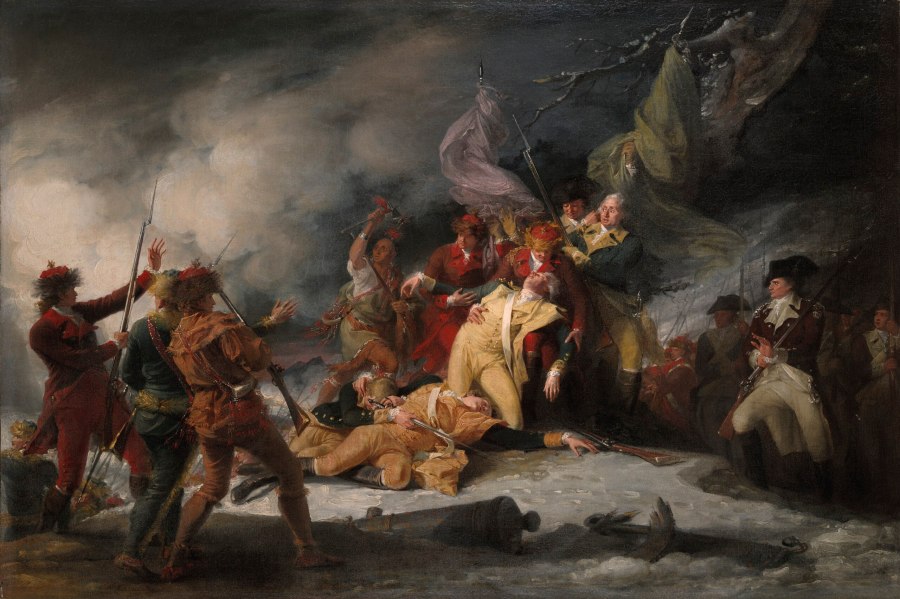
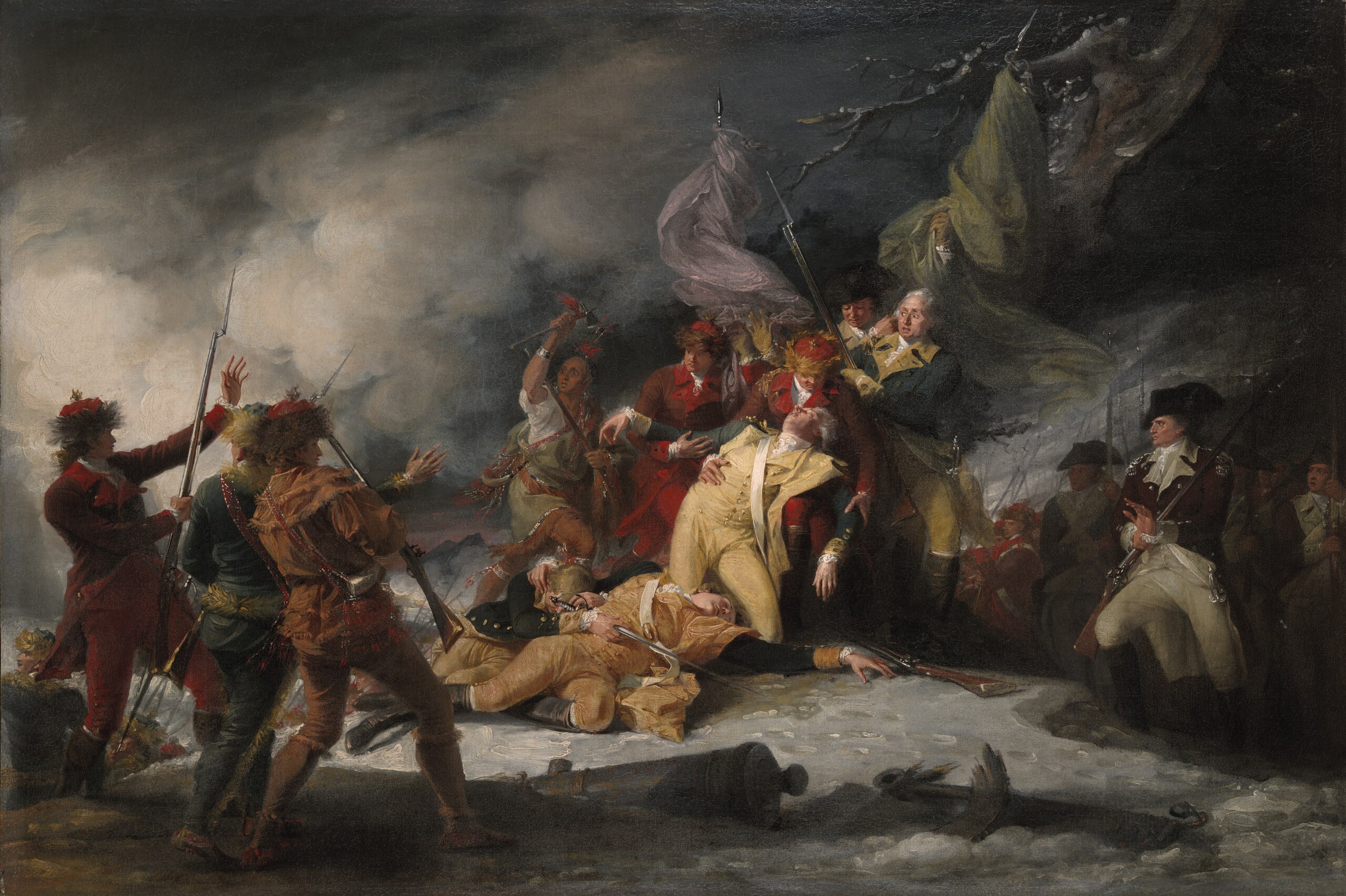
Death of General Richard Montgomery
Bunker Hill, Valley Forge, Yorktown, July 4, George Washington. These are the most common images that come to mind when the American Revolution is mentioned by most people. The collective unconscious of America has become steeped in the imagery of glorious American victories to win our independence from the superpower of the time. However, what many are unaware of is the unusual campaign that took place from 1775 to 1776, in an attempt to gain the support of Canada in our quest for independence. This campaign featured several battles, with the key one being the Battle of Quebec. This marked a significant turning point in the campaign and the war as a whole.
In 1775, the fate of the impending schism between Britain and its North American colonies was all but sealed. The colonial fervor had reached a climax at the Battles of Lexington and Concord in the spring of 1775, setting the mother country and its colony down a path of armed conflict. As tensions rose in 1775, Ethan Allan, along with Benedict Arnold, captured the British fort at Ticonderoga in early May, resulting in much-needed guns for the colonials. With successful action undertaken in the northern reaches of New York state, the Continental Congress approved plans to invade Canada. Intelligence led the patriots to believe that there were fewer than 700 British soldiers stationed in the Canadian territory and that the popular sentiment in the territory was in favor of rebellion, and that they, too, might take up arms against the British Crown.
By late September, Ethan Allan unsuccessfully attempted to capture Montreal. Near the same time, Benedict Arnold began to lead a force of around 1,100 men from Boston on an enterprise aimed at aiding in the capture of Canada (only about 600 would reach their destination). These men would eventually join forces with Richard Montgomery’s force around Quebec in December of 1775, “to finish the Glorious work you begun,” to quote George Washington. By the time Arnold’s men reached Canada, they were “in a very weak condition.” Montgomery’s force was moving north from Lake Champlain. His men captured Fort Chambly and Fort St. Johns. Following these captures, the force under Montgomery advanced on Montreal. The British governor, Guy Carlton, took approximately 150 men with him from Montreal to Quebec, believing it to be a more important and defensible position. Montreal was easily captured on the 13th. Montgomery did not rest long after capturing the fort, leaving a small garrison in Montreal and heading to join forces with Arnold’s men at Point aux Trembles. Montgomery, “…was anxious, after the capture of Chamblee, St. Johns and Montreal, to add Quebec, as a prime trophy to the laurels already won.”
With the combined force of Montgomery and Arnold now outside of Quebec, Montgomery sent Carlton multiple messages to surrender, which were all rejected. Upon hearing the refutation of his final offer, Montgomery was supposed to have said he would “dine in Quebec or Hell at Christmas.” Finally, with all other options seemingly exhausted, it was planned to forcibly take the city by sending Arnold’s corps to assault the lower town via St. Roque. Montgomery was to attack the lower town via Pres-de-Ville, near Cape Diamond. There was to be a fient east of St. John’s Gate under Colonel Livingston and one at Cape Diamond under Major Brown. The ultimate goal was to meet in the lower town, then storm the upper town.
Around midnight as the 31st began, clouds began to fill the sky and snow began to fall. This was a signal to the Americans to begin preparing for an assault, using the snowstorm as cover. By 2 a.m., the American troops began their movements. At about 4 a.m., Captain Malcolm Fraser saw flashes and lights on the Heights of Abraham. Fraser suspected that the lights were a sign of the American troops’ movement and ordered his guards to arm. The British began to play their drums and ring their bells to alert the men of Quebec to prepare for the city’s defense. The Americans launched two rockets to signal the beginning of their assault. With the rockets illuminating the early morning sky, the rebels began to fire their muskets into the British line. With the darkness of the morning still upon the soldiers, the British were unable to see their opponents, except when their muskets would flash and illuminate their heads. They used the flash of the muskets to guide their return volleys. The Americans began to launch artillery into Quebec from St. Roque. When Arnold saw the rockets in the morning sky, he led about 600 men from St. Roque to attack the British works at Saut-au-Matelot. Montgomery led his force of about 300 men to attack the works at Pres-de-Ville. Montgomery believed that this location was ripe for an escalade.
Arnold and the rest of his column advanced along the waterfront through St. Roque. The British sailors stationed there rained fire down on the Americans from atop the ramparts. The Americans “could see nothing but the blaze from the muzzles of their muskets.” As the Americans pressed forward, they lost the cover of the houses. Arnold was hit in the leg by enemy fire near the first barricade, and he was taken from the field by two men. Arnold tried to rally his men as he was taken away. Despite the setback, the Americans under Daniel Morgan pressed forward and used their ladders to scale and capture the first barricade at Saut-au-Matelot, along with 30 British troops. Here, the Americans found their muskets useless due to the snow. Many colonial troops resorted to confiscating British muskets. The Americans continued about 250-300 yards further to attempt to capture the second barrier, where they met opposition from the British. The Americans, on a narrow street, moved against the British, who had their own strong defenses, including a 12-foot-high barrier, cannons, and two lines of soldiers ready to repulse the attacking Americans. The British fired down on the Americans from the tops of the buildings. The colonial troops attempted to climb the barrier but were forced back by the British inside with their bayonets fixed. They then fired from under the cover of the houses, allowing the British to see them only as they moved from house to house. The attackers contemplated retreating; however, they tarried, ultimately a dire mistake. Carleton, aware of the developing assault, men to attack the flank of the Americans. With the Americans now flanked and facing stiff opposition in front, they surrendered to the British force.
Montgomery and his men suffered a far more deadly fate. As his column approached Pres-de-Ville, Captain Barnsfair had his men next to their guns and at the ready when the Americans arrived. The British had erected a barrier here with a battery. The Americans advanced within 50 yards of the British guns and halted, then resumed their advance, likely because they believed the soldiers were not on guard. Barnsfair “declared he would not fire till he was sure of doing execution, and… waited till the enemy came within… about thirty yards’ distance” and then called out, “fire!” “Shrieks and groans followed the discharge.” The fire of canister, grapeshot, and musketfire was deadly. When the fire stopped, the field of battle was clear with no rebels left standing on the field. Montogemery was one of the casualties of the action, found lying on his back with his arm still in the air. Seeing the folly of another assault, the remaining men retreated. An officer of Carlton’s declared the battle “a glorious day for us, and as compleat a little victory as was ever gained.” When the dust settled, the Americans suffered about 50 killed, 34 wounded, and 431 captured or missing, while the British defenders lost only 5 killed and 14 wounded. The fighting had lasted only around 4 hours.
Bibliography:
“An Account of the Assault on Quebec, 1775,” The Pennsylvania Magazine of History and Biography 14, no. 1 (1890): 47–63.
Blockade of Quebec in 1775–1776 by the American Revolutionists (les Bastonnais). Historical event, Quebec City, 1775–1776.
Caldwell, Henry. The Invasion of Canada in 1775. Quebec: Literary and Historical Society of Quebec, [microform].
Hatch, Robert McConnell. Thrust for Canada: The American Attempt on Quebec in 1775–1776. Boston: Houghton Mifflin, 1979.
Henry, John Joseph. Account of Arnold’s Campaign Against Quebec, and of the Hardships and Sufferings of That Band of Heroes Who Traversed the Wilderness of Maine from Cambridge to the St. Lawrence, in the Autumn of 1775. Albany: Joel Munsell, 1877.
Bio:
Andrew Lucien is a social studies curriculum director at the Cleveland Metropolitan School District, host of The Civil War Center podcast, and founder of thecivilwarcenter.com. He has written extensively on the Civil War and Revolutionary War.
Emerging Revolutionary War welcomes back guest historian Avellina Balestri
As I have increased research and work on my American Revolution trilogy All Ye That Pass By, I have noticed a trend towards making this particular season between the anniversary of Nathan Hale’s hanging (September 22, 1776) and John Andre’s hanging (October 2, 1780) into a strange sort of macabre festival I have dubbed “Hangemtide.” I suppose one could consider it a sort of Halloween for historical enthusiasts, as the autumnal chill starts to creep into the air, greenery dies, and horror releases hit the market. But a strange pseudo-religious reality I have observed is a tendency to treat these hangings as secular passion plays of a kind, connected by a secular Advent calendar of daily memorials, with the overarching takeaway being a strange sense of catharsis for the salvation of a newborn nation.
As a Catholic, I very well know the thematic beats, and I can sense them in an unsettling way in these commemorations. We must have our scapegoat; a man, or two, must die so the nation might live in our origin myth. But though the narrative may comfortably place Hale as the first Christ-figure, it uncomfortably assures that Andre is the second. We as the audience, while intended to shed tears for the first, are meant to bay for the blood of the second. Perhaps we may pity him in passing moments, but never so much that we truly desire him to be spared. His death is a foregone conclusion of the ritual which must be affirmed. We are recalling the traditional readings on Passion Sunday, and hardly realize it. We have, perhaps, lost the much greater plot of Christianity, that in the death of each, the other perishes, and in every death, we partake, in the killing and the dying, and in every human catastrophe, there is planted the original Passion Tree, no less in the past than in the present. History is not safe from our iniquity, nor from grace breaking in upon it, oftentimes painfully.
Touching back upon the historical events being remembered according to our national needs, I have often gently chided friends involved in “Hangentide” that I am ever on call to be the defense lawyer Major Andre never got should they wish to shuttle me into the past on circuit. I do not intend to make that defense the core of my current thesis, but put simply, I believe that if he had received a proper legal defense, Andre may well have had his sentence reduced based on extenuating circumstances. But that was not to be, because it could not be, not in the narrative as it is presented to us over and over again. This was a necessary death; a payment to Justice itself. It is language used to mask what was essentially a revenge hanging for both Hale’s execution at the hands of Crown forces and Arnold’s betrayal of the revolution for hard cold coin. The true foundation stone of “Hangemtide” is a satisfaction we are meant to share in nearly 250-year-old retribution. It is meant to, in some way, bring the country together through our most primal tribal instinct. But does it?
Emerging Revolutionary War welcomes back Jeffrey Collin Wilford Part I, click here. Part II, click here.
Major Andre’s Reckoning
Along the way from Tarrytown, New York, to West Point, Benjamin Tallmadge conversed almost nonstop with the freshly captured British prisoner John André and learned much about the youthful officer. It was perhaps Major Tallmadge’s background as George Washington’s chief intelligence officer as well as recollections illuminated by the light of André’s charisma, that helped begin to paint a picture of an honorable soldier. After countless hours of conversation during their journey north he became convinced that André’s “Head was in fault, & not his heart.” Tallmadge commented later that André was “a most delectable Companion. It often drew tears from my Eyes to find him so pleasant & agreeable in Conversation on different Subjects, when I reflected on his future fate, & that too, as I believed, so near at hand—” In the short time the two spent together Tallmadge seemed to have grown extremely fond of the British Major.
One can sympathize with Tallmadge’s point of view. After all, André was merely another victim of the traitor Arnold. He had intended to meet him on board the Vulture but when Arnold failed to show he was forced to go ashore with Smith. After the Vulture was scared off by artillery and Arnold convinced him to don civilian clothes, plying him with incriminating materials and sending him through enemy territory, the stage was set. In his testimony, he said it was General “Clinton’s directions not to go within an Enemy post or to quit my own dress.“ Even so, by his own admission, it was the ruling of the military Proceedings that “he changed his Dress within our Lines and under a feigned Name and in a Disguished [sic].”
Perhaps Tallmadge’s sympathies toward André were accentuated by his hatred for Arnold. Tallmadge’s characterization of André becomes clearer in a simple personal act from his testimony when he stated that “André kept reviewing his shabby Dress, & finally remarked to me that he was positively ashamed to go to the Head Qrs of the American Army in such a plight. I called my Servant, & directed him to bring my Dragoon Cloak, which I presented to André. This he refused to take for some time, but I insisted on it, & he finally put it on & rode in it to Tappan.”
By the time they made Tappan, André was under heavy guard and imprisoned at Mabie’s Tavern. Just a few hundred feet away, Washington convened 14 of his top military officers who, over two days of testimony, found André guilty and sentenced him to death. On October 1st André personally requested from Washington the honor of a firing squad over a “gibbet.” Knowing the favor could not be granted, Washington opted to ignore the request.
On October 2nd, just before noon, André appeared on the stoop of Mabie’s Tavern. Four officers were present to escort the convicted spy to his final judgment. One of the four officers was Captain Lieutenant John Van Dyk, with just six months separating this moment from his own capture by the British off the coast of New Jersey. “There were about six steps which led into the stoop of the house, on the light of these, one American officer with myself were standing when Major André came out of the front door of the house in regimentals, hooking his arm with the two American officers (his attendants) one on his right and left. He ran down the steps of the stoop as quickly and lively as though no execution was to take place, and immediately fell into the centre of the guard, a place assigned him.”
André exits Mabie’s Tavern on the day of execution. (copyright: New York Public Library)
Escorting André with his four guards was also Major Benjamin Tallmadge. “I walked with him to the place of execution, and parted with him under the gallows, entirely overwhelmed with Grief, that so gallant an officer, & so accomplished a Gentleman should come to such an ignominious End.” Echoing that sentiment in writing nine days after his execution was Alexander Hamilton, saying “Never perhaps did any man suffer death with more justice, or deserve it less.”
Mabie’s Tavern today (Wilford)
When André had turned the corner to see the gallows before him, Van Dyk recorded his statement. “Gentlemen, I am disappointed, I expected my request…would have been granted.” According to Van Dyk, preparations were made and André’s final words when asked if he had any were “I have nothing more to say, gentlemen, but this, you all bear me witness, that I meet my fate as a brave man.” With that came the untimely end of Major John André who was then cut down and not allowed to fall to the ground and “every attention and respect was paid to Major André that it is possible to pay a man in his situation.” He was placed in a simple coffin and buried in a shallow grave close to the site. Over the following 40 years, a peach tree grew above the grave, ostensibly from a peach given to André by a woman as he marched to his execution.
When the Duke of York requested the return of his remains in 1821 it was not without fear of a backlash, specifically from the residents of Tappan. Many felt it was an affront to the memory of George Washington. British consul James Buchanan found that the protestations dissipated quickly after he agreed to buy those who were against the idea a drink at the local inn. The bones were then dug up with the root of the peach growing through the skull’s eye socket. They were placed in a mahogany ossuary and shipped by way of a British mail ship called a packet to New York City where they awaited their return to London.
Captain, now Colonel, John Van Dyk, 67 years old and working for the New York Customs House near the docks of the North (Hudson) River heard about the impending exhumation and, using his connections with influential New Yorker John Pintard, requested a dialog with Buchanan. Through the British consul, he obtained a penned introduction to the captain of the packet where André’s bones lay. Van Dyk made his way to the North River and found the captain just leaving to go back aboard the packet. Upon handing him the introduction from Buchanan, the captain requested that he return at 10 o’clock the following morning and a barge would be waiting to take him to the ship.
Coincidentally, that same day Dr. Valentine Mott, considered by many to be the greatest surgeon of his time, was treating one of Van Dyk’s children and heard of Van Dyk’s plan. Naturally, he was invited along for the next morning’s visit. That day, the two reached the docks just before 10 o’clock and met the barge which took them to the ship. “We went together on board the Packet. The bones were in a superb urn, and we were permitted to handle them. I mentioned the circumstances, as I have related them above, to the Captain [about André’s execution] — bid him goodbye, and we came on shore.” Van Dyk’s motivations for wanting to visit the remains of André are lost to history and probably best understood by those who experienced the emotions of that fateful day in American history.
Amidst a boat of mail destined for England, John André left New York for the last time, traveling back to London where his remains were repatriated. His ossuary was emptied of its contents and his remains were buried in Westminster Abbey with the inscription “universally beloved and esteemed by the Army in which he served, and lamented even by his foes, now lay alongside medieval kings, Renaissance statesmen, and Georgian poets.” Arnold and his wife Peggy lived the rest of their lives post-Revolution in London, reviled by most, and are buried just 3 miles away at St. Mary’s Church in Battersea, in a vault that sits behind a wall in a basement kindergarten classroom.
[Original source: The Papers of George Washington, Revolutionary War Series, vol. 28, 28 August–27 October 1780, edited by William M. Ferraro and Jeffrey L. Zvengrowski, 291–296. Charlottesville: University of Virginia Press, 2020.]
[Original source: The Papers of George Washington, Revolutionary War Series, vol. 28, 28 August–27 October 1780, edited by William M. Ferraro and Jeffrey L. Zvengrowski, 277–283. Charlottesville: University of Virginia Press, 2020.]
[Original source: The Papers of George Washington, Revolutionary War Series, vol. 22, 1 August–21 October 1779, edited by Benjamin L. Huggins, 745–746. Charlottesville: University of Virginia Press, 2013.]
[Original source: The Papers of George Washington, Revolutionary War Series, vol. 28, 28 August–27 October 1780, edited by William M. Ferraro and Jeffrey L. Zvengrowski, 303–311. Charlottesville: University of Virginia Press, 2020.]
Van Dyk, John. “Major André, Letter of Col. Van Dyk to John Pintard, August 27, 1821.” Historical Magazine 7, no. 8 (August 1863): 250-252.
Van Dyk, John. “Major André.” Martinsburg Gazette, August 20, 1835.
Emerging Revolutionary War welcomes back Jeffrey Collin Wilford For Part I, click here.
General Benedict Arnold’s Betrayal
On the morning of September 21, 1780, while Captain John Van Dyk, only recently freed from the prison ship Jersey, was guarding West Point as part of Colonel John Lamb’s artillery unit, the HMS Vulture arrived at Haverstraw Bay and anchored just off Teller’s Point. Two men pressing apples at a cider mill on the shore became alarmed at the presence of a British warship on the river north of the “neutral ground,” and a barge disembarking from it filled with Redcoats. Not knowing their intent, both decided to take matters into their own hands and opened fire on the soldiers. John “Rifle Jack” Peterson, a veteran of the Battle of Saratoga, received his nickname due to his superior marksmanship. The other, Moses Sherwood was just 19 years old and a friend of Jack Peterson. Both were enlisted in the Westchester County militia. Their relationship was very close as Rifle Jack had held Sherwood’s father in his arms as he died at Saratoga three years earlier.
Croton (Teller’s) Point today – (Wilford)
Several of their shots hit their mark, wounding soldiers and prompting the barge to return to the Vulture which opened fire with a barrage of grapeshot on the two men as they crouched behind rocks. This signaled to the pair that the ship was within cannon range and they quickly made their way in the darkness to Fort Lafayette ten miles to the north to secure a cannon from the officer in charge, Colonel James Livingston.
Cannon that fired on the Vulture Peekskill Museum (Wilford)
At Peterson and Sherwood worked with several other soldiers to lug the 4-pounder back to the point while, unbeknownst to them, André slipped away from the Vulture. He made his way from the Vulture to shore, at around midnight, with Loyalist Joshua Hett Smith who had been instructed to gather him from the ship. His destination was a clandestine meeting on the river bank with American General Benedict Arnold, the famous war hero of Saratoga who had been plotting for months to turn against the cause of American independence. What was clear, by André’s account, was that this meeting was to be a fairly quick round-trip between the Vulture and shore under cover of darkness.
Instead, an unraveling of the circumstances dictated that he shed all previous warnings from British General Sir Henry Clinton to stay dressed in his regimental uniform, avoid enemy checkpoints, and not possess any incriminating papers. André admitted this to Clinton in a letter written after his capture and dated September 29, 1780 stating, “The Events of coming within an Enemys posts and of Changing my dress which led me to my present Situation were contrary to my own Intentions as they were to your Orders.” This would force him to become, in his own words, “involuntarily an impostor.”
As negotiations on the riverbank dragged on, likely due to Arnold’s negotiations around rank and compensation, daybreak drew near. Fearing discovery, and clearly against André’s original plan, they moved their talks to the home of Smith, which overlooked the river and the Vulture at anchor. During the meeting at Smith’s house, Arnold eventually handed over the defensive plans of the Continental Army’s citadel, West Point, and the minutes from General George Washington’s September 6th War Council meeting that created a vulnerability for the Americans that could have proved catastrophic.
It is easy to understand why West Point was so significant to the British. It was crucial, not just as a military installation situated on the banks of the Hudson between New England and the Southern Colonies, but as a symbol of American strength and resolve. Perched on the high ground overlooking the Hudson, West Point had been there to thwart British attempts to dominate the 300-mile-long river which would have allowed them to effectively cut off the rebels of New England from the rest of the colonies. Losing West Point would have taken an important strategic foothold away from the Americans. The potential of losing General Washington in the process would have also dealt a severely damaging blow to the American cause, if not ending the war altogether.
While the Arnold and André negotiations were taking place, a contingent of men, along with Peterson and Sherwood, had dragged the 4-pounder to Teller’s Point into position on the riverbank within range of the Vulture.
Early in the morning, awakened by cannon fire, the conspirators at Smith’s house could see the Americans in the distance opening fire on the ship. Though he did not immediately know it, this would permanently separate André from his only means of a safe escape. Hit several times and stranded in the middle of the Hudson by a slack tide and unfavorable winds, the Vulture endured the cannon fire but eventually cut her cables to drift with the currents south to Dobbs Ferry.
As a result of the retreat of the Vulture, an alternative plan was devised to get André back to the British lines. On the morning of the 22nd, in disguise and with a pass written by Arnold to travel unmolested behind American lines under the alias John Anderson, he and Smith began the overland trek back to British-occupied New York City. Arnold returned to his home at West Point. What was clear from André’s later testimony was that he felt like this change of plan made him a victim of circumstance saying he “thought it was settled that in the way I came I was also to return.”
What were the motivations for the thirty-nine-year-old hero of Saratoga, who had risen through the military ranks to become one of Washington’s most effective field generals, to give up not only West Point, but his reputation in history? Much has been written, but what is known is that he had been living a life well beyond his means. His wife Peggy Shippen, half his age and from a prominent Philadelphia Loyalist merchant family, had a taste for luxury. To woo the 19-year-old, Arnold openly lived a life of excess while in Philadelphia which turned more than a few heads, wondering if he had secretly been trading with the British.
Benedict Arnold was also known for his self-assured nature and temper. Infighting within certain circles of the military, and his discovery that several junior officers had received promotions ahead of him, provided him even more motivation to turn. Arnold felt the military did not display the respect that was due a war hero and this sentiment was on display in a letter to Washington on May 5, 1779. “Having made every sacrifice of fortune and blood, and become a cripple in the service of my country, I little expected to meet the ungrateful returns I have received of my countrymen.” Perhaps the influence placed upon him by his relationship with Peggy due to her father’s position, and his criticism of the American cause added more weight to his self-imposed need to betray his country. Consequently, he began to develop a plan to turn over West Point to British General Sir Henry Clinton, with Major John André as the British intermediary.
The second day treading enemy soil was rather uneventful as André and Smith carefully made their way south to the original King’s Ferry which crossed the Hudson between Stony Point and Verplanck, the site of the former Fort Lafayette. The crossing was a nerve-wracking affair for André as this was the main ferry crossing for all Continental troops and supplies just outside of the watchful eye of the British forces in New York City 45 miles to the south. Following the Crom-Pond Road, the journey was slow and deliberate, befitting a spy and his Loyalist guide. As nightfall approached, they bedded down at a farmhouse before continuing their journey early the next morning.
Isaac Underhill House – Where André ate his last breakfast (Wilford)
The pair continued to make their way along the Croton River until reaching the southernmost lines of the Continental Army where Smith left André just after finishing their breakfast at the Isaac Underhill house. By the time André had reached Tarrytown, New York, by way of the Albany Post Road, a road he had been told to avoid, his luck had run out. Isaac Underhill House – Where André ate his last breakfast (Wilford)
At 9 o’clock on the morning of September 23, 1780, André was stopped by three militiamen at Clark’s Kill, a stream that today marks the boundary between Sleepy Hollow and Tarrytown, New York. According to André, he “was taken by three Volunteers who not Satisfied with my pass riffled me and finding papers Made me a prisoner.” Isaac Van Wart, John Paulding, and David Williams would go on to be considered heroes by most, but certainly not by all. One of their leading detractors was the person George Washington entrusted with returning André to West Point and ultimately Tappan for trial, Major Benjamin Tallmadge. Tallmadge was Washington’s chief intelligence officer and he believed the three militiamen were “of that class of person who passed between both armies.” He felt they lacked the very character he would end up heaping upon André.
André Capture Site (Wilford)
While the circumstances surrounding Major John André’s capture unfolded in Tarrytown, General Arnold, aware that his treacherous plot had been uncovered, and leaving behind his baby and a hysterically distraught Peggy Shippen, raced to avoid capture and meet up with the HMS Vulture. Upon his return from a meeting with French General Rochambeau at Hartford Connecticut, Washington, unaware of any involvement by Shippen, allowed her to return to her family in Philadelphia, perhaps letting go of an important bargaining chip in the process. It would later be learned that she might have been complicit in her husband’s treason. While she openly denied it, an admission from Theodosia Burr, Aaron Burr’s wife, that she admitted to her involvement as well as a £500 annual pension from King George III would suggest this.
After years of political unrest between Great Britain and her North American colonies, tension finally boiled over into armed conflict on April 19, 1775, at Lexington and Concord. The British expedition to capture arms and munitions held by the colonists at Concord disintegrated into a panic-ridden retreat to Boston as local militias struck the column as it moved through the Massachusetts countryside. As often happens in war, seeds planted during a battle often sow the next.
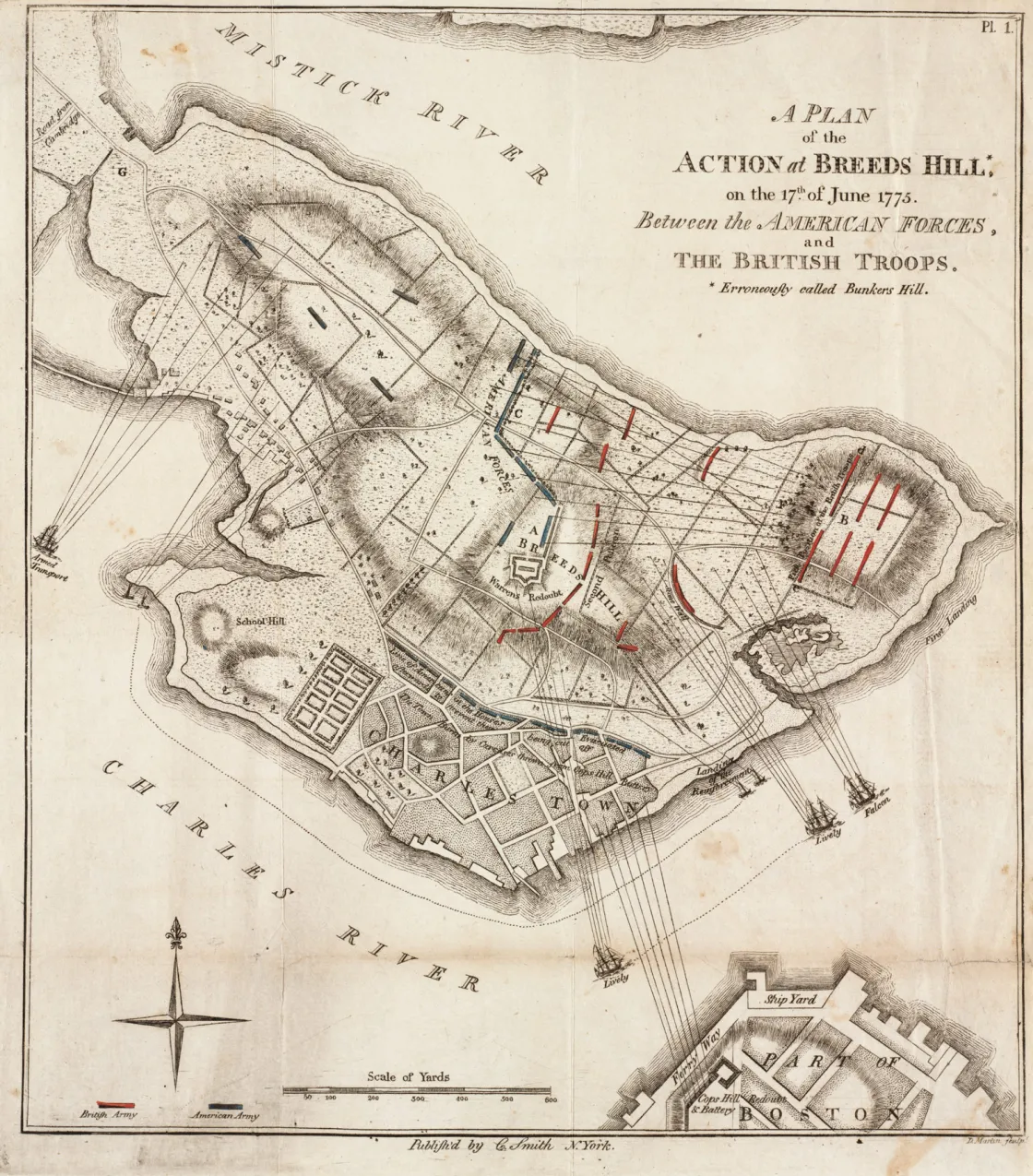
Rather than enter march through Boston Neck British officers diverted to Cambridge and proceeded to the Charlestown Peninsula. Bordered by the Charles and Mystic Rivers, the peninsula jutted out into Boston Harbor northeast of the city. As darkness settled in, exhausted British soldiers made their way onto 110-foot high Bunker Hill. This eminence, commanded Charlestown Neck, a narrow sliver of land connecting to the mainland, along with the surrounding landscape.
That night, Lt. Gen. Thomas Gage, the British Commander-in-Chief met with Vice Admiral Samuel Graves, head of the North Atlantic Squadron. Among other suggestions, Graves urged Gage to burn Charlestown and occupy Bunker Hill. Graves likely knew that his ships in the harbor could not elevate their artillery to reach the high ground. Additionally, Bunker Hill was out of range of the Copp’s Hill Battery located in the city’s North End.
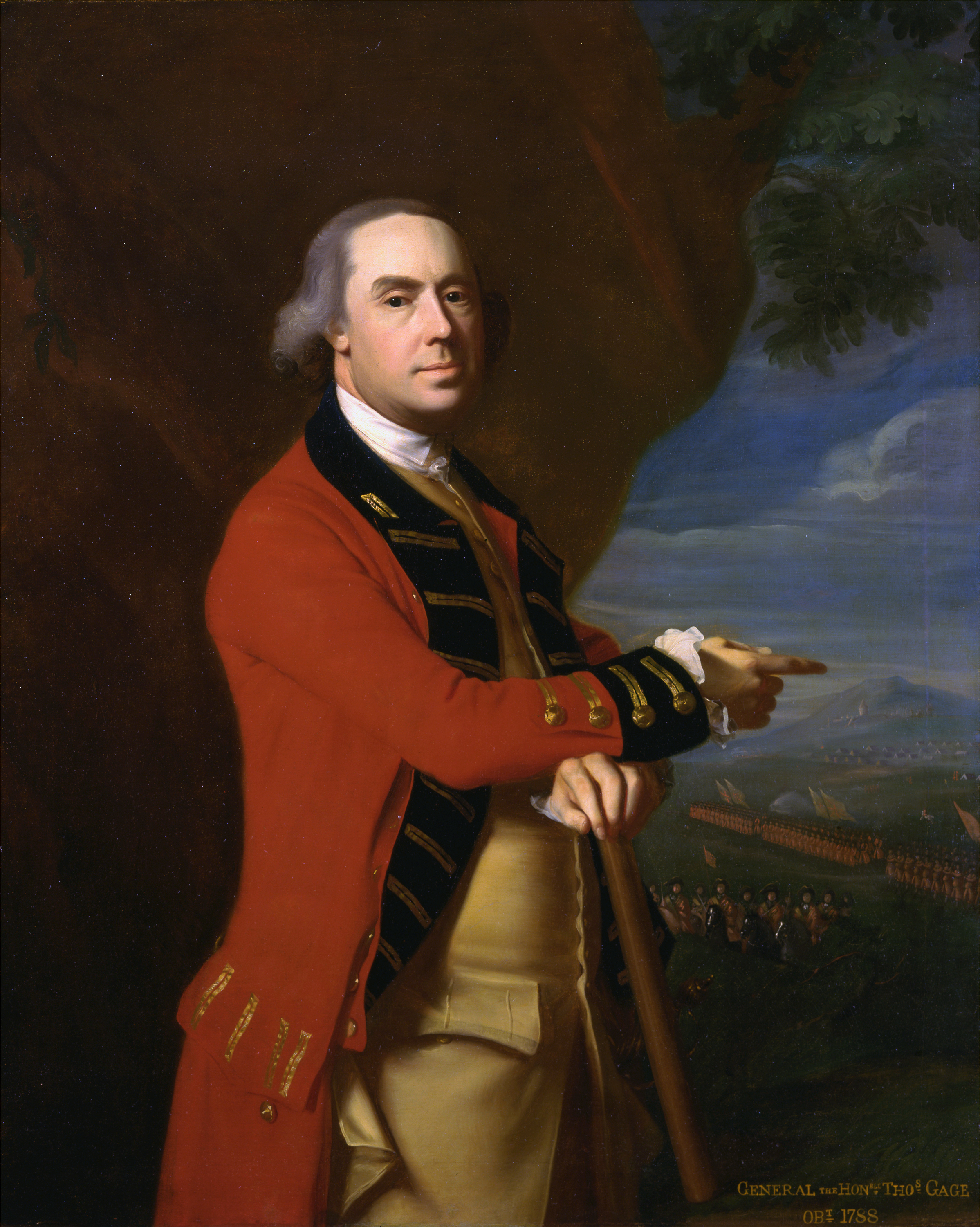
Thomas Gage
Gage recognized the long-simmering pot would eventually boil over with the colonists. “If you think ten thousand men sufficient, send twenty; if one million thought enough, give two; you save both blood and treasure in the end,” he wrote the previous fall to his superiors in London. Now, seemingly distant from the tactical situation on the ground, the survivor of the Monogahela rejected Graves’ proposal, claiming “the weakness of the army.” One must wonder if this was a decision Gage came to privately regret.
The arrival of reinforcements at the end of May, along with Maj. Gens. John Burgoyne, Henry Clinton, and William Howe may have buoyed Gage’s spirits. He soon began making plans to break out of Boston. In consultation with his subordinates, Gage formulated a plan to strike first across Boston Neck to capture Dorchester Heights, which commanded the southern end of the city. A second attack would capture Charlestown then move the three miles to Cambridge to hopefully destroy the Massachusetts army. The offensive was slated to take place on June 18.
Unfortunately, Boston leaked like a sieve and Gage failed to maintain what is known today as operational security. His plans were soon known in Cambridge where the Massachusetts Committee of Safety authorized their own effort to occupy Bunker Hill ahead of the British. On the night of June 16, colonial units led by Col. William Prescott marched out of Cambridge toward Charlestown. Rather than follow his orders, Prescott moved to the 60 foot high Breed’s Hill, located slightly to the southeast of Bunker Hill. Prescott’s decision remains one of the great mysteries surrounding the battle. His men began construction of a redoubt.
Another question surrounding the engagement rests with Henry Clinton. Sometime on the evening of June 16, Clinton wrote he conducted a reconnaissance and claimed he witnessed Provincial activity. He did not, however, explain where he went nor reported the type of actions he saw. Additionally, visibility would be difficult in the growing dusk. Clinton further stated he reported his findings to Gage and Howe but Gage elected to wait for daylight.
Sunrise revealed Prescott’s men atop Breed’s Hill, hard at work on the redoubt, which threatened the northern end of the city. Gage and his officers quickly convened at his headquarters at the Province House. Howe, the senior officer, would be in command. Some thought was given to sail up the Mystic to land on Charlestown Neck well in the rear of the redoubt. This plan was quickly nixed for fear the force could be isolated and cut off by reinforcements from Cambridge and militia on Breed’s Hill. It was eventually decided Howe would land below and out of range of the redoubt. Orders soon went out for the mustering of the “ten oldest companies” the flank and grenadiers, each – along with several regiments to prepare for the operation.
Each British regiment consisted of ten companies, eight line, with two flank and grenadier companies. The flank companies consisted of men who were often the shortest and fastest, who could operate in open order tactics, moving quickly to engage and skirmish with the enemy. The grenadiers, identified by their bear skin hats, were often the tallest men in the regiment and were used as the shock troops during an attack. By the time of the American Revolution, they were no longer carrying hand grenades but the name remained. Oftentimes these companies were separated from their regiments and placed in their own battalions.
Howe disembarked from Long Wharf, going over himself in the second wave, that afternoon. The British landed at Moulton’s Hill, near the modern Navy Yard. Stepping ashore, Howe observed his objective. “On first view it was clearly seen that the rebels were in forced and strongly entrenched upon their right in the Redoubt that had been seen from the town at daybreak,” he reported. “Their left and center were covered by a breastwork which reached from the Redoubt to the Mystick, the space from the Redoubt to that river being about 380 yards, and the whole extent they occupied about 600 yards”. The extent of the defenses compelled Howe to call for reinforcements.
Toward the middle of the day, the British launched their assault. Although Howe’s second in command, Brig. Gen. Robert Pigot was present and directed the left of the line, Howe also decided to take a stronger role and led the center himself on foot. Howe directed his light infantry to advance along the beach of the Mystic, likely with the hope in mind of getting behind the redoubt. This attack was met and repulsed by New Hampshire militia under Col. John Stark. So too were Howe’s and Pigot’s attacks. Watching his men come stumbling back after the failed attempt prompted Howe to later write “it was a moment I had not felt before.”
In the second assault, Howe attempted to further squeeze off the redoubt, pulling the light infantry from the beach to augment his center. At the same time, Pigot sent the 1st Marine Battalion and the 47th Regiment of Foot to get between Charlestown and the redoubt. During the assault, which also failed, the light infantry fired into the rear of the grenadiers, inflicting casualties.
Once again, the British lurched forward, determined to overwhelm the redoubt by a sheer force of numbers. This time, luck was with them as the militia were running out of ammunition. Francis, Lord Rawdon, an officer in the 5th Regiment of Foot who would go on to distinguish himself in the Southern Campaigns recalled “our men grew impatient, and all crying Push on, Push on, advanced with infinite spirit to attack the work with their small arms. As soon as the rebels perceived this, they rose up and poured in so heavy a fire upon us that the oldest officers say they never saw a sharper action. They kept up this fire until we were within ten yards of them…there are few instances of regular troops defending a redoubt till the enemy were in the very ditch of it.”
The British infantry swarmed into Prescott’s redoubt. Somewhere in the maelstrom was British lieutenant and adjutant of the 1st Marines, John Waller. “Nothing could be more shocking than the carnage that followed the storming of this work,” he wrote “We tumbled over the dead to get at the living who were crowding out of the gorge of the redoubt…’twas streaming with blood and strewed with the dead and dying men, the soldiers stabbing some and dashing out the brains of the others.” The colonials managed to retreat across Charlestown Neck, the British too exhausted to give chase.
Bunker Hill became the first of many pyrrhic victories for the British over the course of the American Revolution. Still, there were a number of shortcomings. Howe, rather than oversee the attacks from Moulton’s Hill, led the assaults himself. Perhaps he needed to inspire his men or he recognized the importance of the situation but he reverted to being a battalion commander. One must wonder whether the initial attacks could have been more effective had he delegated authority and used more of a guiding hand. Howe’s experience that day may have influenced him for the remainder of the war. Rather than rely on frontal assaults, he utilized flanking maneuvers such as those at Long Island and Brandywine. The friendly fire casualties can be attributed to inexperience amongst the ranks. Gage, along with his subordinates also share, the blame for not maintaining operational security and letting their plans slip out of Boston. Additionally, Gage failed to heed the advice of Graves and secure Charlestown Peninsula in April when he had the opportunity. The result nearly two months to the day resulted in over 1,000 British soldiers killed and wounded, a high cost of blood and treasure, in a war that would lead to the independence of the United States.





 Emerging Revolutionary War Era